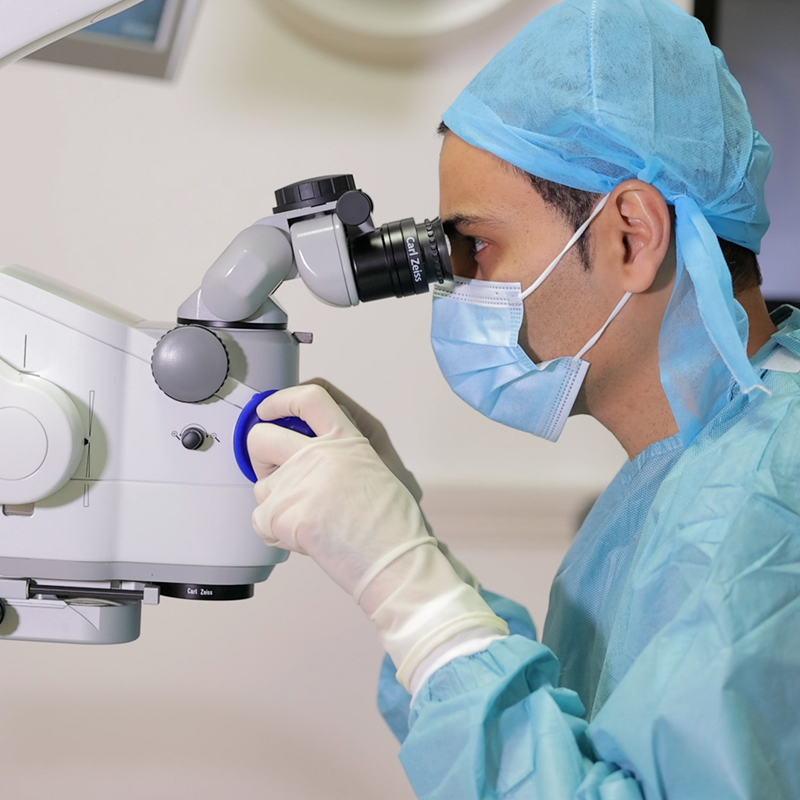
Specialist planning to protect vision while managing eye pressure.
If you have glaucoma and are developing cataracts, careful planning is essential. Glaucoma affects the optic nerve and eye pressure, while cataracts affect clarity of vision — and when both conditions are present, treatment needs to be coordinated thoughtfully to achieve the safest and most effective outcome.
At London Cataract Centre, we regularly manage patients with glaucoma who require cataract surgery. Our approach focuses on protecting the optic nerve, managing eye pressure and restoring vision, all through consultant-led care and detailed pre-operative assessment.
How Glaucoma Affects Cataract Surgery
Glaucoma does not prevent cataract surgery, but it does influence how surgery is planned and performed. Because glaucoma can cause permanent optic nerve damage, preserving remaining vision is a key priority.
Important considerations may include:
Existing optic nerve damage
Current and target eye pressure levels
Use of glaucoma eye drops
Visual field status
The type and severity of glaucoma
With specialist assessment, cataract surgery can be performed safely and may even help lower eye pressure in some patients.
The Relationship Between Cataract Surgery and Eye Pressure
Cataract surgery can affect eye pressure in different ways. In many patients with open-angle glaucoma, cataract removal can lead to a modest and sustained reduction in intraocular pressure.
However, pressure responses vary between individuals. This is why careful planning and post-operative monitoring are essential, particularly for patients with advanced or unstable glaucoma.
Before cataract surgery, it’s important to understand how much vision has been affected by glaucoma itself. Cataracts can reduce clarity, but glaucoma can limit vision in a different and permanent way.
Your assessment may include:
Optic nerve imaging
Visual field testing
Eye pressure measurements
Review of current glaucoma treatment
This allows your surgeon to explain what improvement cataract surgery is likely — and unlikely — to provide.
Lens Choice in Patients with Glaucoma
Lens selection in glaucoma patients is approached with caution and realism. The priority is stable, high-quality vision without increasing visual disturbances.
Depending on your condition, suitable options may include:
Monofocal lenses, often preferred for their predictability and contrast sensitivity
Toric lenses if astigmatism is present
EDOF lenses in carefully selected cases
Multifocal lenses are usually avoided in moderate to advanced glaucoma, as they can reduce contrast sensitivity. Your consultant will explain which options are appropriate and why.
Meet Your Glaucoma and Cataract Surgery Specialists
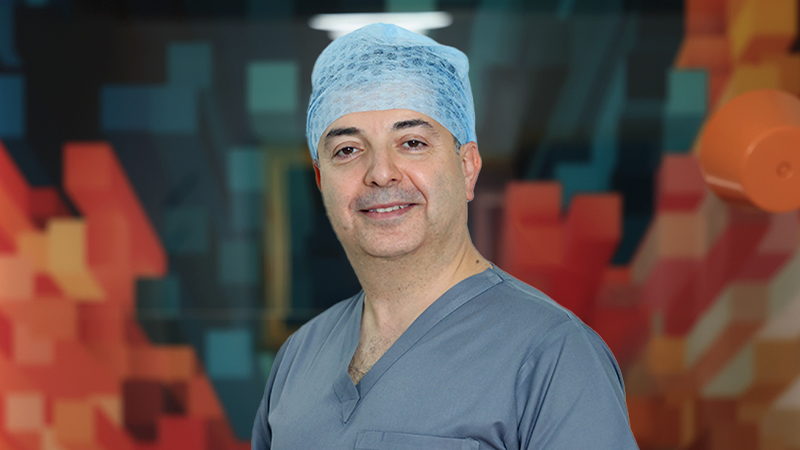
Mr Tariq Ayoub – Consultant Ophthalmic Surgeon
Mr Tariq Ayoub is an experienced cataract and refractive surgeon with a strong focus on functional visual outcomes and precision planning. He regularly advises patients considering monovision, particularly those seeking reduced dependence on glasses without multifocal lenses. His calm, methodical approach helps patients understand the benefits, limitations and suitability of monovision before making a decision.
Mr Samer Hamada is a highly experienced cataract and corneal surgeon with particular expertise in refractive and monovision cataract surgery. He is known for his detailed assessments and for carefully selecting patients who are likely to adapt well to monovision. Patients value his clear explanations and balanced advice when weighing monovision against other lens-based options.
Why Choose London Cataract Centre for Monovision Cataract Surgery?
Dedicated cataract-only clinic
Focused expertise in cataract and lens surgery
Experience with glaucoma patients
Regular management of complex eye conditions
Advanced diagnostics
Optic nerve and pressure-focused assessment
Consultant-led care
No handovers or fragmented decision-making
Honest, pressure-free advice
Clear explanations of benefits and limitations
Outstanding safety record
Outcomes consistently exceed national benchmarks
Frequently Asked Questions
Is cataract surgery safe if I have glaucoma?
Yes, cataract surgery is generally safe for patients with glaucoma. The key is careful assessment and pressure monitoring before and after surgery. Your consultant will tailor the plan to your specific type of glaucoma.
Can cataract surgery lower eye pressure?
In many patients, cataract surgery can lead to a modest reduction in eye pressure. The effect varies between individuals and glaucoma types. It should not be relied on as the sole glaucoma treatment unless advised by your specialist.
Will cataract surgery improve vision if glaucoma is advanced?
Cataract removal can improve clarity and brightness. However, vision already lost from glaucoma cannot be restored. Your consultant will explain what improvement is realistically achievable.
Are multifocal lenses suitable if I have glaucoma?
They are usually not recommended in moderate or advanced glaucoma. This is because they can reduce contrast sensitivity. Your surgeon will explain safer alternatives.
Is recovery different for patients with glaucoma?
Recovery is often similar to non-glaucoma patients. However, closer pressure monitoring may be required after surgery. Follow-up is tailored to your condition.
Book a Consultation for Cataract Surgery with Diabetes
If you have diabetes and are considering cataract surgery, specialist advice is essential.
At London Cataract Centre, we provide consultant-led care designed to protect your eye health while restoring clearer vision.