
Macular Degeneration & Cataract Surgery
Macular Degeneration & Cataract Surgery
Get in Touch
Age-Related Macular Degeneration (AMD) and Cataract Surgery in London
Carefully planned surgery when central vision needs protecting.
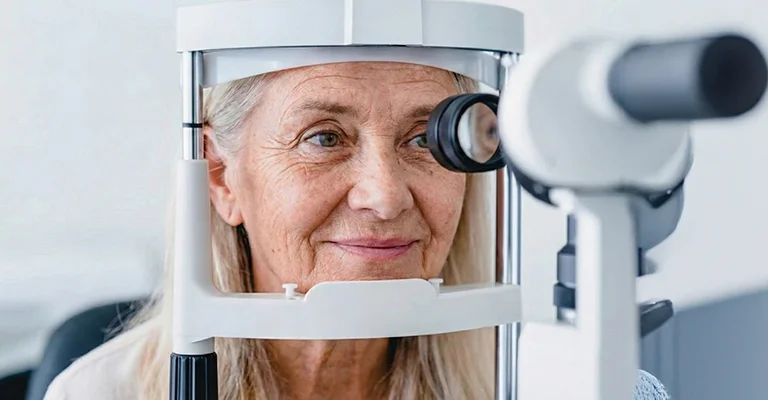
If you have age-related macular degeneration (AMD) and are developing cataracts, it’s understandable to feel uncertain about surgery. AMD affects the macula, which is responsible for central vision, while cataracts cloud the eye’s natural lens — and when both conditions are present, expectations and planning need to be handled carefully.
At London Cataract Centre, we regularly assess and treat patients with AMD who require cataract surgery. Our approach focuses on maximising visual clarity, protecting retinal health and setting realistic expectations, all through consultant-led care.
How AMD Affects Cataract Surgery Outcomes
Cataract surgery does not treat macular degeneration, but it can still play an important role. By removing the cataract, light reaches the retina more clearly, which can improve brightness, contrast and overall visual quality.
However, the degree of visual improvement depends on the severity and type of AMD. This is why careful assessment is essential before deciding whether cataract surgery is likely to be beneficial.
Dry AMD vs Wet AMD: Why the Difference Matters
There are two main forms of AMD, and each influences surgical planning differently:
- Dry AMD tends to progress slowly and may still allow meaningful visual improvement after cataract surgery.
- Wet AMD involves abnormal blood vessel growth and usually requires ongoing retinal treatment, such as injections.
Understanding which type you have — and how active it is — helps guide both timing and expectations for cataract surgery.
The Importance of Retinal and Macular Assessment
Before recommending cataract surgery, your consultant will carefully assess the macula. This allows us to distinguish how much of your vision loss is due to the cataract versus AMD.
Your assessment may include:
- OCT imaging of the macula
- Review of any retinal treatments
- Assessment of AMD stability
- Discussion of realistic visual improvement
This ensures decisions are based on retinal health, not assumptions.
Lens Choice in Patients with AMD
Depending on your retinal health, suitable options may include:
- Monofocal lenses, often preferred for clarity and contrast
- Toric lenses if astigmatism is present
- EDOF lenses in carefully selected cases
Multifocal lenses are generally avoided in patients with AMD, as they can reduce contrast and make central vision issues more noticeable. Your consultant will explain which options are appropriate and why.
Timing Cataract Surgery with AMD
Your consultant will consider:
- Stability of macular disease
- Recent changes in vision
- Ongoing retinal injections or monitoring
- Overall visual benefit versus risk
The goal is to intervene at the safest and most beneficial point.
Consultant-Led Care

Mr Tariq Ayoub
Consultant Ophthalmic Surgeon
Mr Tariq Ayoub is an experienced cataract and refractive surgeon with a strong focus on outcome predictability in patients with macular conditions. He regularly treats patients with both cataracts and AMD, tailoring lens selection and timing to preserve contrast sensitivity and visual function. His calm, structured approach helps patients understand what cataract surgery can — and cannot — improve when macular disease is present.
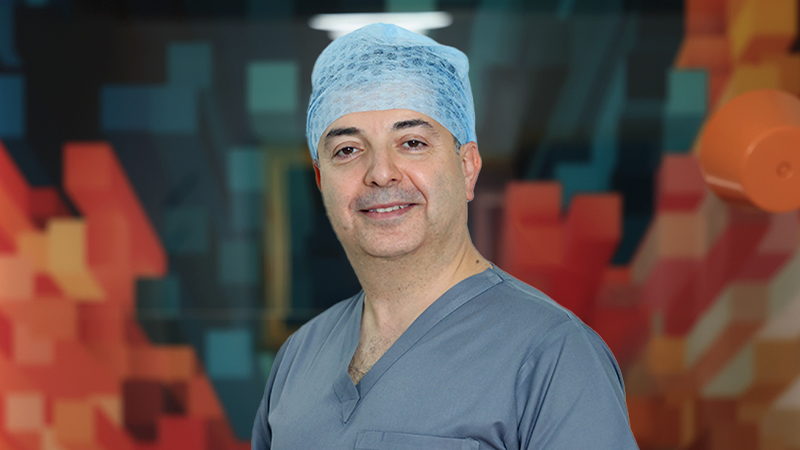
Mr Samer Hamada
Consultant Ophthalmic Surgeon
Mr Samer Hamada is a highly experienced cataract and corneal surgeon with extensive expertise in managing cataract surgery in patients with age-related macular degeneration. He takes a careful, retinal-aware approach to surgical planning, focusing on maximising visual clarity while protecting macular health. Patients value his honest explanations and realistic guidance when balancing cataract removal with underlying retinal disease.
What to Expect from the Consultation
1
Consultant-Led Assessment
You’ll be seen directly by a cataract specialist experienced in managing patients with macular disease.
2
Advanced Retinal Imaging
Detailed OCT scans help assess macular structure and disease activity.
3
Clear Discussion of Expectations
Your consultant will explain what cataract surgery can and cannot improve.
4
Personalised Surgical Planning
Every decision is tailored to your eye health, AMD status and daily visual needs.
Benefits of Specialist AMD-Aware Cataract Care
- Improved brightness and contrast where appropriate
- Avoidance of unsuitable lens choices
- Reduced risk of post-operative disappointment
- Honest guidance on visual potential
- Consultant oversight throughout the process
Why Choose London Cataract Centre?
Dedicated cataract-only clinic
Focused expertise in lens and cataract surgery
Experience with retinal patients
Regular management of AMD-related cases
Advanced macular diagnostics
OCT-led planning for safe decisions
Consultant-led care
No handovers, no rushed assessments
Honest, pressure-free advice
Clear explanation of benefits and limitations
Outstanding safety record
Outcomes consistently exceed national benchmarks
Frequently Asked Questions
Is cataract surgery safe if I have macular degeneration?
Yes, cataract surgery is generally safe for patients with macular degeneration. Careful retinal assessment is essential before surgery to ensure it is appropriate. Your consultant will advise whether cataract surgery is likely to benefit your vision alongside macular degeneration.
Will cataract surgery improve my vision if I have macular degeneration?
Cataract surgery can improve brightness, clarity and contrast in eyes affected by macular degeneration. However, it cannot restore vision that has already been lost due to macular damage. The degree of improvement depends on the type and severity of macular degeneration.
Can cataract surgery make macular degeneration worse?
Current evidence does not show that cataract surgery accelerates macular degeneration. Ongoing monitoring of the macula is still important after surgery. Your consultant will ensure retinal health is carefully followed.
Are multifocal lenses suitable for patients with macular degeneration?
Multifocal lenses are usually not recommended for patients with macular degeneration. They can reduce contrast sensitivity, which may worsen visual quality in macular disease. Safer lens options will be discussed during your consultation.
Is recovery different if I have macular degeneration?
Recovery from cataract surgery is usually similar for patients with and without macular degeneration. Visual improvement may be limited by the underlying macular condition rather than the surgery itself. Your consultant will explain what to expect during recovery.
Book a Consultation for AMD and Cataract Surgery
If you have age-related macular degeneration and are considering cataract surgery, specialist advice is essential.
At London Cataract Centre, we focus on clarity, safety and realistic outcomes — helping you decide whether surgery is right for your eyes.
Contact us today to arrange your consultation.