
RLE Surgery London
RLE Surgery London
Get in Touch
RLE Surgery London (Refractive Lens Exchange)
RLE surgery, also known as Refractive Lens Exchange, is an advanced vision correction procedure designed for patients who want to reduce or eliminate their dependence on glasses or contact lenses. It is commonly considered by people whose vision is no longer suitable for laser eye surgery or who are looking for a long-term refractive solution.
At London Cataract Centre, RLE surgery is performed using modern surgical techniques and advanced intraocular lens technology. Each treatment plan is tailored to the individual, taking into account eye health, lifestyle requirements, and long-term visual goals, with a strong emphasis on safety, precision, and visual clarity.
What Is Refractive Lens Exchange, and How Does It Work?
RLE is a surgical procedure that replaces the natural lens of the eye with a premium intraocular lens (IOL). This high-performance lens is customized to correct common refractive errors like:
- Presbyopia: Difficulty focusing on near objects, often related to aging.
- Myopia: Trouble seeing distant objects.
- Hyperopia: Trouble seeing nearby objects.
- Astigmatism: Blurred or distorted vision due to irregular corneal shape.
Unlike LASIK, which reshapes the cornea, RLE addresses vision correction directly by replacing the lens, offering a permanent solution.
How RLE Is Different From Cataract Surgery?
Although RLE and cataract surgery use similar techniques, they serve different purposes:
- Cataract Surgery: Removes a cloudy natural lens (cataract) to restore clear vision, usually for patients aged 60+.
- RLE: Replaces a clear natural lens to correct vision, ideal for patients aged 40–60.
While cataract surgery is performed for medical necessity, RLE is elective, focusing on refractive correction and eliminating the future risk of cataracts.
Consultation and Assessment:
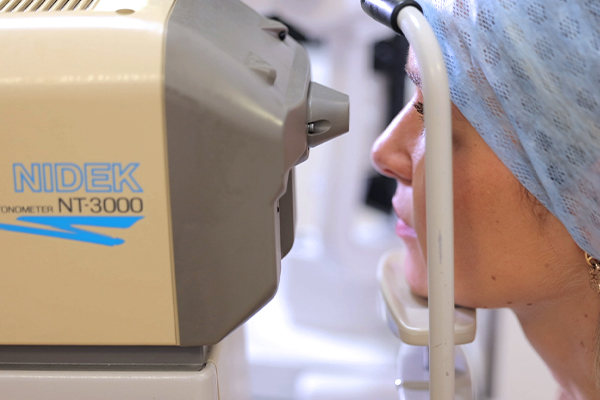
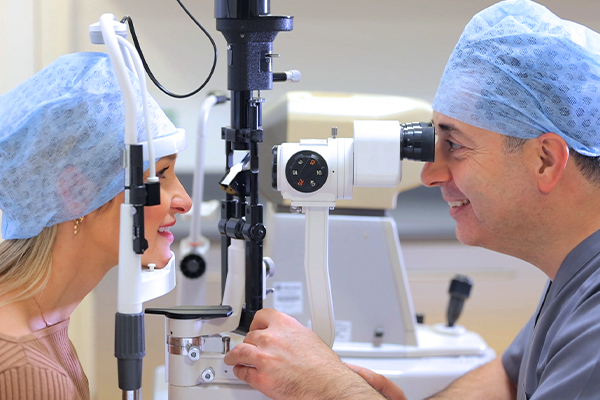
- Comprehensive diagnostic testing, including corneal topography and biometry, determines the best lens for your eye.
- Lifestyle discussions help identify vision goals and select the most suitable IOL.
Preparation for Surgery:
- Local anesthesia (eye drops) ensures a painless experience.
- The procedure is typically performed on one eye at a time, with the second eye treated a week later.
Surgery Process:
- A tiny incision is made at the edge of the cornea.
- The natural lens is removed using phacoemulsification (ultrasound energy).
- The premium IOL is inserted through the same incision, unfolding and positioning itself naturally.
Recovery
- Most patients notice improved vision within days, with complete recovery in a few weeks.
- Follow-up care includes regular check-ups to ensure optimal healing.
Why Is Refractive Lens Exchange Becoming So Popular?
RLE is growing rapidly in popularity worldwide as an effective alternative to LASIK, particularly for patients over 40 or those with high prescriptions.
Over 25 million RLE procedures are performed annually worldwide.
Success rates are extremely high, with 98% of patients reporting satisfaction with their vision post-surgery.
In the UK, RLE has become one of the fastest-growing vision correction procedures, offering a safe and long-lasting solution.
These statistics highlight why RLE is trusted by millions of patients globally.
Who Is a Good Candidate for RLE?
RLE is an excellent option for patients who:
- Are aged 40–60 and experiencing presbyopia or other vision changes.
- Are not candidates for LASIK or PRK due to high prescriptions, thin corneas, or dry eyes.
- Want to eliminate their dependence on glasses or contact lenses.
- Wish to avoid the possibility of developing cataracts in the future.
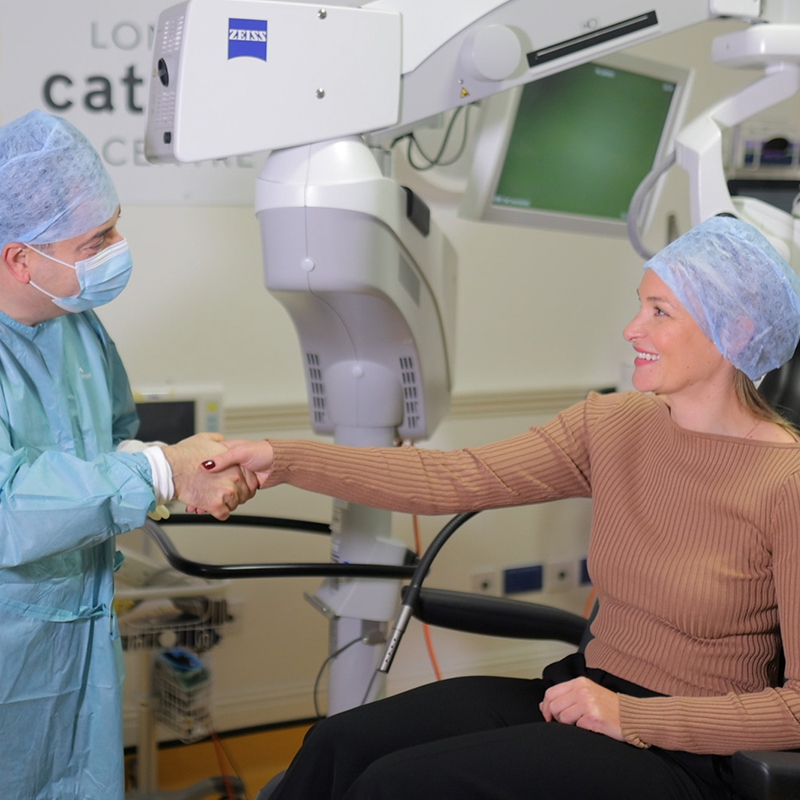
Our surgeons will assess your suitability during a detailed consultation, ensuring you receive the best care for your needs.
Exceptional Care From Leading Surgeons
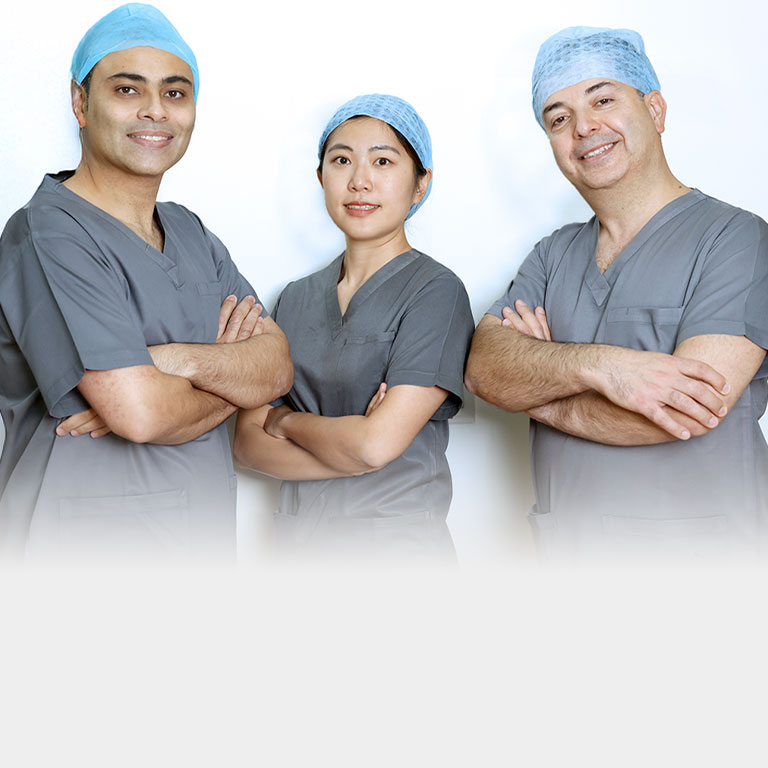
Under the expertise of Mr Hamada and Mr Ayoub, two of the UK’s foremost specialists in refractive lens exchange (RLE) treatments, our team offers unparalleled experience paired with a patient-first philosophy. Renowned for their precision and dedication, they consistently achieve outstanding outcomes for their patients.
Exceptional Care From Leading Surgeons
Under the expertise of Mr Hamada and Mr Ayoub, two of the UK’s foremost specialists in refractive lens exchange (RLE) treatments, our team offers unparalleled experience paired with a patient-first philosophy. Renowned for their precision and dedication, they consistently achieve outstanding outcomes for their patients.
Our Surgeons

Mr Tariq Ayoub
Mr Tariq Ayoub is a Consultant Ophthalmologist at Imperial College Healthcare NHS Trust, overseeing A&E services at the Western Eye Hospital. With extensive expertise in refractive eye surgery, cataract procedures, and the management of corneal conditions, he also serves as the Medical Director of the London Cataract Centre.
Mr Samer Hamada
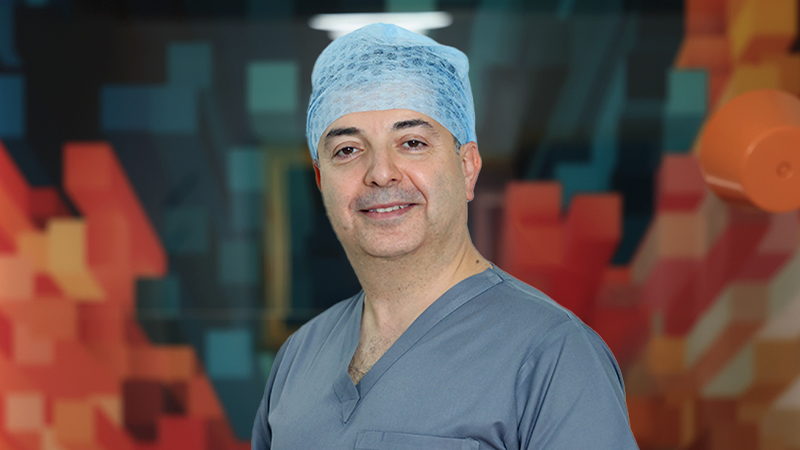
Mr Hamada, Founder and Medical Director of Eye Clinic London and London Cataract Centre, is a globally respected Consultant Ophthalmic Surgeon with over 25 years of experience. He specialises in complex corneal conditions, refractive procedures, and cataract surgery in both adults and children. Trusted worldwide by patients and peers, he is also a leading expert in ocular surface disease and dry eye management.
How do we prepare you for RLE?
- Realistic Goals: While RLE significantly reduces dependence on glasses, some patients may still need them for specific tasks.
- Adjustment Period: Your brain and eyes will take time to adapt to the new lens, especially with multifocal or trifocal lenses.
Managing expectations is a critical part of ensuring satisfaction with Refractive Lens Exchange. While RLE can dramatically improve vision, it’s important to understand the following:
Will my vision be perfect immediately after surgery?
Most patients experience significant improvements within days, but full recovery can take several weeks. During this time, your brain and eyes adapt to the new lens, and your vision sharpens progressively.
What about night vision issues?
Temporary side effects like glares or halos around lights are common, especially with multifocal lenses. These typically diminish within a few weeks or months as your brain adjusts to the new visual inputs.


Will I still need glasses for some tasks?
Premium lenses reduce dependence on glasses, but some patients may still require them for specific activities, depending on their lens type and vision goals.
For example:
- Monofocal lenses often require reading glasses.
- Multifocal or trifocal lenses minimize the need for glasses but may not eliminate it entirely.
Can RLE meet all my vision needs?
Our surgeons work closely with you to set realistic expectations based on your lifestyle and chosen IOL. While RLE provides exceptional vision correction, achieving perfect 20/20 vision in all conditions may not always be possible.
What if I find it difficult to adjust to my new vision?
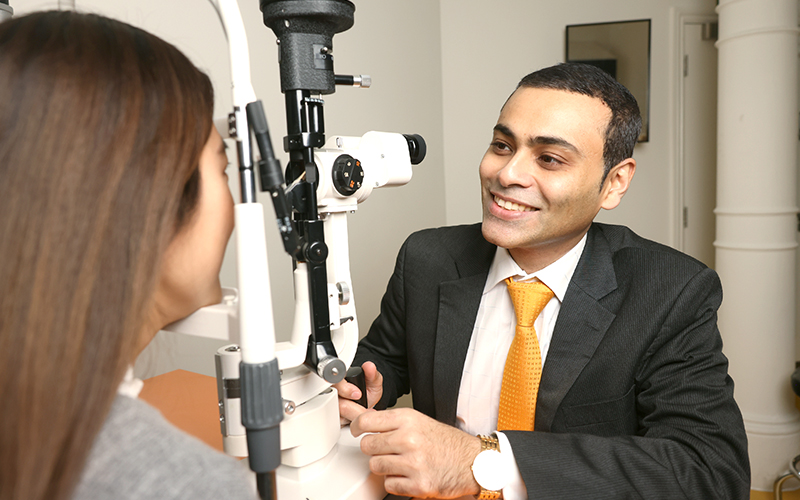
Adjusting to sharper, clearer vision can take time. Some patients may feel overwhelmed by the dramatic improvement or notice subtle changes in perception, such as increased sensitivity to light.
Our team provides:
- Comprehensive Aftercare: Regular follow-up appointments to monitor progress and address concerns.
- Vision Therapy: Exercises and techniques to help your brain and eyes adapt to the new lens.
- Patient Education: Clear guidance on what to expect during the adjustment period.
- We’re here to ensure your transition to enhanced vision is smooth and supported.
What Are the Risks and Benefits of RLE?
Our team provides:
- Cataract Prevention: Replacing the natural lens eliminates the possibility of cataracts.
- Long-Term Vision Correction: IOLs are designed to last a lifetime, providing stable, permanent results.
- Freedom From Glasses and Contacts: Many patients no longer rely on corrective eyewear.
- Customizable Lenses: A wide range of IOLs ensures outcomes tailored to your lifestyle.
Risks:
- Infection or Inflammation: Rare and easily treatable.
- Glare or Halos: Temporary and often resolve within months.
- Posterior Capsule Opacification (PCO): A common condition that is easily corrected with a quick YAG laser procedure.
- Retinal Detachment: Rare but more likely in patients with severe myopia.
At London Cataract Centre, our advanced diagnostics and expert surgeons minimize these risks, ensuring the safest possible outcomes.
Advanced Lens Options for RLE
Which lens is right for me?
At London Cataract Centre, we offer a diverse range of premium intraocular lenses (IOLs) tailored to meet the unique vision needs and lifestyle preferences of our patients. Choosing the right lens is a collaborative process, guided by our expert surgeons, to ensure your lens choice aligns with your vision goals and daily activities.
Enhanced Monofocal Lenses
How do enhanced monofocal lenses improve vision?
Enhanced monofocal lenses are an upgrade to standard monofocal lenses, providing sharp distance vision while offering better depth of focus and contrast sensitivity and added benefit of extended intermediate vision. Unlike standard monofocals, which focus exclusively on one distance, enhanced monofocals allow patients to perform intermediate tasks—such as using computers or checking a car dashboard—without glasses.

Key Features:
- Sharp Distance Vision: Exceptional clarity for outdoor activities like driving or sports.
- Extended Intermediate Vision: Provides some functionality for tasks like working on a laptop or preparing meals.
- Minimal Visual Disturbances: Reduced risk of glare or halos, making them ideal for patients who are sensitive to night vision issues.
How do they compare to multifocal lenses?
While enhanced monofocal lenses offer better intermediate vision than standard monofocals, they don’t provide the full range of near vision that multifocal or trifocal lenses do. Patients choosing enhanced monofocals should be comfortable using glasses for close-up tasks like reading fine print.
Best For:
Patients who want sharp distance vision with some intermediate clarity and prefer a natural visual experience without the potential for halos or glare often associated with multifocal lenses.
Multifocal Lens
What makes multifocal lenses versatile?
Multifocal lenses are designed to provide clear vision across multiple focal points—near, intermediate, and distance—making them a versatile option for patients seeking independence from glasses. These lenses use advanced optical designs to split light into focal zones, enabling clear vision for a variety of tasks.
Key Features:
- Full Range of Vision: Ideal for reading, computer work, and outdoor activities.
- Reduced Dependence on Glasses: Many patients find they rarely need glasses after surgery.
- Balanced Light Distribution: Enhanced clarity in various lighting conditions.
How do they compare to EDOF lenses?
Multifocal lenses are better suited for patients who prioritize near and intermediate vision equally, whereas EDOF lenses excel at intermediate and distance vision, with less emphasis on near tasks. Multifocal lenses may cause more halos and glare compared to EDOF lenses, especially at night.
Best For:
Patients who want a balanced solution for all focal ranges and are comfortable with a short adaptation period for night vision adjustments.
EDOF (Extended Depth-of-Focus) Lenses
What sets EDOF lenses apart??
EDOF lenses are an innovative option that provides an extended range of vision, bridging the gap between monofocal and multifocal lenses. They are designed to deliver a smooth transition from distance to intermediate, with functional near vision.
Key Features:
- Seamless Vision Range: Ideal for tasks like computer work, driving, and casual reading.
- Minimized Visual Disturbances: Reduced risk of glare and halos compared to multifocal lenses.
- Low Dependence on Glasses: Effective for a wide range of activities without requiring frequent glasses use.
Best For:
Patients with active lifestyles who want greater visual freedom for distance and intermediate tasks while maintaining some near vision capabilities.
EDOF (Extended Depth-of-Focus) Lenses
What are trifocal lenses, and how do they work?
Trifocal lenses are designed to provide clear and balanced vision across all three focal points—near, intermediate, and distance. They are an excellent choice for patients seeking maximum visual independence from glasses.
Key Features:
- Comprehensive Clarity: Sharp focus for reading, using digital devices, and outdoor activities.
- Seamless Transitions: Effortlessly switch between near, intermediate, and distance tasks.
- Advanced Light Distribution: Enhanced optics ensure consistent vision quality in various lighting conditions.
- High Glasses-Free Success Rates: Many patients achieve near-total freedom from corrective eyewear.
Best For:
Patients who want maximum independence from glasses and lead visually demanding lifestyles requiring sharp focus at all distances.
Toric Lenses
What are trifocal lenses, and how do they work?
Toric lenses are specifically designed to correct astigmatism, a common refractive error caused by irregular corneal curvature. These lenses provide sharp and distortion-free vision while addressing other refractive errors like myopia or hyperopia.
Key Features:
- Astigmatism Correction: Eliminates blurriness caused by corneal irregularities.
- Stable Vision: Provides consistent and precise visual outcomes without the fluctuations associated with glasses or contact lenses.
- Multi-Distance Clarity: Available as monofocal, multifocal, or EDOF options for comprehensive correction.

Best For:
Patients with astigmatism who want precise, sharp vision across a range of distances and activities.
How Do You Choose the Right Lens?
What factors influence lens selection?
Selecting the ideal lens involves a comprehensive evaluation of your eye health, vision needs, and lifestyle. At London Cataract Centre, we guide this decision using:
Advanced Diagnostics:
- Corneal Topography: Maps the cornea’s shape to identify irregularities.
- Biometry: Measures your eye’s dimensions for accurate lens fitting.
- Wavefront Analysis: Evaluates how light travels through your eye to determine the best lens option.
Lifestyle Assessment:
- Active individuals may prefer EDOF or trifocal lenses for their versatility.
- Patients with specific focal needs may benefit from enhanced monofocal lenses.
Personal Preferences:
- Patients seeking maximum freedom from glasses often choose multifocal or trifocal lenses.
- Those with night vision concerns may prefer EDOF or enhanced monofocal lenses.
Making the Best Choice for Your Vision
Each lens type offers unique advantages, and the best choice depends on your individual goals and daily activities. Whether you’re looking for seamless transitions between distances, enhanced clarity for specific tasks, or a tailored solution for astigmatism, London Cataract Centre has the expertise and technology to deliver exceptional results.
Frequently Asked Questions
How long does RLE surgery take?
The procedure takes approximately 15–30 minutes per eye.
Will I need glasses after RLE?
Many patients no longer need glasses for most activities, but this depends on the chosen lens and specific tasks.
Is RLE painful?
No. The procedure is performed under local anesthesia, and most patients report minimal discomfort.
How long does recovery take?
Most patients notice improvements within days, with full recovery in a few weeks.
Can RLE prevent cataracts?
Yes. By replacing the natural lens, RLE eliminates the risk of developing cataracts.

Take the First Step Toward Clear Vision
Experience the life-changing benefits of ICL at London Cataract Centre. Our expert team is dedicated to providing personalised care and exceptional results.
Contact us today to schedule your consultation and discover if ICL is the right solution for you.