



If you are considering ICL treatment, one of the most important questions you may have is how surgeons decide which lens is right for you. It is a completely fair question, especially when you are thinking about a procedure involving your eyes. Everyone’s vision is different, so the choice is never the same for every patient. Understanding this process can help you feel more at ease.
It is natural for you to feel that this is a big step, and wanting clarity is part of making a confident decision. Your eyes are unique, and the goal is to find a solution that suits your specific needs. Surgeons take several factors into account before recommending a lens. This ensures the outcome is both safe and effective for you.
In this guide, you will be walked through the process in a clear and reassuring way. You will learn how surgeons assess your eyes and what influences their decision. This will help you understand why the approach is so personalised. By the end, you should feel more confident about how the right lens is chosen for you.
Before we go any further, it is important for you to know that this content is completely original and written in a conversational style. The aim is to make everything easy for you to understand without unnecessary complexity. Each part is designed to guide you step by step. This way, you can feel informed and comfortable as you learn more.
What Is an ICL Lens?
Let’s start with the basics so you can clearly understand how this treatment works. An Implantable Collamer Lens, or ICL, is a small and flexible lens placed inside your eye. It is designed to correct your vision without removing or altering your natural eye structure. This makes it a suitable option if you are exploring alternatives to laser procedures.
Unlike laser eye surgery, ICL does not reshape your cornea. Instead, it works by adding a lens inside your eye to improve how light focuses on your retina. Your natural lens remains in place, which helps preserve the eye’s normal function. This approach allows for effective vision correction without changing the surface of your eye.
You can think of an ICL as a permanent, invisible contact lens inside your eye. Once it is in position, you will not feel it or notice it in your daily life. There is no need to remove it or carry out regular maintenance. It simply works continuously to provide you with clearer and more stable vision.
Why Choosing the Right Lens Matters
You might be thinking that all ICL lenses are essentially the same, but that is not the case. While they may look similar, they are designed for different types of vision correction. This means the choice of lens plays a very important role in your outcome. Understanding this helps you see why the decision matters.
Different lens types are created to correct specific vision problems. If the wrong type is chosen, it may not fully address your needs. As a result, your vision may not be as clear or precise as it could be. This is why careful selection is essential for achieving the best results.
Surgeons take a very detailed and personalised approach when recommending a lens for you. They assess your eyes thoroughly to understand your exact requirements. The goal is not just to improve your vision, but to optimise it as much as possible. This ensures you receive the most suitable and effective solution.
Step One: Understanding Your Prescription
The first thing your surgeon will look at is your prescription, as this provides a clear starting point. It helps them understand the type and level of vision correction you need. Whether you are short-sighted, long-sighted, or have a combination of both, this information is essential. It forms the foundation for choosing the right lens.
Your prescription also indicates how severe your vision issue is. ICL lenses are particularly effective if you have moderate to high levels of short-sightedness. In many cases, they can offer clearer and more stable results compared to other options. This makes them a strong choice for certain prescriptions.
If your prescription falls within a suitable range, you are more likely to benefit from this type of treatment. Your surgeon will use this information to determine if ICL is appropriate for you. It also helps guide the selection of the most suitable lens type. This ensures your treatment is tailored to your specific vision needs.
The Role of Astigmatism
Astigmatism is an important factor when determining the most suitable lens for vision correction. It occurs when the eye has an irregular shape, causing light to focus unevenly on the retina. This can result in blurred or distorted vision, even if other refractive errors are corrected. Understanding its impact helps ensure that the chosen lens provides the most accurate and effective visual outcome.
- Irregular Eye Shape: Astigmatism is caused by an uneven curvature of the cornea or lens inside the eye. Instead of focusing light at a single point, the eye creates multiple focal points. This leads to distorted or unclear vision at various distances.
- Limitations of Standard ICL Lenses: Standard ICL lenses are designed to correct basic refractive errors like short-sightedness or long-sightedness. However, they do not address the uneven curvature associated with astigmatism. As a result, vision may remain blurry even after implantation.
- Need for Toric ICL Lenses: Toric ICL lenses are specifically engineered to correct astigmatism along with the primary prescription. Their design compensates for the irregular shape of the eye. This allows for more precise and balanced light focusing.
- Improved Visual Clarity: By correcting astigmatism effectively, toric lenses help deliver sharper and more stable vision. Patients often experience reduced distortion and better overall clarity. This makes a significant difference in everyday visual tasks.
In conclusion, astigmatism plays a key role in determining whether a standard or toric ICL lens is needed. While standard lenses may correct basic vision issues, they are not sufficient for irregular eye shapes. Toric lenses provide a targeted solution that enhances visual accuracy. Ultimately, addressing astigmatism ensures clearer, sharper, and more reliable vision outcomes.
Measuring Your Eye in Detail
This is the stage where things become a little more technical, but it can still be easy for you to understand. Your surgeon will carry out a series of detailed measurements of your eye. These tests are far more precise than a standard eye examination. They are essential for planning your treatment accurately.
During this process, your surgeon will assess specific areas of your eye. This includes measuring the depth of your anterior chamber, which is the space where the lens will be placed. They will also check the curvature of your cornea and the overall size of your eye. Each of these measurements provides important information.
All of this data helps determine the correct lens size and type for you. Choosing the right fit is crucial for both safety and visual results. A well-matched lens will sit comfortably and function properly inside your eye. This careful approach ensures your treatment is tailored to your individual needs.
Why Lens Size Is So Important
Choosing the right lens size is not just about comfort, it is also essential for your safety and visual performance. The lens needs to fit your eye accurately to work as intended. Even small differences in size can affect the outcome. This is why careful planning is so important.
If the lens is too small or too large, it may not sit correctly inside your eye. This can affect how well it corrects your vision and how stable it remains over time. You may not achieve the level of clarity expected. In some cases, it could also lead to additional issues.
Because of this, precise measurements are absolutely critical during the assessment process. Your surgeon uses detailed data to select the most suitable lens size for you. This helps ensure the lens fits securely and functions properly. As a result, you can achieve safe and effective vision correction.
Evaluating the Health of Your Eye
Your overall eye health is another important factor that your surgeon will carefully assess. It is not just about correcting your vision, but also ensuring your eyes are healthy enough for the procedure. A thorough examination helps identify anything that could affect your results. This step is essential for safe and effective treatment.
During this evaluation, your surgeon will check for any underlying conditions. This may include issues such as dry eye, the health of your cornea, and the condition of your retina. Each of these factors can influence how well your eyes respond to surgery. Identifying them early helps avoid potential complications.
If any concerns are found, they will need to be managed before moving forward. Your surgeon may recommend treatment or allow time for your eyes to stabilise. The goal is to ensure your eyes are in the best possible condition before surgery. This careful approach helps improve both safety and long-term results.
Considering Your Lifestyle
This is something many people do not expect, but it is a very important part of the decision-making process. Your lifestyle plays a key role in determining which lens is most suitable for you. Vision correction is not only about what your eyes need, but also how you use them every day. Understanding this helps create a more personalised outcome.
For example, if you spend a lot of time working on screens or reading, your visual priorities may be different. You may need more support for near or intermediate vision. On the other hand, someone who focuses on activities like driving or sports may prioritise distance vision. These differences influence the type of correction that will work best for you.
Your surgeon will take the time to discuss your daily activities and visual expectations in detail. This helps them understand what matters most in your routine. Based on this, they can recommend a lens that aligns with your lifestyle. This approach ensures your vision is not just improved, but also suited to how you live.
Standard vs Toric ICL: Making the Choice
Choosing between standard and toric ICL lenses ultimately comes down to your eye’s specific needs rather than personal preference. Both options are designed to improve vision, but their effectiveness depends on the type of refractive error present. Astigmatism is the key factor that guides this decision. By aligning the lens choice with your eye’s natural shape, you can achieve the best possible visual outcome.
- Presence of Astigmatism: The most important factor in this decision is whether you have astigmatism. If your eye has a regular shape, a standard lens may be sufficient. However, irregular curvature requires a more specialised approach.
- When Standard Lenses Work Best: Standard ICL lenses are ideal for patients without significant astigmatism. They effectively correct common vision issues like short-sightedness or long-sightedness. This makes them a reliable and straightforward option for many individuals.
- When Toric Lenses Are Preferred: Toric ICL lenses are typically recommended for patients with astigmatism. They are designed to correct both the primary refractive error and the uneven curvature of the eye. This ensures clearer and more precise vision.
- Matching the Lens to Your Eye: The decision is not about choosing what seems better, but what fits your eye’s natural structure. Each lens type is tailored to address specific visual needs. Proper matching leads to more accurate and satisfying results.
In conclusion, the choice between standard and toric ICL lenses depends on the presence and extent of astigmatism. While standard lenses work well for simpler prescriptions, toric lenses provide a targeted solution for more complex vision issues. A thorough eye assessment helps determine the most suitable option. Ultimately, selecting the right lens ensures clearer, more comfortable, and more reliable vision.
The Impact of Modern Lens Technology
Advances in ICL technology have made the process of choosing the right lens more precise than ever. Modern designs allow your surgeon to tailor the treatment more closely to your individual needs. This means you can benefit from improved accuracy and better overall results. As a result, your vision correction can feel more reliable and refined.
Many modern lenses now include features such as a central port design, which helps them work more naturally with your eye. This allows fluid to circulate properly within your eye after the lens is placed. Maintaining this natural flow is important for supporting long-term eye health. It also contributes to a smoother recovery experience.
Because of these improvements, your surgeon is not only focusing on your immediate vision needs. They are also considering how the lens will perform over time. This long-term approach helps ensure lasting comfort and stability. It means your treatment is designed with both present and future outcomes in mind.
Personalised Calculations and Planning
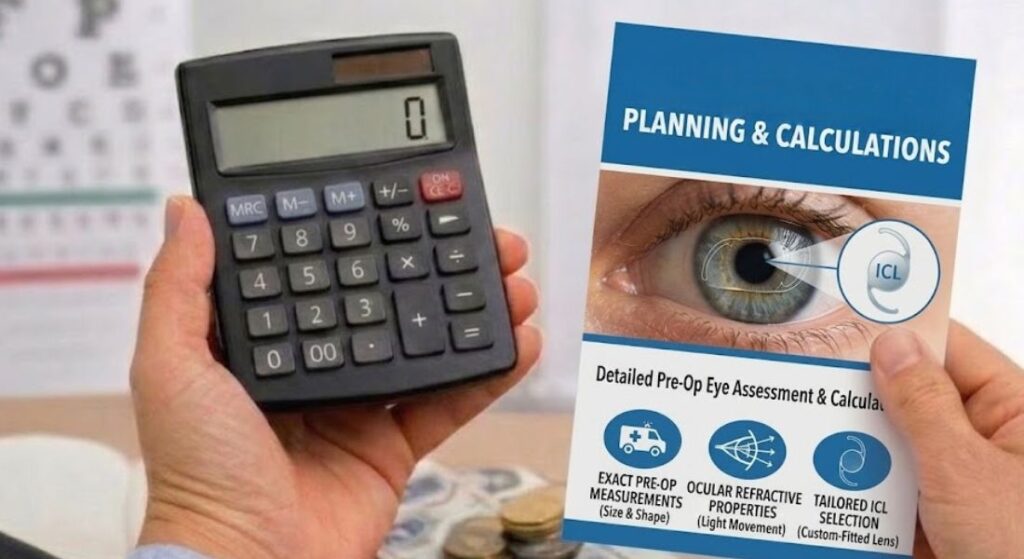
Once all your measurements have been taken, your surgeon uses specialised calculations to determine the most suitable lens for you. These calculations are highly detailed and designed to ensure accuracy. They help match the lens to your eye as precisely as possible. This step is essential for achieving the best visual outcome.
The process considers multiple factors at the same time rather than focusing on just one aspect. Your prescription is important, but it is only one part of the overall picture. The shape of your eye, its size, and how light moves within it are also taken into account. All of these elements work together to guide the final decision.
This is what makes ICL treatment so precise and personalised for you. Every detail is carefully analysed to create a solution tailored to your needs. Your surgeon aims to optimise not just clarity, but also comfort and long-term performance. As a result, you can expect a more accurate and effective vision correction experience.
Trial Lenses and Simulation
In some cases, your surgeon may use trial lenses or simulation tools to show you what your vision could be like after surgery. This step helps you better understand the expected outcome. It gives you a clearer idea of how your eyesight may improve. This can make the process feel more real and easier to visualise.
Although it is not an exact preview, it provides a helpful estimate of your results. You can see how your vision might change in different situations. This can help you set realistic expectations before the procedure. It also allows you to feel more prepared for what is to come.
This stage also gives you the opportunity to ask questions and discuss any concerns. You can talk through different options and understand what each choice means for you. Your surgeon can guide you based on these discussions. As a result, you can feel more confident and comfortable with your decision.
Balancing Expectations and Outcomes
It is important for you to have realistic expectations when considering ICL surgery. While the procedure can deliver excellent results, no treatment can guarantee perfect vision in every situation. Understanding this helps you approach the process with the right mindset. It also allows you to appreciate the improvements more clearly.
Your surgeon will take the time to explain what you can realistically expect from the procedure. This includes discussing how your vision is likely to improve and any limitations that may remain. In some cases, you may still need glasses for specific tasks such as reading or detailed work. Having this clarity helps you make a well-informed decision.
Honest communication is a key part of the entire process. You should feel comfortable asking questions and discussing any concerns you may have. This open approach helps build trust and ensures you fully understand your options. As a result, you can move forward with confidence and clear expectations.
Safety Considerations
Safety is always the top priority when considering any form of vision correction. Lens selection is based on a thorough evaluation of your eye health and individual suitability. Surgeons take a cautious and personalised approach to ensure the procedure is appropriate for you. The focus is always on achieving effective results while maintaining the highest level of safety.
- Comprehensive Suitability Assessment: Before recommending ICL, your surgeon will conduct detailed examinations of your eyes. These tests evaluate factors such as eye structure, health, and prescription stability. This ensures the procedure is safe and appropriate for your specific condition.
- Patient-First Approach: The recommendation for ICL is never made lightly or as a default option. Surgeons prioritise what is best for your long-term eye health. This means the decision is always guided by medical suitability rather than preference.
- Alternative Options if Needed: If ICL is not suitable, your surgeon will discuss other vision correction methods. These alternatives are chosen based on your individual needs and eye condition. The goal is to find a safe and effective solution, even if it’s not ICL.
- Focus on Safe Outcomes: Every step of the process is designed to minimise risk and maximise results. From initial assessment to post-procedure care, safety remains the central focus. This approach helps ensure a smooth and successful vision correction journey.
In conclusion, safety considerations play a crucial role in determining whether ICL is the right choice for you. Surgeons carefully assess your eyes and only proceed if the procedure is suitable. If not, they guide you toward better alternatives. Ultimately, the goal is to provide the safest and most effective vision correction tailored to your needs.
The Consultation Process
Your consultation is the stage where everything comes together and starts to make sense. It is a key part of your journey, as it brings together all the measurements and assessments. This is where your treatment plan begins to take shape. It also helps you feel more informed about what lies ahead.
This is your opportunity to ask questions and fully understand your options. You can discuss any concerns, preferences, or expectations you may have. Your surgeon will take the time to explain everything in a clear and simple way. This helps ensure you feel comfortable with the information provided.
Your surgeon will also explain their recommendations and the reasons behind them. You will be guided through the decision rather than simply being told what to do. This makes the process collaborative rather than one-sided. As a result, you can feel more confident and involved in your treatment choice.
Why Experience Matters

Choosing the right lens is not only about the technology being used, but also about the expertise behind it. The skill and judgement of your surgeon play a crucial role in your overall outcome. Even with advanced tools, experience is what ensures everything is used correctly. This makes a real difference to your results.
An experienced surgeon knows how to interpret detailed measurements accurately. They can assess how different factors within your eye work together. This allows them to make informed decisions that are tailored specifically to you. It also helps ensure the lens selected is the best possible match.
They are also able to anticipate potential challenges before they arise. This means they can plan the procedure carefully and reduce risks. Their knowledge helps create a smoother and more predictable experience for you. As a result, their experience can have a significant impact on your final visual outcome.
Exploring Your Options Further
If you are considering this type of treatment, it is worth taking the time to learn more about how the procedure works in detail. Understanding each stage can help you feel more prepared and less uncertain about what to expect. The more informed you are, the easier it becomes to make a confident decision. This also helps you feel more in control of the process.
You can explore more about ICL surgery in London to gain a clearer understanding of the procedure, its benefits, and what to expect from a specialist clinic. Looking into trusted information can give you insight into how the treatment is carried out. It also helps you understand the level of care and expertise involved. This can make your consultation more meaningful.
Taking the time to research properly can make a real difference in how confident you feel moving forward. You will be better prepared to ask the right questions and understand the answers you receive. This ensures your decision is based on clear and accurate information. As a result, you can approach the process with greater clarity and peace of mind.
What Makes the Process So Personalised
By now, you have probably realised something important about ICL treatment. There is no single “best” lens that works for everyone. Each decision is made based on your individual needs and eye characteristics. This is what makes the process so unique to you.
Everything is carefully tailored to suit your specific situation. Your prescription, the structure of your eye, and your overall eye health are all taken into account. Your daily lifestyle and visual expectations also play a significant role. These factors work together to guide the final choice.
This personalised approach is what makes ICL treatment so effective. It allows your surgeon to create a solution that fits you as closely as possible. As a result, you can achieve better comfort, clarity, and long-term satisfaction. It ensures your vision correction is designed specifically for you.
The Role of Follow-Up Care
Choosing the right lens does not end once your surgery is complete. Follow-up care is an essential part of the overall process. It ensures that your eyes are healing properly and that the lens is working as expected. This stage is just as important as the procedure itself.
During your follow-up visits, your surgeon will carefully monitor your recovery and visual outcomes. They will check how your eye is responding to the lens and whether your vision is improving as planned. These appointments help identify any concerns early. This allows for timely support if needed.
If any adjustments or additional care are required, your surgeon will guide you through the next steps. You will receive clear advice on how to protect your eyes and maintain your results. This ongoing support helps ensure the best possible outcome for you. It also gives you reassurance throughout your recovery journey.
Long-Term Vision Goals
When selecting an ICL lens, the focus goes beyond just immediate visual improvement. Surgeons take a long-term perspective to ensure your vision remains stable and satisfactory over time. This involves careful planning and consideration of how your eyes may respond in the future. By prioritising lasting results, the goal is to provide a solution that continues to perform well for years to come.
- Focus on Lasting Results: The aim is not just to improve vision temporarily, but to deliver consistent clarity over the long term. Surgeons consider how well the lens will maintain its effectiveness. This helps ensure ongoing visual comfort and reliability.
- Future Eye Changes: Your eyes can change over time, and this is taken into account during planning. Factors such as age and natural vision shifts are considered. This helps in selecting a lens that remains suitable in the years ahead.
- Stable Vision Performance: Long-term success depends on how stable your vision remains after the procedure. Surgeons choose lenses that are known for predictable and durable outcomes. This reduces the likelihood of future complications or adjustments.
- Patient Satisfaction Over Time: The ultimate goal is long-term satisfaction with your vision. A well-planned procedure ensures that patients continue to experience clear and comfortable sight. This forward-thinking approach improves overall confidence in the treatment.
In conclusion, long-term vision goals are a key part of the decision-making process when selecting an ICL lens. Surgeons carefully consider not only immediate results but also how your vision will perform in the future. This ensures a more stable and satisfying outcome over time. Ultimately, the goal is to provide clear, reliable vision that lasts for years to come.
Making Your Decision

At some point, you will need to decide whether to move forward with the treatment. This can feel like a big step, so it is important that you take your time. You should never feel rushed into making a choice. A well-considered decision will always feel more comfortable.
Your decision should be based on clear and reliable information. You should understand why a particular lens has been recommended for you. Knowing the reasoning behind it can help build your confidence. It also ensures that you feel fully involved in the process.
If you feel unsure at any stage, it is always okay to ask more questions. Your surgeon is there to support you and provide clarity. Open communication will help address any concerns you may have. This way, you can move forward feeling informed and confident about your choice.
FAQs:
1. How do surgeons decide which ICL lens is right for me?
Surgeons choose the right ICL lens by assessing your prescription, eye measurements, presence of astigmatism, and overall eye health. They also consider your lifestyle and visual needs to recommend the most suitable option.
2. Why is my prescription important when choosing an ICL lens?
Your prescription shows the type and level of vision correction you need. It helps determine whether ICL is suitable for you and guides the selection of the correct lens type.
3. How does astigmatism affect the choice of ICL lens?
If you have astigmatism, your surgeon will usually recommend a toric ICL lens. This type is designed to correct both your main prescription and the uneven curvature of your eye.
4. What measurements are taken before choosing an ICL lens?
Your surgeon will measure the depth of your eye, corneal curvature, and overall eye size. These detailed measurements ensure the lens fits properly and works effectively.
5. Why is the size of the ICL lens important?
The lens must fit your eye accurately to remain stable and provide clear vision. An incorrect size can affect both comfort and visual results.
6. Can my lifestyle influence the type of ICL lens recommended?
Yes, your daily activities and visual priorities play an important role. For example, your needs may differ depending on whether you spend more time reading, using screens, or focusing on distance tasks like driving.
7. What is the difference between standard and toric ICL lenses?
Standard ICL lenses correct general refractive errors, while toric lenses are designed to also correct astigmatism. The choice depends on your specific eye condition.
8. Do surgeons use any tools to predict my results?
In some cases, surgeons may use simulations or trial lenses to give you an idea of how your vision might look after the procedure. This helps set realistic expectations.
9. What happens if I am not suitable for ICL lenses?
If ICL is not the right option for you, your surgeon will recommend alternative treatments based on your eye condition. The focus is always on finding a safe and effective solution.
10. Is the ICL lens choice permanent?
The lens is designed for long-term use, but it can be removed or replaced if needed. This provides flexibility if your vision or needs change in the future.
Final Thoughts: A Personalised Approach to Choosing the Right ICL Lens
Choosing the right ICL lens is not a one-size-fits-all decision, but a carefully tailored process designed around your unique eyes and vision needs. From your prescription and eye measurements to the presence of astigmatism and your daily lifestyle, every detail plays an important role in guiding the final recommendation. This personalised approach ensures that your vision correction is not only effective but also aligned with how you live your life, giving you the best possible outcome.
If you are considering taking the next step, learning more about ICL Surgery in London can help you better understand how this tailored process works in practice. A thorough consultation will give you clarity, confidence, and the reassurance that your treatment is designed specifically for you. If you’re looking for ICL surgery in London, you can get in touch with us at London Cataract Centre.
References:
- Wang, Q., Zhou, X., Zhou, X., Chen, W. and Yu, Z. (2023) Retinal and choroidal changes following implantable collamer lens V4c implantation in high myopia patients: a 1-year follow-up study, Diagnostics, 13(19), p. 3097. Available at: https://www.mdpi.com/2075-4418/13/19/3097
- Nakamura, T., Isogai, N., Kojima, T., Yoshida, Y. and Sugiyama, Y. (2020) Optimization of implantable collamer lens sizing based on swept-source anterior segment optical coherence tomography, Journal of Cataract & Refractive Surgery, 46(5), pp. 742–748. Available at: https://pubmed.ncbi.nlm.nih.gov/32358270/
- Abdelmassih, Y., El-Khoury, S., Chelala, E. and Jarade, E. (2017) Anterior chamber changes after implantable collamer lens implantation in high myopia using Pentacam: a prospective study, Clinical Ophthalmology, 11, pp. 2037–2044. Available at: https://pmc.ncbi.nlm.nih.gov/articles/PMC5693826/
- Macarro-Merino, A. et al. (2025) Iridocorneal angle changes after implantable collamer lens (ICL) implantation: A 10-year follow-up study. Available at: https://www.sciencedirect.com/science/article/abs/pii/S0181551225003559
- Oleszko, A.A. et al. (2021) Horizontal and anterior chamber diameter for phakic intraocular lens sizing. Clinical & Experimental Optometry (Oxford Academic). Available at: https://pubmed.ncbi.nlm.nih.gov/32519362/