


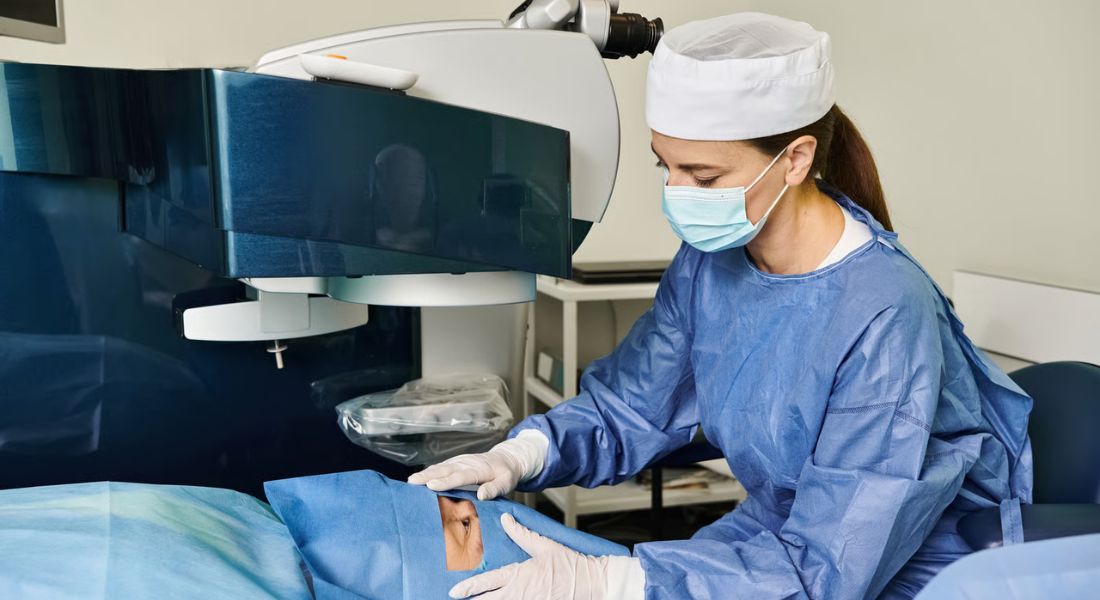
When I speak to you before refractive lens exchange, one concern comes up more often than you might expect: “What if I swallow or accidentally move my head during surgery?” It is a completely natural question to ask. Swallowing is something you do without thinking, and the idea of staying perfectly still can feel like a lot of pressure. Many patients share this worry before their procedure.
The reassuring truth is that RLE surgery is designed with these natural movements in mind. You are not expected to remain completely motionless like a statue. Your body does not need to “switch off” its normal functions for the procedure to be safe. Everything is planned to work comfortably with your natural behaviour.
In practice, small movements such as swallowing or slight head shifts are anticipated and carefully managed. The surgical team is always in control and ready to respond if needed. You will be guided gently throughout the procedure to help you stay comfortable. This ensures the experience remains smooth, safe, and well controlled.
Even if you do swallow or move your head slightly, it does not cause harm or affect the outcome. The procedure can be paused briefly if needed, and you will be calmly guided back into position. There is no urgency or pressure at any point. Overall, you can feel confident that everything is handled safely and professionally.
Understanding What RLE Surgery Involves
Before we focus on movement, I want to give you a clear and simple picture of what actually happens during RLE surgery. This helps you feel more prepared and reduces any uncertainty. When you understand the process, it becomes much less intimidating. It also allows you to approach the procedure with greater confidence.
Refractive lens exchange involves carefully removing your eye’s natural lens and replacing it with an artificial intraocular lens to improve your vision. It is a highly refined procedure, very similar to cataract surgery. The aim is to provide clearer vision and reduce your dependence on glasses. It is a well-established and effective treatment.
You remain awake throughout the procedure, but your eye is numbed using anaesthetic drops to keep you comfortable. Because you are aware, it is natural to wonder how actions like swallowing or slight head movement might affect things. The reassuring news is that the procedure is designed to safely manage these natural movements. You will be guided throughout, so there is no need to feel concerned.
Why Patients Worry About Movement
If you are anything like many of the people I see, you might imagine that even a very small movement could disrupt the surgery. This is a common and completely understandable concern. It often comes from not knowing exactly how controlled the procedure is. Many patients feel this way before they have a clear explanation.
This worry usually comes from the idea that the eye is extremely delicate and must remain perfectly still at all times. It can feel like any slight movement would cause a problem. While precision is certainly important, the procedure does not rely on absolute stillness. Modern techniques are designed with a much more practical approach in mind.
In reality, modern eye surgery is built to safely manage small, natural movements. Surgeons are trained to work with these movements rather than against them. This means you do not need to put pressure on yourself to stay completely still. Understanding this can take a huge weight off your mind and help you feel more relaxed.
How Your Head Is Positioned During Surgery
Let me reassure you straight away: your head is carefully supported throughout the entire procedure. You are not expected to hold it in position on your own. Everything is arranged to keep you comfortable while maintaining stability. This support helps the surgery proceed smoothly.
You will lie comfortably on a surgical bed, with your head resting in a specially shaped headrest. This design helps keep your head steady without causing any discomfort. It naturally reduces unnecessary movement while allowing you to remain relaxed. The position is gentle and does not feel restrictive.
In many cases, additional positioning aids may be used to help keep your head aligned. You are not being forced into place, but simply supported in a natural way. This allows your body to remain at ease throughout the procedure. The goal is to keep everything steady while ensuring you feel comfortable at all times.
What Happens If You Swallow During Surgery?
Swallowing is something your body does naturally and automatically, and it is not something you can realistically hold back for long. Many patients worry about this, especially when they are thinking about staying still during surgery. It is a completely normal concern to have. You are not expected to control this reflex.
The good news is that swallowing does not interfere with RLE surgery in any meaningful way. When you swallow, there may be a slight movement in your neck or jaw. However, this does not cause any significant movement in the eye itself. The surgical area remains stable and controlled.
From a surgical perspective, this is considered completely normal and harmless. Surgeons expect these small, natural movements and are fully prepared for them. There is no risk to your safety or the outcome of the procedure. You can feel reassured that swallowing will not cause any problems during surgery.
Why Swallowing Doesn’t Affect Eye Position
Your eye and your throat are not directly linked in a way that would cause your eye to suddenly move when you swallow. They are controlled by separate systems in your body. This means one action does not significantly interfere with the other. It is a reassuring point that many patients find helpful to understand.
The movements involved in swallowing are subtle and controlled by different muscle groups than those responsible for eye positioning. These actions happen smoothly and without causing disruption. Your eye remains stable even when your body carries out this natural reflex. This separation is what keeps the surgical area steady.
Because of this, any motion that does occur is very minimal and does not affect the surgical field. From a surgical perspective, swallowing is completely expected. It is safely accounted for as part of the procedure. In simple terms, there is nothing to worry about if you need to swallow.
What If You Move Your Head Slightly?
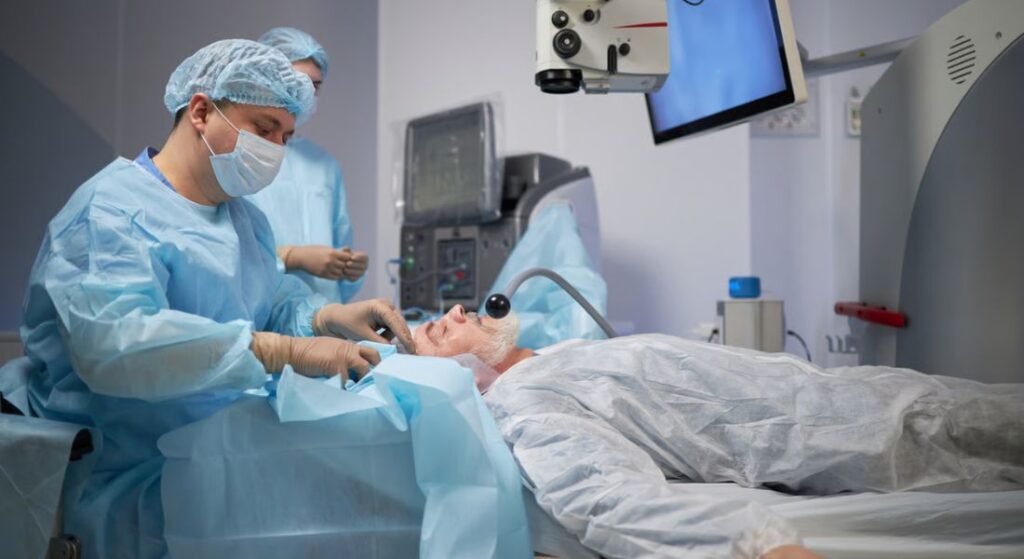
Now let’s talk about head movement, which often worries you more than swallowing. It is completely natural to wonder what might happen if you move without meaning to. Many patients feel concerned about this before the procedure. However, the reality is much more reassuring than you might expect.
If you make a very small or unconscious head movement, nothing dramatic happens at all. I simply pause the procedure and gently guide you back into the correct position. Everything is handled calmly and without any pressure. This ensures that the surgery continues safely and accurately.
The key point to remember is that the procedure is never rushed. There is always time to make small adjustments and ensure everything is properly aligned before continuing. So even if you shift slightly, it is easily managed. You can feel confident that you are always in a controlled and safe environment.
The Difference Between Small and Large Movements
It’s important to understand that not all eye movements during surgery are the same. There is a clear distinction between small, natural micro-movements and sudden, larger movements. Modern surgical techniques are designed to safely manage these minor shifts without affecting precision. Knowing this difference can help you feel more reassured and relaxed during the procedure.
- Small Movements Are Completely Normal: Tiny shifts, such as slight tilts or minimal eye adjustments, happen naturally. These movements are expected and are easily managed during surgery. They do not interfere with the accuracy or safety of the procedure.
- Large Movements Are Very Rare: Significant or sudden movements almost never occur during surgery. This is because you are kept comfortable, relaxed, and well-guided throughout. The calm environment helps prevent any abrupt changes in eye position.
- Surgical Techniques Adapt Instantly: Surgeons are trained to work with natural eye behaviour, including small movements. Advanced tools and techniques allow for immediate adjustments if needed. This ensures that precision is maintained at every stage.
- Safety Comes First at All Times: If any unexpected movement does occur, the procedure is paused immediately. The eye is then gently repositioned before continuing. This careful approach ensures your safety is never compromised.
In conclusion, small eye movements are a normal part of the surgical process and are fully accounted for in modern techniques. Larger movements are extremely uncommon due to the controlled and supportive environment. Even in rare situations, safety measures are always in place to manage them effectively. Understanding this difference can help you feel more confident and at ease during your surgery.
How Surgeons Maintain Control Throughout
During RLE surgery, I continuously monitor both your eye and your overall positioning throughout the entire procedure. This constant observation ensures that everything remains stable and precisely controlled. You are never left unattended at any stage. It is a highly supervised and carefully managed process.
I use a high-powered surgical microscope that provides a detailed, magnified view of your eye. This allows me to see even the smallest changes in position or movement. With this level of clarity, nothing important is missed. It helps maintain a very high degree of accuracy during surgery.
Because of this detailed view, I can respond instantly to any movement, no matter how minor it may be. Adjustments can be made immediately and calmly without disrupting the procedure. This ensures everything stays aligned and under control at all times. You are never in a situation where movement goes unnoticed or unmanaged.
The Role of Communication During Surgery

One of the most important parts of keeping you steady during RLE surgery is clear and calm communication. I guide you throughout the procedure using simple instructions so you always know what to do. This helps create a sense of reassurance and keeps the process smooth. You are never left unsure or confused.
You may hear me say gentle phrases such as “keep looking at the light”, “stay relaxed”, or “you’re doing well”. These instructions are short, calm, and easy to follow. They are designed to help you stay focused without adding any stress. This ongoing communication helps maintain a steady and controlled environment.
If I notice any movement, I will calmly and gently remind you to adjust your position. There is no urgency or pressure when this happens. It is simply part of the normal guidance throughout the surgery. This constant support helps prevent unnecessary movement while keeping you comfortable and at ease.
Why You Don’t Need to Worry About Swallowing
Trying to stop yourself from swallowing can actually make you feel more tense and uncomfortable during the procedure. When you focus too much on controlling it, your body can become more strained rather than relaxed. This is why it is better not to worry about it at all. A calm approach always works best.
Instead of trying to suppress swallowing, I always advise you to let your body behave naturally. Swallowing is an automatic reflex, and it is perfectly normal during surgery. There is no need to fight it or overthink it. The procedure is designed with this in mind.
If you need to swallow, you should simply do it without hesitation. There is no need to ask permission or feel anxious about it. Everything remains safe and controlled. Your comfort is always more important than trying to manage something that is completely harmless.
How Relaxation Reduces Movement
Feeling relaxed during eye surgery plays a key role in helping your body stay steady and comfortable. When you are calm, your natural muscle tension decreases, which reduces the likelihood of unnecessary movement. On the other hand, anxiety or stiffness can sometimes lead to small fidgeting actions. That is why creating a calm mental and physical state is an important part of the procedure.
- Slow, Steady Breathing: Focusing on slow and even breathing helps lower overall tension in your body. This rhythm sends a calming signal to your nervous system, making it easier to stay still. With each steady breath, you naturally become more relaxed and settled.
- Listening to the Surgeon’s Voice: Paying attention to the surgeon’s voice helps keep your mind focused and reassured. Clear guidance throughout the procedure prevents uncertainty or panic. This sense of direction encourages calm cooperation without conscious effort.
- Focusing on the Fixation Light: Keeping your gaze on the fixation light gives your eyes a simple and stable point of reference. This reduces the chance of unnecessary eye movement. Your eye naturally aligns itself when your attention remains gently fixed.
- Calmness Happens Naturally: You do not need to force relaxation or try too hard to stay still. The surgical environment is designed to support your comfort and ease. As you relax, stillness happens naturally without effort.
In conclusion, relaxation is one of the most effective ways to minimise movement during surgery. By focusing on simple anchors like breathing, voice guidance, and the fixation light, your body remains naturally steady. Tension is reduced, making the experience smoother and more comfortable. Ultimately, calmness helps everything proceed safely and efficiently.
What Happens If You Feel the Urge to Move
Sometimes you may feel a natural urge to adjust your head or reposition slightly during RLE surgery. This is completely normal and something many patients experience. It does not mean anything is wrong. It is simply your body reacting in a natural way.
If this happens, the best thing you can do is stay calm and wait for guidance. There is no need to panic or try to control it on your own. I am always observing and will guide you through what to do next. This ensures everything stays steady and controlled.
If needed, I can pause the procedure and help you adjust safely and comfortably. Nothing is rushed at any stage of the surgery. There is always enough time to make sure you are in the right position. Your comfort and safety always come first.
The Safety Measures Built Into the Procedure
RLE surgery is designed with multiple layers of safety to ensure that natural eye movement never compromises the outcome. Rather than relying on absolute stillness, the entire procedure is structured around controlled conditions and real-time responsiveness. This means that even if small movements occur, they are fully anticipated and managed. The priority at every stage is to maintain precision while keeping you completely safe.
- Stable Head Positioning: Your head is gently supported and positioned to minimise unnecessary movement. This provides a stable foundation throughout the procedure. It also helps ensure that your eye remains comfortably aligned for the surgeon.
- Eye Stabilisation Techniques: Special techniques are used to keep the eye steady during surgery. These may include gentle devices and controlled methods that reduce unwanted motion. They are designed for comfort while maintaining optimal surgical accuracy.
- Real-Time Monitoring: The surgical team continuously monitors your eye and the procedure as it happens. This allows immediate awareness of any changes in position or movement. It ensures that adjustments can be made instantly if needed.
- Ability to Pause Instantly; One of the key safety features is the ability to stop the procedure at any moment. If anything unexpected occurs, the surgeon can immediately pause and reposition safely. This guarantees full control at all times.
In conclusion, RLE surgery includes multiple integrated safety systems that are specifically designed to manage natural movement. Each layer works together to maintain precision without relying on perfect stillness. Even in rare situations of movement, the procedure can be paused and corrected instantly. Overall, every aspect of the surgery is focused on ensuring maximum safety and control.
Why Movement Rarely Becomes an Issue
In reality, most patients are surprised by how still they naturally remain during RLE surgery. What often feels worrying beforehand usually becomes much easier once the procedure begins. You are guided throughout, which helps you stay calm and settled. This makes a big difference to how comfortable the experience feels.
Because your eye is numbed and the environment is calm, your body naturally tends to relax on its own. You are not dealing with pain or discomfort, so there is less reason for your body to react or shift. This allows you to remain much steadier than you might expect. The setting is designed to keep you at ease.
You are also not fighting against any discomfort during the procedure, which reduces the natural urge to move. When you are relaxed, your body becomes more stable without effort. This helps the surgery continue smoothly and efficiently. As a result, significant movement is very uncommon.
What You Will Experience Physically
During the procedure, you will typically feel gentle pressure around the eye. This is normal and expected, and it should not be uncomfortable. You may also notice cool sensations as fluids are used during the surgery. These sensations are mild and temporary.
You might feel a light touch at certain points, but there is no pain involved. The anaesthetic drops ensure that your eye remains fully numb throughout the procedure. This helps keep you calm and comfortable while everything is being carried out. You remain aware, but without discomfort.
You will not experience anything that would trigger a sudden reaction or cause you to move abruptly. The sensations are carefully controlled to remain gentle and predictable. This is one of the key reasons the procedure feels so stable and well managed. Overall, it is designed to be a calm and controlled experience from start to finish.
How Long You Need to Stay Still
Another reassuring point is that you are not required to stay perfectly still for long periods during RLE surgery. This is something many patients worry about beforehand, but in practice it is much more manageable. The procedure is designed to feel comfortable and controlled from start to finish. You are supported throughout the entire process.
The surgery is performed in short, precise stages, and each step only lasts a brief amount of time. This means you are never holding one position for very long. The process is broken down into manageable parts to make it easier for you. This also helps maintain a calm and steady experience.
Between these stages, there are natural pauses where your eye and body can relax. These breaks give you a moment to settle before the next step begins. This makes it much easier to remain comfortable throughout the procedure. Overall, it ensures the experience feels smooth, gentle, and well controlled.
Trusting the Process and Your Surgeon

Trust plays a very important role in how smoothly your RLE surgery goes. When you feel confident that everything is under control, your body naturally relaxes. This relaxed state often means you move less without even thinking about it. It helps create the right conditions for a calm and steady procedure.
When you trust the process, your mind is less focused on worry and more able to stay at ease. This reduces tension in your body and makes the experience feel easier overall. You do not need to actively manage every detail during surgery. The entire process is guided and carefully controlled at every stage.
I always remind you that you are not responsible for managing everything yourself. Your role is simply to stay comfortable and follow simple guidance when given. For more information about the procedure, you can visit London Cataract Centre to learn more about RLE Surgery in London.
Common Myths About Movement During Eye Surgery
Let me clear up a few misconceptions I often hear from you before RLE surgery. These worries are very understandable, but they are based on assumptions that are not accurate in reality. Once you understand how the procedure actually works, it usually feels much less stressful. It also helps you approach surgery with more confidence.
One common myth is that swallowing can ruin the surgery. The truth is that it has no meaningful impact on the procedure or the final outcome. Your body’s natural reflexes are completely expected and safely accounted for. There is no need to worry about swallowing at any point.
Another myth is that you must not move at all during the procedure. In fact, small and natural movements are completely normal and are carefully managed by the surgical team. The system is designed to work safely with natural human behaviour. Understanding this can help you feel far more relaxed before your surgery.
Final Stage of Surgery and What You Experience
As the procedure comes to an end, I carefully check that the new lens is correctly positioned. This final step ensures everything is aligned as planned. It is done with great precision to confirm the best possible visual outcome. At this point, the main part of the surgery is already complete.
You no longer need to focus on staying still during this stage. Your head and body can relax fully as the procedure is finishing. There is no further need for precise instructions or positioning. This helps you feel more comfortable as things come to a close.
The surgery itself is completed within just a few minutes at this final stage. Most patients are surprised at how smooth and quick the entire experience feels overall. Even if you swallowed or shifted slightly at times, everything has already been carefully controlled. You can feel reassured that the procedure has been safely managed throughout.
FAQs:
1. What happens if I swallow during RLE surgery?
Swallowing is completely normal and does not affect the surgery. It may cause slight neck or jaw movement, but it does not impact the eye or the procedure.
2. Will moving my head during surgery affect the outcome?
No, small or brief head movements do not affect the final result. The surgeon can pause and gently reposition you if needed to maintain accuracy.
3. Am I expected to keep my head completely still during RLE surgery?
No, you are not expected to stay perfectly still. Your head is supported and gently stabilised, and small natural movements are fully anticipated.
4. What happens if I move accidentally during the procedure?
If you move, the surgeon will calmly pause, guide you back into position, and continue once everything is stable. There is no risk or panic involved.
5. How is my head kept stable during surgery?
Your head rests in a specially designed headrest that provides gentle support. Additional positioning aids may also be used to ensure stability and comfort.
6. Is swallowing or moving my head dangerous during eye surgery?
No, it is not dangerous. These are natural body movements that are fully expected and safely managed during RLE surgery.
7. Why doesn’t swallowing affect my eye during surgery?
Because swallowing uses different muscle systems than those controlling eye position. The eye remains stable even when you swallow.
8. What will I feel if I move during surgery?
You will not feel pain. You may notice gentle pressure or awareness, but anaesthetic drops ensure you remain comfortable throughout.
9. What does the surgeon do if I move unexpectedly?
The surgeon may pause, wait for you to settle, or gently guide your head back into position. Everything is done calmly and safely.
10. Do I need to try very hard not to move at all?
No, trying too hard can actually increase tension. It is better to stay relaxed and let your body remain natural while the surgeon guides you.
Final Thoughts: Stay Relaxed and Let the Process Guide You
The most important thing to remember is that swallowing or small head movements during RLE surgery are completely normal and fully expected. You are not required to control every natural reflex, and the procedure is designed to safely accommodate these moments without affecting your results. Everything is carefully monitored, supported, and adjusted in real time to ensure precision and safety throughout.
When you stay relaxed and trust the process, your body naturally becomes steadier, and the entire experience feels much smoother and more comfortable. If you’re looking for RLE surgery in London, you can get in touch with us at London Cataract Centre.
References:
- Nagyova, D., Tappeiner, C., Blaha, A., Goldblum, D. and Kyroudis, D. (2025) Visual outcomes and patient satisfaction with extended monovision in refractive lens exchange, Journal of Clinical Medicine, 14(16), 5684. Available at: https://www.mdpi.com/2077-0383/14/16/5684
- Sun, E. and Kraus, C.L. (2023) Clear lens extraction and refractive lens exchange for the treatment of amblyopia, Saudi Journal of Ophthalmology, 37(3), pp. 195–200. Available at: https://pubmed.ncbi.nlm.nih.gov/39465019/
- Schallhorn, S.C., Schallhorn, J.M. and Pelouskova, M. (2017) Refractive lens exchange in younger and older presbyopes: comparison of outcomes and complications, Clinical Ophthalmology, 11, pp. 1569–1581. Available at: https://pmc.ncbi.nlm.nih.gov/articles/PMC5584899/
- Lee, C.-Y., Yang, S.-F., Chen, H.-C., Lian, I.-B., Huang, J.-Y. and Chang, C.-K. (2024) Comparison of visual and refractive outcomes between refractive lens exchange and keratorefractive lenticule extraction surgery in moderate to high myopia, Diagnostics, 15(1), p. 43. Available at: https://www.mdpi.com/2075-4418/15/1/43
- Chan, E. and Varma, S. (2024) Refractive lens exchange the evidence behind the practice, Eye, 39(2), pp. 208–209. Available at: https://pmc.ncbi.nlm.nih.gov/articles/PMC11751179/