


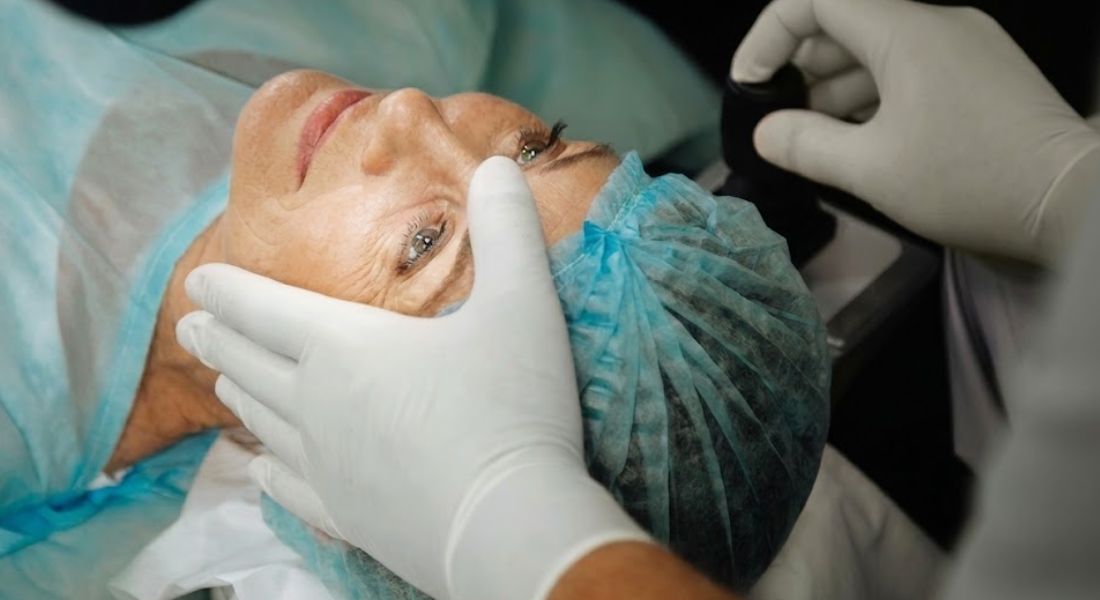
When I first hear the concerns patients have about refractive lens exchange, one question seems to come up again and again: “What happens if I look away during surgery?” I completely understand why this might worry you. The thought of needing to keep your eyes perfectly still during such a delicate procedure can feel quite overwhelming. It is a very natural concern, especially if you have never had eye surgery before.
The reassuring news is that during RLE surgery, you are not expected to control your eye in the way you might imagine. You will not need to consciously hold your gaze perfectly steady for the entire procedure. In reality, modern surgical techniques are specifically designed to safely manage natural eye movement. These advancements allow the surgeon to work with a high level of precision while keeping you comfortable and secure.
It is also worth knowing that your eye is gently stabilised during the procedure. You will be asked to look at a light, which helps guide your focus naturally. If your eye moves slightly, the surgeon is fully trained to manage this without any risk to the outcome. Small movements are expected and are built into how the surgery is performed.
In this article, I am going to guide you through exactly what happens if you do look away during the procedure. I will explain how surgeons gently guide your focus throughout the surgery. You will also learn why your eye position is far more controlled than you might think. By the end, you should feel much more confident and at ease about the process.
What RLE Surgery Actually Involves
Before we talk about eye movement, I want to briefly explain what refractive lens exchange (RLE) actually involves. This will help you feel more comfortable and give you a clearer picture of what is happening during the procedure. Understanding the basics can make the entire experience feel far less intimidating.
RLE is a procedure where your eye’s natural lens is carefully removed and replaced with an artificial intraocular lens. This is done to correct common vision problems such as long-sightedness, short-sightedness, or presbyopia. The aim is to improve your vision and reduce your reliance on glasses or contact lenses.
The procedure is very similar to cataract surgery, but instead of removing a cloudy lens, I remove a clear but less flexible one. It is then replaced with a customised lens that suits your individual vision needs. You remain awake throughout, but your eye is numbed with anaesthetic drops, so you will not feel any pain.
Why Eye Stability Matters During Surgery
When I perform RLE surgery, precision is absolutely essential. The new lens needs to be positioned with great accuracy to give you the best possible visual outcome. Every step is carefully controlled to ensure the result is both safe and effective. This level of precision is what helps deliver clear, reliable vision after the procedure.
This is why eye stability plays an important role during surgery. Even small movements can, in theory, affect the level of precision required. However, modern systems and surgical techniques are specifically designed to take natural eye movement into account. This means the procedure remains safe and highly accurate, even if slight movement occurs.
Your eye is never left “uncontrolled” at any stage of the procedure. Instead, it is gently guided and stabilised throughout the surgery. The surgeon continuously monitors your eye position and makes small adjustments as needed. This ensures everything stays on track and the treatment is carried out smoothly.
The Role of the Fixation Light
The fixation light plays a crucial role in ensuring precision during eye surgery. It is a small but important visual guide placed within the surgical microscope, and patients are gently asked to focus on it throughout the procedure. By doing so, the eye naturally stays centred and steady, allowing the surgeon to work with maximum accuracy. Even though the process is highly controlled, patient cooperation with the fixation light helps optimise results.
- Helps Maintain Eye Alignment: The fixation light acts as a central reference point, guiding your eye into the correct position. When you look directly at it, your eye naturally aligns without effort. This alignment is essential for ensuring the surgeon can perform each step with precision.
- Supports Surgical Accuracy: By keeping your gaze steady, the fixation light allows for highly accurate lens placement and treatment. Even tiny shifts in eye position can affect fine surgical details. Maintaining focus helps ensure the best possible visual outcome.
- Small Movements Are Managed Safely: If you briefly look away, it is not dangerous or harmful during the procedure. Modern surgical techniques are designed to handle natural eye movements. The surgeon can quickly guide your eye back into the correct position without any risk.
- Encourages Relaxation During Surgery: Being told to “look at the light” gives you a simple and calming instruction to follow. This helps reduce anxiety and keeps you focused throughout the procedure. Staying relaxed makes it easier to maintain steady eye positioning.
In conclusion, the fixation light is a simple yet essential part of eye surgery that supports both safety and precision. It helps keep your eye properly aligned while also giving you a clear point of focus. Even if your gaze shifts momentarily, modern techniques ensure everything remains under control. By following this guidance and staying relaxed, you contribute to a smooth and successful surgical experience.
So What Happens If You Look Away?
Let me reassure you straight away: nothing catastrophic happens if you look away during RLE surgery. It is a very common concern, and you are not expected to keep your eye perfectly still at every moment. Small, natural movements are completely normal and expected during the procedure. The entire process is designed to safely accommodate this.
If your eye shifts slightly, I can easily pause and gently guide you back to the correct position. The surgical microscope and instruments allow me to maintain full control at all times. I am continuously monitoring your eye and can respond immediately to any movement. This ensures the procedure remains safe, controlled, and precise.
Modern systems are also highly responsive to movement, which adds an extra level of reassurance. Some advanced equipment can even track small eye movements automatically to maintain accuracy. In short, a brief glance away does not compromise your safety or the success of the procedure. You will be guided throughout, so you can feel confident and at ease.
How Surgeons Maintain Precision Even With Movement
Many patients are surprised to learn that a small amount of eye movement during surgery is completely normal and expected. Rather than requiring absolute stillness, modern surgical techniques are designed to work safely with natural human behaviour. Surgeons use advanced tools and refined methods to maintain control and accuracy throughout the procedure. This ensures that even if your eye shifts slightly, the overall precision of the surgery is not affected.
- Use of Gentle Eyelid Holders: Soft eyelid holders are used to keep your eye comfortably open and prevent blinking during the procedure. This allows the surgeon to maintain a clear and uninterrupted view at all times. The device is carefully positioned to ensure you feel no discomfort while your eye remains stable.
- High-Magnification Microscopes: Surgeons rely on powerful microscopes that provide a highly detailed, magnified view of the eye. This enhanced visibility allows even the smallest structures to be seen clearly. As a result, precise adjustments can be made instantly, even if there is slight movement.
- Fine Instruments for Micro-Adjustments: Specialised surgical instruments are designed specifically for delicate eye procedures. These tools allow for extremely fine and controlled movements during surgery. If the eye shifts slightly, the surgeon can easily adapt and maintain accuracy without any disruption.
- Techniques Designed Around Natural Movement: Modern surgical approaches take into account that the eye may move slightly during the procedure. Instead of resisting this, surgeons work with it using controlled techniques. This makes the entire process safer, smoother, and more reliable.
In conclusion, precision in eye surgery does not depend on perfect stillness but on advanced tools and expert techniques. Surgeons are fully prepared to manage small, natural movements throughout the procedure. With the help of specialised equipment and careful control, accuracy is consistently maintained. This approach ensures both safety and excellent visual outcomes for patients.
Why You Shouldn’t Try Too Hard to Keep Still
One thing I often tell you is that trying too hard to stay perfectly still can actually make things more difficult. It can increase tension in your body and lead to unnecessary strain in your eyes. When you focus too much on controlling every movement, it can have the opposite effect. This is why it is better not to overthink it.
Instead, I encourage you to relax and breathe normally throughout the procedure. When you feel calm, your body naturally becomes more settled and still without any effort. This makes it much easier for the surgery to proceed smoothly. A relaxed approach helps everything work more naturally.
If you try to “force” yourself to stay still, your muscles can become more tense and reactive. This is not helpful during surgery and can make you feel more uncomfortable. Trust me when I say that relaxation is far more effective than trying to stay in control. By staying calm, you are already doing exactly what is needed.
The Surgeon’s Communication During Surgery

During RLE surgery, I do not leave you guessing or unsure about what to do. I guide you throughout the entire procedure using simple and reassuring instructions. This helps you feel more in control and at ease. You will always know what is expected of you at each stage.
You might hear gentle phrases such as “look at the light”, “you’re doing great”, or “just relax your eye”. These short instructions are designed to keep you focused without creating any stress. They are easy to follow and help maintain a calm rhythm during the procedure. This ongoing communication plays an important role in keeping everything smooth and controlled.
If your eye shifts at any point, I will calmly pause and help you reset your focus. There is no urgency, pressure, or need to worry. Everything is handled in a relaxed and controlled manner. My aim is always to keep you comfortable while ensuring the best possible outcome.
What You Will Actually See During Surgery
Many patients feel unsure about what they will see during RLE surgery, and it is often not what they expect. Your vision during the procedure is quite different from normal sight, as it is intentionally blurred and affected by bright lighting. You will not see surgical instruments approaching your eye in detail, which helps make the experience more comfortable. Instead, what you notice tends to be vague and abstract rather than clear or sharp.
- Bright Lights: You will notice bright illumination from the surgical microscope throughout the procedure. This light is essential for the surgeon to see clearly and perform the surgery safely. While it may seem intense, it is not harmful and becomes easier to tolerate as you relax.
- Gentle Shapes or Shadows: Rather than clear images, you may see soft shapes or shadow-like forms moving in your field of vision. These are not detailed enough to identify specific instruments or actions. This blurred effect helps prevent any discomfort or alarm during surgery.
- Occasional Flickers of Movement: At times, you might notice slight flickers or changes in light and shadow. These are completely normal and reflect activity within the surgical field. They are subtle and do not interfere with your overall sense of calm.
- Limited Visual Awareness Reduces Anxiety; Even if you briefly look away, your vision is not sharp enough to lose track of anything important. The lack of detailed visibility actually helps reduce worry about movement or direction. This makes it easier to stay relaxed and follow simple instructions like focusing on the light.
In conclusion, what you see during RLE surgery is generally soft, bright, and indistinct rather than clear or detailed. This limited visual experience is intentional and helps make the procedure feel less overwhelming. Even if your gaze shifts, it does not affect your awareness in a meaningful way. Understanding this in advance can help you feel more at ease and confident going into surgery.
The Importance of Anaesthetic Drops

Before the procedure begins, your eye is carefully numbed using anaesthetic drops. This is an important step that ensures you remain comfortable throughout the surgery. The drops work quickly and effectively to prepare your eye. As a result, you can stay relaxed from the very start.
Because of these drops, you will not feel pain or any sharp pressure during the procedure. This greatly reduces the chance of sudden reactions or involuntary movements. You may still notice light or gentle sensations, but nothing that should cause discomfort. This helps create a calm and controlled surgical environment.
When you are comfortable, your natural instinct to move your eye away from discomfort is greatly reduced. This makes it much easier to keep your eye steady without effort. It is one of the key reasons why RLE surgery is so precise and well controlled. Overall, it plays a vital role in keeping the procedure safe and smooth.
Can Looking Away Affect the Outcome?
This is a question I hear quite often, and it is completely understandable. The simple answer is no, not in any meaningful or lasting way. Small eye movements during the procedure are expected and already planned for. There is no need to worry that a brief shift will affect your results.
If your eye moves slightly, I simply make a small adjustment and continue with the procedure. The level of precision required for lens placement is carefully maintained at all times. I am continuously monitoring your eye and responding as needed. This ensures everything stays accurate and controlled.
Modern surgical technology also plays an important role in maintaining this precision. It is designed to account for even minor movements during surgery. So, even if you momentarily look away, your final visual outcome is not compromised. You can feel confident that the procedure remains safe and effective throughout.
What Surgeons Do If Movement Happens
If your eye does move during surgery, I respond immediately, but always in a calm and controlled way. There is no panic or urgency at any point. Everything is handled with care to maintain both your safety and comfort. You can feel reassured that this is a normal part of the process.
This may involve briefly pausing the procedure, gently guiding your gaze back into position, or simply waiting for your eye to settle naturally. These small adjustments are routine and are done smoothly. I am constantly observing your eye and ready to respond as needed. This ensures the surgery continues with precision.
You are never left in a situation where movement creates any risk. Every step is controlled, predictable, and carefully managed. The procedure is designed to handle these moments without any issue. Your safety and the success of the outcome remain the top priority at all times.
Why Your Eye Naturally Returns to Position
Your eye has natural reflexes that help it return to a central position when guided. These reflexes work automatically, so you do not need to think about it too much. Even during surgery, your eye responds in a predictable and helpful way. This makes it easier to maintain proper alignment throughout the procedure.
The fixation light plays an important role in this process. When you focus on it, your eye naturally adjusts and centres itself again. This gives you a simple point to follow without any effort or strain. It helps keep your gaze steady in a calm and controlled way.
Because of this, even if you briefly look away, it is very easy to bring your eye back into the correct position. The adjustment happens gently and without difficulty. You will be guided throughout, so there is no pressure on you. It is a smooth and reassuring part of the process.
Modern Technology That Supports Eye Tracking

In many modern clinics, advanced technology plays an important role in supporting eye stability during surgery. These systems are designed to work alongside the surgeon to maintain accuracy at every stage. They help ensure that the procedure remains smooth, controlled, and highly precise. This added support provides extra reassurance throughout the process.
Some of these systems include eye-tracking software, automatic alignment correction, and high-speed imaging guidance. Each of these tools has a specific role in monitoring and adjusting for even the smallest movements. They work continuously in the background without causing any disruption. This allows the surgeon to focus fully on delivering the best possible outcome.
Because of this technology, even tiny eye movements are detected and managed instantly. This greatly reduces any risk and helps maintain a high level of precision throughout the procedure. It is one of the key reasons why modern RLE surgery is so safe and reliable. Overall, these advancements make the experience more comfortable and reassuring for you.
How Your Comfort Helps the Procedure
Your comfort is one of the most important factors in ensuring a successful surgery. When you feel at ease, your body naturally becomes more cooperative. This creates the ideal conditions for the procedure to be carried out smoothly. A calm and relaxed state makes a noticeable difference.
When you feel relaxed, your eyes tend to move less, your breathing becomes steadier, and your body remains calm. These natural responses help maintain stability without any effort on your part. Everything works together to support a controlled and precise procedure. It also helps you feel more confident throughout the experience.
This is why I take the time to explain every step to you beforehand. The more you understand what is happening, the more comfortable you are likely to feel. When you are relaxed and reassured, the entire process becomes much smoother. Your comfort truly plays a key role in achieving the best possible outcome.
What I Recommend You Focus On Instead
During RLE surgery, it is completely natural to feel concerned about where to look or whether you might move your eye. However, instead of focusing on doing everything perfectly, it is far more helpful to keep your attention on a few simple, calming anchors. These gentle points of focus are designed to guide you through the procedure without effort or stress. By following them, you can remain relaxed while the surgical team takes care of everything else.
- The Fixation Light: The fixation light is your main visual guide throughout the procedure. By simply looking at it, your eye naturally stays centred and aligned. There is no need to strain just gently keep your gaze in its direction.
- Your Breathing Rhythm: Paying attention to your breathing helps you stay calm and relaxed during surgery. Slow, steady breaths reduce tension and make it easier to remain still. This natural rhythm also helps prevent unnecessary movement.
- My Voice Guiding You: Listening to the surgeon’s voice provides reassurance and clear direction throughout the procedure. You will be gently guided at each step, so you never feel unsure about what to do. This support helps you stay confident and at ease.
- No Need to Try Too Hard: You do not need to make any intense effort to control your eye or body. The process is designed to work with natural behaviour, not against it. Simply following gentle instructions is more than enough.
In conclusion, focusing on simple anchors like the fixation light, your breathing, and the surgeon’s voice can make the entire experience much easier. These elements help keep you steady without requiring effort or concentration. By staying relaxed and trusting the guidance you receive, you can move through the procedure smoothly. Remember, you do not need to try hard just stay calm and follow along.
How Long Eye Focusing Actually Lasts
One thing that often surprises you is just how short each stage of the surgery actually is. The procedure is broken down into small, manageable steps rather than one long continuous process. This makes it much easier to stay comfortable and focused. It also helps reduce any feeling of pressure during the surgery.
You are only asked to look at the light for brief periods at a time. Each step is carefully controlled and does not last very long. This means you do not need to maintain intense focus for extended periods. The process is designed to feel manageable and relaxed.
Between these steps, there are natural pauses where your eye can rest. These short breaks allow you to reset without any effort. You are never expected to hold perfect focus for long stretches. Overall, the experience is far more comfortable and gentle than most people expect.
Why Trust in the Process Matters
Trust plays a very important role in how smoothly your RLE surgery goes. When you feel confident in the process, everything tends to become much easier. You are more likely to stay calm and relaxed throughout the procedure. This creates the right conditions for a smooth and controlled experience.
When you trust the process, you naturally feel less anxious, your eye movement becomes more stable, and the procedure feels easier overall. These small but important changes make a real difference during surgery. Your body responds better when your mind is at ease. This helps the entire procedure flow more smoothly.
I always remind you that you are in experienced hands and that every step is carefully controlled. You are guided throughout, so there is nothing you need to manage on your own. For more detailed information, you can explore London Cataract Centre and learn more about RLE surgery in London.
Common Myths About Looking Away During Eye Surgery
There are a few common myths that I often hear, and it is important to clear them up so you feel more reassured. One myth is that looking away during surgery will ruin the entire procedure. In reality, this is not true at all, as any small movement is quickly and safely managed. The procedure is designed to handle these situations without causing problems.
Another myth is that you must never move your eye at any point during the surgery. The truth is that small, natural movements are completely expected and are built into how the procedure is performed. Surgeons are trained to manage these movements with ease. This means you do not need to worry about being perfectly still.
Some people also believe that one small mistake can affect the final results. In truth, the procedure is designed with safety margins to ensure consistent outcomes. Everything is controlled, monitored, and adjusted as needed throughout. Understanding these points can really help reduce unnecessary worry before your surgery.
Final Stage of Surgery and What You Experience
As the surgery comes to an end, your eye is gently checked to ensure everything is in place. The new lens is carefully confirmed to be positioned correctly. This final step is done with the same level of precision and care as the rest of the procedure. It helps ensure the best possible visual outcome.
At this stage, you are no longer required to focus on anything precise. Your eye is allowed to relax fully, and there is no need to follow any instructions. The main part of the surgical process is already complete. This final phase usually takes only a few minutes.
Most patients are pleasantly surprised by how quick and smooth the entire experience feels. Even if you feel that you may have “looked away” at times, everything has already been carefully managed. The procedure is designed to handle this without any issue. You can feel reassured that everything has been carried out safely and successfully.
FAQs:
1. What happens if I accidentally look away during RLE surgery?
Nothing serious happens if you briefly look away. Small eye movements are completely normal, and your surgeon will gently guide your eye back into position without affecting the procedure.
2. Do I need to keep my eye perfectly still throughout the surgery?
No, you are not expected to keep your eye perfectly still. The procedure is designed to safely accommodate natural eye movements, and your surgeon continuously monitors and adjusts as needed.
3. Will looking away affect the final results of my RLE surgery?
No, brief or minor eye movements do not affect the final outcome. Modern techniques and technology ensure that precision is maintained at all times.
4. What is the fixation light and why is it important?
The fixation light is a small light you are asked to look at during surgery. It helps keep your eye centred and aligned, allowing the surgeon to perform the procedure with maximum accuracy.
5. What will I see during RLE surgery?
You will mainly see bright lights, soft shapes, and shadows. You will not see clear details of instruments, which helps keep the experience comfortable and less stressful.
6. What does the surgeon do if my eye moves?
If your eye moves, the surgeon may briefly pause, gently guide your gaze back, or wait for your eye to settle. These adjustments are routine and handled calmly.
7. Will I feel pain if my eye moves during surgery?
No, you will not feel pain. Your eye is numbed with anaesthetic drops, so even if it moves slightly, you remain comfortable throughout the procedure.
8. How do surgeons keep the eye stable during RLE surgery?
Surgeons use gentle eyelid holders, high-magnification microscopes, fine instruments, and advanced tracking technology to maintain control and precision throughout the procedure.
9. Is it better to try very hard to keep my eye still?
No, trying too hard can actually make things worse by increasing tension. It is best to stay relaxed, breathe naturally, and follow simple instructions from your surgeon.
10. How long do I need to focus on the fixation light?
Only for short periods at a time. The procedure is broken into small steps, and you are never required to maintain intense focus for long durations.
Final Thoughts: Trust the Process and Stay Relaxed
You do not need to worry about looking away during RLE surgery. The procedure is designed with the understanding that small, natural eye movements will happen, and everything from the fixation light to advanced surgical technology is there to safely guide and support you. You are never expected to hold your gaze perfectly still, and any slight movement is calmly managed without affecting the outcome.
What truly matters is staying relaxed and trusting the process. When you feel at ease, your eye naturally remains steadier, and the entire experience becomes smoother and more comfortable. If you’re thinking about RLE surgery in London, you can get in touch with us at London Cataract Centre.
References:
- Lee, C.-Y., Yang, S.-F., Chen, H.-C., Lian, I.-B., Huang, J.-Y. and Chang, C.-K. (2024) Comparison of visual and refractive outcomes between refractive lens exchange and keratorefractive lenticule extraction surgery in moderate to high myopia, Diagnostics, 15(1), p. 43. Available at: https://pubmed.ncbi.nlm.nih.gov/39795571/
- Chan, E. and Varma, S. (2025) Refractive lens exchange the evidence behind the practice, Eye, 39(2), pp. 208–209. Available at: https://pmc.ncbi.nlm.nih.gov/articles/PMC11751179/
- Fernández-Vega, L., Alfonso, J.F. and Montés-Micó, R. (2014) Refractive lens exchange, Survey of Ophthalmology, 59(6), pp. 579–598. Available at: https://www.sciencedirect.com/science/article/abs/pii/S0039625714000873
- Evangelista, C.B., Larsen, K.L., Cervero, R.M. and Samuel, A. (2023) Corneal laser refractive surgery curriculum development in the military: using the nominal group technique, Military Medicine, 188(1–2), pp. e145–e151. Available at: https://academic.oup.com/milmed/article/188/1-2/e145/6311704
- Cieślak, K., Nowak, M.S., Grzybowski, A. and Wróblewska-Czajka, E. (2024) Comparative analysis of the visual, refractive and aberrometric outcome with the use of intraocular multifocal lenses in refractive lens exchange, Journal of Clinical Medicine, 13(1), p. 239. Available at: https://www.mdpi.com/2077-0383/13/1/239