



If you have started relying on reading glasses, it is likely due to presbyopia a natural change that affects the eye’s ability to focus on close objects. Lens replacement surgery offers a long-term solution by addressing the underlying cause rather than simply compensating for it. the procedure, known as lens replacement surgery, involves removing the eye’s natural lens and replacing it with an artificial intraocular lens (IOL). Unlike your natural lens, this artificial lens does not lose flexibility over time. Depending on the type of lens chosen, it can provide improved focus at multiple distances, reducing your reliance on reading glasses.
Advanced options such as multifocal intraocular lens and extended depth of focus lens are specifically designed to improve both near and intermediate vision. Many patients achieve a high level of independence from glasses for everyday tasks like reading messages, using a computer, or checking menus.
However, results are not identical for everyone. While many people significantly reduce or eliminate their need for reading glasses, some may still prefer occasional glasses for very fine print or prolonged reading. The aim is functional independence rather than absolute perfection.
A personalised consultation is essential to determine suitability. Factors such as your eye health, lifestyle, and visual expectations all influence the outcome. With the right lens choice and realistic expectations, lens replacement surgery can provide a lasting improvement in how you see and function day to day.
What Is Presbyopia and Why Does It Happen?
Presbyopia develops as the natural lens inside your eye gradually loses its flexibility over time. When you are younger, this lens can easily change shape to focus on objects at different distances. As you age, it becomes stiffer and less responsive, reducing its ability to adjust for near vision.
This change directly affects how clearly you see up close. You may find it harder to read small print, use your phone, or work on a computer without holding things further away. These symptoms typically begin in your early to mid-40s and progress gradually.
Presbyopia is not a disease but a normal part of ageing. However, its impact on daily activities can be frustrating, especially as dependence on reading glasses increases over time. This is why many people explore longer-term solutions that address the underlying cause rather than simply compensating for it.
What Is Lens Replacement Surgery?
Refractive lens exchange is a procedure where your eye’s natural lens is removed and replaced with a clear artificial lens. It’s the same surgical technique used in cataract surgery, but performed to improve vision rather than to treat a cataract. The aim is to reduce your dependence on glasses and provide clearer, more consistent vision at different distances.
- Your natural lens is replaced with an artificial one: During the procedure, your surgeon removes the eye’s natural lens and inserts a synthetic intraocular lens (IOL). This new lens is designed to focus light more effectively. Unlike your natural lens, it won’t become cloudy or stiff over time. This provides long-term visual stability.
- The procedure is quick and usually comfortable: Surgery is typically carried out under local anaesthetic, so you’ll be awake but won’t feel pain. The procedure itself is relatively fast, often taking around 20–30 minutes per eye. Most patients describe only mild discomfort, if any. You can usually return home the same day.
- Vision improves gradually after surgery: Many people notice clearer vision within a few days, although it can take a few weeks to fully stabilise. Your eyes and brain need time to adjust to the new optical system. Follow-up appointments help ensure everything is healing as expected. Improvements continue as your vision settles.
- It provides a long-term solution for presbyopia: Lens replacement is commonly used to treat presbyopia, which affects your ability to focus on close objects. Because the natural lens is permanently replaced, the results are long-lasting. The artificial lens does not age or lose flexibility. This makes it an effective option for long-term vision correction.
Lens replacement surgery offers a permanent alternative to glasses or contact lenses, helping you achieve clearer, more convenient vision in everyday life.
How Lens Surgery Treats Presbyopia
Lens replacement surgery treats presbyopia by removing the eye’s ageing natural lens the part that has lost its ability to change shape and focus properly. Because this lens is the source of the problem, replacing it directly addresses the underlying cause rather than just managing the symptoms.
The procedure, known as lens replacement surgery, involves implanting an artificial intraocular lens (IOL) in place of the natural one. These lenses are designed to provide clear vision at one or multiple distances, depending on the type chosen. This means your vision no longer depends on the flexibility of the natural lens.
Advanced options, such as multifocal intraocular lens and extended depth of focus lens, can improve near, intermediate, and distance vision. As a result, many patients experience a significant reduction in their reliance on reading glasses.
This approach is fundamentally different from glasses or contact lenses. Instead of compensating for reduced focusing ability, it corrects the issue at its source. For many people, this leads to greater visual freedom and a more convenient day-to-day experience.
Can It Completely Eliminate Reading Glasses?
Many patients can significantly reduce or even eliminate their need for reading glasses after lens replacement surgery. However, the outcome depends on several factors, including the type of intraocular lens used, your eye health, and your day-to-day visual demands. No approach can guarantee complete independence in every situation.
Advanced options such as multifocal intraocular lens and extended depth of focus lens are designed to improve near and intermediate vision. With these lenses, many people can comfortably read messages, use their phone, and carry out most daily tasks without relying on glasses. This often leads to a noticeable improvement in convenience and lifestyle.
That said, some patients may still prefer occasional glasses for very small print, prolonged reading, or low-light conditions. This does not mean the surgery has been unsuccessful it reflects the natural limits of current lens technology. The aim is functional independence rather than absolute perfection.
Having clear expectations before treatment is key. Understanding what is realistically achievable helps ensure you are satisfied with the outcome and can fully appreciate the benefits of improved, more flexible vision.
Understanding Multifocal Intraocular Lenses
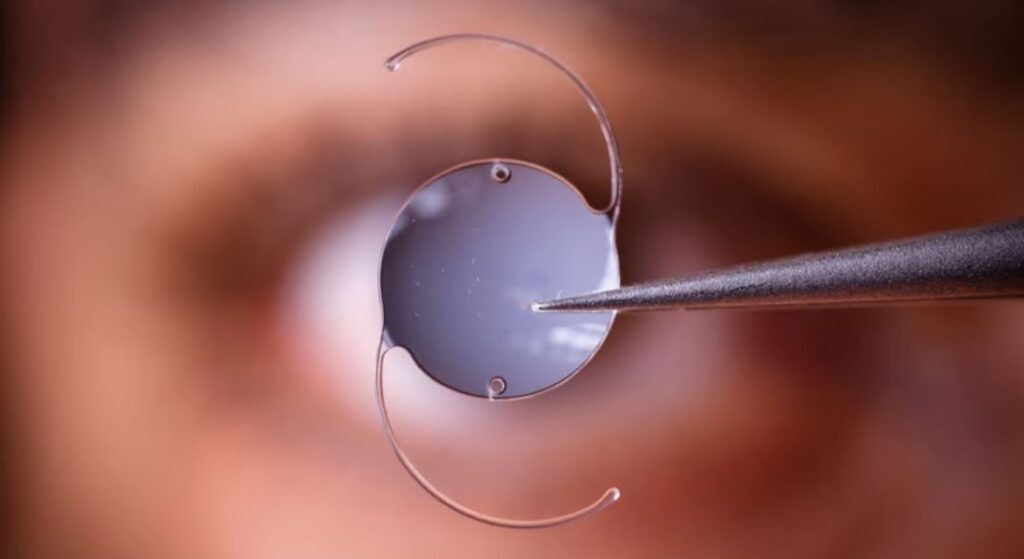
Multifocal intraocular lenses are advanced lenses used in procedures like refractive lens exchange to help you see clearly at different distances. Unlike standard lenses that focus at a single range, multifocal lenses are designed to provide a broader visual experience. They work by allowing your eye to access more than one focal point at the same time. Your brain then adapts by selecting the image it needs depending on what you’re looking at.
- They use multiple focal points to improve vision range: Multifocal lenses split incoming light into different focal zones, allowing you to see near, intermediate, and distant objects. This means you can switch between tasks like reading, using a computer, and looking into the distance more easily. The process happens simultaneously rather than requiring your eye to refocus. Over time, your brain becomes more efficient at interpreting these signals.
- They can reduce dependence on glasses: Many people achieve a high level of independence from glasses after surgery with multifocal lenses. Everyday tasks such as reading menus, checking your phone, or driving can often be done without corrective eyewear. This makes them a popular option for treating presbyopia. The goal is greater convenience in daily life.
- Visual side effects can occur, especially in low light: Because of how the lens splits light, some people notice halos, glare, or starbursts particularly at night. These effects are usually mild and often become less noticeable as your brain adapts. However, they can be more relevant for activities like night driving. It’s an important factor to consider when choosing this type of lens.
- Careful selection ensures the best outcome: Multifocal lenses are not suitable for everyone. Your eye health, lifestyle, and visual priorities all influence whether they are the right choice. A detailed assessment helps determine suitability and manage expectations. Personalised planning leads to better satisfaction and results.
Multifocal intraocular lenses offer a versatile solution for seeing at multiple distances, but they require the right balance between visual range and potential side effects.
What Are Extended Depth of Focus (EDOF) Lenses?
Extended depth of focus lens (EDOF lenses) are designed to create a continuous range of vision rather than separate focal points. Instead of splitting light into distinct zones, they extend the focus so you can see clearly across a broader range of distances. This often results in smoother, more natural transitions when shifting your gaze from far to intermediate and near.
EDOF lenses are particularly strong for intermediate vision. This includes everyday activities such as using a computer, cooking, or looking at a dashboard. Near vision is also improved, although it may not be as sharp as with multifocal intraocular lens, especially for very small print. One of the main advantages of EDOF lenses is their visual quality. They tend to produce fewer side effects such as glare, halos, or reduced contrast. Because of this, they are often a good option for people who prioritise stable, high-quality vision and are more sensitive to visual disturbances.
Multifocal vs EDOF: Which Is Better?
There is no single “best” option when choosing between multifocal intraocular lens and extended depth of focus lens. Each lens type offers different advantages, and the right choice depends on your priorities and visual needs.
Multifocal lenses are designed to provide stronger near vision, which can make tasks like reading or using your phone easier without glasses. However, because they split light into multiple focal points, some patients notice visual side effects such as halos or glare, particularly at night.
EDOF lenses, on the other hand, create a continuous range of vision with smoother transitions between distances. They tend to offer better contrast and fewer visual disturbances, which many people find more comfortable especially in low-light conditions. The trade-off is that near vision may not be quite as sharp as with multifocal lenses, and you may still need glasses for very fine print.
Your lifestyle plays a central role in this decision. If your main goal is to minimise or eliminate reading glasses, multifocal lenses may be more suitable. If you prioritise overall visual quality, clarity, and night driving comfort, EDOF lenses may be the better fit.
A personalised consultation is essential to determine the right option. Your eye health, daily habits, and expectations all need to be carefully considered. Tailoring the choice to your individual needs leads to more satisfying and predictable outcomes.
What Results Can You Expect Over Time?

Vision improvement after lens replacement surgery is often noticeable quite quickly. Many patients experience clearer vision within a few days, although some mild fluctuations are normal in the early stages as the eyes begin to heal.
Your brain also needs time to adapt to the new visual system, particularly if you have chosen multifocal intraocular lens or extended depth of focus lens. This adaptation period can take several weeks, during which your vision continues to refine and stabilise. During this time, tasks like reading or adjusting between distances may feel different, but this gradually becomes more natural.
In the long term, results are stable and consistent. The artificial lens does not age or lose its focusing ability, meaning your vision remains reliable over time. This provides lasting correction and reduces the likelihood of needing further adjustments in the future.
Are the Results Permanent?
lens replacement surgery provides a permanent solution for presbyopia. The natural lens, which has lost its flexibility, is replaced with an artificial intraocular lens that does not age or change shape. This means the original cause of difficulty with near vision is effectively removed.
However, it is important to understand that your eyes can still experience other age-related changes over time. Conditions affecting the retina or general eye health may still develop, but these are unrelated to the implanted lens itself.
The key advantage of lens replacement surgery is long-term stability. Once the lens is in place, it continues to function consistently without deteriorating. For most patients, this results in lasting visual improvement and a reduced dependence on reading glasses for years to come.
Who Is a Good Candidate for This Surgery?
Good candidates for lens replacement surgery are typically over the age of 40 and experiencing presbyopia. Many people consider this procedure if they want to reduce their dependence on reading glasses or achieve greater visual freedom in daily life. Having generally healthy eyes is an important requirement.
However, not everyone is suitable. Certain eye conditions such as significant retinal disease, uncontrolled glaucoma, or other structural issues may mean alternative treatments are more appropriate. This is why a detailed eye examination is essential before making any decision. It ensures the procedure is both safe and likely to deliver good results.
Motivation and expectations also play a key role. Patients who are looking for improved convenience and understand the realistic outcomes of surgery tend to be the most satisfied. Clear, well-informed goals combined with personalised assessment lead to the best overall experience and long-term results.
What About Cataracts in the Future?
One of the key long-term benefits of refractive lens exchange is that it prevents the development of cataracts. Because your natural lens is removed and replaced with an artificial one, it can no longer become cloudy over time. This means you won’t need cataract surgery later in life. For many patients, this adds an extra layer of reassurance.
- Your natural lens is permanently replaced: Cataracts form when the eye’s natural lens becomes cloudy with age. During lens replacement surgery, this lens is removed entirely and replaced with a clear artificial lens. Since the original lens is no longer there, cataracts cannot develop. This provides a permanent solution to a common age-related condition.
- You address both present and future vision concerns: The procedure not only improves your current vision particularly for presbyopia but also removes the risk of needing cataract treatment later. This dual benefit makes it a proactive choice. You’re effectively combining vision correction with future prevention. It’s a forward-thinking approach to eye care.
- Long-term convenience is a major advantage: Knowing that cataracts won’t develop can reduce the need for additional eye procedures in the future. This can simplify your long-term eye care plan. Many patients value the convenience of addressing multiple concerns in one procedure. It contributes to overall peace of mind.
- It adds lasting value to the procedure: Beyond improving day-to-day vision, the preventative aspect of lens replacement enhances its long-term benefits. You’re not just correcting vision you’re also reducing future risks. This makes the treatment appealing for those looking for a durable solution. Prevention is built into the outcome.
For many people, the ability to avoid cataracts altogether is a significant advantage of lens replacement surgery, offering both clarity now and reassurance for the future.
Recovery and Aftercare
Recovery after lens replacement surgery is usually smooth and predictable. Most patients notice improved vision within a few days and can return to normal daily activities relatively quickly. Mild symptoms such as dryness, light sensitivity, or a slightly gritty sensation are common in the early stages but typically settle as the eye heals.
You will be prescribed eye drops to prevent infection and reduce inflammation. Attending follow-up appointments is important so your clinician can monitor healing and ensure everything is progressing as expected. Following aftercare instructions carefully such as avoiding eye rubbing and protecting your eyes from irritants helps support a smooth recovery.
Your vision will continue to stabilise over several weeks. During this time, your eyes and brain adapt to the new lens, particularly if advanced options have been used. Being patient during this adjustment period allows you to achieve the best possible outcome, with clearer and more consistent vision over time.
Risks and Considerations
As with any surgical procedure, lens replacement surgery carries some risks, although serious complications are uncommon when performed by experienced specialists. Potential risks include infection, inflammation, increased eye pressure, or temporary visual disturbances. Careful surgical technique and proper aftercare significantly reduce these risks.
Some patients may notice visual effects such as halos, glare, or reduced contrast sensitivity particularly with multifocal intraocular lens. These effects are usually most noticeable in low-light conditions and often improve as your brain adapts over time. Discussing these possibilities in advance helps you decide whether a particular lens type suits your lifestyle.
Open communication with your clinician is essential. Understanding both the benefits and potential trade-offs allows you to make a well-informed decision. Choosing a reputable clinic with experienced surgeons plays a major role in ensuring safe treatment and achieving the best possible outcome.
Lifestyle Benefits Beyond Reading
After refractive lens exchange, many people notice improvements that go well beyond simply reading without glasses. Clearer vision at multiple distances can make everyday life feel easier and more natural. These changes often affect not just what you see, but how you move through your day. The overall impact is as much about convenience and confidence as it is about vision itself.
- Everyday activities feel more effortless: Tasks like reading, travelling, shopping, or using your phone become more straightforward when you’re less reliant on glasses. You don’t have to constantly switch between different pairs or adjust your position to see clearly. This can make daily routines smoother and less interrupted. Over time, these small conveniences add up.
- Greater freedom when you’re out and about: Whether you’re on holiday, dining out, or attending social events, not needing reading glasses can feel liberating. You can check directions, read menus, or glance at your phone without thinking twice. This flexibility makes spontaneous moments easier to enjoy. Many patients appreciate this sense of independence.
- A boost in confidence and comfort: Not having to reach for glasses repeatedly can have a subtle but meaningful psychological effect. You may feel more confident in social or professional settings. There’s also less worry about misplacing or forgetting your glasses. These small changes can improve how you feel day to day.
- Improved quality of life overall: Lens replacement isn’t just about correcting presbyopia it’s about enhancing how you live. By reducing visual barriers, it helps make everyday tasks more natural and less dependent on aids. This broader benefit is sometimes underestimated. For many people, it’s one of the most rewarding aspects of the procedure.
The real value of lens replacement surgery often lies in these lifestyle improvements, helping you feel more comfortable, capable, and free in your daily life.
How It Compares to Other Vision Correction Options
When comparing options for presbyopia, it helps to understand that most treatments manage symptoms rather than correct the underlying cause. Reading glasses and contact lenses simply compensate for the eye’s reduced focusing ability. They are effective and non-invasive, but they require ongoing use and adjustment as presbyopia progresses.
Laser vision correction procedures can improve certain aspects of vision, but they do not replace the ageing natural lens. As a result, their ability to address presbyopia is more limited, particularly over the long term.
In contrast, lens replacement surgery treats the root of the problem by removing the stiffened natural lens and replacing it with an intraocular lens. This means the loss of flexibility that causes presbyopia is no longer an issue. Because of this, the results are long-lasting and do not change in the same way as natural vision over time.
The Importance of Specialist Assessment

A thorough assessment is essential before undergoing lens replacement surgery. Detailed measurements of your eye including the cornea, lens, and retina are used to guide accurate lens selection and surgical planning. This level of precision is critical for achieving the best possible visual outcome.
Your specialist will also take time to understand your lifestyle, daily activities, and expectations. Whether you prioritise reading, screen use, or distance clarity, this information helps determine the most suitable intraocular lens for your needs. Open communication ensures that the chosen approach aligns with your goals.
Rushing into surgery without proper evaluation can lead to suboptimal results or dissatisfaction. Careful planning, supported by expert assessment, significantly improves both safety and long-term success. In vision correction, attention to detail at every stage makes a meaningful difference.
FAQs:
1. Can lens replacement surgery completely eliminate reading glasses?
Lens replacement surgery can significantly reduce or even eliminate the need for reading glasses for many patients. The outcome depends on the type of intraocular lens used and your individual visual needs. Some people may still require glasses for very fine print or low-light conditions.
2. How does lens replacement surgery correct presbyopia?
The procedure removes the natural lens that has lost flexibility due to ageing. It replaces it with an artificial intraocular lens designed to provide a broader range of focus. This allows improved near, intermediate, and distance vision.
3. What types of lenses are used in this surgery?
The most common options are multifocal lenses and extended depth of focus (EDOF) lenses. Multifocal lenses provide multiple focal points for near and distance vision. EDOF lenses offer a smoother, continuous range of focus with fewer visual disturbances.
4. Is the procedure painful?
Lens replacement surgery is usually performed under local anaesthetic. Most patients experience little to no pain during the procedure. Mild discomfort may occur afterward but typically settles quickly.
5. How long does it take to recover from the surgery?
Recovery is generally quick, with many patients returning to normal activities within a few days. Vision often improves within the first week. Full visual adaptation may take several weeks.
6. Are the results permanent?
Yes, the results are considered permanent because the artificial lens does not age or change over time. However, other age-related eye conditions can still develop later in life. Regular eye check-ups remain important.
7. Who is a suitable candidate for lens replacement surgery?
Good candidates are typically over 40 and experiencing presbyopia. You should also have healthy eyes and realistic expectations about the outcome. A detailed assessment is necessary to confirm suitability.
8. Are there any risks or side effects?
As with any surgery, there are risks such as infection or inflammation, although these are rare. Some patients may notice halos or glare, especially with multifocal lenses. These effects often improve as the eyes adapt.
9. Will I still need glasses after surgery?
Many patients achieve a high level of independence from glasses. However, some may still use glasses occasionally for very detailed tasks. The goal is to reduce reliance rather than guarantee complete elimination.
10. How does this compare to other vision correction options?
Unlike glasses or contact lenses, lens replacement surgery corrects the root cause of presbyopia. It provides a long-term solution rather than a temporary fix. This makes it a preferred option for those seeking greater visual freedom.
Final Thoughts: A Long-Term Solution for Reading Vision
Lens replacement surgery offers a highly effective way to reduce dependence on reading glasses by addressing the root cause of presbyopia rather than simply managing its symptoms. With advanced intraocular lens options such as multifocal and EDOF lenses, many patients achieve a broader range of vision that supports everyday tasks with greater ease. While complete freedom from glasses cannot be guaranteed for everyone, the improvement in convenience, clarity, and lifestyle can be significant.
Choosing the right approach depends on your individual eye health, visual priorities, and expectations. A personalised consultation is essential to determine the most suitable lens and ensure optimal outcomes. If you’re considering presbyopia treatment in London, you can get in touch with us at London Cataract Centre.
References:
- Cochener, B., Lafuma, A., Khoshnood, B. and Berdeaux, G. (2011) Comparison of outcomes with multifocal intraocular lenses: a meta-analysis, Clinical Ophthalmology, 5, pp. 45–56. Available at: https://pmc.ncbi.nlm.nih.gov/articles/PMC3033003/
- Alió, J.L. et al. (2020) Clinical outcomes with a new design in multifocal intraocular lens: a pilot study, Eye and Vision, 7, p. 38. Available at: https://pmc.ncbi.nlm.nih.gov/articles/PMC7368690/
- Pedrotti, E., Carones, F. and Aiello, F. (2024) Extended depth-of-focus intraocular lenses in refractive lens exchange: clinical outcomes and patient satisfaction, Journal of Clinical Medicine, 14(8), p. 2795. Available at: https://www.mdpi.com/2077-0383/14/8/2795
- Rossi, T., Santamaria, C. and Bacherini, D. (2025) Refractive lens exchange compared with other vision correction procedures, Diagnostics, 15(1), p. 43. Available at: https://www.mdpi.com/2075-4418/15/1/43
- Stern, B. and Gatinel, D. (2025) Presbyopia correction in lens replacement surgery a review, Clinical & Experimental Ophthalmology. Available at: https://pubmed.ncbi.nlm.nih.gov/40295166/