



Intermediate vision the ability to see clearly at arm’s length is crucial for many everyday tasks, including using a computer, cooking, playing music, or engaging in hobbies such as crafts. Traditional monofocal lenses generally focus on either distance or near vision, which often leaves the intermediate range blurry. This limitation can result in continued dependence on glasses for activities at that middle distance, even after lens replacement surgery.
Modern intraocular lens (IOL) technology has evolved to address this gap. Extended depth-of-focus (EDOF) lenses and some multifocal lens designs are specifically engineered to provide clearer vision across multiple distances, including intermediate ranges. These lenses allow patients to perform tasks like computer work, cooking, or reading instruments with reduced reliance on spectacles, while still maintaining good distance and near vision.
Selecting a lens that optimises intermediate vision requires a personalised approach. Surgeons carefully evaluate your eye measurements, lifestyle, and daily visual priorities to determine which lens type will offer the best balance of clarity and comfort across all distances. Pre-operative assessments, including biometry and corneal evaluation, play a key role in this decision-making process.
It’s important to have realistic expectations about what intermediate-vision lenses can achieve. While many patients experience significant improvement, some may still need glasses for very fine print or low-light tasks. By understanding the options and discussing your visual goals with your surgeon, lens replacement surgery can be tailored to maximise functional vision and enhance daily life.
Understanding Intermediate Vision
Intermediate vision refers to the visual range between approximately 50 cm and 1 metre from the eyes, which is the distance commonly used for activities like working on a computer, cooking, or checking a car dashboard. This range is essential for daily tasks that fall between traditional near and distance vision.
Patients with standard monofocal lenses often find that while distance vision is clear, intermediate tasks remain blurry, making activities like typing, cooking, or crafting challenging. Without optimisation for this visual range, reliance on reading glasses or frequent adjustments can limit comfort and independence.
Modern lens technologies, such as extended depth-of-focus (EDOF) or certain multifocal designs, are designed to improve intermediate vision. By providing a continuous range of clear vision, these lenses reduce dependence on glasses and allow smoother performance of daily tasks, enhancing overall visual function and quality of life.
Standard Monofocal Lenses and Their Limitations
Monofocal intraocular lenses are the most commonly used lenses in cataract and lens replacement surgery. They are designed to provide clear vision at a single focal distance, which is usually set for distance vision. These lenses are highly effective for tasks such as driving or watching television but have limitations when it comes to intermediate or near vision. Understanding these limitations helps patients make informed decisions about which lens type best suits their lifestyle.
- Single Focal Distance: Monofocal lenses provide excellent clarity at one distance, typically optimised for far vision. This makes them highly effective for everyday distance tasks, ensuring safe and reliable vision for activities such as driving.
- Limited Near and Intermediate Vision: While distance vision is improved, monofocal lenses do not correct for near or intermediate tasks. Patients may still require reading glasses for close-up activities like reading, sewing, or using a computer.
- Not Ideal for Intermediate-Demand Lifestyles: Patients who spend significant time on tasks at intermediate distances, such as desk work or cooking, may find monofocal lenses less convenient. They may need additional visual aids to perform these activities comfortably.
- Predictable and Stable Vision: Despite these limitations, monofocal lenses are highly reliable, providing stable and consistent vision with a low risk of visual disturbances such as halos or glare that can sometimes occur with multifocal lenses.
In conclusion, standard monofocal lenses offer excellent distance vision and are highly predictable for most patients. However, they do not improve intermediate or near vision, meaning reading glasses are often still necessary. Patients whose lifestyle requires frequent intermediate focus may need to consider alternative lens options to meet their visual needs.
Multifocal Lenses and Intermediate Vision
Multifocal lenses are designed to provide multiple focal points, allowing patients to see clearly at distance, near, and in some cases, intermediate ranges. This multi-zone design aims to reduce dependence on glasses for most daily activities, offering a more versatile visual experience.
Certain multifocal lens models are specifically optimised to enhance intermediate vision, making them particularly suitable for patients who spend significant time on computers, kitchen tasks, or other activities at arm’s length. By targeting this mid-range, these lenses help improve comfort and functional independence in everyday life.
It is essential to discuss your lifestyle and visual needs with your surgeon when considering multifocal lenses. Selecting the right lens model ensures that the design aligns with your daily activities, expectations, and tolerance for possible visual phenomena such as glare or halos, leading to the best possible post-operative outcomes.
Extended Depth-of-Focus (EDOF) Lenses
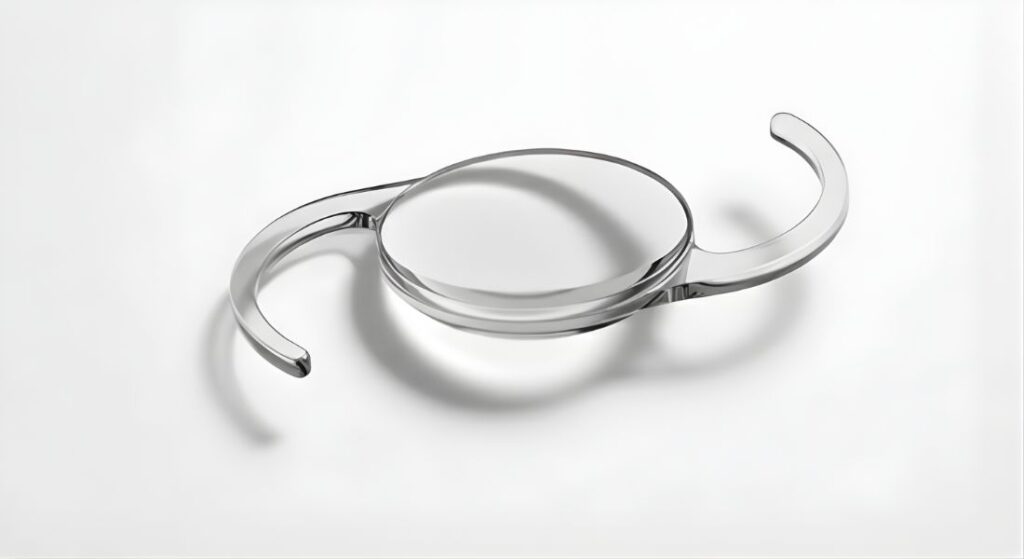
Extended Depth-of-Focus (EDOF) lenses are an advanced option designed to provide a continuous range of focus, making them particularly effective for intermediate vision. Unlike traditional multifocal lenses, which create distinct focal points for near and distance vision, EDOF lenses elongate the focus zone, allowing smoother transitions between distances and reducing abrupt shifts in clarity. This design helps patients see more naturally across a wider visual range.
By extending the depth of focus, EDOF lenses provide sharp vision at both distance and intermediate ranges while minimising common visual disturbances such as glare, halos, or reduced contrast. Patients often experience a more comfortable and seamless visual experience, with fewer compromises in image quality compared to some multifocal lens designs.
These lenses are especially suitable for individuals whose daily routines involve prolonged intermediate tasks, such as working on a computer, preparing meals, or engaging in hobbies that require arm’s-length focus. With careful pre-operative assessment and personalised consultation, surgeons can ensure that EDOF lenses match the patient’s lifestyle, eye measurements, and visual priorities, maximising independence and overall satisfaction with lens replacement surgery.
Toric Lenses and Astigmatism Considerations
For patients with significant astigmatism, selecting a toric lens is essential to achieve clear and sharp vision across all distances, including intermediate ranges. Astigmatism occurs when the cornea is irregularly shaped, causing light to focus unevenly on the retina, which can lead to blurred or distorted vision. This distortion can particularly impact comfort and visual performance during tasks such as computer work or other activities at arm’s length.
Toric lenses are specifically designed to correct this irregular curvature, aligning precisely with the cornea to neutralise astigmatism. By correcting this refractive error, toric lenses enhance clarity and reduce dependence on glasses, making intermediate and distance tasks more comfortable and visually accurate.
In many cases, toric technology can be combined with multifocal or Extended Depth-of-Focus (EDOF) lenses. This approach allows patients to benefit from astigmatism correction while also improving intermediate and near vision, providing a comprehensive solution that addresses both refractive errors and functional visual needs for daily life.
Lifestyle Factors and Lens Selection
A patient’s daily routine is a crucial factor when selecting the most appropriate intraocular lens for surgery. How you use your vision throughout the day whether for computer work, reading, crafting, or other activities can determine which lens will provide the best visual performance. Understanding these lifestyle demands allows the surgeon to recommend a lens that optimises the visual ranges most important for your everyday life.
- Evaluating Daily Visual Needs: Surgeons assess how much time you spend on distance, intermediate, and near tasks. This evaluation ensures that the selected lens supports the activities you perform most often, making day-to-day life easier.
- Optimising Intermediate Vision: For patients who work extensively on computers, use digital devices, or engage in close-to-midrange tasks, lenses that provide clear intermediate vision such as extended depth-of-focus (EDOF) lenses can significantly improve comfort and reduce the need for frequent glasses.
- Balancing Near and Distance Vision: Depending on your lifestyle, the lens choice may aim to balance multiple focal ranges. Monofocal lenses may focus on distance with reading glasses for near tasks, while multifocal or EDOF lenses can reduce dependence on glasses across a wider range of activities.
- Personalised Lens Planning: Discussing lifestyle factors allows the surgeon to tailor the lens selection to your specific needs. This personalised approach ensures functional vision, enhances convenience, and improves overall satisfaction with post-surgery outcomes.
In conclusion, considering lifestyle factors is essential in lens selection for cataract or lens replacement surgery. By understanding how patients use their vision daily, surgeons can choose lenses that prioritise the visual ranges most relevant to each individual. This approach helps maximise functional vision, reduce reliance on glasses, and improve quality of life after surgery.
Pre-Operative Testing for Optimal Lens Choice
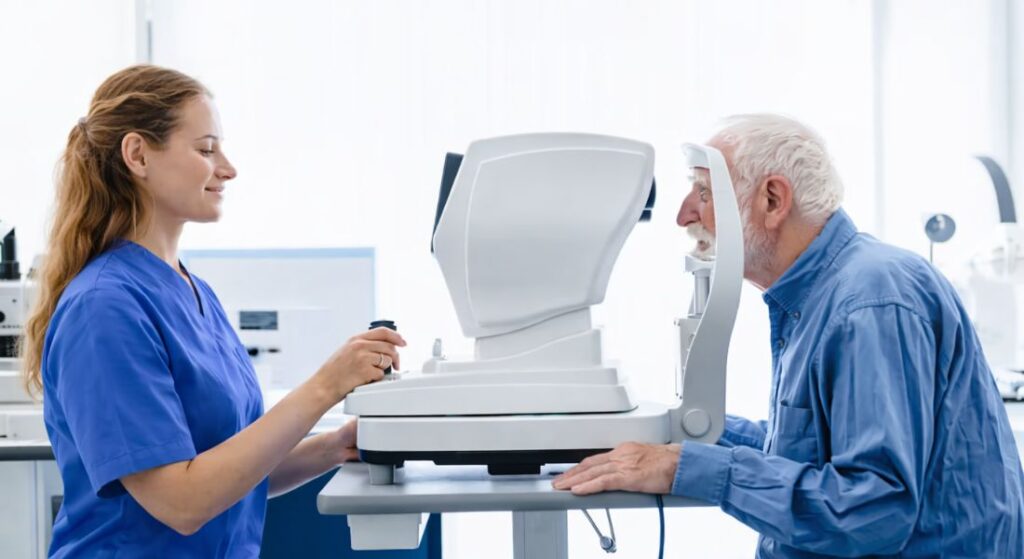
Accurate pre-operative testing is essential to ensure that the chosen intraocular lens performs optimally across all visual ranges, including intermediate distances. Detailed measurements such as biometry, corneal topography, and pupil assessments provide a comprehensive understanding of your eye’s anatomy, refractive characteristics, and optical behaviour. This information is critical for predicting how a lens will function in real-life conditions.
Biometry calculates the precise power needed for the lens to achieve clear focus, reducing the likelihood of residual refractive errors. Corneal topography identifies irregularities or astigmatism that may influence lens selection, while pupil size and responsiveness are evaluated to ensure the lens performs well under different lighting conditions. These assessments together guide the surgeon in choosing a lens that offers a balanced visual experience across near, intermediate, and distance vision.
When combined with a thorough discussion of your daily activities, visual priorities, and lifestyle, pre-operative testing allows the surgeon to personalise lens choice and placement. This meticulous approach increases the likelihood of achieving comfortable, functional vision, reducing dependence on glasses and enhancing overall quality of life after lens replacement surgery.
Realistic Expectations
While modern intraocular lenses can significantly enhance intermediate vision, it’s important to understand that no lens can perfectly cover all visual distances. Some patients may still require glasses for very close work, fine print, or tasks demanding exceptional visual precision. Even lenses designed for multiple focal points, such as multifocal or Extended Depth-of-Focus (EDOF) lenses, have trade-offs that patients should be aware of.
Understanding the strengths and limitations of different lens designs is essential for setting realistic expectations. Surgeons can explain which visual ranges distance, intermediate, or near are most likely to be optimised for your individual eyes, taking into account factors such as corneal shape, pupil size, and any existing eye conditions. This personalised explanation helps patients make informed choices about lens type and design.
Managing expectations is a key part of achieving satisfaction after surgery. By knowing what improvements are realistic and which tasks may still require glasses, patients can approach lens replacement with confidence, appreciating the functional gains in daily life. Clear communication with your surgeon ensures you have a practical understanding of likely outcomes, maximising the benefits of your procedure while minimising surprises or frustration.
Post-Operative Adaptation
After lens replacement surgery, patients often experience a period of neuroadaptation, during which the brain gradually adjusts to the new visual input provided by the artificial lenses. This adjustment period is a normal and expected part of recovery, and it can temporarily affect intermediate vision, causing images at arm’s length to appear slightly blurry or less distinct. Some patients may notice subtle differences in depth perception or contrast initially, but these usually improve over time as the visual system adapts.
Most patients see significant improvement in intermediate vision within a few weeks. Adhering to post-operative guidance such as using prescribed eye drops, protecting the eyes from strain, taking adequate rest, and performing recommended visual exercises can support the neuroadaptation process and make the adjustment smoother. Maintaining good eye hygiene and avoiding activities that could cause stress or injury to the eyes also contributes to a more comfortable recovery.
Regular follow-up appointments are crucial to monitor healing, track improvements in vision, and address any issues promptly. These visits allow your surgeon to ensure that intermediate and overall vision are developing as expected, provide reassurance, and make any necessary adjustments to optimise long-term outcomes. Consistent post-operative care helps patients achieve the best possible functional vision and confidence in daily activities.
Enhancing Work and Daily Life
Improving intermediate vision through lens replacement surgery can have a noticeable impact on everyday activities and overall quality of life. Many patients find that tasks requiring mid-range focus such as working on a computer, cooking, or using tools become easier and more comfortable. By reducing the need for reading glasses or frequent lens adjustments, these visual improvements can make daily routines more efficient and less tiring.
- Reduced Eye Strain: Clearer intermediate vision helps minimise fatigue and discomfort during activities such as computer work or reading documents. This can make long periods of focused work much more manageable.
- Improved Daily Function: Tasks like cooking, crafting, or handling small tools become safer and easier when vision at intermediate distances is optimised. This improvement supports independence in both work and home environments.
- Reduced Dependence on Glasses: Many patients experience less reliance on reading glasses or bifocals for mid-range tasks, making daily life simpler and more convenient.
- Enhanced Quality of Life: By addressing intermediate vision needs, lens replacement surgery can transform daily experiences, allowing patients to perform routine tasks comfortably and confidently. The improvement in functional vision often translates into a greater sense of independence and overall satisfaction.
In conclusion, optimising intermediate vision through lens replacement surgery can greatly enhance work performance, daily activities, and personal independence. Reduced eye strain, improved task efficiency, and decreased reliance on glasses contribute to a more comfortable and fulfilling daily life. For many patients, these benefits make lens surgery a transformative experience.
Customised Surgical Planning
Each patient’s eyes are unique, and achieving optimal intermediate vision requires fully customised surgical planning. Surgeons carefully evaluate detailed ocular measurements, including corneal curvature, axial length, pupil size, and any irregularities in the cornea or lens position. This thorough assessment ensures that the selected intraocular lens aligns precisely with your eye’s anatomy and visual needs.
Lifestyle factors and pre-existing conditions are also carefully considered to ensure the chosen lens supports your daily activities. Whether you spend long hours on a computer, cook frequently, read, or engage in hobbies requiring arm’s-length focus, these factors guide the selection of the most suitable lens be it monofocal, multifocal, Extended Depth-of-Focus (EDOF), or toric. Personalised planning ensures that the lens not only corrects refractive errors but also optimises clarity, contrast, and comfort for the visual ranges most relevant to your life.
By taking this tailored approach, lens replacement surgery can provide functional vision across a broad spectrum of daily activities, reducing dependence on glasses and enhancing independence. Customised planning maximises the likelihood of achieving smooth, clear vision at intermediate, near, and distance ranges, allowing patients to enjoy a seamless and comfortable visual experience in all aspects of everyday life.
When Supplementary Glasses May Still Be Needed
Even with advanced intraocular lens designs, some patients may still require glasses for very fine detail work at close distances, such as reading small print or intricate craft tasks. This is a normal consideration and does not indicate a problem with the surgery or lens selection it simply reflects the limitations of current lens technology.
Understanding this possibility helps patients set realistic expectations for post-operative life. For most individuals, the need for spectacles is minimal, particularly for intermediate tasks like computer use, cooking, or other everyday activities at arm’s length. The majority of daily visual needs can be comfortably managed without additional corrective lenses.
Even if glasses are occasionally required, patients typically experience a significant improvement in visual freedom and independence. Most enjoy sharper vision across multiple distances, reduced dependence on reading glasses, and enhanced comfort for daily activities, making the overall benefits of lens replacement surgery highly rewarding.
Achieving Clear Vision with Expert Cataract Care

Specialist centres, such as the London Cataract Centre, play a crucial role in ensuring the best possible outcomes for patients considering lens replacement surgery. These centres offer comprehensive, personalised assessments that combine advanced diagnostic testing with in-depth consultations. Every aspect of the patient’s eyes such as corneal curvature, axial length, pupil dynamics, and pre-existing conditions is evaluated to ensure the selected lens aligns perfectly with their visual needs.
By taking into account lifestyle factors, daily activities, and visual priorities, these centres can tailor lens selection to provide optimal clarity and comfort across distance, intermediate, and near vision. Whether a patient spends long hours on a computer, drives frequently, or engages in hobbies requiring fine detail, the chosen lens is carefully matched to maximise functional vision and reduce dependence on glasses. This personalised approach ensures patients achieve the greatest possible independence and visual satisfaction.
Access to highly experienced surgeons and the latest lens technology further enhances outcomes. Specialist centres are equipped to offer advanced lens options, such as multifocal, toric, or Extended Depth-of-Focus (EDOF) lenses, and provide expert guidance on managing expectations and post-operative adaptation. With this level of expertise, patients are more likely to experience improved intermediate vision, smoother neuroadaptation, and overall satisfaction with their lens replacement surgery, making the investment in specialist care well worth it.
FAQs:
1. Can lens replacement surgery improve intermediate vision?
Yes, modern intraocular lenses such as Extended Depth-of-Focus (EDOF) and certain multifocal lenses can enhance intermediate vision, allowing clearer focus at arm’s length for tasks like computer work, cooking, or hobbies.
2. What is intermediate vision?
Intermediate vision refers to the visual range approximately 50 cm to 1 metre from the eyes. It is important for daily activities such as using a computer, checking a car dashboard, cooking, or performing crafts.
3. How do standard monofocal lenses affect intermediate vision?
Monofocal lenses focus on a single distance, typically distance vision. While effective for driving or watching TV, they often leave intermediate tasks blurry, meaning reading glasses may still be required for mid-range activities.
4. How do multifocal lenses support intermediate vision?
Multifocal lenses provide multiple focal points, allowing patients to see at near, intermediate, and distance ranges. Certain models are optimised to improve intermediate vision, making tasks like computer use or kitchen work more comfortable and reducing reliance on glasses.
5. What are Extended Depth-of-Focus (EDOF) lenses?
EDOF lenses create a continuous range of focus, particularly between distance and intermediate vision. They allow smoother transitions across visual ranges, reduce halos or glare, and are ideal for patients performing daily tasks at arm’s length.
6. Can toric lenses help with intermediate vision?
Yes, toric lenses correct astigmatism, ensuring clear and stable vision at all distances, including intermediate. They can be combined with multifocal or EDOF designs to address both refractive errors and functional visual needs.
7. How do lifestyle factors influence lens choice?
Daily activities such as computer work, cooking, reading, or crafting are considered when selecting a lens. Lenses are chosen to optimise the visual ranges most important for your routine, enhancing comfort, independence, and functional vision.
8. What pre-operative tests are done for intermediate-vision lenses?
Surgeons perform biometry, corneal topography, and pupil assessments to understand the eye’s anatomy and refractive behaviour. These measurements guide the selection of lenses that provide balanced vision across near, intermediate, and distance ranges.
9. Will I still need glasses after surgery?
Some patients may need glasses for very fine print or low-light tasks, but most daily activities at intermediate distances can be performed without them. Advanced lens designs significantly reduce reliance on spectacles compared with standard monofocal lenses.
10. Why choose a specialist centre for lens replacement surgery?
Specialist centres like the London Cataract Centre offer personalised assessments, advanced diagnostic testing, and expert surgeon guidance. This ensures the chosen lens aligns with eye anatomy, lifestyle, and visual priorities, maximising functional vision and post-operative satisfaction.
Final Thoughts: Enhancing Intermediate Vision with Lens Replacement Surgery
Improving intermediate vision through modern lens replacement surgery can greatly enhance daily life, from computer work and cooking to hobbies that require focus at arm’s length. Advanced intraocular lenses, such as Extended Depth-of-Focus (EDOF), multifocal, and toric designs, allow patients to see clearly across multiple distances, reducing reliance on glasses and improving comfort and efficiency for everyday tasks. Careful pre-operative assessments, personalised lens selection, and consideration of lifestyle factors are essential to achieving optimal results and long-term satisfaction.
By understanding your visual needs and working closely with an experienced surgeon, lens replacement surgery can be tailored to provide a seamless range of vision, minimise eye strain, and enhance independence. If you’re thinking about lens surgery in London, you can get in touch with us at London Cataract Centre.
References:
- Liu, J., Dong, Y. and Wang, Y. (2019) Efficacy and safety of extended depth of focus intraocular lenses in cataract surgery: a systematic review and meta‑analysis, BMC Ophthalmology, https://pmc.ncbi.nlm.nih.gov/articles/PMC6719364/
- Wiens, J. and Hall, B. (2025) Visual outcomes of an extended depth of focus intraocular lens in patients with high ocular axial length, Canadian Journal of Ophthalmology https://pubmed.ncbi.nlm.nih.gov/39961351/
- Borrelli, M., El‑Haddad, C. and Chakravarti, R. (2023) Visual results after extended depth‑of‑focus lens implantation in patients undergoing clear lens surgery, Journal of Clinical Medicine, https://www.mdpi.com/2077-0383/14/8/2795
- Rampat, R. and Gatinel, D. (2020) Multifocal and extended depth‑of‑focus intraocular lenses in 2020, Journal of Cataract & Refractive Surgery. https://www.sciencedirect.com/science/article/abs/pii/S0161642020309313
- Abd‑Elmaguid, M., Abd‑Ellatif, M., Mahmoud, A. et al. (2024) Comparison between intraocular lenses TECNIS Eyhance IOL and AcrySof IQ clear IOL on visual performance, QJM: An International Journal of Medicine. https://academic.oup.com/qjmed/article/117/Supplement_2/hcae175.631/7904120