



If you previously had LASIK or PRK but are experiencing changes in your vision, you may be wondering whether additional correction is possible. Over time, some patients develop residual refractive errors, prescription shifts, or age-related changes that affect their visual clarity. These changes can sometimes make further laser treatment less effective or unsuitable, leaving patients looking for alternative solutions.
ICL surgery provides a safe and effective option for those who are no longer ideal candidates for further laser procedures. Instead of reshaping the cornea like LASIK or PRK, ICL involves implanting a lens inside the eye, behind the iris. This approach is particularly beneficial for patients with thinner corneas, high prescriptions, or those seeking a reversible procedure that can adapt to future vision needs.
Before proceeding, surgeons perform a thorough assessment of the eyes, considering previous laser surgery, corneal thickness, anterior chamber depth, and overall ocular health. This evaluation ensures that the implanted lens will fit safely and provide the best possible visual outcomes without compromising eye structure or function.
With careful planning and experienced surgical technique, many patients who have had LASIK or PRK can successfully undergo ICL surgery. The procedure can correct residual errors, improve visual clarity, and reduce dependence on glasses or contact lenses, offering a reliable long-term solution for changing vision.
Why Vision May Change After LASIK or PRK
Even after LASIK or PRK successfully improves vision, changes can occur over time due to the natural dynamics of the eye. Factors like age, ongoing changes in refractive error, or small regressions in the original laser correction can affect clarity. These shifts may lead to blurred vision, reduced sharpness at certain distances, or difficulties with activities like night driving. Understanding why vision can change helps patients explore options for maintaining optimal eyesight, including the possibility of ICL surgery to correct residual errors.
- Natural Progression of Myopia or Hyperopia: Nearsightedness or farsightedness can continue to change gradually even after laser surgery. The eye may elongate or shorten slightly with age, altering the focusing power. This natural progression can cause vision to drift away from the originally corrected prescription.
- Age-Related Presbyopia: Presbyopia typically develops in the 40s or 50s, affecting the ability to focus on close objects. Even if distance vision remains excellent post-LASIK or PRK, near vision may require reading glasses. This is a normal part of the eye’s aging process and is unrelated to the original laser correction.
- Minor Regression of Laser Correction: In some patients, a small amount of the initial laser correction may regress over time. This can leave residual refractive errors and reduce visual sharpness. Although usually subtle, this effect can impact activities that require precise vision, like driving at night.
- Residual Refractive Errors: Combined, these factors can result in remaining prescription needs that were not fully corrected by the original surgery. ICL surgery offers an option to address these residual errors without additional laser procedures. It provides an alternative for patients seeking improved clarity and reduced dependence on glasses or contacts.
Vision changes after LASIK or PRK are often gradual and influenced by natural eye development and aging. Understanding these factors allows patients to anticipate changes and plan follow-up care. For those with residual refractive errors, ICL surgery presents a safe and effective option to restore sharp vision. Early consultation with an experienced surgeon ensures the best long-term outcomes.
How ICL Complements Previous Laser Surgery

Unlike LASIK or PRK, which reshape the cornea to correct vision, ICL surgery involves implanting a thin lens inside the eye, behind the iris and in front of the natural lens. Because the cornea remains untouched, ICL is particularly suitable for patients who have already undergone laser procedures and may have limited corneal thickness or irregular curvature.
ICL lenses can correct residual refractive errors such as myopia, hyperopia, and astigmatism that persist after previous laser surgery. By providing precise additional correction without altering the cornea, the procedure can enhance visual clarity and reduce dependence on glasses or contact lenses.
Another key advantage is reversibility. The implanted lens can be removed or replaced if necessary, offering flexibility that laser procedures do not provide. This approach preserves the natural cornea while giving patients a safe and effective way to improve vision after prior laser treatments.
Benefits of ICL After Laser Eye Surgery
ICL surgery provides several advantages for patients who have previously undergone LASIK or PRK. One of the primary benefits is the ability to correct residual refractive errors without performing additional corneal surgery. This preserves the cornea’s integrity and thickness, which can be a concern for patients who have already had laser procedures.
The procedure delivers high-quality, stable vision and can address residual astigmatism through the use of toric ICL lenses. Patients often experience sharper visual clarity and improved contrast, with less dependence on glasses or contact lenses.
Another advantage of ICL is its reversibility. If necessary, the lens can be removed or replaced in the future, offering flexibility that laser procedures do not provide. Together, these benefits make ICL an excellent option for patients seeking additional vision correction after previous laser eye surgery.
Candidacy Assessment
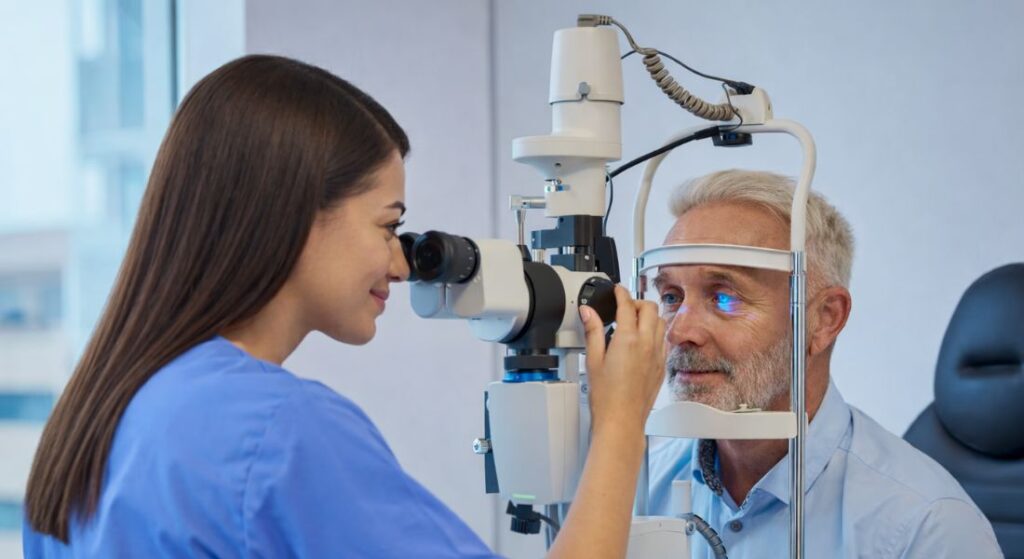
Patients who have previously undergone LASIK or PRK need a detailed pre-operative evaluation before considering ICL surgery. Prior laser procedures can alter corneal shape and thickness, which affects how additional vision correction is planned. A careful assessment helps the surgeon determine whether ICL implantation is both safe and likely to achieve the desired visual outcome. This personalised approach minimises risk and maximises post-operative clarity.
- Corneal Thickness and Shape: Previous laser surgery can thin or reshape the cornea, which is critical for determining ICL suitability. Measuring corneal thickness ensures the procedure will not compromise structural integrity. A healthy cornea is essential for long-term eye safety.
- Anterior Chamber Depth: The space between the cornea and the lens, called the anterior chamber, must be deep enough to accommodate the ICL safely. Insufficient depth increases the risk of lens-related complications. Accurate measurement guides safe lens placement.
- Residual Refractive Error: Surgeons evaluate any remaining myopia, hyperopia, or astigmatism after laser surgery. Understanding the residual prescription helps select the correct lens power. This ensures optimal visual correction without further corneal surgery.
- Pupil Size and General Eye Health: Large pupils or other ocular conditions can affect post-operative vision quality. Evaluating overall eye health, including retina and lens status, helps anticipate potential complications. A thorough check ensures that surgery is appropriate for each individual eye.
Careful candidacy assessment is crucial for patients with prior LASIK or PRK. By evaluating corneal health, anterior chamber depth, residual prescription, and overall eye condition, surgeons can plan ICL surgery safely and effectively. This thorough preparation increases the likelihood of excellent visual outcomes and long-term stability.
Surgical Planning Considerations
Prior laser surgery can have a significant impact on ICL surgical planning, as the cornea has already been reshaped and may be thinner than average. Experienced surgeons take this into account by carefully calculating the appropriate lens power based on residual refractive errors and detailed measurements of the eye. Accurate planning is essential to achieve precise visual correction.
Advanced imaging technologies, such as corneal topography and anterior segment scans, are used to ensure that the lens is correctly sized and positioned. These tools help surgeons account for subtle anatomical changes caused by previous laser procedures, reducing the risk of misalignment or suboptimal outcomes.
This personalised approach is especially important for eyes that have already undergone refractive surgery. By tailoring the procedure to the individual’s unique eye anatomy and vision needs, experienced surgeons can provide safe, effective, and long-lasting results while minimising potential complications.
Addressing Astigmatism
Patients with residual astigmatism following LASIK or PRK may benefit from toric ICL lenses. Unlike standard lenses, toric lenses are specifically designed to correct cylindrical refractive errors, which are common after previous laser procedures. Proper correction depends on accurate calculation of lens power and orientation.
Precise alignment of the toric lens within the eye is essential for achieving clear and stable vision. Even small deviations in positioning can reduce the effectiveness of astigmatism correction and affect visual clarity. Careful pre-operative planning and intraoperative adjustments help ensure optimal results.
Experienced surgeons play a critical role in this process, particularly for eyes that have already undergone surgery. Their expertise ensures that the toric lens is positioned accurately, taking into account any changes in corneal shape or eye anatomy, which maximises both safety and long-term visual outcomes.
Visual Outcomes
ICL surgery can provide excellent visual results even in patients who have previously undergone LASIK or PRK. With careful planning and modern lens technology, many patients achieve sharp distance vision and maintain good night-time clarity. Contrast sensitivity is often preserved, and unwanted visual effects such as glare or halos are usually minimal. Long-term studies show that these results remain stable, and the procedure does not alter the cornea further, making it a reliable option for post-laser vision correction.
- Significant Improvement in Distance Vision: Many patients notice a marked enhancement in distance clarity after ICL implantation. This allows for better performance in activities such as driving or sports. Improved distance vision often reduces dependence on glasses or contact lenses.
- Preserved Night Vision and Contrast Sensitivity: Modern ICL designs aim to maintain the eye’s ability to distinguish subtle differences in light and dark. Night driving and low-light tasks are less likely to be affected. Patients often report clear vision without significant halos or glare.
- Minimal Visual Side Effects: Advances in lens technology have reduced the occurrence of visual disturbances. While some patients may notice mild halos initially, these usually diminish as the brain adapts. Proper lens selection helps optimise comfort and visual quality.
- Long-Term Stability Without Corneal Impact: Unlike further laser surgery, ICL implantation does not remove corneal tissue. The results are stable over many years, and the cornea remains structurally intact. This makes ICL a safe option for patients with prior corneal procedures.
ICL surgery after LASIK or PRK can deliver excellent, stable vision with minimal side effects. By preserving corneal integrity and using advanced lens designs, patients can enjoy improved distance vision and maintain high-quality night and contrast vision. Careful planning ensures predictable and long-lasting outcomes.
Recovery After ICL Surgery
Recovery from ICL surgery is generally rapid, even for patients who have previously undergone laser procedures such as LASIK or PRK. Most patients notice a significant improvement in vision within a few days, while full visual stabilisation typically occurs over several weeks as the eye heals and adapts to the implanted lens.
Follow-up appointments are an essential part of the recovery process. During these visits, the surgeon monitors lens positioning, intraocular pressure, and overall healing to ensure the procedure is progressing safely and effectively. Any minor adjustments or concerns can be addressed promptly, supporting optimal visual outcomes.
Patients are usually advised to avoid strenuous activity and protect the eyes during the initial recovery period. Following post-operative care instructions carefully helps minimise the risk of complications and ensures a smooth, comfortable healing process.
Managing Expectations

It is important for patients to understand that while ICL surgery effectively corrects refractive errors, it does not reverse vision changes caused by other eye conditions. Pre-existing issues such as early cataracts, macular degeneration, or glaucoma can still affect overall visual clarity, even after the lens is implanted.
Setting realistic expectations helps patients appreciate what ICL surgery can achieve. While distance vision and correction of residual refractive errors can be dramatically improved, certain limitations related to underlying eye health may remain.
A thorough pre-operative consultation ensures that each patient receives a personalised plan. Experienced surgeons evaluate the eyes in detail, discuss potential outcomes, and provide guidance tailored to the individual’s visual needs, helping patients make informed decisions and approach surgery with confidence.
Why Experienced Surgeons Matter
Performing ICL surgery in patients who have previously undergone LASIK or PRK requires a high level of skill and precision. These eyes often have altered corneal anatomy, making accurate measurements and careful planning essential for safe and effective lens implantation.
Experienced surgeons are adept at calculating the correct lens power, selecting the appropriate lens type, and aligning it precisely to achieve optimal visual outcomes. Their familiarity with complex cases helps minimise risks such as lens rotation, elevated intraocular pressure, or residual refractive errors.
Choosing a specialised centre, such as the London Cataract Centre, further enhances safety and results. Centres with advanced imaging, experienced surgeons, and personalised care protocols provide patients with greater confidence, improved vision, and a higher likelihood of long-term satisfaction after ICL surgery.
Who May Benefit Most
ICL surgery can be an ideal solution for patients who have undergone previous laser eye procedures but still experience vision issues. Residual refractive errors or regression of the original correction may leave some patients dissatisfied with their current vision. For those who are no longer suitable candidates for additional LASIK or PRK, ICL offers a safe alternative. Understanding who benefits most helps patients and surgeons make informed decisions about post-laser vision correction.
- Patients with Residual Myopia, Hyperopia, or Astigmatism: Some patients retain a small degree of nearsightedness, farsightedness, or astigmatism after laser surgery. ICL implantation can correct these remaining refractive errors precisely. This reduces dependence on glasses or contact lenses.
- Those Experiencing Regression of Their Original Laser Correction: Over time, minor regression can occur after LASIK or PRK, affecting visual clarity. ICL surgery provides an effective method to restore the intended correction without touching the cornea again. This helps maintain long-term vision quality.
- Patients Unsuitable for Additional LASIK or PRK: Thinner or irregular corneas may prevent further laser correction. ICL implantation does not require corneal tissue removal, making it safe for these patients. It offers a viable alternative when repeat laser surgery is not possible.
- Individuals Seeking High-Quality, Stable Vision: ICL surgery can provide sharp, consistent vision for distance, often with minimal night-time disturbances. The implanted lens remains stable over time, delivering reliable long-term results. Patients gain visual independence without further corneal procedures.
ICL surgery after prior laser eye procedures is a versatile solution for those seeking precise, long-lasting vision correction. By targeting residual errors or regression, it provides safe and effective improvement for patients who may not benefit from additional laser surgery. Careful evaluation ensures the best possible outcomes for long-term visual satisfaction.
Pre-Operative Tests
Before ICL surgery, patients undergo comprehensive eye examinations to ensure the procedure can be performed safely and effectively. These tests help the surgeon evaluate the eye’s anatomy, measure residual refractive errors, and plan the procedure with precision.
Key assessments often include corneal topography to map the shape and curvature of the cornea, biometric measurements to determine the correct lens size, and pupil size evaluation to anticipate potential visual effects such as glare or halos. Additionally, retinal health checks are performed to rule out any underlying conditions that could affect surgery or vision outcomes.
These pre-operative tests are especially important for patients who have previously undergone laser surgery. Prior procedures can alter corneal structure and thickness, making detailed measurements critical for accurate lens selection, alignment, and overall surgical success.
Long-Term Considerations
ICL surgery is intended to provide long-term vision correction, offering a durable solution for patients even years after prior LASIK or PRK procedures. The implanted lens is made from stable, biocompatible materials that do not degrade over time, allowing most patients to enjoy many years of clear, high-quality vision.
Regular eye examinations remain important after surgery to monitor overall eye health, check lens positioning, and detect any new or developing conditions early. These follow-ups help ensure that the vision benefits of ICL surgery are maintained safely over the long term.
For patients who have undergone laser eye surgery, ICL implantation can address residual refractive errors or vision changes that occur later in life. By providing a precise, reversible, and long-lasting correction, ICL surgery offers a reliable way to maintain excellent vision when additional laser enhancement is no longer suitable.
FAQs:
1. Can I have ICL surgery if I’ve previously undergone LASIK or PRK?
Yes. ICL surgery is often suitable for patients who have had LASIK or PRK but are experiencing residual refractive errors, prescription changes, or age-related vision shifts. The lens is implanted inside the eye without reshaping the cornea, making it a safe alternative.
2. Why does vision sometimes change after LASIK or PRK?
Vision can change due to natural progression of myopia or hyperopia, age-related presbyopia, minor regression of the original laser correction, or residual refractive errors. These shifts can cause blurred vision, reduced sharpness, or difficulties with night vision.
3. How does ICL complement previous laser eye surgery?
Unlike LASIK or PRK, ICL does not alter the cornea. Instead, a lens is implanted behind the iris, allowing correction of residual myopia, hyperopia, or astigmatism while preserving corneal integrity. The procedure is reversible and can be adjusted in the future if needed.
4. How do surgeons determine if ICL is suitable after prior laser surgery?
A detailed pre-operative assessment evaluates corneal thickness, anterior chamber depth, residual refractive error, pupil size, and overall eye health. These measurements ensure the lens can be safely implanted and will deliver optimal visual outcomes.
5. Can ICL correct residual astigmatism after LASIK or PRK?
Yes. Toric ICL lenses are specifically designed to correct cylindrical refractive errors such as astigmatism. Accurate lens alignment is essential for clear, stable vision, and experienced surgeons ensure precise placement.
6. What are the benefits of ICL surgery after previous laser procedures?
Benefits include correction of residual refractive errors without further corneal surgery, high-quality and stable vision, preservation of corneal thickness, reversibility of the procedure, and reduced dependence on glasses or contact lenses.
7. What does the surgical planning process involve for post-laser ICL patients?
Experienced surgeons use advanced imaging, detailed eye measurements, and consideration of prior corneal changes to determine the correct lens type, power, and positioning. This personalised approach reduces risks and enhances visual outcomes.
8. How quickly does vision recover after ICL surgery following LASIK or PRK?
Most patients notice significant improvement within a few days, while full visual stabilisation occurs over several weeks. Follow-up appointments ensure proper lens positioning and monitor healing.
9. Are there long-term visual concerns after ICL implantation post-laser surgery?
ICL surgery is designed for long-term stability. The lens is biocompatible and reversible, and regular eye exams help monitor lens position and overall eye health, ensuring lasting clear vision.
10. Who benefits most from ICL after LASIK or PRK?
Patients with residual myopia, hyperopia, or astigmatism; those experiencing regression of prior laser correction; individuals unsuitable for additional laser surgery due to thin or irregular corneas; and anyone seeking high-quality, stable vision without altering the cornea.
Final Thoughts: ICL Surgery After LASIK or PRK
ICL surgery offers a safe and effective solution for patients whose vision has changed after LASIK or PRK. By implanting a lens behind the iris without altering the cornea, it can correct residual refractive errors, address astigmatism, and provide high-quality, stable vision. Careful pre-operative assessment, precise surgical planning, and the expertise of an experienced surgeon ensure optimal outcomes, even in eyes that have undergone previous laser procedures.
If you’re looking for ICL Surgery in London, you can get in touch with us at London Cataract Centre. This procedure provides a reliable long-term option for those seeking clear vision when additional laser surgery is not suitable.
References:
- Kim, Y.H., Yoon, C.H. & Kim, M.K., 2025. Long‑term outcome and related risk factors in implantable collamer lens implantation of high myopia. Korean Journal of Ophthalmology, 39(2), pp.134–144. Available at: https://pmc.ncbi.nlm.nih.gov/articles/PMC12010185/
- Chen, X., Wang, X., Zhang, X., Chen, Z. & Zhou, X., 2016. Implantable collamer lens for residual refractive error after corneal refractive surgery. International Journal of Ophthalmology, 9(10), pp.1421–1426. Available at: https://pubmed.ncbi.nlm.nih.gov/27803858/
- de Torres‑Torres, I., et al., 2021. Posterior chamber phakic intraocular lenses for the correction of myopia: factors influencing the postoperative refraction. Vision, 2(4), p.28. Available at: https://www.mdpi.com/2673-3269/2/4/28
- Chan, A.T., Zauberman, N.A., Chan, C.C. & Rootman, D.S., 2017. Outcomes after implantable collamer lens surgery in a Canadian cohort. Canadian Journal of Ophthalmology, 52(2), pp.150–154. Available at: https://www.sciencedirect.com/science/article/abs/pii/S0008418216301089
- Abdelhakim, S.M.N., El Ghazzawy, R.M.F., Ahmed, A.M.A. and Ebeid, A.A.A., 2025. Comparison of White‑to‑White Measurement by IOL Master and Caliper and Sulcus Measurement for Phakic PC ICL by UBM. QJM: An International Journal of Medicine, 118(Supplement_1), 26 November. Available at: https://academic.oup.com/qjmed/article-abstract/118/Supplement_1/hcaf224.176/8341185