



If you are considering refractive lens exchange, you likely have a range of questions about how the procedure works and what results you can expect. This is completely normal, as RLE is a significant decision that directly affects your vision and daily life. Having clear, reliable information helps you move forward with confidence.
RLE surgery replaces your eye’s natural lens with an artificial intraocular lens designed to improve focus. It is often recommended for patients who are developing age-related changes in vision or who are not suitable for laser procedures. The treatment is widely performed and supported by highly advanced surgical technology.
In this guide, we take a detailed look at the ten most frequently asked questions about RLE surgery. Each section is designed to give you a deeper understanding of what to expect before, during, and after the procedure. This helps you make a well-informed and realistic decision about your eye care.
What Is RLE Surgery?
Refractive lens exchange (RLE) is a surgical procedure where your eye’s natural lens is replaced with a synthetic intraocular lens tailored to correct your specific refractive error. The artificial lens improves how your eye focuses light, giving a personalised solution that can address long-sightedness, short-sightedness, and presbyopia.
Although the procedure resembles cataract surgery, it is performed before a cataract develops. By replacing the natural lens early, RLE not only enhances vision but also lowers the risk of cataract formation later. This dual benefit makes it both a corrective and preventative intervention.
One of the key points is that RLE is permanent. Once your natural lens is replaced, it cannot regrow or adapt, which provides long-term stability in your vision. Unlike contact lenses or laser-based treatments, this is a durable solution that can maintain clarity for decades.
Additionally, modern RLE allows surgeons to customise lens type and power based on your lifestyle and visual priorities. Whether your goal is sharper distance vision, improved near focus, or a balanced range, the procedure can be tailored to meet your specific needs, making it a highly individualised approach to eye care.
Who Is Suitable for RLE Surgery?

Refractive lens exchange (RLE) is a procedure where your natural lens is replaced with a synthetic intraocular lens tailored to correct your specific refractive error. This lens improves how your eye focuses light, addressing long-sightedness, short-sightedness, and presbyopia with a personalised approach.
Unlike cataract surgery, RLE is performed before a cataract develops. Replacing the lens early not only enhances vision but also reduces the risk of cataract formation, making it both a corrective and preventative procedure.
RLE is permanent once your natural lens is replaced, it cannot regrow or change, providing long-term stability. Modern techniques allow surgeons to customise lens type and power to your lifestyle and visual goals, ensuring results are tailored to your daily needs.
How Does RLE Differ From Laser Eye Surgery?
Laser eye surgery reshapes your cornea to improve how light enters the eye, while RLE replaces your natural lens entirely. This deeper-level correction makes RLE more suitable for patients whose vision cannot be fully addressed with corneal reshaping alone.
RLE isn’t limited by corneal thickness or shape, making it a better option for complex prescriptions or irregular corneas. It also tends to deliver more consistent results for age-related changes in vision.
Longevity is another key difference. Laser treatments can be affected by future changes in your natural lens, such as presbyopia or cataracts. RLE removes that variable entirely by replacing the lens, providing a more permanent solution.
What Happens During the Procedure?
RLE is a minimally invasive day procedure, typically taking 15 to 20 minutes per eye, with local anaesthetic keeping you comfortable and awake throughout.
A tiny incision is made at the edge of your cornea, through which the natural lens is broken down using advanced techniques and carefully removed. A new intraocular lens is then inserted into the same position to restore focus.
The incision is self-sealing and rarely needs stitches. You may notice light or movement during surgery, but the procedure is pain-free and controlled to ensure maximum precision and safety.
What Is the Recovery Time?

You might expect to bounce back immediately after RLE, but recovery is a gradual process that still demands your attention. While vision often improves within days, the eye continues to stabilise over several weeks, and minor discomfort is normal. If you neglect aftercare or skip follow-ups, even a smooth surgery can lead to delayed healing or temporary visual fluctuations.
- Expect gradual visual improvement over weeks: while you may notice sharper vision within a few days, full visual clarity and stability often take several weeks as the eye settles and any minor swelling resolves
- Manage mild irritation and discomfort: dryness, light sensitivity, and occasional itching are common in early recovery; using lubricating drops and avoiding rubbing your eyes helps reduce these symptoms
- Use prescribed eye drops consistently and correctly: anti-inflammatory and antibiotic drops must be applied exactly as directed to control swelling, prevent infection, and promote proper healing
- Avoid strenuous activity and risky movements: heavy lifting, bending, or sudden head movements can put pressure on healing tissue, potentially affecting incision sites or intraocular lens positioning
- Protect your eyes from environmental irritants: sunglasses outdoors and avoiding dust, smoke, or wind exposure help prevent irritation and secondary inflammation during the recovery period
- Attend all scheduled follow-up appointments: regular check-ups allow your surgeon to monitor healing, detect subtle complications early, and adjust care or medications if necessary
When you approach recovery as an active, managed process rather than a passive waiting period, your eyes heal more predictably and comfortably. The key to excellent results isn’t just the surgery itself t’s in consistently following the care plan to give your eyes the environment they need to stabilise fully.
What Types of Lenses Are Available?
Several types of intraocular lenses are available for RLE, each suited to different visual needs. Monofocal lenses give clear vision at a single distance usually near or far and are a reliable choice, though you may still need glasses for other tasks.
Multifocal lenses provide vision at multiple distances using advanced optical designs, reducing reliance on glasses and offering greater convenience for everyday activities.
Extended depth-of-focus (EDOF) lenses create a smoother range of vision, allowing more gradual transitions between near and far distances while minimising visual disturbances. Your surgeon will guide you in selecting the lens type that best fits your lifestyle and visual goals.
Are the Results Permanent?
The results of RLE are considered permanent because your natural lens is replaced with an artificial one. Unlike your natural lens, the intraocular lens does not age, degrade, or change shape, providing long-term stability in vision.
A major benefit is that cataracts cannot develop after RLE, as the primary cause the natural lens is removed. This gives the procedure a preventative advantage in addition to correcting vision.
It’s important to remember that other aspects of eye ageing still continue. Regular eye exams remain essential to monitor overall eye health and ensure your vision remains optimal over time.
What Are the Risks of RLE Surgery?
Like any surgery, RLE carries some risks. These can include infection, inflammation, or temporary visual disturbances, though serious complications are rare.
Modern techniques and advanced technology have made the procedure much safer, and thorough pre-operative assessments help identify potential risk factors in advance. This allows your surgeon to plan carefully and reduce the likelihood of problems.
Your surgeon will go through all possible risks before the procedure so you understand what to expect. Being fully informed helps you make a confident, well-considered decision about your care.
Will I Still Need Glasses After RLE?
Many patients see a big reduction in their need for glasses after RLE, but complete independence isn’t guaranteed. The result depends on the type of lens you choose and your individual visual goals.
Monofocal lenses often still require reading glasses, while multifocal and extended depth-of-focus lenses reduce the need for spectacles, though they may not eliminate it entirely. Each lens type involves a trade-off between clarity and flexibility.
Talking through your lifestyle and priorities with your surgeon is key. This allows them to recommend the lens best suited to your needs and ensures a personalised outcome that maximises satisfaction.
How Do I Choose the Right Clinic?
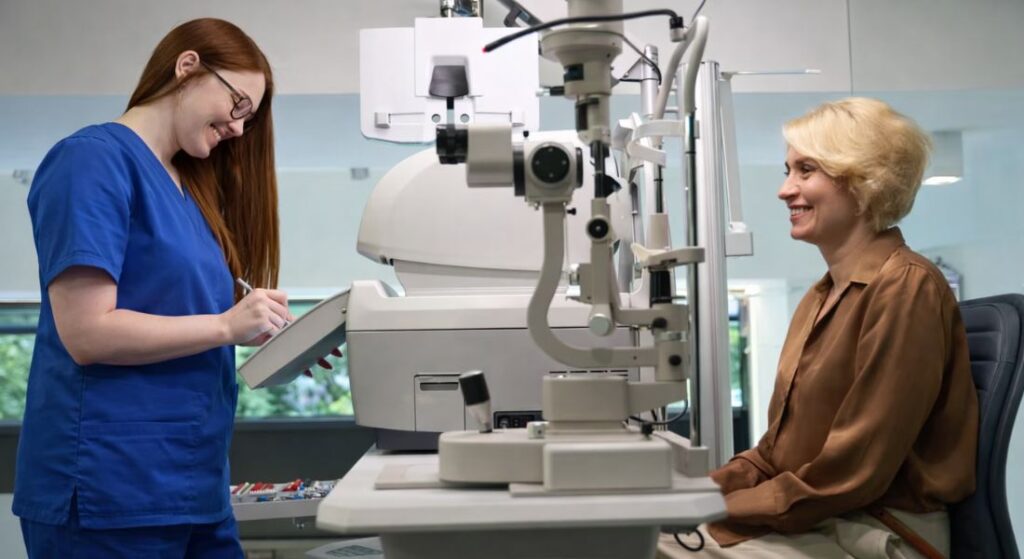
Choosing the right clinic for refractive lens exchange is an important decision that goes beyond simply expecting to be completely free from glasses. While many patients experience a strong reduction in their dependence on spectacles, the final outcome depends on the lens you choose and your personal visual priorities. It is important for you to understand the balance between clarity, flexibility, and your daily needs. This helps ensure your results match your expectations.
Different lens options come with their own benefits and trade-offs, and a good clinic will explain these clearly. Monofocal lenses may give excellent distance vision but often require reading glasses, while multifocal lenses can reduce this need but may introduce halos or glare. Extended depth-of-focus lenses aim to provide a balance between range and clarity. Your lifestyle, eye health, and specific visual demands should all be considered before making a choice.
A reliable clinic will take time to understand how you use your vision in everyday life and guide you accordingly. They will also help you set realistic expectations and explain if occasional visual aids may still be needed. This personalised approach ensures your results feel natural and practical. Taking the time to choose carefully can make a significant difference in your long-term satisfaction.
Is RLE Surgery Painful?
RLE surgery is generally not painful. Anaesthetic eye drops numb the surface of your eye, keeping you comfortable throughout the procedure.
During surgery, you might feel slight pressure or notice movement, but pain is uncommon. Most patients describe the sensation as unusual rather than uncomfortable and are often surprised by how straightforward it feels.
Afterwards, mild discomfort or irritation can occur for a few days, usually manageable with prescribed eye drops. Any significant pain should be reported to your clinic immediately to ensure proper care.
How Soon Can I Return to Normal Activities?
RLE surgery is usually pain-free. Anaesthetic eye drops numb the surface of your eye, so you remain comfortable throughout the procedure.
You may feel slight pressure or notice movement during surgery, but actual pain is rare. Most patients describe it as an unusual sensation rather than discomfort and are often surprised by how simple the experience feels.
After the procedure, mild irritation or discomfort can occur for a few days, typically controlled with prescribed eye drops. Any significant pain should be reported to your clinic right away to ensure it’s addressed promptly.
Can Both Eyes Be Treated at the Same Time?
RLE is usually done one eye at a time. Treating a single eye first allows it to start healing and gives your surgeon a chance to assess the initial results before proceeding with the second eye.
The second eye is typically treated within one to two weeks. This staged approach improves safety, allows for better visual adjustment, and ensures each eye receives focused care.
Performing the surgery separately also reduces risk. If any unexpected issues occur with the first eye, they can be addressed before the second procedure, making this careful, step-by-step approach standard in modern eye surgery.
Will My Vision Be Perfect After RLE?
RLE can greatly improve your vision, but perfect eyesight isn’t guaranteed. The main goal is to reduce dependence on glasses and enhance overall visual quality, though results vary from person to person.
Factors like your prescription, eye health, and the type of lens chosen all affect the outcome. Many patients achieve excellent vision, but some may still need glasses for specific tasks, especially fine or close-up work.
Having realistic expectations is key. RLE is designed to improve your vision, not necessarily make it flawless in every situation, and discussing your goals with your surgeon helps align what you hope to achieve with what’s possible.
What Are the Benefits Compared to Glasses or Contact Lenses?
You might assume glasses or contacts are just as good, but RLE changes the game by fixing the problem inside your eye rather than relying on external correction. It delivers consistent, stable vision that doesn’t fluctuate with lens position, daily wear, or prescription changes. Beyond vision, the lifestyle freedom it offers whether for travel, exercise, or everyday activities is where many patients notice the biggest difference.
- Permanent correction instead of temporary fixes: RLE addresses the eye’s optics directly, reducing or eliminating dependence on external lenses
- Consistent and stable vision: unlike glasses that can fog, slide, or distort, or contacts that can dry out or shift, intraocular lenses provide reliable clarity all day
- No ongoing maintenance or replacements: glasses need periodic prescription updates and contacts require cleaning, replacement, and monitoring, all of which RLE eliminates
- Freedom for active lifestyles: sports, swimming, and outdoor activities become simpler without worrying about lenses or glasses
- Enhanced convenience in travel and work: no need to carry multiple pairs, deal with lost or broken glasses, or manage contact lens supplies
- Reduced visual fluctuations: prescription changes over time affect glasses and contacts, but RLE gives long-term stability once the lens is in place
When you weigh convenience, comfort, and long-term stability, RLE delivers advantages that glasses and contacts simply can’t match. The difference isn’t just in vision it’s in how liberating life becomes without constant reliance on external visual aids.
Can RLE Correct Astigmatism?
Yes, RLE can correct astigmatism in many cases using specialised toric intraocular lenses. These lenses are designed to counter irregular corneal curvature and improve overall focus.
Accurate measurements and precise lens alignment are critical. Advanced diagnostic tools help your surgeon plan and position the lens correctly to achieve the best possible results.
Correcting astigmatism during RLE further reduces the need for glasses and provides a more complete vision correction solution. This is especially valuable for patients with complex prescriptions or higher degrees of astigmatism.
What Happens If My Vision Changes Later?
Although RLE provides long-term stability, minor vision changes can still happen as part of natural ageing. The artificial lens itself remains stable and does not degrade over time.
If changes occur, small adjustments may be needed, such as glasses for certain tasks or, in rare cases, additional procedures. Your surgeon will discuss the best options if intervention becomes necessary.
Regular eye exams remain essential after RLE. They help monitor overall eye health, catch any changes early, and support long-term visual quality.
How Long Do Artificial Lenses Last?
Artificial intraocular lenses are built to last a lifetime. Made from durable, biocompatible materials, they do not degrade over time, making them a long-term solution for vision correction.
Unlike natural lenses, they cannot develop cataracts, so you won’t need future surgery to remove them. This is a major advantage of RLE over relying on the eye’s natural lens.
The stability of these lenses ensures consistent visual results. Once implanted, they stay securely in place, providing lasting improvement in vision and long-term reliability.
Is RLE a Safe Procedure?
RLE is generally a safe and well-established procedure, building on the long track record of cataract surgery. Advances in technology have made it even safer, allowing for precise and controlled surgical techniques.
Thorough pre-operative assessments help identify any potential risks and ensure the procedure is suitable for your eyes. This careful planning supports safer, more predictable outcomes.
While no surgery is completely risk-free, complications are rare. Selecting an experienced clinic and surgeon further minimises risk, as safety is prioritised at every stage of the process.
How Do I Prepare for RLE Surgery?
Preparing for RLE starts with a thorough eye examination, including detailed measurements and assessments of your overall eye health. These tests provide the information your surgeon needs to plan your treatment accurately.
You may be asked to stop wearing contact lenses for a period before your appointment, so your eyes return to their natural shape and measurements are precise. Your clinic will provide clear instructions on how to prepare.
On the day of surgery, arrange for someone to accompany you home, as your vision may be temporarily blurred afterwards. Following these steps helps ensure the procedure goes smoothly and safely.
FAQs:
1. What is RLE Surgery?
Refractive lens exchange (RLE) replaces your natural lens with an artificial intraocular lens to correct vision issues like long-sightedness, short-sightedness, and presbyopia. Unlike cataract surgery, it’s performed before cataracts form, providing both corrective and preventative benefits. The results are permanent, offering long-term stability.
2. Who is Suitable for RLE?
RLE is ideal for patients with age-related vision changes, complex prescriptions, or those unsuitable for laser procedures. Suitability depends on eye health, lifestyle needs, and visual goals. A thorough pre-operative assessment is essential.
3. How Does RLE Differ From Laser Eye Surgery?
Laser surgery reshapes the cornea, while RLE replaces the lens entirely, bypassing corneal limitations. It offers more predictable results for age-related vision changes and delivers a permanent solution unaffected by natural lens ageing.
4. What Happens During the Procedure?
RLE is minimally invasive, taking 15–20 minutes per eye under local anaesthetic. The natural lens is broken up and removed, then replaced with a precise intraocular lens. The incision is self-sealing and rarely requires stitches.
5. What is the Recovery Time?
Vision improves gradually over days to weeks. Following your aftercare plan using drops, avoiding strenuous activity, and attending follow-ups is crucial. Minor irritation and visual fluctuations are normal during the healing process.
6. What Types of Lenses Are Available?
Monofocal lenses provide clear vision at one distance, though glasses may still be needed for other tasks. Multifocal lenses offer vision at multiple distances, reducing reliance on spectacles. EDOF (Extended Depth-of-Focus) lenses allow a smooth transition between near and far vision with minimal visual disturbances7. Are the Results Permanent?
8. What Are the Risks?
Risks are rare but include infection, inflammation, or temporary visual disturbances. Advanced technology and careful pre-op planning minimise complications. Your surgeon will discuss personalised risk factors.
9. Will I Still Need Glasses?
Dependence on glasses depends on lens choice. Monofocals often require reading glasses; multifocal or EDOF lenses reduce spectacles but may not eliminate them entirely. Lifestyle and task assessment guide lens selection.
10. How Do I Choose the Right Clinic?
Prioritise experience, technology, and personalised care. Look for clinics offering thorough pre-op assessments, lens simulations, and structured post-op follow-up. Safety, expertise, and realistic expectations drive the best outcomes.
Final Thoughts: on RLE Surgery
RLE surgery is a long-term investment in your vision, and the key to excellent results lies in actively engaging with your care. From pre-operative assessments to post-op routines, following your surgeon’s plan ensures smoother recovery, predictable outcomes, and long-lasting visual stability. Choosing the right lens is not just a technical decision it’s about matching your daily lifestyle, work, and hobbies to achieve optimal clarity and convenience.
Selecting an experienced clinic with advanced technology and personalised follow-ups makes all the difference. Safety, precision, and tailored guidance ensure your results are reliable and satisfying.If you’re considering RLE surgery in London, get in touch with us at London Cataract Centre to discuss your options and take the next step toward clearer vision.
References:
- Nagyova, D., Tappeiner, C., Blaha, A., Goldblum, D. & Kyroudis, D., 2025. Visual outcomes and patient satisfaction with extended monovision an innovative strategy to achieve spectacle independence in refractive lens exchange. Journal of Clinical Medicine. https://www.mdpi.com/2077-0383/14/16/5684
- Lee, C.-Y., Chen, H.-C., Lian, I.-B., Huang, J.-Y., Yang, S.-F. & Chang, C.-K., 2024. The postoperative visual and refractive outcomes of trifocal and extended depth‑of‑focus intraocular lenses in patients with different biometric characteristics. Diagnostics https://www.mdpi.com/2075-4418/12/2/243
- Kim, E.J., Sajjad, A., Montes de Oca, I. et al., 2017. Refractive outcomes after multifocal intraocular lens exchange. Journal of Cataract and Refractive Surgery. https://pubmed.ncbi.nlm.nih.gov/28732609/
- Rodríguez‑Calvo‑de‑Mora, M., Rocha‑de‑Lossada, C., Rodríguez‑Vallejo, M., Zamora‑de‑la‑Cruz, D. & Fernández, J., 2023. Retinal detachment after refractive lens exchange: a narrative review. Archivos de la Sociedad Española de Oftalmología. https://pubmed.ncbi.nlm.nih.gov/37364678/
- Rosen, E., Alió, J.L., Dick, H.B., Dell, S. & Slade, S., 2016. Efficacy and safety of multifocal intraocular lenses following cataract and refractive lens exchange: meta‑analysis of peer‑reviewed publications. Journal of Cataract and Refractive Surgery. https://www.sciencedirect.com/science/article/abs/pii/S0886335016000195