


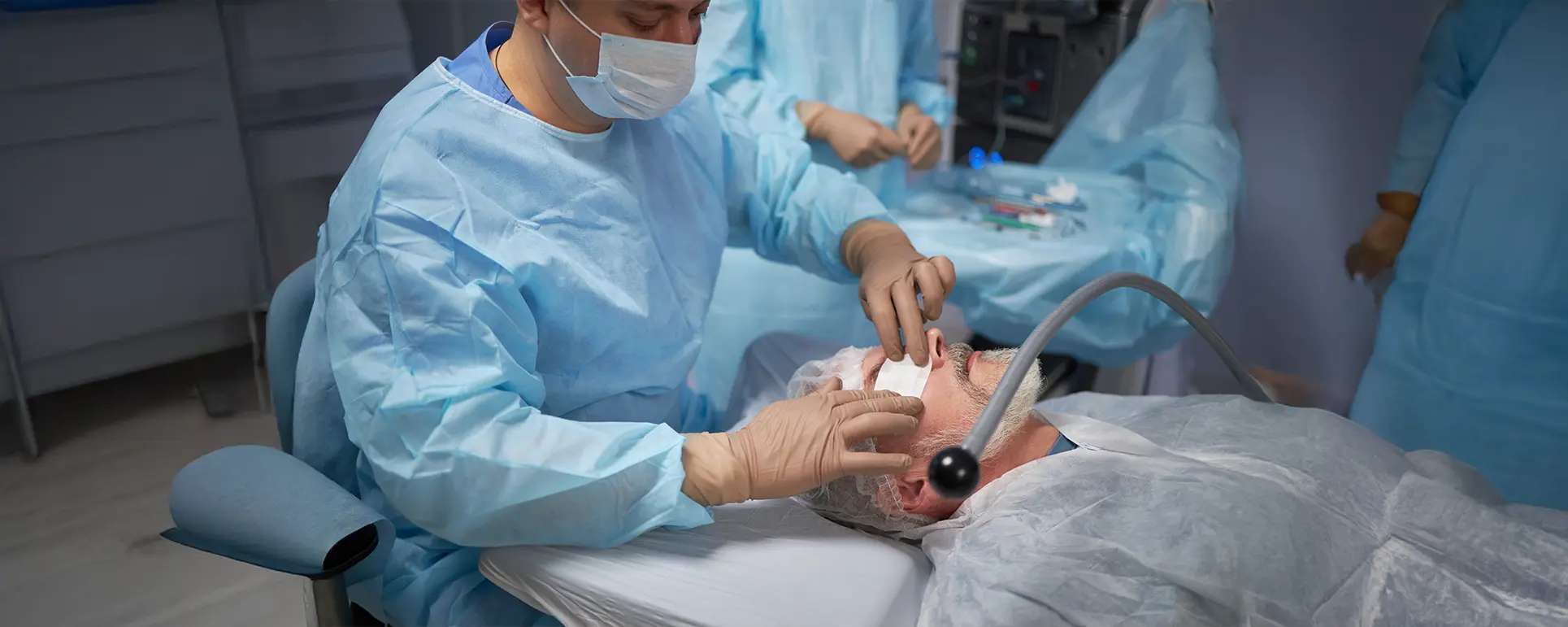
If you’ve had cataract surgery with a premium intraocular lens (IOL), you’ve probably enjoyed the clearer vision and reduced dependence on glasses these advanced lenses provide. But months or even years later, you might notice your vision becoming cloudy, hazy, or less sharp. This can feel confusing especially after such a successful surgery. Many people fear this means something is wrong with the implant itself, but in most cases, the culprit is posterior capsule opacification (PCO), a normal and very common follow-on effect of cataract surgery.
The standard treatment for PCO is a YAG laser capsulotomy. It’s quick, painless, and highly effective. But if you’ve invested in a premium lens whether it’s multifocal, trifocal, extended depth of focus (EDOF), or toric it’s understandable to feel worried about whether the YAG laser could damage the lens or reduce its performance. You might have read conflicting opinions online or heard stories about glare, starbursts, or lens misalignment after YAG treatment. These concerns can make you feel hesitant about proceeding.
Why Posterior Capsule Opacification Happens After Cataract Surgery
Posterior capsule opacification (PCO) is a common occurrence after cataract surgery. It happens when epithelial cells left behind during surgery start to multiply on the posterior capsule the thin, transparent membrane that holds your intraocular lens (IOL) in place. Over time, these cells form a cloudy film that scatters light and can cause vision problems similar to those experienced with the original cataract.
You may begin to notice changes in your vision, such as cloudiness or blur, difficulty distinguishing contrasts, glare from headlights, halos around lights, reduced clarity when reading, or a “foggy” patch in your central vision. These symptoms can develop gradually, sometimes months or years after surgery.
PCO can affect both standard lens patients and those with premium lenses, such as multifocal or toric IOLs. Importantly, its occurrence is not a sign that your cataract surgery was unsuccessful the IOL itself remains perfectly positioned and functional.
When posterior capsule opacification develops, the treatment involves a specialised laser procedure called YAG capsulotomy. This laser safely opens the cloudy capsule, restoring clear vision quickly and effectively, often within minutes, with minimal discomfort and no need for invasive surgery.
How a YAG Laser Capsulotomy Works
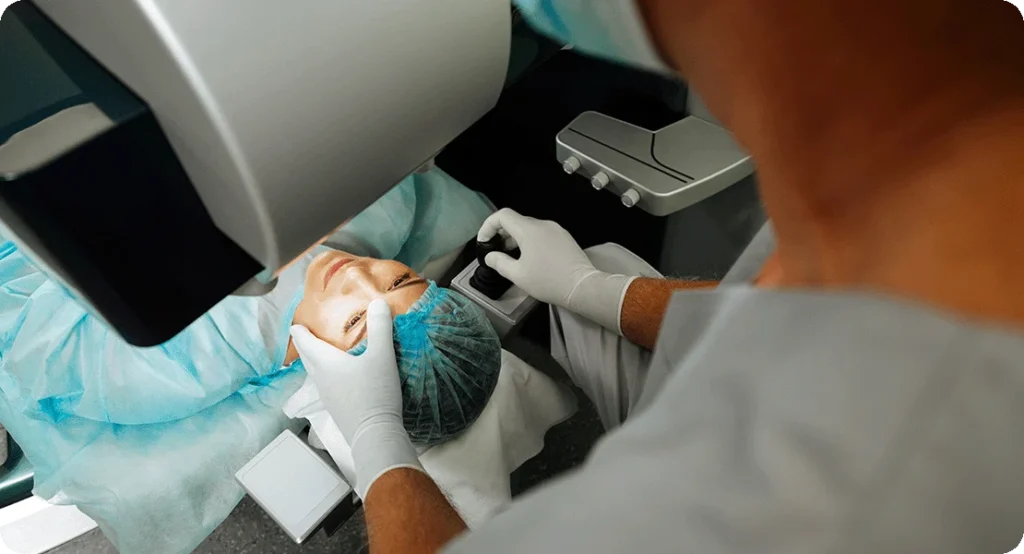
A YAG laser capsulotomy works by creating a small, circular opening in the posterior capsule, which allows light to pass through unobstructed and reach the retina. This immediately restores visual clarity. The procedure is quick, usually taking just a few minutes, requires no incisions, and involves no downtime.
The laser does not touch or heat the intraocular lens implant, nor does it remove any surrounding tissue. Instead, it makes precise microdisruptions in the capsule behind the lens, carefully avoiding the optical centre of the IOL.
Because of this targeted approach, most patients notice sharper vision within 24 hours, and some experience improvement immediately after the procedure. YAG capsulotomy is a safe, effective, and minimally invasive way to treat posterior capsule opacification, allowing patients to regain clear vision without additional surgery.
Why Premium IOL Patients Worry More About YAG Treatment
Patients with premium intraocular lenses (IOLs), such as multifocal, trifocal, EDOF, or toric implants, often have more concerns about YAG laser treatment. These lenses depend on precise positioning, alignment, and centration to deliver high-quality, multifocal, or extended-range vision.
It’s common for patients to ask questions like: Can the YAG laser damage the lens? Could the lens shift afterwards? Will it worsen glare or halos? Could the laser affect the rings in a multifocal lens? Can a toric lens rotate after the procedure?
All of these concerns are valid. Premium lenses are more sensitive to changes, so YAG treatment must be carefully planned and executed. By understanding exactly how the laser interacts with each type of IOL, surgeons can minimise risks and reassure patients that their implant’s position and function will remain safe and effective.
Is YAG Laser Capsulotomy Safe for Multifocal IOLs?

Yes, when performed correctly, YAG laser capsulotomy is safe for multifocal intraocular lenses (IOLs).
Multifocal IOLs contain concentric rings that split light into near, intermediate, and distance focal points. The YAG laser does not affect these rings because it targets the posterior capsule behind the lens, not the lens itself.
However, because multifocal IOLs already split light, even minor changes in clarity can create visual disturbances. Posterior capsule opacification (PCO) can worsen glare and halos, so many patients notice immediate improvement in symptoms after YAG treatment.
Surgeons carefully consider several factors when performing YAG capsulotomy on multifocal IOLs:
- The exact shape and size of the laser opening: A precise opening ensures adequate clearing of the capsule without compromising lens optics.
- Avoiding central optical interference: The laser is placed to prevent disruption of the central visual axis, maintaining optimal vision quality.
- Ensuring correct centration: Proper alignment relative to the IOL ensures the multifocal zones continue functioning as intended.
- Evaluating if symptoms are truly due to PCO: Surgeons confirm that visual disturbances are caused by capsule haze rather than other ocular issues.
When performed with attention to these factors, YAG laser capsulotomy can significantly improve night vision and reduce glare for patients with multifocal lenses.
Is YAG Safe for Trifocal IOLs?
Trifocal IOLs are more light-sensitive than other lenses because they divide incoming light into three focal points: near, intermediate, and distance. The YAG laser itself does not affect the lens optics, but a precise laser opening is crucial to maintain optimal light distribution and visual quality.
If posterior capsule opacification (PCO) develops, trifocal IOL performance can deteriorate faster than other lens types because these lenses rely heavily on contrast clarity.
After YAG capsulotomy, trifocal IOL patients often notice:
- Better contrast: Enhanced clarity helps distinguish fine details across all focal points.
- Improved night vision: Reduction in glare and halos makes driving and low-light activities easier.
- Sharper detail: The visual acuity at all distances becomes clearer once capsule haze is removed.
- Less flare: Reduction in scattered light improves overall visual comfort, particularly in bright or nighttime conditions.
When performed by an experienced surgeon, YAG laser treatment is both safe and effective for trifocal IOLs, restoring the lens’s intended visual performance.
Is YAG Safe for EDOF Lenses?
Extended depth of focus (EDOF) lenses feature a smoother design that relies on wavefront modulation rather than multiple rings. Posterior capsule opacification (PCO) can noticeably reduce their performance by limiting the extended range of focus.
YAG laser treatment effectively restores key aspects of vision, including contrast sensitivity, range of vision, and intermediate clarity. EDOF lenses are highly compatible with YAG capsulotomy, and surgeons generally consider these procedures straightforward and low-risk.
Is YAG Safe for Toric Lenses?
Toric lenses are designed to correct astigmatism and must remain precisely aligned to work effectively, which is why some patients worry that YAG laser treatment could shift or rotate the lens.
In reality, while a toric lens could theoretically rotate after YAG treatment, this is very rare. The risk is minimal once the lens has fibrosed and stabilised in its position, which usually occurs several months after surgery. Surgeons typically wait 3–6 months post-cataract surgery before performing YAG to ensure the lens is secure.
By the time posterior capsule opacification develops, the capsule has usually tightened around the lens, making rotation extremely unlikely. The YAG laser does not physically touch the lens, so it cannot directly cause any movement or rotation.
How Surgeons Assess Whether YAG Treatment Is Safe for Your IOL
Before performing a YAG capsulotomy, your surgeon carefully assesses several factors to ensure the procedure is safe and appropriate for your intraocular lens (IOL). This includes evaluating the stability of your lens, the specific IOL model, your stage of healing, the location and severity of the posterior capsule opacification (PCO), the degree of capsular fibrosis, your current visual symptoms, refractive stability, and any existing dysphotopsia.
This thorough assessment allows the surgeon to determine whether YAG treatment is the right next step. For example, if your visual issues are not caused by PCO, performing a YAG could be unnecessary and might complicate future adjustments, particularly with premium lenses.
Because premium IOLs rely on precise positioning and alignment, careful evaluation is essential to ensure the procedure restores vision effectively without introducing new risks.
Why YAG Treatment is Not Reversible and Why This Matters for Premium Lenses
Once the posterior capsule is opened with a YAG laser, it cannot be closed again. This irreversibility is particularly important for patients with premium IOLs, such as multifocal or trifocal lenses.
Surgeons carefully evaluate these patients before performing YAG because premature treatment can limit future options. If your lens power or position still requires adjustment, delaying YAG preserves the ability to perform procedures such as:
- IOL exchange: Replacing the lens entirely if the power or type is incorrect.
- IOL rotation: Adjusting the alignment of toric lenses to correct astigmatism.
- Piggyback lenses: Adding a second lens if additional correction is needed.
- Refractive enhancement: Making small adjustments to fine-tune vision outcomes.
Performing a YAG capsulotomy too early can make these future adjustments more complex or even impossible. This is why specialists offering YAG laser treatment in London emphasise thorough assessment and careful timing before proceeding with premium lens patients.
If You Have Glare or Halos After a Premium IOL, Is YAG the Solution?
Not always. Some patients notice glare, halos, or light scatter immediately after premium lens surgery, even before posterior capsule opacification (PCO) develops. In these cases, YAG laser treatment may not resolve the symptoms.
YAG is unlikely to help if your symptoms are caused by:
- Dry eye: Surface dryness can create light scatter and visual disturbances.
- Lens dysphotopsia: Optical phenomena inherent to the IOL design, such as rings or glare.
- Refractive error: Residual near- or distance-sightedness can cause blurred vision and halos.
- Residual astigmatism: Uneven corneal curvature can distort light and reduce clarity.
- Neuroadaptation lag: The brain may take time to adjust to the new lens, especially with multifocal or trifocal IOLs.
Surgeons must carefully differentiate between symptoms caused by the lens itself and those caused by capsule clouding. YAG laser capsulotomy is only recommended when PCO is confirmed as the cause of visual disturbances.
Can YAG Laser Make Premium IOL Vision Worse?
It is very rare for a YAG laser capsulotomy to worsen vision in patients with premium IOLs, and this typically only occurs if the procedure is done too early or the underlying diagnosis was incorrect. Potential, though uncommon, risks include lens rotation (mostly theoretical once the capsule has stiffened), a temporary increase in floaters, minor light scatter from capsule remnants, or laser pitting of the IOL, which is extremely rare when performed by an experienced surgeon. In the vast majority of cases, YAG treatment improves vision, restoring clarity and sharpness by directly removing the cloudy posterior capsule that blocks light from reaching the retina.
How the YAG Laser Interacts With the IOL Material
Premium intraocular lenses (IOLs) are made from a variety of materials, including hydrophobic acrylic, hydrophilic acrylic, silicone, and hybrid combinations. Modern YAG laser technology is compatible with all these materials, as the laser is carefully calibrated to avoid contacting the lens surface.
During the procedure, surgeons ensure that the laser energy is low yet effective, the opening is created behind the optical zone, the aim point is positioned posterior to the IOL, and capsule debris is minimised.
When performed by an experienced ophthalmologist, YAG laser capsulotomy does not damage the lens, so patients can undergo the procedure with confidence that their implant remains safe and fully functional.
When YAG Treatment Is Not the Right Choice
YAG capsulotomy is not always the right choice immediately. There are several situations where the procedure should be delayed or avoided, such as if your lens is still stabilising, you’ve recently undergone cataract surgery, or your surgeon is planning a lens exchange.
Other reasons to hold off include visual symptoms caused by dry eyes, dysphotopsia unrelated to posterior capsule opacification (PCO), or if a refractive error needs correction first. An experienced surgeon will recommend waiting until it is clear that PCO is definitively causing your symptoms before proceeding with YAG treatment.
How Premium Lens Type Influences YAG Outcomes
The type of premium IOL you have can affect how much benefit you get from YAG capsulotomy. Different lens designs interact differently with the laser and respond uniquely once the posterior capsule is cleared.
- Multifocal lenses – Vision often improves significantly once capsule haze is removed, reducing glare and halos.
- Trifocal lenses – These lenses respond very well because their optical performance depends on perfect light transmission across all three focal points.
- EDOF (Extended Depth of Focus) lenses – Patients often notice restored contrast sensitivity and smoother intermediate vision after YAG.
- Toric lenses – Timing is important to ensure lens stability, but once the lens is properly aligned, YAG is safe and effective.
Surgeons take these factors into account to fine-tune treatment timing and technique, ensuring the best possible visual outcomes for each patient.
Can YAG Capsulotomy Cause Retinal Detachment?
The risk of retinal detachment following a YAG capsulotomy is extremely low, thanks to modern laser technology. Contemporary YAG lasers use highly precise, low-energy pulses designed to target only the posterior capsule, leaving surrounding eye structures unharmed. In healthy eyes, studies estimate the risk at roughly 1 in 1,000 to 1 in 5,000, making it a rare complication.
Certain factors can slightly increase this risk. Patients with very high myopia, pre-existing retinal conditions, or lattice degeneration are more susceptible, as their retinas are inherently more fragile. Even in these cases, careful planning and technique help keep the risk minimal.
To ensure safety, your ophthalmologist will conduct a thorough retinal examination before proceeding with YAG capsulotomy. This assessment allows them to identify any potential vulnerabilities and decide whether additional precautions are needed.
FAQs:
1. What is a YAG laser capsulotomy?
A YAG laser capsulotomy is a procedure used to treat posterior capsule opacification (PCO), a common condition that can occur after cataract surgery. The laser creates a small opening in the cloudy capsule behind the intraocular lens (IOL), allowing light to pass through and restoring clear vision. The procedure is quick, non-invasive, and typically performed in a clinic setting.
2. Is it safe to have YAG capsulotomy if I have a premium IOL?
Yes, YAG capsulotomy is generally safe for premium lenses such as multifocal, trifocal, EDOF, and toric IOLs when performed by an experienced ophthalmologist. The laser targets the posterior capsule, not the lens itself, so the lens remains intact. Proper timing, precise technique, and assessment of lens stability are crucial to avoid complications.
3. Can YAG laser affect multifocal or trifocal lenses?
While patients sometimes worry about their premium lenses, the YAG laser does not interfere with the concentric rings in multifocal or trifocal lenses. Careful positioning ensures the central visual axis remains clear, allowing the lens to continue providing near, intermediate, and distance vision effectively.
4. Could the procedure cause toric lenses to rotate?
Although toric lenses must remain precisely aligned to correct astigmatism, the risk of rotation due to YAG treatment is extremely low. By the time PCO develops, the capsule usually has fibrosed and stabilised the lens in its intended position, making rotation highly unlikely.
5. Are there any risks associated with YAG capsulotomy?
Like any medical procedure, YAG capsulotomy carries small risks. Potential issues include temporary floaters, minor light scatter, or, very rarely, retinal detachment. These risks are minimized when the procedure is performed by a qualified ophthalmologist who conducts a thorough preoperative assessment.
6. How quickly does vision improve after the procedure?
Most patients notice an improvement in vision within 24 hours, and some experience sharper vision immediately after the laser treatment. The extent of improvement depends on the severity of the capsule opacification and the type of IOL in place.
7. Can YAG capsulotomy make my vision worse?
It is very rare for YAG laser treatment to worsen vision, and this usually only occurs if the procedure is done prematurely or if the visual symptoms are caused by something other than PCO. When performed correctly, the treatment typically restores clarity and reduces glare and halos caused by capsule clouding.
8. Does the type of lens influence the results of YAG capsulotomy?
Yes, different lens designs respond uniquely once the posterior capsule is cleared. Multifocal and trifocal lenses often show significant improvement in contrast and reduction in halos, while EDOF lenses regain smoother intermediate vision. Toric lenses benefit when the timing ensures lens stability.
9. Is YAG capsulotomy reversible?
No, the procedure is irreversible. Once the posterior capsule is opened, it cannot be closed again. This is why ophthalmologists carefully assess whether YAG treatment is appropriate, particularly for premium lenses, to preserve the possibility of future interventions like lens exchange or rotational adjustments.
10. When should I avoid YAG laser treatment?
YAG capsulotomy should be delayed if your lens is still stabilising, if your symptoms are due to dry eyes, lens dysphotopsia, or refractive errors, or if your surgeon plans additional procedures like lens exchange. Proper evaluation ensures the laser is only used when it will effectively address posterior capsule opacification.
Final Thought: Restoring Clear Vision After Premium IOLs
If you’re experiencing cloudy or hazy vision after premium lens cataract surgery, YAG laser capsulotomy can be a safe and effective way to restore clarity. By targeting only the posterior capsule and avoiding contact with the lens itself, the procedure preserves your multifocal, trifocal, EDOF, or toric IOL while improving visual performance. Timing, lens type, and a thorough pre-procedure assessment are essential to achieving the best outcomes. If you’re considering YAG laser capsulotomy in London, you can contact us at London Cataract Centre to book a consultation with one of our specialists and find out whether the treatment is right for you.
References:
1. Traverso CE et al. (2002) Posterior capsule opacification and Nd:YAG laser capsulotomy rates after implantation of silicone, hydrogel and soft acrylic intraocular lenses: a two‑year follow‑up study. https://pubmed.ncbi.nlm.nih.gov/12474921/
2. Alio JL et al. (2018) Three‑year incidence of Nd:YAG capsulotomy and posterior capsule opacification and its relationship to monofocal acrylic IOL biomaterial: a UK real‑world evidence study. https://pubmed.ncbi.nlm.nih.gov/29891902/
3. Wang Z et al. (2024) Effect of mild posterior capsule opacification on visual outcomes in trifocal diffractive pseudophakic eyes: A multicenter prospective study. https://pmc.ncbi.nlm.nih.gov/articles/PMC12005222/
4. Steinert RF et al. (2015) An overview of Nd:YAG laser capsulotomy. Journal of Ophthalmic Surgery, Lasers & Imaging Retina. https://pmc.ncbi.nlm.nih.gov/articles/PMC4346677/
5. Lee AY & Bourne WM (2024) Posterior capsular opacification and YAG laser capsulotomy in uveitis patients following cataract surgery. https://www.sciencedirect.com/science/article/abs/pii/S0008418224001406