



If you’ve had cataract surgery and now need a YAG laser capsulotomy, it’s completely normal to wonder whether the treatment could affect the position of your lens implant. Many people worry that the laser might loosen, shift, or destabilise the intraocular lens (IOL) that was placed during their surgery. After all, the laser is applied inside the eye, close to where the implant sits so the concern makes sense.
The good news is that modern YAG capsulotomy is designed to safely clear the cloudy capsule without touching or disturbing your lens. In fact, the laser never makes physical contact with the IOL, and complications involving lens movement are extremely rare. The treatment is one of the safest procedures performed in ophthalmology, and it has been refined over decades to minimise risk.
Why You Might Need a YAG Laser Capsulotomy After Cataract Surgery
Cataract surgery involves removing the cloudy natural lens and replacing it with a clear artificial lens. The new lens is placed inside a small transparent bag called the capsular sac, which originally held your natural lens. Over time, this capsular sac can become cloudy. This clouding is known as posterior capsule opacification (PCO).
Common symptoms include: Common symptoms include blurry or foggy vision, glare and haloes around lights, reduced contrast, difficulty reading, and light scatter that can make vision feel similar to having a cataract again. Although it may seem like the cataract has returned, this isn’t possible the cataract itself does not come back.
This is where YAG capsulotomy comes in: This is where YAG capsulotomy comes in. During this quick laser procedure, a small opening is created in the cloudy capsule behind the lens, allowing light to pass through clearly again. The artificial lens implant itself remains completely untouched, and vision is often restored almost immediately.
How a YAG Laser Capsulotomy Works (Step-by-Step)
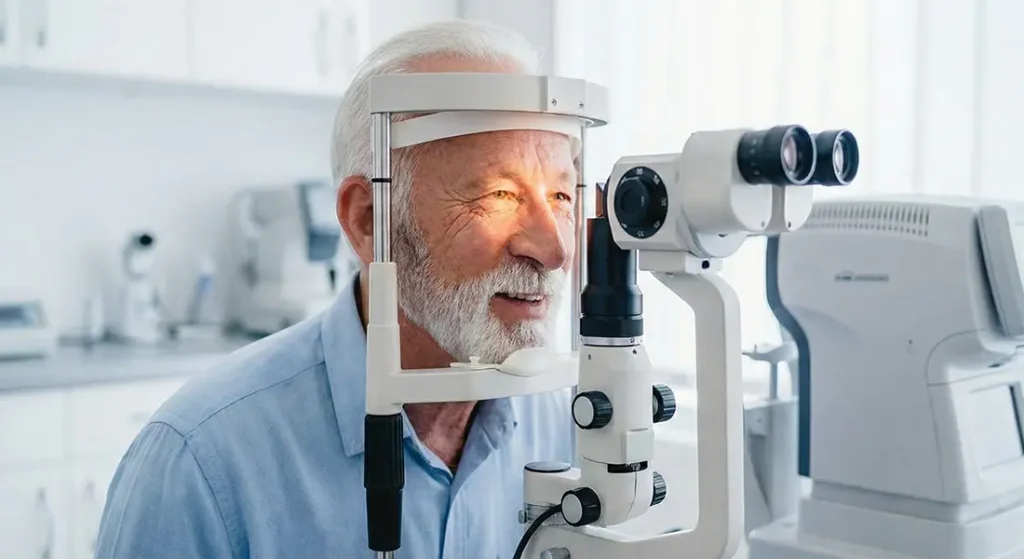
Understanding how a YAG laser capsulotomy works can help reduce anxiety, particularly concerns about whether the intraocular lens (IOL) might move during the procedure. The treatment is designed to improve vision by addressing clouding behind the lens implant, without disturbing the lens itself.
During the procedure, you sit at a machine that looks very similar to the one used for a routine eye examination. Your eye doctor carefully positions the YAG laser and focuses it precisely on the cloudy capsule located behind the implanted lens. The laser delivers a highly focused beam of energy to create tiny, controlled openings in this cloudy tissue.
A key point to understand is that the laser energy is applied behind the lens, not on it. The intraocular lens is not cut, heated, moved, or touched at any stage of the procedure. This precise targeting is what makes YAG laser capsulotomy both safe and effective for restoring clear vision.
Can YAG Laser Capsulotomy Move or Dislodge the IOL?
This is one of the most common concerns patients have before undergoing YAG laser capsulotomy. Reassuringly, the risk of an intraocular lens (IOL) moving or becoming dislodged is extremely low. The procedure has been performed safely for decades and is carefully designed to restore vision without disturbing the lens implant placed during cataract surgery.
1. The IOL is fixed inside the capsular bag
After cataract surgery, the IOL sits securely within the capsular bag, which acts like a snug, supportive pocket. Over time, this capsule actually tightens slightly around the lens, increasing stability rather than reducing it. This firm positioning is one of the key reasons lens movement after YAG is so rare.
2. The laser does not touch the lens
The YAG laser beam is precisely focused behind the IOL, targeting only the cloudy capsule. It passes harmlessly through the artificial lens without damaging or heating it. The lens itself remains completely uninvolved throughout the procedure.
3. The laser energy is low and precisely targeted
Modern YAG lasers use very low-energy pulses delivered with extreme accuracy. This minimises shock waves within the eye and avoids any mechanical force that could affect the lens position. The treatment is controlled and refined, not forceful.
4. The opening is made in the centre away from the lens edges
Surgeons create the capsulotomy centrally, well away from the edges of the lens and the haptics (the tiny arms that hold it in place). By avoiding these supporting structures, the stability of the IOL is preserved. This careful positioning is standard practice.
5. Surgeons adjust settings based on your lens type
Different IOLs monofocal, toric, or premium lenses may require slight technique adjustments. Surgeons are trained to tailor laser settings to your specific lens design and eye anatomy. This personalised approach further reduces any risk.
6. IOL displacement after YAG is extremely rare
Large clinical studies and long-term experience show that significant IOL movement after YAG capsulotomy is exceptionally uncommon. When it does occur, it is usually linked to pre-existing capsule weakness rather than the laser itself. For the vast majority of patients, the lens remains perfectly stable.
Understanding Lens Stability Inside the Eye

To understand why intraocular lens (IOL) movement after YAG capsulotomy is so rare, it helps to know how the lens implant is designed and how it becomes stabilised inside the eye. Modern IOLs are engineered to sit securely in a natural structure called the capsular bag, which previously held your own lens.
Each lens implant has two key components. The optic, which is the central part, is responsible for focusing light and providing clear vision. Surrounding this are the haptics flexible arms that gently press against the inside of the capsular bag. This haptics are designed to hold the lens firmly in position while allowing slight flexibility to adapt to the eye’s shape.
After cataract surgery, the capsular bag naturally tightens and adheres to the lens in a process often described as a “shrink-wrapping” effect. Over weeks to months, this adhesion increases the stability of the implant rather than weakening it. By the time YAG capsulotomy is needed, the IOL is usually very firmly secured, which is why lens displacement during or after the procedure is extremely unlikely.
Does YAG Affect Different Types of Lenses Differently?
Most modern intraocular lenses (IOLs) are designed with YAG laser safety in mind, meaning the procedure does not usually affect lens position or performance. However, different lens types have specific design features, and understanding how each responds to YAG capsulotomy can provide reassurance before treatment.
Monofocal lenses, which are the most commonly implanted IOLs, are also the most stable. YAG laser treatment does not affect their position in the eye. Multifocal lenses, although more complex due to their specialised optical zones, also remain stable after YAG. Surgeons simply take extra care to centre the laser opening correctly to preserve visual quality across all distances.
Extended Depth of Focus (EDOF) lenses are similarly stable and safe to treat with YAG laser capsulotomy. The procedure does not disrupt their extended focusing range or overall performance, and patients typically experience clear and consistent visual improvement after treatment.
How Surgeons Prevent Lens Movement During YAG
One of the biggest concerns patients have about YAG laser capsulotomy is whether it could disturb their lens implant. In reality, surgeons use very deliberate, controlled techniques to protect the intraocular lens (IOL) throughout the procedure. Each step is planned to restore vision while keeping the implant completely stable.
Correct laser focus: The laser is focused precisely on the cloudy capsule behind the lens implant, not on the lens itself. This careful focusing ensures the energy interacts only with the membrane causing the blur. As a result, the IOL is not exposed to direct laser impact.
Low-energy, precise pulses: Modern YAG lasers deliver short, low-energy pulses rather than powerful bursts. This significantly reduces shockwave dispersion inside the eye. Using the minimum effective energy helps maintain lens stability while still achieving a clean capsulotomy.
Creating a small, centred capsulotomy: Surgeons typically create a neat, central opening in the capsule. This avoids the outer edges of the capsular bag where the haptics anchor the lens. Keeping the opening centred helps preserve both lens position and visual quality.
Avoiding aggressive or large openings: Older techniques sometimes used wider openings, but modern practice favours a conservative, controlled approach. Small, carefully placed pulses are used instead of aggressive laser patterns. This minimises unnecessary stress on the capsular bag.
Checking capsular tension beforehand: Before performing YAG, the surgeon assesses how well the lens is seated and how stable the capsular bag appears. If there are any concerns about zonular weakness or lens stability, laser settings and technique are adjusted accordingly.
What the Scientific Research Says About IOL Movement After YAG
Extensive clinical research shows that significant intraocular lens (IOL) movement after YAG laser capsulotomy is very rare. Large studies and long-term follow-ups consistently demonstrate that modern YAG techniques do not meaningfully disturb well-positioned lens implants. For the vast majority of patients, the procedure restores clarity without affecting lens stability or visual outcomes.
Some studies do report very minor positional changes, but these are typically less than 0.25 dioptres and are not noticeable in everyday vision. Toric lenses, in particular, have been shown to remain rotationally stable in around 95–98% of cases, meaning their astigmatism correction is preserved. Significant forward or backward (axial) movement of the lens is extremely uncommon with today’s surgical methods and lens designs.
When any shift does occur, it is usually small, non-visual, and does not affect quality of sight. In the rare event that a refractive change is detected, it is often mild and easily corrected with glasses. Severe or symptomatic lens displacement after YAG capsulotomy is almost unheard of, especially when the procedure is performed using modern lasers and careful surgical technique.
Why You Might Feel Like the Lens Moved After YAG
After YAG laser capsulotomy, many patients notice an immediate and sometimes dramatic change in vision. Because the improvement can be so sudden, it’s common to feel as though something inside the eye has shifted. In reality, what you’re experiencing is the visual system adapting to a newly cleared optical pathway rather than any physical movement of the lens implant.
Once the cloudy capsule is opened, light can pass through the eye without obstruction. This often leads to a rapid increase in brightness and sharpness, which can feel unfamiliar at first. The brain has to quickly recalibrate to the improved image quality, and this adjustment period may create a temporary sense that the eye or lens position has changed.
In addition, the eye naturally adapts to clearer vision over the following days. As your visual system settles, the unusual sensations fade and vision feels normal again just clearer. Although the experience can feel dramatic, the lens itself remains exactly where it was, securely fixed in place.
Do Floaters After YAG Mean the Lens Has Moved?
No floaters after YAG laser capsulotomy do not mean the lens has moved. Floaters are a common and expected effect because tiny fragments of the opened capsule can drift into the vitreous gel, and because your vision is suddenly clearer, making existing particles inside the eye more noticeable. As light now passes through the eye without obstruction, even small floaters can seem more obvious at first. In most cases, they gradually settle, fade, or move out of the central line of sight over the following weeks as the eye adapts and the vitreous clears.
Can YAG Laser Capsulotomy Change Your Glasses Prescription?

YAG laser capsulotomy can sometimes lead to a change in your glasses prescription, but this is not because the intraocular lens (IOL) has moved. Instead, the improvement in visual clarity allows your eye care professional to measure your refractive error more accurately. Before the procedure, the cloudy capsule can blur or distort vision, making prescription assessment less precise.
After the capsulotomy, the visual pathway is cleared, which can make astigmatism more noticeable and allow for a more accurate measurement of nearsightedness or farsightedness. In some cases, people notice that their previous prescription no longer provides optimal clarity because the underlying refractive error can now be properly assessed.
Any adjustments to your glasses are simply a reflection of the eye’s improved visual function, not a shift in the lens itself. The IOL remains securely in place, and the prescription changes are purely due to better optical measurement rather than physical displacement of the implant.
What Patients Should Watch for After YAG Laser
Most patients experience no problems after YAG laser capsulotomy, and the procedure is generally very safe. Vision often improves immediately, and most people notice sharper clarity, reduced glare, and better contrast without any complications. Recovery is usually smooth, and routine follow-up ensures everything is healing as expected.
However, it’s important to monitor for rare symptoms that may indicate inflammation or changes in the vitreous, rather than lens movement. These can include sudden blur, new glare, double vision, severe floaters, or flashing lights. If any of these occur, contact your clinic promptly, as they can assess and manage the issue to protect your eye health and visual outcomes.
What Happens if Lens Movement Does Occur?
In the extremely rare event that a lens experiences significant movement after YAG laser capsulotomy, it’s important to stay calm these cases are very uncommon. Most of the time, minor shifts are small enough that they don’t affect vision and don’t require any intervention.
If a more noticeable movement does occur, your surgeon will first carefully monitor the situation. Regular follow-up exams help determine whether the shift is stable or if action is needed. Often, observation alone is sufficient, as many small movements settle naturally without impacting visual outcomes.
In some cases, your surgeon may prescribe corrective glasses to adjust for any minor refractive changes caused by the lens position. This non-invasive approach is usually enough to restore clear vision without further procedures.
Only in very rare situations would lens repositioning surgery be considered. This is a quick, straightforward procedure designed to restore the lens to its optimal position. Modern surgical techniques make it highly effective, ensuring that even if movement occurs, vision can be corrected safely and efficiently.
Long-Term Stability After YAG Capsulotomy
Long-term stability after YAG capsulotomy is highly reliable. Once the laser creates a precise opening in the cloudy capsule and the tissue naturally settles, the intraocular lens (IOL) remains firmly secured in its original position. This stability is maintained permanently, thanks to modern lens designs and the natural adhesion of the capsular bag. Most patients enjoy lasting improvement in visual clarity and rarely require any additional procedures, making YAG capsulotomy a safe, effective, and long-term solution for restoring vision without affecting the lens itself.
FAQs:
1. What is a YAG laser capsulotomy and why is it performed?
A YAG laser capsulotomy is a quick, outpatient procedure used to treat posterior capsule opacification (PCO), a common complication following cataract surgery. Over time, the capsular bag holding the intraocular lens (IOL) can become cloudy, causing blurred vision, glare, and reduced contrast. The laser creates a small, precise opening in this cloudy tissue, allowing light to pass through clearly and restoring vision without touching the lens itself.
2. Can YAG laser capsulotomy move or dislodge my IOL?
Significant movement of the IOL after YAG capsulotomy is extremely rare. The lens sits securely within the capsular bag, which naturally tightens over time. The laser is precisely focused behind the lens, avoiding direct contact, and low-energy pulses are used to minimise any shockwave or mechanical impact. Modern lens designs and careful surgical technique make lens displacement highly uncommon.
3. How does the YAG laser procedure avoid affecting the lens?
Surgeons create a small, central opening in the cloudy capsule, well away from the lens edges and haptics (the supporting arms). The laser energy is low and precisely targeted to the capsule, not the lens. Settings are adjusted based on lens type, ensuring that the implant remains stable throughout the procedure, whether it’s monofocal, multifocal, EDOF, or toric.
4. Does YAG capsulotomy affect different lens types differently?
Most modern IOLs are designed with YAG safety in mind. Monofocal, multifocal, and extended depth of focus (EDOF) lenses remain stable. Toric lenses, which correct astigmatism, are also highly rotationally stable. In very rare cases, weak zonules or incomplete capsule adhesion may slightly increase risk, but this is uncommon with current surgical techniques and lens designs.
5. Why might it feel like my lens has moved after YAG?
After the procedure, vision often improves dramatically and almost immediately. The sudden increase in clarity, contrast, and colour can create a sensation that the lens has shifted. In reality, the IOL remains firmly in place; the eye is simply adapting to a clearer optical pathway.
6. Can floaters after YAG indicate lens movement?
No. Floaters are common after YAG laser capsulotomy and occur because tiny fragments of the opened capsule can drift into the vitreous gel. They may also become more noticeable as vision clears. These floaters are normal and usually settle or fade over several weeks, without any impact on lens stability.
7. Can YAG capsulotomy change my glasses prescription?
Sometimes, patients notice a change in their glasses prescription after YAG, but this is due to improved clarity allowing more accurate measurement of refractive error. The IOL itself does not move; any prescription adjustments reflect the eye’s enhanced visual function rather than physical displacement of the lens.
8. What precautions do surgeons take to prevent lens movement during YAG?
Surgeons use precise focusing, low-energy pulses, and small, centred capsulotomy openings to protect the lens. They avoid aggressive or wide openings, assess capsular tension beforehand, and tailor the procedure to the specific lens type. These measures ensure that the IOL remains stable and visual outcomes are maximised.
9. What should I watch for after YAG laser capsulotomy?
Most patients recover smoothly, with immediate improvement in clarity and reduced glare. Rare symptoms to monitor include sudden blur, new glare, double vision, severe floaters, or flashing lights. If these occur, prompt contact with your clinic is advised to safeguard eye health, though they are typically unrelated to lens displacement.
10. How stable is the IOL long-term after YAG capsulotomy?
Long-term lens stability is highly reliable. Modern IOLs and the natural adhesion of the capsular bag ensure that the lens remains securely in place. Most patients enjoy permanent visual improvement without further procedures, making YAG laser capsulotomy a safe and effective treatment for restoring vision without affecting the implant.
Final Thought: Ensuring Safe and Stable Vision After YAG Laser Capsulotomy
YAG laser capsulotomy is a safe, effective procedure that restores clear vision without affecting the position of your intraocular lens (IOL). Modern lens implants, precise laser techniques, and careful surgical planning ensure that the IOL remains secure and stable, providing long-term visual clarity and comfort.
If you’re looking for YAG laser capsulotomy in London, you can contact our specialist team at the London Cataract Centre is here to help. A thorough assessment and personalised approach give you confidence in both the procedure and the stability of your lens for years to come.
References:
1. Raj SM, Vasavada AR, Johar SRK, et al. Intraocular lens position and anterior chamber parameters evaluation after Nd:YAG laser posterior capsulotomy for posterior capsular opacification using anterior segment swept‑source optical coherence tomography. https://pmc.ncbi.nlm.nih.gov/articles/PMC8785224/
2. Comparative study of induced changes in effective lens position and refraction after Nd:YAG laser capsulotomy according to intraocular lens design. https://pmc.ncbi.nlm.nih.gov/articles/PMC5863715/
3. Findl O, Buehl W, Bauer P, Sycha T. Changes in intraocular lens position after neodymium:YAG capsulotomy. https://www.sciencedirect.com/science/article/abs/pii/S0886335099000103
4. Intraocular lens tilt and decentration after Nd:YAG laser posterior capsulotomy: Femtosecond laser capsulorhexis versus manual capsulorhexis. https://pubmed.ncbi.nlm.nih.gov/31706518/
5. Influence of Nd:YAG laser capsulotomy on toric intraocular lens rotation and change in cylinder power. https://pubmed.ncbi.nlm.nih.gov/37702513/