


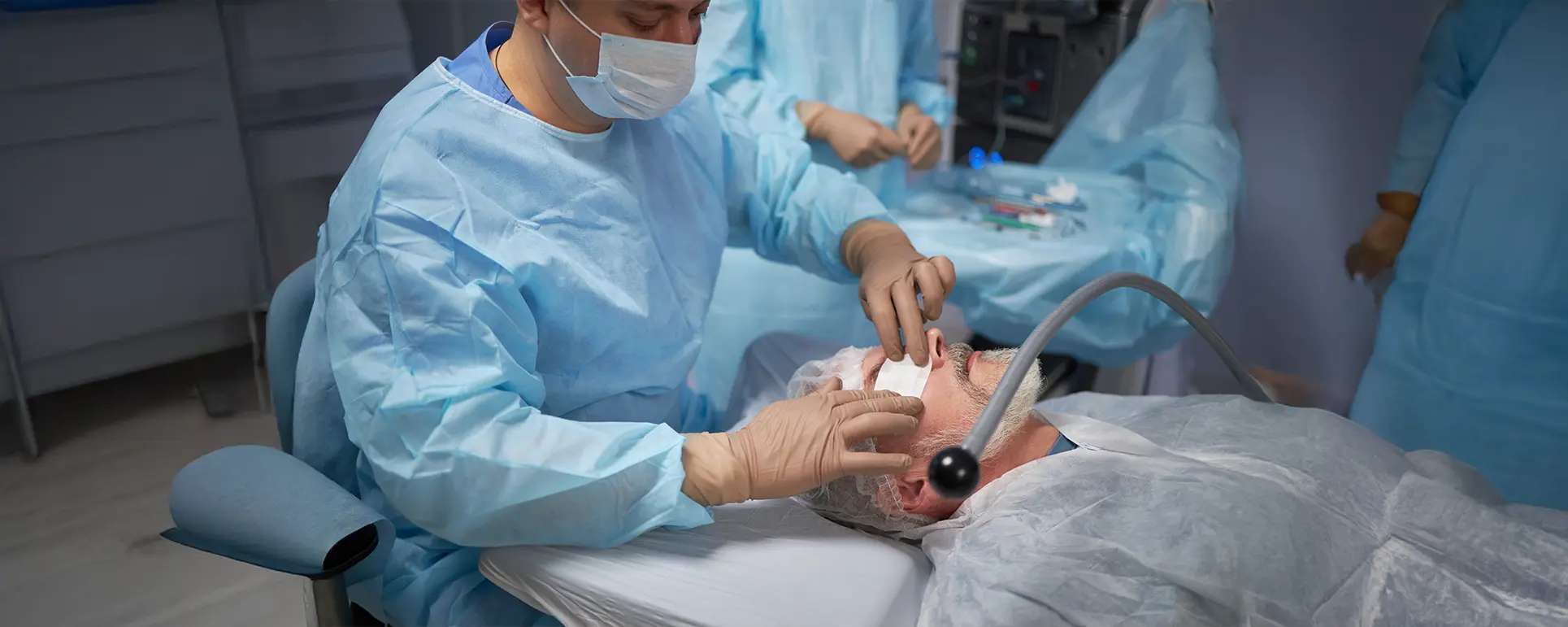
If you’ve just had IOL surgery or you’re getting ready for it, you’re probably wondering one major thing: “How long will it take before my vision finally settles?”
It’s a totally normal question and a really important one because your sight is personal. You want to know when you can get back to normal life, feel confident driving again, read comfortably, or simply experience the world without blurry patches drifting in and out of focus.
IOL surgery (whether for cataracts or refractive lens exchange) is one of the fastest, cleanest, and most predictable eye procedures you can have. But although the surgery itself is quick, the recovery is a different story. Your eyes need time to adjust, settle, and adapt to the new lens that’s now doing the job your natural lens can no longer do.
In this guide, I’m going to walk you through every stage of visual recovery, from the first few hours right through to the point when your vision reaches its long-term stability. You’ll discover why your sight might fluctuate, why one eye can behave differently from the other, and when you can expect your final prescription checks.
I’ll explain it all in a simple, conversational way so you can actually understand what’s happening not in medical jargon, but in everyday language that helps you feel informed and reassured. Let’s explore the journey your eyes take after IOL surgery.
What “Visual Stabilisation” Actually Means
After IOL surgery, your sight passes through a natural settling-in phase. During this period, several things happen inside the eye:
- Your cornea reshapes slightly after the micro-incisions.
These tiny cuts can cause mild curvature changes for a short time, which is why clarity may vary from day to day. - The natural inflammation from surgery subsides.
Even with gentle techniques, the eye responds with a small amount of swelling, which gradually fades as healing progresses. - The new lens finds its final resting position.
The IOL sits in the capsule that once held your natural lens. As the capsule tightens and heals, the lens settles into its most accurate focusing point. - Your brain re-learns how to process a sharper, clearer image.
This neuro-adaptation can take weeks, especially if you previously had cloudy or distorted vision. - Tear film becomes more stable again.
Temporary dryness is extremely common after surgery, and uneven tear film can make vision fluctuate until it normalises. - Any temporary swelling inside the eye resolves.
Fluid shifts and microscopic inflammation can subtly affect vision until they fully settle.
Once all of these processes calm down, your vision becomes consistent instead of fluctuating and that’s what stabilisation actually means.
The First 24 Hours: What You Can Expect
The first day after IOL surgery is usually the most dramatic in terms of improvement. Many people tell me they wake up and immediately notice they can see better sometimes significantly better than before the operation.
But that doesn’t mean everything is stable. Far from it.
Here’s how the typical first 24 hours unfold:
1. A Quick Burst of Clarity – It’s completely normal for your vision to fluctuate throughout the day after cataract surgery or with certain IOL types. Many people notice a hazy film that comes and goes, slight light scatter, haloes around lights or a bit of ghosting around objects. Some also experience mild, temporary double vision in one eye or describe their sight as feeling like they’re “looking through water.” These sensations often vary from hour to hour and can be more noticeable when your eyes are tired or the lighting changes.
Although these fluctuations can be distracting, they are usually harmless and temporary. As your eyes heal and your brain adapts to the new lens, these symptoms typically settle down on their own. Most people find that their visual clarity becomes more stable over the following weeks, with fewer moments of haze or distortion.
2. Fluctuations Throughout the Day – It’s very common for vision to fluctuate throughout the day, especially in the early period after cataract surgery or while adapting to a new IOL. You may find that your eyesight shifts from clear to slightly hazy, almost as if a thin film is moving in and out. Light scatter or haloes around bright sources can appear at certain times, and some people notice ghosting or a faint doubling of images, usually in just one eye. Many describe these moments as feeling like they’re “looking through water.”
Although these changes can be unsettling, they are almost always temporary and part of the normal adjustment process. As the eye heals and the visual system adapts to the new lens, these fluctuations typically reduce day by day. Most people find that their vision becomes more stable over the following weeks, with fewer episodes of haze, distortion or shifting clarity.
3. Light Sensitivity – Light sensitivity is very common after cataract surgery, even if the procedure itself felt quick and painless. Your eye has undergone a significant change, and the tissues inside are still settling and healing. As a result, bright environments especially sunlight, reflective surfaces or strong indoor lighting can feel noticeably more intense than before. Many people find themselves squinting outdoors or becoming aware of brightness that never used to bother them.
4. A Gentle “Awareness” of the New Lens – It’s quite normal to have a gentle “awareness” of the new lens in the days after cataract surgery. This isn’t pain, but more of a subtle sensation that something inside the eye feels different almost like your eye is adjusting to a new internal balance. Many people describe it as a mild foreign-body feeling or simply a sense that the eye is not yet completely “settled.”
5. Tear Film Instability – Tear film instability is a common, temporary side effect after cataract surgery. The procedure itself, along with the frequent use of post-operative eye drops, can disrupt the delicate tear layer that keeps your eye’s surface smooth and clear. When this protective layer is uneven, vision can fluctuate, sometimes appearing sharp one moment and slightly blurry the next.
So, while many people see improvement right away, it’s important not to judge your long-term results based on the first 24 hours. This is the most changeable period of the entire recovery.
The First Week: Fluctuations Are Normal

During the first seven days after surgery, your eye is healing quickly, and most people feel far more comfortable and functional than they expected. It’s common to notice steady improvement each day but improvement does not mean your vision has fully stabilised yet. That part takes more time.
A Clearer Baseline – By the end of week one, your vision usually settles into a more predictable pattern. It may not be perfectly sharp, but many people find that each new morning brings slightly better clarity than the day before.
Dryness, Grittiness, and Tear Film Changes – Dryness is one of the main reasons your vision fluctuates in the early days. Even mild dryness can distort the image that reaches your retina, causing temporary blur. It’s also normal for dryness to get worse before it starts improving.
Halos and Night Glare – These symptoms are especially common if you have multifocal or EDOF (extended depth-of-focus) lenses. Light scatter is expected during early healing, and these effects usually settle down as your brain adapts and the eye surface becomes more stable.
Sensitivity to Contrast – Some people notice difficulty in low-light environments or shaded areas. This reduced contrast sensitivity improves gradually over the first few weeks.
Colour Vibrancy – If cataracts were present before surgery, colours may suddenly appear bright, vivid, and cleaner. This is a normal effect of having a clear new lens.
A “Sharp but Not Settled” Sensation – It’s very common to have moments of excellent clarity followed by short periods of fuzziness or distortion. These fluctuations are exactly what you should expect in the first week as your eye adjusts, heals, and stabilises.
Why Vision Fluctuates During the First Few Weeks
If your sight is still changing from day to day, or even within the same day, you’re not alone. Let’s look at why this happens because the more you understand it, the less you’ll worry about these fluctuations.
1. Tear Film Instability: Your tear film is the first lens of your eye. If it’s slightly dry or uneven, your vision will vary. Post-op drops, air conditioning, screen use, and reduced blinking all contribute to this.
2. Mild Corneal Swelling: The cornea absorbs a tiny amount of fluid after surgery. As this swelling goes down, your vision sharpens, sometimes noticeably.
3. The Lens Position Settles: Your new IOL sits inside the capsular bag. Over the first few weeks, this bag contracts gently and secures the lens. This settling can create small changes in focus.
4. Light Scatter from Healing Tissues: Any healing tissue inside the eye can scatter light temporarily. This fades as inflammation subsides.
5. Neuro-adaptation: Your brain is learning how to process sharper images. With multifocal or advanced lenses, this process may take longer.
6. Residual Refractive Error: Even after a perfectly performed surgery, your eye may still be adjusting to the new optical system as things settle.
7. Differences Between the Two Eyes: If you’ve only had one eye done, it’s normal for the brain to struggle when processing two very different inputs. Things settle once both eyes are aligned again.
When Do Most People Feel “Stable”?
Now let’s talk timelines this is the part you’re probably waiting for. Every eye heals differently, but here’s the typical pattern.
First 24 Hours: Early Clarity but Not Stability– You’ll likely notice sharper vision, but big fluctuations are still normal.
First Week: A Good Sense of Improvement – You may feel confident, functional, and able to resume most activities.
But your vision will probably still vary, especially later in the day.
First 2–3 Weeks: The Transition Phase – The first two to three weeks after cataract surgery are when most of the visual stabilisation occurs. By this stage, the lens has largely settled into place, inflammation is starting to decrease, and the tear film begins to balance out. During this period, many people notice that their vision feels significantly improved more predictable, more comfortable, and sharper overall.
4–6 Weeks: The Point of True Stabilisation – By four to six weeks after IOL surgery, most people’s vision has stabilised enough for a final, reliable prescription check. This is why post-surgery clinics normally schedule your final refraction around this time. It ensures the eye has finished healing and the results are no longer shifting from week to week.
Months: The “Long-Term Stability” Stage – While most visual stabilisation happens within the first month after cataract surgery, your vision can continue to fine-tune over the following couple of months. This gradual adjustment is especially common for people who had multifocal or EDOF lenses, significant astigmatism corrected, long-standing cataracts, dry eyes, diabetes or other systemic conditions, previous laser eye surgery, or a naturally slower healing process. By around three months, however, nearly every eye reaches its final stable point. At this stage, fluctuations are minimal, and most patients experience consistent clarity for distance, intermediate, and near tasks depending on the type of lens implanted. This long-term stability allows you to enjoy the full benefits of your new vision with minimal need for further adjustment.
Why One Eye May Settle Faster Than the Other
This is something people often worry about, but it’s more common than you think.
Here are the top reasons the two eyes behave differently:
1. Each Eye Has Its Own Healing Pattern – Even identical surgery on two eyes can produce slightly different healing speeds.
2. Differences in Pre-existing Vision – If one eye was more affected by cataracts, scar tissue, or dryness, it may take longer to adjust.
3. Dominant vs Non-dominant Eyes – Your dominant eye often stabilises more quickly and tends to feel sharper earlier.
4. Tear Film Differences – It’s rare for both eyes to have the exact same tear profile. One eye may dry out faster, blink less often, or have more evaporation.
5. Brain Interpretation – Your brain can adapt to one eye faster than the other, especially if the two eyes have different optical designs (e.g., monovision setups).
6. Lens Power or Type Differences – If your surgeon used different lenses in the two eyes, their stabilisation timelines may not match perfectly.
7. Timing Between Surgeries – If your eyes were operated on days or weeks apart, they’re naturally in different phases of healing.
When to Expect Your Final Prescription
You’ll typically have several follow-up checks after IOL surgery:
1–2 Days After Surgery: This is to make sure the eye is healing correctly and that pressure levels are stable.
1 Week After Surgery: Your clinician checks early vision, inflammation, and the settling of the lens.
4–6 Weeks After Surgery: Around four to six weeks after cataract surgery, your eyes have typically healed enough for a precise assessment and final prescription check. By this point, measurements of your vision are accurate, and your surgeon can determine whether any adjustments or enhancements are needed.
This is the stage when new glasses prescriptions may be issued if required, residual refractive errors are assessed, and final outcomes are confirmed. It’s also the time to discuss potential enhancements, if necessary. This timeline applies to all types of lenses, whether you had standard monofocal lenses, toric lenses for astigmatism, or advanced multifocal/EDOF options.
How to Support Faster Visual Stabilisation
Even though the healing process is largely automatic, you can help things along.
Use Your Drops Exactly as Prescribed – The anti-inflammatory and antibiotic drops play a crucial role in stabilisation. Skipping doses can slow healing or create avoidable fluctuations.
Keep Your Eyes Hydrated – Dry eye is one of the biggest sources of blurry or inconsistent vision. Using preservative-free lubricating drops can dramatically improve stability.
Limit Heavy Screen Use in the First Week – Screens reduce your blink rate, which worsens dryness.
Avoid Rubbing Your Eyes – Even gentle rubbing can shift the healing tissues or disrupt the tear film.
Wear Sunglasses Outdoors – Sunlight can trigger inflammation in early recovery. Sunglasses help protect your eyes and keep them comfortable.
Follow the After-care Plan – If your surgeon has given you specific advice, stick to it faithfully. Every eye is different, and your plan is tailored for you.
What About Night Vision Symptoms?
Glare, halos, starbursts, and visual scatter are extremely common early on especially if you’ve had a multifocal or EDOF lens.
These symptoms usually improve as:
- swelling resolves
- the tear film stabilises
- the brain adapts to the optical zone patterns
- the cornea fully heals
Most people notice a significant reduction within the first 3 months.
If you’ve had monofocal lenses, these symptoms are usually minimal and pass quickly.
When Should You Be Concerned?
Mild fluctuations in vision after IOL surgery are normal, but there are certain warning signs that require urgent attention from your eye care team:
- Sudden loss of vision – Any abrupt decrease in sight is not normal and should be assessed immediately.
- Flashing lights – Flashes can indicate changes in the retina, such as a tear, and need prompt evaluation.
- A dramatic increase in floaters – A sudden surge in spots, cobwebs, or specks could signal retinal issues or internal bleeding.
- Increasing pain – Mild discomfort is expected, but worsening or severe pain may indicate infection or increased eye pressure.
- A curtain-like shadow in your vision – This can be a sign of retinal detachment and requires immediate medical attention.
- Significant redness that doesn’t improve – Persistent or worsening redness may indicate inflammation or infection that needs treatment.
- Unexplained worsening after initial improvement – If your vision starts to decline after seeming better, it’s important to get it checked promptly.
These symptoms are uncommon, but they should never be ignored. Prompt assessment ensures your eye is healing safely and any complications are treated early.
Why Clarity Doesn’t Always Equal Stability
It’s possible to see brilliantly well one day and think, “That’s it, I’m healed!” only to wake up the next morning with mild blur again. This doesn’t mean something has gone wrong. Your cornea, tear film, and internal eye structures are still settling. Early clarity often appears before final stability. Think of it like tuning a radio: the signal might come in clearly at moments, but it needs a few weeks before it locks into that perfect channel.
If You Need More Information About IOL Surgery
If you want to learn more about the procedure itself, there are plenty of resources that provide a clear and detailed overview of intraocular lens (IOL) surgery in London. These guides explain exactly what happens before, during, and after the operation, helping you understand each step of the process. You can discover how the lenses are chosen, what the surgical procedure involves, and what kind of recovery timeline to expect.
In addition, detailed information covers important aspects such as pre-operative assessments, the different types of lenses available, post-operative care, and what you can do to ensure optimal healing and visual outcomes. Whether you are considering standard monofocal lenses, toric lenses for astigmatism, or advanced multifocal/EDOF options, learning more about the procedure can help you feel informed, confident, and prepared for your surgery.
FAQs:
1. How long does it take for vision to stabilise after IOL surgery?
Most people reach stable vision around 4–6 weeks after surgery. Early improvement happens fast, often within the first day, but fluctuations are normal for the first few weeks. Tear film changes, lens settling, and mild inflammation can make vision vary day to day. By one month, most of this has resolved. Full long-term stability is usually achieved by three months.
2. Why does my vision fluctuate throughout the day?
Fluctuations often come from dryness, corneal swelling, and the tear film becoming unstable after surgery. Your eye is also adapting to the new lens, and small shifts in inflammation can affect clarity. Using screens or spending time in dry environments can worsen blur later in the day. These changes are temporary and should gradually reduce. Consistent lubrication usually helps smooth things out.
3. Is it normal for one eye to heal faster than the other?
Yes each eye has its own healing speed and visual history. Differences in cataract density, dryness, or dominant-eye preference can make one eye feel clearer sooner. If your surgeries were done on separate days, the eyes are naturally in different phases of recovery. The brain also adapts at its own pace. Most people find both eyes align well once healing is complete.
4. When can I get a new glasses prescription after IOL surgery?
Most optometrists recommend waiting 4–6 weeks before having a final prescription check. By this point, the lens position is stable and inflammation has settled enough to produce accurate measurements. Earlier than this, your vision may still be shifting from day to day. If you need temporary glasses, your clinician can advise. Multifocal IOL patients may need slightly longer.
5. Why do I still have glare or halos at night?
Night-vision symptoms are common after IOL surgery, especially with multifocal or EDOF lenses. Healing tissues scatter light, and the brain also needs time to adjust to new optical patterns. Dryness or swelling can make halos more noticeable in the early weeks. These effects usually fade significantly within the first three months. If symptoms worsen suddenly, contact your clinic.
6. Can dryness really make my vision blurry?
Absolutely your tear film is the eye’s first focusing surface. If it’s uneven or evaporates too quickly, your vision can fluctuate from sharp to hazy. Post-operative drops, reduced blinking, and screen use often make dryness worse. Hydration, regular lubrication, and avoiding windy or air-conditioned environments can help. As the tear film stabilises, vision becomes more consistent.
7. What should I expect in the first 24 hours after surgery?
Most people notice a burst of clarity, but this doesn’t mean the eye has stabilised. Hazy patches, ghosting, mild double vision, and light sensitivity are all normal at this stage. The tear film can be disrupted and your brain is adjusting to the new lens. Vision may change hour by hour. This early fluctuation is completely expected and temporary.
8. When can I drive again after IOL surgery?
If your vision meets the legal driving standard and you feel comfortable, many people can drive within a few days. However, this varies depending on how quickly your vision clears and how safe you feel. Night driving may take longer due to halos or glare. Always follow your surgeon’s specific advice. Safety should come before speed of returning to normal routines.
9. How do I know if something is wrong with my healing?
Red flags include sudden vision loss, increasing pain, a curtain-like shadow, flashing lights, or a rapid rise in floaters. Persistent redness or worsening clarity after initial improvement also needs urgent assessment. These issues are uncommon but should never be ignored. Contact your clinical team immediately if they appear. Early review ensures proper healing and peace of mind.
10. What can I do to help my vision stabilise faster?
Use your prescribed post-op drops exactly as directed they’re essential for reducing inflammation and protecting the eye. Keep your eyes well lubricated, especially if you spend time on screens. Avoid rubbing your eyes and wear sunglasses outdoors to reduce irritation. Stay consistent with after-care instructions. Small habits make a big difference to smooth, predictable healing.
Final Thought: Your Vision Journey After IOL Surgery
If you’re waiting for your vision to stabilise after IOL surgery, it’s important to remember that fluctuations, blurriness, and day-to-day changes are completely normal. Even if things look surprisingly clear early on, your eyes still need time to heal, adapt, and settle into their new optical system. Most people experience the biggest stabilisation within the first few weeks, and the four-to-six-week point is when your final prescription becomes reliably accurate. Some eyes continue to fine-tune for a couple of months, especially if advanced lenses were used or pre-existing eye conditions were present.
You’re on a journey, not a race. Every eye heals at its own pace, and the final outcome is usually clearer, brighter, and more consistent than anything you’ve seen for years. Be patient, follow your after-care plan, and give your eyes the time they need to lock into their new clarity. Before long, you’ll wake up, look around, and realise your vision has finally reached the steady, dependable sharpness you’ve been hoping for. And if you’re looking to IOL surgery in London, our specialist team at the London Cataract Centre is always here to help.
Reference:
1. Nemet, A.Y., et al. (2024) Dry Eye Disease as a Cause of Refractive Errors After Cataract Surgery A Systematic Review. Ophthalmology. https://pubmed.ncbi.nlm.nih.gov/37304333/
2. Clinical outcomes and rotational stability following implantation of Eyecryl toric IOL – 12month prospective study https://pmc.ncbi.nlm.nih.gov/articles/PMC8374768/
3. Longterm outcomes of cataract surgery with toric intraocular lens implantation by type of preoperative astigmatism https://pmc.ncbi.nlm.nih.gov/articles/PMC9120159/
4. Refractive stability and timing of spectacle prescription following cataract surgery in myopic eyes. (2024) Journal of Ophthalmology https://pubmed.ncbi.nlm.nih.gov/38351864/ 5. Mrugacz, M., Olszewski, M., PonyUram, M., Brymerski, J. & Bryl, A. (2022) ‘Assessment of the Refractive Error and Stabilisation of Refraction after Cataract Surgery in Relation to the Length of the Eyeball’, Journal of Clinical Medicine, 11(18), 5447. https://www.mdpi.com/2077-0383/11/18/5447