



If you’ve started noticing that faces don’t look as clear or as familiar as they used to, you are not imagining it. This is something many people experience when their vision begins to change. It can feel confusing at first, especially when it affects everyday interactions. You may find yourself second-guessing what you see.
I want to reassure you that difficulty recognising faces is very common when vision is affected. It is often one of the earliest changes people notice in daily life. You might struggle to pick out details or recognise someone from a distance. This can feel unsettling, but it is a recognised part of vision changes.
You may also notice that recognising faces becomes harder in certain situations, such as in low lighting or crowded places. Faces can appear less defined, making it difficult for you to rely on visual cues alone. This can sometimes lead to hesitation or uncertainty in social settings. It is a gradual change that many people adapt to over time.
What often feels most worrying is not just that it is happening, but why it happens. Understanding the reason behind it can help you feel more in control. I will break this down for you in a simple and practical way. This will help you understand what is going on and what you can do about it.
Why recognising faces depends so heavily on vision
Recognising a face is something your brain usually does automatically, without you needing to think about it. You do not consciously study each feature in everyday situations or analyse what you are seeing. Instead, your brain quickly processes details in the background. This allows you to recognise people almost instantly and respond without hesitation.
Your brain relies on clear visual details such as the eyes, nose, mouth, and overall expression. It combines these features in a split second to form a complete and familiar image. This process works best when your vision is sharp and consistent across different environments. Even small changes in clarity can affect how well these details come together for you.
Because this process depends so heavily on visual clarity, any change in your vision can disrupt it. Your brain may have less detail to work with, making recognition slower or less accurate than before. As a result, faces may start to look less familiar, less defined, or harder to distinguish. This can feel frustrating, but it is a common and understandable change that many people experience.
The role of central vision in face recognition
Central vision plays a key role in how you recognise and interpret faces in everyday life. It is the part of your vision that gives you sharp, detailed focus when you look directly at something. This allows you to notice important visual cues such as facial expressions and subtle movements. When this part of vision is affected, even slightly, it can noticeably change how familiar faces appear.
- Sharp Detail for Accurate Recognition: Central vision provides the fine detail needed to clearly see facial features. It helps you distinguish small differences in expression, shape, and structure. Without it, faces may appear less defined or harder to interpret.
- Understanding Facial Expressions: A large part of communication comes from reading expressions like smiles, frowns, or raised eyebrows. Central vision allows you to pick up on these subtle emotional cues. When it is reduced, understanding emotions can become more challenging.
- Detecting Subtle Movements: Small movements such as eye shifts or lip changes are easier to notice with clear central vision. These details help you follow conversations and social interactions more naturally. When they are missed, interactions may feel less clear or slightly confusing.
- Changes in Familiar Face Recognition: When central vision becomes blurred, even familiar people may appear less instantly recognisable. You may need more time or different visual cues to identify someone. This can sometimes make everyday encounters feel briefly unfamiliar.
Overall, central vision is essential for recognising faces quickly and accurately. When it is affected, the way you perceive people can change in subtle but important ways. Understanding this helps explain why face recognition may feel different in certain vision conditions. With time and adaptation, many people find new ways to rely on other cues to support recognition and communication.
How contrast sensitivity affects facial clarity
Another important factor you should understand is contrast sensitivity. This refers to your ability to distinguish between light and dark areas in what you see. It plays a key role in how clearly you can make out details. When contrast is strong, features appear more defined and easier to recognise.
Faces rely heavily on contrast to appear clear and familiar to you. The eyes, eyebrows, lips, and natural shadows all depend on subtle differences in tone. Your brain uses these small variations to build a detailed image of a face. When everything is working well, these features stand out clearly.
When your contrast sensitivity reduces, these differences become much harder to see. Facial features may start to blend together, making faces look flatter or less defined. Even in good lighting, you might feel like something is missing from the image. This can make recognising people more challenging, even if your overall vision seems unchanged.
Why familiar faces can still feel unfamiliar
One of the most confusing experiences you may have is recognising someone in your mind but not immediately through sight. You might know the person well, yet their face does not register straight away. This can feel surprising, especially in everyday situations. It often leaves you feeling unsure for a brief moment.
You may find that you recognise their voice before their face. As soon as they speak, you know exactly who they are. However, the visual recognition takes longer to catch up. This difference between hearing and seeing can feel unusual at first.
This happens because your brain is trying to match what you see with what it already knows. When the visual information is incomplete or unclear, this process becomes slower. The delay can make recognition feel less natural and more effortful. In social situations, this can feel disorienting, but it is a common and understandable experience.
Difficulty recognising faces in real-world environments
In real life, you are rarely recognising faces in perfect conditions. Lighting can change quickly, people are often moving, and backgrounds can be busy or distracting. These factors all affect how clearly you see someone’s face. When your vision is already reduced, this can make recognition more challenging.
You might notice that you recognise someone easily in a calm indoor setting but struggle when you are outside. Bright sunlight, shadows, or glare can make facial details harder to see. Movement can also reduce how much time you have to process what you are seeing. This can lead to hesitation or uncertainty in familiar situations.
You may also find it more difficult to recognise faces in crowded places. When there are many people around, your brain has more visual information to sort through. This can make it harder to focus on one face at a time. These inconsistencies are very common and are a normal part of adapting to changes in vision.
The impact of glare and lighting conditions

Lighting plays a significant role in how clearly you see faces in everyday situations. You may not notice it at first, but different lighting conditions can change how details appear. Bright sunlight, artificial lighting, or glare from reflective surfaces can all affect your vision. These changes can make facial features harder for you to recognise.
Glare is especially challenging because it reduces contrast and washes out important details. When this happens, features like the eyes, nose, and mouth may appear less defined. Shadows can also create uneven lighting, which can distort how a face looks to you. This makes it more difficult for your brain to interpret what you are seeing.
You might find that someone’s face is easy to recognise in one setting but difficult in another. For example, you may see them clearly indoors but struggle outside in bright light. This inconsistency can feel frustrating or confusing. However, it is not your imagination, as it is a direct result of how light interacts with reduced vision.
Why distance matters more than you think
Distance is another key factor that affects how easily you recognise faces. When someone is further away, their facial features naturally appear smaller and less detailed. This makes it harder for you to pick up on the subtle details your brain relies on. Even familiar faces can become difficult to recognise at a distance.
With healthy vision, your eyes and brain adjust automatically to these changes. You are usually able to focus and interpret facial details without much effort. However, when your vision is reduced, this adjustment becomes less effective. Your brain may not receive enough clear information to recognise the person quickly.
You may find that you can recognise someone easily when they are close to you but struggle when they are further away. This difference can feel frustrating, especially in social situations. It may lead to hesitation or uncertainty when you are trying to identify someone. This is a common experience and part of how vision changes affect everyday interactions.
The emotional side of not recognising faces
This part is often overlooked, but it can have a real impact on how you feel day to day. Not recognising someone straight away can feel uncomfortable and unsettling. You may find yourself becoming more cautious in social situations. These feelings are more common than you might expect.
You might worry about offending someone if you do not recognise them immediately. There can be moments where you feel embarrassed once you realise who they are after a delay. This can make interactions feel more stressful than they used to be. Over time, these experiences can affect how confident you feel when talking to others.
As a result, you may start to avoid situations where recognising people is important. This could include social events or group settings where there are many faces to identify. Avoiding these situations might feel easier in the moment. However, if it continues, it can lead to unnecessary isolation if it is not addressed.
How vision loss can affect memory-based recognition
Face recognition is not only about what you see, but also how your memory works. Your brain stores familiar facial patterns and links them to names, emotions, and past experiences. When you see someone, these connections are usually triggered quickly and automatically. This is what allows you to recognise people without needing to think about it.
When your vision becomes less clear, your brain may receive incomplete or blurred information. This makes it harder for those stored memories to be activated straight away. You might feel like you know the person, but the recognition takes longer to happen. This delay can make the process feel less natural and more effortful.
It is important to understand that this does not mean your memory is weakening. The issue lies in the quality of the visual input, not in your ability to remember. When the details are less precise, your brain simply has less information to work with. With time and awareness, you can learn ways to adapt and support this process.
Why some faces are easier to recognise than others
You might notice something interesting in your daily life: some faces are still easy for you to recognise, while others are not. This difference can feel confusing at first. You may wonder why it happens even when your vision has changed in the same way. In reality, it often comes down to familiarity and how distinctive a face is.
Highly familiar faces, such as close family members or people you see often, are usually easier for you to identify. Your brain has a stronger and more detailed memory of these faces. Even with reduced vision, it can fill in missing details more effectively. This is why you may recognise someone close to you more quickly than others.
Faces with strong or unique features are also easier for you to distinguish. Clear characteristics like a distinct hairstyle, glasses, or facial structure can stand out more. On the other hand, more subtle or less familiar faces may not provide enough detail for quick recognition. This can make them harder for you to identify, especially in less ideal conditions.
The role of eye strain and fatigue

Eye strain can make recognising faces even more difficult for you, especially when your eyes have been working hard. When your eyes feel tired, it becomes harder to focus clearly on fine details. This can affect how well you interpret what you are seeing in everyday situations. As a result, faces may appear less sharp or slightly blurred.
When your eyes are fatigued, your overall visual clarity can reduce further. This means your brain has to put in more effort to process the information it receives. The extra effort can slow down recognition and make it feel more challenging than usual. You may notice that it takes longer for a face to become familiar to you.
You might find this more noticeable later in the day or after activities like reading, screen use, or long periods of concentration. These tasks can increase eye strain without you always being aware of it. Fatigue does not only affect comfort, but also how accurately you perceive details. Taking regular breaks and resting your eyes can help reduce this effect and support clearer, more reliable vision.
How vision changes can affect social confidence
Struggling to recognise faces can affect how you feel when you are around other people. You may notice a drop in confidence, especially in situations where quick recognition is expected. This can make everyday interactions feel less natural than they used to be. Over time, it may change how you approach social settings.
You might find yourself hesitating before greeting someone, just to be sure of who they are. In some cases, you may wait for verbal confirmation before responding. You might also rely more on recognising voices rather than visual cues. These are natural adjustments that help you manage the situation.
However, these changes can make social interaction feel more effortful for you. You may feel like you have to think more during conversations than before. This can sometimes lead to frustration or self-doubt. Understanding why this happens can help you feel more in control and reduce that frustration.
Practical ways to make face recognition easier
Face recognition can become more challenging when vision is affected, but small adjustments in daily environments can make a meaningful difference. Simple changes in lighting, positioning, and interaction style can help improve clarity and reduce confusion. These strategies are easy to apply and can support more comfortable communication. Over time, they can make social interactions feel more natural and less effortful.
- Use Good, Even Lighting: Proper lighting is essential for clearer face recognition. Well-lit environments help highlight facial features and reduce visual strain. Try to avoid dim rooms or strong backlighting, as these can make faces harder to see.
- Reduce Glare Where Possible: Glare from windows, screens, or bright lights can distort facial details. Adjusting your position or using softer lighting can help reduce this effect. A clearer visual environment makes it easier to recognise expressions and features.
- Maintain a Comfortable Distance: Sitting or standing at an appropriate distance helps ensure faces remain in focus. Being too close or too far can reduce clarity and make recognition more difficult. Finding a consistent, comfortable distance can improve visual understanding.
- Encourage Direct Face-to-Face Interaction: Facing someone directly provides the best view of facial features and expressions. Side angles or partial views can make recognition more challenging. Wherever possible, positioning yourself face-to-face can support clearer communication.
Overall, these simple practical steps can significantly improve face recognition in daily life. While vision changes may still present challenges, small environmental adjustments can make interactions easier. With the right conditions, communication often becomes more comfortable and less stressful. These habits can help support confidence and clarity in social situations.
Using additional cues to identify people
When your vision is reduced, you may naturally begin to rely more on your other senses. This is a normal and helpful adjustment that your brain makes over time. You might notice that you pay closer attention to sounds and movement. These extra cues can support your ability to recognise people.
Voice is often one of the most useful and reliable cues for you. People’s speech patterns, tone, and rhythm can be easier to recognise than their facial features. You may find that you identify someone as soon as they start speaking. This can help you feel more confident in social situations.
Other details, such as clothing, hairstyle, and the way someone moves, can also provide useful clues. You may begin to notice these features more than before. Over time, you can build recognition using a combination of signals rather than relying on vision alone. This approach can make identifying people feel more natural and manageable.
Helping others support your recognition challenges
If you feel comfortable, it can be helpful for you to let others know about your difficulty recognising faces. Being open about it can reduce pressure and make social situations feel less stressful. People are often more understanding than you expect once they know what you are experiencing. This openness can create a more supportive and relaxed environment for you.
Simple adjustments can make a noticeable difference in how easily you recognise others. For example, someone saying their name when they approach you can remove any uncertainty straight away. This small step allows you to respond with confidence and avoids awkward moments. It also helps conversations start more naturally without hesitation.
Most people are willing to help once they understand what you need. They may not realise how to support you unless you explain it clearly. When you communicate your preferences, it becomes easier for them to adapt. Over time, this can make your interactions feel smoother, more comfortable, and far less effortful.
When to seek professional advice
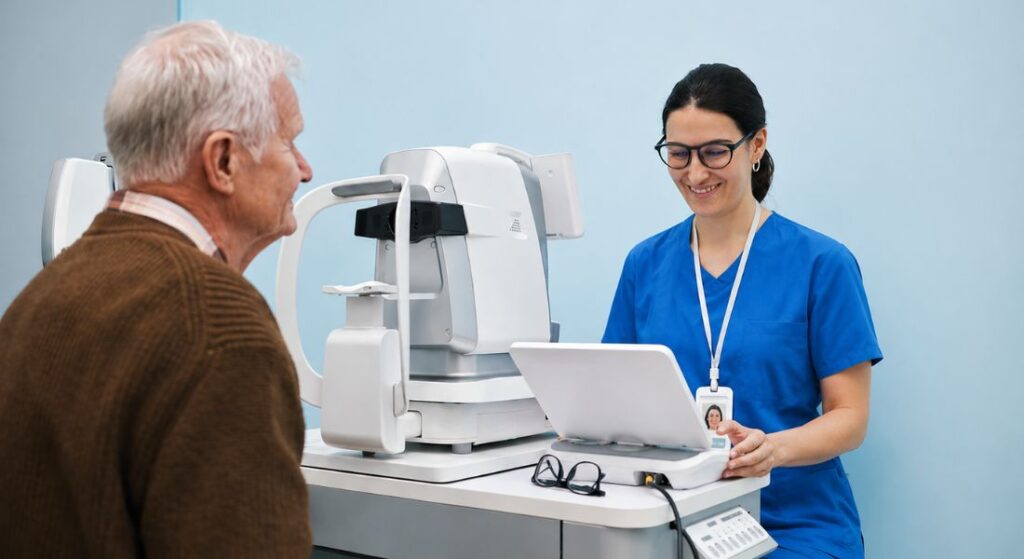
If you find that recognising faces is becoming increasingly difficult, it may be time for you to have your vision checked. Gradual changes can sometimes go unnoticed until they begin to affect daily life. Getting an assessment can give you a clearer understanding of what is happening. It also helps you take the right steps early on.
Changes in central vision or contrast sensitivity can sometimes be linked to underlying eye conditions. These changes may affect how clearly you see details and recognise people. Identifying the cause early can make a significant difference to how it is managed. It also helps prevent further impact on your daily activities.
Early assessment allows you to explore suitable treatment or management options. Specialist eye care services, such as those offered by the London Cataract Centre, can provide detailed evaluation and guidance. They can help you understand whether cataracts or other vision changes are contributing to your symptoms. With the right support, you can manage these challenges more confidently.
Can this improve over time?
The answer depends on the underlying cause of your vision changes. In some cases, such as cataracts, your vision can improve significantly with the right treatment. This can make recognising faces easier again and restore visual clarity. Understanding the cause is the first step towards improvement.
In other situations, the focus may be more on adapting rather than reversing the condition. You may learn to use different strategies to support recognition and communication. These adjustments can help you feel more confident in daily interactions. Over time, they can make a noticeable difference to how you manage social situations.
Either way, improvement in recognition and confidence is absolutely possible for you. With the right support, guidance, and practical changes, many people adjust successfully. You may find that your awareness and ability to recognise others improves gradually. This can help you regain a strong sense of visual awareness in everyday life.Top of Form
Bottom of Form
Adjusting expectations in a positive way
It’s important that you do not see difficulty recognising faces as a personal failure or a loss of ability. What you are experiencing is linked to how visual information is processed, not to your intelligence or memory. It can feel frustrating at times, but it is not a reflection of your capability. Understanding this can help you respond with more patience and confidence.
This is a visual processing challenge rather than a cognitive one. Your brain is still fully capable of recognising people and making connections. The difficulty comes from the quality of the visual input it receives. When that input is less clear, recognition simply takes more time or effort.
Once you understand this, it becomes easier for you to approach the situation in a calm and practical way. You can focus on using helpful strategies rather than feeling discouraged. This shift in perspective can reduce frustration and improve your overall experience. Over time, it can help you feel more in control and confident in social situations.
FAQs:
1. Can vision loss make it difficult to recognise faces?
Yes, vision loss can make face recognition more difficult because it reduces the clarity of visual details needed to identify people. This can affect how quickly and accurately you recognise familiar and unfamiliar faces in everyday situations.
2. Why does vision loss affect face recognition?
Face recognition relies heavily on clear visual input such as eyes, mouth, expression, and facial structure. When vision becomes blurred or less detailed, the brain receives incomplete information, making recognition slower or less reliable.
3. What role does central vision play in recognising faces?
Central vision is responsible for sharp, detailed sight and is essential for recognising facial features and expressions. When this part of vision is affected, faces may appear less clear, making identification more difficult.
4. How does contrast sensitivity affect facial clarity?
Contrast sensitivity helps you distinguish between light and dark areas on a face. When it is reduced, facial features such as the eyes, nose, and mouth may blend together, making faces appear flatter and harder to recognise.
5. Why can familiar faces still be hard to recognise?
Even familiar faces may not be recognised instantly if visual information is unclear. Your brain may recognise the person through voice or context first, with visual recognition taking slightly longer to catch up.
6. Do lighting and glare affect face recognition?
Yes, poor lighting, glare, and shadows can significantly reduce facial clarity. These conditions make it harder to see important details, which can make recognition more difficult even for familiar people.
7. Why is distance important when recognising faces?
Distance reduces the visibility of fine facial details. The further away someone is, the harder it becomes to distinguish features clearly, especially when vision is already reduced.
8. Can eye strain make face recognition worse?
Yes, eye strain and fatigue can reduce visual clarity and make it harder to focus on facial details. This can slow down recognition and make faces appear less sharp, especially later in the day.
9. How can vision loss affect social confidence?
Difficulty recognising faces can lead to hesitation in social situations, reduced confidence, or fear of making mistakes. Over time, this may affect how comfortable you feel in conversations or group settings.
10. What can help improve face recognition with vision loss?
Simple strategies such as improving lighting, reducing glare, maintaining a comfortable distance, and using additional cues like voice or clothing can make face recognition easier and more reliable.
Final Thoughts: Understanding and Adapting to Changes in Face Recognition
Difficulty recognising faces due to vision loss can feel unsettling at first, especially when it begins to affect everyday social interactions. However, it is important to remember that this change is usually linked to how visual information is processed rather than memory or cognitive ability. When central vision, contrast sensitivity, lighting conditions, or distance are affected, the brain simply receives less clear detail to work with, which can naturally slow down recognition.
With awareness and the right practical strategies such as improving lighting, using additional cues like voice, and allowing more time for recognition many people find that they can adapt successfully and maintain confident social interactions. Support, understanding, and early assessment can also make a meaningful difference in managing these changes effectively. If you’re looking to enhance your vision or need personalised guidance, our specialist team at the London Cataract Centre is here to help.
References:
- Pascolini, D. and Mariotti, S.P. (2012) Global estimates of visual impairment: 2010, British Journal of Ophthalmology, 96(5), pp. 614–618. Available at: https://pubmed.ncbi.nlm.nih.gov/22133988/
- Dimalanta, L. et al. (2024) Disease associations among patients afflicted with both glaucoma and age-related macular degeneration, Journal of Clinical Medicine, 13(19), p. 5941. Available at: https://www.mdpi.com/2077-0383/13/19/5941/
- Flaxman, S.R. et al. (2017) Global causes of blindness and distance vision impairment 1990–2020: a systematic analysis, The Lancet Global Health, 5(12), pp. e1221–e1234. Available at: https://pubmed.ncbi.nlm.nih.gov/29032195/
- Burton, M.J. et al. (2021) The Lancet Global Health Commission on Global Eye Health: Vision beyond 2020, Journal of Clinical Medicine. Available at: https://www.mdpi.com/2039-4403/15/4/125/
- Srinivasan, S. et al. (2017) Prevalence and the risk factors for visual impairment in age-related macular degeneration, Eye, 31(7), pp. 1066–1074. Available at: https://pmc.ncbi.nlm.nih.gov/articles/PMC5518841/