


If you are considering refractive lens exchange, one of the most natural questions you will ask is what your vision will actually be like afterwards. It is a completely reasonable thing to want to understand before making a decision. Choosing eye surgery is not only about correcting a prescription. It is also about improving the way you see and experience the world each day.
The results of RLE can be excellent, but it is important to be realistic about what influences the outcome. Your overall eye health, your existing prescription and your lifestyle needs can all affect the final visual result. Another key factor is the type of intraocular lens that is selected for your eyes. Each lens design offers slightly different benefits and visual characteristics.
To help you understand this more clearly, it is useful to look at the different aspects of vision after surgery. This includes how well you may see at distance, at intermediate range and at close reading distance. We can also consider how likely you are to reduce or avoid the need for glasses. Understanding these points helps you build realistic expectations.
The aim of this discussion is not to promise perfect vision in every situation. Instead, the goal is to give you a clear and honest understanding of what RLE can realistically achieve. When you know what to expect, it becomes much easier to decide whether the procedure is right for you. This approach helps you make a confident and well-informed choice.
Understanding What RLE Actually Does
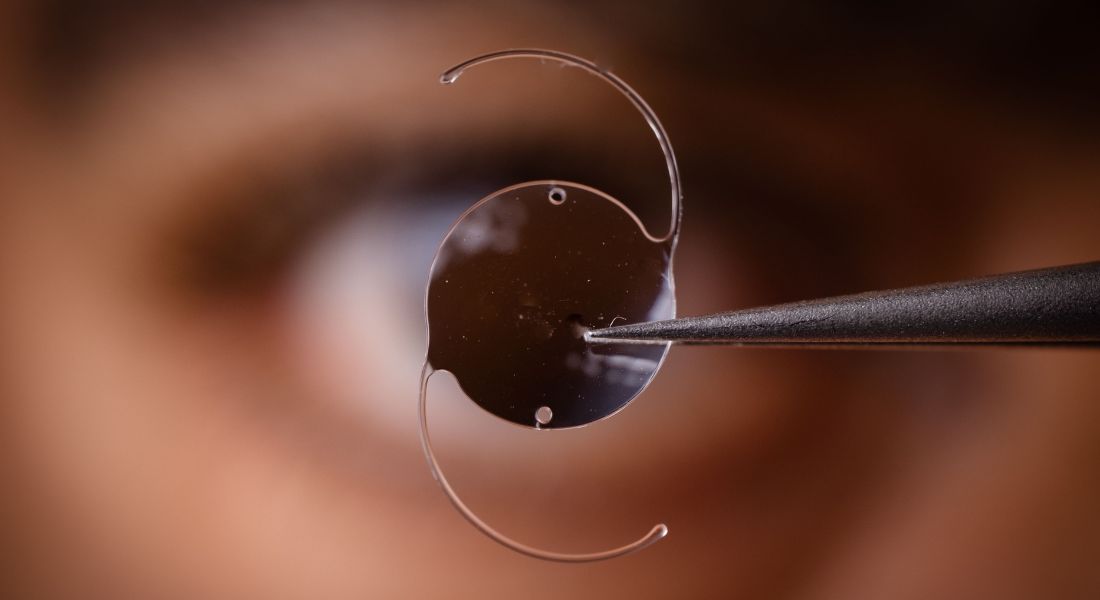
Before discussing visual outcomes, it helps to understand what refractive lens exchange actually changes inside your eye. During RLE, your natural lens is removed and replaced with an artificial intraocular lens. This new lens is clear, stable and specifically designed to correct refractive error. Once it is in place, it remains permanently inside the eye.
Your natural lens normally changes shape throughout your life to help you focus at different distances. However, as you get older, the lens gradually loses its flexibility. This is the reason reading and close work often become more difficult in your 40s and 50s. The condition is known as presbyopia and is a normal part of ageing.
By replacing the natural lens entirely, RLE corrects refractive errors while also removing the ageing lens that causes presbyopia. This means the focusing limitations of the natural lens are no longer part of the visual system. The artificial lens provides stable optical correction instead. Now it becomes easier to understand the type of vision you may experience after surgery.
Distance Vision After RLE

Distance vision is typically the most predictable outcome following refractive lens exchange (RLE). The procedure replaces the eye’s natural lens with an artificial intraocular lens that is carefully calculated to optimise visual clarity. For many patients, this results in noticeably sharper distance vision and greater visual stability. Everyday activities that rely on clear long-range vision often become much easier after recovery.
- Clearer Vision for Daily Activities: After RLE, most patients notice significant improvement when performing everyday tasks that require distance vision. Activities such as driving, watching television, recognising faces from across a room, and enjoying outdoor hobbies usually become clearer. Travel and general mobility can also feel more comfortable when distance vision improves.
- Many Patients Meet Driving Standards Without Glasses: With accurate lens calculations, many individuals achieve vision close to or even better than the legal driving standard without needing glasses. This means clearer road signs, improved confidence while driving, and less dependence on corrective lenses. However, outcomes can vary depending on each person’s eye measurements and pre-existing vision conditions.
- Advanced Lens Calculations Improve Accuracy: Modern diagnostic technology allows surgeons to measure the eye with a high degree of precision before selecting the intraocular lens. These measurements help determine the lens power required to optimise distance vision. While the calculations are extremely accurate, small biological variations can still influence the final result.
- Healing and Eye Characteristics Affect Final Vision: Even with advanced planning, subtle differences in healing or corneal shape can affect the final outcome. Every eye responds slightly differently after surgery, and these natural variations can influence visual sharpness. Surgeons aim for the best possible accuracy but always explain that perfect mathematical precision cannot be guaranteed.
Overall, the majority of patients experience a clear and noticeable improvement in distance vision after RLE. The procedure is designed to deliver stable and predictable results, particularly for long-range clarity. While minor variations can occur, most people find that everyday activities requiring distance vision become significantly easier. For many patients, the improvement in clarity greatly enhances comfort and confidence in daily life.
Intermediate Vision in Everyday Life
Intermediate vision is the range you probably use more often than you realise during your daily routine. It covers many common activities that happen at arm’s length. For example, it includes working on a computer, cooking in the kitchen or checking the dashboard while driving. You also rely on this range when using a tablet or interacting with people across a table.
Many people assume that reading vision is the biggest problem as their eyes age. In reality, intermediate vision often plays an even larger role in everyday life. A large part of modern daily activity takes place within this mid-range distance. When this range becomes unclear, tasks can feel more tiring and less comfortable.
The quality of intermediate vision after refractive lens exchange depends greatly on the type of lens chosen. Monofocal lenses are usually set to focus on clear distance vision, so some intermediate tasks may still require mild glasses. Extended depth of focus lenses are designed to improve this middle range and make activities such as computer use more comfortable. Multifocal lenses may also provide intermediate clarity depending on their optical design, which is why understanding these differences before surgery is so important.
Near Vision Expectations
Near vision is an area where expectations after refractive lens exchange (RLE) need to be especially realistic. Tasks such as reading small print, checking messages on your phone, or seeing fine details up close require precise focusing ability. As we age, the eye gradually loses its natural accommodation, which allowed effortless focusing at different distances when we were younger. Because RLE replaces the natural lens, the type of artificial lens chosen plays a major role in how well near vision functions afterwards.
- Monofocal Lenses and Reading Glasses: A standard monofocal intraocular lens is typically designed to focus clearly at one main distance, usually for far vision. While this provides excellent clarity for activities like driving or watching television, it cannot fully restore the natural focusing ability of a younger eye. As a result, many patients will still need reading glasses for small print or prolonged close work.
- Multifocal Lens Technology: Multifocal lenses are designed to split light into multiple focal points, allowing the eye to focus at both distance and near simultaneously. This can reduce dependence on reading glasses for everyday tasks such as checking a phone or reading menus. However, because light is divided between focal points, some people may notice mild visual effects such as halos or glare in certain lighting conditions.
- Extended Depth of Focus (EDOF) Lenses: Extended depth of focus lenses work differently by stretching the eye’s range of focus rather than creating separate focal points. This design provides excellent distance and intermediate vision, which can be helpful for tasks such as computer use or dashboard viewing while driving. Near vision is often improved compared with monofocal lenses, although small print may still occasionally require reading glasses.
- Balancing Vision Quality and Side Effects: Each lens design involves small trade-offs between clarity at different distances and potential optical effects. Some patients prioritise maximum sharpness for distance vision, while others prefer greater independence from reading glasses. Careful discussion with a surgeon helps determine which option best suits your lifestyle and visual priorities.
Choosing the right lens for near vision is a very personal decision that depends on your daily activities and expectations. Modern lens technologies offer several ways to improve functional near vision, but no single option is perfect for everyone. Understanding the strengths and limitations of each lens type helps ensure realistic expectations after surgery. With the right personalised approach, many patients achieve a comfortable balance between distance, intermediate and near vision.
Spectacle Independence: What It Really Means

Many people consider refractive lens exchange because they hope to stop wearing glasses completely. This is an understandable goal, especially if you have relied on glasses for many years. However, the reality of spectacle independence is often a little more nuanced. In most cases, it means reducing your dependence on glasses rather than eliminating them entirely.
For many patients, this means enjoying clear distance and intermediate vision throughout the day without needing glasses. You may be able to drive, use a computer or move through daily activities with much greater visual freedom. However, you might still choose to use reading glasses for very small print or in dim lighting. This is quite common and does not mean the procedure has been unsuccessful.
Some patients who choose multifocal lenses rarely need glasses at all for everyday tasks. Others prefer the simpler and often sharper optical quality of monofocal lenses and are comfortable using reading glasses occasionally. Both approaches can provide excellent outcomes depending on your lifestyle and expectations. The most important factor is choosing a lens option that matches the way you want to see and live each day.
How Lens Choice Shapes Your Vision
Lens selection is the single most important factor influencing the type of vision you experience after refractive lens exchange. Different intraocular lenses are designed to produce different visual outcomes. Because of this, the lens you choose will strongly shape how clearly you see at various distances. Understanding these differences helps you make a more informed decision before surgery.
Monofocal lenses provide crisp, high-quality vision at a single focal distance. They are known for delivering excellent clarity and contrast, particularly for distance vision. However, because they focus at one distance, you will usually need reading glasses for close tasks. Many patients still prefer this option because it offers very stable and predictable visual quality.
Extended depth of focus lenses provide a broader range of vision and can improve intermediate tasks such as computer use. Multifocal lenses go a step further by creating multiple focal points that support both distance and near vision. However, these designs can sometimes introduce visual effects such as halos or glare around lights. Because each lens has its own advantages and compromises, your lifestyle and visual priorities should guide the final choice.
The First Few Days After Surgery

Immediately after surgery, your vision may feel slightly hazy or may fluctuate from time to time. This is completely normal in the early stages of recovery. Your eye needs a short period to settle after the procedure. At the same time, your brain begins adapting to the new optical system created by the artificial lens.
Many patients start to notice clearer distance vision within the first few days. As the eye begins to heal, the sharpness and stability of your vision gradually improve. Some people also notice that colours appear brighter and more vivid than before. This happens because the ageing natural lens has been replaced with a perfectly clear artificial one.
It is also common to experience mild light sensitivity or a slightly dry feeling in the eye during the early recovery period. These symptoms are usually temporary and tend to improve as healing progresses. Using the prescribed eye drops and following post-operative advice helps the eye recover smoothly. For most patients, vision continues to settle and become clearer over the following weeks.
The Adaptation Period
One of the most important aspects of recovery after refractive lens exchange is neural adaptation. Your brain has spent many years processing images through your natural lens. When a new artificial lens is introduced, the visual system needs time to adjust to this different optical setup. This adjustment mainly happens in the visual cortex, which processes the images your eyes send to the brain.
Because of this, the adaptation process does not happen instantly. It can take several weeks for your brain to fully adapt to the new way light is focused inside the eye. If you have multifocal or extended depth of focus lenses, this adjustment period may take slightly longer. During this time, your brain gradually learns how to interpret the new visual signals.
While this adaptation is happening, you might notice effects such as glare, halos around lights or small differences in contrast. These sensations are quite common in the early stages after surgery. In most cases, they reduce significantly as the brain becomes more comfortable with the new visual system. Being patient during this stage is important, as the improvement usually continues over time.
Night Vision After RLE
Night vision is an important factor to consider when planning refractive lens exchange (RLE), especially for people who regularly drive after dark. Low-light conditions can make visual disturbances more noticeable, so the type of intraocular lens implanted plays a key role in night-time visual quality. Different lens designs interact with light in different ways, which can influence how clearly you see headlights, streetlights and other bright sources in the dark.
- Monofocal Lenses and Natural Night Vision: Monofocal lenses are generally known for providing the most natural night vision after RLE. Because they focus light into a single point, they tend to produce fewer visual disturbances in low-light conditions. This makes them a common choice for patients who prioritise sharp distance vision and frequently drive at night.
- Multifocal Lenses and Halos Around Lights: Multifocal lenses divide light into multiple focal points to provide both distance and near vision. While this can reduce dependence on reading glasses, it may sometimes create halos or glare around bright lights. These visual effects are usually most noticeable during the early adaptation period after surgery.
- Extended Depth of Focus (EDOF) Lenses: Extended depth of focus lenses aim to stretch the eye’s range of focus rather than splitting light into separate focal zones. As a result, they often provide a balance between clear distance vision and functional intermediate vision. Night-time visual disturbances are generally less pronounced than with multifocal lenses, though individual experiences can vary.
- Adaptation Over Time: For most patients, any halos or glare that appear after surgery gradually become less noticeable as the brain adapts to the new optical system. This process, known as neuroadaptation, helps the visual system adjust to the way light is focused by the new lens. Over time, many people report that night vision feels comfortable and natural again.
Night vision outcomes after RLE depend largely on the type of lens selected and the individual characteristics of your eyes. While modern lens designs aim to minimise visual disturbances, every option involves small trade-offs between distance, near and night-time clarity. Discussing your driving habits and lifestyle before surgery allows your surgeon to recommend the most appropriate lens.
Stability of Vision Over Time
One of the major advantages of refractive lens exchange is the long-term stability it can provide. Because your natural lens is removed during the procedure, cataracts cannot develop in the future. The artificial intraocular lens that replaces it does not age, become cloudy or change shape. This means the optical correction created by the surgery is designed to remain permanent.
As a result, your prescription is usually far more stable than it would be with glasses or contact lenses alone. The artificial lens continues to focus light consistently without the natural ageing changes that affect the original lens. For many patients, this stability brings reassurance and long-term visual clarity. It also means fewer concerns about prescription changes later in life.
In some cases, a mild haze may develop in the capsule that holds the artificial lens years after surgery. This condition is known as posterior capsule opacification and is relatively common. If it occurs, it can usually be treated quickly with a simple laser procedure. Overall, however, the visual outcomes of RLE tend to remain stable for many years, often lasting for decades.
When Additional Enhancements Are Needed
In a small number of cases, a minor adjustment may be needed after refractive lens exchange. This can happen if a small amount of residual refractive error remains once the eye has fully healed. While uncommon, these situations are possible and do not mean the initial surgery was unsuccessful.
Enhancement options are available to refine the results if necessary. This can include laser procedures or other corrective treatments, depending on the specific issue. Modern eye surgery offers safe and effective solutions for these minor refinements.
Clear communication with your surgeon is key to managing expectations. Discussing possible outcomes and understanding the enhancement options in advance helps you feel more confident about the process. Most patients achieve excellent long-term vision with little or no need for further intervention.
Lifestyle Improvements After RLE
While clinical outcomes such as visual acuity are important, many patients are most interested in how refractive lens exchange (RLE) improves everyday life. Beyond numbers on an eye chart, RLE can make daily activities simpler, more comfortable, and more enjoyable. The procedure often brings practical benefits that significantly enhance independence and confidence in routine tasks.
- Clearer Vision When Travelling: Many patients notice that long journeys, sightseeing, and navigating unfamiliar areas become easier after RLE. Clear distance vision helps with reading signs, recognising landmarks, and safely moving through busy environments. Travel can feel less stressful when your vision is consistently sharp.
- Greater Comfort Using Digital Devices: RLE can reduce eye strain during prolonged screen use, whether for work, reading, or entertainment. With improved visual clarity, checking emails, browsing on a tablet, or video calling becomes more comfortable. Many patients report fewer headaches and less fatigue when using digital devices.
- Less Dependence on Glasses: One of the biggest lifestyle improvements is freedom from constantly switching between multiple pairs of glasses. Distance, reading, or multifocal lenses in glasses are often no longer required, simplifying daily routines. This convenience can be surprisingly liberating for patients who previously relied heavily on corrective eyewear.
- Better Confidence When Driving: Clear and stable vision enhances confidence behind the wheel, especially in low-light conditions or heavy traffic. Patients often report feeling safer and more comfortable driving without worrying about blurry or distorted vision. This improved confidence extends to both short commutes and longer journeys.
For many people, the most noticeable benefit of RLE is the newfound freedom and convenience it brings to daily life. Improved clarity, reduced reliance on glasses, and greater comfort in routine activities contribute to a better overall quality of life. The procedure often provides practical improvements that make a tangible difference long after surgery.
Managing Expectations Before Surgery
The most successful outcomes from refractive lens exchange happen when expectations are realistic. It’s important to understand that perfect vision at every distance, without any optical compromises, is unlikely with any lens technology. However, achieving a significant improvement in visual freedom and clarity is very possible for most patients.
Choosing the right lens design is central to matching your personal priorities. Some people place the highest value on absolute optical sharpness and contrast. Others are more focused on reducing or eliminating their need for reading glasses. Both approaches are valid and can deliver excellent results.
The key is aligning your lens choice with your lifestyle and daily visual needs. By considering how you use your eyes most often, you can make a decision that maximises satisfaction and functional vision. Clear communication with your surgeon ensures your expectations remain realistic and achievable.
The Importance of Personalised Consultation
No article can replace a proper, in-person clinical assessment. Every eye is unique, and subtle differences in shape, prescription and overall health can influence which lens options are suitable. Detailed measurements, corneal mapping and retinal examination are essential to determine the best approach for each patient. These assessments provide the foundation for a safe and effective procedure.
During your consultation, the surgeon will also discuss your lifestyle, hobbies, work environment and visual goals. This helps tailor the lens choice to your individual needs. For example, a pilot, a graphic designer and a retired traveller may all require different visual strategies to achieve the best functional vision. These considerations are as important as the technical measurements.
Personalised planning ensures that the outcome is optimised for you specifically. By combining precise clinical data with an understanding of your daily life, the surgeon can recommend the lens type and surgical approach that best meets your expectations. This is key to achieving both satisfaction and long-term visual success.
FAQs:
1. What type of vision can I expect immediately after RLE surgery?
Immediately after surgery, your vision may feel slightly hazy or fluctuate as your eye heals. Most patients begin to notice clearer distance vision within a few days, while sharpness and stability continue to improve over several weeks as the eye and brain adapt to the new lens.
2. How does lens choice affect vision after RLE?
The type of intraocular lens you choose has a major impact on your visual outcomes. Monofocal lenses focus on one distance (usually distance), multifocal lenses create multiple focal points for near and far vision, and EDOF lenses extend the range of focus for intermediate tasks while maintaining good distance clarity. Each option balances clarity, spectacle independence, and potential optical effects differently.
3. Will I still need glasses after RLE?
Many patients experience reduced dependence on glasses, particularly for distance and intermediate vision. Monofocal lenses usually still require reading glasses, whereas multifocal or EDOF lenses can minimise the need for glasses for everyday tasks. Total spectacle independence is possible but varies with lens type and individual eye characteristics.
4. How soon can I expect stable vision after RLE?
Distance vision is often clear within the first few days, but full adaptation including intermediate and near vision can take several weeks. Neural adaptation helps the brain adjust to the new optical system, particularly with multifocal or EDOF lenses, so some visual effects may gradually reduce over time.
5. What can I expect for night vision after RLE?
Night vision depends on the lens type. Monofocal lenses typically provide the most natural night vision, while multifocal lenses may cause mild halos or glare. EDOF lenses often offer a balance between clear distance/intermediate vision and reduced night-time disturbances. Visual adaptation over time usually improves night vision comfort.
6. How predictable is distance vision after RLE?
Distance vision is usually the most predictable outcome. Advanced diagnostic measurements and lens calculations allow surgeons to achieve a high level of accuracy, often meeting or exceeding driving standards. Minor biological variations can still influence final clarity.
7. How well will I see at intermediate distances after RLE?
Intermediate vision is important for activities like computer use, cooking, and interacting across a table. Monofocal lenses may require glasses for this range, while EDOF and multifocal lenses are designed to provide better intermediate clarity, reducing the need for additional correction.
8. Can RLE improve near vision for reading and close work?
Near vision outcomes depend on the lens type. Monofocal lenses usually require reading glasses, multifocal lenses provide multiple focal points for near and distance vision, and EDOF lenses stretch the focus range to enhance intermediate and near tasks, although very small print may still need glasses.
9. Is RLE vision stable over time?
Yes, vision after RLE is generally stable because the natural lens is permanently replaced and cataracts cannot develop. The artificial lens does not age or change shape, so long-term clarity is maintained. Posterior capsule opacification can occur years later but is easily treated with a laser.
10. What lifestyle improvements can I expect after RLE?
Many patients notice greater visual freedom, less eye strain during screen use, improved comfort while driving, and reduced dependence on glasses. Everyday activities such as travel, reading, and using digital devices often become simpler and more enjoyable, enhancing overall quality of life.
Final Thoughts: Understanding Your Vision After RLE
Refractive lens exchange can offer significant improvements in how you see the world, from sharper distance vision to more comfortable intermediate and near tasks. While outcomes vary depending on lens choice, eye health, and individual adaptation, most patients experience clearer vision, reduced dependence on glasses, and greater confidence in daily activities. Realistic expectations are key no lens can perfectly replicate the natural flexibility of a youthful eye, but modern intraocular lenses provide excellent clarity and long-term stability.
Choosing the right lens type and understanding its benefits for distance, intermediate, and near vision is central to achieving satisfaction. With careful planning, personalised assessment, and patience during the early adaptation period, many patients enjoy lasting improvements that enhance everyday life. If you’re looking for RLE Surgery, you can get in touch with us at London Cataract Centre.
References:
- Alió, J.L., Ortiz, D. and Amparo, F. (2025) Current Trends in Presbyopia Correction A Comprehensive Review, Journal of Clinical Medicine https://www.mdpi.com/2077-0383/15/1/215
- Barisić, A., Gabrić, N., Dekaris, I. et al. (2010) Comparison of different presbyopia treatments: refractive lens exchange with multifocal intraocular lens implantation versus LASIK monovision, Coll Antropol, https://pubmed.ncbi.nlm.nih.gov/21302708/
- Fernández‑Vega, L. and Alió, J.L. (2023) Surgical interventions for presbyopia, British Journal of Ophthalmology https://pmc.ncbi.nlm.nih.gov/articles/PMC10031802/
- Schallhorn, S.C., Teenan, D., Venter, J.A. et al. (2017) Monovision LASIK versus presbyopia‑correcting IOLs: comparison of clinical and patient‑reported outcomes, Journal of Refractive Surgery, https://pubmed.ncbi.nlm.nih.gov/29117414/
- Pandey, S.K. and Werner, L. (2014) Refractive lens exchange, Survey of Ophthalmology https://www.sciencedirect.com/science/article/abs/pii/S0039625714000873