



If you are planning cataract or lens replacement surgery and reading is a big part of your daily life, choosing the right lens becomes incredibly important. Many people want the strongest possible reading vision after surgery, especially if they spend hours with books, digital screens, documents or fine-detail tasks.
The answer depends on what you expect from your vision, how you use your eyes day-to-day and how sensitive you are to certain visual effects. Trifocal lenses offer an impressive blend of near, intermediate and distance clarity, but every lifestyle is different.
In this article, I’ll walk you through how trifocal lenses work for reading, why near vision varies between people, how lighting affects reading comfort and when alternative options may give you even sharper close-range performance.
How Trifocal Lenses Work
Trifocal intraocular lenses are designed with three focal points: near, intermediate and distance. This multifocal setup allows your brain to access visual information at different ranges without relying on glasses. The lens splits incoming light into these focal zones, giving you functional clarity for daily activities such as reading, computer work and driving.
Because trifocals distribute light across multiple points, they create a balanced vision profile. The near segment is optimised for reading at a typical book distance, the intermediate zone supports screen work and the distance segment provides clarity for everyday tasks such as walking or driving.
Key Design Features
Three focal ranges – Near, intermediate and distance zones blend to give you broad visual coverage throughout the day.
Light distribution – The lens divides incoming light between the focal zones, which supports independence from reading glasses.
Neuroadaptation – Your brain learns to select the most appropriate focus depending on the task and lighting conditions.
Trifocals are popular because they offer an all-round solution, but near vision performance depends on several factors.
How Strong Is Trifocal Near Vision?

Trifocal lenses do provide good reading vision for most people. They are calibrated to make close tasks comfortable, and many patients can read small print without glasses once they adapt. However, the strength of near clarity is influenced by personal reading habits, lighting and the specific trifocal model used during surgery.
Most trifocals are optimised for reading distances of around 35–40 cm. If your natural reading distance falls close to this range, you may find the performance excellent. If you prefer reading at a much closer distance, you may notice that the near focal point feels slightly less sharp.
Near Vision Influencing Factors
Reading distance – Your preferred reading distance affects how well the near focal point matches your natural posture.
Pupil size – Larger pupils in dim lighting may shift the balance between focal zones, changing clarity.
Neuroadaptation speed – Some people adapt quickly to multifocal optics, while others need more time to reach maximum comfort.
Understanding how these elements interact helps set realistic expectations.
Why Some Heavy Readers Want Even Sharper Near Vision
If reading is a major part of your day, you may expect your near vision to feel crisp and effortless. Trifocal lenses offer a balanced range, but because they distribute light between multiple focal points, they cannot concentrate all available light exclusively into the near segment.
If your work or hobbies require frequent close focus such as research, paperwork, crafting, sewing, editing or using small devices you might prefer a lens setup that enhances near vision more aggressively. This doesn’t mean trifocals can’t work well; it simply means they offer a compromise between all distances.
When Near Vision Needs More Precision
Intensive reading habits – If you read for several hours per day, you may prefer sharper close contrast.
Close-range hobbies – Tasks involving fine detail often benefit from extra near focus.
Low-light activities – Reading at night or in dim spaces may require stronger near clarity than trifocals provide.
Your lifestyle may guide you towards a more specialised lens configuration.
How Lighting Influences Trifocal Reading Vision
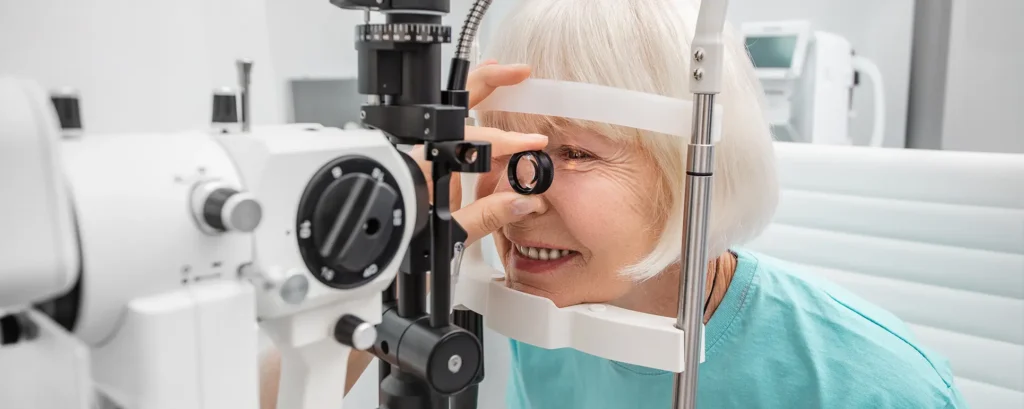
Lighting plays an essential role in how well you see with trifocal lenses. Bright, even lighting helps the near focal point feel clearer and more stable. In low-light conditions, your pupil widens, and this can subtly shift the balance of how light enters the lens. Some people find that reading in dim conditions leads to softer focus or mild difficulty with fine print.
You may also notice stronger clarity during daytime or under bright desk lamps. If you regularly read in low-light environments, this factor becomes important when deciding whether trifocals are your best option.
Lighting Effects Explained
Smaller pupils – When your pupils are smaller, such as in bright sunlight or well-lit environments, you can access the near focal zone of multifocal lenses more efficiently. This improves close-up clarity, reduces eye strain, and allows you to read or focus on fine details more comfortably.
Larger pupils – In dim or low-light conditions, your pupils naturally enlarge, allowing more light into the peripheral optics of the lens. While this helps overall brightness, it can sometimes reduce near sharpness and make reading small text or fine details more challenging.
Contrast sensitivity – Good lighting enhances contrast, which is essential for interpreting small print, detailed patterns, or subtle textures. Strong contrast helps your eyes distinguish objects more clearly and reduces visual fatigue during prolonged near work.
Lighting is one of the easiest adjustments you can make, but it still plays a key role in user satisfaction.
Are Trifocal Lenses Always the Best Option for Reading?
The answer depends entirely on your personal priorities. If you want high independence from glasses at all distances, trifocals provide an excellent and balanced experience. However, if your main goal is the strongest possible near vision, there are alternative setups that may outperform trifocals specifically for reading.
Trifocals are designed for versatility. They aim to give you functional clarity across multiple ranges, not single-distance perfection. For many people, this balance works beautifully. But for heavy readers or people who rely on intense close focus, a different strategy may suit them better.
Alternative Lens Options for Stronger Near Vision
You may be surprised to learn that some lens strategies can deliver even sharper near focus than a standard trifocal. These are often recommended for people whose lifestyle leans heavily towards reading or close-work activities.
1. Enhanced Monovision
This approach corrects one eye for near vision and the other for distance. When done with modern lens technology, monovision provides strong near focus while maintaining a wide visual range.
Near-eye focus – Allows extremely sharp reading clarity for fine print.
Distance balance – The other eye supports driving and everyday seeing.
Brain adaptation – Most people adapt well to the visual difference between eyes.
Enhanced monovision is particularly useful for heavy readers who still want functional distance vision.
2. EDOF Lenses Combined With Monovision
Extended Depth of Focus (EDOF) lenses provide smooth intermediate clarity and decent near vision. When combined with a slight monovision approach, near focus becomes sharper without compromising mid-range tasks such as screens and digital devices.
Improved close comfort – Offers stronger reading clarity than EDOF alone.
Smooth visual transitions – Reduces jumps between focus zones.
Balanced daily vision – Suitable for people who need good near and intermediate function.
This hybrid method is increasingly popular for those seeking custom near performance.
3. Trifocal With a Near Bias
Some trifocal models include versions that favour the near range more strongly. These options provide the typical trifocal spread but shift more visual emphasis toward reading.
Improved fine print – Offers sharper near clarity than standard trifocals.
Maintained multifocality – Still provides usable intermediate and distance vision.
Lifestyle matching – Ideal if your near needs outweigh distance requirements.
Your surgeon can help determine whether a near-biased trifocal matches your reading habits.
What Determines If Trifocals Work Well for You?
Several personal factors influence how well you see with trifocal lenses. These lenses are designed to provide clear vision at near, intermediate, and far distances, but individual differences can affect how effectively they perform.
Important Influencing Factors
Your reading posture – If you tend to hold books, tablets, or documents closer than average, you may need a lens with a nearer focal zone to reduce strain and maintain clear vision.
Your visual tolerance – Some people adapt quickly to multifocal optics, while others find complex lens designs uncomfortable or disorienting. Understanding your comfort level helps determine the best lens type.
Your contrast needs – If you frequently read small print, work on screens, or engage in detailed tasks, lenses that enhance contrast sensitivity can make text and fine details sharper and easier on the eyes.
Your lighting habits – Reading or working in dim lighting naturally reduces near clarity with multifocals, so the lens choice may need to compensate for low-light conditions to maintain comfort.
Your daily routines play a huge role in choosing the right lens.
How Trifocals Perform for Digital Reading
Many people now read more on digital devices than on paper. Trifocal lenses generally perform well for screen-based tasks because the intermediate range is specifically built for computer and tablet distances. If you spend hours reading articles, browsing documents or analysing spreadsheets, trifocals often provide comfortable mid-range clarity.
However, your near focus for mobile phones may vary, especially if you hold your device very close. If your natural posture brings the phone closer than 30–35 cm, you may notice slight softness. Adjusting your reading distance usually resolves this.
Realistic Expectations With Trifocal Near Vision
Trifocal lenses can deliver excellent everyday reading ability, but the quality of near vision varies from person to person. Some people find reading effortless, while others notice slight softness in certain lighting conditions or with very fine print.
If your primary goal is convenience and glasses independence, trifocals may be the perfect choice. If your goal is absolute near sharpness, you may benefit from a targeted approach such as monovision or near-biased lenses.
Being clear about your expectations helps your surgeon match you with the ideal lens.
Frequently Asked Questions:
1. How do trifocal lenses help with reading?
Trifocal lenses are designed with three focal points—near, intermediate, and distance—which allow your eyes to focus on different ranges without glasses. For reading, the near segment is optimised for a typical book distance, usually around 35 to 40 centimetres. This means that once your brain adapts to the lens, you can see small print comfortably without additional visual aids.
2. When will I notice improvements in my reading vision?
Most patients begin to notice subtle improvements within a few weeks after surgery as their brain adapts to the new lens. The full benefits, especially for near vision, typically become apparent over three to six months when neuroadaptation is complete and your eyes have fully adjusted to the trifocal optics.
3. How many trifocal lenses are needed per eye?
Trifocal lenses are implanted one per eye during cataract or lens replacement surgery. Each eye receives a single lens that provides multiple focal points, and together they work to give functional vision across near, intermediate, and distance ranges. Your surgeon may adjust the prescription in one eye slightly to optimise overall balance and comfort.
4. Will trifocal lenses give me perfect near vision?
While trifocal lenses are excellent for providing functional near vision, they do not always give perfect clarity at extremely close distances. Because light is divided among three focal points, the near zone may not be as strong as a lens specifically designed for close-range focus. Some patients who require extremely sharp near vision for detailed work or prolonged reading may consider alternative lens strategies.
5. Are trifocal lenses suitable for heavy readers?
Trifocal lenses can be suitable for people who read frequently, but those who spend many hours on close work may notice slight softness in very fine print or in low-light conditions. People with intensive reading habits may benefit from enhanced monovision, near-biased trifocals, or other customised approaches that prioritise near clarity.
6. How does lighting affect reading with trifocal lenses?
Lighting has a significant impact on near vision clarity. In bright light, your pupils constrict, allowing the trifocal lens to focus efficiently on the near segment. In dim lighting, your pupils expand, which can shift the balance of light between the focal points and make small print appear slightly less sharp. Good lighting enhances contrast and makes reading more comfortable.
7. Can I read digital devices comfortably with trifocal lenses?
Yes, trifocal lenses typically provide good intermediate vision, which is ideal for computer screens, tablets, and larger smartphones. However, if you hold your mobile device closer than 30 to 35 centimetres, you may notice that the near focal point is slightly less sharp. Adjusting the distance of your screen often resolves this issue.
8. Do trifocal lenses require adaptation?
Yes, most people experience a period of neuroadaptation where the brain learns to select the correct focal point for each activity. This adaptation can take several weeks to months. During this period, it is common to notice slight blurring, halos, or changes in contrast sensitivity, all of which usually resolve as your visual system adjusts.
9. Are there any limitations to trifocal lenses?
Trifocal lenses provide a balanced approach to near, intermediate, and distance vision, but they are not perfect for all tasks. Very fine close work, low-light reading, or extremely near distances may feel slightly less sharp. People with certain eye conditions or irregular corneal shapes may not achieve optimal results with standard trifocals.
10. Can I combine trifocal lenses with other vision strategies for better reading?
Yes, surgeons sometimes recommend combining trifocals with enhanced monovision or selecting near-biased trifocal models to improve close-range focus. These approaches can enhance reading clarity while maintaining functional intermediate and distance vision. Your surgeon will help determine the most suitable lens strategy based on your reading habits, lifestyle, and overall visual needs.
Final Thought: Deciding on the Best Lens for Your Eyes
Choosing the right lens for cataract or lens replacement surgery is a highly personal decision, especially if reading is a significant part of your daily life. Trifocal lenses offer a versatile solution, providing clear vision at near, intermediate, and distance ranges, but their performance can vary depending on your reading habits, lighting conditions, and visual tolerance. Understanding how these lenses work, what influences near clarity, and when alternative options may be more suitable can help you make an informed choice.
If you’re considering trifocal lenses in London, contact us at the London Cataract Centre to book a consultation with one of our specialists. They can assess your lifestyle, visual priorities, and eye health to recommend the lens strategy that best matches your needs.
References:
1. Olsen, T., et al. (2018) ‘Comparative analysis of visual outcomes with 4 intraocular lenses: Monofocal, multifocal, and extended range of vision’, Journal of Cataract & Refractive Surgery, 44(6), pages as per journal. https://www.sciencedirect.com/science/article/abs/pii/S0886335018301032
2. Scheepers, M.A., Pasin, N.M. & Hall, B. (2025) ‘Visual outcomes, quality of vision, and patient satisfaction of a trifocal intraocular lens’, Current Eye Research. https://www.sciencedirect.com/science/article/abs/pii/S0008418225000389
3. Hinterberger, S., Artmayr, C., Multani, K., Riaz, K.M., Pantanelli, S.M., Kaiser, K.P., Langenbucher, A., Bolz, M. & Wendelstein, J.A. (2025) ‘Real‑World Visual and Refractive Results of Two Different Presbyopia Correcting Intraocular Lenses’, Journal of Clinical Medicine, 14(22), 8259. https://www.mdpi.com/2077-0383/14/22/8259
4. Venkatesh, S., et al. (2021) ‘Comparison of Clinical Outcomes, Visual Quality and Visual Function of Two Presbyopia-Correcting Intraocular Lenses Made from the Same Material, but with Different Design and Optics’, Journal of Clinical Medicine, 10(15), 3268. https://www.mdpi.com/2077-0383/10/15/3268
5. Cochener, B., Kiefer, J., Boutillier, G., Traversi, C., & Rozot, P. (2004) ‘Effectiveness of multifocal intraocular lenses to correct presbyopia after cataract surgery: randomized controlled trial’, Ophthalmology, 111(9), pp. 1675–1685. https://pubmed.ncbi.nlm.nih.gov/15465543/