



If you’ve been told you have astigmatism, you probably already understand how frustrating it can be. You may notice blurred vision at all distances, along with ghosting or distortion around lights. Everyday tasks such as reading signs, using digital screens or focusing clearly can start to feel more difficult. Over time, these small visual problems can become something you deal with every single day.
Many people with astigmatism also struggle with night driving and constantly changing glasses prescriptions. Headlights may appear stretched or scattered, which can make driving after dark uncomfortable. Even when you update your glasses, the improvement may feel limited or temporary. It can begin to feel like an ongoing cycle without a long-term solution.
If you are considering refractive lens exchange, it is completely natural to wonder whether RLE can properly correct astigmatism. You want to know whether the procedure can truly improve the clarity and stability of your vision. You may also be asking whether the results are accurate and how long they are likely to last. These are sensible questions to explore before making any decision.
In this guide, I will walk you through the answers in a clear and straightforward way. You will learn how astigmatism affects the eye and how toric intraocular lenses are used during RLE to correct it. I will also explain how precise the treatment can be, how stable the results remain over time and whether you are likely to be a suitable candidate. By the end, you should feel much more confident about whether this option could be right for you.
First, Let’s Talk About Astigmatism
Astigmatism is a very common vision condition that occurs when the eye is not perfectly round. Instead of having a smooth, symmetrical shape, the cornea or natural lens has a slightly uneven curvature. This irregular shape causes light entering the eye to focus unevenly on the retina, which leads to blurred or distorted vision. While it may sound complicated, astigmatism is well understood and can usually be corrected effectively with modern vision treatments.
- Irregular Eye Shape: In a perfectly shaped eye, the cornea is round and light focuses evenly onto the retina. With astigmatism, the cornea or lens is slightly uneven, similar to a rugby ball lying on its side. This uneven surface bends light in different directions, which causes vision to appear blurred or stretched.
- Common Visual Symptoms: People with astigmatism often notice blurred or shadowed letters when reading. Headaches after long periods of screen use and difficulty focusing at night are also common. Many patients also report halos or glare around headlights when driving in low-light conditions.
- The Cylindrical Number in Your Prescription: If you wear glasses or contact lenses, you may have noticed a cylindrical (CYL) value in your prescription. This number indicates the presence and strength of astigmatism in your eye. Eye specialists use this measurement to determine the most accurate correction for your vision.
- Astigmatism Often Appears with Other Vision Issues: Astigmatism rarely exists alone and is often combined with short-sightedness, long-sightedness or age-related presbyopia. This combination can make vision feel inconsistent at different distances. Fortunately, modern treatments such as refractive lens exchange can correct astigmatism when it is addressed properly.
Astigmatism may sound concerning, but it is one of the most routinely managed vision conditions in ophthalmology. Understanding its cause helps explain why vision can feel blurred, stretched or uncomfortable at times. The good news is that modern lens technology can correct astigmatism with a high level of accuracy. When properly treated during refractive lens exchange, patients can often achieve clearer and more stable vision.
What Is Refractive Lens Exchange?
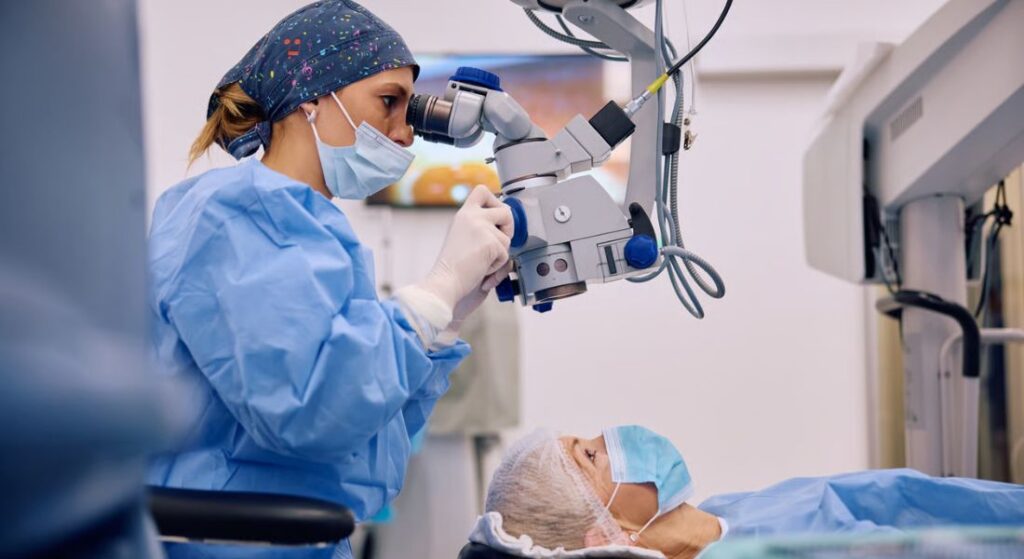
Refractive lens exchange (RLE) is a procedure in which your natural eye lens is removed and replaced with a clear artificial intraocular lens. This artificial lens helps light focus correctly inside your eye so your vision becomes clearer. The lens remains permanently in place and does not become cloudy over time. For many people, this can significantly reduce their reliance on glasses.
The procedure uses the same advanced technique that is used in modern cataract surgery. The difference is that RLE is performed before a cataract develops. Instead of waiting for the natural lens to become cloudy, the lens is replaced earlier to correct refractive errors such as long-sightedness or presbyopia. This allows your vision to be improved while your natural lens is still clear.
If you are over 45 and becoming increasingly frustrated with glasses, RLE may be an option worth considering. It is often recommended when laser eye surgery is no longer suitable for your eyes. Many people find that the procedure provides a long-term improvement in vision and greater visual freedom. Now let’s focus on your main concern astigmatism.
So, Can RLE Correct Astigmatism?
Yes, refractive lens exchange can correct astigmatism very effectively. However, this only works when a specific type of lens called a toric intraocular lens is used. The design of this lens allows it to address the uneven curvature in your eye that causes astigmatism. When positioned correctly, it can significantly improve the clarity and sharpness of your vision.
A standard lens implant used during RLE is designed to correct spherical prescriptions. This means it can treat short-sightedness or long-sightedness by helping light focus properly on the retina. However, it does not correct cylindrical error, which is the component responsible for astigmatism. As a result, astigmatism would still affect your vision if a standard lens were used.
To properly correct astigmatism, a lens specifically designed to neutralise that uneven curvature is required. This is where toric intraocular lenses become important. These lenses are carefully calculated and aligned to match the unique shape of your eye. When used during RLE, they can provide much clearer and more balanced vision.
What Is a Toric Intraocular Lens?
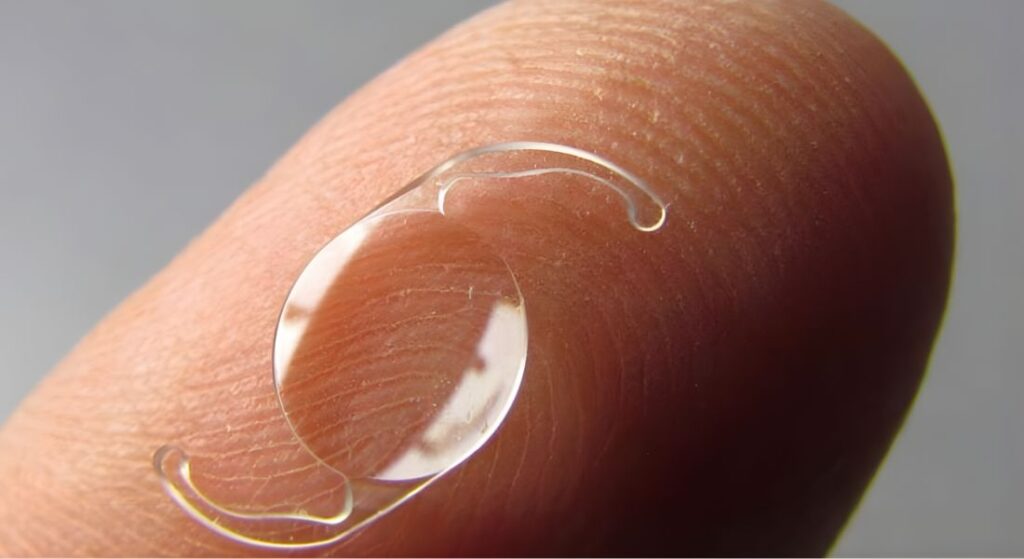
A toric intraocular lens is specially designed to correct astigmatism. Unlike a standard lens implant, it contains different optical powers in different meridians. This design works in a similar way to toric contact lenses that correct astigmatism on the surface of the eye. The goal is to balance the uneven curvature that causes blurred or distorted vision.
By compensating for this irregular shape, the toric lens helps light focus more evenly on your retina. This allows your vision to become sharper and more stable at different distances. You can think of it as a customised optical correction placed permanently inside your eye. Once implanted during RLE, it works continuously to improve visual clarity.
However, there is one crucial detail that makes toric lenses different from standard implants. The lens must be aligned very precisely with the axis of your astigmatism. Even small rotational movements can reduce how effectively the lens corrects your vision. That is why careful planning, accurate measurements and precise surgical technique are extremely important.
How Accurate Is Astigmatism Correction with Toric Lenses?
Modern toric intraocular lenses can correct astigmatism with a very high level of accuracy. Advances in diagnostic technology allow your eye to be measured in remarkable detail before surgery. Your corneal curvature can now be analysed down to very small fractions of a millimetre. These measurements help determine the exact lens power and the precise alignment needed for your eye.
Using digital planning systems, surgeons can carefully calculate how the toric lens should be positioned. This planning ensures the lens is matched to the unique shape and optical characteristics of your eye. In well-selected patients, the remaining astigmatism after surgery is often less than 0.5 dioptres. For many people, this level of correction provides sharp and clear distance vision without the need for glasses.
However, it is important to understand that no surgical correction is mathematically perfect. Small factors such as individual healing patterns, minor variations in corneal shape or slight lens rotation can influence the final result. These changes are usually very small and rarely affect vision significantly. Overall, the predictability of toric lens outcomes is considered excellent.
Does the Lens Stay in Position?
This is one of the most common questions people ask when considering toric lenses. Because the lens must be aligned carefully to correct astigmatism, it is natural to wonder whether it will stay in the correct position. Fortunately, toric intraocular lenses are designed to remain very stable once they are properly placed. In most cases, they stay aligned exactly where they should be.
After the lens is implanted, it sits inside the capsular bag, which is the thin membrane that originally held your natural lens. Over the following weeks, this capsule begins to heal and gently contract around the new lens. This natural healing process helps secure the lens and keeps it stable within the eye. As a result, the lens usually remains firmly in position.
In the majority of patients, any rotation after healing is extremely small and does not affect vision. Occasionally, a lens may rotate slightly in the early weeks following surgery, but this is uncommon. If it does happen and affects the correction, the lens can usually be repositioned safely. With modern lens designs and careful surgical technique, long-term instability is considered rare.
What About Long-Term Results?
Astigmatism correction with toric intraocular lenses is generally very stable over the long term. Once your natural lens has been removed during refractive lens exchange, it cannot grow back or change again. This means your prescription will not continue to shift because of ageing changes in the lens. For many people, this provides a reassuring sense of long-term visual stability.
Your cornea, which is the part of the eye responsible for astigmatism, usually remains the same shape throughout adulthood. The toric lens is designed to counterbalance that uneven curvature and continue correcting it year after year. Because the lens stays inside your eye permanently, it provides continuous optical correction. As a result, the improvement in vision tends to remain very consistent over time.
Unlike laser eye procedures that reshape the cornea, refractive lens exchange replaces the natural lens entirely. This means the results are not affected in the same way by age-related changes that can influence laser surgery patients later in life. There is also another important benefit to remember. Because the natural lens has been removed, you will never develop cataracts in the future.
Am I Suitable for Toric RLE?
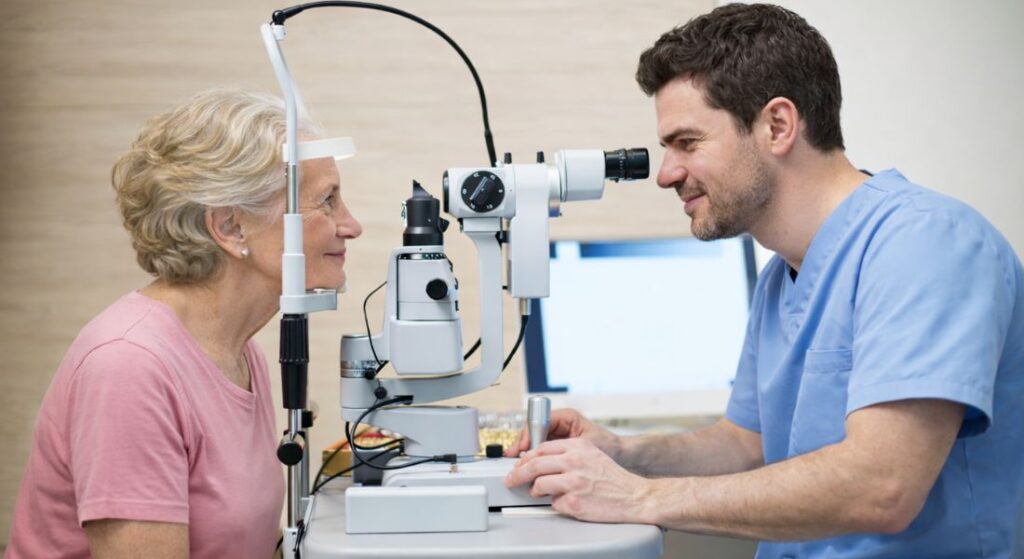
Toric refractive lens exchange (RLE) can be an excellent option for people who want to correct astigmatism and improve overall visual clarity. However, suitability depends on several clinical and lifestyle factors that need to be carefully assessed. Age, the strength of astigmatism, and the presence of other vision conditions all play an important role in determining whether this treatment is appropriate. A thorough eye examination and detailed diagnostics are always required before a final decision is made.
- Age and Vision Changes: Many suitable candidates for toric RLE are over the age of 45. At this stage, presbyopia often begins to affect near vision, making reading glasses necessary. Replacing the natural lens can address both astigmatism and age-related focusing issues at the same time.
- Moderate to High Astigmatism: People with moderate or higher levels of astigmatism often benefit the most from toric lenses. These specialised implants are designed to neutralise the uneven curvature of the eye. By correcting the cylindrical component of the prescription, they can significantly improve visual sharpness.
- Not an Ideal Candidate for Laser Surgery: Some patients are not suitable for laser vision correction due to thin corneas, high prescriptions or other anatomical factors. In these situations, RLE may provide a safer and more predictable alternative. Because the procedure replaces the natural lens rather than reshaping the cornea, it avoids certain limitations of laser surgery.
- Looking for a Long-Term Vision Solution: Toric RLE is often chosen by people who want a lasting correction rather than repeatedly updating glasses or contact lenses. Once the artificial lens is implanted, it remains stable and does not deteriorate over time. This can provide consistent vision correction for many years.
Not everyone will be the perfect candidate for toric RLE, which is why personalised assessment is essential. Certain conditions, such as irregular astigmatism caused by corneal disorders, may require specialist evaluation before treatment is considered. In cases of very mild astigmatism, a toric implant may not provide significant additional benefit. Detailed diagnostic scans allow the surgeon to assess the cornea, lens and retina carefully to ensure the most appropriate treatment plan is chosen.
Can Toric Lenses Be Combined with Multifocal or EDOF Lenses?
Yes, they can, and this is where refractive lens exchange becomes particularly interesting. If you have both astigmatism and presbyopia, you may want to reduce your need for reading glasses as well as distance glasses. Toric lenses can be combined with multifocal or extended depth of focus (EDOF) lens designs. This allows several vision issues to be addressed during a single procedure.
By combining these technologies, your astigmatism can be corrected while also improving your ability to see at different distances. The toric component corrects the uneven curvature of the eye, while the multifocal or EDOF design helps extend your range of focus. In many cases, this means you can see clearly for distance and manage many everyday tasks without relying heavily on glasses. It can offer a more complete visual solution for suitable patients.
However, it is important to be open and realistic about how these advanced lenses work. The more complex the optical design becomes, the more important careful patient selection is. Some people adapt very well to multifocal optics and enjoy the wider range of vision they provide. Others prefer the clearer and simpler visual quality of monofocal lenses, which is why this decision should always be discussed carefully during your consultation.
How Does RLE Compare to Laser Eye Surgery for Astigmatism?
Laser eye surgery corrects vision by reshaping the surface of your cornea. By adjusting the curvature of the cornea, the procedure helps light focus more accurately on the retina. This can effectively correct refractive errors such as short-sightedness, long-sightedness and mild to moderate astigmatism. For younger patients with stable prescriptions and healthy corneal thickness, laser treatment can work very well.
Refractive lens exchange works in a different way. Instead of reshaping the cornea, the procedure replaces your natural lens with an artificial intraocular lens. This allows both the refractive error and the optical performance of the ageing lens to be corrected at the same time. When a toric lens is used, astigmatism can also be addressed very precisely.
If you are over the age of 45 and beginning to notice changes in your reading vision, laser surgery may not fully solve the problem. This is because laser procedures do not stop presbyopia, which is the natural loss of near focusing ability with age. RLE, however, can address astigmatism as well as these age-related lens changes in one step. For many patients entering their 50s and 60s, it becomes a more logical long-term solution.
What Happens on the Day of Surgery?
The procedure itself is usually very quick and straightforward. In most cases, it takes around 15 to 20 minutes to treat each eye. You will remain awake during the surgery, but anaesthetic eye drops are used to keep you comfortable. This means you should not feel pain, although you may notice some gentle pressure or movement.
During the procedure, your natural lens is carefully broken into small pieces and removed through a very small incision in the eye. This process is performed using advanced surgical technology designed for precision and safety. Once the natural lens has been removed, the artificial toric lens is inserted into the eye. The lens is placed in a folded form and then gently rotated until it is aligned perfectly with the axis of your astigmatism.
After the lens is in the correct position, the procedure is complete and the incision is usually small enough to seal on its own. Most people begin to notice improvements in their vision within the first few days after surgery. Your eye will continue to settle as it heals, and you will normally use prescribed eye drops for several weeks. For the majority of patients, recovery is smooth and comfortable.
Will I Still Need Glasses?
Whether you will still need glasses after surgery depends largely on the type of lens you choose and what your visual priorities are. If you select a toric monofocal lens that is set for clear distance vision, you may still need reading glasses for close work. This is because monofocal lenses are designed to focus primarily at one distance. However, your distance vision is often much clearer without the need for glasses.
If you choose a toric multifocal or extended depth of focus (EDOF) lens, the situation can be different. These lenses are designed to provide a wider range of vision, which may reduce or sometimes eliminate the need for reading glasses. Many patients find they can comfortably manage everyday tasks such as using a phone or reading labels without additional correction. The goal is to provide greater visual freedom across different distances.
It is important to understand that no surgical procedure can guarantee complete independence from glasses. Individual eyes, visual demands and healing responses can all influence the final outcome. However, toric RLE can significantly reduce your reliance on glasses, particularly for astigmatism correction. Most patients describe their vision afterwards as clearer, sharper and far simpler to manage in daily life.
Risks You Should Understand
Every surgical procedure carries some level of risk, and refractive lens exchange is no exception. Although complications are uncommon, it is important that you understand them before deciding on treatment. Possible risks can include infection, inflammation, retinal detachment or visual effects such as glare and halos. These events are rare, but responsible counselling means discussing them openly.
When toric lenses are used, there are also a few considerations specific to astigmatism correction. In some cases, the lens may rotate slightly from its intended position, which can reduce the effectiveness of the correction. Occasionally, there may also be a small amount of remaining astigmatism if the eye heals in an unexpected way. These situations are not common, but they are important to understand.
If a significant issue does occur, enhancement options may sometimes be available to improve the outcome. This could involve repositioning the lens or performing an additional adjustment. The most important factor is being treated in a centre with extensive experience in advanced lens technology. Careful measurements, precise surgery and experienced clinical judgement all play a crucial role in achieving the best possible result.
Is It Worth It?
Deciding whether toric refractive lens exchange (RLE) is worth it is a very personal choice. The value of the procedure often depends on how much astigmatism and changing prescriptions are affecting your daily life. Many people reach a point where glasses, contact lenses, or frequent prescription updates become frustrating. In those situations, a long-term solution that offers clearer and more stable vision can be very appealing.
- Relief from Distorted Vision: Astigmatism can cause blurred or stretched vision that affects everyday tasks such as reading, driving, or using digital screens. Toric RLE is designed to correct the uneven curvature responsible for this distortion. By replacing the natural lens with a precisely aligned toric implant, vision can become clearer and more stable.
- Freedom from Constant Prescription Changes: Many people with astigmatism experience frequent changes in their glasses prescription. This can mean repeated eye tests, new lenses, and ongoing adjustments to vision correction. Toric RLE offers a more permanent solution because the artificial lens does not change shape or degrade over time.
- Greater Daily Convenience: Relying less on glasses or contact lenses can make everyday life much simpler. Activities such as travelling, exercising, or working on screens may feel more comfortable without constantly managing visual aids. For many patients, this added convenience becomes one of the biggest advantages of the procedure.
- A Long-Term Vision Solution: One of the key benefits of RLE is that it replaces the natural lens permanently. Once the toric lens is implanted and properly aligned, it remains stable for the long term. This can provide consistent visual clarity and reduce the need for future corrective procedures.
Ultimately, whether toric RLE is worth it depends on your personal goals and expectations. Some people are happy continuing with glasses or contact lenses, while others prefer a more permanent correction. For patients who want stable vision and freedom from repeated prescription changes, toric RLE can be a very attractive option. Many individuals who undergo the procedure report that the improvement in clarity and convenience makes a significant difference in their daily lives.
FAQs:
1. Can refractive lens exchange (RLE) completely correct astigmatism?
Yes, RLE can correct astigmatism when a toric intraocular lens is used during the procedure. These specialised lenses are designed to compensate for the uneven curvature of the cornea that causes astigmatism. When the lens is accurately aligned, many patients achieve significantly clearer and more balanced vision.
2. What is a toric intraocular lens?
A toric intraocular lens is an artificial lens implant designed specifically to correct astigmatism. Unlike standard lens implants, it has different optical powers in different orientations to neutralise the irregular curvature of the eye. This helps light focus more precisely on the retina and improves visual clarity.
3. How accurate is astigmatism correction with toric lenses?
Modern toric lenses are highly accurate when precise diagnostic measurements and digital planning systems are used. In many patients, the remaining astigmatism after surgery is less than 0.5 dioptres, which often provides clear distance vision without glasses. However, minor variations in healing or lens positioning can influence the final result slightly.
4. Will the toric lens move after surgery?
Toric lenses are designed to remain stable inside the eye. After implantation, the lens sits within the capsular bag where the natural lens previously existed. As the eye heals, the capsule gently contracts around the lens, helping secure it in position.
5. What happens if the toric lens rotates?
Small degrees of rotation rarely affect vision. However, if a lens rotates enough to reduce the astigmatism correction, it can usually be repositioned safely by your surgeon. This situation is uncommon but is an important consideration when discussing toric lenses.
6. Are the results of toric RLE permanent?
The artificial lens implanted during RLE is designed to remain in the eye permanently. Because the natural lens has been removed, it cannot develop cataracts later in life. This means the visual correction tends to remain stable for many years.
7. Can toric lenses also correct presbyopia?
Yes, toric lenses can be combined with multifocal or extended depth of focus (EDOF) lens designs. This combination can correct astigmatism while also improving the range of vision for both distance and near tasks. Suitability depends on individual eye characteristics and lifestyle needs.
8. Who is a good candidate for toric refractive lens exchange?
Many suitable candidates are over the age of 45 and have moderate or higher levels of astigmatism. People who are not ideal candidates for laser eye surgery may also benefit from RLE. A detailed eye examination is always required to determine suitability.
9. Will I still need glasses after toric RLE?
This depends on the type of lens used. If a toric monofocal lensis chosen, you may still require reading glasses for close work. Multifocal or EDOF toric lenses may reduce the need for glasses at multiple distances.
10. Is toric RLE better than laser eye surgery for astigmatism?
Laser eye surgery reshapes the cornea to improve vision, while RLE replaces the natural lens with an artificial one. For younger patients with healthy corneas, laser treatment may be appropriate. However, for patients over 45 who also have presbyopia, RLE can correct astigmatism and age-related focusing changes at the same time.
Final Thoughts: Is Toric RLE the Right Solution for Your Astigmatism?
Astigmatism can make vision feel consistently blurred or distorted, particularly when reading, using screens or driving at night. While glasses and contact lenses can help, many people eventually begin looking for a more stable and long-term solution. Toric refractive lens exchange offers a way to correct the uneven curvature responsible for astigmatism by replacing the natural lens with a precisely calculated intraocular lens. When accurate measurements and modern surgical planning are used, the results can provide clearer and more stable vision for many years.
For people over 45, this procedure can also address age-related vision changes such as presbyopia at the same time, potentially reducing reliance on glasses. However, suitability always depends on careful eye examination and personalised advice from an experienced specialist. If you’re considering RLE Surgery in London, you can get in touch with us at London Cataract Centre.
References:
- Jiang, Z., Zhang, N., Zhu, M., Huang, L. and Dong, J., 2025. Effects of toric intraocular lens implantation in cataract patients with axial myopia and regular corneal astigmatism. International Ophthalmology. https://pubmed.ncbi.nlm.nih.gov/40323491/
- Li, H., He, W., Guo, D., Fang, Y., Meng, J., Zhang, K., Zhu, X. and Lu, Y., 2023. Correction of asymmetric bowtie corneal astigmatism with a toric intraocular lens: Outcomes and accuracy of measurement modes. Journal of Personalized Medicine https://www.mdpi.com/2075-4426/13/3/401
- Qiu, X., Shi, Y., Han, X., Hua, Z., Lu, Y. and Yang, J., 2021. Toric intraocular lens implantation in the correction of moderate-to-high corneal astigmatism in cataract patients: Clinical efficacy and safety. Journal of Ophthalmology. https://pmc.ncbi.nlm.nih.gov/articles/PMC7840247/
- Mendicute, J., Irigoyen, C., Ruiz, M., Illarramendi, I. and Ferrer-Blasco, T., 2008. Toric intraocular lens versus opposite clear corneal incisions to correct astigmatism in eyes having cataract surgery. Journal of Cataract and Refractive Surgery. https://www.sciencedirect.com/science/article/abs/pii/S0886335008011966
- Au Eong, J.T.W., Tsai, J.H.J. and Au Eong, K.G., 2024. Severe astigmatism secondary to large intraocular lens pantoscopic tilt because of a malpositioned haptic following cataract surgery. Journal of Surgical Case Reports https://academic.oup.com/jscr/article/2024/3/rjae134/7625335