



If you live in London and have been referred for cataract surgery, you may wonder whether the NHS Right to Choose applies to you in the same way it does elsewhere in England. London’s healthcare system can feel more complex, with multiple hospitals, providers, and commissioning bodies involved. This often leads to confusion about who controls referrals and whether choice is genuinely available.
The short answer is yes, Right to Choose does apply in London. However, how it works in practice can feel different compared with other parts of the country. In this article, we explain how Right to Choose operates specifically within London, how Integrated Care Boards manage referrals, and why access and waiting times can vary even within the same city.
What Right to Choose Means in a London Context
Right to Choose is a national NHS framework that applies across England, and this fully includes London. When you are eligible, you and we can use this right to choose an NHS-approved provider for certain treatments, including cataract surgery. The funding remains NHS-based, and clinical standards are unchanged. What changes is where your care is delivered.
In London, the principle of Right to Choose is exactly the same, but the pathway can feel more complex. We are dealing with a higher number of providers, referral routes, and administrative systems. Because of this, choice may not always be clearly explained unless you actively ask. Knowing that the right exists helps you engage more confidently.
Understanding how Right to Choose operates within London gives you greater control. When you and we understand the system, discussions with your GP become more productive. This awareness helps ensure your options are not overlooked. Confidence comes from clarity, especially in a busy healthcare environment.
Why London Feels Different From Other Regions
London has one of the most complex healthcare landscapes in the UK. We see multiple NHS trusts, independent providers, and commissioning bodies operating alongside one another. This density creates more options but also more layers to navigate. For you, this can make the system feel fragmented or unclear.
Population size, movement, and demand are significantly higher in London. As a result, waiting times and access can vary widely, even between neighbouring boroughs. You may find that one area has long delays while another offers quicker access. These differences can directly affect how useful Right to Choose feels in practice.
These local factors shape how Right to Choose is applied across the city. When you and we understand these variations, expectations become more realistic. It also helps you ask better questions during referral discussions. Awareness turns complexity into something manageable rather than overwhelming.
Integrated Care Boards and Their Role in London
Integrated Care Boards, known as ICBs, are responsible for planning, funding, and overseeing NHS services in their local areas. In London, we are covered by several different ICBs, each responsible for a group of boroughs. These organisations decide how services such as cataract surgery are commissioned locally.
Each ICB approaches cataract care slightly differently. This affects which providers are available under Right to Choose, how referrals are managed, and sometimes how quickly patients move through the system. Because of this, options can vary even within the same city.
Your GP referral is influenced by the ICB linked to your registered address. When you and we understand which ICB applies to you, it becomes easier to understand why certain providers are offered and others are not. This context helps set realistic expectations and reduces confusion.
How Referrals Are Initiated in London
In most cases, the referral process begins with an optometrist confirming that cataracts are affecting your vision and daily activities. This clinical information is then shared with your GP to support the referral decision. We rely on this initial assessment to ensure surgery is appropriate.
Your GP submits the referral into the NHS system, often using a centralised electronic platform. At this stage, you and we can request a specific NHS-approved provider under Right to Choose. This request must be made clearly, as systems may default to local pathways if no preference is stated.
In London, these electronic systems can feel impersonal and automated. However, they do not remove your right to choose. When you and we actively state your preference, choice can still be applied within these digital pathways.
Why Some Patients Are Not Told About Right to Choose
Many patients, particularly in busy urban areas, notice that Right to Choose is not always discussed during referrals. This usually reflects time pressure and workflow realities rather than any intention to withhold information. Understanding why this happens helps make sense of the experience and shows where patient involvement can make a difference.
Some patients are not told about Right to Choose because:
- Appointment time is limited – Consultations often focus on diagnosis and immediate clinical needs, leaving less room for administrative rights.
- Assumptions are made about preference – Clinicians may assume patients want to attend their nearest NHS hospital unless told otherwise.
- Awareness of providers can vary – Not all clinicians are familiar with every approved provider across different ICBs.
- Pathways are treated as fixed by default – Referral systems can appear automatic unless a choice is actively requested.
- The topic may not be raised unless prompted – Without asking, the option can remain unspoken even though the right exists.
When you raise Right to Choose yourself, the conversation often shifts. You and we can then explore alternatives that may better suit your needs, preferences, or timelines. Simply asking creates space for discussion and helps ensure your legal right to choose is fully considered.
Approved Providers for Cataract Surgery in London

London has a wide range of providers approved to deliver NHS-funded cataract surgery. These include large NHS hospitals as well as independent providers working under NHS contracts. All must meet the same clinical and governance standards.
Not every provider accepts referrals from every borough. Availability depends on contracts agreed with individual ICBs. This means that options for one patient may differ from those for someone living only a short distance away.
Knowing which providers accept Right to Choose referrals from your area is essential. When you and we understand local eligibility, discussions with your GP become more focused. This avoids frustration and helps streamline the referral process.
How Waiting Times Vary Across London
Waiting times for cataract surgery in London can differ significantly. Some NHS hospitals experience long delays due to high demand and limited capacity. For many patients, this can feel discouraging and stressful.
Other providers may have shorter waiting times, depending on their resources and how their pathways are designed. These differences can exist even within the same ICB. Right to Choose allows you and we to consider these variations carefully.
By asking about waiting times at the referral stage, you gain valuable information. When you and we factor timing into decisions, the pathway often feels more manageable. Informed choice helps balance access, convenience, and peace of mind.
Why Central London Often Has Longer Waits
Central London hospitals usually serve extremely large and diverse populations. We often rely on these hospitals not only for routine care but also for highly complex, urgent, and specialist treatments. Many are major teaching centres where emergency and tertiary services must take priority. This naturally limits how much capacity is left for elective procedures like cataract surgery.
Because of this pressure, demand frequently exceeds available theatre slots. You may find that waiting lists grow longer even when referrals are clinically appropriate. If you live nearby, it can feel natural to assume that these hospitals are your only realistic option. Familiarity and reputation often reinforce that assumption.
However, this is exactly why Right to Choose exists. When we understand that geography does not always equal access, we can consider alternatives more confidently. Looking beyond your nearest hospital can sometimes lead to more timely care. Awareness allows us to make choices based on suitability, not just location.
Outer London and Different Access Patterns
Outer London boroughs often operate under very different access patterns. Some areas may have shorter waiting times or contracts with alternative providers that are not routinely available in Central London. Capacity pressures vary across the city, and demand is not evenly distributed. This can create meaningful differences in access.
At the same time, practical considerations remain important. You need to think about travel distance, transport links, and how easy it is for you to attend appointments. A shorter waiting time only helps if the provider is realistically accessible. Convenience and feasibility matter just as much as speed.
Right to Choose gives us flexibility, but it works best when decisions are balanced. We should consider clinical suitability alongside everyday practical needs. When both factors align, the pathway feels more manageable and less stressful. Thoughtful choice leads to better experiences.
How Patient Choice Is Recorded in London
For Right to Choose to work properly, your preference must be clearly recorded at the referral stage. This usually means stating your chosen provider directly during your GP appointment. If requests are vague or implied, they can easily be overlooked. Clear communication is essential.
In London, referrals are commonly processed through electronic systems. If the correct provider is not selected, the system may automatically default to a local NHS hospital. This can happen without anyone intending it, and you may only discover it later. These small administrative steps matter.
By being specific and asking for confirmation, you reduce the risk of delays. We recommend checking that your preference has been recorded correctly before the referral is submitted. A few extra moments of clarity can save weeks of waiting. Being proactive protects your pathway.
Can You Choose a Provider Outside Your Borough?
Many patients are surprised to learn that Right to Choose is not limited by borough boundaries. In practice, choice is often broader than expected, provided certain conditions are met. Understanding how this works helps you explore options confidently and realistically.
Choosing a provider outside your borough is possible because:
- Cross-borough choice is often allowed – As long as the provider accepts NHS referrals from your Integrated Care Board, choosing outside your local area is usually permitted.
- Right to Choose supports flexibility – The principle is designed to widen access, not restrict care to the nearest hospital.
- Waiting times may differ between areas – Looking beyond your borough can be helpful when local waits are particularly long.
- Practical factors still matter – Travel time, follow-up visits, and support arrangements should be considered carefully.
- Suitability outweighs proximity – The most appropriate provider is not always the closest one.
Ultimately, Right to Choose is about finding care that fits your circumstances, not just your postcode. When access, comfort, and timing are considered together, decisions feel more sustainable. The best choice is the one that works for your life as a whole, not just the first appointment.
What You Cannot Choose in London
As across the rest of England, Right to Choose does not allow you to select a specific surgeon. Surgical allocation remains a clinical and organisational decision designed to ensure fairness and safety. This helps services function efficiently while maintaining standards. Choice does not override clinical governance.
You also cannot bypass NHS eligibility criteria or skip required assessments. Everyone must meet the same clinical thresholds for cataract surgery, regardless of provider. These safeguards exist to protect patients and ensure appropriate use of NHS resources. Standards remain consistent.
Right to Choose does not guarantee immediate treatment either. Waiting times still depend on capacity and clinical priority. What it offers is informed choice, not certainty. Understanding these limits helps us set realistic expectations and avoid frustration.
Lens Options and NHS Funding in London
Under NHS-funded cataract surgery, a standard monofocal lens is included as part of routine care. This applies across London regardless of whether surgery is delivered by an NHS hospital or an approved independent provider. The lens provided is designed to restore clear vision at a single distance. This standardisation helps ensure fairness across NHS pathways.
If enhanced or lifestyle lens options are discussed, these must be clearly separated from NHS-funded treatment. You should never feel that paying extra is expected or required. Any discussion about non-funded options must be transparent and optional. We believe clarity at this stage prevents confusion later.
You should always be informed clearly about what is included in your NHS care. Understanding lens options helps you make decisions without pressure. When information is presented properly, you and we can focus on safety and outcomes rather than uncertainty. Clear communication protects trust.
How London’s Diversity Affects Cataract Pathways
London’s population is one of the most diverse in the UK, and this directly affects healthcare pathways. Patients come with different languages, cultural expectations, mobility levels, and health literacy. These factors shape how easily people can navigate referrals and appointments. A single pathway does not suit everyone equally.
Some cataract pathways are designed with accessibility in mind. They may offer clearer communication, support for additional needs, or more flexible appointment structures. Others may feel rigid or difficult to navigate, particularly for patients unfamiliar with the system. Experience can vary widely.
Understanding your options allows you to choose a pathway that fits your circumstances. When we recognise that needs differ, we can seek care that feels manageable rather than overwhelming. Choice supports dignity and confidence. The right pathway makes the process less stressful.
Common Misconceptions Among London Patients

In London, the size and complexity of the healthcare system often lead to assumptions that are understandable but not always accurate. Many patients form expectations based on habit, hearsay, or past experiences rather than current NHS frameworks. These misconceptions can quietly limit options without patients realising it.
We find that once these assumptions are clarified, patients feel more confident engaging with the system. Awareness changes how conversations unfold and how decisions are made.
- Believing the Nearest NHS Hospital Is the Only Option – We often see patients assume they must attend their local NHS hospital. In reality, this is not always the case. Choice of provider can exist, even within London.
- Assuming Right to Choose Does Not Apply in Big Cities – Some believe that Right to Choose only works in smaller regions. London’s complexity does not remove this right. Eligibility is based on NHS rules, not geography.
- Thinking Long Waits Are Inevitable – Long waiting times are often accepted as unavoidable. While delays can happen, alternatives may exist if they are explored early.
- Not Questioning Default Referrals – Default referrals are commonly seen as fixed decisions. In practice, referrals can often be discussed, clarified, or redirected when appropriate.
5. Viewing Questions as Challenging the System – Many patients worry that asking questions may cause friction. We see the opposite clear, respectful questions usually improve communication and understanding.
When patients understand their rights, conversations with GPs become more productive. Curiosity replaces passivity, and expectations become more realistic. We encourage informed engagement, as it often leads to smoother pathways and fewer surprises along the way.
What Happens After You Choose a Provider
Once your referral is accepted, the chosen provider will contact you to arrange an assessment. This assessment follows NHS clinical standards, regardless of the organisation delivering care. You will be reviewed to confirm suitability and safety. The process mirrors standard NHS pathways.
Pre-operative checks are carried out as usual. These include measurements, medical history review, and safety assessments. Nothing is skipped simply because you used Right to Choose. Clinical governance remains consistent across providers. From a patient perspective, care quality should feel equivalent. We expect the same safety standards, infection control, and outcome monitoring. The difference lies in access and organisation, not clinical rigour. NHS funding carries NHS responsibility.
When Delays Still Occur Despite Right to Choose
Right to Choose gives patients more control over where care is delivered, but it does not remove all system pressures. Waiting times are influenced by capacity, staffing, and clinical urgency across the NHS. Understanding these limits helps set realistic expectations and reduces unnecessary frustration.
Delays can still occur because:
- Capacity limits affect all providers – Staffing pressures and theatre availability influence waiting times, even outside local hospitals.
- Clinical prioritisation remains essential – Urgent cases are always seen first, and choice cannot override medical need.
- Choice is not a guarantee of speed – Right to Choose offers options, not automatic fast-tracking.
- Local pressures vary over time – Waiting lists can change as demand fluctuates across regions and providers.
- System-wide constraints still apply – Workforce and resource challenges affect the whole pathway, not just one centre.
Even so, Right to Choose remains valuable. It can offer alternatives when local waits are long and allows comparison rather than passive acceptance. With realistic expectations, we can use choice thoughtfully as a tool to improve experience where possible, not a promise to eliminate every delay.
How London Cataract Centre Supports Informed Choice
At London Cataract Centre, we regularly speak with patients who are trying to understand NHS cataract pathways in London. Many people tell us the system feels complicated, fragmented, and difficult to navigate. This confusion is completely understandable given the number of organisations involved. We recognise how overwhelming this can feel when your vision is already affected.
Our focus is on clarity, education, and supporting informed decision-making. We help patients understand how referrals work, what options may be available, and what questions are worth asking. Some patients explore options such as Cataract Surgery in London when thinking about access and timing. Information helps turn uncertainty into confidence.
When you understand the pathway, decision-making becomes easier. We believe informed patients feel more in control of their care. Choice is most effective when it is supported by clear, balanced information. Understanding empowers you to move forward confidently.
Why Asking Questions Matters in London
London’s healthcare system offers many options, but these are not always made explicit unless you ask. Pathways can differ by borough, provider, and referral route, which means experiences vary widely. Understanding this context helps patients navigate care more confidently and effectively.
We often see that engagement changes outcomes. When questions are asked early, choices become clearer and assumptions reduce. This creates a more transparent and less stressful experience.
- Options Are Not Always Explained Automatically – We recognise that waiting times, provider choices, and referral routes may not be outlined unless raised directly. Important details can remain unspoken without proactive discussion.
- Small Questions Can Change Outcomes – Asking about alternatives or timelines can lead to different pathways. Minor conversations sometimes unlock faster access or more suitable providers.
- Patients Have a Right to Understand Their Care – You are entitled to know how decisions are made and why certain options are suggested. Clarity supports informed consent and realistic expectations.
- Questions Reduce Assumptions and Confusion – By asking about processes and next steps, misunderstandings are minimised. Clear questions often lead to clearer, more useful answers.
- Active Engagement Improves the Experience – We consistently see that informed patients feel calmer and better prepared. Participation creates transparency rather than conflict.
In a complex healthcare system, asking questions is practical, not problematic. When we engage openly, care becomes easier to navigate, anxiety reduces, and outcomes feel more controlled and predictable.
Practical Tips for Using Right to Choose in London
Preparation makes a real difference when using Right to Choose. Before seeing your GP, it can help to research approved providers where possible. Being ready to mention Right to Choose explicitly ensures it is part of the conversation. This prevents assumptions.
During your appointment, ask about waiting times and referral routes. It is also useful to confirm which Integrated Care Board covers your address. These details influence which providers are available to you. Clarity early reduces delays later.
When referrals are prepared carefully, the process runs more smoothly. We encourage patients to be specific and ask for confirmation. Preparation supports accuracy. Small steps can prevent administrative setbacks.
How Future Changes May Affect London Patients
Cataract care in London continues to evolve as NHS reforms reshape commissioning, capacity, and referral systems. These changes are designed to improve efficiency, but they can also alter how pathways feel from a patient perspective. Understanding this evolution helps reduce uncertainty and maintain confidence.
Future changes may affect London patients because:
- Commissioning and capacity will continue to shift – Adjustments in funding and service delivery may influence where and how quickly care is accessed.
- Digital referral pathways may become standard – Greater standardisation can improve consistency, though some patients may find systems feel less personal.
- Referral processing may change – How choices are presented and recorded could evolve as digital systems develop further.
- Right to Choose is expected to remain – While implementation may adapt, the principle of patient choice is likely to continue within cataract care.
- Staying informed protects confidence – Awareness helps you and we stay engaged with the system rather than feeling confused by change.
As pathways develop, knowledge remains empowering. By understanding how systems are changing, we can approach care decisions with clarity, adapt more easily, and remain confident that patient choice and safe access continue to matter.
Why London Patients Need Clear Information
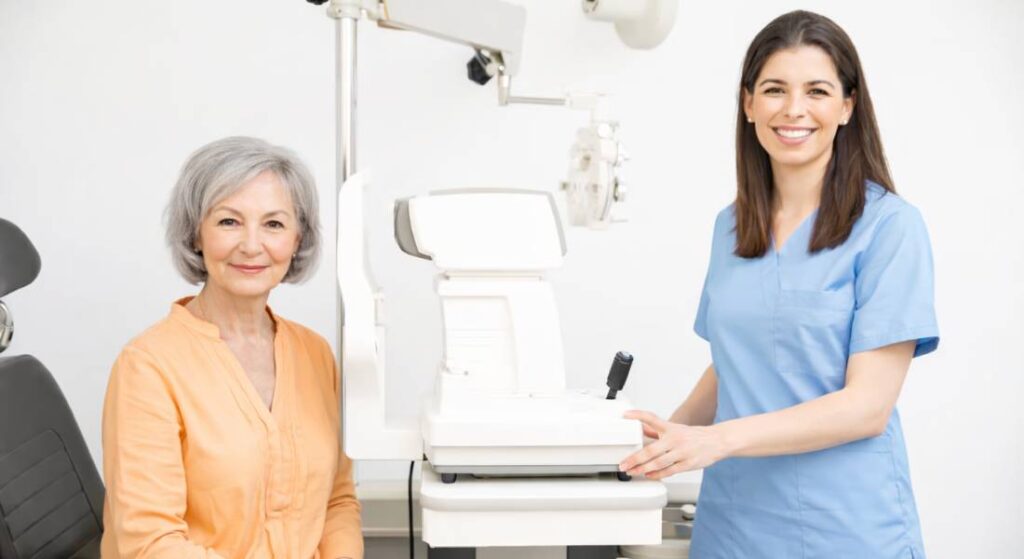
Complex systems create stress when information is unclear or inconsistent. London’s healthcare landscape is particularly layered, which can amplify uncertainty. Clear guidance reduces anxiety and builds trust. Patients feel calmer when they understand what is happening.
Knowing how Right to Choose works locally helps you feel more in control. It allows you to plan, ask relevant questions, and set realistic expectations. Understanding removes fear of the unknown. Confidence grows with clarity.
Information supports better decisions for you and for us. When expectations are aligned, care feels more manageable. Clear communication is not optional in complex systems. It is essential for good patient experience.
FAQs:
1. Does NHS Right to Choose work the same way in London as in the rest of England?
Yes, NHS Right to Choose applies in London in exactly the same legal way as it does elsewhere in England. If you are registered with an NHS GP in England and are referred for cataract surgery, you are entitled to request an NHS-approved provider rather than being limited to your nearest hospital. What often feels different in London is the complexity of the system, not the right itself. Multiple providers, referral platforms, and Integrated Care Boards can make the pathway feel less transparent, but the entitlement remains the same.
2. Why does Right to Choose feel more complicated in London?
Right to Choose often feels more complicated in London because of the sheer size and density of the healthcare system. There are many NHS trusts, independent providers, and commissioning arrangements operating side by side. This means referral pathways are less uniform than in smaller regions, and information is not always communicated clearly unless patients ask directly. The complexity comes from administration and scale, not from reduced patient rights.
3. Can I use Right to Choose even if my local London hospital has a long waiting list?
Yes, long waiting times at your local hospital are one of the main reasons patients in London consider using Right to Choose. If another NHS-approved provider accepts referrals from your Integrated Care Board, you can request to be referred there instead. While shorter waiting times are not guaranteed, exploring alternatives is entirely appropriate and often helpful in areas where demand is particularly high.
4. Do Integrated Care Boards limit my Right to Choose options in London?
Integrated Care Boards do not remove your Right to Choose, but they do influence which providers are available to you. Each ICB commissions services for its local population, and providers must hold contracts that allow them to accept referrals from that ICB. This means your options may differ from someone living in a neighbouring borough, even within London. Understanding which ICB covers your GP registration helps explain why certain providers are available and others are not.
5. Can I choose a cataract surgery provider outside my London borough?
Yes, choosing a provider outside your borough is often possible under Right to Choose. The key requirement is that the provider accepts NHS referrals from your Integrated Care Board, not that it is located within your borough. Many patients in London successfully attend providers in other parts of the city when waiting times or access are more suitable. Practical factors such as travel and follow-up visits should always be considered alongside availability.
6. Why do some London patients say they were never told about Right to Choose?
Many London patients are not told about Right to Choose simply because consultations are short and tend to focus on diagnosis rather than administrative rights. In busy urban settings, referral pathways are often treated as default processes unless a preference is actively raised. This does not mean the right does not exist. When patients ask about Right to Choose directly, the conversation often changes and options are explored more openly.
7. Will using Right to Choose in London affect the quality or safety of my cataract surgery?
No, using Right to Choose does not affect the quality or safety of your cataract surgery. All providers delivering NHS-funded cataract surgery in London must meet the same clinical governance, safety standards, and outcome monitoring requirements. Whether surgery is performed in an NHS hospital or by an approved independent provider, care remains NHS-regulated and funded. The difference lies in access and organisation, not clinical standards.
8. Can I use Right to Choose to get surgery faster in central London hospitals?
Right to Choose does not allow you to bypass waiting lists at oversubscribed central London hospitals. In fact, central London hospitals often have the longest waits due to high demand and specialist workloads. Right to Choose is more useful when it allows you to consider alternative providers with different capacity, which may be located elsewhere in London. It is a tool for exploring options, not a mechanism for jumping queues.
9. Are lens options different when using Right to Choose in London?
Lens options under NHS-funded cataract surgery are the same across London regardless of provider. A standard NHS monofocal lens is included as part of routine care. Any discussion about enhanced or lifestyle lenses must be clearly separated from NHS treatment and offered as an optional, paid choice without pressure. Right to Choose does not change what the NHS funds, only where the surgery takes place.
10. What is the most important thing London patients should remember about Right to Choose?
The most important thing to remember is that Right to Choose only works when you actively use it. In London’s complex healthcare system, choice is rarely applied automatically. Asking clear questions, stating your preference at the referral stage, and confirming that it has been recorded can make a significant difference to your experience. When you understand your rights and engage early, the pathway becomes clearer, calmer, and more manageable.
Final Thoughts: Using Right to Choose Confidently in London
Right to Choose does apply to cataract surgery in London, but the city’s complex healthcare landscape means it often works best when patients are informed and proactive. Understanding how Integrated Care Boards, referral systems, and provider availability affect access helps turn a confusing process into a manageable one. When you know that choice exists and ask about it clearly at the referral stage, you are far more likely to explore options that suit your timing, location, and personal circumstances.
Clear information is what makes choice meaningful rather than overwhelming. At London Cataract Centre, we support patients in understanding how London pathways work and what options may realistically be available, including considerations around Cataract Surgery in London. If you’re looking for Right to Choose cataract surgery in London, you can get in touch with us at London Cataract Centre.
References:
- Han, X.C. and Keel, S. (2025) Outcomes of cataract surgery: definitions, benchmarks and visual acuity improvement. ScienceDirect Topics – Outcome of Cataract. https://www.sciencedirect.com/topics/medicine-and-dentistry/outcome-of-cataract
- Bierbrier, J. et al. (2025) Comparing the rate of cataract surgery complications between hospital and independent health facility settings. Canadian Journal of Ophthalmology. https://www.sciencedirect.com/science/article/pii/S0008418225001516
- Gelalcha, A.A. et al. (2025) Assessment of cataract surgery outcomes at a tertiary medical centre visual acuity and complication profile. PMC Free Article. https://pmc.ncbi.nlm.nih.gov/articles/PMC12011767/
- Del Risco, N.E. (2024) Visual outcomes of cataract surgery in patients with varied preoperative characteristics. Journal of Clinical Medicine, 13(15), 4292. https://www.mdpi.com/2077-0383/13/15/4292
- Shoshi, F., Shoshi, F., Xhafa, A. and Nagy, Z.Z. (2024) Refractive outcomes after cataract surgery the impact of preoperative visual acuity, the intraocular lens model, and the surgeon’s experience. Journal of Clinical Medicine, 13(23), 7013. https://www.mdpi.com/2077-0383/13/23/7013