



If you’ve been told your prescription is “too high” for laser eye surgery, you’re not alone. I speak to people all the time who feel confused, disappointed, or even dismissed after being ruled out for LASIK or SMILE. You might have worn strong glasses or contact lenses for years, finally built up the courage to explore laser vision correction, and then hit a wall.
I want to reassure you of something straight away. Being unsuitable for laser eye surgery does not mean you’ve reached the end of the road. In many cases, it simply means a different solution is more appropriate. For people with high myopia or high hyperopia, refractive lens exchange can offer safer, more predictable, and longer-lasting results than laser ever could.
In this article, I’ll explain why high prescriptions change the equation, where laser surgery reaches its limits, and how refractive lens exchange fits into the picture. I’ll talk to you directly, without sales talk or shortcuts, so you can understand what really matters when making this decision.
What do we mean by “high prescriptions”?
Before going any further, it helps to be clear about what is meant by “high” prescriptions. In simple terms, this refers to stronger levels of short-sightedness or long-sightedness than average. These higher prescriptions can affect which treatment options are suitable for you.
High myopia is usually considered to be around –6.00 dioptres or more, while high hyperopia often begins above +4.00 to +5.00 dioptres. These figures are not fixed limits, but they are commonly used as reference points in refractive surgery. Your own prescription may sit close to these ranges or well beyond them.
What matters more than the number alone is how your prescription works with the structure of your eyes. Factors such as corneal thickness, corneal shape, pupil size, and lens behaviour all influence your options. This is why two people with the same prescription can be offered very different treatments, and why broad promises about laser surgery should always make you cautious.
Why laser eye surgery works so well for moderate prescriptions
Laser eye surgery has earned its strong reputation because it delivers reliable, high-quality results for many patients. For low to moderate prescriptions, procedures such as LASIK, LASEK, and SMILE can be genuinely life-changing. These treatments correct how light focuses inside the eye, often reducing or eliminating the need for glasses or contact lenses.
- Precise reshaping of the cornea: Laser eye surgery works by carefully reshaping the cornea so light focuses correctly on the retina. For moderate prescriptions, this adjustment stays well within safe anatomical limits.
- Corneal strength and stability are maintained: When the prescription is within a suitable range, enough corneal tissue remains after treatment. This helps preserve long-term strength, stability, and optical quality.
- Predictable healing and recovery: Moderate corrections tend to heal in a consistent and predictable way. Most patients experience a smooth recovery with steadily improving vision.
- Consistent visual outcomes with low risk: Because the correction required is modest, visual results are highly reliable. The likelihood of complications remains low compared to higher prescription treatments.
- Limits of safe correction: Problems arise when the amount of correction needed pushes the cornea beyond what it can safely tolerate. This is why careful assessment and realistic limits are essential.
Laser eye surgery works best when used within safe prescription ranges. For moderate corrections, it offers stable healing, excellent vision, and a strong safety profile. Staying within these limits is what keeps outcomes both effective and predictable.
The cornea has limits, and high prescriptions test them
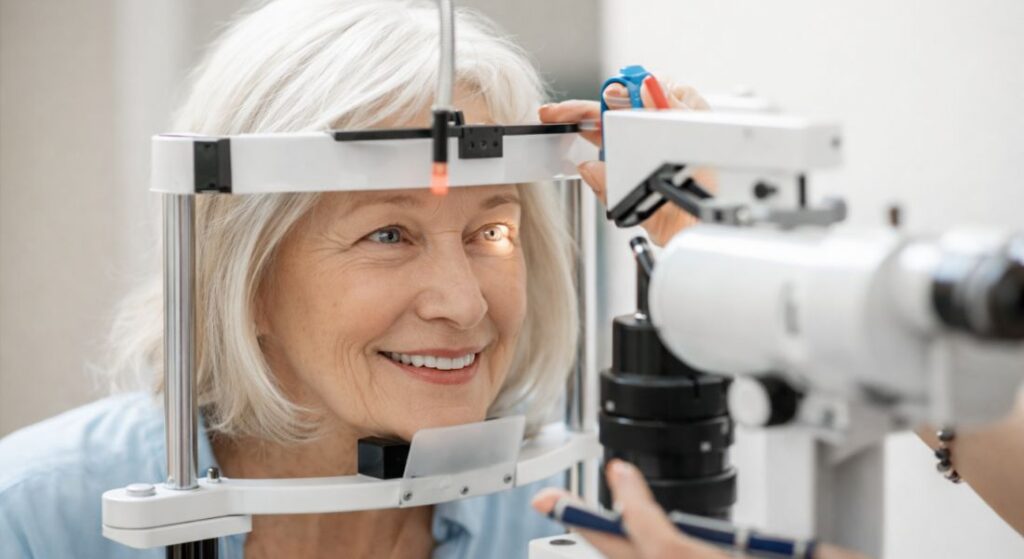
Laser eye surgery works by removing tissue from your cornea, and this is where limits start to matter. The higher your prescription, the more corneal tissue needs to be removed to correct your vision. At a certain point, this becomes a safety concern rather than a technical one.
With high myopia, tissue is removed from the central part of the cornea to flatten it. With high hyperopia, tissue is taken from the outer areas to steepen the centre. Both methods place extra stress on the cornea’s natural structure and strength.
If too much tissue is removed, the cornea can become weakened. This increases the risk of complications such as ectasia, where the cornea becomes unstable and gradually changes shape. For this reason, no responsible surgeon will risk your long-term eye health, even if you are very keen to go ahead with laser surgery.
Corneal thickness is only part of the story
It is common to think that corneal thickness alone decides whether you are suitable for laser eye surgery. While thickness is important, it is only one part of a much bigger picture. Relying on thickness alone can give a false sense of security.
The shape and overall strength of your cornea matter just as much. Detailed scans are used to detect subtle irregularities that may not affect your vision now but could become a problem after laser treatment. These checks help surgeons assess how your cornea is likely to behave in the long term.
High prescriptions increase these risks further. Even if your cornea is relatively thick, it may respond unpredictably if too much reshaping is needed. When a surgeon advises against laser surgery, it is usually because the long-term safety risks outweigh the potential benefits for you.
High myopia brings additional retinal risks
If you’re highly myopic, your eye is longer than average. This stretching doesn’t just affect the cornea.
The retina, at the back of the eye, can become thinner and more vulnerable. High myopia increases the lifetime risk of retinal tears and detachments.
Laser eye surgery doesn’t cause these problems directly, but it doesn’t address them either. In fact, by focusing on the cornea alone, laser surgery may leave the underlying anatomical risks unchanged.
This is one reason surgeons become more cautious as myopia increases.
Why laser outcomes become less predictable at high prescriptions
When prescriptions are high, laser eye surgery becomes less predictable. Small differences in how your eyes heal can lead to noticeable changes in visual outcome. This means results are harder to fine-tune compared with lower prescriptions.
At higher corrections, there is also a greater risk of regression, where some of your prescription gradually returns over time. You may need enhancements or find that your vision is not as stable as you expected. This can be frustrating after going through surgery.
Night vision issues can also be more noticeable with high prescriptions. Glare and halos are more common, especially if you have larger pupils. Even when the procedure itself goes well, the margin for error is much smaller, which affects long-term reliability.
High hyperopia presents a different set of challenges
High hyperopia comes with its own set of challenges, and it is often misunderstood. While short-sightedness involves an eye that is too long, long-sightedness usually means your eye is too short or your cornea is too flat. This makes laser correction more biomechanically complex and less stable over time.
Laser surgery for high hyperopia requires reshaping the cornea in a way that places greater stress on its structure. Even when the initial result looks good, the correction is more vulnerable to change. This means long-term predictability is generally lower than it is for myopia.
As you get older, your natural lens stiffens and loses its ability to focus. In people with hyperopia, this age-related change can undo the benefits of laser surgery more quickly. This is why many patients with high hyperopia find themselves returning to glasses sooner than they expected after treatment.
Presbyopia complicates everything further
Presbyopia is the natural, age-related loss of your ability to focus up close, and it affects everyone eventually. If you are in your late 30s or early 40s, it may already be starting or just around the corner. Laser eye surgery does not prevent this process from happening.
When you have a high prescription, presbyopia adds another layer of complexity. Even if laser surgery improves your distance vision, your near vision may still decline as your lens ages. This can make the overall result feel less satisfying over time.
For this reason, presbyopia often shifts the balance away from corneal laser procedures and towards lens-based options. Correcting the cornea while ignoring changes in the natural lens can work in the short term. In the long run, however, it may lead to compromises that affect how comfortable and stable your vision feels.
This is where refractive lens exchange comes in

Refractive lens exchange, often referred to as RLE, takes a fundamentally different approach to vision correction. Rather than altering the cornea, it involves replacing the eye’s natural lens with an artificial intraocular lens. This is the same core procedure used in cataract surgery, performed long before a cataract would normally develop.
- Lens-based correction instead of corneal reshaping: RLE corrects vision by changing the lens inside the eye rather than reshaping the cornea. This avoids placing additional stress on corneal tissue, which is a key limitation of laser surgery in higher prescriptions.
- Proven surgical technique: The procedure itself is well established and has been safely performed for decades in cataract patients. Modern refinements have made it highly precise when used for refractive purposes.
- Suitable for high prescriptions: By addressing the source of focusing power within the eye, RLE can correct levels of short-sightedness, long-sightedness, and presbyopia that laser surgery cannot safely treat.
- Eliminates future cataract development: Because the natural lens is replaced, cataracts can no longer form in that eye. This provides a long-term benefit beyond immediate vision correction.
Refractive lens exchange offers a powerful alternative when laser eye surgery is not suitable. By bypassing corneal limitations, it allows safe and effective correction of higher prescriptions. For the right patient, it provides both visual freedom and long-term eye health benefits.
Why refractive lens exchange suits high prescriptions so well
High prescriptions are often influenced by the natural lens as much as by the cornea itself. When you replace the lens, you can achieve strong and precise correction without altering or weakening the cornea. This makes lens-based surgery particularly suitable for higher prescriptions.
Refractive lens exchange also avoids many of the predictability and regression issues linked to laser surgery at higher corrections. Once the artificial lens is implanted, your prescription does not gradually return over time. This gives you a level of visual stability that laser procedures cannot always offer in these cases.
For many people, that long-term stability becomes the key deciding factor. Knowing that your vision is unlikely to drift back can provide reassurance and confidence in the outcome. It is often this permanence that makes refractive lens exchange the better option for high prescriptions.
Predictability is one of RLE’s biggest strengths
Refractive lens exchange is known for its strong predictability, especially when you have a high or extreme prescription. The technology behind modern intraocular lenses is highly precise, which allows surgeons to plan outcomes with a high level of accuracy. This makes results more consistent across a wide range of prescriptions.
Surgical techniques for RLE are well refined and standardised. Because the correction comes from the implanted lens rather than reshaping the cornea, outcomes are less influenced by healing variability. This reduces the chances of unexpected visual fluctuations after surgery.
When you compare this with laser surgery at the limits of suitability, RLE often delivers more reliable results. For many people who have lived with poor vision for years, that level of predictability feels especially reassuring.
RLE also future-proofs your vision
One of the most overlooked advantages of refractive lens exchange is how it protects your vision in the future. Because your natural lens is removed, you will not develop cataracts in that eye. This means the procedure effectively deals with both refractive error and cataract risk at the same time.
If you are already nearing the age when cataracts become more likely, this benefit becomes especially relevant. Instead of correcting the cornea now and facing lens surgery later, RLE addresses the underlying issue in one step. This can reduce the need for further eye surgery down the line.
For many people, this long-term perspective makes RLE a more sensible option. It offers not just vision correction today, but lasting reassurance about your eye health in the years ahead.
What types of lenses are used in refractive lens exchange?
The type of lens used in refractive lens exchange is highly personalised. There is no single “best” option that works for everyone. Your choice depends on how you use your vision in everyday life.
Several lens types are available, including monofocal, extended depth of focus, and multifocal lenses. Each option comes with its own benefits and compromises, particularly when it comes to clarity, range of vision, and visual side effects. What suits you best will depend on what you value most.
Your lifestyle, visual priorities, and tolerance for effects such as glare or halos all matter. You may also want to consider how important it is for you to reduce reliance on reading glasses. This decision is often more nuanced than people expect and deserves careful discussion.
Addressing concerns about losing natural accommodation
A common concern with refractive lens exchange is the loss of your eye’s natural focusing ability. Because the natural lens is removed, accommodation is no longer possible. This can sound alarming at first, especially if you are used to relying on your eyes to adjust focus.
In reality, if you have a high prescription and are over the age of 45, this focusing ability is often already quite limited. Presbyopia tends to reduce accommodation well before surgery is considered. For many people, the change is smaller than they expect.
In practical terms, you may notice little difference in everyday tasks. Some people even find their functional vision improves because the artificial lens provides clearer and more stable vision. This clarity can outweigh the loss of a focusing ability that had already been fading.
Safety considerations: how RLE compares to laser
Every surgical procedure involves some level of risk, and it is important that you understand this clearly. Refractive lens exchange is an intraocular operation, which means it is more invasive than laser eye surgery. That said, it is based on cataract surgery, one of the most commonly performed and safest procedures in the world.
When you have a high prescription, the balance of risk often changes. Although laser surgery is less invasive, the long-term risks to corneal strength and stability can outweigh its benefits. In these cases, what seems simpler at first may not be safer in the long run.
The risk profile of refractive lens exchange is well studied and well understood. In experienced hands, complications are uncommon and carefully managed. For many people with high prescriptions, this makes RLE a more reassuring and predictable option.
Why surgeon experience matters even more with RLE
Refractive lens exchange is not a volume-driven procedure. It demands careful planning, precise measurements, and a high level of surgical expertise to achieve optimal results. Small technical details can make a meaningful difference to visual outcomes.
- Preoperative planning is critical: Accurate measurements of the eye are essential for selecting the correct intraocular lens. Even minor errors in calculations can affect clarity, focus, and patient satisfaction.
- Lens selection influences long-term results: Choosing the right lens type depends on lifestyle, visual needs, and eye anatomy. Experienced surgeons are better equipped to match patients with lenses that deliver balanced, realistic outcomes.
- Precision in alignment and centration: Proper positioning of the lens is crucial, particularly with premium or toric implants. Surgeon skill directly affects alignment, stability, and overall visual quality.
- Experience reduces risk and variability: Surgeons who regularly perform RLE are more familiar with potential complications and how to avoid them. This consistency leads to safer procedures and more predictable results.
- Specialist centres provide focused expertise: Clinics that concentrate on advanced cataract and refractive lens procedures tend to develop deeper technical proficiency. Providers such as the London Cataract Centre offer experience specifically tailored to lens-based vision correction.
With refractive lens exchange, outcomes are closely tied to surgical expertise. Choosing an experienced surgeon and specialist centre helps reduce risk and improve predictability. For a procedure this precise, experience is not optional it is essential.
Recovery and visual adaptation after RLE
Recovery after refractive lens exchange is usually straightforward and well tolerated. You will often notice a clear improvement in your vision within the first few days. Full stabilisation typically happens over the following weeks.
If you have an advanced lens design, visual adaptation can take a little longer. Your brain needs time to adjust to the new way light is focused, and this is a normal part of the process. During this phase, some visual changes may come and go.
Being prepared for this adjustment period makes a big difference. When you understand what to expect before surgery, recovery tends to feel far less stressful. Open discussion beforehand helps you stay confident and patient as your vision settles.
Lifestyle considerations: RLE isn’t just about numbers

Your prescription alone should not drive the decision about refractive lens exchange. How you use your eyes in everyday life is just as important. The goal is to match the treatment to how you actually live, not just what the numbers say.
Activities such as night driving, long hours on screens, frequent reading, or playing sports all affect which lens options may suit you best. These lifestyle details help shape surgical planning and expectations. They can make a real difference to how satisfied you feel after treatment.
A good consultation should feel like an open conversation rather than a tick-box exercise. You should have time to discuss your habits, concerns, and priorities. When you leave feeling informed rather than rushed, you are more likely to make a choice that truly fits your life.
Why some people are disappointed after being ruled out for laser
It is common to feel disappointed when you are told that laser eye surgery is not suitable for you. After hearing so much about laser treatment, being ruled out can feel like a personal rejection. That reaction is completely understandable.
Laser eye surgery is heavily promoted and often presented as the gold standard. What is rarely made clear is that refractive lens exchange is not a lesser alternative. For high prescriptions, it is often the safer and more effective option.
The disappointment usually comes from not having the full picture at the start. When you understand why laser is not advised and what RLE can offer instead, the decision often feels more positive. Better information can turn frustration into confidence about the path you choose.
Making peace with a lens-based solution
Choosing refractive lens exchange often involves a mental adjustment as well as a medical one. You may find it difficult to accept replacing a natural lens that does not feel “damaged” yet. For some people, the idea can initially feel too extreme or premature.
These concerns are understandable and very common. You might worry about permanence or question whether you are taking a step that feels bigger than necessary. Those doubts usually come from emotion rather than from a lack of suitability or safety.
In practice, most people move past these worries quite quickly. Once you experience clear, stable vision, the decision often feels easier to justify. The improvement in day-to-day life has a way of reframing the choice and bringing peace of mind.
Questions you should ask before deciding
Before you commit to any eye procedure, it is important that you feel confident and informed. You should feel comfortable asking questions and taking the time you need to understand your options. This is your vision, and the decision deserves careful thought.
You can ask why laser surgery is not suitable for you and what makes refractive lens exchange the safer choice in your situation. You should also ask about lens options, possible risks, recovery time, and what to expect in the long term. Clear answers help you feel prepared rather than uncertain.
A good surgeon will welcome these conversations and explain things in a way you can understand. If you feel rushed or brushed aside, it is a sign to pause and reflect. Feeling heard and respected is an essential part of making the right decision.
Cost considerations and long-term value
Refractive lens exchange is often more expensive upfront than laser eye surgery. This can make the decision feel daunting at first, especially when you compare initial prices alone. It is natural to focus on the immediate cost.
When you look at the bigger picture, the long-term value can be compelling. RLE removes the need for future cataract surgery, can greatly reduce reliance on glasses, and offers stable vision that does not drift over time. Over a lifetime, these benefits can outweigh the higher initial expense.
Cost should never be the only factor guiding your choice. However, it does deserve an open and honest discussion as part of the decision-making process. Understanding both the financial and visual outcomes helps you decide what truly offers the best value for you.
The emotional impact of finally seeing clearly
For people with very high prescriptions, finally seeing clearly can have a powerful emotional impact. If you have spent most of your life relying on glasses or contact lenses, unaided vision may feel completely new. The change can be surprising and even a little surreal at first.
You may notice small moments that suddenly feel different, like waking up and seeing clearly straight away. Simple activities can feel easier and more natural. These experiences often bring a mix of excitement, relief, and disbelief.
This emotional side of vision correction is not talked about often, but it is important. Vision is not just about what you can see. It shapes how you move, how confident you feel, and how you experience the world around you.
FAQs:
1. What counts as a “high prescription” for eye surgery?
High myopia is typically around –6.00 dioptres or more, while high hyperopia usually starts above +4.00 to +5.00 dioptres. These are guideline ranges rather than fixed cut-offs, and suitability also depends on eye structure.
2. Why can a high prescription rule out laser eye surgery?
High prescriptions require removing more corneal tissue during laser surgery. Beyond a certain point, this can weaken the cornea and increase long-term risks, making laser correction unsafe.
3. Is corneal thickness the only factor that determines laser suitability?
No. Corneal shape, strength, and stability are just as important as thickness. Even a thick cornea may not safely tolerate the amount of reshaping needed for high prescriptions.
4. Why is laser eye surgery less predictable for high prescriptions?
At higher corrections, healing responses vary more, increasing the risk of regression, night vision issues, and less stable long-term results compared with lower prescriptions.
5. Does high myopia increase risks beyond the cornea?
Yes. High myopia is linked to a longer eye, which can increase the risk of retinal problems such as tears or detachment. Laser surgery does not address these underlying anatomical risks.
6. Why is laser correction more challenging for high hyperopia?
High hyperopia requires corneal reshaping that places greater biomechanical stress on the eye. Over time, results are more likely to change, especially as the natural lens stiffens with age.
7. What is refractive lens exchange (RLE)?
Refractive lens exchange replaces the eye’s natural lens with an artificial intraocular lens. It corrects vision by changing the lens rather than reshaping the cornea and is based on the same technique used in cataract surgery.
8. Why is refractive lens exchange safer for high prescriptions?
RLE avoids weakening the cornea and can correct levels of short-sightedness, long-sightedness, and presbyopia that laser surgery cannot safely treat. Results are also more stable over time.
9. Does refractive lens exchange prevent future cataracts?
Yes. Because the natural lens is replaced, cataracts can no longer develop in that eye, making RLE a long-term solution rather than a temporary fix.
10. Who is most likely to benefit from refractive lens exchange instead of laser surgery?
People with high prescriptions, reduced corneal safety margins, or those approaching presbyopia often benefit most from RLE. It is particularly suited to patients who want predictable, stable, long-term vision correction.
Final Thoughts: Choosing the Right Path When Laser Isn’t the Answer
Being told that laser eye surgery isn’t suitable can feel like a setback, but in reality, it’s often a sign that your eyes need a more appropriate and forward-thinking solution. High prescriptions change the balance of risk and predictability, and pushing laser surgery beyond safe limits rarely leads to satisfying long-term outcomes.
What matters most is not chasing a particular procedure, but choosing the option that protects your eye health while delivering stable, reliable vision. Refractive lens exchange exists precisely for this reason. By correcting vision at the level of the lens rather than the cornea, it bypasses many of the limitations that make laser surgery unsuitable for higher prescriptions. If you’re considering refractive lens exchange surgery in London, you can get in touch with us at London Cataract Centre.
References:
- Markuszewski, B., 2024. Comparative analysis of the visual, refractive and multifocal intraocular lens outcomes: cataract surgery and refractive lens exchange. Journal of Clinical Medicine https://www.mdpi.com/2077-0383/13/1/239
- Lee, J.H., 2013. Refractive lens exchange for correction of high myopia: safety and outcomes. Journal of Refractive Surgery https://pubmed.ncbi.nlm.nih.gov/12474920/
- Packer, M., 2015. Refractive lens exchange in modern practice: When and when not to do it? Clinical Ophthalmology https://pmc.ncbi.nlm.nih.gov/articles/PMC4655463/
- Wan, K.H., 2025. Refractive lens exchange trends and patient preferences in high ametropia. Asia-Pacific Journal of Ophthalmology https://www.sciencedirect.com/science/article/pii/S216209892500088X
- Urban, B., 2024. Refractive surgery in myopic patients: corneal and intraocular procedures compared. Journal of Clinical Medicine https://www.mdpi.com/2077-0383/13/15/4311