



You may be aware that NHS cataract surgery waiting lists have grown significantly in recent years. We see increased demand, ageing populations, and limited capacity all contributing to these delays. You may be asked to wait even when vision is clearly affecting daily life.
We understand that cataracts are often classified as non-urgent, but prolonged delays still carry real consequences. You may experience gradual decline in vision quality, independence, and personal safety over time. These effects can accumulate quietly while waiting.
Waiting lists are not just about patient numbers. We recognise that they reflect system pressure across staffing, theatres, funding, and post-operative care. Understanding solutions requires looking beyond NHS hospitals alone.
This is where private sector involvement becomes relevant. We see partnerships as a way to relieve pressure by expanding capacity. These models aim to support timely care while keeping treatment NHS-funded and accessible.
How NHS–Private Partnerships Work in Cataract Care
The NHS sometimes works with independent clinics to deliver cataract surgery when hospital capacity is stretched. This allows NHS-funded patients to receive treatment outside NHS hospitals without changing entitlement. Care remains free at the point of use, with funding continuing to come from the NHS. We see this as a practical way to extend delivery while preserving public funding principles.
- Treatment remains NHS-funded and free at the point of use: Even when surgery is delivered outside an NHS hospital, funding does not change. You are not paying privately, and entitlement remains the same.
- Partnership models operate within NHS frameworks: These arrangements have existed for many years under established governance. Care pathways may look different, but clinical standards and funding remain public.
- Capacity is expanded rather than replaced: Independent clinics can offer theatres and staff when NHS hospitals are under pressure. You benefit when this additional capacity helps reduce backlogs and waiting times.
These partnerships are designed to adapt delivery without altering core NHS principles. By expanding capacity while keeping funding public, they aim to improve access and timeliness of care. We view this approach as a practical response to demand that supports patients without changing how care is funded.
When Patients May Be Treated Privately Under NHS Funding
Some patients are offered treatment at independent clinics through NHS referral pathways when local NHS capacity is limited. You are still assessed against the same referral criteria before any option is offered. We see this approach used to manage demand rather than change eligibility.
You may be given a choice of provider once your referral is approved. We recognise that this can include NHS hospitals as well as independent clinics, depending on regional arrangements. Choice varies by location, which is why experiences differ.
We encourage you to ask proactively about available options, as not all patients are informed automatically. We believe awareness supports confident decision-making and better navigation of care. NHS-funded treatment in private settings remains structured, regulated, and delivered to NHS standards.
How Private Clinics Increase Surgical Capacity
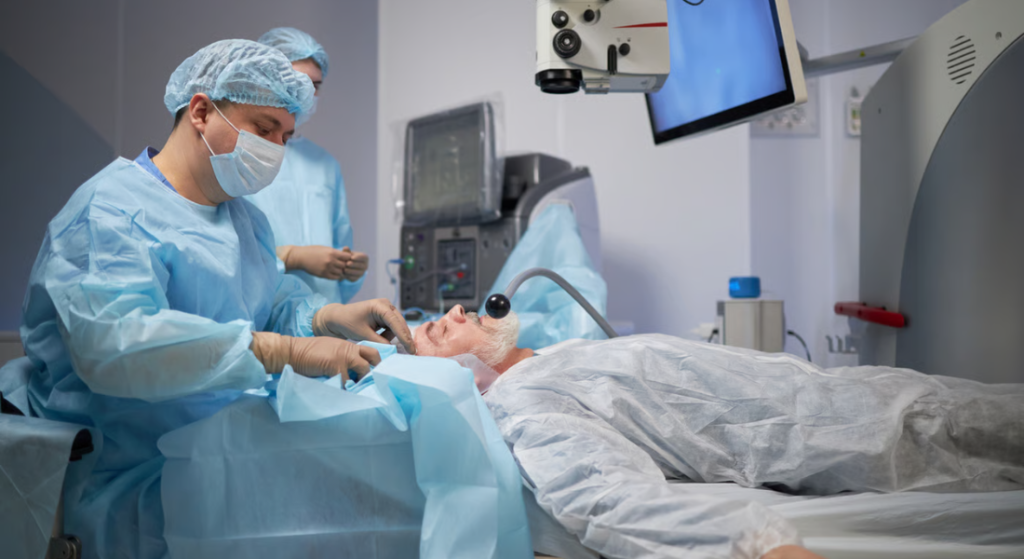
Private clinics often concentrate on high-volume elective procedures such as cataract surgery, which allows care to be delivered efficiently. You benefit from dedicated facilities that are designed around predictable workflows and scheduling. We see this reduce bottlenecks that can occur in more general hospital settings.
You may experience shorter waiting times when capacity is expanded in this way. We recognise that additional theatres and specialised teams increase overall system output. This expansion supports backlog reduction without disrupting existing care pathways.
We see private clinics absorbing excess demand rather than diverting patients away from NHS care. You are supported when pressure is shared across more providers and services remain balanced. Capacity expansion is the main advantage, improving speed while keeping funding principles intact.
Impact on Waiting Times for Patients
When private clinics are integrated effectively into care pathways, waiting times can reduce. You may receive surgery sooner than if care relied only on NHS hospitals. We see improved timing as a practical benefit of better capacity use.
You may notice that regions making active use of independent providers often manage backlogs more effectively. We recognise that wider availability creates flexibility in how and where care is delivered. Access improves when services can respond to demand more dynamically.
We understand that earlier surgery helps prevent prolonged functional decline. You benefit when vision is restored before long periods of adaptation affect confidence and daily activity. Reduced waiting times are a tangible advantage because timeliness directly influences outcomes.
Continuity of Care and Follow-Up
Continuity of care is a common and understandable concern for patients. You may worry about how follow-up is managed if surgery takes place outside a traditional NHS hospital setting. We recognise that reassurance depends on knowing how care is connected. What matters most is how services are coordinated rather than where treatment occurs.
- Continuity is maintained through structured care pathways: Pre-operative assessment, surgery, and follow-up are planned as a single pathway. We see close coordination used to ensure no stage of care is fragmented.
- Clear communication between providers supports safety: Information is shared between surgical teams and follow-up services. This communication ensures decisions remain informed and consistent.
- Post-operative care is integrated, not isolated: Follow-up may be delivered by the surgical provider, NHS services, or both. You benefit from pathways designed to keep care connected regardless of setting.
Continuity of care depends on coordination rather than location. When systems are designed to link assessment, treatment, and follow-up, care remains integrated and reliable. We focus on how services work together to ensure safety and confidence throughout the process.
Quality and Safety Standards
Private clinics that deliver NHS-funded care are required to meet strict quality standards. You receive treatment under the same regulatory oversight, outcome reporting, and safety expectations as any NHS provider. We recognise that these requirements are non-negotiable.
You are treated according to national clinical guidelines, with accredited surgeons and approved facilities. We ensure that safety protocols, governance structures, and professional standards are consistently applied. The setting may differ, but expectations do not.
We monitor outcomes closely across all providers involved in partnership models. You can be confident that quality assurance remains central regardless of where care is delivered. Standards do not change with location, and safety always comes first.
Patient Choice and Autonomy

Partnership models can expand patient choice by offering different settings for care. You may be able to choose where surgery is performed, depending on local arrangements. We see choice as a way to support confidence and autonomy.
We encourage understanding the available options at the referral stage. You benefit when you can balance timing, location, and comfort based on your own priorities. Engagement in these discussions often leads to clearer and more satisfactory decisions.
Some patients prefer NHS hospitals, while others prioritise faster access through alternative providers. We recognise that choice allows these preferences to be respected. Patient autonomy improves when options are clear, and awareness remains key.
Limitations of Private Sector Involvement
Private clinics are not a complete solution to capacity pressures. You may find that expansion has limits because workforce availability affects both NHS and independent providers. We recognise that staffing constraints apply across the entire system.
You may still face delays when demand exceeds combined capacity. We understand that partnerships can reduce pressure but cannot remove it entirely. Expectations need to remain realistic about what additional capacity can achieve.
We also recognise that access varies by region. You may not have independent providers available locally, which means geography continues to influence care. Private involvement helps, but it remains only one part of a broader system response.
How These Partnerships Affect NHS Hospitals
By shifting some cataract surgeries to private clinics, pressure on NHS hospitals can be reduced. You may not always see this directly, but redistributing routine cases allows resources to be used more effectively. We see this easing strain across the system.
You may benefit indirectly even if your care remains within an NHS hospital. We recognise that reduced surgical volume can improve patient flow and free capacity for more complex cases. This helps services function more smoothly overall.
We view this relationship as complementary rather than competitive. You are supported when both sectors contribute according to their strengths. Collaboration strengthens resilience across the system, where balance remains the goal.
Transparency and Patient Understanding
Clear communication plays a central role in maintaining trust throughout the care journey. When funding arrangements are unclear, confusion can quickly undermine confidence. We believe patients should understand how their care is organised and funded from the outset. Transparency helps reduce uncertainty and supports informed engagement.
- Clarity about funding builds trust: You should know whether treatment is NHS-funded or privately funded. Clear explanation prevents misunderstanding and supports confidence in care decisions.
- Transparency reduces anxiety and uncertainty: We advocate openness about funding, care pathways, and follow-up arrangements. Access to clear information helps patients feel informed rather than unsettled.
- Understanding partnership models offers reassurance: Some care is delivered outside traditional settings while remaining NHS-funded. Knowing this helps you feel secure about the nature and continuity of your care.
Transparency supports confidence at every stage of treatment. When funding and pathways are clearly explained, trust is strengthened and anxiety reduced. We believe clarity is not optional but essential for a positive and reassuring care experience.
What This Means for Patients Facing Long Waits

If you are facing a long wait, it may be worth asking about alternative providers. You may find that options differ depending on region and referral pathway. We see that awareness of choice often opens up possibilities.
We encourage proactive discussion with optometrists and GPs about provider options. You are entitled to ask questions about choice and availability, and this is entirely reasonable. Engagement often supports clearer pathways and improved access.
We recognise that some patients explore independent assessment alongside NHS routes. You may use this to gain clarity or reassurance while remaining within existing pathways. Choice can support more timely and confident care decisions.
The Role of Independent Centres in London
London has a mix of NHS hospitals and independent centres, which increases potential treatment capacity. You may benefit from this structure because partnerships are more common in areas with high demand. We see urban density creating opportunities that are not always available elsewhere.
You may find greater flexibility when choosing a provider, supported by wider availability across the city. We recognise that this range of options can help improve access and reduce waiting times. Location plays a meaningful role in what is possible.
We see independent centres working alongside NHS services to support patient care. You benefit when collaboration improves flow and experience rather than competing for space. Regional context influences how effective these partnerships are, and in London, diversity of providers matters.
FAQs:
1. How can private clinics help reduce your NHS cataract surgery waiting time?
Private clinics can increase overall surgical capacity when NHS hospitals are under pressure. You may be offered treatment sooner because additional theatres and teams are available. This helps spread demand across more providers. Earlier access can prevent prolonged visual decline.
2. Are you still treated as an NHS patient if surgery happens in a private clinic?
Yes, your treatment remains NHS-funded even if it takes place in a private setting. You do not pay for surgery, and eligibility rules stay the same. Funding comes from the NHS, not from you personally. The location changes, not your entitlement.
3. When might you be offered cataract surgery in a private clinic?
You may be offered this option when NHS hospital capacity is limited. Your referral must still meet NHS criteria before any alternative provider is suggested. Availability depends on local arrangements. Choice varies by region and waiting pressure.
4. How do private clinics increase capacity for NHS cataract care?
Private clinics often focus on routine procedures with dedicated facilities. You benefit from predictable scheduling and specialised teams. This allows more operations to be delivered safely. Extra capacity helps reduce backlog across the system.
5. Can being treated privately under NHS funding improve your outcomes?
Earlier surgery can help restore vision before daily activities are heavily affected. You may avoid prolonged loss of confidence or safety risks. Timely treatment supports independence. Outcomes often improve when delays are reduced.
6. Will your follow-up care still be properly coordinated?
Follow-up is planned as part of a connected care pathway. You may receive post-operative checks through the surgical provider, NHS services, or both. Information is shared to maintain continuity. Care remains structured and joined up.
7. Are quality and safety standards the same in private clinics?
Private clinics delivering NHS-funded care must meet strict national standards. You are treated by accredited professionals using approved facilities. Outcomes and safety are monitored consistently. Quality expectations do not change with location.
8. Do you have a choice about where your cataract surgery happens?
In some areas, you may be offered a choice of provider once approved. You can ask about available options and waiting times. Choice depends on local commissioning arrangements. Understanding options supports informed decisions.
9. Are private clinics a complete solution to NHS waiting lists?
Private involvement helps but cannot remove all delays. You may still experience waiting if demand exceeds combined capacity. Staffing limits affect all providers. Partnerships are one part of a wider system response.
10. What should you do if you are waiting a long time for cataract surgery?
You can ask about alternative providers and available pathways. Clear discussion with your optometrist or GP can help. You may also seek reassurance through further assessment. Understanding options often improves confidence and clarity.
Final Thoughts on Private Clinics and NHS Cataract Waiting Lists:
Private clinics can play a meaningful role in reducing NHS cataract surgery waiting lists by expanding capacity, offering additional provider choice, and enabling earlier treatment for patients affected by long delays. When delivered under NHS funding, these partnerships maintain quality and safety standards while improving access and flexibility.
We believe informed patients are better equipped to navigate care pathways. If you are exploring timely options or would like expert guidance on accessing cataract surgery in London, feel free to contact us at London Cataract Centre.
References:
- Churchill, A., 2000. What factors influence cataract waiting list time? BMJ Open Ophthalmology. Available at: https://www.ncbi.nlm.nih.gov/pmc/articles/PMC1723430/
- Ramchandani, M., 2002. Pooled cataract waiting lists: views of hospital consultants. BMJ Open Ophthalmology. Available at: https://www.ncbi.nlm.nih.gov/pmc/articles/PMC1279285/
- Zhang, J.H., Li, X. and Gupta, S. (2022) A systematic review of clinical practice guidelines for cataract surgery recommendations. Vision, 6(2), 36. Available at: https://www.mdpi.com/2411-5150/6/2/36
- Błachnio, K., Szaflik, J.P., Woźniak-Zadworna, M., et al. (2024) Quality of life after cataract surgery: patient-reported outcomes and factors affecting post-surgical function. Journal of Clinical Medicine, 13(17), 5209. Available at: https://www.mdpi.com/2077-0383/13/17/5209
- Hodge, W., Horsley, T., Robinson, B. and McMullin, J. (2007) The consequences of waiting for cataract surgery. Canadian Journal of Ophthalmology, 42(5), pp. 757–761. Available at: https://pubmed.ncbi.nlm.nih.gov/17452662/