


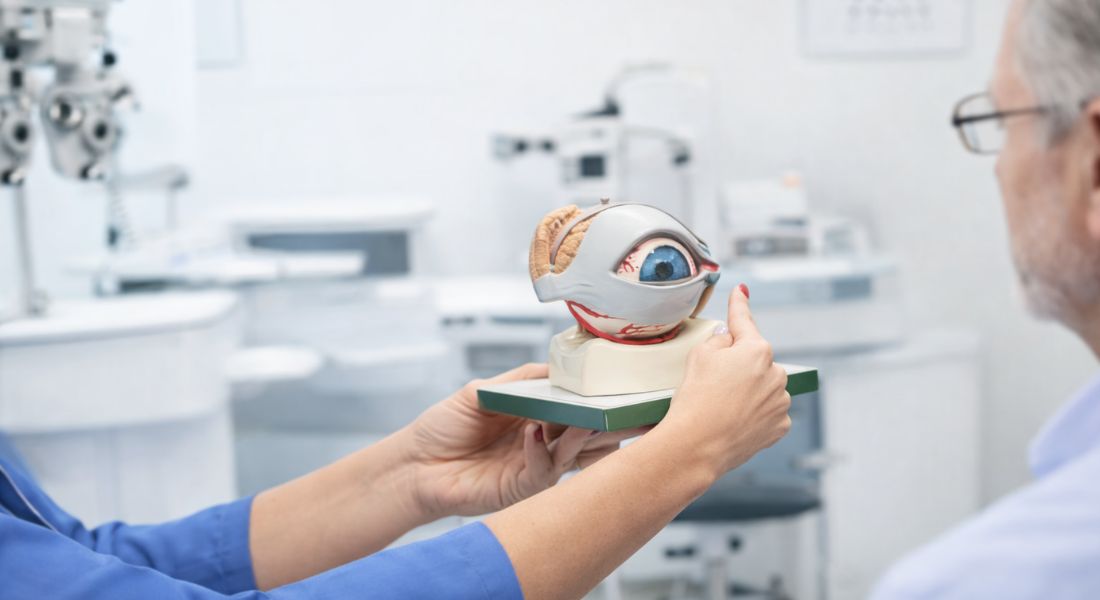
You may notice presbyopia creeping in gradually. Your phone drifts further from your face, menus become harder to read, and low-light conditions make even simple reading a challenge. These subtle changes often signal that your near vision is beginning to decline. Over time, the question shifts from “What is presbyopia?” to a more practical one: “Can it be corrected surgically?”
The short answer is yes surgery can help correct presbyopia. However, the full answer is more nuanced. Not every surgical option works in the same way, and not every eye responds equally to treatment. Understanding the differences between procedures is key to finding the most effective approach for your vision.
Different surgical techniques target presbyopia in unique ways. Some focus on replacing the lens with an artificial intraocular lens, while others reshape the cornea or use laser-assisted procedures. Each method has its own advantages, limitations, and suitability depending on your age, eye health, and lifestyle needs.
Ultimately, the goal is to restore functional near vision while maintaining clarity for distance tasks. With proper evaluation and personalised planning, surgical correction can reduce dependence on reading glasses or multifocal lenses. The right procedure can make everyday activities like reading, using a phone, or working on a computer much easier and more comfortable.
The Real Constraint You’re Working Against
The real constraint with presbyopia is mechanical, not superficial. Over time, your natural lens gradually loses flexibility, making it increasingly difficult to focus on near objects. No drops, exercises, or lifestyle changes can reverse this structural loss, which is why presbyopia progresses inevitably with age and affects almost everyone eventually.
When we talk about surgery, it’s important to understand that it doesn’t “repair” the natural lens. Instead, procedures either work around it or replace it entirely with an artificial lens designed to restore near vision. This distinction is critical because it determines what results are realistic and what each surgical approach can actually achieve.
Different surgical methods tackle the problem in unique ways. Some involve replacing the lens with multifocal or accommodating intraocular lenses, while others reshape the cornea to improve near focus. Understanding that presbyopia is a structural limitation helps you set realistic expectations and make an informed choice about the treatment best suited to your vision needs and lifestyle.
The First Mistake People Make
Many patients approach presbyopia treatment as though there is a single, universal solution. In reality, presbyopia can be addressed through several fundamentally different strategies, each with unique benefits and limitations. Understanding these options and their trade-offs is crucial to achieving satisfactory outcomes. Ignoring these differences is where many patients make mistakes that could have been avoided with proper guidance.
- Altering How Light Enters the Eye: Some procedures, like certain laser treatments, reshape the cornea to change how light focuses on the retina. These options can improve near vision without removing the natural lens. However, they may not fully restore all distances and can sometimes cause visual side effects such as glare or halos.
- Training the Brain to Use Each Eye Differently: Monovision approaches correct one eye for distance and the other for near vision. The brain must adapt to this arrangement, which can reduce dependence on glasses. While effective for many, some people experience difficulty with depth perception or visual comfort initially.
- Replacing the Natural Lens Entirely: Lens replacement surgery removes the eye’s natural lens and replaces it with an artificial one, often multifocal or accommodating. This can address both presbyopia and early cataracts simultaneously. It is more invasive and carries surgical risks, but may offer the most comprehensive long-term correction.
In conclusion, treating presbyopia is not a one-size-fits-all process. Each method from altering light entry to monovision to lens replacement has distinct trade-offs that must be considered. Patients who overlook these differences may face unsatisfactory results or unnecessary complications. A thorough understanding of each option ensures informed decision-making and better long-term vision outcomes.
Option One: Laser Vision Correction (Blended Vision)
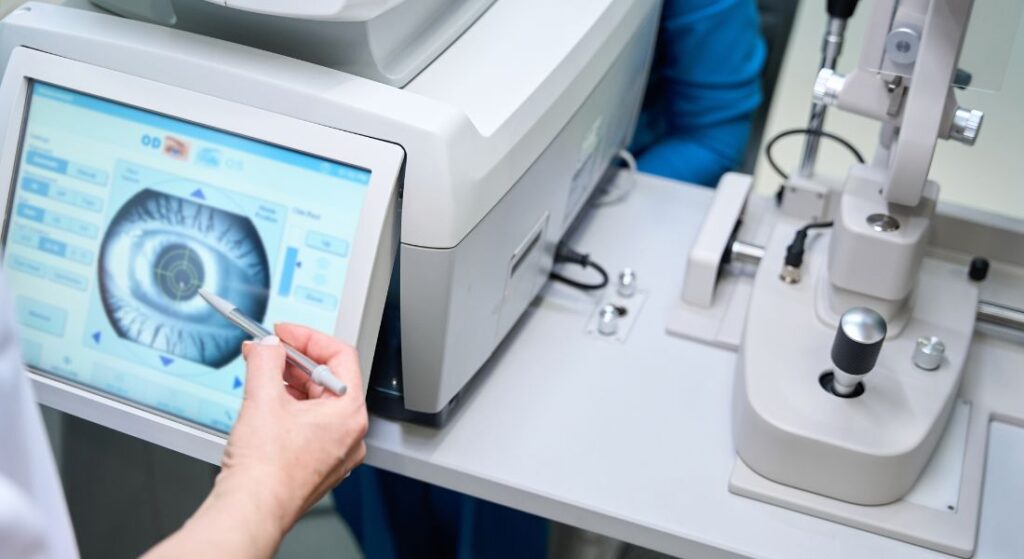
It is often the first solution people explore, especially if they are already familiar with laser procedures. Rather than restoring your natural lens flexibility, this method creates an intentional imbalance between your eyes one is optimised for distance, the other for near. Over time, your brain learns to merge the two images. This approach can work very well, but its success depends largely on how well your brain adapts to the change.
Laser blended vision tends to work best if you’ve previously tolerated monovision contact lenses, don’t require extremely sharp depth perception for work, and are willing to accept a short adaptation period. Some people adjust within days, while others may take longer, so patience and realistic expectations are important. Tolerance is the key factor that determines whether this solution feels comfortable in daily life.
However, the method can fall short for certain individuals. Those highly sensitive to visual imbalance, whose work depends on precise depth perception, or who expect perfect vision at all distances simultaneously may struggle. This isn’t a failure of the procedure itself it reflects a mismatch between physiological adaptation and expectations. Understanding your visual needs and limitations helps ensure the best possible outcome.
Option Two: Presbyopia-Correcting LASIK (Multifocal Profiles)
Option Two: Presbyopia-Correcting LASIK (Multifocal Profiles) takes a more sophisticated approach. Rather than assigning each eye a separate role like in blended vision, the laser reshapes the cornea to create multiple focal zones. Essentially, it layers near and distance focus into a single optical system, allowing your brain to select the image it needs in each situation. This method aims to provide a more integrated visual experience.
The main benefit of this approach is a more natural binocular experience compared with monovision. Tasks like reading, intermediate work, and distance vision can all improve simultaneously, without heavily favouring one eye over the other. Many patients find this gives a smoother transition between different focal lengths throughout the day.
However, there are trade-offs to consider. Perfect clarity at every distance is not achievable, and there can be a slight compromise in contrast or sharpness, particularly in low-light conditions. Managing expectations is critical here if you are seeking flawless vision at all distances, this approach may lead to frustration. Understanding these limitations helps ensure satisfaction with the outcome.
Option Three: Lens Replacement Surgery (Refractive Lens Exchange)
Option Three: Lens Replacement Surgery, also known as Refractive Lens Exchange, offers a more definitive solution. Rather than adapting your existing lens system, this procedure removes the natural lens entirely and replaces it with an artificial intraocular lens (IOL). Once the natural lens is replaced, presbyopia is effectively eliminated, removing the main barrier to near vision.
This approach is often the most effective solution because you are not merely compensating for a lens that has lost flexibility you are removing the problem entirely. It provides a level of predictability and long-term stability that corneal procedures, like LASIK, cannot match. Patients can generally expect consistent near, intermediate, and distance vision once healing is complete.
An additional benefit is that it prevents future cataract development. Since the natural lens is replaced, the risk of age-related cataracts is removed, offering both a functional and preventative advantage. This makes lens replacement a durable solution for those seeking a permanent correction for presbyopia.
Types of Lenses Used

Not all artificial lenses are created equal, and selecting the right one is critical for patient satisfaction. The type of lens determines not only the quality of vision but also the potential trade-offs, such as visual disturbances or compromise in certain distances. Understanding the options and how they function helps patients make informed choices that align with their lifestyle and visual priorities.
- Multifocal Lenses: Multifocal lenses split incoming light into multiple focal points, allowing functional vision at near, intermediate, and distance ranges. This versatility makes them a popular choice for those seeking independence from glasses. However, some patients may experience reduced contrast sensitivity or visual phenomena like halos, especially in low-light conditions.
- Extended Depth of Focus (EDOF) Lenses: EDOF lenses stretch the range of focus rather than splitting it into distinct points. This design offers smoother transitions between distances and generally fewer visual disturbances. While it improves intermediate and distance vision, near vision may not be as strong as with multifocal lenses, requiring occasional reading glasses.
- Monofocal Lenses (With Strategy): Monofocal lenses are designed to focus at a single distance, usually far vision. Strategically, they can be combined with mini-monovision to balance near and distance vision. This approach reduces the risk of side effects common with multifocal lenses while still offering a functional range of vision.
In conclusion, choosing the right lens type is a highly individual decision that depends on visual priorities and lifestyle. Multifocal, EDOF, and monofocal lenses each have unique benefits and limitations. A strategic approach tailored to the patient ensures the best combination of visual function, comfort, and satisfaction. Proper counselling before lens selection can prevent common sources of disappointment.
Who Actually Qualifies for Surgery?
Who actually qualifies for presbyopia surgery isn’t determined by the technology itself, but by your eye health, lifestyle, and expectations. Age alone is not the deciding factor; what matters is whether your vision needs, overall ocular health, and daily activities make you a suitable candidate. Careful evaluation ensures that the chosen procedure will provide meaningful improvement without unrealistic promises.
You’re a strong candidate if you are over 40 and consistently struggling with near vision, frustrated by glasses or contact lenses, and have stable, healthy eyes suitable for surgery. Equally important is having realistic expectations and understanding the trade-offs involved with each procedure. This mindset helps ensure satisfaction with the outcome.
Conversely, you’re not an ideal candidate if you expect flawless vision under every condition, have untreated eye disease, or are unwilling to adapt to changes in your vision. Surgical success relies on aligning expectations with the physical realities of the eye. When expectations match what the procedure can deliver, outcomes tend to be far more rewarding.
The Overlooked Decision: Timing
The overlooked factor in presbyopia surgery is timing. Many people either delay surgery longer than necessary or rush into it too early, and both approaches carry risks. Choosing the right moment is just as important as choosing the right procedure.
Going in too early can be problematic if your prescription is still changing. In such cases, outcomes become less predictable, and you may find yourself needing repeated adjustments instead of achieving a stable, long-term result. Patience ensures that surgery is performed on eyes that are ready for a lasting correction.
Waiting too long also has drawbacks. If cataracts are already forming, corneal procedures like LASIK become less effective, and lens replacement often becomes the more logical solution. Ultimately, timing is guided less by age and more by the stability of your vision and the condition of your eyes.
Why Lens Replacement Often Wins Long-Term
There’s a reason many surgeons favour lens replacement for presbyopia, especially when looking at long-term outcomes. It’s not just about improving vision today it’s about minimising future interventions and maintaining consistent results over the years. By addressing the underlying cause, this approach offers a more permanent solution compared with corneal procedures.
Once the natural lens is removed, presbyopia is effectively eliminated, giving you functional near, intermediate, and distance vision. Additionally, cataracts can no longer develop in that eye, removing a major age-related concern. This dual benefit makes lens replacement a particularly strategic choice for long-term vision care.
Visual stability also improves over time, as the artificial lens provides consistent focus without the natural lens’s age-related changes. In a single procedure, you are addressing multiple issues, reducing the likelihood of future corrections, and achieving predictable, lasting results. This comprehensive approach is why lens replacement often comes out ahead for patients seeking a durable solution.
The Role of Lifestyle in Choosing the Right Procedure
The role of lifestyle is often the most important factor when choosing the right presbyopia procedure. Decisions shouldn’t be based solely on what’s available in the clinic, but on your day-to-day visual demands. Understanding how you use your eyes in real life helps guide which surgical option will give the most practical benefit.
If you work on screens all day, strong intermediate vision is essential. In this case, EDOF (extended depth-of-focus) lenses or blended vision strategies often perform better, providing clarity for computer work and other mid-range tasks. Your work environment can directly influence which lens or procedure will give you the best functional results.
For those who read frequently, near vision is non-negotiable. Multifocal lenses or carefully planned monovision may be more appropriate to ensure comfortable reading and close-up tasks. Meanwhile, if you drive at night often, minimising glare and halos becomes critical, making monofocal or EDOF lenses a better choice. Ultimately, your lifestyle dictates the solution not the other way around.
What Recovery Actually Looks Like
Many patients have misconceptions about recovery from presbyopia treatments, often expecting either immediate perfection or prolonged discomfort. In reality, the healing process is usually straightforward, but full visual adaptation can take time. Understanding what to expect helps manage expectations and ensures a smoother transition back to daily life.
- After Laser Procedures: Vision typically stabilises over a period of days to weeks. Mild discomfort, such as dryness or irritation, usually resolves quickly. However, the brain’s adaptation to new vision, especially with monovision approaches, can take longer than the physical healing itself.
- After Lens Replacement: Functional vision often returns quickly following lens replacement surgery. Fine-tuning and full visual clarity continue to improve over several weeks. Even after the eyes heal, the brain needs time to adapt to the new optical system, particularly with multifocal or EDOF lenses.
- Healing vs. Adaptation: While physical healing is generally rapid, the adaptation process is what most patients underestimate. Patience during this period is crucial, as the visual system gradually adjusts to the new focus and depth perception.
In conclusion, recovery from presbyopia procedures is generally fast and manageable, but adaptation may take longer than expected. Laser treatments and lens replacement each have their own timelines for stabilisation and fine-tuning. By understanding the distinction between physical healing and neural adaptation, patients can approach recovery with realistic expectations and greater confidence.
The Risks You Should Actually Care About
The risks you should actually care about vary depending on the procedure, and not all risks have the same impact on daily life. It’s important to focus on the issues that will affect your everyday vision and comfort, rather than being distracted by every theoretical complication. Understanding the practical implications helps you make a more informed choice.
For laser-based options, the main concerns include undercorrection or regression, visual imbalance issues, and dry eye symptoms. These can affect your clarity at different distances or cause temporary discomfort, but they are generally manageable with proper planning and follow-up.
For lens replacement surgery, potential risks include glare or halos depending on the lens type residual refractive error, and rare surgical complications. The goal isn’t to eliminate all risk, which is impossible, but to choose the procedure whose risks you can tolerate and live with comfortably. Matching your expectations to the realistic outcomes is key to long-term satisfaction.
Cost vs Value: The Conversation People Avoid
Cost versus value is an important conversation that many people avoid when considering presbyopia surgery. While pricing can vary widely between procedures, the true question isn’t cost alone it’s how many visual problems you solve with a single intervention. Thinking long-term helps frame the decision beyond the immediate expense.
Laser-based procedures may be less expensive upfront, but they often don’t address future cataract development or long-term lens changes. This means additional interventions could be needed later, adding both cost and inconvenience over time.
Lens replacement surgery may have a higher initial price, but it removes multiple future issues from the equation. You’re not just paying for surgery you’re investing in a long-term visual strategy that addresses presbyopia, prevents cataracts, and provides stable, predictable vision for years to come.
The Decision Framework That Actually Works

The decision framework that actually works simplifies your choices and keeps your priorities front and centre. Start by asking yourself what kind of solution you want. If you prefer a reversible, adaptive approach, a laser-based procedure may be best. If you’re looking for a definitive, long-term fix, lens replacement is the more reliable option.
Consider your sensitivity to visual compromise as well. If you’re highly sensitive, it may be wise to avoid multifocal optics, which can create subtle issues with glare, contrast, or depth perception. Understanding how your eyes respond to these trade-offs helps narrow down the options.
Finally, think about independence from glasses. If being free from corrective lenses is a priority, you may need to accept some compromises in clarity or adaptation time. There’s no single perfect solution only the option that best aligns with your lifestyle, expectations, and visual needs.
FAQs
1. Can presbyopia be corrected with surgery?
Yes. Surgical options such as lens replacement, presbyopia-correcting LASIK, and laser blended vision can improve near vision and reduce dependence on glasses or contact lenses. The best method depends on your eye health, lifestyle, and visual goals.
2. What is the difference between lens replacement and laser procedures for presbyopia?
Lens replacement (refractive lens exchange) removes the natural lens and replaces it with an artificial intraocular lens, addressing presbyopia permanently. Laser procedures reshape the cornea to improve focus but don’t remove the underlying age-related lens stiffness.
3. Who is a good candidate for presbyopia surgery?
Ideal candidates are usually over 40, have stable vision, healthy eyes, and struggle with near vision. Patients should also have realistic expectations and no untreated eye conditions.
4. Can presbyopia surgery correct both near and distance vision?
Yes, certain procedures like multifocal or EDOF lenses in lens replacement surgery are designed to restore near, intermediate, and distance vision simultaneously. Laser options may also improve functional vision but may require compromises for some distances.
5. What is laser blended vision and how does it work?
Laser blended vision corrects one eye for distance and the other for near vision. The brain adapts to merge the two images, improving functional vision without removing the natural lens. It is most suitable for patients who have tolerated monovision with contact lenses.
6. Is presbyopia surgery permanent?
Lens replacement surgery is considered permanent, as the natural lens is removed and replaced with an artificial lens. Laser-based procedures are long-lasting but may not prevent future age-related changes, sometimes requiring touch-ups or additional interventions.
7. How do presbyopia-correcting LASIK and monovision differ?
Monovision assigns one eye for near and the other for distance, relying on brain adaptation. Presbyopia-correcting LASIK reshapes the cornea to create multiple focal points, aiming for a more natural binocular experience. Both require adaptation, but LASIK may offer smoother visual transitions.
8. Can presbyopia surgery prevent future cataracts?
Yes. Lens replacement surgery removes the natural lens, which eliminates the risk of future age-related cataracts in that eye, offering both corrective and preventative benefits.
9. Will I still need glasses after surgery?
It depends on the procedure and lens choice. Multifocal or EDOF lenses often reduce dependence on glasses but may require reading glasses for very fine print. Laser-based or monovision procedures may still require occasional corrective lenses for certain tasks.
10. How do I choose the right surgical option for presbyopia?
Consider your desired independence from glasses, sensitivity to visual compromises, adaptation ability, and long-term stability. A thorough evaluation by an experienced surgeon ensures a personalised solution that aligns with your lifestyle and expectations.
Final Thoughts: Choosing the Right Surgical Solution for Presbyopia
Surgical correction for presbyopia provides reliable options to restore near vision, reduce dependence on glasses, and improve quality of life. The best procedure depends on your eye health, lifestyle, and visual priorities. Laser-based options, such as blended vision or presbyopia-correcting LASIK, can offer effective improvements for many patients, while lens replacement surgery provides a more permanent solution by addressing the underlying cause of presbyopia. Each approach has its own advantages, limitations, and recovery considerations, making personalised evaluation essential.
Timing, realistic expectations, and understanding trade-offs are key to achieving lasting satisfaction. A thorough consultation with an experienced surgeon helps identify the most suitable procedure, ensuring optimal outcomes for near, intermediate, and distance vision. If you’re considering Presbyopia treatment in London, you can get in touch with us at London Cataract Centre to explore the best solution for your eyes and maintain long-term visual comfort.
Reference
- Park, C.Y. (2026) Factors Affecting Postoperative Satisfaction After Presbyopia‑Correcting Intraocular Lens, Journal of Clinical Medicine https://www.mdpi.com/2077-0383/15/1/336
- Akella, S.S. and Juthani, V.V. (2018) Extended depth of focus intraocular lenses for presbyopia, Current Opinion in Ophthalmology https://pubmed.ncbi.nlm.nih.gov/29697436/
- American Academy of Ophthalmology (2021) Multifocal and Accommodating Intraocular Lenses for the Treatment of Presbyopia: A Report, Ophthalmology, https://www.sciencedirect.com/science/article/abs/pii/S0161642021001998
- Ferreira, P.S. et al. (2023) Real‑World Visual and Refractive Results of Two Different Presbyopia‑Correcting Intraocular Lenses, Journal of Clinical Medicine, https://www.mdpi.com/2077-0383/14/22/8259
- Than, J. and Barsam, A. (2022) Presbyopia‑correcting intraocular lenses and refractive presbyopia in cataract and refractive surgery, in Venki Sundaram et al. (eds), Refractive Surgery, Training in Ophthalmology https://academic.oup.com/book/43958/chapter-abstract/369603134