



If you’ve had cataract surgery or refractive lens exchange and feel your vision still isn’t quite where you want it to be, you’re not alone. Sometimes, even with careful calculations, your final prescription may settle slightly off target, leaving you with small refractive errors like mild short-sightedness, long-sightedness, astigmatism or unexpected blur. You might be wondering whether you need to replace your existing lens or whether there’s a less invasive solution to fine-tune your vision.
This is where piggyback lenses, also known as secondary intraocular lenses (secondary IOLs), come in. Rather than removing your original implant, a second lens is placed in the eye to refine your focus. In this guide, I want to help you understand when piggyback lenses are used, how safe they are, what the benefits are compared with an IOL exchange, and who might be an ideal candidate for this procedure.
What Are Piggyback Lenses?
A piggyback lens is an additional intraocular lens inserted into the eye after the primary IOL has already been placed during cataract or refractive lens surgery. This approach allows surgeons to fine-tune vision without removing the original implant.
Piggyback lenses can sit either in front of or behind the existing IOL, depending on the eye’s anatomy and the type of correction needed. They are designed to address residual refractive “surprises” or small prescription errors that remain after the initial surgery.
These lenses are typically thin, custom-made, and highly precise, allowing for targeted adjustments that can significantly improve visual clarity. Because the primary IOL remains in place, piggyback lenses avoid the risks associated with full lens exchange procedures.
Piggyback lenses are often chosen when achieving perfect vision requires minor, precise corrections rather than a complete IOL replacement. This makes them a valuable option for patients seeking fine-tuned results after surgery.
Why Might You Need a Piggyback Lens?
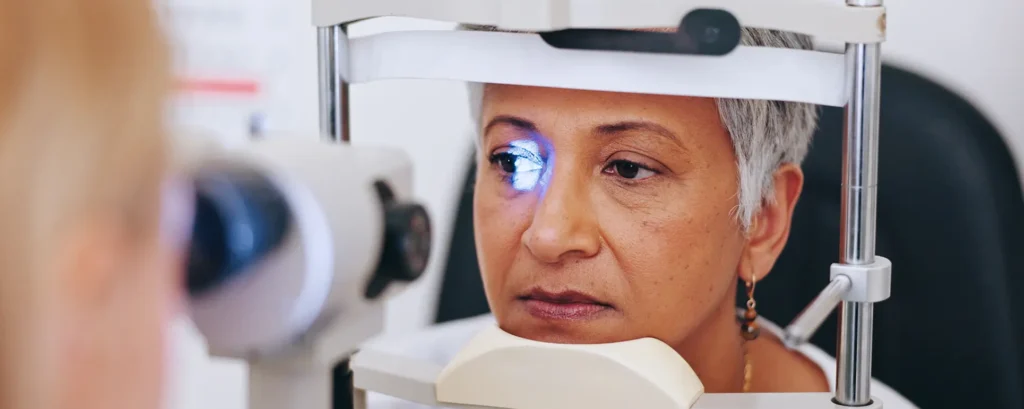
Even with the most advanced equipment and careful calculations, the final power of an intraocular lens (IOL) can sometimes settle slightly differently than predicted, because every eye heals in its own unique way. In some cases, a secondary IOL often called a piggyback lens can help achieve the desired vision outcome without removing the original lens.
Common reasons for considering a piggyback lens include:
- Mild refractive error after cataract surgery – Sometimes the primary IOL doesn’t fully correct vision, leaving a small residual error.
- Unexpected astigmatism – Even minor irregularities in the cornea can reduce visual clarity after surgery.
- Vision not sharp enough at a distance – If distant objects remain slightly blurred, a secondary lens can refine focus.
- Near tasks still blurry – For patients struggling with reading or close-up work, a piggyback lens can improve near vision.
- Intolerance to glasses after surgery – Some patients prefer to reduce or eliminate dependence on spectacles, especially if they find them uncomfortable.
- Desire for greater spectacle independence – A piggyback lens can help achieve more freedom from corrective eyewear for both near and distance tasks.
- Avoiding the risks of removing the first lens – Placing a secondary lens is often safer than explanting the original IOL, which carries higher surgical risk.
Piggyback lenses provide precise correction while leaving the primary lens undisturbed, offering a safe and effective way to optimise vision after cataract surgery.
How Piggyback Lenses Work
When a piggyback lens is considered, your surgeon first evaluates your current prescription and determines the precise correction needed. This ensures the additional lens addresses any residual refractive error effectively.
The surgeon then calculates the exact power of the piggyback IOL and carefully places it either in front of or behind your existing implant, depending on your eye’s anatomy and visual requirements.
Once in place, the piggyback lens works together with your primary IOL to fine-tune focus, much like adding a very thin, precise layer of optical correction inside your eye. This allows for subtle improvements in vision without removing the original lens.
This approach provides an elegant solution for patients seeking sharper vision after surgery, especially when minor adjustments are all that’s needed to achieve optimal results.
Are Piggyback Lenses Safe?
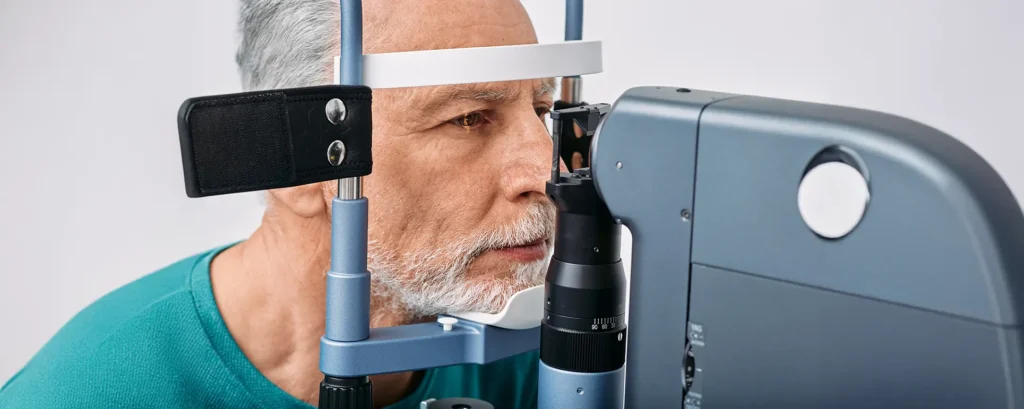
Yes, piggyback lenses are considered safe when implanted by an experienced surgeon and when the appropriate lens type is selected. They offer a reliable way to fine-tune vision without removing the original IOL.
One of the main advantages of piggyback lenses over a full IOL exchange is that the primary lens remains undisturbed. This reduces the need to re-enter the capsular bag and lowers the risk of complications such as capsular rupture or zonule damage.
The procedure is generally shorter and less invasive, which often leads to faster healing and recovery. Patients typically experience minimal disruption to their vision and daily activities.
Piggyback lenses have been used successfully for decades, and modern materials and designs make them highly stable and biocompatible, providing a safe and effective option for achieving sharper vision after surgery.
Where Is the Piggyback Lens Placed?
There are two main positions for secondary IOLs.
1. Sulcus-Fixated Piggyback Lens
A sulcus-fixated piggyback lens is the most commonly used placement method, where the additional lens sits in the ciliary sulcus in front of the primary IOL but behind the iris. This approach avoids disturbing the original lens and is often ideal for refractive touch-ups. It offers good stability and works well with many eye anatomies. However, proper sizing and selecting the right lens design are crucial, and the procedure requires an experienced surgeon to ensure the best outcome.
2. Capsular Bag Placement (Less Common)
Capsular bag placement for a secondary lens is less common but can be used when the original capsule is open or certain anatomical conditions allow it. In this method, the piggyback lens is positioned inside the capsular bag alongside the primary lens. This offers excellent stability and reduces the risk of lens movement. However, it isn’t suitable for every patient the capsule must be intact and wide enough to safely accommodate both lenses.
Piggyback vs IOL Exchange: Which Is Better?
If you need your vision fine-tuned, your two options are:
Piggyback lens (secondary IOL) – If your vision needs fine-tuning after your initial cataract or lens replacement surgery, one of the primary options is a piggyback lens (also called a secondary IOL). This involves placing an additional lens in the eye usually in the ciliary sulcus without removing the existing one. It’s often preferred when the original lens is well-positioned and the correction needed is modest, as it avoids the higher risks associated with reopening the capsular bag.
IOL exchange (removing and replacing the original lens) – IOL exchange involves taking out the initial implanted lens and replacing it with a new one that corrects the remaining prescription more precisely. It’s essentially a revision surgery that gives the surgeon full control over your visual outcome.
Here’s how they compare.
Piggyback Lenses:
Pros
- Less invasive
- Lower risk of complications
- Faster healing
- No disruption to the capsular bag
- Excellent for small refractive refinements
- Easier for patients with fragile anatomical structures
- Reversible if needed (much easier than removing original IOL)
Cons
- Requires precise measurement
- Needs surgeon experience
- Must use specific lens types
IOL Exchange:
Pros
- Entire lens power can be changed
- Suitable for significant errors
Cons
- Higher risk of capsular rupture
- More invasive
- Longer recovery
- Greater risk of tissue damage
- Limited by capsular fibrosis
Conclusion:
Piggyback lenses are safer in most cases, especially when only a small correction is needed.
Benefits of Piggyback Lenses
Piggyback lenses aren’t just safe they offer multiple advantages that many people don’t realise.
1. Perfect for Small Refractive Errors – If you only need a small adjustment (e.g., -0.75D or +1.00D), piggyback lenses achieve this without replacing the primary lens.
2. Reversible if Necessary – If you do not adapt well, the piggyback lens can be removed or replaced far more easily than the primary IOL.
3. Great for Complex Eyes – Eyes with unusual anatomy often benefit from piggyback lenses because they avoid disturbance to delicate structures.
4. Useful for Multifocal or Premium IOL Adjustments – If you already have a premium IOL and your vision isn’t balanced, piggyback lenses are an excellent solution.
5. Can Correct Astigmatism – Toric piggyback lenses allow additional astigmatism correction without touching the original lens.
What About Side Effects?
Like any eye procedure, piggyback lenses come with some potential side effects but these are generally low and manageable when the surgery is performed by an experienced ophthalmologist.
Most patients experience only mild, temporary symptoms such as slight inflammation or light sensitivity during the early healing period. Some may notice glare or halos, though these typically improve as the eye adjusts. In very rare cases, the additional lens may mechanically interact with the primary IOL, particularly if the sizing or positioning isn’t ideal.
Other uncommon risks include pigment dispersion or mild pressure changes inside the eye, both of which are usually easy to monitor and treat. Selecting the correct lens design and ensuring precise calculations significantly reduces these risks, making the procedure both safe and effective for fine-tuning post-surgical vision.
Who Is a Good Candidate for a Piggyback Lens?
You may be a strong candidate for a piggyback lens if you have a small to moderate refractive error after cataract or lens replacement surgery and want a more accurate visual outcome without undergoing a full IOL exchange. This option is often preferred when the eye’s anatomy allows safe sulcus placement and the prescription has remained stable for several weeks to months post-surgery.
Piggyback lenses are particularly useful if you’re aiming for greater spectacle independence or if glasses don’t fully correct your remaining visual discrepancy. Many patients choose this approach because it avoids the higher risks involved in removing the original IOL, making it a safer and less invasive way to fine-tune vision. Your surgeon will carry out detailed measurements including biometry, corneal topography and anterior segment assessment to confirm whether this solution is suitable for your specific visual needs.
Who Should Avoid Piggyback Lenses?
Piggyback lenses can offer excellent results, but they aren’t suitable for everyone. Certain eye conditions or anatomical factors can make this option less safe or less effective, so careful screening is essential. Before recommending a piggyback IOL, your surgeon will evaluate your overall eye health and determine whether this approach is the best fit for your visual needs.
How Surgeons Choose the Right Piggyback Lens
Choosing the right piggyback lens is a precise process, and your surgeon relies on detailed measurements to ensure the best visual outcome. Because a piggyback IOL sits alongside your existing lens, accurate calculations are essential to avoid over- or under-correction.
By assessing the eye’s structure, your current IOL power, and your exact refractive needs, surgeons can determine the ideal supplemental lens to fine-tune your vision safely and effectively.
The success of a piggyback lens depends heavily on the right calculations.
Surgeons will assess:
- Axial length of the eye
- Corneal curvature
- Current IOL power
- Exact refractive error
- Sulcus size
- Angle anatomy
- Stability of primary IOL
Modern biometry technologies make these calculations highly accurate.
Piggyback Lens Procedure: What to Expect
The piggyback lens procedure is typically simple and minimally invasive, designed to fine-tune your vision without replacing the primary IOL. It’s performed under local anaesthesia, and most people are able to return home shortly after the surgery. Here’s what the process generally involves:
The procedure is usually straightforward.
Steps include:
- Local anaesthesia
- Micro-incision at the corneal edge
- Inserting the secondary IOL
- Positioning it safely in the sulcus
- Closing the incision (often self-sealing)
Most patients go home the same day.
Recovery After Piggyback Lens Implantation
Recovery After Piggyback Lens Implantation
Recovery after a piggyback lens procedure is usually smooth and similar to standard cataract surgery, with vision improving steadily over the first few weeks.
- Day 1 – You may experience mild discomfort, light sensitivity, or slight blurriness, but most patients already notice some early improvement in clarity.
- Week 1 – Vision continues to sharpen as inflammation settles, and daily tasks often become easier and more comfortable.
- Weeks 2–4 – Your vision typically stabilises during this period, with both sharpness and contrast becoming more consistent.
- Months 1–3 – Final visual results develop as the eye fully heals and adapts to the secondary lens.
Most people are able to return to normal activities, including work and light exercise, within just a few days.
Long-Term Results
Piggyback lenses are known for their stability and long-lasting visual clarity. Because they work together with your original IOL, they provide a precise and reliable way to fine-tune focus without disturbing the eye’s natural healing. Once the prescription stabilises, most patients enjoy noticeably sharper vision and significantly reduced dependence on glasses for everyday tasks.
In the long term, results remain consistent for many years, with strong compatibility between the two lenses and a very low risk of shifting or degradation. Many patients describe the improvement as transformative, giving them the crisp, comfortable vision they hoped for after their initial surgery.
Piggyback Lenses for Astigmatism
For patients with residual astigmatism after cataract or lens replacement surgery, toric piggyback lenses offer a highly effective solution. These secondary lenses are engineered to provide precise rotational stability, which is essential for accurate astigmatism correction. Because they are designed to sit securely in front of or behind the existing IOL, they blend optically with the primary lens to deliver excellent refractive accuracy and noticeably sharper vision.
In many cases, a toric piggyback lens is a safer and more predictable option than removing and replacing the original IOL. It avoids the risks associated with reopening the capsular bag, reduces surgical trauma and recovery time, and allows the surgeon to fine-tune the correction with greater precision. For the right patient, this approach offers a reliable path to clearer, more comfortable vision without the need for a full lens exchange.
Piggyback Lenses for Multifocal IOL Corrections
If you’ve had a multifocal IOL and are experiencing imbalance between your eyes or inconsistent clarity, a piggyback lens can fine-tune your vision without removing the original implant. These secondary lenses can add extra distance or near power, enhance contrast, and reduce visual strain, making them especially helpful when the primary multifocal lens is well-positioned and functioning correctly but needs a small adjustment to deliver optimal clarity.
Piggyback Lenses vs Laser Vision Correction (LASIK/PRK)
In some cases, a laser enhancement may be considered instead of a secondary IOL.
Laser correction is suitable for:
- Very small refractive errors
- Healthy corneas
- Patients preferring surface correction
Piggyback lenses are preferred when:
- Corneas are thin or irregular
- Prescription change is too large for laser
- The primary IOL’s focus needs internal adjustment
- You want a reversible option
Your surgeon will help you choose the safest approach.
FAQs:
1. Are piggyback lenses safe?
Piggyback lenses are considered a safe and reliable option when implanted by an experienced surgeon. The procedure avoids disturbing the original intraocular lens, which significantly lowers the risk of complications such as capsular rupture, zonule damage or inflammation. Because the surgeon does not need to re-enter the capsular bag, the surgery is generally shorter, less invasive and associated with faster healing. Modern piggyback lens designs are biocompatible and stable, and when appropriately selected, they integrate well with the eye’s natural structures. Most patients achieve excellent long-term clarity with minimal risk.
2. How do piggyback lenses differ from an IOL exchange?
An IOL exchange involves removing the original implanted lens and replacing it with a new one, whereas piggyback lenses simply add a secondary lens to refine the refractive outcome. The main difference lies in invasiveness: IOL exchange requires entering the capsular bag again, which carries a higher risk of tearing, dislocation and longer recovery. Piggyback lenses avoid all of these issues. They are generally preferred for small or moderate corrections because they are safer, more predictable and reversible. An exchange is usually reserved for cases where the refractive error is too large to correct with a secondary lens.
3. Who is the ideal candidate for a piggyback lens?
Ideal candidates are individuals who have undergone cataract surgery or refractive lens exchange and are left with small to moderate refractive errors such as mild short-sightedness, long-sightedness or astigmatism. Candidates should have stable postoperative measurements, suitable sulcus anatomy and a desire to improve spectacle independence. People who struggle with residual blur despite wearing glasses or who feel their visual outcome is not fully optimised often benefit from this procedure. It is also ideal for patients with premium or multifocal IOLs who need fine-tuning without disturbing the original implant.
4. How is the piggyback lens procedure performed?
The procedure is relatively straightforward. After administering local anaesthesia, the surgeon creates a tiny micro-incision at the edge of the cornea. Through this incision, the custom-calculated secondary lens is gently inserted and positioned either in front of the primary IOL (usually in the ciliary sulcus) or occasionally within the capsular bag if anatomical conditions allow. The incision usually seals on its own without stitches. Because the eye’s internal structures remain largely untouched, patients typically experience a comfortable and quick recovery.
5. Where exactly is the piggyback lens placed?
Most piggyback lenses are positioned in the ciliary sulcus, which sits just in front of the primary lens but behind the iris. This location is ideal because it provides stability without interfering with the original IOL. In certain situations such as when the capsular bag is open or spacious the secondary lens may be placed within the capsule itself, next to the first lens. Surgeons choose the location based on anatomy, safety and refractive accuracy. Sulcus placement remains the most common and predictable method.
6. How long does recovery take after a piggyback lens implant?
Recovery after a piggyback lens implantation is usually quick. Most patients notice mild discomfort and light sensitivity on the first day. Visual clarity begins improving within the first week, and by the end of two to four weeks, most people experience stable vision. Complete visual optimisation can take between one and three months as the eye fully heals and adjusts. Because the procedure is minimally invasive, patients often return to normal activities within a couple of days.
7. Can piggyback lenses correct astigmatism?
Yes, piggyback lenses can effectively correct astigmatism. Special toric piggyback lenses are designed to provide precise rotational stability so they stay aligned with the corneal axis. This ensures accurate astigmatism correction and crisp visual improvement without disturbing the original IOL. They are especially useful for patients who were left with unexpected astigmatism after cataract or lens replacement surgery, or for those whose corneal shape makes laser correction less suitable.
8. What side effects or risks should I be aware of?
Although piggyback lenses are generally safe, a few potential side effects can occur. Some patients experience mild inflammation, temporary glare or halos during the early healing period. Very rarely, improper lens sizing or position can lead to pigment dispersion or mechanical interaction between the two lenses. In uncommon cases, eye pressure fluctuations may occur, but these are typically manageable with medication. Choosing an experienced surgeon and a well-designed lens significantly reduces the likelihood of these issues.
9. Are piggyback lenses reversible?
Yes, one of the major advantages of piggyback lenses is that they are reversible. If the eye does not adapt well or if further adjustments are needed, the secondary lens can usually be removed or exchanged much more easily than the primary IOL. This makes the procedure appealing for patients who want flexibility or are hesitant about undergoing another major internal lens surgery. The reversibility also gives surgeons more confidence in fine-tuning vision with high precision.
10. Can laser vision correction be used instead of a piggyback lens?
Laser vision correction such as LASIK or PRK can be an excellent alternative in selected cases, particularly where the residual refractive error is very small and the cornea is healthy. However, piggyback lenses are a better choice when the correction required is larger, when the cornea is thin or irregular, or when the adjustment needs to be made internally rather than on the corneal surface. Surgeons also recommend piggyback lenses for patients who prefer a reversible solution or who have premium IOLs that require fine internal balancing. The best option depends on eye health, corneal thickness and the exact refractive change needed.
Final Thoughts: Safe, Precise Vision Enhancement Without Disturbing Your Primary IOL
Piggyback lenses offer a safe, reliable way to fine-tune your vision after cataract surgery or refractive lens exchange, especially when the correction you need is small but meaningful. Instead of removing the original implant a procedure that carries higher risks and a longer recovery a secondary IOL allows surgeons to enhance your focus with far less disturbance to the eye’s delicate structures. For many people, this approach delivers sharper, clearer vision and greater confidence in daily tasks without the invasiveness of an IOL exchange.
If you’re considering IOL replacement surgery in London, you can contact us at the London Cataract Centre to explore whether this procedure, or a piggyback lens, is the best and safest option for your long-term visual clarity.
References:
1. Khoramnia, R., et al. (2023). Comparison of a Presbyopia-Correcting Supplementary Sulcus-Fixated IOL. Diagnostics, 13(8), 1482. Available at: https://www.mdpi.com/2075-4418/13/8/1482
2. Fernández-Vigo, J.I., Sánchez-González, J.-M., De-Hita-Cantalejo, C., Ballesteros-Sánchez, A. (2024). The Clinical Usefulness of Evaluating the Lens and IOL Position: OCT in Pseudophakes. Journal of Clinical Medicine, 13(23), 7070. Available at: https://www.mdpi.com/2077-0383/13/23/7070
3. Hassan, A.H.A., et al. (2016). Refractive results: Safety and efficacy of secondary piggyback intraocular lens implantation to correct pseudophakic ametropia. BioMed Research International. Available at: https://www.ncbi.nlm.nih.gov/pmc/articles/PMC4904093/
4. Karjou, Z., et al. (2021). Secondary Piggyback Intraocular Lens for Management of Residual Refractive Error Following Cataract Surgery. Ophthalmology Practice, 2021. Available at: https://www.ncbi.nlm.nih.gov/pmc/articles/PMC7841270/
5. Iwase, T., Tanaka, N. (2005). Elevated intraocular pressure in secondary piggyback intraocular lens implantation. Journal of Cataract & Refractive Surgery, 31(9), pp.1821-1823. Available via PubMed at: https://pubmed.ncbi.nlm.nih.gov/16246790/