


When you’re living with Neurofibromatosis Type 2 (NF2), there’s a lot to think about — from hearing changes and balance issues to the regular check-ups with neurologists and ophthalmologists. But for many people with NF2, cataracts also enter the picture — and much earlier than usual. In fact, it’s not uncommon for someone with NF2 to develop lens changes in their teens or twenties. If you or a loved one are navigating cataracts on top of everything else, you might be wondering how surgery works and what special considerations apply.
In this article, we’ll explore exactly how cataract surgery is approached in people with NF2, the timing of the operation, potential risks, and what outcomes you can realistically expect. Our aim is to make the path forward clearer and less daunting — because you deserve to know what’s ahead.
Understanding NF2 and Its Ocular Impact
Neurofibromatosis Type 2 is a rare genetic condition caused by mutations in the NF2 gene, leading to the development of non-cancerous tumours in the nervous system. While it’s often associated with vestibular schwannomas (tumours affecting hearing and balance), NF2 has many other manifestations, including those involving the eyes.
Ocular features of NF2 are present in around 70% of cases, with cataracts being one of the earliest and most common signs. These are typically posterior subcapsular or cortical cataracts, meaning they affect the back or the outer layers of the lens. Unlike age-related cataracts that develop slowly in later life, NF2-related cataracts often emerge early and progress faster.
What makes cataracts in NF2 particularly concerning is that they may coexist with other eye issues like epiretinal membranes, retinal hamartomas, or optic nerve sheath meningiomas. So, managing your vision isn’t just about removing the cloudy lens — it’s about navigating a more complex landscape of eye health.
Why Cataracts Develop in NF2
The precise mechanism behind early cataract formation in NF2 isn’t fully understood, but researchers believe the mutated merlin protein (produced by the NF2 gene) affects how cells grow and maintain clarity in the lens. Over time, these abnormalities lead to the clouding and disorganisation we see in the lens structure.
Because NF2-related cataracts tend to appear earlier in life, they can have a significant impact on education, work, and quality of life. For children or young adults, they can interfere with developmental milestones and visual learning. For adults, they can contribute to reduced independence and complications with other NF2 symptoms like balance and hearing problems.
The decision to operate isn’t taken lightly — but with proper timing and a personalised approach, cataract surgery can restore significant function and improve life quality.
When Is Cataract Surgery Recommended?
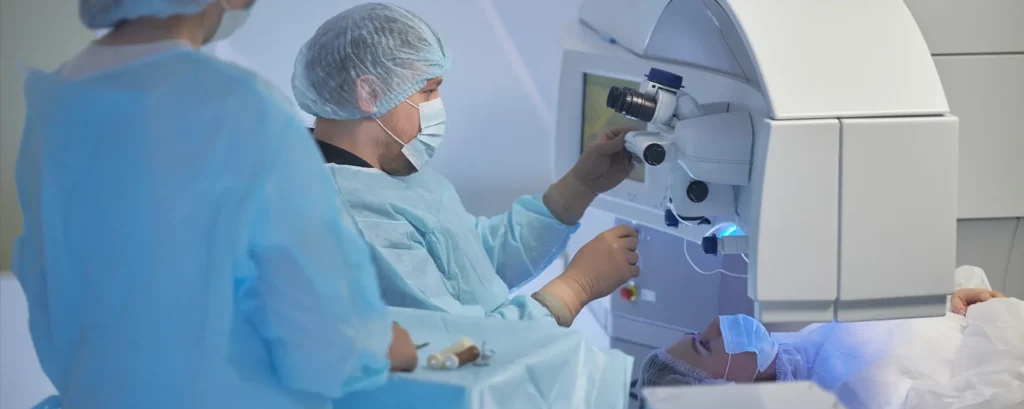
Unlike typical age-related cataracts, the threshold for surgery in NF2 tends to be lower. That’s because even a mild visual reduction in someone already coping with hearing loss or other neurological symptoms can be quite disabling. In general, the decision is based not just on how cloudy the lens looks under examination, but on how much it’s interfering with your day-to-day life.
You might be a candidate for surgery if you:
- Struggle with reading, driving, or recognising faces
- Experience increased glare or sensitivity to light
- Notice a significant drop in visual clarity
- Are preparing for other eye-related procedures that require a clear view of the retina
Before recommending surgery, your ophthalmologist will likely carry out a comprehensive exam, including imaging tests like OCT (optical coherence tomography) to look at the back of your eye. This helps rule out other causes of vision loss that might complicate the surgery or recovery.
Preoperative Assessment and Planning
Planning cataract surgery in someone with NF2 is a bit more involved than in the general population. First, your surgeon needs to take a careful look at any coexisting eye problems. This could include optic nerve tumours, retinal abnormalities, or even irregular eye movements (nystagmus), which are more common in NF2 patients.
Visual field testing may also be necessary, especially if you’ve had prior brain or orbital surgery. In some cases, an MRI might be requested to evaluate the orbital and intracranial structures, particularly if you’ve had new neurological symptoms.
A detailed anaesthetic assessment is also important. If you’ve had previous cranial surgeries or radiation, you may have altered airway anatomy, which the anaesthetist must know about in advance. Coordination with your neurologist or NF2 specialist is common and encouraged.
Surgical Technique Modifications for NF2 Patients
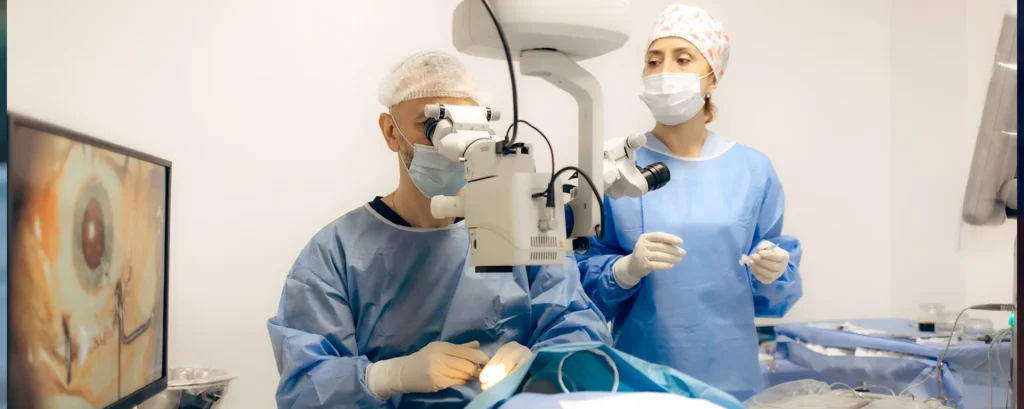
In most cases, cataract surgery for NF2 is performed under local anaesthesia using phacoemulsification — a modern technique that uses ultrasound to break up and remove the cloudy lens. But some modifications may be needed depending on your situation.
For instance, if you have significant nystagmus (involuntary eye movement), additional stabilisation techniques might be used to keep your eye still during surgery. If you have posterior subcapsular cataracts (which are closer to the back of the lens), extra care is taken to avoid damage to the posterior capsule and the underlying structures.
Another consideration is the choice of intraocular lens (IOL). In younger NF2 patients, the choice of a monofocal versus multifocal IOL is discussed carefully. Monofocal lenses are generally preferred because they offer reliable vision without some of the glare or halo issues that multifocals can cause — particularly important if your visual pathways are already compromised.
Special Considerations for Paediatric Patients
For children with NF2 who develop visually significant cataracts, the approach differs. Surgery is more complex in paediatric eyes because their visual system is still developing, and timing becomes critical to prevent amblyopia (lazy eye).
Paediatric cataract surgery often involves general anaesthesia and may or may not include the implantation of a lens, depending on the child’s age and eye anatomy. Postoperative follow-up is intensive and may include patching therapy, glasses, or contact lenses.
Importantly, NF2 in children can sometimes be subtle at first, with cataracts being an early clue. A paediatric cataract diagnosis should always trigger evaluation for NF2 if there are other suggestive signs like hearing loss or café-au-lait spots.
Recovery and Postoperative Care
After surgery, NF2 patients may need a longer recovery period and closer follow-up. This isn’t because the surgery is inherently more dangerous, but because coexisting conditions — like retinal issues or optic nerve involvement — may slow visual improvement.
You’ll typically be prescribed eye drops for a few weeks to reduce inflammation and prevent infection. Your vision may begin to clear within a few days, but stabilisation could take several weeks, especially if your retina or optic nerve is affected.
Regular follow-ups with your ophthalmologist and your NF2 specialist are vital. You may also need visual field tests or imaging to monitor for tumour-related changes over time.
Possible Complications and How They’re Managed
While cataract surgery is generally safe, NF2 patients face some unique risks. One is that underlying optic nerve tumours may limit how much vision improves after surgery. Another is the possibility of post-surgical inflammation, especially in younger patients or those with immune-related complications.
Retinal detachment, though rare, is another risk — particularly if there’s pre-existing traction from epiretinal membranes or retinal hamartomas. Your surgeon will evaluate this beforehand and may even involve a retina specialist if needed.
The good news is that with modern technology and skilled surgeons, most complications are preventable or manageable. What’s key is honest communication with your surgical team about what improvements you can expect.
Long-Term Visual Prognosis
How well you’ll see after cataract surgery depends on multiple factors — including the type of cataract, whether your optic nerve is healthy, and if the retina is intact. For many NF2 patients, especially those with minimal other eye involvement, the outcome is very positive.
However, if there’s significant damage to the optic pathways from tumours or prior surgery, visual recovery might be limited. That’s why managing expectations is such an important part of pre-surgical counselling.
Still, even modest improvements in clarity, contrast sensitivity, or light tolerance can make a big difference in daily functioning — especially when other senses are already impacted by NF2.
Multidisciplinary Approach to Eye Care in NF2
Caring for NF2 patients requires a team effort. Your care may involve a neuro-ophthalmologist, a cataract surgeon, a neurologist, an audiologist, and even a geneticist. This multidisciplinary collaboration ensures that the timing of surgery, anaesthesia safety, and post-op follow-up all align with your overall health strategy.
In some cases, surgery might be coordinated with other procedures — for instance, cochlear implant placement or brain tumour monitoring — to reduce the need for repeated hospital visits or anaesthesia.
If you’re under the care of an NF2 clinic, they’ll often facilitate these discussions and referrals. Don’t hesitate to ask your consultant about whether this sort of integrated approach is available to you.
FAQs: Cataract Surgery in Patients with Neurofibromatosis Type 2 (NF2)
- At what age do cataracts usually develop in people with NF2?
In NF2, cataracts often develop much earlier than in the general population — sometimes during childhood or the teenage years. This early onset is due to genetic changes affecting lens cell stability and structure. Because of this, NF2-related cataracts can impact vision at a younger age and may require earlier surgical intervention compared to age-related cataracts. - Can children with NF2 safely undergo cataract surgery?
Yes, children with NF2 can undergo cataract surgery safely when it’s deemed necessary. The procedure is more complex in younger eyes, and the timing must be carefully planned to support healthy visual development. Surgeons typically work with paediatric specialists to tailor the approach and monitor for potential amblyopia after surgery. - How are NF2-related cataracts different from typical age-related cataracts?
Cataracts in NF2 are usually of the posterior subcapsular or cortical type and tend to develop earlier in life. They may also progress faster and be associated with other eye abnormalities, such as epiretinal membranes or optic nerve tumours. This makes surgical planning more intricate than in standard age-related cases. - Will cataract surgery fully restore my vision if I have NF2?
The success of cataract surgery in NF2 varies from person to person. If the rest of the eye — especially the optic nerve and retina — is healthy, significant visual improvement is likely. However, if there’s damage from other NF2-related conditions, the visual gains may be limited, and expectations need to be managed accordingly. - Can cataracts come back after surgery in someone with NF2?
While the removed cataract cannot return, a condition called posterior capsule opacification (PCO) can occur months or years after surgery. This causes vision to become cloudy again but can be quickly and painlessly corrected with a laser procedure called YAG capsulotomy. - Are there special risks during cataract surgery for people with NF2?
Yes, individuals with NF2 may face unique risks due to coexisting eye problems like retinal abnormalities or optic nerve tumours. They may also have eye movement disorders such as nystagmus. These factors require the surgeon to adapt the procedure and coordinate with other specialists to ensure a safe outcome. - Should people with NF2 avoid multifocal intraocular lenses?
Multifocal lenses are generally not recommended for NF2 patients, especially if the optic nerve or retina is affected. These lenses can reduce contrast sensitivity and increase glare, which can be problematic in eyes already coping with neurological or structural challenges. Monofocal lenses are often the safer choice. - Will I need general anaesthesia for cataract surgery if I have NF2?
Most adult NF2 patients can have cataract surgery under local anaesthesia, but in children or individuals with specific medical histories, general anaesthesia may be required. Preoperative assessments help determine the safest approach, especially if you’ve had prior brain or ear surgery that could complicate sedation or positioning. - How long does it take to recover after cataract surgery in NF2?
Recovery time varies, but most people notice visual improvement within a few days. However, in NF2 patients with other ocular conditions, full recovery and vision stabilisation might take longer. Regular postoperative follow-ups are essential to monitor healing and assess for any complications. - Is it important to have cataract surgery done at a specialist centre if I have NF2?
Absolutely. NF2-related cataracts are considered complex due to associated eye and neurological conditions. Seeking care at a specialist centre ensures that your surgical team is familiar with the nuances of NF2 and can provide a tailored approach that reduces risks and maximises the chance of a good visual outcome.
Final Thoughts
If you have NF2 and cataracts are affecting your vision, you’re not alone — and you’re not without options. While surgery in this context does carry more nuance, it’s also highly customisable. Surgeons who are experienced in dealing with complex cases can adapt the procedure to give you the best chance of visual improvement, while protecting other vital structures in your eye.
Taking that step toward surgery might feel daunting — but it could also be a major step forward in reclaiming clarity in your daily life.
References
- Jingyu, L. & Ke, Y., 2013. Ocular Findings of Neurofibromatosis 2: A Case Study. Journal of Clinical & Experimental Ophthalmology, 4(3), pp.284. Available at: https://www.longdom.org/open-access/ocular-findings-of-neurofibromatosis-2-a-case-study-48911.html [Accessed 22 July 2025].
- McLaughlin, M.E., Pepin, S.M., Maccollin, M., Choopong, P. & Lessell, S., 2007. Ocular pathologic findings of neurofibromatosis type 2. Archives of Ophthalmology, 125(3), pp.389–394. Available at: https://jamanetwork.com/journals/jamaophthalmology/fullarticle/419144 [Accessed 22 July 2025].
- Mautner, V.F., Tatagiba, M., Guthoff, R.F., Samii, M. & Pulst, S.M., 1993. Neurofibromatosis 2 in the paediatric age group. Neurosurgery, 33(1), pp.92–96. Available at: https://pmc.ncbi.nlm.nih.gov/articles/PMC1734496/ [Accessed 22 July 2025].
- Mautner, V.F., Tatagiba, M., Guthoff, R.F., Samii, M. & Pulst, S.M., 1993. Neurofibromatosis 2 in the paediatric age group. Surgical Neurology, 33(1), pp.92–96. Available at: https://www.sciencedirect.com/science/article/pii/S107190919880003X [Accessed 22 July 2025].
- Yaisberg, V. et al., 2019. Ocular alterations, molecular findings, and three novel pathological mutations in a series of NF2 patients. Graefe’s Archive for Clinical and Experimental Ophthalmology, 257(7), pp.1453–1458. Available at: https://doi.org/10.1007/s00417-019-04348-5 [Accessed 22 July 2025].