


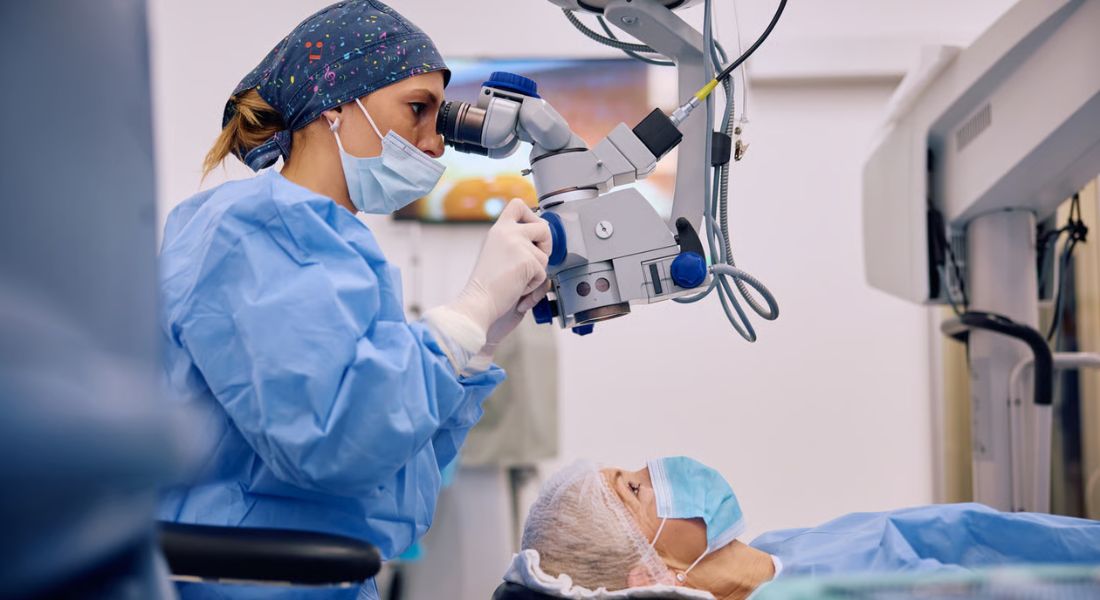
You may walk into a consultation expecting lens replacement to immediately restore clear near vision without compromise. This assumption is very common, especially as modern cataract and lens procedures are widely promoted as highly effective and reliable. The messaging around clarity and convenience can make it feel like a straightforward solution. However, when your lifestyle needs are not properly explored beforehand, this expectation often leads to avoidable disappointment.
You may also rely too heavily on marketing claims or brief success stories without fully understanding what applies to your own vision. What works well for one patient may not suit your reading habits, work demands, or tolerance for visual side effects. This creates a gap between expectation and outcome that becomes obvious after surgery. Taking time to align the procedure with your actual daily visual needs is often overlooked but essential.
We frequently see patients who have underestimated the adaptation period following surgery. If you choose multifocal or trifocal lenses, your brain needs time to adjust to how visual information is processed. Expecting instant, seamless vision can quickly turn into frustration during the early weeks. In many cases, early dissatisfaction comes from limited research into how different lens types actually behave in daily life.
You might also assume that lens replacement is a one-size-fits-all solution, but this is rarely the case in practice. Many patients focus heavily on cost or recovery time while overlooking the functional differences between monofocal, multifocal, and extended depth-of-focus lenses. Each option comes with specific trade-offs that directly affect how you see at different distances. Choosing without understanding these nuances can leave you with residual blur or an unexpected dependence on reading glasses.
Overlooking Non-Surgical Alternatives
You may dismiss non-surgical options too quickly, assuming they are only temporary and not worth trying. Glasses, contact lenses, and corneal inlays can seem inconvenient compared to surgery. This often leads you to move forward without fully testing what works for your daily routine. Many patients later regret skipping these simpler options.
You might also underestimate how effective modern optical solutions can be for near vision. Well-fitted glasses or contact lenses can provide stable and comfortable results. These options allow you to understand your visual needs before making a permanent decision. Skipping this step often leads to less informed choices.
Ignoring early interventions can mean losing years of manageable visual comfort. You may assume presbyopia cannot be managed without surgery, which is not always true. Interim solutions can support your vision while you plan long-term options. Taking a gradual approach helps reduce pressure and leads to better decisions.
Misjudging Surgical Risks
Lens replacement is often treated as a routine, low-risk intervention, and that perception shapes how decisions are made. In practice, risk conversations are frequently compressed into reassurance rather than proper expectation-setting. You may walk into surgery thinking outcomes are universally smooth, without appreciating variability in healing and visual adaptation. That gap between expectation and reality is where dissatisfaction typically begins.
- Surface-level understanding of complications: Many patients acknowledge “risk” but don’t internalise what it looks like day-to-day. Issues like glare, halos, or reduced contrast sensitivity can affect night driving, screen use, and general comfort. When these are framed vaguely, you’re not equipped to anticipate lifestyle impact.
- Underestimating dry eye and visual quality shifts: Post-operative dryness is common and can persist longer than expected. It doesn’t just cause discomfort; it can fluctuate vision quality throughout the day. If you assume crisp, stable vision immediately, this variability can feel like a failed outcome.
- Assumption of one-and-done surgery: There’s a tendency to believe the procedure is final with no need for further input. In reality, enhancements or minor refinements are sometimes required to reach optimal vision. If you’re not prepared for that possibility, even small follow-ups can feel like complications.
- Disconnect between clinical success and personal satisfaction: Surgery can be technically perfect yet still fall short of your expectations. This usually happens when visual trade-offs were not clearly understood beforehand. You end up measuring success against assumptions rather than informed benchmarks.
You avoid most post-surgical dissatisfaction by tightening your understanding of risk before committing. It’s not about avoiding the procedure but aligning expectations with how vision may actually behave afterwards. When you factor in variability, minor side effects, and the possibility of refinements, your decision becomes far more grounded. That clarity protects both your outcome and your long-term confidence in the choice.
Rushing Without Lifestyle Analysis

You may move towards surgery without properly analysing how your vision is used throughout the day. Presbyopia does not affect every task in the same way, and your needs will vary across reading, screen use, driving, and hobbies. Assuming one solution will cover everything often leads to gaps in visual performance. This is where expectations and real outcomes begin to diverge.
You need to look closely at how your daily routine actually functions before making a decision. Someone who reads extensively will prioritise near vision very differently from someone who spends more time outdoors or travelling. These differences directly influence which lens option will suit you best. Skipping this step often leads to choices that feel technically correct but practically limiting.
Failure to weigh your lifestyle needs properly often results in ongoing dependence on glasses for specific tasks. You may achieve good distance or intermediate vision but still struggle with activities that matter most to you. This can feel frustrating, especially when surgery was expected to remove that dependency. Taking time to align your visual goals with your routine helps avoid these compromises.
Ignoring the Long-Term Eye Health Picture
You may assume lens replacement will resolve all age-related vision concerns, but this is rarely the case in practice. Conditions such as glaucoma, macular degeneration, or diabetic retinopathy can continue to progress even after surgery. Focusing only on presbyopia can create a false sense of security about your long-term vision. This often leads to disappointment when other issues begin to affect visual quality.
You need to recognise that surgery does not stop underlying eye conditions from developing or worsening over time. Even with a successful procedure, these conditions can limit how well you see in the future. Ignoring them during the decision-making stage reduces the overall effectiveness of your treatment plan. A broader view of eye health is essential before moving forward.
We often see patients prioritising presbyopia correction while overlooking existing corneal or retinal factors. This narrow focus can result in outcomes that do not match expectations despite technically successful surgery. A proper evaluation should always include a full assessment of your eye health, not just your near vision needs. Taking this approach helps you make more balanced and informed decisions.
Overconfidence in Lens Technology
You may place too much confidence in modern lens technology, assuming it will deliver perfect vision at all distances without compromise. Multifocal lenses are advanced, but they are not designed to perform flawlessly in every situation. Believing one lens can fully replace natural vision often sets unrealistic expectations. This gap between expectation and reality is where dissatisfaction begins.
You also need to account for how these lenses behave in real-world conditions rather than ideal scenarios. Visual tasks vary throughout the day, and performance can shift depending on lighting and focus demands. Assuming consistent clarity across all environments can lead to frustration. A balanced understanding of capabilities and limits is essential before proceeding.
You may also be surprised by visual effects such as glare at night or reduced clarity in dim lighting. These are known trade-offs, but they are often underestimated or not fully discussed beforehand. Overconfidence can prevent you from asking the right questions during consultation. Taking time to understand these compromises helps you make a more realistic and informed decision.
Financial Miscalculations and Priorities
You may view lens replacement as a one-time expense, especially when considering premium lens options. This often leads to the assumption that higher upfront cost guarantees complete visual independence. In reality, post-operative needs such as enhancements or prescription glasses can still arise. Overlooking these additional costs can disrupt your financial expectations.
You also need to think beyond the initial procedure when planning your budget. Visual outcomes can vary, and some patients require minor adjustments or ongoing support to achieve optimal results. Ignoring this possibility creates a narrow view of cost that does not reflect real-world scenarios. A more complete financial plan helps you avoid unexpected expenses later.
On the other hand, trying to minimise cost without understanding functional differences can lead to long-term inefficiency. Choosing lower-cost options without considering your visual priorities often results in supplementary spending on glasses or corrections. What appears economical at first can become a recurring expense over time. Aligning cost with function and expectations leads to more sustainable decisions.
Skipping Surgeon Selection and Consultation Depth
Patients often treat lens replacement as a standardised service, assuming outcomes are consistent across providers. In reality, the variability sits in decision-making long before the procedure begins. Surgeon judgement, lens strategy, and how thoroughly your case is profiled all shape the final result. When consultation depth is shallow, you’re effectively delegating critical choices without enough scrutiny.
- Overreliance on branding and marketing signals: Clinics with strong visibility can create a false sense of uniform quality. You may equate polished messaging with clinical excellence, which isn’t always aligned. Outcomes depend far more on surgical volume, complication management, and decision precision than presentation.
- Inadequate lifestyle and visual needs assessment: A rushed consultation often skips how you actually use your vision day-to-day. Factors like night driving, screen-heavy work, or reading habits directly influence lens choice. Without that mapping, the selected solution may be technically correct but practically misaligned.
- Limited discussion of lens options and trade-offs: Not all intraocular lenses behave the same, and each comes with compromises. If the consultation doesn’t clearly outline these trade-offs, you’re making a partially informed decision. That gap typically surfaces later as dissatisfaction rather than a clinical issue.
- Weak pre- and post-operative planning protocols: Surgical skill alone isn’t enough to guarantee consistency. Measurement accuracy, planning rigour, and structured aftercare all contribute to outcome stability. When these elements are underdeveloped, even well-executed surgery can deliver uneven results.
You improve outcomes by treating surgeon selection and consultation depth as non-negotiable steps, not formalities. The goal is to ensure decisions are tailored, not templated, and grounded in how you actually live and use your vision. When the consultation is thorough, it reduces uncertainty and aligns expectations with achievable results. That upfront diligence is what separates acceptable outcomes from genuinely optimised ones.
Common Missteps in Post-Surgical Planning

You may underestimate what recovery actually involves, assuming your vision will stabilise almost immediately after surgery. In reality, neural adaptation can take several weeks, especially with advanced lens types. Expecting instant clarity often leads to unnecessary concern during the early phase. A more realistic timeline helps you stay patient and avoid premature judgement.
You also need to stay consistent with post-operative care, which is often overlooked once the procedure is completed. Anti-inflammatory drops, hygiene routines, and scheduled follow-up visits all play a direct role in your final outcome. Missing or delaying these steps can affect healing and visual stability. Treating aftercare as optional rather than essential is a common and avoidable mistake.
Another area often missed is planning for possible enhancements after the initial procedure. You may need minor adjustments, such as laser refinement, to fine-tune your vision. Many patients do not account for this until dissatisfaction or minor issues appear. Being prepared for this possibility allows you to approach the process with greater clarity and control.
Expecting Permanent “Set-and-Forget” Results
You may assume lens replacement will permanently eliminate future vision problems, but this expectation is rarely accurate in practice. Presbyopia surgery improves near vision, yet it does not prevent other age-related changes from developing over time. Treating it as a complete, lasting fix can create a false sense of certainty. This often leads to frustration when vision needs evolve later.
You also need to recognise that your visual demands will continue to change with age and lifestyle. Even with a successful outcome, new challenges can emerge that require adjustment or support. Ignoring this long-term perspective limits how you plan your care. A more realistic view helps you stay prepared rather than surprised.
You may expect to stop using glasses entirely once the lens is replaced, but this is not always the case. Reading glasses or minor corrections can still be needed in low-light conditions or during prolonged, high-focus tasks. These situations highlight the limits of any single solution. Accepting this early allows you to approach surgery with balanced expectations.
Planning Surgery with Realistic Precision
Lens replacement for presbyopia is won or lost in the planning phase, not in theatre. I approach this by translating your daily visual behaviour into surgical decisions, rather than relying on generic templates. If we don’t anchor choices to how you actually use your eyes, even technically flawless surgery can underdeliver. Precision here is about alignment between anatomy, lifestyle, and lens performance.
- Mapping real-world visual demand before anything else: I prioritise understanding how you split your time across near, intermediate, and distance tasks. Reading habits, screen exposure, and night driving all carry different visual demands that directly influence lens selection. Without this clarity, you risk ending up with vision that works well in clinic but not in daily life.
- Going beyond standard measurements: Pre-operative work should extend past basic biometry into corneal behaviour, retinal status, and pupil dynamics. These variables affect how light is processed post-surgery and how lenses perform under different conditions. Skipping this depth may save time upfront but often introduces avoidable inconsistencies later.
- Aligning lens choice with lifestyle, not preference alone: Patients often lean towards premium lens options without fully understanding trade-offs. I ground the decision in how you prioritise clarity versus range whether that’s sharp distance vision or reduced dependence on glasses. This avoids mismatches where expectations exceed what the lens is designed to deliver.
- Reducing post-operative dependency through accurate planning: The goal isn’t perfection; it’s predictability. When we align measurements, lifestyle data, and lens selection correctly, we significantly reduce the likelihood of residual blur or reliance on corrective lenses. Most dissatisfaction stems from small planning errors that compound after surgery.
You get consistent outcomes by treating planning as a clinical process, not an administrative step. The more precisely we define your visual priorities and anatomical variables, the more controlled the result becomes. This isn’t about over complicating it’s about removing guesswork before it reaches the operating table. When planning is done properly, surgery becomes execution rather than experimentation.
Lens Selection and Trade-Offs
You need to accept early that no lens delivers perfect vision across all distances without compromise. Multifocal lenses distribute light across multiple focal points, which can introduce effects such as halos or reduced contrast, particularly in low-light settings. Extended depth-of-focus lenses provide smoother intermediate vision but may not deliver the same strength for close reading. Expecting a flawless outcome often leads to dissatisfaction when these trade-offs become noticeable.
You should approach lens selection by focusing on how you actually use your vision each day. A lens that performs well for reading may slightly reduce comfort during night driving or in dim environments. These differences are not flaws but design trade-offs that need to be matched to your priorities. Ignoring them can result in technically successful outcomes that still feel limiting in practice.
I guide you through direct comparisons so you can see how each option behaves in real-world situations. This includes discussing where compromises occur and how they may affect your routine. When you understand these nuances clearly, your expectations become more aligned with what is realistically achievable. That alignment is far more valuable than chasing the idea of perfect vision.
Post-Operative Workflow
After surgery, you enter a critical adaptation phase where your vision may fluctuate more than expected. This is particularly noticeable with multifocal lenses, where clarity can shift during the first few days. You should not interpret these changes as failure but as part of normal adjustment. Consistent monitoring helps ensure everything is progressing as it should.
You need structured follow-up rather than a passive wait-and-see approach. I typically arrange reviews on day one, week one, and around one month to assess healing and visual stability. These checkpoints allow early identification of any issues and give you clarity on what is normal. Skipping follow-ups removes an important layer of control in your recovery.
Medication adherence is essential and should never be treated casually. Anti-inflammatory and antibiotic drops protect against complications and support proper healing. Missing doses may seem minor but can slow recovery or introduce unnecessary irritation. Staying consistent with your regimen directly influences how well your final result settles.
Enhancement Planning
You should accept early that even with precise surgery, small refinements may still be required. A minor laser adjustment can correct residual refractive error and improve the balance between near and distance vision. Planning for this possibility helps you approach the process with realistic expectations. It also reduces the risk of disappointment if vision is not perfect immediately.
You need to treat enhancements as part of optimisation rather than correction of failure. In many cases, they are used to fine-tune outcomes and align vision more closely with your daily demands. Ignoring this option can leave small but noticeable limitations unaddressed. Being open to adjustments allows for a more complete and satisfactory result.
You should also understand that neural adaptation takes time and cannot be rushed. Your brain needs weeks, and sometimes months, to fully integrate new visual inputs. Expecting instant stability often leads to unnecessary concern or premature decisions. Allowing this process to settle naturally helps you avoid unnecessary interventions.
Patient-Centred Communication

You need clear, structured communication throughout the process, not just technical precision during surgery. I walk you through pre-operative measurements, explain the reasoning behind lens selection, and outline what outcomes you can realistically expect. This level of clarity helps you understand what is happening at each stage. Without it, small uncertainties can quickly turn into doubt.
You may misinterpret normal post-operative effects if expectations are not properly set in advance. Temporary blur, halos, or fluctuations in vision are often part of the adjustment phase rather than signs of a problem. When these are not discussed clearly, they are easily mistaken for surgical error. This is one of the most common and avoidable causes of dissatisfaction.
I make it a priority to document discussions and encourage you to ask direct, specific questions. Active involvement helps you build a clearer picture of what to expect and how to respond during recovery. Patients who engage in this way tend to feel more confident and in control. This alignment between expectation and outcome is what ultimately drives satisfaction.
Lifestyle Integration After Surgery
You need to treat recovery as an active process that continues well beyond the operating theatre. I guide you through a tailored visual rehabilitation plan that includes managing light exposure, adjusting reading distance, and adapting to night-time conditions. These small changes help your eyes settle more efficiently and improve day-to-day comfort. Ignoring them often slows adaptation and reduces overall satisfaction.
You should also be intentional about how you use your vision during the early weeks. Gradually increasing reading time, managing screen exposure, and avoiding strain in low-light settings all support smoother adjustment. These habits may seem minor, but they directly influence how quickly your vision stabilises. A structured approach helps you regain confidence in your visual performance.
Long-term success depends on continued attention to overall eye health, not just the surgical outcome. You still need routine monitoring for conditions such as cataracts, glaucoma, or macular changes that can develop over time. Regular follow-ups ensure any changes are identified early and managed appropriately. Treating follow-up care as essential keeps your results stable and sustainable.
FAQs:
1. Is lens replacement surgery a permanent solution for presbyopia?
Lens replacement addresses the focusing limitation caused by presbyopia, but it does not prevent other age-related eye conditions such as glaucoma or macular degeneration. You still need regular eye monitoring after surgery. Think of it as correcting one component of vision, not future-proofing your eyes.
2. Will I completely stop needing glasses after surgery?
Not always. While many patients reduce dependence on glasses, certain tasks like prolonged reading or low-light work may still require support. This depends heavily on lens choice and how your visual priorities were mapped pre-operatively.
3. How long does it take to adapt to multifocal or trifocal lenses?
Neural adaptation typically takes a few weeks, but in some cases can extend to a few months. During this time, you may notice fluctuations in clarity, halos, or contrast changes. This is expected and not a sign of surgical failure.
4. Are there risks involved in lens replacement surgery?
Yes, and they should be understood in practical terms. Common issues include dry eye, glare, halos, and reduced contrast sensitivity. While serious complications are rare, variability in healing and visual quality is normal and should be anticipated.
5. What is the difference between monofocal, multifocal, and EDOF lenses?
Monofocal lenses provide clear vision at one distance (usually far). Multifocal lenses split light to provide near, intermediate, and distance vision but may introduce visual side effects. Extended depth-of-focus (EDOF) lenses offer smoother intermediate vision with fewer optical disturbances but weaker near performance.
6. Can I try non-surgical options before committing to surgery?
Yes, and you should. Glasses and contact lenses allow you to test how you prioritise near vs distance vision. Skipping this step often leads to poorly aligned surgical decisions.
7. Will I need further procedures after lens replacement?
Possibly. Some patients require minor laser enhancements to refine vision. Planning for this upfront prevents unnecessary frustration later.
8. How important is the consultation before surgery?
It is critical. The outcome is largely determined before surgery through measurements, lifestyle analysis, and lens selection. A rushed or generic consultation significantly increases the risk of dissatisfaction.
9. Is recovery immediate after the procedure?
Initial recovery is quick, but visual stability takes time. You may experience fluctuations in the first few weeks, especially with advanced lenses. Structured follow-up is essential during this phase.
10. How do I know which lens is right for my lifestyle?
You need to map your daily visual demands reading, screens, driving, and hobbies before deciding. The “best” lens is not universal; it’s the one aligned with how you actually use your vision, not what sounds most advanced.
Final Thoughts: Precision Over Promise in Presbyopia Surgery
You don’t get a strong outcome from lens replacement by choosing the most advanced option you get it by choosing what actually fits how you use your vision. In practice, satisfaction comes from aligning lens behaviour with your daily routine, not from chasing technology. Most problems we see later are not surgical they’re planning gaps where expectations were never properly calibrated.
You also need to treat the process as ongoing, not a one-off event. Adaptation, follow-up, and occasional refinement are part of getting the result to where it should be, and staying engaged keeps control on your side. If you’re considering Presbyopia treatment in London, you can get in touch with us at London Cataract Centre. Speak with our team to explore a tailored, clinically precise approach to your vision correction.
Reference:
- Li, J., Sun, B., Zhang, Y., Hao, Y., Wang, Z. and Liu, C. (2024) Comparative efficacy and safety of all kinds of intraocular lenses in presbyopia‑correcting cataract surgery: a systematic review and meta‑analysis.
BMC Ophthalmology https://pubmed.ncbi.nlm.nih.gov/38627651/ - Cho, J.‑Y. et al. (2022) Visual outcomes and optical quality of accommodative, multifocal, extended depth‑of‑focus, and monofocal intraocular lenses in presbyopia‑correcting cataract surgery: a systematic review and Bayesian network meta‑analysis. https://pmc.ncbi.nlm.nih.gov/articles/PMC9501783/
- American Academy of Ophthalmology (2021) Multifocal and accommodative intraocular lenses for the treatment of presbyopia: technology assessment. Ophthalmology https://www.sciencedirect.com/science/article/abs/pii/S0161642021001998
- Park, C.Y. (2026) Factors Affecting Postoperative Satisfaction After Presbyopia‑Correcting Intraocular Lens. Journal of Clinical Medicine https://www.mdpi.com/2077-0383/15/1/336
- Ribeiro, F.J., Ferreira, T.B., Silva, D., Matos, A.C. and Gaspar, S. (2021) Visual outcomes and patient satisfaction after implantation of a presbyopia‑correcting intraocular lens that combines extended depth‑of‑focus and multifocal profiles https://pubmed.ncbi.nlm.nih.gov/33929808/