



If you are considering ICL surgery in London, it is essential to understand the different lens options available. Implantable Collamer Lenses (ICLs) are designed to correct various refractive errors, including myopia (short-sightedness), hyperopia (long-sightedness), and astigmatism. Choosing the right lens is a highly personalised decision, based on your prescription, eye anatomy, and lifestyle needs.
The most commonly used ICLs include standard lenses, which are suitable for correcting myopia and hyperopia in most patients. These lenses provide sharp distance vision without altering the cornea and are an excellent option for individuals who are not ideal candidates for laser eye surgery due to thin corneas or other anatomical considerations.
For patients with astigmatism, toric ICLs are available. These lenses are specially designed to correct cylindrical errors and must be aligned precisely along a specific axis within the eye. Proper alignment is critical for achieving clear, stable vision, and experienced surgeons use advanced imaging and intraoperative guidance to ensure optimal placement.
Surgeons determine the most suitable lens option through detailed pre-operative assessments, including corneal mapping, anterior chamber measurements, and evaluation of pupil size. By combining these clinical insights with your visual goals and lifestyle requirements, your surgeon can select a lens that maximises both clarity and comfort, offering long-term, stable results tailored to your eyes.
Standard ICL Lenses
Standard ICL lenses are designed to correct spherical refractive errors, such as myopia (short-sightedness) or hyperopia (long-sightedness), in patients who do not have significant astigmatism. They improve how light focuses on the retina, providing sharp, clear distance vision.
These lenses are implanted behind the iris and in front of the natural lens, leaving the cornea untouched. This makes them a suitable option for patients with thinner corneas or those who may not be ideal candidates for laser eye surgery like LASIK or PRK.
Ideal candidates for standard ICL lenses have stable prescriptions and healthy ocular anatomy without significant corneal irregularities. When selected and implanted by an experienced surgeon, standard ICLs can deliver predictable, long-lasting visual improvement while preserving the eye’s natural structures.
Toric ICL Lenses
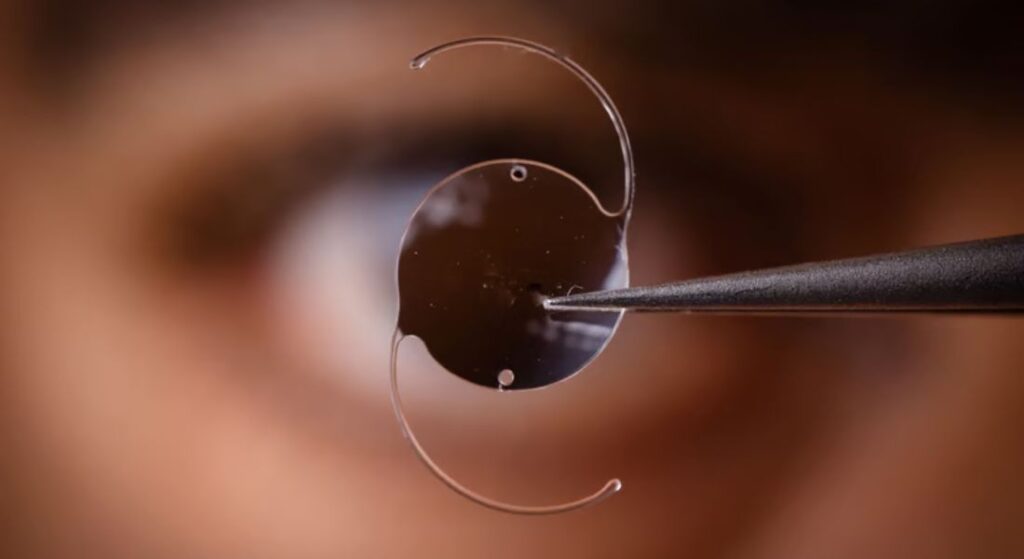
Toric ICL lenses are specifically designed to correct astigmatism in addition to myopia (short-sightedness) or hyperopia (long-sightedness). Astigmatism occurs when the cornea or natural lens has an irregular shape, causing blurred or distorted vision at all distances.
These lenses are carefully implanted behind the iris and in front of the natural lens, similar to standard ICLs, but they include a cylindrical component to counteract the uneven curvature of the eye. Precise alignment along a specific axis is critical to ensure that the cylindrical error is fully corrected and vision is optimised.
Experienced surgeons use advanced imaging and intraoperative guidance to position toric lenses accurately. When implanted correctly, toric ICLs can provide clear, stable vision for patients with astigmatism, significantly reducing the need for glasses or contact lenses while maintaining long-term visual quality.
How Toric Lenses Are Aligned
Toric ICL lenses are designed to correct astigmatism, which requires precise alignment for optimal visual results. The success of the procedure depends heavily on accurate placement of the lens along the correct meridian of the eye. Surgeons employ advanced imaging and careful planning to ensure that the toric lens is positioned exactly where it will provide the best correction. Proper alignment not only improves vision but also enhances overall patient satisfaction with the outcome.
- Use of Advanced Imaging: Surgeons utilise high-resolution imaging techniques to map the eye’s anatomy in detail. This helps determine the exact axis for lens placement. Accurate imaging ensures that the toric lens corrects astigmatism as intended.
- Reference Markers for Precision: Small reference markers are often applied to the eye to guide lens alignment during surgery. These markers serve as visual guides for the surgeon, allowing precise orientation. Proper positioning reduces the risk of residual refractive errors.
- Impact on Visual Clarity: When the toric lens is aligned correctly, patients experience sharper vision and more consistent focus. Residual astigmatism is minimised, improving both distance and near vision. Accurate alignment is especially important for activities requiring fine visual detail, such as reading or driving at night.
- Enhanced Night Vision and Comfort: Properly positioned toric lenses can reduce glare, halos, and other visual distortions commonly experienced at night. Patients often report improved visual comfort in low-light conditions. Correct alignment contributes to overall satisfaction and quality of life after surgery.
Accurate alignment of toric ICL lenses is essential for achieving the intended correction of astigmatism. Through the use of advanced imaging, reference markers, and meticulous surgical technique, surgeons can maximise visual clarity and reduce complications. This careful approach ensures patients enjoy improved vision, better night-time performance, and long-term satisfaction with their results.
High-Definition ICL Lenses
High-definition ICL lenses are designed with advanced optics to enhance visual quality, particularly contrast sensitivity and clarity. These lenses aim to reduce common visual disturbances such as glare, halos, or starbursts, which can be more noticeable in low-light conditions.
They are especially beneficial for activities that demand precise vision, such as night driving, reading in dim light, or detailed work that requires sharp focus. By improving the way light is transmitted through the eye, high-definition ICLs provide a crisper, more natural visual experience.
Patients with higher visual demands or those seeking the best possible optical performance may particularly benefit from these lenses. When implanted by an experienced surgeon, high-definition ICLs can offer long-lasting, high-quality vision with minimal compromise to the eye’s natural structures.
Lens Size and Eye Anatomy

Selecting the correct lens size is as crucial as choosing the right lens type for ICL surgery. An appropriately sized lens ensures that it sits securely in the eye, maintains optimal alignment, and provides stable, long-lasting vision correction.
Surgeons determine lens size by carefully measuring the anterior chamber depth, corneal diameter, and overall eye anatomy. Advanced imaging techniques allow for precise calculations, helping to minimise the risk of lens movement, increased intraocular pressure, or other complications.
A properly sized lens not only enhances safety but also maximises visual performance. By matching the lens to the patient’s unique eye structure, experienced surgeons can achieve the best possible clarity, comfort, and long-term stability.
Reversible and Adjustable Option
One of the key advantages of ICL lenses is that they are removable or replaceable if needed. Unlike permanent corneal procedures such as LASIK or PRK, ICLs offer the flexibility to adapt to future changes in vision or address unforeseen issues.
If a patient’s prescription changes significantly over time, or if complications arise, the lens can be safely exchanged or adjusted without affecting the natural cornea. This reversibility provides reassurance for patients seeking long-term vision correction.
Because of this flexibility, ICLs are a particularly attractive option for individuals who want a reliable, adjustable solution. Patients benefit from precise, stable vision while retaining the ability to modify their treatment if their visual needs evolve.
Lifestyle Considerations
When planning ICL surgery, surgeons carefully consider a patient’s lifestyle to optimise lens selection and visual outcomes. Different lens types can offer advantages depending on daily activities, visual demands, and personal preferences.
For example, patients who frequently drive at night may benefit from lenses designed to reduce halos, glare, or starbursts, improving comfort and safety in low-light conditions. Similarly, individuals who spend long hours on computers or require strong intermediate vision may receive tailored guidance on lens options that support these specific tasks.
By integrating lifestyle factors into the decision-making process, surgeons can ensure that patients achieve not only clear distance vision but also functional, high-quality vision for everyday activities. This personalised approach helps maximise satisfaction and long-term visual performance.
Age and Prescription Stability
ICL candidates should have a stable prescription for at least 12 months before undergoing surgery. Stability ensures that the implanted lens provides long-lasting, accurate vision correction without the need for frequent adjustments.
Younger patients with high myopia often make ideal candidates, as their eye anatomy and lens health are suitable for long-term implantation. Older patients may require additional evaluation to assess early lens changes, presbyopia, or other age-related factors that could influence lens choice and visual outcomes.
By considering both age and prescription stability, surgeons can tailor lens selection to each patient’s needs. This personalised approach helps maximise long-term clarity, comfort, and overall satisfaction with the procedure.
Managing Astigmatism with Toric Lenses
Astigmatism can cause blurred or distorted vision, making clear sight a challenge for those affected. Toric ICL lenses are specifically designed to correct this condition, offering a tailored solution for patients across a spectrum of severity. By using precise measurements and advanced imaging, surgeons can customise the lens to each individual’s eye. This personalised approach ensures that patients achieve sharper vision and improved visual comfort.
- Correction Across Different Astigmatism Levels: Toric lenses can address mild, moderate, or high astigmatic errors depending on the patient’s prescription. This versatility allows surgeons to provide effective correction for a wide range of patients. Each lens is chosen to match the exact degree of astigmatism, ensuring optimal results.
- Precision-Based Lens Selection: Detailed pre-operative measurements, including corneal curvature and eye anatomy, guide the selection of the appropriate toric lens. Accurate planning ensures the lens provides maximum correction. This step is crucial for achieving stable and predictable vision post-surgery.
- Customised Cylinder Correction: Advanced imaging allows surgeons to determine the exact cylindrical power needed for each eye. Customising the cylinder correction ensures that astigmatism is minimised effectively. The result is clearer, more natural vision across all distances.
- Enhanced Visual Outcomes: Properly managed astigmatism with toric ICLs reduces common visual disturbances such as blur or ghosting. Patients often experience improved contrast sensitivity and sharper vision in low-light conditions. This contributes to overall satisfaction and quality of life after surgery.
Managing astigmatism with toric lenses combines precise measurement, advanced imaging, and tailored surgical planning. This approach allows patients to achieve significant visual improvement, regardless of the severity of their astigmatism. With careful planning and expert execution, toric ICLs provide reliable, long-lasting correction and enhanced visual comfort.
Bilateral vs Unilateral Correction
ICL lenses are typically implanted in both eyes to ensure balanced vision and proper depth perception. Treating both eyes simultaneously helps achieve symmetry in visual acuity and reduces the likelihood of eye strain or imbalance.
In certain situations, however, only one eye may require correction. For example, if one eye already has good vision or a minor refractive error, the surgeon can customise the lens choice and implantation plan accordingly.
Your surgeon will carefully evaluate your eyes and discuss the best approach to achieve optimal binocular vision. This personalised planning ensures clear, comfortable vision in daily life while maximising the benefits of ICL surgery.
Pre-Operative Measurements
Before selecting an ICL lens, your surgeon performs a series of detailed eye measurements to ensure a precise fit and optimal visual outcomes. These assessments typically include corneal curvature, anterior chamber depth, pupil size, and lens power calculations.
Each measurement plays a critical role in determining the most suitable lens type and size for your eyes. Accurate data helps minimise the risk of lens movement, intraocular pressure issues, or other complications after surgery.
By carefully analysing these parameters, surgeons can customise the procedure to each patient’s unique anatomy and visual needs. This thorough pre-operative planning is key to achieving stable, long-lasting, and high-quality vision correction.
Compatibility With Previous Eye Surgery
Patients who have previously undergone LASIK or PRK can often still be candidates for ICL surgery, but careful evaluation is essential. Prior laser procedures can alter corneal shape and thickness, which must be taken into account when planning lens implantation.
Lens selection is tailored to accommodate these changes, ensuring that the ICL fits securely and provides the best possible visual correction. Depending on the patient’s residual refractive error, surgeons may recommend standard or toric lenses to optimise vision.
By assessing previous surgical outcomes and adjusting the approach accordingly, experienced surgeons can safely deliver excellent visual results. This personalised planning helps maximise clarity and long-term stability, even in eyes that have undergone prior refractive surgery.
Correcting High Myopia
ICL lenses are especially effective for patients with high myopia, where conventional procedures like LASIK or PRK may not provide safe or reliable correction. By implanting the lens behind the iris and in front of the natural lens, ICL surgery can deliver sharp, high-quality distance vision without removing or reshaping corneal tissue.
These lenses are designed to accommodate a wide range of prescriptions, including extreme levels of myopia that would otherwise be difficult to treat. Advanced optics and precise surgical planning allow for predictable, stable outcomes, even in complex cases.
For patients with high myopia, ICL surgery offers a long-term solution that combines safety, clarity, and flexibility. With proper lens selection and expert implantation, patients can enjoy improved vision while preserving the integrity of their natural eye structures.
Correcting Hyperopia
Patients with hyperopia (long-sightedness) can also benefit from ICL lenses, which help focus light precisely onto the retina for clear distance vision. By bypassing corneal reshaping, these lenses provide an effective solution for patients who may not be ideal candidates for laser surgery.
Lens selection for hyperopia takes into account both the patient’s eye anatomy and the strength of their prescription. This ensures the lens sits correctly in the eye and provides sharp, comfortable vision without compromising long-term eye health.
Hyperopic ICL lenses are custom-made for each patient, allowing surgeons to achieve optimal visual outcomes tailored to individual needs. When implanted by an experienced surgeon, these lenses can provide stable, high-quality vision and reduce dependence on glasses or contact lenses.
Lens Material and Biocompatibility
ICL lenses are made from collamer, a biocompatible material that works harmoniously with the eye’s natural tissues. This high compatibility reduces the risk of inflammation, immune reactions, or lens rejection, making the procedure safer and more predictable.
Collamer is also highly durable and maintains optical clarity over many years. Unlike some other lens materials, it resists clouding or degradation, ensuring that patients enjoy stable, high-quality vision long-term.
By combining biocompatibility with advanced optical design, ICL lenses provide a reliable and lasting solution for correcting refractive errors. When implanted correctly by an experienced surgeon, they offer both excellent visual outcomes and long-term safety.
Reducing Visual Disturbances
Modern ICL lens designs are specifically optimised to minimise visual disturbances such as glare, halos, or starbursts, which can be particularly noticeable in low-light conditions. These improvements help patients achieve clearer, more comfortable vision, especially at night.
Surgeons carefully select the lens type and design based on factors such as pupil size, lighting conditions, and the patient’s daily visual requirements. This personalised approach ensures that the lens performs optimally for the individual’s eyes and lifestyle.
By addressing potential visual disturbances during the planning and lens selection process, experienced surgeons can enhance post-operative comfort and overall patient satisfaction. The result is sharper, more natural vision with fewer unwanted visual side effects.
Customising for Night Vision

Certain ICL lenses are designed with optics that specifically improve night vision and reduce halo effects around lights. This is particularly beneficial for patients who frequently drive at night or work in low-light environments, where glare or starbursts can impact safety and visual comfort.
By enhancing contrast sensitivity, these specialised lenses help patients see more clearly in dim conditions, making everyday activities easier and more comfortable. The improved visual performance can significantly boost confidence for night-time tasks.
Surgeons take these factors into account when recommending the most suitable lens option. By considering lifestyle needs alongside anatomical measurements, they can tailor the lens selection to provide optimal night vision without compromising overall visual clarity.
Long-Term Stability
One of the key advantages of ICL surgery is its long-term stability, offering patients lasting vision correction with minimal ongoing maintenance. Unlike corneal procedures such as LASIK, ICL implantation does not alter the cornea or remove tissue, preserving the eye’s natural structure. Careful planning and personalised lens selection ensure that visual clarity remains consistent over time. This combination of precision and preservation makes ICL a reliable solution for many patients seeking permanent correction.
- Durable Vision Correction: ICL lenses are designed to provide long-lasting refractive correction, maintaining clear vision for many years. Unlike temporary solutions like contact lenses, they offer a stable alternative that reduces dependence on external aids. Patients can enjoy consistent visual performance with minimal intervention.
- Preservation of Natural Eye Structures: Since the cornea and natural lens remain untouched, the structural integrity of the eye is maintained. This reduces the risk of complications associated with corneal reshaping procedures. Preserving the eye’s anatomy supports both safety and long-term ocular health.
- Personalised Lens Selection: Surgeons carefully tailor the ICL to the patient’s specific eye measurements and prescription. This ensures that the lens fits precisely and performs optimally. Customised selection helps maintain clarity and stability even as the eyes naturally age.
- Minimal Maintenance Requirements: Once implanted, ICL lenses require very little ongoing care beyond regular eye check-ups. Patients can rely on the lens to provide consistent vision without daily attention. This low-maintenance aspect adds convenience and reassurance for long-term satisfaction.
The long-term stability of ICL lenses makes them a highly effective option for lasting vision correction. By preserving natural eye structures and using personalised lens planning, surgeons can ensure both safety and clarity over time. Patients benefit from reliable, low-maintenance vision improvement that supports an active and independent lifestyle for many years.
FAQs:
1. What types of ICL lenses are available?
The main types of ICL lenses are standard lenses for myopia and hyperopia, toric lenses for astigmatism, and high-definition lenses designed for enhanced visual clarity and reduced visual disturbances.
2. How do surgeons choose the right ICL lens?
Surgeons select the lens based on a combination of factors including prescription strength, eye anatomy, anterior chamber depth, pupil size, and lifestyle needs to ensure optimal clarity, comfort, and long-term stability.
3. What is the difference between standard and toric ICL lenses?
Standard ICLs correct spherical errors like myopia or hyperopia, while toric ICLs correct astigmatism in addition to myopia or hyperopia, requiring precise alignment along a specific axis for effective vision correction.
4. How are toric lenses aligned for astigmatism?
Toric lenses are aligned using advanced imaging, reference markers, and intraoperative guidance to ensure the cylindrical error is corrected accurately, enhancing visual clarity and night vision performance.
5. Can ICL lenses be adjusted or replaced in the future?
Yes, ICL lenses are removable or replaceable, allowing surgeons to adjust for prescription changes or address complications without altering the natural cornea.
6. Are ICL lenses suitable for patients with previous LASIK or PRK surgery?
Many patients who have had prior corneal laser surgery can still undergo ICL implantation, but careful evaluation and customised lens selection are required to ensure a secure fit and optimal vision.
7. Who is an ideal candidate for ICL surgery?
Ideal candidates are adults with stable prescriptions for at least 12 months, healthy eye anatomy, high myopia or hyperopia, or astigmatism, and those seeking long-term, reversible vision correction.
8. How does lifestyle affect ICL lens selection?
Lifestyle factors such as night driving, screen use, or hobbies requiring sharp intermediate vision influence lens choice, helping optimise both daytime and night-time visual performance.
9. What are the benefits of high-definition ICL lenses?
High-definition lenses improve contrast sensitivity, reduce glare, halos, and starbursts, and provide a crisper, more natural visual experience, particularly in low-light conditions or visually demanding tasks.
10. How long do ICL lenses provide stable vision?
ICL lenses offer long-term stability without altering the cornea, maintaining clear, reliable vision for many years with minimal ongoing maintenance beyond regular eye check-ups.
Final Thoughts: Choosing the Right ICL Lens for Your Eyes
Selecting the right ICL lens is a highly personalised process that balances your prescription, eye anatomy, lifestyle, and long-term visual goals. From standard lenses for myopia and hyperopia to toric lenses for astigmatism and high-definition options for enhanced clarity, each lens type is designed to provide sharp, stable vision while preserving the natural structures of your eye. Advanced imaging, careful measurements, and expert surgical planning ensure precise lens selection and alignment, maximising both safety and visual outcomes.
ICL lenses also offer flexibility, as they can be adjusted or replaced if your vision changes over time, making them a reliable and long-term solution for refractive errors. By considering factors such as night vision, lifestyle needs, and previous eye surgeries, experienced surgeons can tailor the procedure for optimal comfort and performance. If you’re considering ICL surgery in London, you can get in touch with us at London Cataract Centre to explore your lens options and receive personalised guidance for your vision correction journey.
References:
- Del Risco, N.E., Talbot, C.L., Moin, K.A., Manion, G.N., Brown, A.H., Walker, S.M., Zhong, P.-S., Zhang, H., Hoopes, P.C. and Moshirfar, M., 2024. Visual outcomes of cataract surgery in patients with previous history of implantable collamer lens. Journal of Clinical Medicine, 13(15), pp.4292–4305. Available at: https://www.mdpi.com/2077-0383/13/15/4292
- Moshirfar, M., Giblin, M., Churgin, D.S., Santiago‑Caban, L., Kang, P. and Hoopes, P.C., 2021. Toric implantable collamer lens for the treatment of myopic astigmatism. Journal of Cataract and Refractive Surgery, 47(5), pp.620–627. Available at: https://pubmed.ncbi.nlm.nih.gov/34262249/
- Goes, S. and Delbeke, H., 2022. Posterior chamber toric implantable collamer lenses versus LASIK for myopia and astigmatism: Systematic review. Journal of Cataract and Refractive Surgery, 48(10), pp.1204–1210. Available at: https://pubmed.ncbi.nlm.nih.gov/36179351/
- Wei, Q., Zhou, X., Chang, W., Jiang, R., Yu, Z. and Zhou, X., 2023. Retinal and choroidal changes following implantable collamer lens V4c implantation in high myopia patients: A 1‑year follow‑up study. Diagnostics, 13(19), pp.3097–3111. Available at: https://www.mdpi.com/2075-4418/13/19/3097
- Hirabayashi, M., Nasser, T. and Parkhurst, G., 2025. Clinical outcomes of implantable collamer lenses in eyes with different anterior chamber depths. Parkhurst NuVision clinical data. Available at: https://pmc.ncbi.nlm.nih.gov/articles/PMC12206414/