


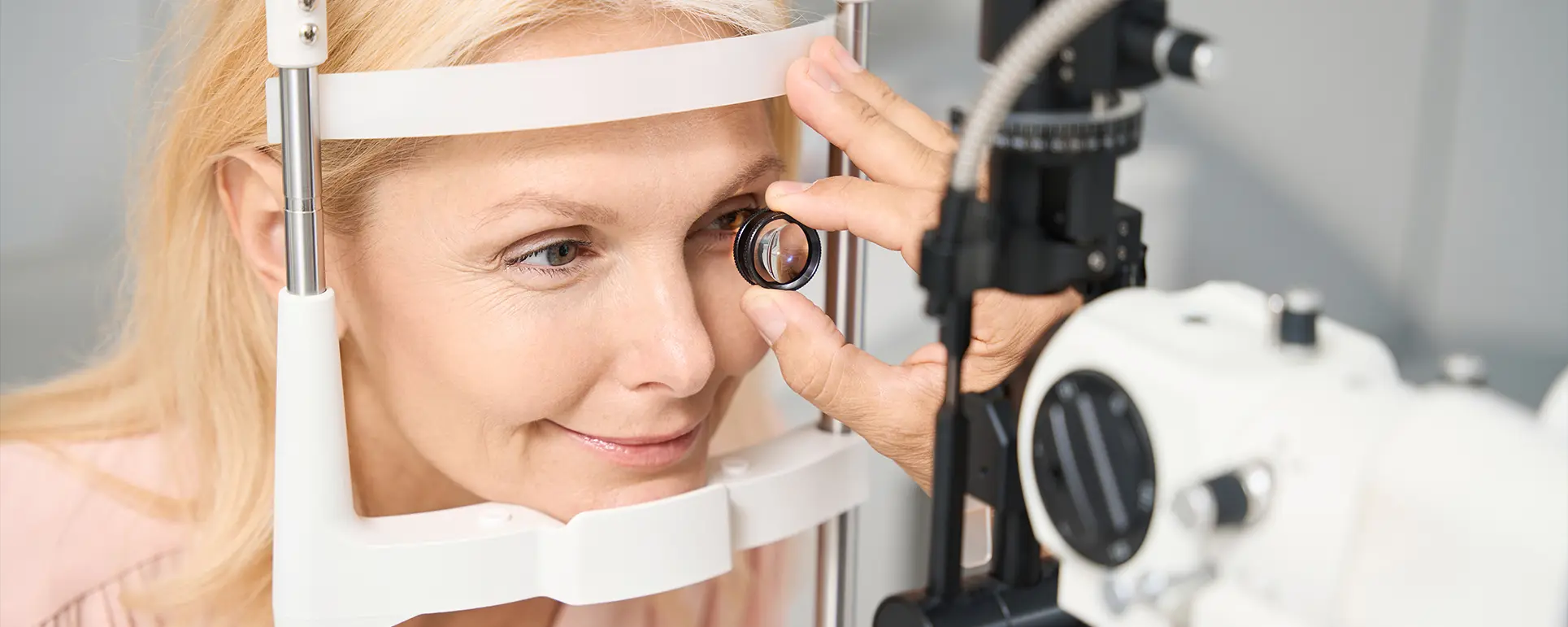
Choosing the right lens implant for cataract surgery or refractive lens exchange is a decision that can shape how comfortably and effortlessly you see for the rest of your life. If you’re someone who values natural vision above everything clarity, contrast, depth, comfort and a visual experience that feels intuitive then understanding the differences between monofocal and EDOF lenses becomes crucial. Many patients say that spectacle freedom is appealing, but not at the expense of softness, detail, and ease. The question becomes: which lens gives a more “natural” view of the world?
Monofocal lenses have long been considered the gold standard for pure optical clarity. They deliver crisp, high-contrast distance vision with minimal optical side effects. EDOF (Extended Depth of Focus) lenses, on the other hand, aim to stretch your range so you can see further into intermediate distances with less reliance on glasses, all while preserving a smooth, natural visual feel. Both lenses have strengths, limitations, and distinct personalities. The real challenge is matching the right lens to your lifestyle and expectations.
What Does “Natural Vision” Really Mean?
Before comparing lenses, you have to define what you mean by “natural.” This term varies wildly between patients. For some, natural means high contrast and sharpness at distance. For others, it means seamless transitions between ranges without having to think about where the focal point is. You might associate natural vision with comfort minimal glare, no halos, and a visual field that feels relaxed rather than forced.
In practice, natural vision often includes:
- Effortless focus at the distances you use most in daily life.
- Good depth perception and spatial awareness for safe and confident movement.
- Strong contrast sensitivity, helping you distinguish details even in challenging lighting.
- Comfortable vision in low-light settings, such as evening driving or dim interiors.
- Minimal optical artefacts, including glare, halos, or starbursts.
- The ability to judge distance intuitively, supporting natural coordination and mobility.
- A visual experience that feels unforced, not artificial or “engineered.”
Both monofocal and EDOF (Extended Depth of Focus) lenses can provide natural vision, but they achieve it in different ways. Understanding your priorities helps guide the choice that best fits your lifestyle and visual needs.
How Monofocal Lenses Work

A monofocal lens is designed with one point of focus. Most patients choose distance vision, meaning you see sharply far away but need glasses for reading and sometimes intermediate tasks like computer work.
Monofocals are simple, optically pure implants. They don’t split light or stretch your depth of field artificially. As a result, they often provide the cleanest level of contrast sensitivity a key component of natural vision. This is one of the reasons monofocals are considered the safest, most predictable option for those who prioritise clarity over spectacle freedom.
With monofocals, your brain doesn’t need to adapt to new optical patterns. Instead, it receives light in a way that closely resembles the eye’s natural focusing system before cataracts began to interfere. This makes adaptation easy and side effects minimal.
How EDOF Lenses Work
EDOF (Extended Depth of Focus) lenses are designed to extend your range of vision by creating a continuous focal zone, rather than splitting light into multiple distinct points like traditional multifocal lenses. This provides clear distance and intermediate vision, with some functional near vision depending on the specific lens model. Unlike multifocal lenses, EDOFs generally reduce glare and halos, offering a more comfortable visual experience.
EDOF lenses are particularly useful for everyday tasks:
- Driving – They provide clear distance vision for road signs and traffic, while also maintaining intermediate focus on the dashboard, mirrors, and pedestrians.
- Walking outdoors – EDOFs support depth perception and spatial awareness, making it easier to navigate stairs, curbs, or uneven surfaces safely.
- Using a computer or digital devices – They reduce eye strain for prolonged screen use by offering smooth intermediate focus without needing constant head or eye adjustments.
- Cooking and meal preparation – Allows you to switch between reading recipes, handling ingredients, and checking stovetop controls without reaching for glasses.
- Shopping – You can read price tags, labels, and signs while still noticing your surroundings, improving convenience and independence.
- Seeing faces at conversational distance – Enhances social interactions by allowing comfortable, clear vision for eye contact and facial expressions.
EDOF lenses offer a middle ground between monofocal and multifocal lenses, giving patients some degree of spectacle independence while minimising common side effects like halos, glare, or visual discomfort. They are particularly appealing for people seeking a natural, smooth, and comfortable range of vision in daily life.
Which Lens Gives Better Contrast?
Contrast sensitivity your ability to see fine details in dim or low-contrast environments is one of the biggest contributors to natural vision. It affects how well you drive at night, how comfortably you read signs in low light, and how confidently you move in dim spaces.
Monofocal lenses nearly always outperform EDOF lenses in contrast. Because they don’t manipulate light to extend range, they preserve more optical purity. The image feels crisp, clean, and high-definition. If you value detail in shadows or work regularly in low light, this difference matters.
EDOF lenses maintain relatively high contrast, and far better than multifocals, but they do involve a trade-off. The extended range uses optical engineering that subtly softens contrast. Many patients never notice this difference because modern EDOF technology is extremely refined. But if contrast is your top priority, monofocals may feel more natural.
Depth of Focus: Where the Two Lenses Differ Most
When choosing a lens for cataract or refractive surgery, understanding depth of focus is key. This determines how much of your visual range from distance to near appears clear without needing glasses. Different lens types offer varying focal ranges, so knowing how they work helps you match your vision to your daily activities.
Monofocal lenses:
- Distance is crisp – Objects far away are clear and sharp, making them ideal for driving or watching TV.
- Intermediate vision is soft – Tasks like computer work, cooking, or reading a menu appear slightly blurred without glasses.
- Near vision requires glasses – Reading, phone use, and other close-up tasks still need additional correction.
This narrow depth of focus can feel natural if your main priority is distance vision, but it may feel restrictive if you frequently perform intermediate tasks and prefer not to wear reading glasses.
EDOF lenses:
- Expanded depth of focus – Provides clear vision from distance through mid-range tasks, reducing the need for multiple focal adjustments.
- Smooth transitions – Vision shifts seamlessly between distances without noticeable focal jumps, making everyday activities more comfortable.
- Natural, intuitive vision – Many patients describe it as effortless because they don’t have to think about switching between focal points.
- Enhanced daily functionality – Reading menus, using tablets, shopping, cooking, and engaging in conversation all become easier and more comfortable.
If your daily life involves frequent intermediate tasks, EDOF lenses may feel more aligned with how your eyes naturally worked before needing surgery, offering a practical balance between clarity and comfort.
Everyday Activities: How Each Lens Performs
When choosing between monofocal and EDOF lenses, it helps to think about how each lens performs in real-life situations rather than just optical measurements. Everyday activities like reading, working on a computer, cooking, or driving highlight the practical differences in vision each lens provides. Understanding these differences can guide you to the option that best fits your lifestyle.
Distance Vision: Monofocals provide exceptional long-distance clarity. Road signs, landscapes, TV screens, and driving tend to look crisp and contrast-rich. EDOFs also offer strong distance vision, though some people notice slightly less sharpness compared to monofocals.
Intermediate Vision: This is where EDOF lenses shine. Tasks like cooking, using a laptop, grocery shopping, and recognising faces at conversation distance feel effortless. With monofocals, these tasks may require leaning in or using glasses.
Near Vision: Monofocals require reading glasses for almost all near tasks. EDOFs may allow you to perform some near activities without glasses, though you may still need reading glasses for fine print.
Low-Light Activities: Monofocals typically perform better in dim environments. EDOFs still perform well, but some people notice softer contrast in poorly lit spaces.
Driving at Night: Monofocals usually provide the most confidence at night because glare and halos are minimal. EDOFs produce fewer halos than multifocals, but they can still appear in some lighting conditions. Most patients adapt well and feel comfortable driving with EDOFs.
Halos and Glare: What You Can Expect
Halos and glare are common concerns for anyone considering a premium lens. They occur when the lens design interacts with bright lights in certain conditions. Monofocals have the lowest incidence of halos and glare. Their simple optics create fewer artefacts and generally feel the most natural in night-time settings.
EDOF lenses produce slightly more glare and halos than monofocals, but far less than multifocals. Most patients find the level acceptable and easy to adapt to. Many describe the glare as mild and fading within the first few months.
If you drive frequently at night and want the most natural visual comfort, monofocals may have the edge. However, if intermediate range is important, EDOFs often strike the better overall balance.
Visual “Relaxation”: An Under-Discussed Feature of Natural Vision
Natural vision isn’t just about clarity it’s about effortlessness. You shouldn’t feel like you have to “work” to focus. Many patients say the most natural lens is the one that allows them to forget they even have an implant. Monofocals provide this relaxed distance vision easily. Many people describe the experience as calming and stable.
EDOF lenses provide relaxed intermediate vision because you don’t have to constantly adjust your position or wear glasses. The seamless flow between distances often feels intuitive and stress-free. If your day involves lots of mid-range tasks, an EDOF may feel more natural simply because you won’t need to adjust your behaviour to see comfortably.
Which Lens Feels More Like Your Pre-Cataract Eyes?
This is one of the most important considerations when choosing a lens. Before cataracts developed, your natural lens offered a wide depth of focus and excellent contrast. While no artificial lens can perfectly replicate youthful vision, some options come closer than others.
- EDOF lenses – Mimic the natural depth of focus more effectively than monofocals. They provide a smooth, continuous range of vision with minimal visual interruption, making everyday tasks feel effortless.
- Monofocal lenses – Typically offer superior contrast and crispness, especially for distance vision. If your memory of your pre-cataract vision involves sharp details, high-definition contrast, and deep shadows, monofocals may feel more familiar.
Your choice depends on which aspect of natural vision you value most:
- Crisp, high-definition distance vision: monofocal lenses are likely to feel closest to your original eyesight.
- Smooth, uninterrupted vision across distances without glasses: EDOF lenses offer a more fluid, glasses-free experience.
Understanding these differences helps you set realistic expectations and choose the lens that best aligns with your lifestyle and visual priorities.
Lifestyle Factors: Matching the Lens to the Person
When deciding between EDOF and monofocal lenses, your daily activities play a key role. Monofocal lenses may be better if you drive often at night, need the highest contrast sensitivity, or are comfortable using reading glasses. They also suit those who prioritise long-distance clarity or enjoy hobbies requiring sharp focus, like bird-watching or sports.
EDOF lenses, on the other hand, may suit people who spend a lot of time on computers or reading small text such as menus and labels. They provide a wider range of vision without needing full multifocals and are ideal for those who value convenience and minimal visual disruption.
EDOF lenses offer vision that feels smooth and intuitive throughout the day, supporting a variety of tasks without constant reliance on glasses. This can be especially useful for active lifestyles where frequent visual changes are needed.
Ultimately, your lifestyle determines what “natural” vision means for you. Choosing the lens that aligns with your daily routine ensures comfort, clarity, and ease in everyday life.
Patient Satisfaction: What Real People Report
Patient satisfaction data consistently shows high approval rates for both lens types. Monofocals receive excellent satisfaction because they deliver predictable clarity. People who choose monofocals rarely experience significant visual side effects.
EDOF lenses also receive strong satisfaction scores, especially from patients who want more freedom from glasses. Most people describe EDOF vision as crisp, comfortable, and effortless during the day. Satisfaction tends to be highest in those who understand the trade-off: slightly reduced contrast in exchange for a broader visual range. Those who regret their choice usually feel they expected something different, highlighting the importance of aligning your choice with your goals.
Visual Personality: The Hidden Factor That Determines Which Lens You’ll Prefer
Everyone has a unique “visual personality” that affects how they perceive the world. Some people are highly detail-oriented and sensitive to contrast, while others prioritise fluidity and comfort. How easily you adapt to visual artefacts also plays a role in what feels natural.
Your visual personality directly influences which lens will feel most comfortable. People who are bothered by starbursts, reflections, or glare may find monofocal lenses more relaxing. Conversely, if you dislike constantly taking glasses on and off, EDOF lenses can feel transformative. They provide a seamless visual experience that suits an adaptable, convenience-focused lifestyle.
Understanding your own visual preferences and sensitivities is crucial before choosing a lens. It ensures your vision aligns with your comfort, lifestyle, and daily needs.
Mix-and-Match Approaches: A Hybrid Option
Some patients opt for a hybrid approach, combining one monofocal lens with one EDOF lens usually placing the monofocal in the dominant eye and the EDOF in the non-dominant eye. This strategy aims to provide a balanced blend of crisp contrast and extended depth of focus, giving patients the benefits of both lens types.
Key points about hybrid lens strategies:
- Enhanced overall vision – Combines the sharp distance clarity of a monofocal with the smooth intermediate range of an EDOF lens.
- Potential for reduced glasses dependence – Many patients can perform everyday tasks without constantly switching between lenses or using reading glasses.
- Requires careful planning – Not every patient’s brain adapts comfortably to mixed inputs; the dominant eye should be carefully chosen to optimise visual comfort.
- Close follow-up is important – Surgeons may recommend trial simulations or detailed pre-operative assessments to ensure the hybrid approach will work for your lifestyle.
When executed properly, a hybrid strategy can offer a practical middle ground, delivering both clarity and functional freedom for a wide range of daily activities.
The Role of Pupil Size and Eye Anatomy
When choosing an intraocular lens, your daily habits and visual priorities are important but so is your eye’s natural anatomy. Every eye is unique, and factors such as pupil size, corneal shape, and existing refractive errors can influence how well a lens performs. Understanding these anatomical considerations helps your surgeon select the lens that will deliver the most natural, comfortable vision for you.
- Pupil size – Larger pupils can increase the likelihood of night-time glare or halos, particularly with certain lens types.
- Astigmatism and corneal shape – Irregular astigmatism or unusual corneal contours can affect how well you adapt to EDOF lenses and influence optical clarity.
- Overall eye anatomy – Factors such as axial length, lens position, and corneal curvature determine which lens type will provide the most stable and comfortable vision.
Your surgeon will carefully analyse these factors during pre-operative assessment. Achieving the most natural vision comes from matching the lens not just to your lifestyle, but also to your unique biological characteristics. This personalised approach helps maximise comfort, clarity, and overall satisfaction after surgery.
What If You Have Astigmatism?
If you have astigmatism, your lens choice needs a little extra planning. You’ll require a toric version of either a monofocal or an EDOF lens to correct the uneven curvature of your eye and sharpen vision properly.
The reassuring part is that both monofocal and EDOF lenses are available in toric designs. When positioned correctly, they can deliver very precise, reliable results and significantly reduce dependence on glasses.
Monofocal toric lenses are known for offering the highest contrast and crispness. They tend to produce very sharp vision at one set distance, which many patients feel looks the most natural.
EDOF toric lenses, on the other hand, provide a broader range of vision. The trade-off is slightly softer contrast, so your final choice comes down to whether visual clarity or visual freedom matters more to you.
Understanding the Trade-Offs Clearly
Every lens choice comes with compromises. No artificial lens can perfectly recreate the clarity, flexibility, and depth of youthful natural vision. Cataract surgery isn’t about finding a “perfect” lens it’s about deciding which aspects of vision matter most to you and which trade-offs you’re comfortable living with.
Monofocals = maximum clarity + minimal visual disturbances + no depth range
Monofocal lenses provide the sharpest, highest-contrast vision at a single distance, making them the most optically precise option. However, because they focus at just one point, you will usually need glasses for reading or intermediate tasks.
EDOFs = extended range + fewer glasses + slightly reduced contrast
EDOF lenses offer a smoother range of vision from distance to intermediate, which can reduce your reliance on glasses for everyday activities. The trade-off is a small reduction in contrast, particularly in low-light conditions.
If you accept and understand these differences, you are far more likely to be happy with your final decision.
Which Lens Feels More Natural Overall?
If you think of natural vision as crisp clarity, strong contrast, and visual simplicity, monofocal lenses often feel the most natural. They deliver sharp, predictable vision without much adjustment. If, instead, natural vision means ease, flexibility, and smoother transitions between distances, EDOF lenses may feel more intuitive. Many people enjoy not constantly switching between glasses for different tasks.
There isn’t a single right answer. What feels natural varies from person to person and is shaped by habits, expectations, and daily visual demands. Ultimately, the most natural-feeling lens is the one that reduces visual effort in the parts of life that matter most to you.
FAQs:
1. What is the main difference between monofocal and EDOF lenses?
The main difference lies in how much of your visual range each lens covers. Monofocal lenses focus light at a single distance, most commonly for clear distance vision, which means glasses are usually needed for reading and intermediate tasks. EDOF lenses, or Extended Depth of Focus lenses, are designed to stretch vision smoothly from distance into intermediate ranges, reducing dependence on glasses for everyday activities. While monofocals prioritise maximum sharpness and contrast at one distance, EDOFs aim to provide a more flexible and functional range of vision with minimal visual disruption.
2. Which lens option provides the most “natural” vision?
Natural vision means different things to different people, which is why there is no single correct answer. For some patients, natural vision means crisp clarity, strong contrast, and minimal visual artefacts, which often makes monofocal lenses feel more familiar and comfortable. For others, natural vision means effortless transitions between distances without constantly reaching for glasses, making EDOF lenses feel more intuitive. The most natural lens is the one that best matches how you use your eyes in daily life.
3. Will I still need glasses after cataract surgery with these lenses?
With monofocal lenses, most people will need glasses for reading and often for intermediate tasks such as computer use. Distance vision is usually very clear without glasses. With EDOF lenses, many patients can manage distance and intermediate activities without glasses, although reading fine print may still require additional correction. Neither option guarantees complete freedom from glasses, but EDOF lenses generally reduce reliance on them more than monofocals.
4. Are EDOF lenses the same as multifocal lenses?
EDOF lenses are not the same as traditional multifocal lenses. Multifocal lenses split light into several distinct focal points, which can increase the likelihood of glare and halos. EDOF lenses instead create a continuous focal zone, allowing smoother transitions between distances. This design generally results in fewer visual disturbances while still offering an extended range of vision, making EDOF lenses feel more comfortable and natural for many patients.
5. Which lens performs better for night driving?
Monofocal lenses tend to perform best for night driving because they preserve contrast and produce very few visual artefacts such as glare or halos. EDOF lenses perform well for most people, but some may notice mild halos or softer contrast in low-light conditions, especially during the early adaptation period. Patients who frequently drive at night or are particularly sensitive to visual disturbances often feel more confident with monofocal lenses.
6. How long does it take to adapt to monofocal or EDOF lenses?
Adaptation with monofocal lenses is usually very quick because the optics are simple and predictable. Most patients feel comfortable within days or weeks. EDOF lenses may take slightly longer to adapt to, as the brain learns to process the extended range of focus. For most people, this adjustment period is smooth, and vision continues to improve over the first few weeks to months after surgery.
7. Do EDOF lenses reduce contrast compared to monofocal lenses?
Yes, there is typically a small reduction in contrast with EDOF lenses compared to monofocals. This is due to the optical design required to extend depth of focus. However, modern EDOF lenses maintain much better contrast than traditional multifocal lenses, and many patients never notice the difference in daily life. If contrast sensitivity is a top priority, particularly in low-light environments, monofocal lenses may feel more natural.
8. Can people with astigmatism choose either lens type?
People with astigmatism can choose both monofocal and EDOF lenses, provided they use toric versions designed to correct the uneven curvature of the cornea. When properly aligned, toric lenses offer excellent visual outcomes with either lens type. The choice between monofocal toric and EDOF toric lenses depends on whether the patient prioritises maximum clarity at one distance or a broader, more flexible range of vision.
9. Is it possible to combine a monofocal lens in one eye and an EDOF lens in the other?
Yes, some patients choose a hybrid approach, typically placing a monofocal lens in the dominant eye and an EDOF lens in the non-dominant eye. This strategy aims to balance sharp distance vision with extended intermediate focus. While many patients adapt well to this combination, it requires careful planning and assessment to ensure the brain can comfortably integrate the two visual inputs.
10. How do I decide which lens is right for me?
The best lens choice depends on your lifestyle, visual priorities, and personal tolerance for visual trade-offs. If you value sharp distance vision, high contrast, and minimal visual disturbances, monofocal lenses may suit you best. If your daily life involves frequent intermediate tasks and you prefer fewer glasses, EDOF lenses may feel more natural. A detailed discussion with your surgeon, considering your eye anatomy and expectations, is essential to making the right decision.
Final Thought: Choosing the Lens That Feels Most Natural for You
Choosing between monofocal and EDOF lenses is not about finding a universally “better” option. It’s about understanding how you use your eyes every day and deciding which aspects of vision matter most to you. Some people value crisp, high-contrast distance vision and the visual calm that comes with optical simplicity. Others prefer a wider, more flexible range that reduces dependence on glasses and allows vision to flow more naturally through daily tasks.
What matters most is clarity around the trade-offs. Monofocal lenses prioritise contrast and precision at a single focal point. EDOF lenses offer a smoother depth of focus and greater convenience, with only a small compromise in contrast for most people. When expectations match the lens design, satisfaction is usually very high.
A detailed consultation is essential. Your eye anatomy, pupil size, astigmatism, lifestyle, and visual preferences all play a role in determining which lens will feel the most natural for you. With the right guidance, it becomes much easier to choose a lens that supports comfortable, confident vision for years to come. If you’re considering EDOF lenses in London, you can contact us at the London Cataract Centre to book a consultation with one of our specialists.
References:
1. Kanclerz, P. and et al. (2020) Extended Depth-of-Field Intraocular Lenses: An Update, Journal of Ophthalmology. https://pmc.ncbi.nlm.nih.gov/articles/PMC7299221/
2. Park, E.S.Y., Kim, D.Y. et al. (2025) Comparative Outcomes of the Next-Generation EDOF and Enhanced Monofocal IOL in Cataract Surgery. https://pmc.ncbi.nlm.nih.gov/articles/PMC12295884/
3. Nivean, M., et al. (2019) Performance of a New-Generation EDOF IOL: Visual Results, Contrast, and Satisfaction, Journal of Ophthalmology & Visual Science. https://www.sciencedirect.com/science/article/pii/S2162098923005108
4. Kanclerz, P. (2020) Extended Depth-of-Field Intraocular Lenses: An Update, Progress in Retinal and Eye Research. https://www.sciencedirect.com/science/article/pii/S2162098923002001
5. Kim, D.Y., Park, E.S.Y. et al. (2025) Comparative Outcomes of Next-Generation EDOF vs Enhanced Monofocal IOLs, Journal of Clinical Medicine, 14(14):4967. https://www.mdpi.com/2077-0383/14/14/4967