


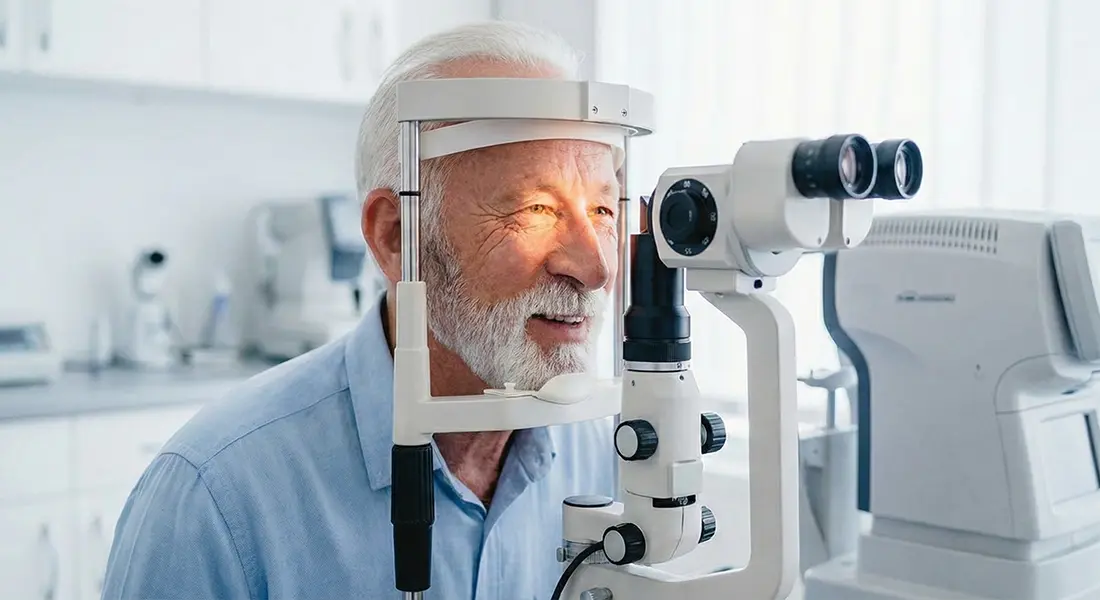
EDOF lenses are designed to provide clear vision across distance and intermediate ranges, reducing dependence on glasses. For those with mild astigmatism, standard EDOF lenses may still improve overall vision, but some residual blur could remain for certain tasks.
Toric EDOF lenses are specifically tailored to correct astigmatism, combining extended depth-of-focus benefits with astigmatism correction. Modern biometry and precise measurements help ensure the lens matches your eye’s shape, maximising clarity and visual comfort.
Overall, many people with mild astigmatism achieve excellent functional vision with EDOF lenses, especially for computer use, driving, and everyday activities, though occasional glasses may still be needed for fine near work.
Understanding Mild Astigmatism
Astigmatism occurs when the cornea or lens of the eye has an irregular shape, causing light to focus unevenly. This leads to blurred or distorted vision at certain distances, making some everyday tasks more challenging.
People with mild astigmatism may notice slight blurriness or ghosting, particularly at night, and can struggle to focus on fine details. Prolonged reading or extended screen use may also cause eye strain or fatigue.
The positive aspect is that mild astigmatism is usually manageable with corrective lenses. Modern EDOF technology can be customised to accommodate astigmatism, providing clearer intermediate and distance vision while reducing reliance on glasses.
What Are EDOF Lenses?
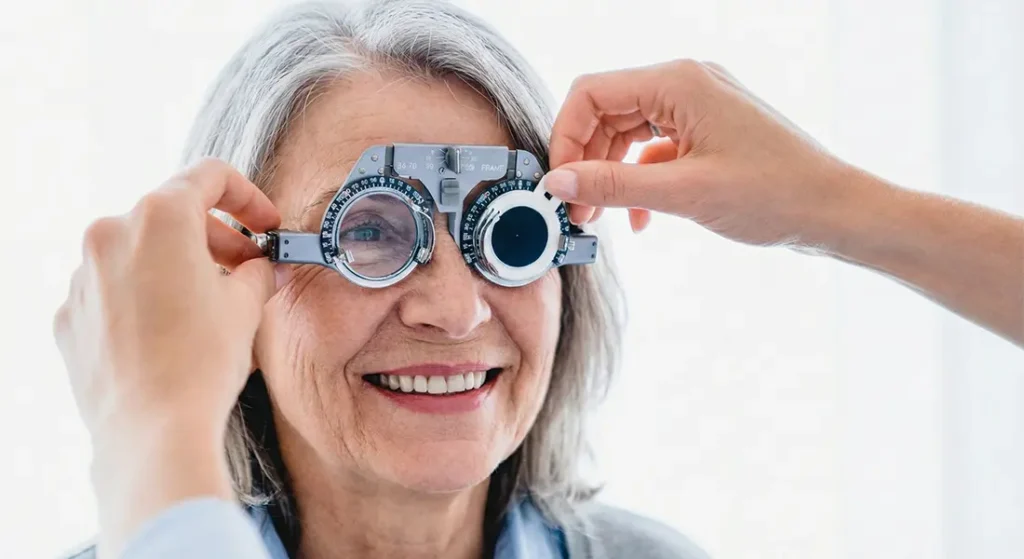
EDOF, or Extended Depth of Focus lenses, are designed to give a continuous range of clear vision, usually from distance to intermediate. Unlike multifocal lenses, which provide discrete focus points, EDOF lenses aim for smooth, uninterrupted vision, which many patients find more natural.
Here’s what makes them stand out:
Reduced Dependence on Reading Glasses: EDOF lenses minimise the need for glasses during intermediate tasks like using a computer, cooking, or checking documents.
Strong Distance Vision: These lenses preserve clear distance vision, making them ideal for activities such as driving or recognising faces across a room.
Fewer Visual Disturbances: Compared to traditional multifocals, EDOF lenses generally produce less glare, halos, and other visual distractions, offering more comfortable vision.
In short, EDOF lenses focus on providing a balance between distance and near clarity, which is particularly appealing if you’re active and want minimal dependence on glasses.
How Astigmatism Affects Vision with Lenses
Even mild astigmatism can influence how your eyes perceive light and focus images. When considering EDOF lenses, it’s important to understand how this interacts:
Blurred Intermediate or Distance Vision: If astigmatism is not fully corrected, the clarity benefits of EDOF lenses may be reduced. This can lead to occasional blurring at intermediate or distance ranges, making tasks like computer work or driving slightly less sharp than expected.
Residual Astigmatism Risk: Even small amounts of remaining astigmatism after surgery can cause minor blurring or ghosting, particularly in low-light conditions. Accurate pre-surgical measurements and precise lens placement are key to minimising this risk.
Adaptation Period: Your brain may require time to adjust to the combined effect of EDOF optics and astigmatic correction. Most patients adapt within a few weeks, gradually experiencing smoother transitions and more consistent vision across all distances.
This is why patients with mild astigmatism often explore toric EDOF lenses, which are specifically designed to correct both astigmatism and extend depth of focus.
Toric EDOF Lenses: Combining Two Benefits

Toric EDOF lenses are the solution for patients who want the continuous focus benefits of EDOF lenses while correcting astigmatism. These lenses have a special design that compensates for the uneven curvature of your cornea or lens.
Key advantages include:
Clear Vision at Multiple Distances: EDOF toric lenses provide sharp vision across near, intermediate, and distance ranges without compromising astigmatism correction.
Reduced Dependency on Glasses: With these lenses, most daily activities from reading to computer work can be performed comfortably without additional eyewear.
Customisable Options: Toric EDOF lenses can be precisely tailored to match your exact level of astigmatism, ensuring optimal clarity and personalised vision correction.
I always recommend discussing toric options if you have mild astigmatism, because they often deliver sharper results than standard EDOF lenses for patients like you.
How Modern Biometry Improves Lens Selection
Modern biometry has revolutionised cataract and lens surgery by precisely measuring the eye’s dimensions, curvature, and optical properties. These measurements allow surgeons to select the most accurate lens power, minimising the risk of residual refractive errors.
Biometry also plays a crucial role in determining whether a toric EDOF lens is suitable for correcting your specific level of astigmatism. By understanding the eye’s unique characteristics, surgeons can optimise lens choice for each patient.
Ultimately, advanced biometry enables a customised approach, helping your EDOF lens deliver smooth, reliable vision across distances and improving overall patient satisfaction with visual outcomes.
Who Is an Ideal Candidate for EDOF Lenses with Mild Astigmatism?
Not everyone with astigmatism will experience the same results with EDOF lenses. Ideal candidates typically have mild to moderate astigmatism, usually up to 1.5 dioptres, and healthy eyes without significant corneal irregularities.
It’s also important to have realistic expectations about visual outcomes. EDOF lenses can greatly reduce dependence on glasses, especially for distance and intermediate tasks, but may not completely eliminate the need for near correction.
Patients who meet these criteria and particularly those choosing toric EDOF lenses often achieve excellent functional vision, enjoying clearer vision for daily activities such as computer work, driving, and general lifestyle tasks.
Potential Limitations to Consider
While EDOF lenses offer excellent distance and intermediate vision, they may have limitations for those with astigmatism. Some residual blur or reduced sharpness can occur for near tasks or fine print, and effectiveness may vary depending on the lens model and degree of astigmatism. Occasional glasses might still be needed for detailed close-up work, and a short adaptation period is normal as the brain adjusts to the new visual system.
Near Vision May Still Require Reading Glasses: While EDOF lenses are excellent for intermediate tasks, they may not fully replace the need for reading glasses when it comes to very small print or detailed close-up work. Tasks like reading fine-text documents, labels, or small smartphone text might still require occasional glasses for optimal clarity.
Minor Visual Disturbances: Although EDOF lenses generally cause fewer visual disruptions than traditional multifocals, some patients may notice slight halos, glare, or starbursts around lights at night. These effects are usually mild and tend to improve as the brain adapts to the lenses over time.
Surgical Precision Matters: The success of EDOF lenses, especially toric versions for astigmatism, depends heavily on surgical accuracy. Even mild residual astigmatism can reduce clarity, which is why advanced measurements, careful planning, and an experienced surgeon are crucial to achieving the best possible visual outcomes.
Understanding these limitations helps set realistic expectations before your procedure.
Comparing EDOF Lenses with Other Lens Options
When deciding on lenses, it’s useful to compare EDOF lenses with alternatives like monofocal, multifocal, or standard toric lenses.
EDOF vs Monofocal Lenses: Monofocal lenses provide sharp vision at a single distance, which means patients often need reading glasses for near tasks or intermediate activities like computer work. In contrast, EDOF lenses offer a smoother range of vision across near, intermediate, and distance tasks, reducing dependence on additional eyewear for daily activities.
EDOF vs Multifocal Lenses: Multifocal lenses create multiple distinct focal points, which can sometimes lead to visual disturbances such as halos or glare, especially at night. EDOF lenses, on the other hand, provide a continuous range of focus, delivering more natural vision with fewer distractions and smoother transitions between distances.
EDOF vs Standard Toric Lenses: Standard toric lenses are designed to correct astigmatism but do not extend the depth of focus, so intermediate and near vision may still require glasses. Toric EDOF lenses combine astigmatism correction with extended depth of focus, making them an excellent option for people with mild astigmatism who want clearer vision across multiple distances.
Personalising Your Lens Choice
Personalising your lens choice is a key part of achieving the best visual outcomes in lens surgery. Each person’s lifestyle, daily activities, and visual priorities play an important role in determining which lens will suit them best.
It’s helpful to consider your typical day-to-day tasks. For example, do you spend most of your time at a computer, reading, or driving? Understanding how you use your vision can guide your lens selection to maximise comfort and clarity for those activities.
You should also reflect on how important it is to reduce reliance on glasses and whether you are sensitive to visual disturbances like halos or glare. Discussing these factors with your surgeon ensures that the chosen lens aligns closely with your personal needs and lifestyle.
Post-Surgery Considerations for Astigmatic Patients
Even after choosing the right EDOF lens, astigmatic patients should be aware of post-surgery factors such as temporary visual fluctuations, the potential need for occasional glasses for fine near tasks, and following up regularly to monitor healing and ensure optimal visual outcomes.
Visual Adaptation: After EDOF lens implantation, your brain may take a few weeks to fully adjust to the new optics. During this period, vision may feel slightly different at certain distances, but most patients gradually experience smooth, comfortable focus across near, intermediate, and distance tasks.
Follow-Up Assessments: Regular post-surgery check-ups are important to monitor healing and ensure any minor residual astigmatism is identified and managed promptly. These assessments help optimise vision outcomes and address any small adjustments needed for the best clarity.
Lifestyle Adjustments: While most daily activities improve almost immediately after surgery, some tasks like night driving or reading very small print may require a short adaptation period. Over time, as your eyes and brain adjust, these activities typically become easier and more comfortable.
These steps help maximise the benefits of your EDOF lens, particularly if you have mild astigmatism.
Why Many Patients Prefer EDOF Lenses
Many patients opt for EDOF lenses because they offer a balanced and practical solution for everyday vision. Unlike traditional multifocal lenses, EDOF lenses provide a smoother transition between distances, reducing visual disturbances and improving overall comfort.
A major benefit is the reduced dependence on reading glasses for routine tasks such as computer work, driving, or watching TV. This convenience enhances day-to-day life and allows patients to perform common activities with greater ease.
Toric EDOF lenses also make them suitable for individuals with mild astigmatism, broadening their applicability. Overall, these advantages contribute to why EDOF lenses are increasingly considered a go-to option in modern cataract surgery.
FAQs:
1. What are EDOF lenses, and how do they differ from traditional multifocal lenses?
EDOF lenses, or Extended Depth of Focus lenses, are designed to provide a smooth and continuous range of vision from distance to intermediate, rather than focusing on specific, separate distances like traditional multifocal lenses. This means that everyday activities such as using a computer, cooking, or watching TV can be performed with less dependence on glasses. Unlike multifocal lenses, EDOF lenses tend to produce fewer visual disturbances like halos or glare, making vision more comfortable and natural.
2. Can EDOF lenses correct mild astigmatism?
Yes, but it depends on the type of EDOF lens. Standard EDOF lenses can improve overall vision for people with mild astigmatism, but they may not fully correct the irregular curvature of the cornea, potentially leaving some residual blur. Toric EDOF lenses are specifically designed to correct astigmatism while maintaining the benefits of extended depth of focus, offering sharper vision for distance, intermediate, and near tasks.
3. How does mild astigmatism affect vision with EDOF lenses?
Even mild astigmatism can influence how clearly your eyes focus light, sometimes causing minor blur or ghosting at certain distances. This can be more noticeable at night or when performing precise tasks like reading small print or working on a computer. Accurate pre-surgical measurements and careful lens placement are essential to minimise these effects and optimise the visual benefits of EDOF lenses.
4. What is a toric EDOF lens, and who is it for?
A toric EDOF lens is a specialised lens that combines astigmatism correction with extended depth-of-focus technology. It is ideal for patients with mild to moderate astigmatism who want clear vision across multiple distances without relying heavily on glasses. These lenses are customised to match the unique shape and curvature of your eye, which can improve clarity and comfort for daily activities such as driving, computer work, and reading.
5. Will I still need reading glasses after getting EDOF lenses?
EDOF lenses greatly reduce the need for glasses for most daily activities, especially for intermediate tasks like using a computer or checking a document. However, very close tasks, such as reading fine print or small labels, may still require occasional reading glasses. The extent to which glasses are needed depends on your individual vision needs and the specific lens implanted.
6. How important is modern biometry in selecting EDOF lenses?
Modern biometry is crucial because it provides highly precise measurements of your eye, including corneal curvature, eye length, and optical properties. These measurements allow your surgeon to select the most suitable lens type, power, and alignment, significantly reducing the risk of residual astigmatism or suboptimal vision. This personalised approach ensures that the EDOF lens delivers smooth, reliable vision tailored to your unique eyes.
7. What should I expect during the adaptation period after EDOF lens surgery?
After EDOF lens implantation, your brain and eyes need time to adjust to the new optics. During the first few weeks, you may notice slight differences in how you perceive distance and near objects, and some visual fluctuations can occur. Most patients gradually adapt, experiencing smooth vision across near, intermediate, and distance tasks. Following post-operative advice and attending follow-up appointments helps ensure a smoother adaptation period.
8. How do EDOF lenses compare to monofocal lenses for daily activities?
Monofocal lenses provide clear vision at a single distance, meaning reading glasses are usually required for near or intermediate tasks. EDOF lenses, however, extend focus over a continuous range, allowing you to perform daily activities like computer work, cooking, or watching TV with reduced dependence on glasses. This makes EDOF lenses a more practical option for patients who want balanced vision for both distance and intermediate tasks.
9. Are there any visual disturbances with EDOF lenses?
While EDOF lenses generally cause fewer visual disturbances than multifocal lenses, some patients may notice minor halos, glare, or starbursts around lights, especially at night. These effects are usually mild and often improve over time as the brain adapts to the new visual system. Choosing a lens with proper measurements and surgical precision further minimises the likelihood of experiencing these disturbances.
10. Who is an ideal candidate for EDOF lenses with mild astigmatism?
Ideal candidates are usually patients with mild to moderate astigmatism (up to around 1.5 dioptres) who have healthy eyes without significant corneal irregularities. Candidates should have realistic expectations, understanding that while EDOF lenses reduce reliance on glasses for most tasks, they may not completely eliminate the need for reading glasses. Toric EDOF lenses are particularly suitable for those seeking sharper vision across multiple distances.
Final Thoughts on EDOF Lenses for Mild Astigmatism
EDOF lenses, especially toric versions, offer a highly effective solution for patients with mild astigmatism who want clear, natural vision across distance and intermediate ranges. They reduce dependence on glasses for most daily activities, such as computer work, driving, and hobbies, while providing smoother visual transitions and minimal glare. Although occasional reading glasses may still be needed for very close tasks, most patients experience significantly improved visual comfort and clarity.
If you’re considering EDOF lenses in London treatment, you can reach out to us at the London Cataract Centre to book a consultation with one of our expert specialists.
References:
1. Ruiz‑Mesa, R., Castro de Luna, G., Ruiz‑Santos, M., Jiménez‑Nieto, A. and Tañá‑Rivero, P. (2024) Clinical Outcomes of a Toric Enhanced Depth‑of‑Focus Intraocular Lens Based on the Combination of 4th‑ and 6th‑Order Spherical Aberration, Journal of Refractive Surgery, 40(6), e398‑e406. https://pubmed.ncbi.nlm.nih.gov/38848057
2. Bonacci, E., Pagnacco, C., Anastasi, M., De Gregorio, A., Marchini, G. and Pedrotti, E. (2025) Toric Aberrometric Extended Depth of Focus Intraocular Lens: Visual Outcomes, Rotational Stability, Patients’ Satisfaction, and Spectacle Independence, Journal of Personalized Medicine. PMC11943596. https://pmc.ncbi.nlm.nih.gov/articles/PMC11943596
3. Cano‑Ortiz, A., Sánchez‑Ventosa, Á., González‑Cruces, T., Villalba‑González, M., Aguilar‑Salazar, F.J., Díaz‑Mesa, V. and Villarrubia, A. (2025) Clinical Performance and Optical Quality of a Non‑Diffractive Extended‑Depth‑of‑Focus Intraocular Lens, Journal of Clinical Medicine, 14(11), p.3717. https://www.mdpi.com/2077-0383/14/11/3717
4. Mu, X., Xiong, X., Xu, F., Guo, Q., Sun, Y., Chen, L. and Fan, D. (2024) Tolerance to Induced Astigmatism of Patients with Trifocal or Extended Depth‑of‑Focus Intraocular Lens Implantation, Frontiers in Medicine. https://pmc.ncbi.nlm.nih.gov/articles/PMC11377219
5. Barber, K.M., O’Connor, S., Mackinder, P., Chih, A. and Jones, B. (2023) Rotational Stability and Refractive Outcomes of the DFT/DATx15 Toric, Extended Depth of Focus Intraocular Lens, International Ophthalmology, 43, pp.2737–2747. https://link.springer.com/article/10.1007/s10792-023-02673-7