


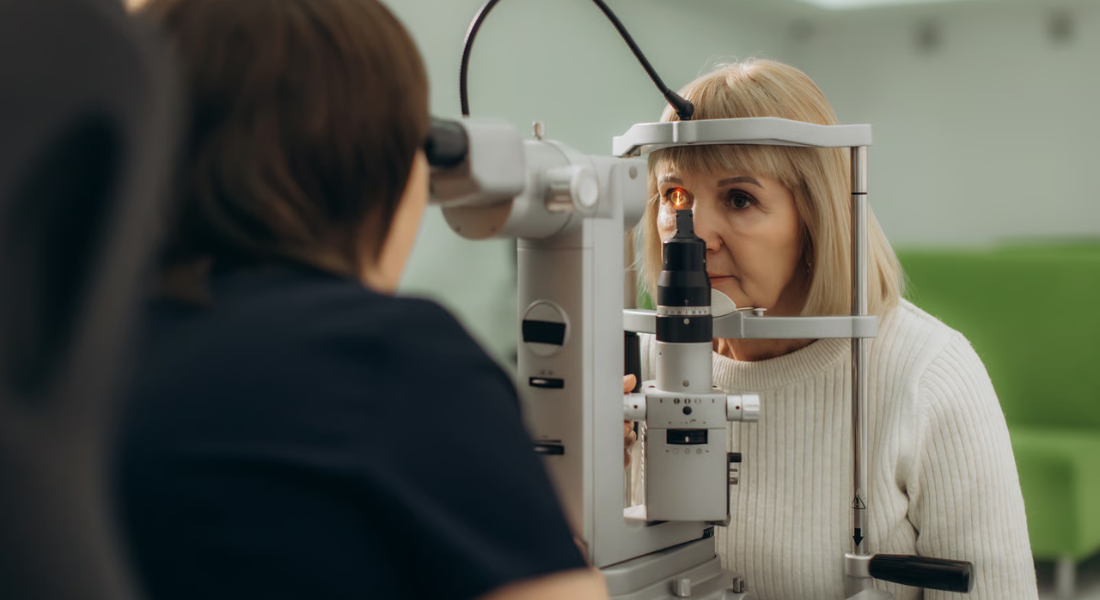
When I talk to you about depth perception, I am referring to your ability to judge how far away objects are and how they relate to each other in three-dimensional space. It is what helps you understand distance in everyday life without needing to consciously think about it. For example, it allows you to decide whether a step is safe to take, whether a car is too close, or whether an object is within easy reach. This system works quietly in the background to support safe and confident movement.
As you get older, this system can become less accurate and less reliable. It does not usually stop working completely, but it may become slower in how it processes visual information. This can make it harder to judge distances quickly and confidently. As a result, everyday tasks may begin to feel slightly less smooth or automatic than before.
One of the main reasons for this change is that depth perception relies on both eyes working together properly. When vision changes in one or both eyes due to ageing or eye conditions, the brain receives less consistent information. This can make it harder to build an accurate sense of space and distance. Even small changes in vision can have a noticeable effect over time.
Because of this, you may start to notice subtle difficulties in daily activities that depend on accurate depth judgement. Things like walking down stairs, pouring liquids, or reaching for objects may require a bit more attention than they used to. These changes often develop gradually, so you may not realise they are linked to your vision at first. Understanding this connection can help you manage these challenges more confidently.
Why Vision Loss and Depth Perception Are Closely Linked
Your depth perception depends heavily on clear, balanced visual input from both eyes working together. The brain continuously compares the images from each eye to judge distance, height, and spatial relationships. When vision loss develops whether due to conditions like Cataract or other age-related changes it disrupts this balance and makes it harder for the brain to interpret depth accurately.
When one or both eyes are affected, the quality of visual information becomes less consistent. This reduces the detail your brain relies on to judge space correctly. As a result, everyday tasks such as stepping off a curb, navigating stairs, or reaching for objects can feel slightly less precise than before.
A simple way to understand this is to think of it like a camera system. If one lens becomes cloudy or produces a slightly distorted image, the brain struggles to merge both images smoothly. Even if the difference is subtle, it can affect how accurately depth is perceived. This is why clear and balanced vision is so important for maintaining strong spatial awareness.
The Role of Ageing Eyes in Spatial Awareness
As we age, it’s completely natural for the eyes to undergo gradual changes that can influence how we perceive space and movement. I’ve seen that these changes are often subtle at first, but they can have a meaningful impact on depth perception and spatial awareness over time. The eye’s lens becomes less flexible, and its ability to process contrast slowly reduces. This means that judging distances and interpreting the environment may require more visual effort than it once did.
- Reduced Lens Flexibility: With age, the eye’s natural lens becomes stiffer and less adaptable. This affects how quickly and efficiently the eye can adjust focus between near and far objects. As a result, judging distances may feel slightly slower or less automatic than before.
- Lower Contrast Sensitivity: One of the key changes in ageing vision is reduced ability to distinguish subtle differences in light and shadow. This makes it harder to pick out edges, shapes, and textures in the environment. Even when overall vision seems clear, fine details may appear less defined.
- Impact on Depth Perception: Depth perception relies heavily on contrast, edges, and shading to help the brain understand distance. When these visual cues become less distinct, spatial judgement can feel less precise. This may affect everyday tasks such as walking, reaching, or navigating uneven ground.
- Reduced Clarity of Environmental Edges: Shadows and outlines play an important role in helping the brain map physical space. As contrast sensitivity decreases, these boundaries become less obvious. This can make environments feel slightly flatter or less sharply defined.
In conclusion, ageing naturally affects how the eyes process contrast and spatial detail, which in turn influences depth perception. While these changes are gradual, they can make spatial awareness feel less precise over time. The brain continues to adapt, but visual cues become less strong. Understanding these changes helps explain why judging distance and movement may require more conscious effort with age.
How Cataracts Affect Depth Perception
One of the most common causes of reduced depth perception in older adults is Cataract. A cataract clouds the natural lens inside the eye, which leads to vision becoming blurrier, duller, and often slightly yellowed over time. Because this lens is responsible for focusing light clearly onto the retina, any clouding directly affects how well the brain receives visual information needed for judging distance.
When the visual input becomes less clear, the brain has fewer reliable cues to accurately assess depth. This can make everyday tasks feel less precise. Many people describe experiences such as misjudging steps, hesitating on stairs, or feeling less confident when pouring liquids. These are subtle but important signs that spatial awareness is being affected.
In simple terms, the visual “signals” your brain relies on are being filtered and reduced by the cataract. As a result, depth judgement becomes less accurate even if you are not fully aware of it at first. Over time, this can influence confidence in movement and everyday activities, especially in unfamiliar or low-light environments.
Why Walking on Stairs Becomes More Difficult

Stairs are one of the first everyday situations where reduced depth perception becomes noticeable. You rely on clear visual cues such as contrast, shadows, and angle changes to judge each step accurately and safely. When these cues are strong, your brain can easily map where each step begins and ends.
However, when vision is affected by conditions like Cataract, those visual signals become less clear. The edges of steps may look softer, and differences in height can be harder to distinguish. This can make steps appear flatter or closer together than they actually are, even though the staircase itself has not changed.
As a result, you may find yourself moving more cautiously, slowing down, or pausing before each step. Some people describe feeling like they “don’t trust their feet anymore,” which is actually a very accurate reflection of what is happening visually. The issue is not with balance itself, but with reduced clarity in the information your brain is using to guide movement.
Driving and the Challenge of Distance Judgement
Driving relies heavily on accurate depth perception and spatial awareness. You constantly need to judge distances between vehicles, road markings, pedestrians, and junctions, often within seconds. When visual clarity is strong, these decisions feel automatic and effortless, but when vision is reduced, the brain has to work harder to interpret the same information.
With conditions like Cataract, the visual cues needed for precise judgement can become less reliable. This may affect how accurately braking distances are estimated or how confidently a vehicle is positioned within a lane. Even small changes in clarity can subtly influence reaction time and decision-making on the road.
Night driving can become particularly challenging because reduced contrast and glare from headlights further limit visual detail. Objects may appear less defined, and judging distance in low-light conditions can feel less certain. As a result, driving may start to feel more mentally demanding than before, even if overall vision loss seems gradual.
Everyday Tasks That Suddenly Feel Harder
It is not only major activities like driving or using stairs that are affected when vision changes. Everyday, routine tasks can also start to feel unexpectedly more difficult. These are often the small movements you normally do without thinking.
Simple actions such as pouring tea, reaching for objects, or placing items onto shelves may begin to feel slightly “off.” You might notice that you hesitate more, move more slowly, or double-check your hand position before completing a task. This is especially common when depth perception is reduced due to conditions like Cataract, where visual clarity becomes less precise over time.
It is important to understand that this is not clumsiness or a loss of ability. Instead, it is your visual system providing less accurate spatial information, which your brain then tries to compensate for. As a result, you naturally become more cautious and deliberate in your movements to maintain accuracy and avoid mistakes.
The Importance of Binocular Vision
Depth perception relies on both eyes working together in a process called binocular vision. Your brain compares the two slightly different images from each eye and uses those differences to calculate distance, height, and spatial positioning. This constant comparison is what allows you to judge space accurately in everyday life.
When both eyes have similar clarity, this system works smoothly. But when one eye sees more clearly than the other such as when a Cataract is affecting one eye more than the other the balance between the two images is disrupted. The brain then receives uneven visual information, which can make depth judgement less precise.
Even small differences in vision between the eyes can have a noticeable effect. You may find it harder to judge distances accurately or feel slightly less confident with tasks that rely on spatial awareness. This is because binocular vision depends on both eyes contributing equally to create a single, stable perception of the world.
How Contrast Sensitivity Loss Impacts Awareness
Contrast sensitivity is your ability to detect subtle differences between an object and its background. It is a key part of visual function and plays a major role in depth perception, especially in low-light or visually complex environments. It helps you notice edges, shadows, textures, and changes in surface level that are essential for safe movement.
As contrast sensitivity declines with age or due to conditions like Cataract, objects can start to blend more easily into their surroundings. Steps may not stand out as clearly, uneven ground can be harder to detect, and edges may appear softer or less defined. This reduction in visual separation makes it more difficult for the brain to build an accurate sense of space.
I often describe this experience as the world becoming “flatter,” even though nothing in the physical environment has actually changed. It is simply that the visual cues your brain relies on are less distinct, which reduces the natural sense of depth and awareness in everyday surroundings.
Night Vision and Reduced Depth Accuracy
Low-light conditions make depth perception significantly more difficult because the visual system has fewer reliable cues to work with. In bright environments, the brain uses fine detail, contrast, and texture to judge distance accurately. In darker conditions, those details are reduced, so the brain must rely more heavily on contrast and movement.
As the eye ages, it naturally requires more light to see clearly. At the same time, glare from sources such as streetlights, headlights, and reflective surfaces becomes more noticeable and disruptive. This combination can reduce clarity further and make it harder to judge how far away objects are.
When a Cataract is also present, these effects can become more pronounced because light is scattered as it passes through the cloudy lens. This can make distances feel less certain and movement in dim environments more challenging. For this reason, many older adults feel less confident going out after dark, especially in unfamiliar or poorly lit areas.
How Macular Changes Affect Spatial Judgement
Conditions affecting the macula can significantly disrupt spatial judgement because the macula is responsible for your sharpest, most detailed central vision. This is the part of the retina you rely on for directly looking at objects, recognising detail, and accurately judging distance in front of you.
When the macula is affected, central vision can become distorted. Straight lines may appear wavy or bent, and objects may not look proportionate or stable. This distortion makes it harder for the brain to interpret spatial relationships correctly, which is essential for depth perception and safe movement.
As a result, everyday tasks that depend on accurate visual alignment such as judging stair edges, stepping onto curbs, or recognising changes in surface level can become more challenging. Even relatively mild changes in macular function can create noticeable uncertainty in movement, because the central visual reference point your brain depends on is no longer fully reliable.
Why the Brain Struggles to Compensate Over Time

Your brain is highly adaptable, but it has limits when it comes to replacing missing or distorted visual information. When depth cues become unreliable due to conditions like Cataract or other forms of vision loss, the brain is forced to work harder to interpret space, distance, and movement.
Over time, this constant effort can lead to visual fatigue. You may notice that everyday environments require more concentration to navigate, especially in unfamiliar or low-contrast settings. This can result in slower reactions, increased caution, or a general sense of hesitation when moving through space.
It is important to understand that this is not just an issue with the eyes themselves, but with how the brain processes visual information. When the input it receives becomes less clear or less consistent, the brain has to make more guesses to fill in the gaps—something it can do, but not perfectly.
Balance and the Link to Visual Depth Cues
Balance is not controlled by the body alone it is the result of several systems working together, including your vision, inner ear, and muscles. I’ve seen that vision plays a much larger role in stability than most people realise. Your brain constantly uses visual depth cues such as distance, angles, contrast, and ground level changes to understand where your body is in space. When these cues are clear, movement feels natural and automatic.
- Vision as a Key Support for Balance
Your eyes help the brain constantly map your surroundings in real time. This includes judging how far away objects are, how level the ground is, and how your body is positioned within that space. These visual signals work alongside the inner ear and muscles to maintain stability. - Reduced Reliability of Depth Cues in Eye Conditions
When vision is affected by conditions such as cataracts, these depth cues become less sharp or consistent. Edges, shadows, and contrasts may appear blurred or muted. This makes it harder for the brain to interpret spatial relationships accurately. - Impact on Everyday Movement and Stability
When visual information is less precise, balance can feel slightly less secure in specific situations. This is often most noticeable on uneven ground, kerbs, stairs, or in unfamiliar environments. Movements may become more cautious as the brain compensates for reduced visual clarity. - Increased Reliance on Caution and Slower Movement
When visual support is reduced, the body naturally adapts by becoming more careful and deliberate. This does not mean physical ability is lost, but rather that movement becomes more controlled. Slower pacing and increased attention help maintain safety and confidence.
In conclusion, vision plays an essential role in supporting balance through depth perception and spatial awareness. When visual cues become less reliable, the brain compensates by relying more on cautious movement. This can make certain situations feel less stable, even if physical strength remains unchanged. Understanding this connection helps explain why clearer vision often leads to improved confidence and steadiness in daily life.
Emotional Impact of Losing Depth Confidence
There is also an emotional side to changes in depth perception. When you begin to feel less certain about what you are seeing, it is natural to become more cautious in how you move through everyday life. This hesitation is not a reflection of ability, but a response to reduced visual reliability.
Over time, this lack of confidence can influence behaviour. Some people may feel less secure when walking in busy environments, driving, or taking part in social activities that involve movement or unfamiliar spaces. In some cases, this can even lead to avoiding certain situations altogether, simply because they feel less predictable.
It is important to recognise that this experience is often linked to underlying visual changes, such as those caused by Cataract, rather than personal decline or loss of capability. Understanding this distinction can be reassuring, as it highlights that the issue is rooted in how vision is being processed not in who you are or what you are capable of doing.
How Lighting Changes Can Help Improve Depth Perception
Good lighting can make a significant difference to how well you judge distance and movement. Bright, even lighting improves contrast, which helps your brain detect edges, steps, and changes in surface level more clearly. This is especially important when visual clarity has been reduced by conditions like Cataract.
In practical terms, simple adjustments at home or in daily environments can be very effective. Adding lighting to stairways, brightening darker rooms, and reducing harsh shadows all help create a more consistent visual field. This allows your eyes to pick up spatial details more easily and reduces the risk of misjudging steps or distances.
Even small environmental changes can make a noticeable difference to confidence. When visual cues are clearer, your brain has an easier time interpreting space accurately, which supports safer and more comfortable movement in everyday situations.
Can Vision Correction Improve Depth Perception?
In many cases, improving overall vision clarity can have a noticeable positive effect on depth perception. I’ve seen that when vision becomes sharper and more balanced, the brain is better able to interpret spatial relationships between objects. This can make everyday activities feel more natural and less mentally demanding. Depending on the cause of visual changes, options such as updated glasses, contact lenses, or surgical correction may help improve overall visual function.
- Clearer Visual Input to Both Eyes: Depth perception relies heavily on the brain receiving clear and consistent images from both eyes. When vision is corrected, these images become sharper and more aligned. This allows the brain to compare information more accurately and judge distances more effectively.
- Improved Spatial Processing in the Brain: Once clearer images reach the brain, it can process spatial information with greater efficiency. This enhances the ability to understand how objects relate to each other in space. As a result, movement and navigation often feel more confident and controlled.
- Greater Confidence in Everyday Movement: Better depth perception directly supports tasks such as walking, reaching, and navigating environments. When spatial judgement improves, people often feel more stable and secure in their movements. This can reduce hesitation in unfamiliar or complex settings.
- Focus on Functional Vision, Not Perfection: Vision correction is not about achieving “perfect” eyesight but about restoring usable clarity. Even small improvements in sharpness and contrast can make a meaningful difference. The goal is to support comfortable, practical vision for daily life.
In conclusion, vision correction can often improve depth perception by enhancing clarity and improving how both eyes work together. This allows the brain to process spatial information more effectively and naturally. While perfection is not the aim, functional improvement can significantly enhance confidence and comfort. Ultimately, clearer vision supports better interaction with the world around you.
When to Seek a Professional Eye Assessment
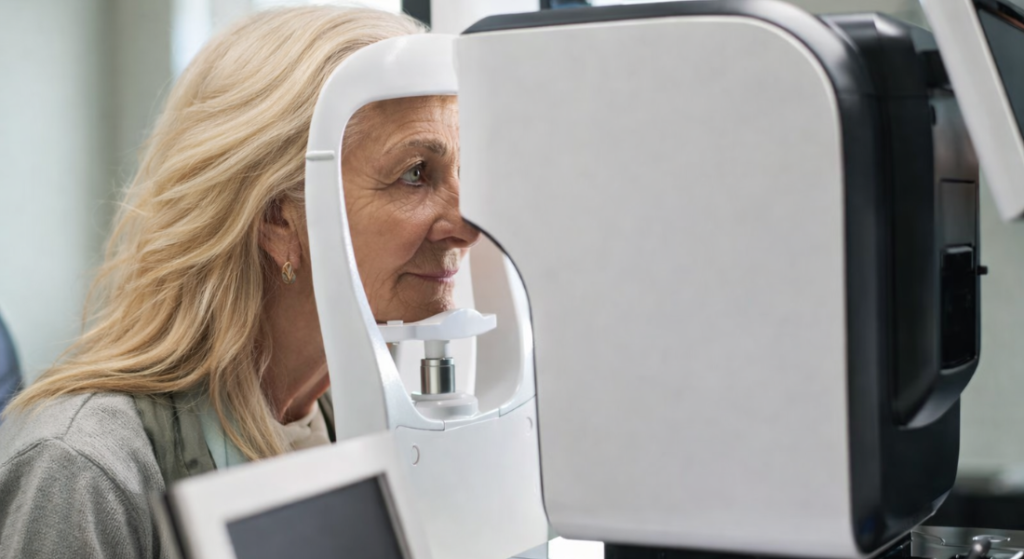
If you begin to notice frequent misjudging of steps, increasing difficulty with driving, or a growing sense of hesitation or uncertainty when moving around, it may be time to arrange a professional eye assessment. These kinds of changes are often linked to gradual reductions in visual clarity or depth perception.
It is important not to simply “get used to” these symptoms. In many cases, they can be associated with underlying vision changes such as Cataract or other age-related eye conditions, which can often be identified and managed effectively when detected early.
A comprehensive eye examination can help determine what is causing the changes in your vision and whether treatment or updated vision correction is needed. Early assessment not only improves clarity of diagnosis but also helps maintain confidence, safety, and independence in daily life.
Living Safely and Confidently with Changing Vision
Even when depth perception becomes less reliable, there are many practical ways to maintain independence, safety, and confidence in daily life. The first and most important step is awareness understanding that these changes are linked to how the visual system is processing information, often due to conditions like Cataract.
Once you recognise why things feel different, it becomes easier to make small but effective adjustments. This might include improving lighting at home, moving more slowly in unfamiliar environments, or taking extra time when judging steps and distances. These simple habits help reduce uncertainty and support safer movement.
Many people find that these small changes make a significant difference to their confidence over time. With the right understanding and support, it is absolutely possible to continue navigating daily life safely and comfortably, even when vision is not as sharp as it once was.
FAQs:
1. How does vision loss affect depth perception in older adults?
Vision loss reduces the clarity and consistency of visual information the brain relies on to judge distance. As a result, older adults may find it harder to accurately assess how far away objects are or how to move safely through space.
2. Why does depth perception worsen with age?
Depth perception can worsen with age due to changes in the eyes, such as reduced contrast sensitivity, stiffer lenses, and slower visual processing. These changes make it harder for the brain to interpret spatial cues accurately.
3. How do cataracts affect depth perception?
Cataracts cloud the eye’s natural lens, reducing clarity and distorting light. This limits the visual cues needed for depth judgement, making everyday tasks like walking on stairs or judging distances more difficult.
4. Why do stairs become harder to navigate with poor vision?
Stairs rely on clear edges, shadows, and contrast to judge height and distance. When vision is reduced, these cues become less visible, making steps appear flatter or less defined, which can affect confidence and safety.
5. Can vision loss affect driving ability?
Yes, reduced vision can impact distance judgement, reaction time, and spatial awareness while driving. This is especially noticeable in low-light conditions or at night, when visual cues are already limited.
6. What role does binocular vision play in depth perception?
Binocular vision allows both eyes to work together to create a single, accurate sense of depth. If one eye sees less clearly than the other, this balance is disrupted, making distance judgement less reliable.
7. Why do everyday tasks feel harder with reduced depth perception?
Simple tasks like pouring, reaching, or placing objects rely on accurate spatial judgement. When depth perception is reduced, the brain receives less precise visual information, leading to hesitation or slower movements.
8. Can lighting improve depth perception problems?
Yes, good lighting improves contrast and makes edges, steps, and objects easier to see. Brighter, even lighting helps the brain interpret spatial information more accurately, improving safety and confidence.
9. Can vision correction improve depth perception?
In many cases, yes. Glasses, contact lenses, or treatments like cataract surgery can improve clarity and contrast, helping both eyes work together more effectively and improving spatial awareness.
10. When should someone seek an eye examination for depth perception issues?
If you frequently misjudge distances, feel unsure on stairs, or notice increasing difficulty with driving or movement, an eye assessment is recommended. These symptoms may indicate underlying vision changes that can often be treated.
Final Thoughts: Protecting Depth Perception Through Better Vision Care
Depth perception is something most people take for granted until it begins to change, but as we’ve explored, even subtle vision loss can significantly affect how safely and confidently you move through daily life. When visual cues like contrast, edges, and clarity become less reliable, the brain has to work harder to interpret space and distance. This is why improving or maintaining eye health plays such an important role in preserving independence and comfort with age.
The encouraging part is that many of these changes can be managed or improved with the right assessment and treatment. Whether through updated vision correction or addressing underlying conditions such as cataracts, clearer vision often leads to noticeably better spatial awareness and confidence in everyday activities. If you’re looking to enhance your vision or need personalised guidance, our specialist team at the London Cataract Centre is here to help.
References:
- Quillen, D.A. (1999) Common causes of vision loss in elderly patients, American Family Physician, 60(1), pp. 99-108. Available at: https://pubmed.ncbi.nlm.nih.gov/10414631/
- Harvey, P.T. (2003) Common eye diseases of elderly people: identifying and treating causes of vision loss, Gerontology, 49(1), pp. 1-11. Available at: https://pubmed.ncbi.nlm.nih.gov/12457044/
- Driscoll, R., Scantling‑Brown, H., Margrain, T. and others. (2021) A systematic review of the accessibility, acceptability, safety, efficiency, clinical effectiveness, and cost‑effectiveness of private surgical facilities. BMC Health Services Research. Available at: https://pmc.ncbi.nlm.nih.gov/articles/PMC11570012/
- Ouyang, S. et al. (2023) Cataract, glaucoma, and diabetic retinopathy as risk factors in older adults, Geriatric Nursing, 53, pp. 170-174. Available at: https://pubmed.ncbi.nlm.nih.gov/37540912/
- Dinarvand, D., Panthakey, J., Hassan, A. and Ahmed, M.H. (2024) Frailty and visual impairment in elderly individuals: Improving outcomes and modulating cognitive decline through collaborative care, Diseases, 12(11), p. 273. Available at: https://www.mdpi.com/2079-9721/12/11/273