



When cataracts and macular degeneration exist together, surgery requires more than a routine approach. You may assume cataract surgery follows the same steps for everyone, but retinal disease changes how decisions are made. Planning becomes as important as the surgical technique itself. We approach these cases with additional care and consideration.
We consider how both conditions interact rather than treating them in isolation. Cataracts reduce lens clarity, while macular degeneration affects central retinal function. You experience the combined effect of both conditions on vision. We recognise that outcomes depend heavily on careful preparation and expectation setting.
You may feel anxious about whether surgery will genuinely improve vision. Careful planning allows more accurate prediction of likely benefits and limitations. We use retinal assessment to guide these discussions. This helps ensure decisions are based on clarity rather than hope alone.
We approach planning as a personalised process rather than a standard pathway. Each eye is assessed individually with attention to stability, function, and risk. You receive recommendations tailored to your specific situation. We focus on protecting safety while maximising meaningful visual benefit.
Understanding the Role of the Macula in Vision
The macula is responsible for detailed central vision, including reading and recognising faces. Macular degeneration damages this area gradually over time. Cataracts, by contrast, cloud the lens and reduce overall clarity and brightness.
When both are present, visual symptoms overlap. You may struggle to tell which condition is causing which problem. This makes accurate assessment essential before surgery is considered.
We evaluate macular function carefully to understand visual potential. Cataract surgery can only improve vision limited by the lens, not the retina. Knowing this distinction guides planning. Understanding macular health allows expectations to be grounded in reality. This prevents disappointment after surgery.
Why Additional Retinal Scans Are Needed
Patients with macular degeneration usually require more detailed retinal imaging before cataract surgery. Standard examination alone may not reveal subtle macular changes. Imaging provides essential information about disease stage and stability.
Optical coherence tomography is commonly used to assess retinal structure. It shows whether fluid, thinning, or scarring is present. These findings influence both timing and expected outcome.
You may wonder why extra scans are needed if surgery targets the lens. These scans help predict how much vision can improve. They also ensure surgery does not proceed during active retinal disease. We rely on imaging to guide safe decision-making. Accurate data supports confident planning.
Assessing Disease Stability Before Surgery
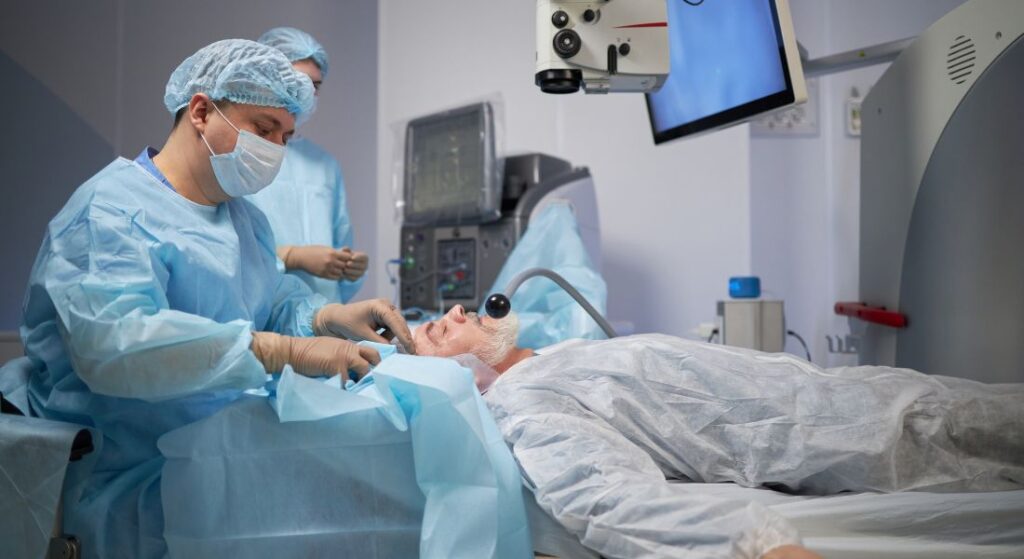
Stability of macular degeneration is a key factor when planning cataract surgery. Stable disease means there is no active fluid, bleeding, or rapid change within the retina. You are generally safer to proceed once this stability has been confirmed. We place strong emphasis on retinal quietness before scheduling surgery.
You may already be undergoing treatment for macular degeneration, and this care usually continues around the time of surgery. Ongoing therapy helps maintain control and reduces surgical risk. We coordinate timing so cataract surgery fits smoothly alongside existing treatment. Stability allows procedures to be planned with greater confidence.
When macular disease is active, treatment is often required before surgery can move forward. This approach protects the retina and lowers the chance of postoperative complications. We prioritise stabilisation before lens removal whenever risk is present. Surgical timing is guided by retinal health rather than urgency alone.
Setting Realistic Visual Goals
Expectation management is central when planning cataract surgery in the presence of macular degeneration. You may hope for perfect vision, but existing retinal damage places limits on what surgery can deliver. We focus on aligning goals with realistic outcomes through honest discussion. This clarity helps reduce disappointment and uncertainty.
We explain that cataract surgery improves clarity, brightness, and contrast by removing lens clouding. It does not reverse macular damage or restore lost central detail. You should expect results to vary depending on disease severity and retinal health. We base guidance on individual assessment rather than general promises.
You may still experience meaningful benefits in daily life after surgery. Improved light perception and reduced glare often enhance comfort and function. We believe realistic goals support emotional wellbeing as well as visual satisfaction. Clear communication is considered just as important as surgical skill.
Choosing the Right Intraocular Lens
Lens selection is a key part of cataract surgery planning, particularly when macular degeneration is present. Certain lens types are usually avoided because they can compromise visual quality. Multifocal lenses, in particular, may reduce contrast and clarity. We take retinal health into account when considering these risks.
Monofocal lenses are often recommended for more predictable and reliable outcomes. These lenses focus on delivering clear images with good contrast. You are more likely to benefit from this simplicity when retinal function is already reduced. We prioritise optical performance that supports everyday vision.
You may be advised against premium lens options despite advanced surgical capability. This guidance reflects retinal limitations rather than technical constraints. We choose lenses based on safety, clarity, and functional benefit. The aim is meaningful improvement rather than unnecessary complexity.
Why Surgeon and Retina Specialist Coordination Matters
When macular degeneration is present, cataract surgery cannot be planned in isolation. Ongoing retinal monitoring or treatment must be carefully aligned with surgical care. Clear coordination between specialists ensures decisions are made with the full clinical picture in mind. This integrated approach supports both safety and continuity.
- Surgical planning is aligned with retinal management
Cataract surgeons and retinal specialists work together when macular degeneration requires ongoing care. Planning reflects retinal findings rather than focusing on surgery alone. - Clear communication improves continuity and reduces risk
Imaging results, treatment schedules, and timing decisions are shared between teams. You benefit when care is coordinated rather than fragmented. - Retinal treatments are timed carefully around surgery
Anti-VEGF injections may be scheduled before or after surgery to maintain stability. This approach avoids unnecessary interruption to retinal treatment.
Teamwork is central to safe and effective care. By coordinating cataract surgery with retinal management, we reduce risk and improve confidence throughout the process. This collaborative model ensures nothing is overlooked and care remains aligned at every stage.
Timing Surgery Around Retinal Treatments
Patients receiving injections for macular degeneration require careful coordination when surgery is planned. Procedures are usually scheduled once disease activity is well controlled. This approach helps minimise stress on the retina during treatment. We prioritise stability before moving forward.
You may receive an injection shortly before or after surgery to maintain retinal control. This timing is personalised based on how the disease behaves and responds to treatment. We plan these steps to support stability during the perioperative period. Individual assessment guides every decision.
Concerns about interrupting ongoing therapy are very common. In practice, treatment usually continues with minimal disruption. We coordinate timing carefully to protect the macula throughout care. Stability remains the central focus at every stage.
How Cataracts Can Mask Retinal Disease

Dense cataracts can make it difficult to view retinal detail accurately. When the lens is significantly clouded, both imaging and clinical examination become less reliable. You may find that assessing the true state of macular degeneration is challenging under these conditions. We take this limitation into account during evaluation.
You may be advised to proceed with cataract surgery partly to improve retinal visibility. Once the lens is clear, imaging becomes more precise and monitoring more reliable. This clarity supports better understanding of macular health over time. We use improved visualisation to guide long-term management decisions.
In these situations, surgery serves both visual and diagnostic purposes. It helps reveal the true extent of retinal disease rather than obscuring it. We consider how cataracts affect assessment as well as day-to-day vision. This broader perspective informs recommendations and supports more accurate planning.
Managing Surgical Risk and Inflammation
Modern cataract surgery is highly controlled and minimally invasive, but some inflammation can still occur during recovery. When macular degeneration is present, this response needs careful management. You benefit from an approach that anticipates and limits inflammatory stress on the retina. We treat inflammation control as a priority rather than an afterthought.
Postoperative care includes tailored medication regimens designed to reduce inflammatory response. You may be prescribed specific eye drops for a longer duration to support retinal protection while healing takes place. We monitor recovery closely so any concerns are addressed early. Prompt adjustment helps prevent avoidable complications.
Postoperative planning is given the same level of attention as the surgery itself. Recovery is considered part of the overall treatment strategy rather than a separate phase. We focus on maintaining stability throughout the healing period. This structured approach supports safer outcomes and long-term visual protection.
Why Visual Outcomes Vary Between Patients
Visual outcomes after cataract surgery can vary widely when macular degeneration is present. Factors such as disease stage, retinal scarring, and baseline vision all influence results. You should expect some degree of individual variation rather than uniform outcomes. We assess each eye on its own merits.
You may find yourself comparing results with others and feeling uncertain. This response is natural, but direct comparison is rarely helpful. We use personalised assessment to estimate likely benefit before surgery. Expectations are shaped around your specific retinal health.
Some people experience modest improvement, while others gain meaningful functional benefit. Both outcomes can be considered successful when expectations are realistic. We define success based on your individual goals rather than fixed targets. Improvement is measured against what matters most in daily life.
Postoperative Monitoring and Follow-Up

After surgery, monitoring continues just as it did before. Macular degeneration does not stop progressing simply because a cataract has been removed. You still require regular follow-up to track retinal health over time. We view ongoing review as essential rather than optional.
You may notice visual changes as the eye heals in the weeks following surgery. These changes are assessed carefully to separate normal recovery from retinal activity. We use imaging to detect subtle changes at an early stage. Prompt identification allows timely response if needed.
Postoperative care integrates both cataract and retinal management into a single plan. Communication between care teams continues throughout recovery to maintain continuity. We emphasise follow-up as a core part of long-term care. Ongoing monitoring plays a key role in protecting vision.
Why Patient Education Is Part of Planning
Education plays a vital role in achieving successful outcomes. When you understand the reasons behind planning decisions, confidence naturally increases. Being informed helps you know what to expect at each stage. We see preparation as an essential part of good care.
We actively encourage questions and open discussion throughout the process. Clear explanations help reduce anxiety and improve overall satisfaction. You are better supported when information is shared transparently. We view knowledge as the foundation of a strong care partnership.
Planning is not something done to you but something done with you. Shared understanding strengthens trust and supports better decision-making. We believe informed patients experience more positive outcomes. Education is therefore an integral part of treatment, not an extra.
Long-Term Vision Strategy
When macular degeneration is present, cataract surgery should be viewed as one step within a broader vision care journey. While surgery can improve clarity, long-term management continues beyond the operating theatre. Planning with a forward-looking perspective helps ensure decisions support lasting visual function. We approach surgery as part of a coordinated, ongoing care pathway rather than a standalone solution.
- Cataract surgery forms part of long-term vision management
The procedure improves lens clarity but does not conclude macular care. We plan surgery within the context of ongoing monitoring and treatment needs. - Retinal care continues alongside visual improvement
You may still require retinal treatment or regular follow-up after surgery. Cataract removal works alongside this care so progress remains balanced and safe. - Future visual function guides decision-making
Long-term planning prioritises useful vision, comfort, and independence. Each step is taken with stability and practicality in mind rather than short-term gains.
Taking a long-term view helps ensure cataract surgery contributes positively to overall visual health. By integrating surgical care with continued retinal management, we support outcomes that remain functional and reliable over time. This forward-focused approach helps protect vision and independence well into the future.
FAQs:
1. Why is your cataract surgery planned differently when you have macular degeneration?
Your surgery requires additional planning because vision is affected by both the lens and the retina. We need to understand how much improvement lens surgery can realistically provide. This avoids unnecessary expectations and helps guide safer decisions. Planning becomes just as important as the operation itself.
2. How does macular degeneration change the way your surgeon assesses vision?
Macular disease affects central vision, which cannot be corrected by cataract surgery. We assess retinal function carefully to understand visual potential before operating. This helps separate lens-related blur from retinal limitation. Clear assessment supports more accurate outcome prediction.
3. Why do you need extra retinal scans before cataract surgery?
Additional scans help identify disease activity that may not be visible during routine examination. We use this information to confirm stability and stage severity. These details influence both timing and expected benefit. Imaging allows surgery to be planned with greater confidence.
4. Why does retinal stability matter so much before your surgery?
Surgery is safest when the macula shows no active change such as fluid or bleeding. Stable disease reduces the risk of unpredictable outcomes after surgery. We prioritise retinal quietness before proceeding. This protects both recovery and long-term vision.
5. How are realistic visual goals set for you before surgery?
We explain what cataract surgery can and cannot improve in your specific situation. Lens removal improves clarity and brightness, not retinal damage. Goals are aligned with macular health rather than idealised outcomes. Honest discussion helps prevent disappointment after surgery.
6. Why might certain lens types not be suitable for you?
Some lenses reduce contrast or visual quality, which can be problematic when retinal function is limited. We usually prioritise clarity and reliability over complex optics. Lens choice is guided by how your macula functions. The aim is usable vision rather than unnecessary compromise.
7. Why is coordination between your surgeon and retinal specialist important?
Your care involves both surgical and retinal considerations that must align. Shared planning ensures treatments do not conflict with each other. We coordinate timing, imaging, and follow-up carefully. This teamwork reduces risk and improves continuity of care.
8. How is cataract surgery timed around your retinal treatments?
Surgery is usually scheduled when retinal treatment has achieved stability. Injections may continue before or after surgery without interruption. We plan timing to protect the macula throughout the process. Stability remains the guiding principle for every decision.
9. Why can cataracts make macular degeneration harder to assess?
A dense cataract can obscure retinal detail and reduce imaging accuracy. This makes it harder to judge disease behaviour over time. Removing the cataract can improve diagnostic clarity. Surgery may therefore support both vision and ongoing retinal monitoring.
10. Why does your recovery require close follow-up after surgery?
Macular degeneration continues to require monitoring even after cataract removal. Healing changes must be distinguished from retinal activity. We use follow-up visits to protect long-term vision. Ongoing review is essential for safe and stable outcomes.
Final Thoughts on Cataract Surgery Planning With Macular Degeneration
Cataract surgery planning is more detailed when macular degeneration is present, because outcomes depend on retinal health as much as surgical technique. Additional scans, coordinated care, careful lens choice, and realistic goal-setting all play essential roles. When these elements come together, surgery can be both safe and beneficial.
We believe personalised planning leads to the best outcomes. If you have concerns about Macular degeneration and cataract surgery, you can contact us at London Cataract Centre for expert guidance and tailored care based on your individual needs.
References:
- Hössl, L. et al. (2024) Insights into cataract surgery outcomes in age-related macular degeneration, Ophthalmology Retina, ScienceDirect. Available at: https://www.sciencedirect.com/science/article/pii/S246865302400575X
- Kessel, L. (2016) Cataract surgery in patients with neovascular age-related macular degeneration, Acta Ophthalmologica Scandinavica. Available at: https://pubmed.ncbi.nlm.nih.gov/27255691/
- Icoz, M. and Gurturk, S. (2024) Importance of optical coherence tomography before cataract surgery, PMC. Available at: https://pmc.ncbi.nlm.nih.gov/articles/PMC11320843/
- Spaide, R.F. (2018) Optical coherence tomography angiography applications, ScienceDirect Ophthalmic Imaging Review. Available at: https://www.sciencedirect.com/science/article/pii/S1350946217300563
- Seredyka-Burduk, M. et al. (2024) Cataract Surgery in nAMD Patients Receiving Intravitreal Therapy, Journal of Clinical Medicine, 13(13), p.3832. Available at: https://www.mdpi.com/2077-0383/13/13/3832