


The thought of performing cataract surgery in space might sound like science fiction, but it’s becoming an increasingly relevant question as humans prepare for longer missions and eventually, life beyond Earth.
In the past decade, astronauts aboard the International Space Station (ISS) have reported a surprising number of vision changes, including blurred vision, optic disc swelling, and shifts in the shape of the eyeball itself. These aren’t just inconveniences they’re clues to how microgravity affects the delicate balance of pressure, fluids, and structures inside the eye.
So, what would happen if someone needed eye surgery in orbit? Could a surgeon perform a cataract operation in zero gravity? And, more importantly, what do these experiments in space teach us about protecting eye health here on Earth? Let’s explore what space medicine is revealing and how lessons from orbit could change ophthalmology forever.
Why Astronauts’ Eyes Change in Space
Under Earth’s gravity, fluids in your body naturally settle blood, lymph, and other liquids are pulled toward your lower body. But in space, microgravity removes this downward pull, causing fluid to redistribute throughout the body.
In astronauts, this fluid shift leads to:
- Facial: Puffiness in the face often accompanies nasal congestion, making breathing through the nose more difficult and giving a feeling of fullness around the eyes.
- Legs: Fluid retention can cause swelling in the lower limbs, sometimes called the “bird legs” effect, where the legs appear disproportionately swollen compared with the rest of the body.
- Pressure: Increased intracranial and orbital pressure may lead to headaches, eye discomfort, and visual disturbances, indicating that fluid buildup is affecting sensitive structures inside the skull.
This condition, known as Spaceflight-Associated Neuro-ocular Syndrome (SANS), affects roughly two-thirds of astronauts on long missions.
Key Symptoms Include:
- Vision: Blurred or distorted vision is often an early symptom, making it difficult to focus on objects clearly and sometimes causing double vision or visual fluctuations.
- Globe: Flattening of the eyeball occurs due to pressure changes inside the skull, altering the eye’s shape and affecting how light is focused onto the retina.
- Disc: Swelling of the optic disc, known as papilloedema, indicates increased intracranial pressure and can threaten optic nerve function if not addressed promptly.
- Refraction: Changes in the eye’s curvature often result in farsightedness (hyperopia), requiring updated prescriptions or corrective lenses to restore clear vision.
These changes can persist even after returning to Earth, raising important questions about how microgravity influences ocular health and how eye surgeons might need to adapt.
The Challenge of Performing Surgery in Zero Gravity
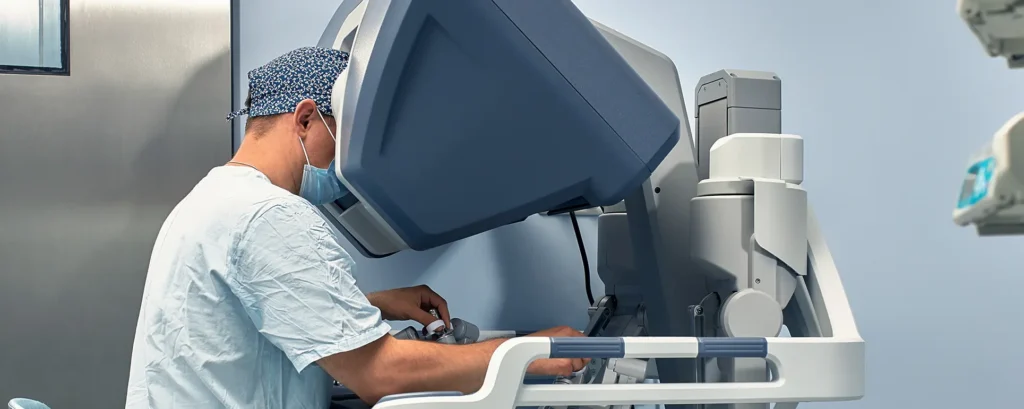
Cataract surgery on Earth is already one of the most precise procedures in medicine, requiring steady hands, microscopic accuracy, and delicate instruments. Performing it in space, however, introduces entirely new challenges, as the absence of gravity affects every movement.
In microgravity, even tiny droplets of fluid, loose eyelashes, or lens fragments can float freely around the cabin. This presents a major safety and infection-control concern, as these particles can drift unpredictably during surgery.
Fluid dynamics are also completely different in space. Procedures like irrigation and aspiration rely on fluid pooling and draining in a controlled manner, but in zero gravity, liquids form floating spheres that cling to surfaces due to surface tension.
As a result, every element of cataract surgery from fluid management to suction and visual clarity must be re-engineered. Surgeons need innovative tools and techniques to perform precise operations safely in a microgravity environment.
How Cataract Surgery Works on Earth
Understanding how cataract surgery works on Earth highlights why performing it in space is so challenging. The standard procedure, called phacoemulsification, involves a tiny corneal incision, ultrasound to break up the cloudy lens, and suction to remove fragments.
A clear intraocular lens (IOL) is then inserted to restore vision. The surgery typically takes about 15 minutes under local anaesthesia, relying on gravity to help fluids flow and maintain intraocular pressure and eye stability.
In microgravity, there is no “down” direction, and even instruments can float if not secured. This lack of stability makes every step from fragment removal to fluid management far more complex than on Earth.
Engineering the “Space Surgery” Environment
NASA and other space agencies have long recognised the need for medical autonomy during long missions especially as astronauts travel further from Earth. For eye care, that means designing surgical systems that function in microgravity.
Several innovations have already been proposed or tested:
1. Closed Surgical Chambers: To prevent fluids from escaping, the surgical site would likely be enclosed in a sealed dome that maintains pressure and suction. All tools and irrigation lines would operate within this dome, creating a mini “surgical atmosphere” independent from the spacecraft cabin.
2. Anchored Surgical Instruments: Instruments could be attached to fixed mounts or robotic arms, allowing surgeons to operate with precision even while floating.
3. Artificial Gravity Platforms: Some concepts suggest performing surgery inside a small rotating centrifuge that simulates gravity helping fluids behave more predictably.
4. Automated or Robotic Systems: Advances in robotic-assisted surgery could make space cataract operations safer. A surgeon on Earth might control robotic instruments remotely, using telemedicine and real-time imaging.
What We’ve Learned from Space Eye Studies
Although no one has performed cataract surgery in orbit yet, space medicine has already provided valuable insights into how eyes behave in microgravity.
1. Increased Intracranial Pressure Affects Vision: Without gravity, fluid shifts toward the head, slightly increasing pressure around the brain and optic nerve. This pressure can flatten the back of the eye, causing refractive changes similar to early cataracts.
2. Ocular Fluid Balance Is Critical: The eye’s aqueous humour the clear fluid that nourishes the cornea and lens circulates differently in space. This can affect nutrient delivery and waste removal, key factors in maintaining clear lenses.
3. Lens Clarity May Change Over Time: While cataracts have not yet developed during space missions, the altered metabolism of lens cells and increased radiation exposure could accelerate lens opacity on longer missions, such as those to Mars.
4. Radiation Accelerates Eye Ageing: Outside Earth’s protective magnetic field, cosmic radiation is far higher. Over time, radiation exposure can damage DNA in ocular tissues, potentially increasing the risk of cataracts and retinal degeneration.
The Role of Telemedicine and AI in Space Eye Care

Since astronauts cannot access traditional eye clinics during missions, space eye care depends on telemedicine and AI. These technologies enable remote monitoring, diagnosis, and treatment planning, ensuring astronauts maintain optimal eye health even in orbit.
Tele-ophthalmology on the ISS: Astronauts aboard the ISS regularly undergo eye scans using fundus cameras and optical coherence tomography (OCT). These images are transmitted back to Earth, where ophthalmologists analyse them for signs of swelling, pressure changes, or structural damage.
AI for Remote Diagnostics: Artificial intelligence is being trained to identify early changes in optic nerves and retina from image data, helping astronauts detect issues before symptoms worsen. In future missions, AI could even guide robotic procedures monitoring vital signs, adjusting fluid flow, or assisting in autonomous surgery if communication delays make remote control impossible.
Could Cataract Surgery Be Performed in Space Today?
Currently, cataract surgery cannot be safely performed in space, though the foundational technologies are emerging. Researchers are exploring how to adapt procedures to microgravity, where fluid, instrument, and patient stability are major concerns.
Key challenges include controlling floating droplets during lens removal, stabilising instruments for precision, maintaining sterility, and managing anaesthesia effectively in a weightless environment. Emergency response is also a critical concern, as full medical backup is limited on orbiting spacecraft.
Despite these obstacles, advances in robotic surgery, enclosed surgical domes, and AI-assisted guidance suggest that experimental cataract procedures in low Earth orbit could become feasible within the next two decades.
What Zero Gravity Teaches Us About Eye Health on Earth
Research in zero gravity offers insights that benefit everyone, not just astronauts. Studying how microgravity affects vision and eye pressure helps improve our understanding of conditions like glaucoma and intracranial pressure, leading to better diagnostics and treatments on Earth.
Here are key takeaways from studying eyes in orbit:
1. Understanding Pressure and Fluid Dynamics: Microgravity shows us how sensitive the eye is to changes in fluid pressure. This research could lead to improved treatments for conditions like glaucoma, where fluid imbalance damages the optic nerve.
2. Better Imaging and Monitoring: Compact, high-resolution imaging tools designed for space are now being used in remote clinics on Earth, improving access to advanced diagnostics.
3. Insights into Ageing and Degeneration: Space radiation mimics accelerated ageing. Studying its effects helps scientists understand how cataracts and retinal damage develop over time and how to slow them.
4. Innovations in Surgical Robotics: Robotic systems built for microgravity environments have inspired more stable and precise surgical robots on Earth, capable of performing microsurgeries with unparalleled accuracy.
5. Resilience of the Human Eye: Perhaps most importantly, space studies highlight how adaptable the human eye is and how its ability to adjust could inform recovery and rehabilitation techniques after surgery.
The Future: Eye Surgery on Mars Missions
A mission to Mars would take around seven months each way, plus time on the planet’s surface. That means astronauts could spend over two years away from Earth, well beyond the reach of immediate medical support. To make such missions viable, crews will need fully autonomous medical systems capable of performing emergency surgeries including eye operations.
Possible Solutions:
- Self-contained surgical pods with robotic arms and sterile enclosures.
- AI-assisted surgical guidance trained on millions of simulations.
- 3D-printed surgical tools created on demand in space.
- Compact laser systems for minimally invasive lens removal.
Developing these systems not only prepares humanity for space travel it also refines the precision, safety, and portability of ophthalmic surgery on Earth.
What If You Needed Cataract Surgery in Space?
Imagine an astronaut on a long-duration Mars mission developing a cataract that affects vision. Early diagnosis would be critical, using a portable OCT scanner to detect lens clouding in real time.
Once identified, AI could confirm the diagnosis by comparing images with an extensive medical database. This step ensures accuracy and helps plan the most effective surgical approach remotely.
For surgery, a robotic surgical dome could create a sterile chamber around the eye. A remote ophthalmologist at mission control would then guide robotic arms to perform the procedure with precision.
Post-operative care would also rely on AI, monitoring eye pressure, healing progress, and adjusting medication as needed. While it sounds futuristic, advances in robotics, telemedicine, and AI make this scenario a realistic glimpse of space healthcare’s future.
How These Discoveries Improve Cataract Surgery on Earth
Insights from space surgery are translating into practical improvements for cataract procedures on Earth. Techniques developed for precision in microgravity have inspired better surgical tools, enhanced training methods, and more efficient protocols, ultimately making surgeries safer and more effective for patients.
1. Micro-Fluidic Control Systems: Developed for zero-gravity irrigation, these systems make fluid management during eye surgery more precise reducing trauma and improving visual outcomes.
2. Enhanced Robotic Microsurgery: Techniques designed for space stability have inspired robotic cataract systems that allow sub-millimetre accuracy.
3. Compact Imaging Devices: Portable OCT and retinal cameras built for spacecraft are now helping doctors diagnose cataracts and retinal disease in remote and rural areas.
4. Non-Invasive Monitoring Tools: Wearable sensors originally designed for astronauts are now being adapted for patients with glaucoma and other chronic eye conditions.
In other words, space exploration is already shaping the future of eye care on Earth.
The Role of the London Cataract Centre
At the London Cataract Centre, we are inspired by the cutting-edge advancements in ophthalmology, including those being explored for space medicine. Precision, innovation, and safety remain at the heart of every procedure we perform.
Our consultants use the latest micro-incision techniques, premium intraocular lenses, and advanced imaging systems. Many of these technologies share principles with the robotics and AI being developed for surgeries in microgravity.
Every new discovery whether from space research or surgical innovation helps us refine how we protect and restore vision on Earth. This continuous progress ensures our patients receive the safest, most effective care possible.
FAQs:
1. Can cataract surgery really be performed in space?
Not yet but scientists are getting closer. Performing cataract surgery in space presents unique challenges because, without gravity, fluids don’t behave the same way they do on Earth. Every droplet of liquid floats, and that makes it incredibly difficult to control irrigation and suction during surgery. Researchers are working on solutions like sealed surgical domes and robotic systems that could one day make it possible. So while you can’t have cataract surgery in orbit right now, future missions may be equipped to handle such procedures safely.
2. Why do astronauts experience vision problems in space?
You might be surprised to learn that microgravity affects how fluids move inside your body. On Earth, gravity keeps most fluids pulled toward your lower body, but in space, they shift upward toward the head. This increases pressure around the eyes and brain, which can cause swelling of the optic disc, changes in eyeball shape, and blurred vision. Scientists call this condition Spaceflight-Associated Neuro-ocular Syndrome (SANS), and it’s one of the biggest challenges astronauts face during long missions.
3. Would a cataract actually form faster in space?
It’s possible. Cataracts develop when proteins in the eye’s lens start to clump together, and several factors in space could speed this up. Radiation exposure beyond Earth’s protective atmosphere is far greater and can damage cells in the lens. Fluid and nutrient imbalances in microgravity may also affect how the lens maintains its clarity. While astronauts haven’t yet developed cataracts during missions, longer journeys like those to Mars could increase the risk.
4. How would a surgeon manage floating fluids during space surgery?
In zero gravity, fluid behaves in unexpected ways it forms small floating spheres instead of pooling or draining. That means a surgeon couldn’t rely on the same irrigation or suction systems used on Earth. To solve this, engineers have proposed sealed surgical chambers that would completely enclose the eye during surgery. Inside, pressure, suction, and airflow could be carefully controlled so that every drop of fluid stays contained. This approach would also help maintain sterility and protect both the patient and equipment.
5. Could a robotic system perform cataract surgery in orbit?
Yes, that’s one of the most promising solutions. Robotic-assisted systems could perform incredibly precise movements even when the surgeon and patient are both floating. You could imagine a scenario where a surgeon on Earth controls robotic instruments remotely while watching a live video feed from the spacecraft. In time, AI could take this a step further performing parts of the procedure autonomously if communication delays make real-time control impossible. This level of technology could redefine what’s possible in remote surgery, both in space and on Earth.
6. What happens to the eyes after astronauts return from space?
When astronauts come back to Earth, most vision changes gradually improve, but not always completely. Some still experience lingering farsightedness or subtle structural changes to the eyes. The body readjusts to gravity over time, and fluid distribution returns to normal, but scientists continue to study how long-term exposure to microgravity affects eye tissue. What’s fascinating is that these findings are already helping doctors on Earth better understand conditions like glaucoma and intracranial pressure-related vision loss.
7. How does studying eyes in space help eye care on Earth?
Space research teaches us a lot about how your eyes respond to pressure, fluid shifts, and ageing. By observing what happens to astronauts, scientists can develop better treatments for eye diseases here on Earth. For example, studying how microgravity alters eye pressure has already influenced new ways to manage glaucoma. Similarly, compact imaging devices and robotic surgical systems designed for space missions are now being adapted for use in remote or resource-limited hospitals around the world.
8. Could AI really assist in cataract surgery in space?
Absolutely. Artificial intelligence is already being used on the International Space Station to analyse eye scans and detect early signs of problems. In a space surgery scenario, AI could guide a robotic system by monitoring real-time data such as eye pressure, fluid levels, and instrument position. It could even make micro-adjustments automatically, ensuring precision when human control isn’t possible due to signal delays. In the long run, AI-assisted surgery could become a vital safety net for astronauts and for patients on Earth too.
9. What kind of eye care technology do astronauts currently use?
Right now, astronauts use advanced diagnostic tools like fundus cameras and optical coherence tomography (OCT) scanners aboard the ISS. These allow them to take detailed images of the retina and optic nerve. The data is then transmitted to ophthalmologists on Earth who analyse it and provide guidance. It’s a perfect example of telemedicine in action remote specialists supporting patients from thousands of miles away. The same technology is also being used on Earth to bring quality eye care to rural or underserved areas.
10. How do these advancements connect to cataract care at the London Cataract Centre?
At the London Cataract Centre, many of the technologies inspired by space research are already part of everyday practice. When you come in for cataract surgery, you’re benefiting from innovations that share the same scientific roots precision micro-incision techniques, robotic assistance, and high-resolution imaging systems similar to those developed for space medicine. While surgeries aren’t happening in orbit just yet, the lessons learned from space exploration are helping surgeons like ours perform even safer and more accurate procedures right here on Earth.
Final Thought: Adapting to a Clearer World
Adjusting to your new vision after cataract surgery is a fascinating journey one that reveals just how intelligent and adaptable your eyes and brain really are. It takes time for your visual system to fully recalibrate, especially after years of cloudy or blurred sight. But as your brain learns to process sharper, brighter images, you’ll begin to notice details you might not have seen in a long time from the fine print on a sign to the vibrant colours of a sunset.
With patience, consistency, and the right aftercare, most people find that their new, crystal-clear vision feels completely natural within a few weeks to months. And just like astronauts adapting to the conditions of space, your eyes too are learning to function in a new visual world one that’s clearer, more balanced, and full of renewed perspective.
If you’re thinking about improving your vision or want expert advice tailored to your needs, our specialists team at the London Cataract Centre are here to help. We offer advanced cataract surgery using cutting-edge techniques and premium lens options all designed to restore your clarity and confidence, so you can enjoy life with vision as limitless as space itself.
References:
1. Özelbaykal, B. (2022) ‘The effects of space radiation and microgravity on ocular structures’, Life, 12(5), 736. Available at: https://www.ncbi.nlm.nih.gov/pmc/articles/PMC8876783/
2. Pandey, S. K., Chandrasekaran, S., Singh, R. and Luthra, A. (2019) ‘Robotics and ophthalmology: are we there yet?’, BMJ Open Ophthalmology, 4(1), e000248. Available at: https://www.ncbi.nlm.nih.gov/pmc/articles/PMC6611303/
3. Grigoryan, E. N. (2023) ‘Impact of microgravity and other spaceflight factors on human ocular health: a review’, Life, 13(6), 1263. Available at: https://www.mdpi.com/2075-1729/13/6/1263
4. Loganovsky, K. N. (2020) ‘Radiation-induced cerebro-ophthalmic effects in humans’, Life, 10(4), 41. Available at: https://www.mdpi.com/2075-1729/10/4/41
5. Lee, R., (2024) ‘Potential Risks of Ocular Molecular and Cellular Changes Associated with Long-Duration Spaceflight’, Life, 14(3), 405. Available at: https://pubmed.ncbi.nlm.nih.gov/40094398/