


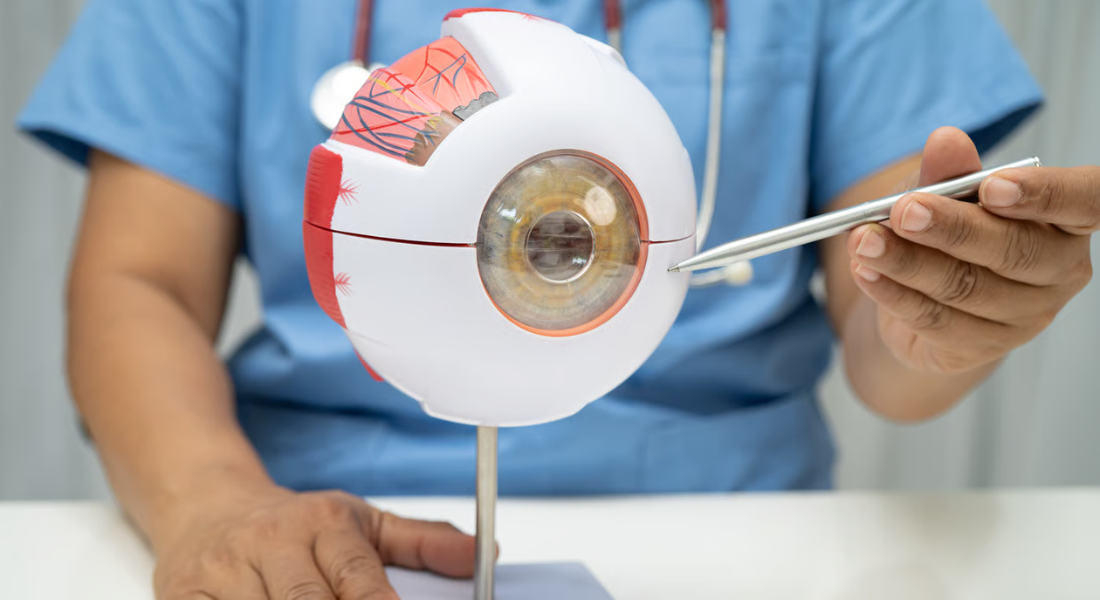
When you start exploring lens replacement surgery, most discussions focus on lens type, incision size, or recovery timelines. These are all important, but a subtler factor often gets overlooked: angle kappa. This small measurement can significantly affect your vision, particularly if you are considering premium lenses such as multifocal or trifocal options. Overlooking it may lead to visual disturbances even when the surgery itself is technically flawless.
Angle kappa refers to the angle between your visual axis the line of sight from the fovea to the object you are focusing on and the centre of your pupil. A larger angle can change how light passes through the lens relative to your visual axis, which may affect clarity and optical performance. For standard monofocal lenses, this is usually less critical, but for premium lenses that rely on precise optics, even a small misalignment can cause glare, halos, or reduced contrast sensitivity.
Measuring angle kappa accurately before surgery allows me to match lens choice to your eye’s anatomy. It guides whether a multifocal, trifocal, or extended depth-of-focus lens will give you optimal results. In some cases, a large angle kappa might steer me toward lenses designed to tolerate slight misalignment, ensuring your vision remains sharp and comfortable.
By taking angle kappa into account, you reduce the risk of post-operative visual issues and improve satisfaction with premium lens outcomes. It’s a detail that doesn’t often come up in general discussions but can be crucial for achieving crisp, natural vision. Knowing this measurement allows both you and your surgeon to make informed decisions tailored to your eyes.
Why Angle Kappa Deserves Your Attention
You should understand that angle kappa is the angular difference between your visual axis the line you naturally use to focus on objects and the pupillary axis, which passes through the centre of your pupil. Even though it sounds technical, it has very real effects on your vision. A large angle can mean that a perfectly placed lens doesn’t align with your natural sight, causing issues like glare, halos, or reduced contrast.
This is particularly important for premium lenses such as multifocal or trifocal options. These lenses split light to provide focus at multiple distances, and any misalignment caused by a significant angle kappa can degrade performance. Patients with larger angles often notice visual disturbances even when the surgery itself is flawless.
By measuring angle kappa before surgery, you and your surgeon can choose a lens that suits your anatomy and visual needs. This helps maximise clarity, comfort, and overall satisfaction with your results. Accounting for this detail ensures that your premium lens performs as intended and reduces the risk of unwanted optical side effects.
How I Measure Angle Kappa
Angle kappa plays a critical role in lens positioning and visual outcomes. I combine corneal topography with advanced optical biometers to map the visual axis relative to the pupillary centre. Accurate measurement ensures that the lens aligns with the visual axis rather than just the pupil, which is essential for reducing glare, halos, and post-operative dissatisfaction.
- Using corneal topography and optical biometers: These tools provide a precise map of the cornea and visual axis. By comparing this with the pupillary centre, I can calculate the angle kappa accurately. Reliance on visual estimation alone can lead to misalignment and reduced visual quality.
- Measuring under normal lighting conditions: Pupil size fluctuates with lighting, altering apparent alignment. I always measure in typical ambient conditions to capture realistic functional angles. This avoids errors that could arise from artificially dilated or constricted pupils.
- Multiple readings for accuracy: Angle kappa varies between eyes and with fixation. I take several measurements to account for these variations, reducing the risk of planning based on an unrepresentative snapshot. Consistency in readings ensures confidence in lens selection and placement.
- Guiding lens selection and positioning: Precise angle kappa measurement informs which lens type and centration strategy will minimise visual disturbances. Misjudging this can lead to halos, glare, or poor adaptation. Early, accurate mapping is a preventive step that protects both comfort and functional vision.
Measuring angle kappa accurately transforms lens implantation from guesswork into precision planning. By combining multiple readings, proper lighting, and advanced imaging, I reduce the risk of misalignment and post-operative complications. This careful approach ensures that lenses interact with the visual axis correctly, maximising clarity and patient satisfaction. In practice, precise angle kappa assessment is a cornerstone of predictable, high-quality visual outcomes.
Large Angle Kappa: Implications for Premium Lenses
You should know that premium lenses, like multifocal or extended depth-of-focus (EDOF) options, need precise centration to perform optimally. When angle kappa is large typically over 0.5 millimetres the visual axis doesn’t line up with the lens’s optical centre. Even after technically perfect surgery, I’ve seen patients notice night-time glare, halos, or reduced contrast due to this misalignment.
In these situations, I often recommend selecting an EDOF or monofocal lens that aligns with the visual axis rather than a multifocal lens. This may feel counterintuitive to patients who assume a premium lens is always the best choice. The truth is that aligning lens selection with your individual biometric measurements produces the most reliable visual outcomes.
By tailoring the lens to your angle kappa, you reduce the risk of post-operative optical disturbances and maximise clarity at all distances. This personalised approach ensures your vision is both comfortable and functional, even if it means choosing a lens that is technically less “premium” but better suited to your eyes.
Adjusting Lens Placement
You should understand that once angle kappa is measured, lens placement can be planned with a high degree of precision. For example, if your visual axis sits slightly nasally relative to the pupillary centre, I may offset the lens to ensure optimal alignment with your natural line of sight. Some lens platforms even allow micro-adjustments during implantation, and I make full use of these features to minimise post-operative visual disturbances such as glare, halos, or reduced contrast. Careful planning at this stage can prevent common issues that patients sometimes experience despite technically perfect surgery.
It’s not just the lens itself that determines visual quality it’s how it interacts with your eye’s unique geometry. Even a perfectly manufactured premium lens can underperform if alignment isn’t considered, particularly with multifocal or trifocal designs. The subtle relationship between the lens and your visual axis often dictates whether the results feel sharp, comfortable, and natural, or whether small optical imperfections persist.
By incorporating angle kappa into lens planning and adjusting placement accordingly, I can ensure the implant works harmoniously with your eye’s anatomy. This detailed, patient-specific approach maximises the performance of premium lenses and significantly improves satisfaction. When these nuances are addressed, the difference between excellent vision and minor but persistent visual complaints becomes very clear.
Real-Life Examples

You should appreciate how angle kappa can directly influence lens choice in practice. I remember a patient who was set on a trifocal lens for both near and distance vision. Pre-operative assessment revealed an unusually large angle kappa, which I explained could cause glare and halos. We opted for an EDOF lens instead, and post-surgery, the patient enjoyed excellent clarity and comfort without any of the visual disturbances a misaligned trifocal lens might have caused.
On the other hand, patients with a small angle kappa generally tolerate multifocal or trifocal lenses very well. Their visual axis aligns closely with the pupillary centre, allowing premium optics to perform as intended without causing unwanted optical phenomena.
These real-world examples highlight why measuring angle kappa is essential rather than optional. It allows for personalised lens selection, improves the likelihood of a smooth visual experience, and helps set realistic expectations, ensuring patients achieve both clarity and comfort after surgery.
When Angle Kappa Matters Less
You should know that not every lens replacement makes angle kappa a critical factor. Standard monofocal lenses, especially those used for distance vision, are generally less sensitive to minor misalignments because they don’t split light like multifocal or trifocal lenses. This means the risk of glare or halos is much lower, even if the visual axis and pupillary centre aren’t perfectly aligned.
Even so, I always measure angle kappa as part of a comprehensive pre-operative assessment. Having a complete biometric profile allows me to anticipate potential issues and plan each procedure more accurately.
By including angle kappa in every evaluation, you gain an extra layer of safety and predictability. This ensures that whether you choose a monofocal or premium lens, the final outcome is optimised for clarity, comfort, and long-term satisfaction.
Combining Angle Kappa with Other Biometric Factors
You should understand that angle kappa is only one part of a broader biometric picture. I also take into account corneal astigmatism, axial length, anterior chamber depth, and pupil size. Evaluating all these factors together allows me to choose the lens and surgical plan that will deliver the best possible visual outcomes.
For instance, a patient with a large angle kappa and significant astigmatism may benefit more from a toric EDOF lens than a multifocal or trifocal lens. This combination addresses both alignment and refractive correction, reducing the risk of glare, halos, or compromised vision.
By integrating angle kappa with these other measurements, you can optimise functional vision at all distances while minimising visual disturbances. It’s this comprehensive, personalised approach that ensures premium lenses perform as intended and meet patient expectations.
Pre-Operative Planning Workflow
Effective lens replacement begins long before the first incision. I treat pre-operative planning as a structured, stepwise process where each measurement and consultation informs the next. Skipping or rushing any step increases the risk of suboptimal lens choice, misalignment, or post-operative dissatisfaction. A meticulous workflow transforms individual anatomical data into a predictable surgical plan.
- Comprehensive biometric measurements: I gather multiple metrics, including angle kappa, corneal curvature, and axial length. Each parameter contributes to understanding how the lens will sit and perform. Accurate biometry is the foundation for safe, predictable outcomes.
- Visual axis mapping under standard lighting: Corneal topography and biometers reveal how the visual axis aligns with the pupil. Measuring under normal lighting ensures realistic functional data, avoiding misalignment from artificially dilated or constricted pupils. This step informs centration and lens type decisions.
- Lens selection simulation: I match lens design and type to the unique geometry of the eye. Simulations help predict visual performance, identify potential issues, and guide final selection. This proactive step reduces surprises and ensures alignment with patient needs.
- Patient consultation and expectation setting: I explain how angle kappa and other metrics affect outcomes. Patients understand the rationale behind lens choice, potential trade-offs, and realistic adaptation timelines. Engaged, informed patients are more cooperative and satisfied post-surgery.
- Surgical plan finalization: All data converges into a precise surgical plan, including lens offset adjustments or micro-alignment features as needed. Every step is documented to maintain consistency and reproducibility. Planning at this level ensures every lens placement is tailored, not templated.
A structured pre-operative workflow transforms variable anatomy into predictable, high-quality outcomes. Each biometric reading, mapping step, and patient discussion contributes to precision and confidence in lens selection. By following this process meticulously, I minimise surprises, optimise visual results, and enhance patient satisfaction. Pre-operative diligence is the key that turns careful planning into lasting success.
Lens Technology Innovations and Angle Kappa
You should know that lens manufacturers are increasingly designing implants that take angle kappa into account. Some modern EDOF and trifocal lenses feature aspheric optics, which tolerate slight decentration and reduce the impact of a large angle. Other innovations, such as adjustable lens platforms, allow intraoperative fine-tuning to optimise alignment with your visual axis.
I combine these technological advances with detailed biometric data to guide lens selection and placement. This ensures that the lens performs as intended and minimises the risk of visual disturbances like glare or halos. It’s a careful balance between product design and individual anatomy.
By integrating technology with precise measurements, you can achieve visual outcomes that are both predictable and comfortable. It’s not just the lens itself but how it interacts with your eye that determines the quality of your vision after surgery.
Night Vision and Angle Kappa

You should be aware that halos or glare are most noticeable in low-light conditions, and a large angle kappa can make these issues more pronounced with premium lenses. I always discuss night vision carefully with patients before surgery, explaining that even minor misalignment can affect how light is perceived in dim environments. This helps set realistic expectations and avoids surprises after the procedure.
For patients with a large angle kappa who frequently drive or work in low-light settings, I may recommend lenses that minimise light splitting or prioritise contrast sensitivity over multifocality. The goal is to maximise functional vision where it matters most rather than simply choosing a lens marketed as “premium.”
By considering night-time visual demands alongside angle kappa, you can select a lens that balances clarity, comfort, and safety. This practical approach ensures you can perform daily activities confidently without being hindered by optical side effects.
Integrating Lens Surgery in London Practices
You should know that if you’re considering premium lens replacement, working with a surgeon who understands angle kappa is essential. This measurement is routinely included in my comprehensive pre-operative evaluations, alongside other biometric factors, to ensure that lens choice and placement are fully customised.
In London, advanced practices increasingly incorporate these assessments to guide personalised lens selection. By factoring in angle kappa, surgeons can minimise the risk of post-operative visual disturbances and maximise both clarity and comfort.
If you’re exploring your options, seeking a clinic that combines detailed biometric analysis with experience in premium lens implantation can make a significant difference. Understanding the nuances of your eye’s anatomy is key to achieving predictable, high-quality outcomes.
Patient Experience and Satisfaction
You should know that the ultimate goal of lens surgery is functional vision that fits your lifestyle. By including angle kappa measurements in my pre-operative assessment, I can significantly reduce the risk of dissatisfaction caused by glare, halos, or reduced contrast. This ensures that your vision after surgery is not just technically good, but comfortable and practical for everyday life.
Patients often feel reassured when they understand why a lens different from their initial preference may actually serve them better. Explaining the role of angle kappa helps them see that choices are grounded in anatomy and visual function, not just marketing.
By aligning lens selection with your individual biometric profile, you increase the likelihood of predictable, high-quality outcomes. This personalised approach enhances satisfaction, giving patients confidence that their premium lens will deliver both clarity and comfort in real-world conditions.
Advanced Planning for Complex Cases
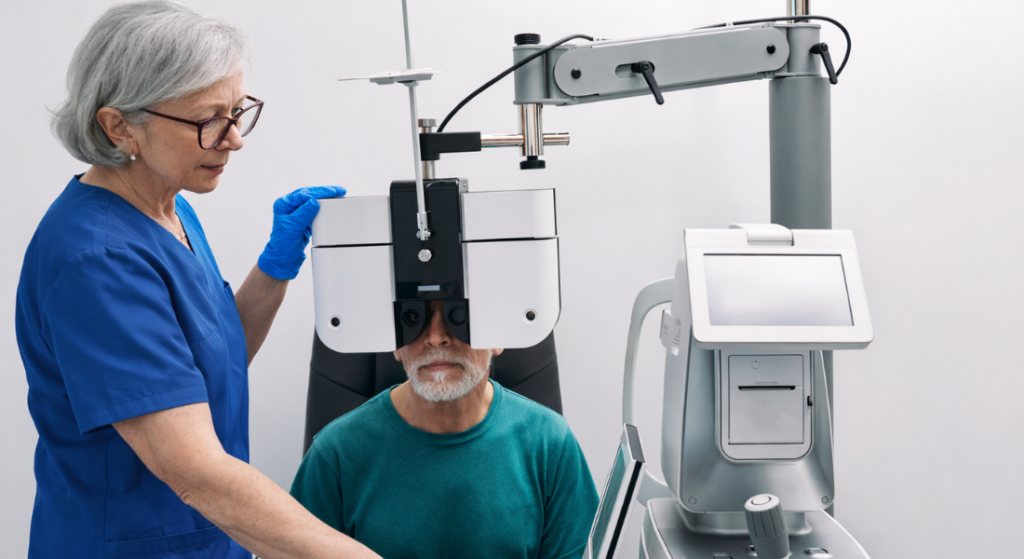
You should understand that patients with multiple ocular variables, like significant astigmatism combined with a large angle kappa, need extra careful planning. I use advanced biometric software to simulate outcomes with different lens types, which helps predict how each option will interact with the eye’s natural geometry.
This approach allows me to evaluate potential optical trade-offs, such as balancing contrast sensitivity with near vision performance. It ensures that the lens choice isn’t just theoretically ideal but practical for the patient’s daily activities and visual demands.
By integrating detailed simulations into pre-operative planning, you can achieve personalised, predictable results even in complex cases. This data-driven strategy minimises surprises and maximises both clarity and comfort, giving patients confidence in their surgical outcome.
Managing Expectations Pre- and Post-Operatively
Transparency is the foundation of patient satisfaction in lens replacement. I make it clear that premium lenses can provide excellent near, intermediate, and distance vision, but anatomical realities sometimes limit performance. Factors like angle kappa influence how well lenses align with the visual axis, affecting clarity and comfort. By addressing these nuances upfront, patients enter surgery with realistic expectations and are less likely to be disappointed afterwards.
- Communicating anatomical constraints: Even the best lenses cannot fully overcome individual variations such as corneal shape, axial length, or angle kappa. Patients who understand these limitations are prepared for minor trade-offs. Clarity about constraints prevents frustration and fosters trust.
- Linking lens choice to functional outcomes: I explain how different lens designs perform under varying anatomical conditions. This ensures patients see why one lens may be preferred over another. Awareness of this rationale helps patients appreciate results, even if minor compromises exist.
- Setting adaptation expectations: Post-operative visual adaptation varies between individuals. Educating patients about gradual improvements and the possibility of minor adjustments reduces anxiety. Realistic timelines for visual recovery create confidence in the process.
- Transparency to prevent disappointment: When patients are fully informed, satisfaction rates rise significantly. They are less likely to attribute normal adaptation issues to surgical failure. Honest, early communication aligns patient perception with achievable outcomes.
Managing expectations is as important as technical execution in lens replacement. Clear communication about anatomical limits, lens performance, and adaptation timelines sets a framework for realistic satisfaction. Patients who understand the process engage more confidently and report higher post-operative contentment. In practice, transparency transforms high-quality surgery into a truly rewarding patient experience.
Continuous Follow-Up and Outcome Evaluation
You should know that post-operative follow-up is essential for assessing how well the lens aligns with your visual axis and performs in real life. If minor misalignments are detected, some modern lenses allow for adjustment or enhancement to fine-tune vision. This ensures that any subtle issues can be corrected before they affect your day-to-day activities.
Regular monitoring also allows me to evaluate overall visual quality, including glare, halos, and contrast sensitivity, and compare it against pre-operative simulations. This feedback loop helps confirm that the chosen lens and placement strategy are delivering the expected results.
By completing this cycle of personalised care, biometric considerations like angle kappa are translated into practical, functional outcomes. Continuous follow-up gives you confidence that your vision remains sharp, comfortable, and well-aligned with your lifestyle needs over time.
FAQs:
1. What is angle kappa and why does it matter?
Angle kappa is the angular difference between your visual axis the line your eye naturally uses to focus and your pupillary axis, which passes through the pupil centre. A large angle can misalign light entering premium lenses, causing glare, halos, or reduced contrast.
2. Which lenses are most affected by angle kappa?
Multifocal, trifocal, and extended depth-of-focus (EDOF) lenses rely on precise centration. Misalignment due to a large angle kappa can reduce performance, whereas standard monofocal lenses are generally less sensitive to this factor.
3. How is angle kappa measured?
I use corneal topography combined with optical biometers under normal lighting conditions, taking multiple readings to ensure accuracy. This allows precise mapping of the visual axis relative to the pupil, guiding lens choice and placement.
4. What if I have a large angle kappa?
For large angles (typically >0.5 mm), I may recommend EDOF or monofocal lenses over multifocals to minimise visual disturbances. Lens placement can also be slightly offset to align with your visual axis for optimal clarity and comfort.
5. Does angle kappa affect night vision?
Yes. A large angle kappa can make halos and glare more noticeable in low-light conditions. Lens selection and placement strategies can be adjusted to prioritise contrast sensitivity and reduce night-time visual issues.
6. Can angle kappa be considered alongside other biometric factors?
Absolutely. Corneal astigmatism, axial length, pupil size, and anterior chamber depth are all assessed in conjunction with angle kappa to select the lens that best balances clarity, near vision, and functional outcomes.
7. How is lens surgery planned around angle kappa?
Pre-operative workflow includes biometric measurements, visual axis mapping, lens simulation, and patient consultation. These steps ensure lens type and placement are customised, reducing the risk of optical side effects.
8. Are there lens technologies that mitigate angle kappa issues?
Yes. Modern aspheric EDOF and trifocal lenses tolerate slight decentration, and some adjustable lens platforms allow intraoperative fine-tuning to optimise alignment with your visual axis.
9. Will post-operative follow-up address angle kappa concerns?
Continuous follow-up assesses visual alignment and performance. Minor misalignments can sometimes be corrected, ensuring your vision remains clear, comfortable, and well-suited to daily activities.
10. How do I ensure the best outcomes for premium lenses?
Comprehensive pre-operative assessment, personalised lens selection, precise placement, patient education, and diligent follow-up all combine to maximise clarity, comfort, and satisfaction, translating biometric measurements into predictable, high-quality vision.
Final Thoughts: Precision Matters in Every Eye
Angle kappa may seem like a small measurement, but its impact on premium lens outcomes is significant. By assessing it alongside other biometric factors, I can choose and position lenses that align with your visual axis, minimising glare, halos, and contrast issues. Careful pre-operative planning, patient education, and post-operative follow-up turn technically perfect surgery into functional, comfortable vision.
If you’re considering Lens Surgery in London, you can get in touch with us at London Cataract Centre, where each procedure is personalised to your anatomy and visual needs. By combining detailed measurements with modern lens technology, we ensure outcomes that are predictable, precise, and tailored for your lifestyle. Book a consultation to start your journey toward clear, comfortable, and high-quality vision.
References:
- Kohnen, T., Ramasubramanian, V. & Suryakumar, R. (2026) A review of angle kappa and multifocal intraocular lenses and their effect on visual outcomes, Acta Ophthalmologica, https://pubmed.ncbi.nlm.nih.gov/40884206/
- Pandey, S.K., Sharma, V. and Vashist, P. (2022) Angle kappa measurement and its relevance in cataract and refractive surgery outcomes, Diagnostics, https://www.mdpi.com/2077-0383/15/1/336
- Fu, Y. et al., 2018. Role of angle κ in visual quality in patients with a trifocal diffractive intraocular lens. Journal of Cataract & Refractive Surgery, https://www.sciencedirect.com/science/article/abs/pii/S0886335018304772
- Au Eong, J.T.W., 2024. Severe astigmatism secondary to large intraocular lens pantoscopic tilt because of a malpositioned haptic following cataract surgery. Journal of Surgical Case Reports https://academic.oup.com/jscr/article/2024/3/rjae134/7625335
- Sandoval, H.P., Potvin, R. and Solomon, K.D. (2022) The effects of angle kappa on clinical results and patient‑reported outcomes after implantation of a trifocal intraocular lens, Clinical Ophthalmology, https://pmc.ncbi.nlm.nih.gov/articles/PMC9058245/