



If you’ve chosen trifocal lenses for your cataract or lens replacement surgery, you’re probably excited about the idea of seeing clearly at all distances without glasses. However, like many patients, you may also be wondering how long it takes to adapt to your new vision. Trifocal lenses work differently from your natural lens, so your brain needs time to learn how to process the new visual information. This settling period is completely normal, but it can feel unusual until everything stabilises.
Understanding what to expect in the hours, days and weeks after surgery can make your experience much easier. Adaptation is a journey that varies from person to person, and knowing what is normal helps you feel reassured while your vision adjusts. In this guide, I’ll walk you through the typical adaptation timeline, why the brain needs time to adjust, what sensations are normal and when to contact your clinic if something feels unusual.
Why Adaptation Happens
Trifocal lenses split incoming light into different focal points so that you can see near, intermediate and far distances without glasses. Because this optical structure is different from the natural crystalline lens you had before surgery, your brain has to learn how to select the right focus for each situation. This process is called neuroadaptation.
Your brain is incredibly adaptable, but it still needs time to understand the new light distribution. While some people adjust quickly, others need more time because their visual habits vary. You use your eyes differently depending on your work, hobbies and lifestyle, and these patterns influence how fast you adapt.
Why Neuroadaptation Takes Time
- New light patterns – Your brain must learn how to interpret the different focal points created by the trifocal lens.
- Habitual focusing – Years of wearing glasses or relying on your natural lens means your visual habits need time to shift.
- Contrast sensitivity changes – Your eyes adjust to new contrast levels as the brain learns to balance the three focal zones.
Adaptation is a natural part of multifocal lens surgery and understanding it helps create realistic expectations.
What Vision Looks Like in the First Few Hours
Immediately after surgery, your vision may be foggy or slightly blurry. This is due to normal swelling and the effect of eye drops. You may feel surprised that your vision isn’t instantly sharp, but this early blur is expected and temporary.
Some people describe the first hours as similar to looking through a light mist. You may also notice haloing or glare around lights, especially in bright environments or at night. These effects are related to how trifocal optics distribute light, and they usually reduce as your brain adapts.
During the first few hours, your main goal is rest. Your eye is healing, and your brain is beginning the complex process of adjusting to the new lens.
What Happens During the First Few Days
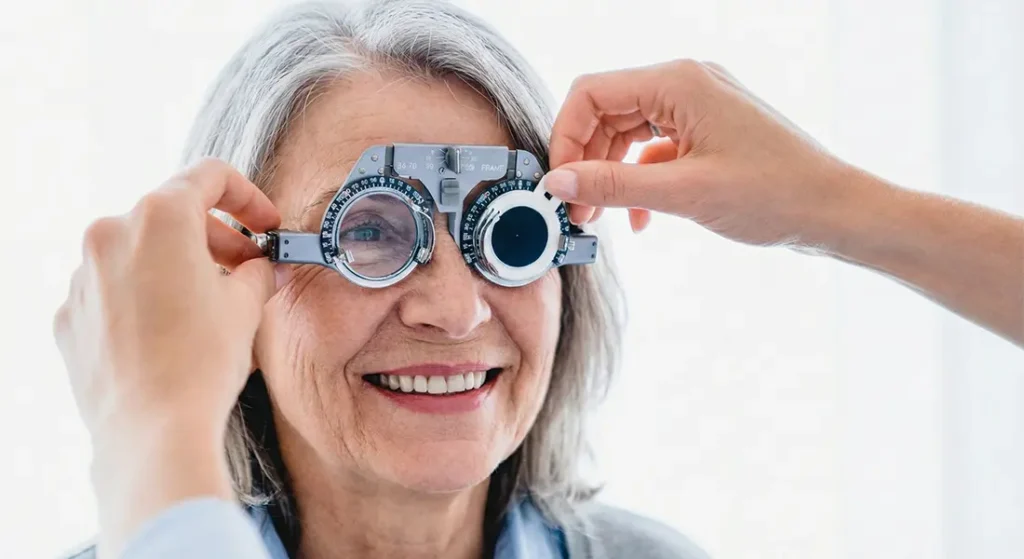
The first few days often bring noticeable improvement. Your distance vision may start to feel clearer, while your intermediate and near vision continue to sharpen gradually. Some moments may feel unexpectedly clear, and other moments slightly blurry. This fluctuation is completely normal.
You may also notice your sensitivity to light changing. Some patients report halos or starbursts around lights at night, especially when driving or walking outdoors. These effects usually reduce significantly as neuroadaptation progresses.
Common First-Week Experiences
- Visual fluctuations – During the early weeks, it’s common for clarity to vary at different times of the day. This happens because your brain is learning to interpret multiple focal points, and temporary fatigue or lighting changes can make vision feel inconsistent.
- Night-light effects – Halos, glare, or starbursts around lights are typical during the initial adaptation period. These effects usually decrease over time as your eyes and brain adjust, particularly under low-light or nighttime conditions.
- Improving comfort – As early swelling and minor visual disturbances settle, your eyes gradually feel more relaxed and stable. This increased comfort reflects both healing and the ongoing neuroadaptation process, allowing daily activities to become easier and more natural.
Most people find the first week exciting but also a little unpredictable as their vision constantly improves.
What the First Few Weeks Feel Like
By the second or third week, most people notice a more predictable level of clarity. Near and intermediate vision typically improve significantly during this period, and tasks such as reading, using a phone or working on a computer become easier. Distance vision often stabilises more quickly, but near vision benefits most from neuroadaptation.
Your brain becomes more efficient at choosing the correct focal point for each task. This is when many patients begin experiencing the true advantages of trifocal lenses the ability to move between tasks effortlessly with minimal reliance on glasses.
Some fluctuations may still occur, particularly in low light or when your eyes are tired. This is normal and part of the natural settling process.
Why Night Vision Takes Longer to Adapt
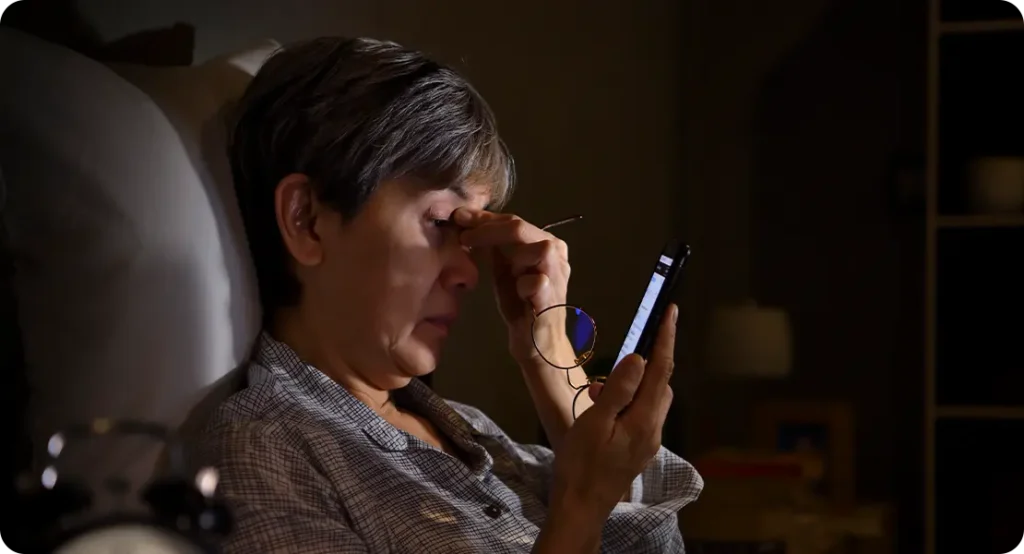
Night-time light sources challenge your eyes because your pupils naturally widen in dim conditions. Larger pupils allow more peripheral light to enter the lens, and multifocal lenses distribute this light in a way that can temporarily increase glare or halo effects. These visual patterns improve steadily as your brain learns how to process them.
For some people, night vision adaptation takes a little longer than daytime adaptation. However, the majority of patients experience significant improvement within the first few months.
Night-Vision Adaptation Factors
- Pupil size – Larger pupils increase the percentage of light entering non-central focal zones.
- Contrast sensitivity – Low-light environments challenge contrast, but this improves with neuroadaptation.
- Fatigue effects – Tired eyes make it harder for the brain to process multiple focal points.
With consistent use, your brain becomes better at filtering unnecessary visual information.
How Long Adaptation Typically Takes
Most people feel comfortable with their trifocal lenses between four and eight weeks after surgery. This is when the majority of improvements stabilise. However, complete neuroadaptation can take up to three to six months, particularly for night-time vision or fine near work.
While this timeline varies, there is no “right or wrong” speed. Some people adapt in days, while others take several months. Your brain’s ability to interpret new visual patterns depends on many factors, including your lifestyle, your focusing habits and even your personality.
Typical Adaptation Timelines
- First 24 hours – Immediately after receiving trifocal lenses, it’s common to experience blurred or foggy vision, along with light sensitivity. Your eyes are adjusting to multiple focal zones, and these early fluctuations are completely normal.
- First week – During the initial week, many patients notice rapid improvement in general clarity, but variations between near, intermediate, and distance vision can still occur. Your brain is beginning to process the new visual inputs and integrate them into daily activities.
- Weeks 2–4 – By the second to fourth week, vision becomes more consistent across different distances. Reading, computer work, and general day-to-day tasks start to feel more comfortable as your eyes continue adapting to the trifocal design.
- Months 2–3 – Night vision gradually improves during this period, and halos or glare around lights often start to soften. This phase reflects ongoing neuroadaptation, as your brain fine-tunes the processing of multiple focal zones under varying light conditions.
- Months 3–6 – Most patients achieve full neuroadaptation by three to six months, with stable long-term vision and consistent performance across near, intermediate, and distance tasks. Any residual halos or distortions usually diminish significantly during this phase.
Most patients feel satisfied well before the six-month mark.
Factors That Influence How Fast You Adapt
The speed at which you adapt to trifocal lenses varies because your brain needs to adjust to the new optics. No two people adapt in exactly the same way, and several factors can influence your experience.
Your daily visual demands play a role those who perform a variety of tasks that naturally use multiple focal points often adapt more quickly. Reading habits can also affect adaptation; if you spend long periods reading closely, it may take longer for your eyes and brain to adjust.
Lighting environments are another consideration. Well-lit spaces make it easier for your visual system to process images, while dim conditions require extra neural effort. Eye health is equally important conditions like dry eyes, ocular surface issues, or retinal concerns can slow down the adaptation process.
These factors help explain why two people with the same lenses may adapt at very different speeds, highlighting the personalised nature of neural adjustment to trifocal optics.
How You Can Support Faster Adaptation
Actively using your new vision helps your brain learn to interpret it more quickly. Simple daily habits can make the adjustment period smoother and more comfortable.
Try to use all distances regularly, switching between reading, intermediate tasks and long-distance viewing. This encourages your visual system to train across all focal points. Maximising lighting also helps well-lit environments improve clarity and make it easier for your brain to process images.
Patience is key, as adaptation happens gradually. Even subtle progress each day indicates that your visual system is adjusting. Consistent and varied use of your new vision is the most effective way to support faster and more complete adaptation.
What Is Normal During the Settling Phase
Understanding what sensations are typical during trifocal lens adaptation can reassure patients and help manage expectations. Many people notice mild blur at certain distances, especially when quickly switching focus from near to far. This occurs because your visual system is still learning to prioritise the correct focal point for each task.
Haloing or glare, particularly in low-light or nighttime conditions, is another common early experience. These visual effects often improve gradually over several weeks as your brain adapts to the new optical input. They are usually temporary and tend to diminish with consistent use of your lenses.
Some patients observe subtle changes in contrast or colour perception. Blacks may appear slightly softer, and details may seem less sharp initially. This is a normal part of neuroadaptation as your brain recalibrates how it processes images from multiple focal points.
You may also feel that focusing requires a little extra effort at first. Your brain is actively learning which focal point to use for each distance, so tasks like reading, computer work or driving may feel slightly different until adaptation is complete. These experiences are expected and indicate that your visual system is adjusting correctly.
When to Contact Your Clinic
Although most symptoms during trifocal lens adaptation are normal, there are certain situations where you should contact your clinic for advice. If your vision does not show gradual improvement over the first few weeks, or if discomfort increases instead of easing, your eyes should be assessed to ensure everything is progressing as expected.
You should reach out if you experience increasing pain rather than improving comfort, sudden changes in vision, or a sharp decrease in clarity after initial improvement. Persistent redness or any symptoms that interfere with your daily activities are also reasons to seek professional guidance.
Your clinic can evaluate whether your healing is on track and check for any secondary issues that may affect adaptation. Prompt consultation helps address problems early, providing reassurance and, if needed, timely treatment to support a smoother visual adjustment.
Frequently Asked Questions
1. How long will it take before I can see clearly after trifocal lens surgery?
Most patients notice some improvement in vision within the first few hours, but it is normal for clarity to fluctuate during the initial days. Full adaptation, where your brain comfortably processes near, intermediate, and distance vision, generally occurs between three to six months. During this time, subtle visual disturbances such as halos or slight blur at specific distances are common, and they gradually diminish as neuroadaptation progresses.
2. Why does my vision feel blurry or misty immediately after surgery?
Blurriness in the first hours or days is a natural result of normal postoperative swelling and the use of eye drops. Trifocal lenses split light into multiple focal points, which is different from how your natural lens works, so your brain has not yet learned to prioritise each distance effectively. Early visual fogginess should improve steadily as your eyes heal and neuroadaptation begins.
3. Are halos, glare, or starbursts normal after receiving trifocal lenses?
Yes, halos, glare, and starbursts are typical during the adaptation period. These effects occur because multifocal optics distribute incoming light across several focal zones, and your brain is still learning to filter and focus this information. Most patients notice these visual phenomena reducing within a few weeks to months, especially as nighttime and low-light vision gradually stabilises.
4. Why does my night vision take longer to feel comfortable than daytime vision?
Night-time adaptation often takes longer because dim lighting causes pupils to enlarge, allowing more peripheral light to enter the lens. This can increase glare and halo effects temporarily. The brain requires additional time to adjust to the broader distribution of light in low-light conditions, and improvements continue gradually over the first few months, often coinciding with the completion of general neuroadaptation.
5. Will my near and intermediate vision improve at the same rate as my distance vision?
Distance vision usually stabilises more quickly than near or intermediate vision, which can continue improving over several weeks. Tasks such as reading, using a phone, or working on a computer benefit particularly from neuroadaptation. The brain gradually learns to select the correct focal point for each activity, making transitions between distances smoother and more natural as time passes.
6. Can my lifestyle or daily activities affect how quickly I adapt?
Yes, the speed of adaptation is influenced by your daily visual habits. People who frequently switch between near, intermediate, and far tasks often adapt more quickly because their brains receive consistent visual practice across multiple focal points. Conversely, individuals with highly specific or intensive near-focus activities may take longer to achieve full comfort as their brain learns to balance different distances efficiently.
7. Are there any signs that adaptation is not progressing normally?
While some fluctuation in vision is expected, you should contact your clinic if you notice a sudden decrease in clarity, persistent pain, or if halos and glare do not gradually improve. Increasing discomfort, redness, or any symptom that interferes with daily life warrants professional evaluation. These signs may indicate secondary issues that require attention to ensure a smooth recovery.
8. How does lighting affect my adaptation process?
Well-lit environments generally help the brain interpret the multiple focal zones more efficiently, improving near and intermediate clarity. Dim or inconsistent lighting can challenge visual processing, making blur, halos, or starbursts more noticeable. Patients are encouraged to perform visual tasks in varied lighting to help their visual system adapt more smoothly, but it is normal for low-light conditions to initially feel less comfortable.
9. What role does neuroadaptation play in adjusting to trifocal lenses?
Neuroadaptation is the process by which your brain learns to select the correct focal point for different distances. After surgery, the eyes send new patterns of light to the brain that differ from previous experiences with natural lenses. Over weeks to months, the brain recalibrates how it processes these signals, reducing visual disturbances and enhancing overall comfort and clarity.
10. Can I support my adaptation at home?
Yes, actively using your vision across all distances is one of the most effective ways to promote adaptation. Regularly performing near, intermediate, and distance tasks encourages your brain to train across multiple focal points. Adequate lighting and patience are essential, as small improvements each day indicate that your visual system is adjusting properly. Avoiding overstraining the eyes and following your surgeon’s post-operative advice helps ensure a smooth and successful adaptation period.
Final Thought: Adapting to Trifocal Lenses
Adapting to trifocal lenses is a gradual process, and understanding what to expect during the first hours, days, and weeks can make the experience far more manageable. Most patients notice steady improvements over the first month, with full neuroadaptation often achieved within three to six months. Patience, consistent use of your new vision across all distances, and exposure to varied lighting conditions all help your brain adjust more efficiently. If you’re considering trifocal lenses in London, you can contact us at the London Cataract Centre to schedule a consultation with one of our specialists.
References:
1. D’Oria, F., Nowrouzi, A., Alio del Barrio, J. L., Versaci, F. & Alio, J. L. (2021) ‘Retinal Optical Quality of Multifocal Refractive and Monofocal Intraocular Lenses’, Photonics, 8(12), 559. https://www.mdpi.com/2304-6732/8/12/559
2. ‘Basic Optics Underlying Current Intraocular Lenses’, Journal of Clinical Medicine, 14(23), 8608. https://www.mdpi.com/2077-0383/14/23/8608
3. Scheepers, M. A., Pasin, N. M. & Hall, B. (2025) ‘Visual outcomes, quality of vision, and patient satisfaction of a trifocal intraocular lens. https://www.sciencedirect.com/science/article/abs/pii/S0008418225000389
4. ‘Visual and patient‑reported outcomes of a novel full visual range intraocular lens versus a monofocal intraocular lens: a randomized multicenter US trial’ https://www.sciencedirect.com/science/article/pii/S0002939425004659 5. ‘Comparison of postoperative visual performance between trifocal intraocular lens and monofocal intraocular lens’, Saudi Medical Journal, 44(5), 456