


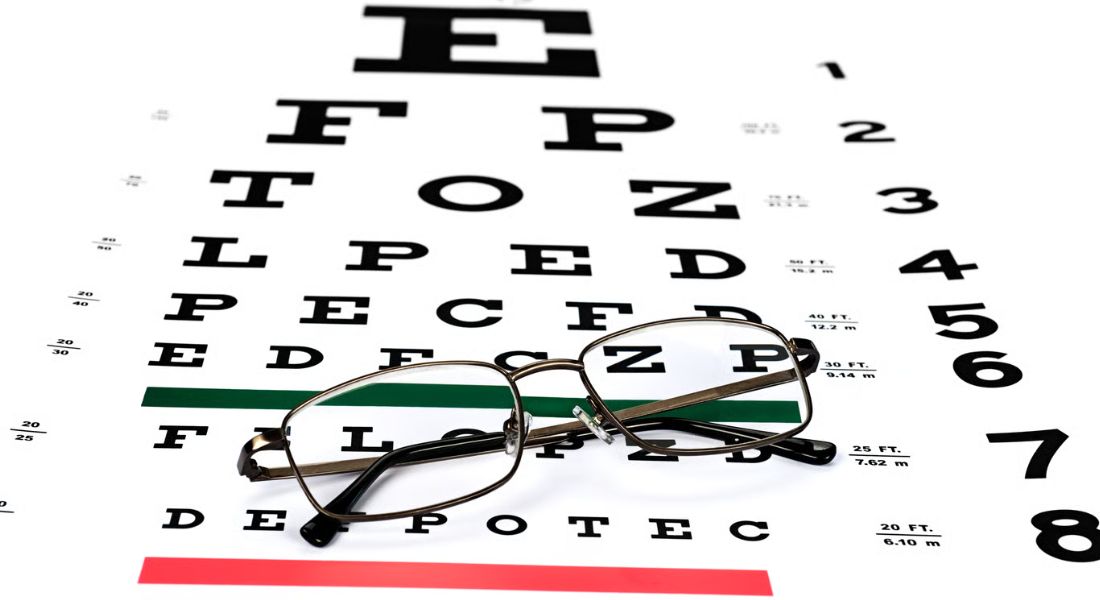
When you hear the phrase 20/20 vision, it is very easy for you to assume it means perfect eyesight. This is a common misunderstanding, and many people still believe it. It sounds like a clear measure of “good” or “bad” vision. However, the reality is more complex than that.
You may think that if you have 20/20 vision, your eyesight is completely normal in every way. But this only refers to how clearly you can see at a specific distance on a chart. It does not measure other important aspects of vision such as depth perception, colour vision, or eye coordination. For you, this means a vision test is only giving part of the full picture.
Once you understand how vision actually works, you realise that 20/20 vision is just one part of overall visual quality. High-quality vision also includes comfort, clarity in different lighting, and how well your eyes work together. You might still experience eye strain or headaches even with 20/20 vision. This is why looking beyond the number is important.
In this guide, the aim is to help you understand what your vision test is really telling you and what it is not. By having a clearer understanding, you can make better decisions about your eye health. It also helps you avoid assuming everything is fine based on a single measurement. For you, this awareness is key to maintaining truly healthy vision.
What 20/20 Vision Actually Means
Let me start with the basics so you can clearly understand what this actually means. 20/20 vision is a measurement of visual acuity, which refers to the sharpness or clarity of your sight. It is one of the most common tests used during an eye examination. However, it only measures one specific aspect of your vision.
In simple terms, it tells you how clearly you can see letters or symbols at a set distance compared to what is considered “normal” vision. You are usually asked to read an eye chart from a fixed distance, and your results are compared to a standard level. This gives an indication of how sharp your central vision is at that moment. For you, it is a basic benchmark rather than a full assessment.
If you have 20/20 vision, it means you can see at 20 feet what an average person with normal vision can also see at 20 feet. This does not mean your vision is perfect in every situation. It simply shows that your distance clarity meets the expected standard. Other important aspects of vision are not included in this measurement.
But Here Is the Important Part
But here is the important part that you need to understand clearly: 20/20 vision does not mean perfect vision. It only describes how clearly you can see at a specific distance under controlled testing conditions. Many people assume it reflects complete eye health, but it does not. For you, it is simply a basic measure of sharpness, not overall visual performance.
20/20 vision mainly measures clarity at high contrast in ideal conditions, such as reading black letters on a white chart in a well-lit room. It does not reflect how your eyes perform in more complex or challenging environments. In real life, you deal with changing light, movement, and different visual demands throughout the day. These situations are not fully represented in a standard vision test.
It also does not measure how well you function in everyday situations like driving at night, reading in dim light, or dealing with glare from screens or headlights. You might still experience eye strain, fatigue, or focusing issues even if you have 20/20 vision. This is why visual quality is much broader than just one number. And this is where understanding your true vision experience becomes much more interesting and important.
Vision Is More Than Just Sharpness
When talking about ‘visual quality,’ the focus is on how vision actually performs in everyday life, not just how well letters can be read on a chart. Good vision is about comfort, clarity, and adaptability in real-world situations. Many people assume that if they can see clearly on a test, their vision is perfect, but that is only one part of the picture. True visual quality includes how your eyes function in different environments and conditions.
- Seeing Clearly in Low Light: Your ability to see in dim environments is an important part of visual performance. Some people struggle with night driving or moving around in poorly lit areas. This can indicate that the eyes are not adjusting efficiently to changes in light.
- Handling Fog, Glare, and Bright Conditions: Vision quality also includes how well you cope with challenging visual environments like fog, glare, or strong sunlight. If objects become difficult to distinguish in these conditions, it may affect safety and comfort. Good visual function allows you to adapt more easily to brightness changes.
- Long-Term Visual Comfort: Comfortable vision means your eyes do not feel strained or tired during daily activities. If you experience frequent headaches or eye fatigue, it may suggest an underlying focusing issue. Healthy vision should remain stable and comfortable over extended periods of use.
- Quick Adaptation to Changing Light: Your eyes should be able to adjust smoothly when moving between bright and dark environments. For example, going from indoors to outdoors should not cause prolonged discomfort or blurred vision. Faster adaptation is a sign of well-functioning visual processing.
In conclusion, visual quality goes far beyond simply reading an eye chart clearly. It reflects how your eyes perform in real-life situations such as changing light, glare, and long periods of use. Understanding this broader view helps you recognise issues that might otherwise be overlooked. Taking care of all aspects of vision ensures better comfort, safety, and overall eye health.
Contrast Sensitivity: The Missing Piece
One of the biggest differences between 20/20 vision and high-quality vision is contrast sensitivity. This is an important part of how clearly you actually see in real-world situations. While 20/20 vision focuses on sharpness, contrast sensitivity focuses on detail in more challenging visual conditions. For you, this can have a big impact on everyday clarity.
Contrast sensitivity refers to your ability to distinguish objects from their background when there is only a small difference in brightness or colour. You may find it harder to see things when lighting is poor or when colours blend together. This can affect how clearly shapes and edges stand out. It plays a key role in safe and comfortable vision.
For example, it includes situations like seeing a grey car in fog or reading light grey text on a white background. You might also notice difficulty in dim lighting or when there is glare from lights. These situations are common in daily life, especially when driving or using screens. For you, this shows how vision quality goes beyond simple clarity.
Why Contrast Matters in Real Life
Why contrast matters in real life becomes very clear when you think about everyday situations like driving at night. In these conditions, your eyes are not just dealing with clear, high-contrast images like those on a test chart. Instead, everything becomes more visually complex and harder to separate.
Streetlights, headlights, and reflections can make it much harder for you to see clearly, even if your eyesight tests perfectly on a standard chart. Objects may blend into the background, and depth perception can feel reduced. You might find it harder to judge distances or notice subtle details on the road. These challenges are very different from reading black letters on a white background.
This happens because real-world vision is not high contrast like a test chart. In daily life, lighting is uneven, colours vary, and objects often do not stand out clearly from their surroundings. For you, this means that good test results do not always guarantee smooth visual performance in practical situations. Understanding this difference helps explain why visual quality is about much more than just sharpness.
Clarity in Different Lighting Conditions
Clarity in different lighting conditions is a key part of how your vision actually works in real life. You might notice that your eyesight feels different depending on whether you are outside in bright sunlight, indoors under artificial lighting, or in a dimly lit space. These changes are normal, but they can significantly affect how clearly you see your surroundings.
Bright sunlight can sometimes cause glare or discomfort, making it harder for you to focus on details. Indoor lighting may create shadows or uneven brightness, which can also impact clarity. In dim environments, your eyes need more time to adjust, and objects may appear less sharp. For you, these variations can influence how comfortable and confident your vision feels throughout the day.
20/20 vision does not account for these real-world lighting differences. It only measures clarity under controlled, ideal testing conditions. This means your vision might appear perfect during a test but behave differently in everyday environments. That is why some people with “perfect” vision still struggle in certain situations, even though their eye chart results are normal.
Glare and Halos
Glare and halos are visual effects that you may notice around bright lights, especially at night or in low-light environments. For example, streetlights, headlights, or even indoor lighting can appear to have glowing rings, streaks, or scattered light around them. This can make your vision feel less sharp or slightly distorted, even when your eyesight seems otherwise normal during the day.
This issue is not reflected in standard vision tests, because eye charts are designed to measure clarity under ideal, controlled conditions. They focus on high-contrast images, such as black letters on a white background, rather than real-world lighting challenges. As a result, these tests do not show how your eyes react to glare, reflections, or changing light sources. For you, this means your everyday visual experience can be quite different from your test results.
It can happen even if your distance vision is technically 20/20, which is why some people are surprised when they still have visual difficulties despite “perfect” eyesight. These effects can make night driving, walking in poorly lit areas, or doing tasks in dim environments more difficult. You might find it harder to focus, judge distances, or feel comfortable in these situations, even though your basic vision test is normal.
Depth Perception and Spatial Awareness
Depth perception and spatial awareness are another important part of visual quality that you should understand. This refers to your ability to judge how far away objects are and how they relate to each other in space. It helps your brain combine the images from both eyes into a single, three-dimensional view of the world.
This ability is essential for everyday activities like driving, playing sports, or even walking downstairs safely. You rely on it more than you might realise in daily life. For example, judging the distance of an approaching car or stepping off a curb both depend on accurate depth perception. If this system is not working well, even simple tasks can feel less confident or more challenging.
20/20 vision alone does not guarantee strong depth perception. You may have clear vision on an eye chart but still struggle with judging distances accurately in real situations. This is because depth perception depends on how well both eyes work together, not just how sharp each eye is individually. For you, this highlights why visual quality involves more than just clarity.
Eye Comfort and Fatigue

Eye comfort and fatigue are an important part of visual quality that many people overlook. You might assume that if your vision is clear, your eyes are working perfectly, but that is not always the case. Comfort plays a major role in how well your eyes function throughout the day, especially during long or focused tasks.
Some people experience eye strain, headaches, or tired eyes even when their vision is “normal” or 20/20. This can happen when reading, using screens, or focusing for extended periods. You may notice your eyes feeling heavy or your concentration dropping over time. For you, this shows that clarity alone does not guarantee comfort.
Good visual quality means your eyes can function comfortably throughout the day without unnecessary strain. When your visual system is working efficiently, you should be able to complete daily tasks without constant fatigue. This balance of clarity and comfort is what truly defines healthy vision.
How the Brain Plays a Role
Your eyes do not work in isolation; they are only one part of a much larger visual system. While your eyes capture light and form an image, it is your brain that interprets and makes sense of what you see. This means vision is not just a physical process in the eye, but also a neurological one. Understanding this connection helps explain why two people with similar eye health can still experience vision differently.
- Eyes Capture, Brain Interprets: Your eyes act like a camera by receiving light and forming an image on the retina. However, this raw information is then sent to the brain for processing. The brain interprets shapes, colours, depth, and movement to create your actual visual experience.
- Perception Can Affect Clarity: Even when the eyes are producing a sharp image, the brain may interpret it differently based on context or prior experience. This can influence how clear or comfortable your vision feels. In some cases, the issue is not in the eye itself but in how the brain processes the signal.
- Visual Processing and Comfort: The brain also plays a role in how comfortable your vision feels over time. If visual information is harder to process, it can lead to eye strain, fatigue, or difficulty focusing. Smooth processing helps maintain stable and comfortable vision.
- Integration of Multiple Signals: Your brain combines information from both eyes to create a single, unified image. It also adjusts for lighting changes, movement, and depth perception. This complex processing system is what allows you to navigate the world effectively.
In conclusion, vision is a coordinated effort between your eyes and your brain, working together to create what you see. Even if your eyes are healthy, the brain’s interpretation plays a major role in overall visual experience. This is why vision is not just about sharpness, but also about processing and perception. Understanding this connection gives a more complete picture of how sight truly works.
Why Some People with 20/20 Vision Still Wear Glasses
This might seem confusing at first, because many people assume 20/20 vision means glasses are not needed. If someone can already see clearly on a standard eye chart, it is natural to wonder why correction would still be required. However, this assumption only focuses on sharpness and ignores other important parts of vision.
The answer lies in visual quality, not just visual acuity. Even if distance clarity is normal, a person may still experience issues like eye strain, poor night vision, or difficulty with contrast and glare. These problems can affect daily comfort and performance, especially during tasks like driving, reading, or using screens for long periods.
Glasses are not only about making things sharper; they can also improve how the eyes process visual information in different conditions. They may help reduce glare, enhance contrast, and make focusing less tiring for the eyes. For you, this means glasses can be useful even when basic vision tests show “normal” results, because they improve overall visual comfort and quality.
Real-World Vision vs Test Room Vision
Real-world vision vs test room vision is a very important difference that you should understand. Vision tests are performed in controlled environments, where everything is designed to be simple and predictable. You sit in a well-lit room and read high-contrast letters on a chart at a fixed distance. For you, this measures clarity under ideal conditions, not real-life performance.
But real life is completely different. You deal with constantly changing lighting, movement, reflections, and visual distractions throughout your day. Your eyes have to adapt quickly to things like sunlight, indoor lighting, screens, and night-time conditions. These situations are far more complex than what is shown in a test room.
That is why real-world vision can feel very different from test results. You might pass an eye chart perfectly but still notice difficulties in everyday situations like driving, reading in dim light, or dealing with glare. For you, this shows that vision quality is not just about what happens in a clinic, but how your eyes perform in everyday life.
The Role of Eye Health Conditions
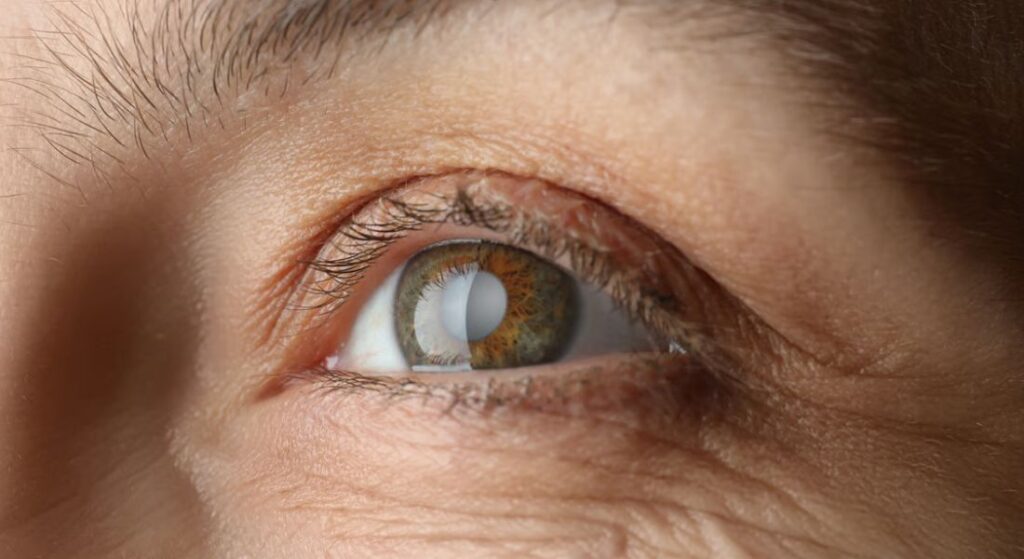
Certain eye conditions can have a bigger impact on overall visual quality than on simple sharpness alone. This means you may still be able to read clearly on an eye chart, but your day-to-day visual experience might feel less comfortable or less stable. These conditions often affect how you perceive contrast, clarity, and consistency in real-world situations. Understanding this helps explain why vision is about more than just a 20/20 result.
- Cataracts and Reduced Contrast: Cataracts can make your vision appear hazy or less vibrant by reducing contrast sensitivity. You may also experience increased glare, especially at night or in bright sunlight. This can make activities like driving more difficult, even if your basic sharpness seems unchanged.
- Dry Eye and Fluctuating Vision: Dry eye can cause your vision to come and go throughout the day. At times it may feel clear, while at other moments it becomes blurry or uncomfortable. This inconsistency can affect reading, screen use, and overall visual comfort.
- Early Macular Changes and Fine Detail Loss: Early changes in the macula can affect your ability to see fine details clearly. Straight lines may still look normal, but small text or intricate patterns may appear less sharp. This can significantly impact tasks that require precision vision.
- Sharpness vs Real-World Vision: It is possible to achieve a 20/20 result on a standard eye chart while still experiencing reduced visual quality. This is because chart tests measure sharpness in a controlled setting, not how vision performs in everyday life. Many conditions affect perception in ways that a basic test may not fully capture.
In conclusion, eye health conditions can influence how you experience vision beyond just clarity on a chart. Factors like contrast, stability, and fine detail perception are just as important in daily life. This is why a full eye assessment looks at more than just sharpness alone. Understanding this difference helps you better appreciate the importance of comprehensive eye care.
Ageing and Visual Quality Changes
As you get older, it is completely natural for your visual quality to change over time. Even if you do not have any major eye disease, the way your eyes function can gradually shift. These changes are part of the normal ageing process and affect how comfortably and efficiently you see in different situations.
You may start to notice more difficulty in low light conditions, such as when reading in the evening or moving around in dim environments. Your eyes may also take longer to adjust when switching between bright and dark settings. For you, this can make everyday tasks feel slightly less effortless than before, even if your basic vision still seems fine.
Another common change is increased sensitivity to glare, especially from headlights, screens, or bright sunlight. You might also find that your eyes take a bit longer to focus clearly on near and distant objects. These changes are often gradual, so you may not notice them straight away, but they can slowly affect your overall visual comfort and quality.
Why Two People with 20/20 Vision Can See Differently
This is something that often surprises people, but it makes sense once you understand how vision actually works. Two individuals can both have 20/20 vision and still experience very different visual quality in their daily lives. On paper, their test results look the same, but their real-world experience of seeing can vary quite a bit.
One person may see clearly in almost all conditions, while the other might struggle in situations like night driving, bright sunlight, or low-light environments. You could also notice differences in glare sensitivity, eye comfort, or how quickly the eyes adjust between lighting changes. For you, this shows that vision is not just about reading letters on a chart.
This happens because visual acuity is only one measurement among many that define overall vision quality. It mainly tests sharpness, but does not assess contrast sensitivity, depth perception, or visual comfort. These additional factors play a major role in how you actually experience the world visually. So even with identical test results, real-life vision can feel very different.
Modern Eye Care Looks Beyond 20/20
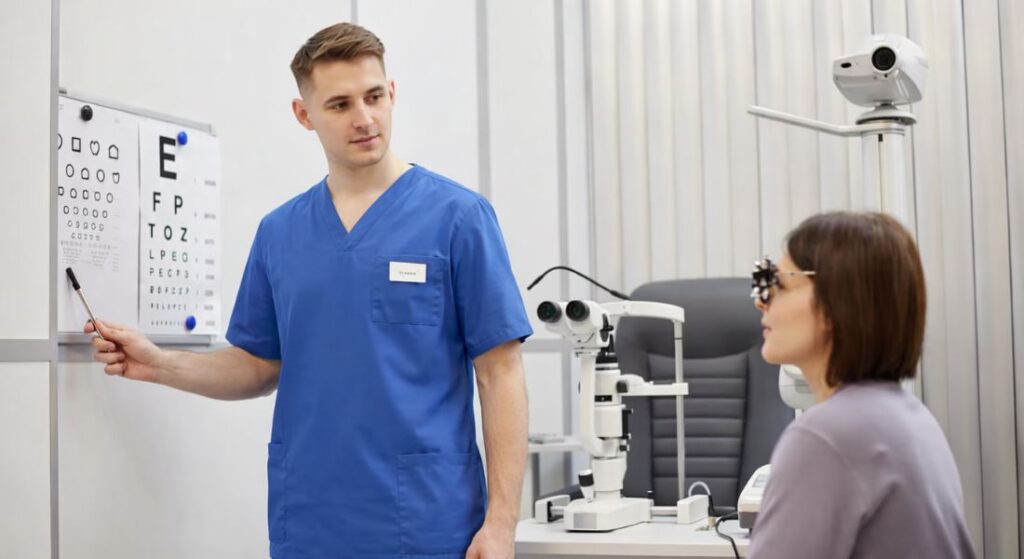
Modern eye care today goes far beyond simply checking whether you can read letters on a chart. While visual acuity like 20/20 is still an important measure, it is only one part of a much broader assessment. Eye care professionals now look at how your vision actually performs in real-world conditions. For you, this means a more complete picture of your eye health.
They assess factors such as contrast sensitivity, which affects how clearly you see objects in low light or poor visibility. They also evaluate depth perception, which is important for judging distances in daily activities like driving or walking. In addition, overall visual performance is considered, including how your eyes work together and adapt to different environments.
This wider approach gives a more accurate understanding of how your eyes are functioning in everyday life. You may have good test results but still experience challenges that affect comfort or clarity. By looking beyond just 20/20 vision, eye care professionals can identify issues that might otherwise be missed. For you, this leads to better diagnosis, more personalised care, and improved visual comfort.
How This Relates to Eye Treatments
How this relates to eye treatments becomes very important when you start looking at procedures like lens replacement or cataract surgery. At this stage, the goal is no longer just about achieving 20/20 vision on a chart. Instead, the focus shifts toward how well you actually see and function in your everyday life. For you, this means looking at the full visual experience, not just sharpness.
It is not only about improving clarity, but also about enhancing contrast, reducing glare, and improving comfort in different lighting conditions. Many people assume surgery is successful simply when they can read an eye chart well again, but real success is often measured by how natural and effortless vision feels afterwards. You may notice improvements in night driving, reading, and overall visual ease.
This is where detailed assessments become essential in guiding treatment decisions. Eye care professionals use these evaluations to understand your specific visual needs and tailor the approach accordingly. For example, clinics such as the London Cataract Centre focus on restoring both clarity and real-world visual quality, not just test results. For you, this ensures treatment is aimed at improving how you see in daily life, not just what you see on a chart.
Why You Should Care About Visual Quality
It is easy to focus only on the number you see on an eye chart, but that does not fully reflect how your vision works in real life. Your daily experience of vision is what truly matters, especially when you are carrying out everyday tasks. Good visual quality is about comfort, clarity, and consistency in different environments, not just sharpness. This is why understanding visual quality is so important for your overall eye health and safety.
- Driving Safety: Clear and stable vision is essential for safe driving, especially at night or in poor weather conditions. Issues like glare, reduced contrast, or slow adaptation to light changes can make driving more challenging. Good visual quality helps you react quickly and confidently on the road.
- Reading Comfort: Comfortable vision makes reading easier and reduces eye strain during long periods of close work. If visual quality is reduced, you may experience tiredness, headaches, or difficulty focusing. High-quality vision allows you to read and work without discomfort.
- Work Performance: Many jobs rely heavily on visual accuracy, especially those involving screens, detail work, or precision tasks. Poor visual quality can reduce efficiency and increase fatigue over time. Good vision supports better focus and productivity throughout the day.
- Overall Confidence in Daily Life: When your vision feels clear and stable, you naturally feel more confident in your surroundings. Uncertainty in vision can affect how comfortably you move through daily activities. Strong visual quality helps you feel more secure and independent.
In conclusion, visual quality is far more important than just achieving a good score on an eye chart. It directly affects how safely, comfortably, and confidently you function in everyday life. Focusing only on sharpness can overlook issues that impact real-world vision. Prioritising overall visual performance ensures better quality of life and long-term eye comfort.
Can You Improve Visual Quality?
Yes, in many cases you can improve visual quality, depending on what is causing the issue in the first place. Visual quality problems are not always permanent, and with the right diagnosis, they can often be managed effectively. For you, the key is identifying whether the cause is optical, medical, or related to eye comfort.
Depending on the cause, visual quality can be improved through different approaches. Corrective lenses can help with focusing issues, while treatments for underlying eye conditions can address more specific medical problems. In cases like cataracts, surgery such as lens replacement or cataract removal can significantly improve clarity, contrast, and overall visual performance.
Other common issues like dry eye or eye strain can also be managed with targeted treatments, lifestyle adjustments, or medication. These may not always affect sharpness on a chart, but they can greatly improve how comfortable and clear your vision feels in daily life. For you, this can make a noticeable difference in day-to-day activities.
What You Should Take Away From This
What you should take away from this is actually quite simple but very important for you to understand. 20/20 vision does not automatically mean perfect vision in every situation. It is only a measure of how sharply you can see under specific, controlled testing conditions. For you, it represents a baseline standard rather than the full picture of how your eyes perform.
It simply means your sharpness meets a certain standard under ideal test conditions, such as reading high-contrast letters in a well-lit room. However, it does not account for how your vision behaves in everyday life. You might still experience difficulties that are not reflected in this number. For you, this is why relying only on a chart result can be misleading.
Real-world vision is far more complex and involves much more than just clarity. It includes comfort, contrast sensitivity, depth perception, and how well you adapt to different environments. You use your vision in constantly changing conditions, and all of these factors influence how clearly and comfortably you see. Understanding this helps you see why visual quality matters just as much as visual sharpness.
FAQs:
1. Does 20/20 vision mean perfect eyesight?
No, 20/20 vision does not mean perfect eyesight. It only measures how clearly you can see at a standard distance under ideal testing conditions. It does not take into account other important aspects of vision such as contrast sensitivity, depth perception, glare handling, or how your eyes perform in everyday environments like night driving or low light.
2. What does 20/20 vision actually measure?
20/20 vision measures visual acuity, which is the sharpness or clarity of your central vision. During an eye test, you are asked to read letters on a chart at a fixed distance to compare your vision with a standard benchmark. However, this test does not measure how your vision works in real-world conditions or how comfortable your eyes feel during daily tasks.
3. Why can someone with 20/20 vision still have vision problems?
Even with 20/20 vision, you can still experience issues because visual acuity is only one part of overall visual function. Problems like eye strain, headaches, poor night vision, glare sensitivity, or difficulty focusing can still occur. These issues are linked to how your eyes and brain work together, not just how clearly you see a chart.
4. What is visual quality in eye health?
Visual quality refers to how well your vision performs in everyday life, not just in a controlled test. It includes clarity, comfort, contrast, lighting adaptation, and how stable your vision feels throughout the day. Good visual quality means your eyes can handle different environments smoothly without strain or discomfort.
5. What is contrast sensitivity and why is it important?
Contrast sensitivity is your ability to distinguish objects from their background when there is only a small difference in brightness or colour. It is very important for real-life vision tasks such as driving at night, seeing in fog, or reading in low light. Even if your vision is 20/20, reduced contrast sensitivity can still make everyday vision feel less clear.
6. Can 20/20 vision still cause difficulty with night driving?
Yes, it is possible to have 20/20 vision and still struggle with night driving. This is often due to glare from headlights, reduced contrast in dark environments, or slower adaptation to changing light levels. These issues are related to visual quality rather than basic sharpness, which is why they may not show up in a standard eye test.
7. Why do some people see glare or halos despite good vision?
Glare and halos occur when light scatters inside the eye, often due to changes in the lens or other optical factors. You may notice these effects around bright lights, especially at night or in dim environments. Since eye charts are tested in ideal lighting conditions, these real-world issues are not always detected during routine vision tests.
8. How does eye health affect visual quality beyond sharpness?
Eye health conditions like cataracts, dry eye syndrome, or early macular changes can significantly affect how your vision feels, even if sharpness remains good. These conditions can reduce contrast, cause fluctuating clarity, or create discomfort. As a result, your overall visual experience may feel worse even when you can still read an eye chart clearly.
9. Can visual quality be improved?
Yes, visual quality can often be improved depending on the underlying cause. Glasses or contact lenses can help with focusing issues, while dry eye treatments or lifestyle changes can improve comfort and stability. In some cases, procedures like cataract surgery can greatly enhance clarity, contrast, and real-world visual performance.
10. Why is real-world vision different from eye test results?
Eye tests are conducted in controlled environments with ideal lighting, fixed distances, and high-contrast targets. Real-world vision is much more complex, involving changing light conditions, movement, glare, reflections, and varying contrast levels. This is why someone can perform well on an eye chart but still experience difficulties in everyday visual situations.
Final Thoughts: Seeing Beyond 20/20 Vision
20/20 vision is often misunderstood as the definition of perfect eyesight, but as you now know, it only measures one small part of how you actually see. Real visual experience is much broader and includes contrast sensitivity, depth perception, comfort, and how your eyes respond to different lighting conditions. This is why someone can have “perfect” chart vision but still struggle in real-world situations like night driving, screen use, or low-light environments.
Understanding this difference helps you look beyond a single number and focus on how your vision performs in everyday life. Good visual quality is about clarity, stability, and comfort across all situations not just reading letters in a controlled test room. When these elements are considered together, you get a far more accurate picture of your true vision health. If you’re looking to enhance your vision or need personalised guidance, our specialist team at the London Cataract Centre is here to help.
Reference:
- Ouyang, S. et al. (2023) Cataract, glaucoma, and diabetic retinopathy as risk factors in older adults, Geriatric Nursing, 53, pp. 170-174. Available at: https://pubmed.ncbi.nlm.nih.gov/37540912/
- Quillen, D.A. (1999) Common causes of vision loss in elderly patients, American Family Physician, 60(1), pp. 99-108. Available at: https://pubmed.ncbi.nlm.nih.gov/10414631/
- Dinarvand, D., Panthakey, J., Hassan, A. and Ahmed, M.H. (2024) Frailty and visual impairment in elderly individuals: Improving outcomes and modulating cognitive decline through collaborative care, Diseases, 12(11), p. 273. Available at: https://www.mdpi.com/2079-9721/12/11/273
- Driscoll, R., Scantling‑Brown, H., Margrain, T. and others. (2021) A systematic review of the accessibility, acceptability, safety, efficiency, clinical effectiveness, and cost‑effectiveness of private surgical facilities. BMC Health Services Research. Available at: https://pmc.ncbi.nlm.nih.gov/articles/PMC11570012/
- Harvey, P.T. (2003) Common eye diseases of elderly people: identifying and treating causes of vision loss, Gerontology, 49(1), pp. 1-11. Available at: https://pubmed.ncbi.nlm.nih.gov/12457044/