



If you are considering implantable collamer lens (ICL) surgery, or you have already undergone the procedure, it is natural to wonder what might happen if your prescription changes in the future. It is a thoughtful and sensible concern. Vision can evolve over time, and no surgical procedure can permanently freeze the eye in its current state.
Your eyes are living, dynamic structures. Over the years, factors such as natural ageing, progression of myopia, hormonal influences, or lifestyle changes can affect your prescription. While surgeons carefully confirm that your vision is stable before recommending ICL surgery, small shifts can still occur later in life.
The reassuring aspect of ICL surgery is its reversibility and flexibility. Unlike procedures that permanently reshape the cornea, the ICL sits inside the eye alongside your natural lens and can be removed or exchanged if required. This design allows future adjustments should your prescription change significantly.
In many cases, minor prescription shifts can be managed with glasses, contact lenses, or a small enhancement procedure if appropriate. Significant changes are uncommon in well-selected candidates, but if they do occur, there are safe and effective options available. With proper follow-up and ongoing eye care, long-term vision after ICL remains highly stable and predictable.
Understanding What ICL Surgery Actually Does
ICL surgery involves placing a thin, biocompatible lens inside your eye, positioned behind the iris and in front of your natural lens. The most commonly used lens worldwide is the EVO Visian ICL, designed to work in harmony with the eye’s natural structures to correct refractive errors.
Unlike LASIK, your cornea is not reshaped, and unlike refractive lens exchange, your natural lens is not removed. Instead, the ICL works alongside your natural lens to correct short-sightedness, long-sightedness, and in many cases astigmatism, providing sharp and stable visual outcomes.
One of the key advantages of ICL surgery is that it is reversible. Because the lens is implanted rather than permanently altering eye tissue, it can be removed or exchanged if necessary, offering long-term flexibility and reassurance should your prescription or visual needs change over time.
Are Prescription Changes Common After ICL?
ICL surgery is designed to provide long-term visual stability, and for most patients, their prescription remains steady for many years. The procedure is typically performed once your eyesight has stabilised in adulthood, which significantly reduces the likelihood of future changes. However, while outcomes are durable, they are not immune to the natural ageing process. Small refractive shifts can still occur over time, depending on individual factors.
- Long-Term Stability Is the Norm: Most patients experience stable vision for many years after ICL surgery. Because the procedure is usually performed after prescription stability is confirmed, significant changes are uncommon. This makes ICL a reliable long-term solution for moderate to high refractive errors.
- Natural Age-Related Eye Changes: As you age, the natural lens inside the eye can gradually change shape and clarity. These age-related changes may slightly alter your prescription over time. This is not a failure of the ICL, but rather part of the normal ageing process.
- Original Prescription Strength: Patients with very high prescriptions may have a slightly higher chance of minor refractive shifts in the long term. However, these changes are usually small and manageable. Regular eye examinations help monitor any subtle adjustments that may be needed.
- Individual Healing and Eye Health Factors: Every eye responds uniquely to surgery and ageing. Factors such as overall ocular health and lifestyle can influence long-term stability. Maintaining routine follow-ups ensures any changes are detected early and addressed appropriately.
In summary, prescription changes after ICL are not common, but small shifts can occur naturally over time. Most patients enjoy many years of stable, clear vision following their procedure. If changes do arise, they are typically mild and manageable with simple solutions. Ongoing eye care and periodic reviews remain the best way to protect your long-term visual outcome.
Why Might Your Vision Change Years Later?

There are several possible reasons why your vision could change years after ICL surgery. One is the progression of myopia. If you had high myopia before surgery, there is a small possibility that the eye may continue to elongate slightly over time, leading to a mild shift in prescription. This is uncommon in stable adult patients, but it can occur.
Age-related changes are another important factor. From your mid-40s onward, presbyopia naturally develops. This affects your ability to focus on near objects, even if your distance vision remains clear and stable. It is a normal ageing process of the natural lens inside the eye and is not caused by the ICL itself.
Later in life, early cataract development may subtly influence your vision. As the natural lens gradually becomes less clear, you may notice changes in clarity, contrast, or glare. These are natural biological processes rather than a failure of the ICL, and they can be managed effectively if and when they arise.
Mild Residual Prescription Versus New Change
It is important to distinguish between two different scenarios when discussing prescription changes after ICL surgery. The first is a small residual prescription that may have been present immediately after the procedure. The second is a genuine new prescription change that develops years later. These situations are not the same and should be assessed differently.
A mild residual prescription simply means that although the surgery significantly reduced your refractive error, a very small amount remained. In many cases, this is so minor that it does not affect daily life. Some patients may only notice it in low light or when driving at night.
If you were very close to plano (zero prescription) after surgery and then begin to notice blur five or ten years later, this is more likely to represent a natural shift in the eye rather than an undercorrection from the original procedure. Your ophthalmologist can determine the cause with a straightforward refraction test and a routine examination, helping clarify whether the change is minor and manageable or requires further treatment.
How Big Are These Changes Usually?
In most cases, any prescription shift after ICL surgery is small. You might notice a slight blur in the distance, particularly in low light, or find yourself relying more on reading glasses as you get older. These changes are typically subtle rather than dramatic.
Significant prescription changes after ICL are uncommon, especially in patients whose vision was stable before surgery. Careful pre-operative screening is designed to minimise the risk of ongoing progression, which is why large shifts are not frequently seen in suitable candidates.
If changes do occur, they are usually manageable. Options may include a light spectacle correction for specific tasks, contact lenses, or in selected cases, a minor enhancement procedure. With regular eye examinations, any shift can be identified early and addressed appropriately.
Presbyopia: The Most Common “Change”
The most predictable vision change after ICL surgery is not related to the implant itself, but to the natural ageing process of the eye. This change is known as presbyopia, and it affects everyone over time. Even if your distance vision remains clear and stable after ICL, you may eventually notice difficulty with reading or other near tasks. This occurs because the eye’s natural lens gradually loses its flexibility with age.
- What Is Presbyopia: Presbyopia is the gradual loss of the eye’s ability to focus on near objects. It typically becomes noticeable in your early to mid-40s. This is a universal age-related change and not a complication of ICL surgery.
- Why ICL Does Not Prevent It: ICL works by placing a lens inside the eye to correct refractive errors such as myopia or astigmatism. However, your natural lens remains in place. Since presbyopia occurs due to stiffness in the natural lens, ICL cannot stop this process.
- Clear Distance, Blurry Near: Many patients continue to enjoy excellent distance vision for years after ICL. However, they may eventually require reading glasses for close work. This is a normal and expected development, not a sign that the implant has failed.
- Completely Unrelated to Implant Performance: The development of presbyopia does not mean your ICL has shifted or stopped working. The implant continues correcting your original prescription as intended. Presbyopia is simply a separate, age-related focusing change.
In conclusion, presbyopia is the most common “change” patients experience after ICL, but it is entirely unrelated to the implant. It reflects the natural ageing of the eye rather than any issue with surgery. Most patients maintain excellent distance vision while using simple solutions for near tasks when needed. Understanding this distinction helps set realistic expectations for long-term vision.
What Are Your Options If Distance Vision Changes?
If your distance prescription shifts slightly years after ICL surgery, you have several practical options. The most straightforward solution is glasses. Many patients are perfectly comfortable using occasional spectacles for night driving, prolonged screen use, or tasks that require very sharp distance detail.
Contact lenses are also possible, although they are less commonly needed after ICL. For some individuals, they may be useful for specific activities such as sports or travel. Your eye specialist can confirm whether your ocular surface and tear film remain suitable for comfortable contact lens wear.
For selected patients, laser vision correction such as LASIK or PRK can fine-tune small residual refractive errors, provided the cornea is healthy and of adequate thickness. This approach is typically reserved for minor adjustments and is carefully assessed on an individual basis to ensure safety and predictability.
Can the ICL Be Exchanged?
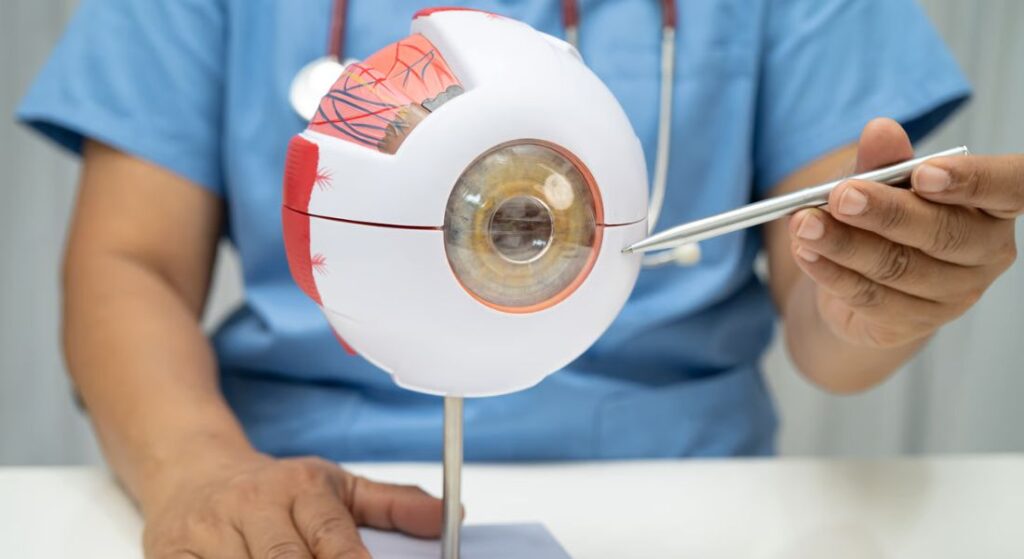
Yes. One of the most reassuring aspects of ICL surgery is its reversibility. Unlike procedures that permanently reshape the cornea, the implanted lens sits inside the eye without removing natural tissue, which means it can be removed if necessary. This built-in flexibility is one of the key reasons many patients feel confident choosing ICL.
If a significant prescription shift occurs, the existing lens can be removed and replaced with a new one of a different power. This is known as an ICL exchange. The procedure involves carefully removing the original lens through a small incision and implanting a new lens calculated to match your updated prescription and visual requirements.
Although ICL exchange is not commonly required, it is technically straightforward in experienced hands. Surgeons assess eye health, lens position, and overall stability before recommending it. When performed for the right reasons, outcomes are generally predictable and safe, providing reassurance that even years after your original surgery, effective solutions remain available if your vision changes.
What If You Develop Cataracts Later in Life?
Because your natural lens remains inside the eye after ICL surgery, it is still possible to develop cataracts later in life. Cataracts are part of the normal ageing process, where the natural lens gradually becomes cloudy, affecting clarity, contrast, and night vision. This is unrelated to the ICL itself.
If cataracts do develop, the treatment plan is straightforward. During cataract surgery, the ICL is first removed, and then the cloudy natural lens is replaced with a new artificial intraocular lens (IOL). The overall process is very similar to standard cataract surgery and follows established surgical techniques.
Importantly, having had ICL surgery does not prevent you from undergoing successful cataract surgery in the future. With appropriate surgical planning and measurements, visual outcomes are typically excellent, and your surgeon can select an IOL power that suits your visual goals at that stage of life.
Long-Term Safety and Monitoring
ICL surgery is designed to provide long-lasting visual correction, but ongoing monitoring remains an essential part of maintaining eye health. Routine eye examinations allow your ophthalmologist to ensure that the implant continues to sit correctly and function as intended. These reviews are typically straightforward and form part of responsible long-term care. Regular follow-up provides reassurance that your eyes remain healthy and stable over time.
- Intraocular Pressure Checks: Monitoring intraocular pressure helps ensure that fluid drainage within the eye remains normal. Although modern ICL designs are created to support healthy circulation, pressure checks remain important. Early detection of pressure changes allows for prompt and effective management.
- Lens Position Assessment: Your ophthalmologist will confirm that the ICL remains correctly positioned behind the iris. The lens is designed to stay stable, but routine evaluation ensures there has been no unexpected movement. Proper positioning supports both safety and visual quality.
- Vault Measurement: The vault refers to the space between the ICL and your natural lens. Maintaining an appropriate vault is important to protect the natural lens and surrounding structures. Follow-up imaging allows precise measurement and long-term monitoring.
- Retinal Health Evaluation: Particularly in patients with higher pre-operative prescriptions, retinal checks are essential. The retina remains independent of the implant, and routine examination helps detect any unrelated changes early. Ongoing monitoring supports comprehensive eye care beyond refractive correction.
In conclusion, long-term safety after ICL surgery depends not only on the procedure itself but also on consistent follow-up care. Regular examinations allow your ophthalmologist to monitor pressure, positioning, vault, and retinal health with precision. These routine checks help ensure continued stability and visual clarity for years to come. If you are considering ICL surgery in London, understanding the importance of long-term monitoring can provide lasting confidence and peace of mind.
Age-Related Changes Versus Surgical Limitations
It is important not to confuse natural ageing with surgical limitation. ICL surgery corrects your prescription at the time of the procedure, based on the measurements and stability of your eyes at that stage of life. It is designed to provide long-term clarity, but it does not stop the biological processes that naturally occur as we age.
ICL corrects your refractive error, but it does not “freeze” your eye in that exact state forever. If presbyopia develops in your 40s or 50s, this happens because the natural lens gradually loses flexibility, making near focus more difficult. This change would occur whether or not you had vision correction surgery.
Similarly, if cataracts form later in life, this is a universal ageing process affecting the natural lens. The implant itself does not accelerate or cause these changes. Understanding this distinction helps set realistic expectations and provides reassurance that most future vision changes are related to normal ageing rather than a limitation of the ICL procedure itself.
How Flexible Is ICL as a Long-Term Solution?
ICL is considered one of the most flexible refractive procedures available today. Because the lens is implanted rather than permanently altering corneal tissue, the structure of your eye remains largely unchanged. This preserves future treatment options and provides an added layer of reassurance.
Unlike LASIK, no corneal tissue is permanently removed. Unlike refractive lens exchange, your natural lens is preserved, which means your eye continues to function in its natural biological state. This makes ICL particularly appealing for patients who prefer a reversible solution.
If your visual needs change over time, adjustments can be made. The lens can be exchanged, removed, or complemented with additional procedures if appropriate. This adaptability is one reason many surgeons recommend ICL for younger patients with high prescriptions, as it offers both strong visual outcomes today and flexibility for the decades ahead.
What About Enhancement Procedures?
If a prescription shift after ICL surgery is minor, a corneal laser enhancement may be sufficient to fine-tune your vision. Procedures such as LASIK or PRK can adjust small residual refractive errors, provided the cornea has adequate thickness and a healthy shape. Careful measurements are taken to ensure safety and predictability before recommending this approach.
Your surgeon will assess several factors, including corneal topography, thickness, tear film quality, and overall eye health, to determine whether you are a suitable candidate for laser enhancement. Not everyone will require or qualify for this option, which is why a personalised evaluation is essential.
In some cases, particularly if the prescription change is moderate to large, an ICL exchange may be more appropriate than corneal laser treatment. The decision is always individualised, balancing the size of the refractive shift, the condition of your eyes, and your long-term visual goals to achieve the safest and most effective outcome.
Does Eye Growth Continue in Adulthood?
For most people, eye growth stabilises in the late teens or early twenties, which is why refractive procedures such as ICL are typically performed only after prescriptions have remained stable for a period of time. Once stability is confirmed, significant further elongation of the eye is uncommon.
However, in individuals with very high myopia, slow progression can occasionally continue into adulthood. This is usually gradual rather than dramatic. If it does occur, the ICL will still be correcting the majority of the refractive error, and any additional shift is often small and manageable with minor enhancement or glasses if needed.
Regular retinal examinations are particularly important for highly myopic patients, whether or not they have had ICL surgery. High myopia is associated with increased risk of certain retinal conditions, so ongoing monitoring helps protect long-term eye health and ensures that any changes are detected and treated early.
Planning for the Future

If a prescription shift after ICL surgery is minor, a corneal laser enhancement may be sufficient to fine-tune your vision. Procedures such as LASIK or PRK can adjust small residual refractive errors, provided the cornea has adequate thickness and a healthy shape. Careful measurements are taken to ensure safety and predictability before recommending this approach.
Your surgeon will assess several factors, including corneal topography, thickness, tear film quality, and overall eye health, to determine whether you are a suitable candidate for laser enhancement. Not everyone will require or qualify for this option, which is why a personalised evaluation is essential.
In some cases, particularly if the prescription change is moderate to large, an ICL exchange may be more appropriate than corneal laser treatment. The decision is always individualised, balancing the size of the refractive shift, the condition of your eyes, and your long-term visual goals to achieve the safest and most effective outcome.
Is It Common to Regret ICL Because of Later Changes?
Regret after ICL surgery is uncommon. Most patients place high value on the years of clear, sharp distance vision and the freedom from heavy glasses or contact lenses, particularly if they previously had high prescriptions. The improvement in daily convenience and visual quality often outweighs the possibility of small changes later in life.
Even if a minor prescription shift occurs years down the line, it is typically manageable. A light pair of glasses for specific tasks, a small laser enhancement, or in rare cases a lens exchange can address most changes effectively. These adjustments are usually straightforward rather than disruptive.
The key is understanding from the outset that no refractive procedure can permanently halt biological ageing. Presbyopia and cataract formation are natural processes that would occur regardless of surgery. When patients enter ICL with realistic expectations, long-term satisfaction rates remain very high.
When Should You Seek Review?
If you notice gradual blur at distance, increasing glare or halos, new floaters or flashes, or any noticeable drop in vision, it is wise to arrange an eye examination. Even if the change feels mild at first, persistent symptoms should not be ignored. Subtle visual shifts can sometimes indicate a small prescription change or another treatable issue.
In many situations, the cause is straightforward and manageable. A minor refractive shift, dry eye, early presbyopia, or normal ageing changes can all affect clarity. A comprehensive eye assessment, including refraction and internal examination, allows your ophthalmologist to identify the reason and recommend the most appropriate solution.
If symptoms are sudden, such as bright flashes, a sudden shower of floaters, or a shadow or curtain in your field of vision, urgent review is particularly important to rule out retinal problems. Seeking early evaluation not only protects long-term eye health but also provides reassurance and clear guidance on the next steps.
FAQs:
1. Can my prescription change after ICL surgery?
Yes, although it is uncommon. Most patients experience long-term stability after implantable collamer lens surgery. However, small prescription shifts can occur due to natural ageing, mild progression of myopia, or other biological changes in the eye.
2. Does a prescription change mean my ICL has failed?
No. A change in vision years later does not mean the ICL has stopped working. The lens continues correcting your original refractive error. Most later changes are due to ageing processes such as presbyopia or early cataract development, not implant failure.
3. How common are significant prescription changes after ICL?
Significant changes are rare in well-selected candidates whose prescriptions were stable before surgery. Minor shifts are possible but are usually small and manageable with glasses or enhancement procedures if needed.
4. Can the ICL be removed or replaced if my vision changes?
Yes. One of the major advantages of ICL surgery is that it is reversible. The lens can be safely removed or exchanged if a substantial prescription shift occurs or if your visual needs change.
5. What is the most common vision change after ICL?
The most common change is presbyopia, which typically develops in your 40s. This affects near vision and is part of natural ageing. It is unrelated to the ICL itself and usually requires simple reading glasses.
6. Can I have laser enhancement after ICL surgery?
In selected cases, yes. If a small residual prescription or later minor shift occurs, procedures such as LASIK or PRK may be used to fine-tune vision, provided the cornea is healthy and suitable for treatment.
7. What happens if I develop cataracts after having ICL?
If cataracts develop later in life, the ICL can be removed during cataract surgery. Your natural lens is then replaced with an intraocular lens (IOL). Visual outcomes are typically excellent with proper surgical planning.
8. Will high myopia continue to progress after ICL?
For most adults, eye growth stabilises before surgery. However, in patients with very high myopia, slow progression can occasionally continue. Any resulting shift is usually small and manageable.
9. How will I know if my prescription has changed?
You may notice mild distance blur, increased glare, more difficulty with night driving, or a greater need for reading glasses. A routine eye examination can quickly confirm whether a refractive shift has occurred.
10. Should I worry about long-term stability after ICL?
For the vast majority of patients, ICL provides stable and predictable long-term vision. Regular follow-up appointments help monitor eye health and ensure any natural changes are identified early and managed appropriately.
Final Thoughts: Long-Term Stability and Flexibility After ICL
ICL surgery is designed to deliver long-term, stable vision, and for most patients, prescription changes years later are minimal or entirely related to natural ageing rather than the implant itself. Presbyopia and cataracts are biological processes that would occur regardless of surgery, and they do not indicate that the ICL has failed. In the rare event that a meaningful refractive shift does occur, options such as glasses, laser enhancement, or lens exchange provide safe and effective solutions.
One of the key advantages of ICL is its reversibility and adaptability. Because the lens is implanted without permanently altering corneal tissue, future adjustments remain possible if your visual needs change. With appropriate follow-up and monitoring, long-term outcomes remain highly predictable and reassuring. If you’re considering ICL Surgery in London, you can get in touch with us at London Cataract Centre.
References:
- Kim, Y.H., Yoon, C.H. and Kim, M.K. (2025) ‘Long-term outcome and related risk factors in implantable collamer lens implantation of high myopia’, Korean Journal of Ophthalmology, https://pubmed.ncbi.nlm.nih.gov/40007092/
- Long-term observation on safety and visual quality of implantable collamer lens V4c implantation: a 5-year follow-up study. https://pmc.ncbi.nlm.nih.gov/articles/PMC10333246/
- Outcomes of implantable collamer lenses (ICL), LASIK and PRK for refractive correction includes ICL refractive outcomes and long-term stability context. https://www.sciencedirect.com/science/article/pii/S2452403420300145
- Seven-year clinical outcomes and optical quality of implantable collamer lens implantation versus keratorefractive surgery’, American Journal of Ophthalmology https://pubmed.ncbi.nlm.nih.gov/41490812/
- Akamatsu, T. et al. (2019) ‘Posterior Chamber Phakic Intraocular Lens Implantation for the Correction of Myopia and Myopic Astigmatism: A Retrospective 10-Year Follow-up Study’, American Journal of Ophthalmology https://www.sciencedirect.com/science/article/abs/pii/S0002939419302053