



If you are preparing for cataract surgery, one of the biggest questions on your mind is probably this: will I see clearly afterwards? More specifically, you may be wondering how accurately your surgeon can calculate the power of the intraocular lens, or IOL, that will replace your natural lens. It is an entirely fair question.
Cataract surgery today is not simply about removing a cloudy lens. It is also a refractive procedure designed to improve the quality of your vision and, in many cases, reduce your dependence on glasses. The precision of IOL power calculation plays a central role in achieving that outcome. Even small variations in measurement can influence whether you end up slightly short-sighted, long-sighted, or very close to your intended target.
Modern technology has dramatically improved the accuracy of these calculations. Advanced optical biometry devices measure the length of your eye, the curvature of your cornea, and the depth of the anterior chamber with remarkable precision. Sophisticated mathematical formulas then use this data to predict the ideal lens power for your eye.
In the next sections, I will explain how IOL power is calculated today, how precise current methods truly are, and why even with excellent technology results are highly accurate but not mathematically perfect. Understanding this balance can help you set realistic expectations and feel more confident about your surgery.
What Is IOL Power and Why Does It Matter?
When your natural lens is removed during cataract surgery, it is replaced with an artificial intraocular lens, often called an IOL. This lens has a specific optical power, measured in dioptres, which determines how light is focused onto your retina. Selecting the correct power is essential to achieving the visual outcome you and your surgeon have planned.
The chosen IOL power directly influences whether you are left with clear distance vision, improved near vision, or a small residual prescription that may still require glasses. Some patients opt for a lens targeting sharp distance vision, while others may prefer a mild degree of short-sightedness to help with reading. The decision is personalised and based on your lifestyle, eye measurements, and expectations.
In simple terms, IOL power calculation is the critical step that determines how clearly you will see after surgery. While the cataract removal restores clarity by eliminating the cloudy lens, it is the precision of this calculation that shapes your final visual sharpness and overall satisfaction with the procedure.
The Goal: Predicting Your Eye’s Future Focus
When planning lens replacement surgery, your surgeon is not simply measuring your eye in its current state. The objective is to predict how your eye will focus after the natural lens has been removed and replaced with an artificial one. This process involves detailed calculations and advanced imaging technology. However, it is important to recognise that while the measurements are precise, the outcome still depends on biological prediction.
- Measuring More Than the Present: Pre-operative assessments evaluate the length of your eye, the curvature of the cornea, and other anatomical factors. These measurements form the foundation of the calculation. Yet the true aim is to estimate how light will focus once the new intraocular lens is in place.
- Balancing Precision and Prediction: Modern diagnostic devices provide highly accurate data. However, the formula must predict how the lens will sit and interact within your unique eye structure after surgery. Small biological variations can influence the final result.
- Why Perfection Is Not Absolute: Even with sophisticated technology and refined formulas, no prediction can be mathematically flawless. Healing responses and subtle anatomical differences may lead to minor residual prescriptions. This does not indicate failure, but rather the inherent limits of predictive medicine.
Ultimately, the goal of IOL power calculation is to achieve the clearest possible vision tailored to your needs. Surgeons combine precision measurements with advanced predictive models to optimise outcomes. While results today are remarkably accurate, understanding that prediction is involved helps set realistic expectations. This balance between science and biology is what makes modern cataract surgery both highly successful and carefully individualised.
How Surgeons Measure Your Eye Before Surgery
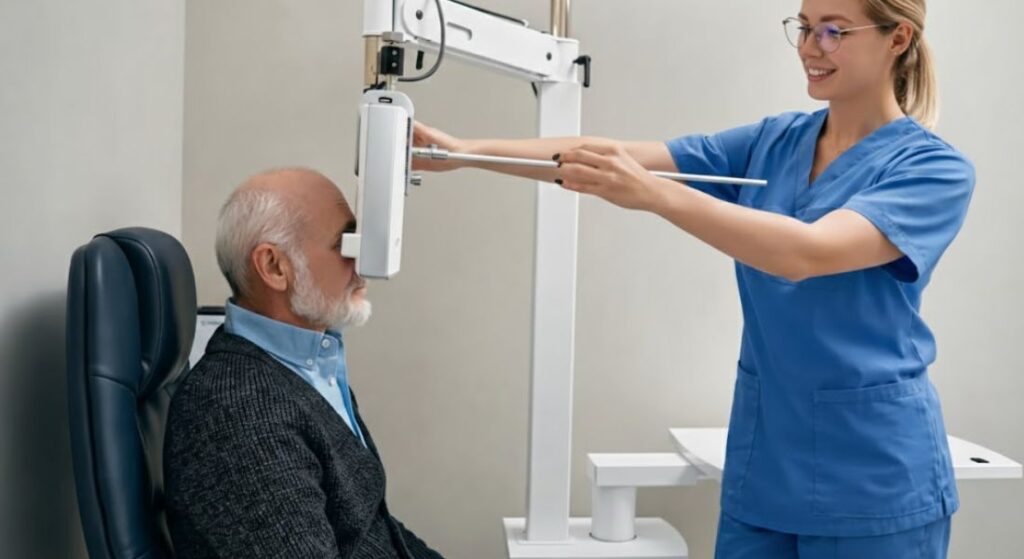
Before cataract surgery, you will undergo a series of highly detailed measurements known as ocular biometry. This is very different from a routine sight test at the optician. It is a precise and technology-driven assessment designed specifically to calculate the exact intraocular lens power your eye requires.
Modern optical biometers use advanced light-based scanning to map the structures of your eye with exceptional accuracy. The most important measurement is axial length, which is the distance from the front surface of your cornea to the retina at the back of the eye. Even a tiny error in axial length measurement can significantly affect the final refractive outcome, which is why precision at this stage is critical.
In addition to axial length, several other parameters are measured. These include corneal curvature, which determines how strongly the front of your eye focuses light; anterior chamber depth, which influences where the lens will sit after surgery; lens thickness; and white-to-white corneal diameter, which can assist in certain lens calculations. Each of these values feeds into sophisticated mathematical formulas that predict the ideal lens power for your eye, helping surgeons aim for the clearest possible vision after surgery.
Axial Length: The Most Critical Measurement
Axial length is widely regarded as the single most important measurement in IOL power calculation. It represents the distance from the front surface of your cornea to the retina at the back of the eye. Because this measurement directly influences how light focuses inside the eye, even the smallest inaccuracy can affect your final visual outcome.
If axial length is miscalculated by as little as 0.1 mm, it can lead to a noticeable refractive error after surgery. That seemingly tiny variation may result in residual short-sightedness or long-sightedness, potentially meaning you still need glasses for certain tasks. This is why surgeons place such emphasis on obtaining highly accurate and repeatable readings before finalising the lens power.
Modern optical biometers measure axial length with astonishing precision, often within microns. To put that into perspective, a micron is one thousandth of a millimetre. This extraordinary level of detail is a major reason why cataract surgery outcomes today are so reliable, predictable, and consistently close to the intended visual target.
Corneal Curvature: Shaping Your Focus
Your cornea plays a major role in focusing light onto the retina and contributes a significant portion of your eye’s total optical power. Because of this, accurately measuring its curvature is essential when calculating the correct intraocular lens. If the corneal measurements are slightly inaccurate, the chosen IOL may not perfectly match your eye’s natural focusing system.
Keratometry is the process used to measure corneal curvature. These readings help ensure that the IOL power selected complements your unique corneal shape rather than working against it. This is especially important if you have astigmatism, where the cornea is not perfectly round and may require a toric lens to achieve optimal clarity.
Modern diagnostic devices now collect multiple data points across the corneal surface instead of relying on just a few central measurements. By analysing a broader and more detailed map of the cornea, these systems reduce potential errors and significantly improve refractive accuracy. This enhanced precision contributes to the consistently strong visual outcomes seen in cataract surgery today.
Modern Biometry Technology
Technology has dramatically improved the accuracy and predictability of cataract surgery over the past two decades. Earlier ultrasound-based systems required direct contact with the eye and were more prone to minor measurement inconsistencies. Today, most advanced centres rely on optical biometry, a non-contact method that provides significantly greater precision. This evolution has played a central role in achieving highly reliable refractive outcomes.
- From Ultrasound to Optical Precision: Traditional ultrasound biometry involved placing a probe on the eye, which could slightly alter measurements depending on technique. Modern optical systems eliminate contact, reducing variability and improving patient comfort. This shift alone has enhanced measurement consistency.
- Advanced Diagnostic Devices: Instruments such as the IOLMaster 700 and the Lenstar LS 900 use optical coherence interferometry to measure axial length, corneal curvature, and other critical parameters. These devices capture detailed data with extraordinary precision, supporting more accurate IOL power calculations.
- Improved Performance in Dense Cataracts: Modern biometers can often measure axial length even through dense cataracts, where older systems struggled. They also provide internal cross-checks and multiple scans to confirm reliability. This reduces the likelihood of outlier readings affecting surgical planning.
The result of these technological advances is highly reproducible measurement data with minimal variability. While no predictive system can guarantee absolute perfection, modern biometry has significantly narrowed the margin of error. For patients, this translates into greater confidence in the expected visual outcome after cataract surgery.
IOL Calculation Formulae: Where Science Meets Mathematics
Taking precise measurements is only one part of the process. Once the data is collected, it must be entered into a sophisticated mathematical formula designed to calculate the ideal intraocular lens power for your eye. These formulae analyse multiple variables simultaneously, combining anatomical measurements with statistical modelling derived from thousands of surgical outcomes.
A key component these formulae attempt to predict is the effective lens position. This refers to where the IOL will ultimately sit inside your eye after surgery. Although the lens is placed in a standard anatomical location, small individual differences in healing and eye structure mean its final resting position can vary slightly from person to person.
This prediction is critical. Even if axial length and corneal curvature measurements are perfectly accurate, an incorrect estimation of effective lens position can influence the final refractive outcome. Modern formulae have become increasingly advanced and refined, which is why results today are far more predictable than they were in previous decades.
From Older Formulae to Modern AI-Enhanced Models
Earlier generation IOL calculation formulae, such as the SRK/T formula and the Holladay 1 formula, were major advancements in their time. They significantly improved refractive outcomes compared to even older regression-based methods and became widely adopted across the world. For many years, they formed the backbone of cataract surgery planning.
However, as measurement technology improved and more outcome data became available, newer generation formulae were developed to enhance predictive accuracy. Modern examples include the Barrett Universal II, the Haigis formula, and the Hill-RBF method. These formulae incorporate more complex modelling of eye anatomy and, in some cases, use pattern recognition rather than purely theoretical optics.
Some of these modern systems utilise artificial intelligence and large datasets derived from thousands of surgical outcomes to refine their predictions. By continuously learning from real-world results, they reduce systematic errors and improve accuracy across a wide range of eye shapes and lengths. This evolution in formula design has significantly narrowed the margin of error, making today’s IOL power calculations more reliable and personalised than ever before.
So, How Accurate Is IOL Power Calculation Today?
Let’s talk numbers, because this is what most patients really want to know. In modern cataract surgery, around 80–90% of patients achieve a refractive outcome within ±0.5 dioptres of the intended target. More than 95% fall within ±1.0 dioptre. For a predictive medical calculation based on biological healing, that level of precision is genuinely impressive.
For most people, being within half a dioptre of the target translates into excellent functional vision. Many patients in this range can carry out daily activities comfortably and may only need glasses for specific tasks, depending on their chosen focus target. The combination of advanced biometry and sophisticated formulae has made these outcomes consistently achievable in experienced hands.
But there is an important point to acknowledge. The accuracy is extremely high, yet it is not 100%. The human eye is a living, healing structure, and small variations in anatomy or post-operative healing can influence the final refractive result. Understanding this helps set realistic expectations and reinforces why even the best technology cannot guarantee mathematical perfection every single time.
Why Isn’t It Perfect?
You might reasonably wonder why, with all this advanced technology, IOL power calculations are not mathematically exact every single time. The answer lies in biological variability. Cataract surgery may use precision instruments and sophisticated formulae, but the eye itself is a living structure, and living systems do not behave like engineered machines.
No two eyes are identical, even if their measurements appear similar. Subtle anatomical differences, microscopic variations in tissue properties, and individual healing responses can all influence where the lens ultimately settles inside the eye. Even tiny differences in wound architecture or effective lens position after surgery can slightly shift the final refractive outcome.
In other words, even the most advanced formula is still making a prediction about how your eye will respond after surgery. And while modern models are remarkably accurate, they are forecasting a biological process not solving a fixed physics equation. That inherent variability is the reason results are highly precise, but not perfectly predictable in every case.
Short Eyes and Long Eyes: Higher Complexity Cases
Not all eyes are anatomically average, and certain eye shapes present additional challenges in IOL power calculation. Very short eyes, often associated with hyperopia, and very long eyes, commonly seen in high myopia, have historically shown higher prediction error rates. These anatomical extremes require more sophisticated calculations and careful planning. Although modern advances have greatly improved accuracy, a slightly higher margin of unpredictability remains in these cases.
- Very Short (Hyperopic) Eyes: Shorter eyes require higher-powered intraocular lenses, and even small measurement variations can have a proportionally larger impact on the final refractive result. Predicting the effective lens position can be more complex in these cases. Modern formulae help reduce this uncertainty but cannot eliminate it entirely.
- Very Long (Highly Myopic) Eyes: In long eyes, subtle changes in axial length measurement can significantly influence IOL power selection. Historically, these eyes were more prone to postoperative refractive surprises. Contemporary calculation methods have improved outcomes substantially, though slight variability can still occur.
- Impact of Anatomical Extremes: The further an eye deviates from average dimensions, the more sensitive calculations become to small biological differences. Even with advanced biometry and refined formulae, predicting postoperative focus in extreme eye sizes carries a marginally higher unpredictability.
Modern technology and improved calculation models have transformed outcomes for both short and long eyes. While these cases remain more complex, accuracy today is far superior to historical standards. Understanding that anatomical extremes naturally introduce a slightly greater prediction range helps set realistic and informed expectations for surgery.
Premium IOLs and Higher Expectations
You might reasonably wonder why, with all this advanced technology, IOL power calculations are not mathematically exact every single time. The answer lies in biological variability. Cataract surgery may use precision instruments and sophisticated formulae, but the eye itself is a living structure, and living systems do not behave like engineered machines.
No two eyes are identical, even if their measurements appear similar. Subtle anatomical differences, microscopic variations in tissue properties, and individual healing responses can all influence where the lens ultimately settles inside the eye. Even tiny differences in wound architecture or effective lens position after surgery can slightly shift the final refractive outcome.
In other words, even the most advanced formula is still making a prediction about how your eye will respond after surgery. And while modern models are remarkably accurate, they are forecasting a biological process not solving a fixed physics equation. That inherent variability is the reason results are highly precise, but not perfectly predictable in every case.
What Happens If a Small Residual Prescription Remains?
Let’s say you are left with a small prescription after surgery. What then? First, it’s important to understand that a minor residual refractive error is not dangerous. It simply means the eye has healed slightly differently from the predicted target, and a small degree of optical fine-tuning may be helpful.
In many cases, the simplest solution is glasses for specific tasks, such as reading or driving at night. Some patients prefer contact lenses, particularly if the difference between the two eyes needs balancing. If the residual prescription is more noticeable and you wish to reduce dependence on glasses further, laser vision correction enhancement can often refine the outcome safely and effectively.
IOL exchange replacing the implanted lens is rarely required and typically reserved for larger refractive surprises. The reassuring news is that most small residual errors are straightforward to correct and involve minimal inconvenience. With modern options available, achieving comfortable, functional vision after cataract surgery remains highly achievable.
Enhancement Procedures
In some cases, particularly if you have chosen a premium IOL and are strongly motivated to remain glasses-free, a laser enhancement may be considered. This is usually discussed if a small residual prescription remains and you would prefer further refinement rather than relying on spectacles for certain tasks. Careful assessment is performed first to ensure your eyes are suitable for additional treatment.
The enhancement typically involves a corneal laser procedure to fine-tune the remaining refractive error. Because the cataract has already been removed and the intraocular lens is stable inside the eye, the correction is generally predictable and long-lasting. The laser reshapes the cornea to adjust how light focuses on the retina, improving clarity.
Enhancement rates after modern cataract surgery are relatively low, especially with accurate pre-operative planning. However, knowing that this option exists provides reassurance for patients who prioritise spectacle independence. It offers a safe and effective way to optimise visual outcomes if needed.
Intraoperative Aberrometry: Real-Time Adjustment
Some surgeons use intraoperative aberrometry during cataract surgery to add an extra layer of precision. This technology measures the eye’s refractive power after the cloudy lens has been removed but before the intraocular lens is permanently finalised. It provides real-time feedback while you are still in the operating theatre.
In essence, it acts as a second layer of verification. The surgeon can compare pre-operative calculations with live intraoperative data and make adjustments if necessary, particularly when selecting the final lens power or confirming toric lens alignment for astigmatism correction.
While intraoperative aberrometry is not universally required for every patient, it can be particularly useful in more complex cases. For example, it is often helpful in eyes that have previously undergone laser vision correction, where traditional formulae can be less predictable. In these situations, real-time measurement can enhance confidence and further improve refractive accuracy.
Post-LASIK and Post-PRK Eyes
If you have previously undergone laser vision correction such as LASIK or PRK, IOL power calculation becomes more complex. These procedures permanently reshape the cornea to correct refractive error, which changes the way light enters the eye. As a result, the cornea no longer follows the assumptions built into many traditional calculation methods.
Because the corneal shape has been altered, standard keratometry measurements can underestimate or misinterpret the true refractive power of the eye. This makes predicting the effective lens position and final outcome more challenging. In the past, this group of patients had a higher risk of residual refractive error after cataract surgery.
Fortunately, modern formulae specifically designed for post-refractive surgery eyes have dramatically improved accuracy. These methods use advanced modelling and, in some cases, historical data or artificial intelligence to refine predictions. Although outcomes in post-LASIK or post-PRK eyes may be slightly less predictable compared to untouched corneas, results today remain highly reliable and consistently deliver excellent visual quality.
Astigmatism and Toric Lenses
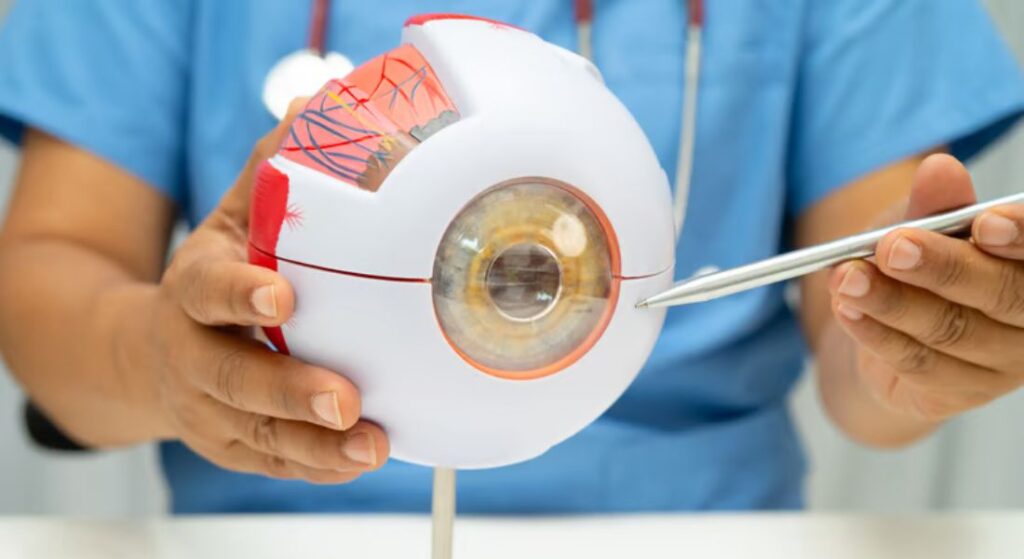
If you have corneal astigmatism, your surgeon may recommend a toric intraocular lens to reduce or eliminate the need for glasses after cataract surgery. Unlike standard lenses, toric IOLs are designed with different powers in specific meridians to counteract the uneven curvature of the cornea. Choosing the correct lens power is only part of the process precise alignment is equally important.
Calculating the appropriate axis and strength of correction requires additional measurements beyond routine biometry. Modern corneal topography and tomography provide highly detailed maps of the corneal surface, allowing surgeons to plan treatment with impressive accuracy. These technologies help determine both the magnitude and orientation of astigmatism before surgery.
However, the rotational alignment of the lens inside the eye also plays a crucial role. Even a few degrees of rotation after implantation can slightly reduce the astigmatic correction effect. Although modern surgical techniques minimise this risk, it illustrates an important point: outcomes today are consistently excellent, but because they depend on both precise calculation and biological healing, they are not mathematically flawless in every single case.
Managing Expectations: The Most Important Step
Perhaps the most important part of IOL power calculation is not the machine or the formula it is the conversation you have with your surgeon. Technology can measure and predict with remarkable precision, but understanding your personal visual priorities is what truly shapes a successful outcome.
Before surgery, your surgeon should clearly discuss your visual goals, the intended target refraction, and the realistic margin of error that exists even with modern techniques. You should also understand the potential need for glasses in certain situations, such as prolonged reading, night driving, or very fine detail work. This clarity prevents disappointment and ensures you know what to expect.
When expectations are aligned with clinical reality, satisfaction rates are exceptionally high. Patients who understand that results are highly accurate though not mathematically perfect tend to feel reassured and confident in their decision. In the end, informed preparation is just as important as precise measurement in achieving a positive surgical experience.
Can Anything Improve Accuracy Further?

Research in IOL power calculation continues to advance at an impressive pace. Artificial intelligence is increasingly being used to refine predictive algorithms, analysing vast datasets to identify subtle patterns that traditional formulae may miss. These AI-enhanced models continue to narrow the margin of error, particularly in complex or atypical eyes.
At the same time, imaging technology is improving. Modern swept-source OCT biometers provide extremely detailed measurements of axial length and other ocular structures, even in dense cataracts. This level of clarity enhances measurement reliability and reduces the risk of data inaccuracies before surgery even begins.
Another important development is the use of personalised IOL constants based on surgeon-specific outcomes. By adjusting calculations according to a surgeon’s own historical results, predictions become even more tailored and precise. The field is still evolving, but even today, the level of refractive accuracy achieved in cataract surgery is truly extraordinary.
What Should You Realistically Expect?
If you are having standard monofocal IOL surgery targeted for distance vision, you can expect a very high likelihood of clear, sharp distance vision without glasses. Modern measurements and formulae make this outcome highly predictable. However, you will probably still need reading glasses for near tasks such as books, phones, or detailed work, as monofocal lenses are designed to focus at a single distance.
If you are choosing a multifocal or EDOF (extended depth of focus) lens, the goal is to reduce your dependence on spectacles across multiple distances. Most patients experience significant freedom from glasses for daily activities, though some may still require them for very fine print or prolonged close work. There can also be visual phenomena such as halos or glare, which should be discussed beforehand.
Importantly, perfection cannot be guaranteed. Even with advanced technology, small biological variations influence healing and final lens position. The reassuring reality is that most patients fall very close to their intended target, and only a very small percentage experience outcomes that are significantly off plan. Clear communication and realistic expectations are key to feeling satisfied with your result.
FAQs:
1. How accurate is IOL power calculation today?
With modern optical biometry and advanced formulae, around 80–90% of patients achieve a result within ±0.5 dioptres of the intended target, and over 95% are within ±1.0 dioptre. This level of precision is considered exceptionally high in predictive medicine.
2. What measurements are used to calculate IOL power?
Key measurements include axial length (eye length), corneal curvature (keratometry), anterior chamber depth, and sometimes lens thickness and corneal diameter. These values are obtained using advanced optical biometers before surgery.
3. Why isn’t IOL power calculation 100% perfect?
Even with highly precise technology, the calculation predicts how your eye will heal and where the lens will ultimately settle. Small biological variations in healing and anatomy mean outcomes are highly accurate, but not mathematically exact.
4. What is axial length and why is it so important?
Axial length is the distance from the front of your cornea to the retina. Even a tiny measurement difference (as little as 0.1 mm) can affect the final prescription. It is considered the most critical factor in IOL power calculation.
5. Do short or long eyes affect calculation accuracy?
Yes. Very short (hyperopic) or very long (highly myopic) eyes are more complex to calculate. Modern formulae have significantly improved outcomes in these cases, but prediction margins may be slightly wider than in average-sized eyes.
6. Is IOL calculation more difficult if I’ve had LASIK or PRK?
Yes. Previous laser vision correction changes the shape of the cornea, making standard assumptions less reliable. However, specialised modern formulae and, in some cases, intraoperative measurements greatly improve accuracy in post-refractive surgery eyes.
7. What happens if I’m left with a small prescription after surgery?
A small residual prescription is not dangerous. It can usually be managed with glasses, contact lenses, or, if desired, a laser enhancement procedure to fine-tune vision.
8. Can intraoperative aberrometry improve accuracy?
Intraoperative aberrometry provides real-time measurements during surgery. It can be especially helpful in complex cases, such as prior laser vision correction or toric lens alignment, offering an additional layer of precision.
9. Are premium or multifocal lenses less forgiving of small errors?
Premium lenses, including multifocal and toric IOLs, often require more precise targeting to achieve optimal results. Small residual refractive errors may be more noticeable, which is why careful planning and discussion are essential.
10. What should I realistically expect after cataract surgery?
Most patients achieve clear functional vision close to their intended target. If you choose a monofocal lens for distance, you will likely still need reading glasses. While perfection cannot be guaranteed, satisfaction rates are very high when expectations are properly aligned with clinical reality.
Final Thoughts: Precision with Realistic Expectations
Modern IOL power calculation is extraordinarily accurate. With advanced optical biometry, refined formulae, and AI-enhanced modelling, the vast majority of patients achieve vision very close to their intended target after cataract surgery. While no biological system can be predicted with absolute mathematical perfection, today’s technology allows surgeons to deliver highly reliable, consistent outcomes with impressive precision.
If you’re thinking about IOL Surgery in London, you can get in touch with us at the London Cataract Centre. A personalised consultation, careful planning, and clear discussion of your visual goals are the most important steps toward achieving the best possible result.
References:
- Won, Y.K. et al. (2024) Predictive Accuracy of Intraocular Lens Formulas with Different Biometer https://www.mdpi.com/2077-0383/13/22/6815
- Guo, C. et al. (2022) Comparison of accuracy of IOL formulas for very long eyes https://pubmed.ncbi.nlm.nih.gov/35536455/
- Solomon, R. et al. (2022) Barrett vs Older Formulas Across Axial Lengths https://pmc.ncbi.nlm.nih.gov/articles/PMC9905895/
- Abd El-moneam, H.A. (2024) Evaluation of different corneal powers measured by corneal tomography in intraocular lens power calculation. https://academic.oup.com/qjmed/article/117/Supplement_1/hcae070.382/7705324
- Zhou, Y. et al. (2023) AI Formula Accuracy in Highly Myopic Eyes https://pubmed.ncbi.nlm.nih.gov/38026369/