



If you are over 40 and struggling to see clearly up close whether it’s your phone, a menu, or a computer screen you are not alone. Presbyopia is a natural part of ageing, and it eventually affects almost everyone. Many people ask me, “What is the best treatment for presbyopia?” and the answer is not the same for everyone.
The most suitable treatment depends on several factors, including your age, lifestyle, prescription, and personal vision goals. Some patients prioritise clear distance vision without glasses, while others need sharp near vision for reading or computer work. Understanding your priorities is the first step in finding the right solution.
Modern treatments for presbyopia are diverse. Lens replacement surgery can correct both near and distance vision in one procedure, while laser-based procedures adjust the shape of the cornea to improve focus. Specialised contact lenses, such as multifocal or monovision lenses, can also provide a practical non-surgical option.
Choosing the best approach means weighing the benefits, risks, and lifestyle considerations of each option. By exploring all available treatments, you can make an informed decision that fits your daily life, reduces dependence on glasses, and improves your overall visual comfort.
Understanding Presbyopia
Presbyopia is the gradual loss of your eye’s ability to focus on nearby objects. You might first notice it in your early to mid-40s when reading small print, checking your smartphone, or working on a computer becomes more challenging. This occurs because the lens inside your eye naturally becomes less flexible over time, making it harder to adjust focus for close-up tasks.
Unlike short-sightedness (myopia) or long-sightedness (hyperopia), presbyopia is an age-related change in the lens itself rather than a problem with the overall shape of your eye. Everyone will experience it eventually, though the rate at which it progresses can vary. Some people may notice subtle difficulties initially, while others may see a more rapid change over a few years.
Understanding presbyopia is important because it explains why near vision tasks are becoming increasingly difficult and why traditional reading glasses may no longer feel sufficient. It also highlights why modern treatments such as lens replacement surgery, laser procedures, or specialised contact lenses can provide more lasting solutions. Being aware of this natural ageing process allows you to take proactive steps to maintain clear and comfortable vision for your daily activities.
Symptoms of Presbyopia
Presbyopia is the age-related decline in near vision that typically begins in your 40s. Early recognition of symptoms is important for deciding when and how to correct your vision. Identifying these signs allows for timely intervention with glasses, contact lenses, or surgical options like lens replacement surgery.
- Holding Reading Material at Arm’s Length: Difficulty focusing on close objects often leads people to extend reading material further away. This compensates for the eye’s declining ability to accommodate near vision.
- Difficulty Seeing Small Print in Low Light: Fine print becomes harder to read, especially under dim lighting conditions. This is often one of the earliest noticeable signs of presbyopia.
- Eye Strain or Headaches After Close Work: Prolonged reading or detailed tasks can cause discomfort, fatigue, or headaches due to constant eye strain. This symptom signals that the eyes are working harder to focus.
- Needing Brighter Lighting to See Clearly: Increased lighting requirements for close tasks indicate that the lens is less flexible and less able to adjust to varying visual demands.
In conclusion, recognising early signs of presbyopia such as holding reading material at arm’s length, difficulty in low light, eye strain, and the need for brighter lighting is the first step toward effective vision correction. Timely assessment allows patients to explore suitable options, including glasses, contact lenses, or lens replacement surgery, to maintain comfortable near vision.
Traditional Solutions: Reading Glasses and Bifocals

Historically, reading glasses have been the most common way to manage presbyopia. They are simple, non-invasive, and effective, making them a reliable choice for many people. However, they do have some limitations, such as needing to carry them everywhere and having to switch between near and distance vision tasks frequently.
Some people also find reading glasses inconvenient for daily life or dislike the way they look. They can interrupt your workflow or social activities, especially if you are constantly putting them on and taking them off. For these reasons, glasses may not feel like a perfect long-term solution.
Bifocals or progressive lenses offer more flexibility by combining distance and near vision in a single pair of glasses. While they can reduce the need to switch between multiple pairs, some users may need time to adapt, and occasional distortions or visual discomfort can occur. Understanding these traditional options helps you see why modern treatments might offer greater convenience and freedom.
Modern Presbyopia Treatments
In the last decade, medical and surgical innovations have introduced a variety of effective treatments for presbyopia. These modern options go beyond traditional glasses and offer solutions that can reduce or even eliminate the need for reading spectacles. Knowing what’s available can help you choose the approach that best fits your lifestyle and vision goals.
Lens replacement surgery is one of the most advanced options, replacing your natural lens with an intraocular lens (IOL) to restore clear near and distance vision. Laser vision correction can reshape your cornea to improve focus, while specialised contact lenses, such as multifocal or monovision designs, provide a non-surgical alternative for managing near vision difficulties.
There are also emerging non-surgical treatments being explored, including eye drops and other pharmaceutical solutions aimed at improving near vision. By understanding the full range of modern treatments, you can make a more informed choice and select the method that best balances convenience, effectiveness, and long-term benefits.
Lens Replacement Surgery for Presbyopia
Lens replacement surgery, also called refractive lens exchange (RLE), replaces your natural lens with an artificial intraocular lens (IOL) to correct both near and distance vision in a single procedure. This approach can significantly reduce your dependence on glasses and is particularly useful if early cataracts are starting to form or if you want a long-term solution for presbyopia.
There are different types of IOLs to suit your needs. Monofocal lenses focus at one distance, so reading glasses may still be needed. Multifocal lenses provide near, intermediate, and distance vision, although some patients notice minor halos. Extended Depth-of-Focus (EDOF) lenses offer a continuous range of vision with fewer side effects, while toric lenses can also correct astigmatism. Discussing your daily visual tasks, such as reading, screen work, or driving, will help determine the best lens type for you.
While highly effective, lens replacement is more invasive than glasses or contacts and carries mild risks, including glare or halos. A short recovery period and follow-up care are required, but most patients achieve long-term, stable results. In London, advanced presbyopia treatments provide personalised lens replacement options using the latest technology to ensure safe and predictable outcomes.
Laser Treatments for Presbyopia
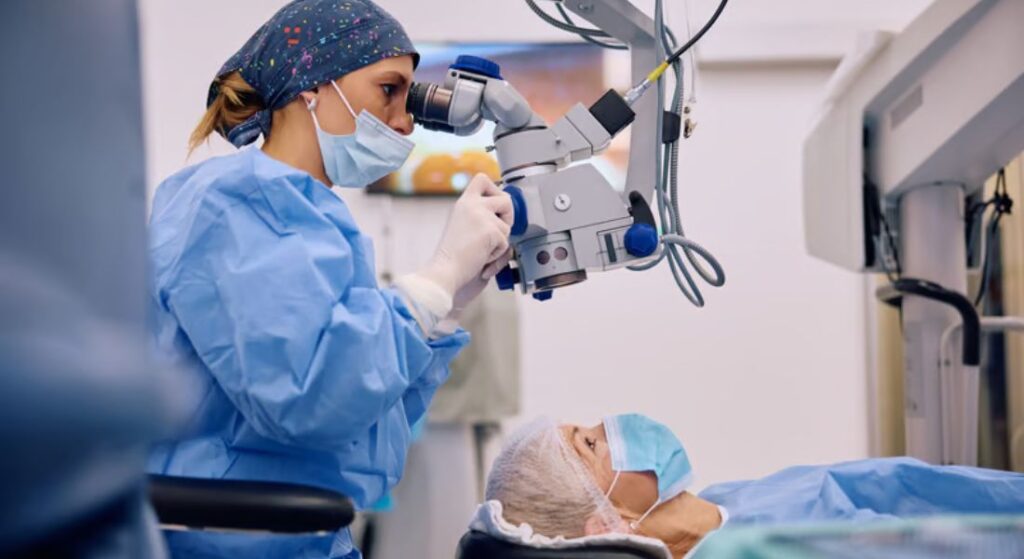
Presbyopia, the age-related difficulty in focusing on near objects, can now be addressed with advanced laser treatments. These procedures work by reshaping the cornea to improve near vision, offering an alternative to reading glasses or contact lenses. Two of the main laser approaches adapted for presbyopia are LASIK and PRK, each tailored to suit individual visual needs. Understanding the differences between these methods can help patients make informed decisions.
- Monovision LASIK: Monovision LASIK corrects one eye for distance vision and the other for near vision. This approach can significantly reduce the need for reading glasses in daily life. However, adaptation is required, as some individuals may initially feel disoriented or experience slight depth perception challenges.
- PresbyLASIK: PresbyLASIK creates multifocal zones on the cornea, allowing for improved near and distance vision simultaneously. As a newer technique, it shows promising results for suitable candidates. That said, it may not be appropriate for all prescriptions, and careful preoperative assessment is essential.
- Recovery and Considerations: Laser treatments are minimally invasive and typically involve a short recovery period, often just a few days. While they permanently reshape the cornea, they do not prevent cataracts or address age-related lens changes. Patients should weigh the benefits against long-term eye health considerations before proceeding.
In conclusion, laser treatments for presbyopia offer a convenient and effective option for improving near vision without the constant use of glasses. While techniques like Monovision LASIK and PresbyLASIK have unique benefits, each requires careful selection and adaptation. Understanding recovery timelines, limitations, and personal visual needs is essential. With the right guidance, these procedures can greatly enhance everyday visual comfort and independence.
Specialised Contact Lenses
Contact lenses remain a flexible and non-surgical option for managing presbyopia. They allow you to improve both near and distance vision without undergoing surgery, making them ideal if you prefer a reversible solution. Choosing the right type of lens depends on your visual needs and lifestyle.
Multifocal contact lenses are designed to provide near and distance correction within a single lens, allowing you to see clearly across different ranges. Monovision contacts work differently: one eye is corrected for distance vision, and the other for near tasks, similar to monovision LASIK. Hybrid or scleral lenses are also available for patients with irregular corneas or high prescriptions, offering comfort and clarity where standard lenses may not suffice.
The main advantage of contact lenses is that they allow you to adapt your vision gradually and reversibly. You can trial different types to see which suits your daily activities best, such as reading, working on screens, or participating in sports. For many patients, they provide a practical, non-invasive way to manage presbyopia while maintaining flexibility in their vision care.
Emerging Non-Surgical Options
Research continues into non-invasive methods that may help slow or partially reverse presbyopia. These treatments aim to improve near vision without surgery, offering potential alternatives for patients who prefer less invasive approaches.
One option under study is corneal inlays, which are tiny implants placed in the cornea to enhance near vision. Pharmaceutical eye drops are also being developed to temporarily increase the flexibility of your natural lens, improving focus for close-up tasks. Additionally, lifestyle adjustments and eye exercises may help reduce strain, though their effect on presbyopia itself is limited.
While these emerging treatments are promising, they are still being researched and may not provide the long-term or full correction that surgery or specialised lenses can offer. It’s important to consider these options as complementary or experimental approaches, rather than complete solutions, until more evidence is available.
Factors to Consider When Choosing a Treatment
When deciding on the best treatment for presbyopia, several factors need to be considered. Age and eye health play a key role: younger patients may prefer non-invasive or laser-based options, while those over 50 often benefit most from lens replacement surgery, particularly if early cataracts are present. Your overall eye health and any existing conditions will also influence which treatments are safe and effective for you.
Lifestyle is another important consideration. If you lead an active life, surgery or multifocal lenses may be more convenient, allowing you to participate in sports or outdoor activities without relying on glasses. If your work involves long hours at a desk or using a computer, near vision may be a priority, while night-time drivers should consider lens options carefully to minimise glare and ensure clear vision in low-light conditions.
Your prescription and risk tolerance are equally important. High prescriptions or significant astigmatism may be best corrected with lens replacement or specialised lenses, while non-invasive options generally carry fewer surgical risks but may not fully correct your vision. Surgery can provide long-term, stable results, but it involves an intraocular procedure, so understanding your comfort level and priorities will help you choose the treatment that suits you best.
Comparing Treatments
There are many ways to manage presbyopia, and each option comes with its own advantages and limitations. Reading glasses and multifocal glasses are non-invasive and easy to use, but they offer limited to moderate visual freedom and only provide temporary correction. Contact lenses are slightly more flexible and offer moderate vision improvement, though they carry small risks such as discomfort or infection.
Laser procedures like LASIK or PRK provide high visual freedom and longer-lasting results, but they are slightly more invasive and require a period of adaptation, especially for monovision approaches. Lens replacement surgery offers the highest level of visual independence and permanent correction, though it is a more invasive procedure with rare surgical risks.
This comparison shows that no single treatment is perfect for everyone. The best choice depends on your personal priorities, lifestyle, and overall eye health. Understanding the benefits and trade-offs of each option will help you make an informed decision that fits your daily needs and long-term vision goals.
Real-Life Patient Experiences
Hearing about real patient experiences can provide valuable insight into how presbyopia treatments work in everyday life. Each individual’s choice depends on age, lifestyle, and visual needs, and outcomes can vary slightly from person to person. By looking at actual cases, prospective patients can better understand the practical benefits and limitations of different treatments.
- Patient A, 45: Chose multifocal lenses, allowing clear vision for both reading and driving. This approach has made daily activities more convenient, eliminating the constant need for glasses. Patient A reports a smooth adjustment period and high satisfaction with independence.
- Patient B, 52: Opted for monovision LASIK, which corrects one eye for distance and the other for near vision. They adapted quickly to this approach, finding it easier to manage both near and distance tasks. Minor initial disorientation resolved within a few weeks, highlighting the adaptability of the brain to monovision.
- Patient C, 60: Underwent lens replacement surgery to correct both presbyopia and early cataracts. This procedure restored clear vision across all distances, allowing independence from reading glasses. Patient C describes improved quality of life, particularly for reading and driving without additional optical aids.
In conclusion, real-life experiences demonstrate that presbyopia treatments can offer significant improvements in daily life, from reading and driving to general independence. While each procedure has unique benefits, outcomes are generally positive when matched to the patient’s lifestyle and visual needs. Learning from others’ experiences can guide informed decision-making and set realistic expectations.
Recovery and Post-Treatment Care
Recovery times for presbyopia treatments vary depending on the method you choose. Contact lenses generally allow immediate adaptation, but it’s important to follow proper hygiene instructions to avoid discomfort or infection. With consistent use, you can adjust quickly and safely.
Laser procedures, such as LASIK or PRK, typically require a few days for your vision to stabilise. You may experience temporary dryness or mild fluctuations in vision, which can be managed with prescribed eye drops. Following all post-operative instructions carefully helps ensure the best possible results.
Lens replacement surgery involves a longer recovery period, usually around six to eight weeks for full visual stabilisation. Regular follow-up appointments are essential to monitor your eye health, check lens positioning, and confirm that your vision is improving as expected. Consistent post-treatment care is key to achieving optimal outcomes and maintaining long-term eye health.
Future Innovations in Presbyopia Treatment
Research and innovation in presbyopia treatment are progressing rapidly, offering exciting possibilities for the future. Smart intraocular lenses (IOLs) are being developed to adjust focus dynamically, mimicking the way your natural lens works and potentially reducing the need for glasses even further.
Corneal inlays are also improving, with newer designs aiming to provide more natural vision restoration for near tasks. These tiny implants are becoming more precise and comfortable, helping to enhance near vision without surgery on the lens itself.
Advanced pharmaceutical drops are another area of exploration, designed to temporarily restore flexibility to the natural lens. While these treatments are still in development, they offer hope for less invasive, more effective solutions that could make presbyopia management simpler and more convenient in the near future.
Financial and Lifestyle Considerations
When choosing a treatment for presbyopia, it’s important to consider both the financial and lifestyle aspects. Surgical options, such as lens replacement, typically involve a higher upfront cost, but they can reduce your long-term expenditure on glasses and contact lenses. Over time, this investment can make financial sense, especially if you value freedom from corrective eyewear.
Non-surgical options, including glasses, multifocal lenses, or specialised contact lenses, usually have a lower initial cost. However, they may not fully correct your vision or offer the same long-term convenience as surgical solutions. You may continue to spend on replacements or upgrades over the years.
Beyond cost, the lifestyle benefits of clear vision can be significant. Independence from glasses, easier participation in sports or work, and greater convenience in daily life often outweigh purely financial considerations. Evaluating how a treatment will impact your day-to-day activities can help you choose the option that best fits your priorities and quality of life.
When to Seek Professional Advice
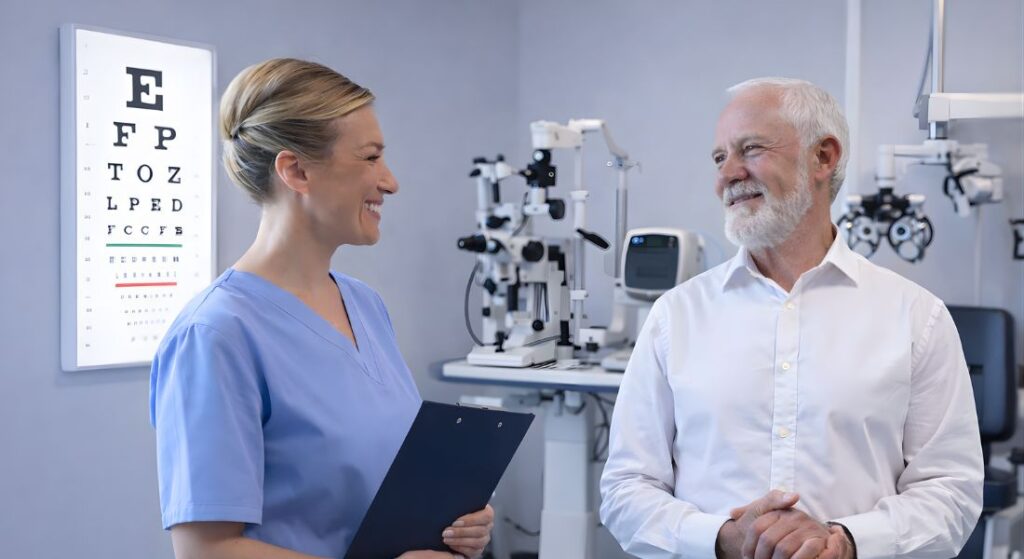
Presbyopia often develops gradually, and many people don’t realise their near vision is changing until it starts affecting daily tasks. Difficulty reading, using a smartphone, or performing close-up activities can signal that it’s time to consult an eye specialist. Early professional assessment helps identify the most suitable treatment before vision problems become more disruptive.
- Prescription and Vision Changes: An eye specialist will review your current prescription and check for any recent changes in vision. Detecting shifts in near or distance vision early allows for timely correction and better outcomes.
- Eye Health and Anatomy: A thorough examination evaluates the overall health of your eyes, including the cornea, lens, and retina. Understanding your eye anatomy ensures that any recommended treatment is safe and effective.
- Lifestyle and Visual Priorities: Eye care professionals consider how you use your vision daily, from work tasks to hobbies. This personalised approach helps select a treatment that aligns with your lifestyle and long-term visual needs.
In conclusion, seeking professional advice at the first signs of presbyopia is crucial for preserving visual comfort and independence. Comprehensive assessment of your prescription, eye health, and lifestyle ensures that the chosen treatment is safe, effective, and tailored to your needs. Early guidance can make the transition to corrective solutions smooth and rewarding, preventing unnecessary strain or frustration in daily life.
Presbyopia Treatment in London
If you are in London and considering presbyopia treatment, it’s important to choose a clinic with experience and advanced technology. The right clinic can guide you through the full range of treatment options, ensuring your choice aligns with your vision needs and lifestyle.
Tailored solutions are available, from lens replacement surgery and laser procedures to specialised contact lenses. Each option has its benefits, and experienced surgeons can help you understand which approach will best meet your daily visual requirements.
With professional guidance, you can make an informed decision and achieve the best possible outcomes for your eyes. Whether your priority is reducing dependence on glasses, improving near vision, or achieving long-term clarity, personalised care ensures that your treatment is safe, effective, and suited to your lifestyle.
FAQs:
1. What is presbyopia?
Presbyopia is the natural age-related decline in near vision, usually starting in your 40s. It occurs because the eye’s lens becomes less flexible, making it harder to focus on close objects like books, phones, or computer screens.
2. How can I tell if I have presbyopia?
Common symptoms include holding reading material at arm’s length, difficulty seeing small print in low light, eye strain or headaches during close work, and needing brighter light for near tasks. Recognising these early helps in choosing the right treatment.
3. What are the traditional solutions for presbyopia?
Reading glasses, bifocals, or progressive lenses are the most common options. They are simple and effective but may require switching between glasses for different tasks and don’t provide permanent correction.
4. How does lens replacement surgery work for presbyopia?
Lens replacement, or refractive lens exchange (RLE), replaces your natural lens with an intraocular lens (IOL) to restore both near and distance vision. Options include monofocal, multifocal, extended depth-of-focus (EDOF), and toric lenses, depending on your visual needs.
5. Are laser treatments effective for presbyopia?
Yes. Procedures like Monovision LASIK and PresbyLASIK reshape the cornea to improve near vision. Laser treatments are minimally invasive, but they do not prevent cataracts or age-related changes in the natural lens.
6. Can contact lenses help with presbyopia?
Specialised contact lenses, including multifocal or monovision designs, can correct near and distance vision without surgery. They offer a reversible and flexible solution, allowing you to trial what works best for reading, screen use, or sports.
7. Are there any emerging non-surgical treatments?
Research includes corneal inlays, pharmaceutical eye drops, and lens flexibility enhancers. While promising, these are generally experimental and may not provide full or permanent correction like surgery or lenses.
8. How do I choose the best treatment?
Consider your age, prescription, eye health, lifestyle, and visual priorities. For active lifestyles or early cataracts, lens replacement may be ideal, while younger patients may benefit from laser or contact lens options. Risk tolerance and personal preference are also important.
9. What is the recovery time for different treatments?
Contact lenses have immediate adaptation. Laser treatments typically take a few days for vision to stabilise, while lens replacement surgery usually requires six to eight weeks for full visual stabilisation. Proper follow-up and post-care are essential.
10. Where can I get professional presbyopia treatment in London?
Clinics like the London Cataract Centre offer tailored solutions with advanced technology, experienced surgeons, and personalised lens or laser options. Professional assessment ensures the safest and most effective treatment based on your vision and lifestyle.
Final Thoughts: Choosing the Best Presbyopia Treatment
Finding the right treatment for presbyopia is a highly personal decision that depends on your age, prescription, eye health, lifestyle, and visual priorities. Modern options, including lens replacement surgery, laser procedures, and specialised contact lenses, offer a range of solutions that can reduce or even eliminate reliance on reading glasses. By understanding the benefits, risks, and recovery considerations of each approach, you can make an informed choice that best fits your daily life and long-term vision goals.
If you’re looking for Presbyopia treatment in London, you can get in touch with us at London Cataract Centre to explore tailored solutions, receive a personalised assessment, and select the most suitable option to restore clear near and distance vision safely and effectively.
References:
- Sieburth, R. & Chen, M. (2019) Intraocular lens correction of presbyopia, Taiwan Journal of Ophthalmology https://pmc.ncbi.nlm.nih.gov/articles/PMC6432854/
- American Academy of Ophthalmology (2021) Multifocal and Accommodating Intraocular Lenses for the Treatment of Presbyopia: A Technology Assessment, Ophthalmology, https://www.sciencedirect.com/science/article/abs/pii/S0161642021001998
- Kim, D.Y., Ahn, H., Lee, S., Jun, I., Seo, K.Y., Kim, S.Y. & Kim, T.‑I. (2024) Efficacy of a new refractive multifocal contact lens for presbyopia, Scientific Reports, https://pubmed.ncbi.nlm.nih.gov/38632261/
- Salvá, L., García, S., García‑Delpech, S., Martínez‑Espert, A. & Ferrando, V., 2023. Optical Performance of a Segmented Extended‑Depth‑of‑Focus Intraocular Lens under the Influence of Different Values of Spherical Aberration Generated by Refractive Surgery. Journal of Clinical Medicine, https://www.mdpi.com/2077-0383/12/14/4758
- Frick, K.D., Gower, E.W., Kempen, J.H., et al., 2021. Presbyopia A Review of Current Treatment Options and Management. British Journal of Ophthalmology. https://pmc.ncbi.nlm.nih.gov/articles/PMC8163965/