



If you have been referred for cataract surgery on the NHS, you may have heard the phrase “Right to Choose” mentioned, often without much explanation. Many patients are unsure what it really means, whether it applies to cataract surgery, or how to use it in practice. This uncertainty can make an already stressful process feel more confusing than it needs to be.
The NHS Right to Choose framework gives patients certain freedoms when being referred for specialist care. However, it is often misunderstood, especially in eye care. In this article, we explain clearly what Right to Choose means for cataract surgery, how it works, what you can and cannot choose, and how to avoid common misconceptions.
What the NHS ‘Right to Choose’ Actually Means
The NHS Right to Choose is a legal entitlement that gives you more control over where you receive certain NHS-funded treatments. When your GP refers you for a first outpatient appointment or treatment, you are not limited to your local NHS hospital by default. Instead, you may be able to choose from a list of approved providers. This applies as long as the referral meets NHS criteria.
For cataract surgery, this means you and we can explore options beyond the nearest hospital trust. If an alternative provider holds an NHS contract, your surgery can still be funded by the NHS. The care remains part of the NHS system, even though the location may differ. Choice is about access and convenience, not about private payment.
It is important to understand what this right does and does not do. Right to Choose does not override clinical assessment or eligibility requirements. You still need an appropriate referral and confirmation that surgery is suitable. What it offers is flexibility, helping you and us consider where care is delivered once that decision is made.
Who Is Eligible for Right to Choose?
Right to Choose applies to patients who live in England and are registered with an NHS GP. The scheme does not operate in Scotland, Wales, or Northern Ireland, where referral pathways are managed differently. This geographical distinction is important and often causes confusion. Eligibility depends on where you are registered, not where you seek treatment.
To use Right to Choose, you must be referred by a GP or another appropriate primary care clinician. You cannot self-refer under this pathway. The provider you choose must also be approved to deliver cataract surgery under an NHS contract. If a provider does not hold this contract, Right to Choose cannot be applied.
When these conditions are met, you are generally entitled to exercise this right. You and we can discuss available providers at the point of referral and request your preferred option. Understanding eligibility helps you take an active role in your care and ensures expectations remain realistic and aligned with NHS rules.
Does Right to Choose Apply to Cataract Surgery?

Yes, Right to Choose does apply to cataract surgery, and it is one of the more commonly accessed procedures under this framework. When you are referred by your GP, you and we can consider approved providers that deliver NHS-funded cataract surgery. This gives you more flexibility than being automatically directed to a local NHS hospital. The surgery itself remains part of NHS care, with no private payment required.
However, it is important for us to understand that availability is not uniform across England. Which providers you can choose from depends on local commissioning arrangements and which organisations hold active NHS contracts. This means that options may differ depending on where you live and how services are organised in your area. Right to Choose expands options, but it does not remove all regional variation.
Crucially, Right to Choose does not mean you can select any clinic or surgeon without restriction. You can only choose from providers that are approved to deliver cataract surgery on behalf of the NHS. Understanding this helps set realistic expectations and avoids frustration. When you and we approach the referral process with clarity, Right to Choose becomes a practical tool rather than a source of confusion.
How the Referral Process Works Step by Step
The cataract referral process can feel confusing at first, especially when multiple professionals are involved. In reality, it follows a clear sequence designed to assess need, confirm eligibility, and guide you safely towards surgery. Understanding each step helps reduce uncertainty and allows informed decisions at the right moments.
We find that clarity around the process also empowers patients to use their rights appropriately, including choice of provider. When everyone understands their role, the pathway feels more structured and predictable.
1. Initial Eye Test or Clinical Assessment – The process usually begins with an eye test or assessment by an optometrist or eye care professional. Cataracts are identified, and their impact on vision and daily activities is documented.
2. Functional Impact Is Recorded – Beyond visual acuity, difficulties with glare, reading, driving, or daily tasks are noted. This functional information is essential and supports the clinical justification for surgery.
3. Information Is Shared With the GP – Findings from the eye assessment are sent to the GP. This documentation forms the basis for a formal NHS referral request.
4. GP Makes the Formal Referral – The GP submits the referral for cataract surgery. This is the key point where Right to Choose can be raised and an NHS-approved provider can be requested instead of a default local hospital.
5. Chosen Provider Takes Over Care – Once the referral is accepted, the selected provider contacts you directly. They arrange further assessments, pre-operative checks, and surgery according to their clinical pathway.
Overall, the process is designed to feel guided rather than fragmented. While waiting times can vary, each stage has a clear purpose. When we understand the steps in advance, the pathway becomes easier to navigate and far less stressful.
What You Can Choose Under Right to Choose
Under Right to Choose, you can select the provider organisation that delivers your NHS-funded cataract surgery. This may include NHS hospitals as well as certain independent providers that hold NHS contracts. The standard of care remains NHS-regulated regardless of who delivers it.
You may also be able to choose a provider in a different location if this is more convenient for you. Some patients use this flexibility to reduce travel difficulties or to access providers with shorter waiting times. For many of us, this practical choice can significantly improve the overall experience.
What matters is that choice focuses on access and logistics rather than altering clinical care. You and we still follow the same medical assessments, safety standards, and eligibility criteria. Right to Choose gives flexibility within the system, not outside it.
What You Cannot Choose
Right to Choose does not allow you to select a specific surgeon. Allocation of surgeons is managed by the provider based on clinical governance, availability, and safety considerations. This ensures care is delivered consistently and appropriately.
You also cannot use Right to Choose to bypass clinical eligibility criteria. You must still meet NHS requirements for cataract surgery, including functional impact and clinical need. Choice does not override medical decision-making.
In addition, you cannot demand treatments, lenses, or upgrades that are not funded by the NHS. Optional or premium options fall outside Right to Choose. Understanding these limits helps you and we avoid unrealistic expectations.
Common Misconception: “It Means Private Surgery”
A frequent misunderstanding is that Right to Choose turns NHS care into private care. This is not the case. Your cataract surgery remains NHS-funded and free at the point of use.
Independent providers simply deliver care on behalf of the NHS under contract. They follow NHS standards, reporting requirements, and safety regulations. From a patient perspective, the funding and entitlement do not change.
There is no obligation to pay for standard NHS cataract surgery when using Right to Choose. When you and we understand this clearly, it becomes easier to make informed decisions without unnecessary concern about cost.
Common Misconception: “I Can Skip the NHS Queue”
Right to Choose does not guarantee immediate surgery. While some providers may have shorter waiting times, this depends on capacity, demand, and clinical prioritisation. Waiting still forms part of the process.
Your position on a waiting list is influenced by clinical need, not just choice of provider. Some patients may move faster, others may not, depending on circumstances. Right to Choose offers opportunity, not certainty.
It is best understood as a way to explore alternatives within the NHS, not a method of queue-jumping. When expectations are realistic, you and we can use Right to Choose constructively rather than feeling disappointed.
How Waiting Times Can Differ Between Providers
One of the main reasons you and many others explore Right to Choose is variation in waiting times between providers. Some organisations have greater surgical capacity, dedicated cataract pathways, or more efficient scheduling systems. This can allow them to see and treat patients sooner than some NHS hospitals.
These differences do not mean one provider offers better clinical care than another. They usually reflect how services are organised locally and how demand is managed. Waiting times can also change over time as demand rises or capacity shifts, so no provider is permanently faster than all others.
Because of this variation, it is entirely reasonable for you and us to ask about expected waiting times when discussing referral options. Having this information helps you make a practical decision based on your circumstances, priorities, and tolerance for delay.
The Role of Your GP in Right to Choose

Your GP plays a key role in enabling Right to Choose because they are responsible for initiating the referral. Even if your eye assessment is done elsewhere, the GP submits the formal referral to the chosen NHS-approved provider. Without this step, Right to Choose cannot be applied.
Some GPs may not automatically mention Right to Choose. This is often due to time pressures, workload, or varying familiarity with referral pathways rather than unwillingness. The right still exists, even if it is not raised proactively during the appointment.
If you wish to use Right to Choose, it is appropriate for you to raise this with your GP. When you and we approach the conversation clearly and calmly, it usually allows the referral to be directed according to your preference within NHS rules.
What Happens After the Referral Is Sent
Once your referral is sent and accepted, the chosen provider will contact you directly. They will arrange a pre-operative assessment to confirm suitability for cataract surgery. This assessment follows the same NHS clinical standards regardless of who delivers the care.
You will still undergo all necessary checks, measurements, and safety assessments. These include confirming the cataract diagnosis, assessing eye health, and planning the surgery appropriately. Being seen by an independent provider does not reduce or bypass these steps.
Throughout this process, care remains clinically governed and NHS-funded. Whether treatment is delivered in an NHS hospital or by an approved provider, you and we can expect the same focus on safety, quality, and appropriate clinical decision-making.
Clinical Standards and Safety Under Right to Choose
All providers delivering NHS cataract surgery under Right to Choose must meet the same clinical governance standards as NHS hospitals. Safety protocols, infection control, and outcome monitoring are mandatory, regardless of who provides the surgery. From our perspective, this means your care should meet nationally agreed benchmarks at every stage.
We expect providers to undergo regular audits and external regulation. Outcomes are tracked, complications are reviewed, and quality assurance processes remain in place. This oversight ensures consistency and protects patient safety across NHS-funded pathways.
For you, this means that choosing a different provider does not mean accepting lower standards. Whether surgery is delivered in an NHS hospital or by an approved independent provider, we should expect equivalent levels of safety, professionalism, and accountability.
Lens Choices and NHS Funding
When accessing cataract surgery under Right to Choose, it is important to understand how lens options are handled. NHS funding follows the same rules regardless of where surgery is delivered. Clarity around what is included helps keep decisions focused on care rather than cost.
Lens choices under NHS funding work as follows:
- Standard NHS lenses apply – These lenses are designed to restore clear, reliable vision safely and effectively.
- Premium lenses are not automatically included – Lifestyle or enhanced lens options sit outside standard NHS funding.
- Clear separation is required – Any discussion about paid upgrades must be kept separate from NHS-funded care.
- Transparency about costs is essential – You and we should receive clear information about what is included and what would involve additional charges.
- No pressure should be applied – Decisions about paid options should never feel rushed or compulsory.
Understanding this distinction early prevents confusion later. When NHS entitlements are clear, discussions remain centred on clinical need, informed choice, and confidence in the care pathway.
Can You Change Your Mind After Referral?
In some situations, it may be possible to change your chosen provider after referral. However, doing so can introduce delays, as referrals may need to be redirected and reassessed. This can reset parts of the process.
For this reason, it is best for you and us to consider options carefully before the referral is submitted. Asking about waiting times, location, and pathways early helps reduce uncertainty. Informed decisions upfront usually lead to smoother progress.
Once surgery planning is underway, switching providers becomes more complex. Pre-operative assessments, measurements, and scheduling may already be in motion, making changes less practical at later stages.
Why Some Patients Are Unaware of Right to Choose
Many patients are unaware of the NHS Right to Choose because it is not always communicated clearly within routine care pathways. Eye care often involves several professionals, and discussions understandably focus on diagnosis and treatment rather than administrative rights. This can leave important gaps in understanding.
Patients may be unaware of Right to Choose because:
- It is not consistently explained – Information about choice of provider is not always highlighted during referrals or consultations.
- Clinical priorities take precedence – Optometrists, GPs, and hospital teams focus on assessment and treatment decisions, which can overshadow discussion of patient rights.
- Pathways involve multiple professionals – When care passes through several stages, responsibility for explaining choice can become unclear.
- Patients may not know to ask – Without awareness that the right exists, many people assume referral pathways are fixed.
- Communication varies between regions – How clearly Right to Choose is explained can differ depending on local processes and practices.
When we understand that Right to Choose exists, it supports more active participation in care decisions. Awareness helps reduce passivity, builds confidence, and allows patients to engage more meaningfully within complex healthcare systems.
Right to Choose and Regional Differences
Although Right to Choose is a national framework, local commissioning arrangements still influence availability. Some regions have multiple approved providers, while others have fewer options. This affects how much choice you realistically have.
These regional differences can be frustrating, especially when comparing experiences with others. However, they reflect local contracts and capacity rather than individual entitlement. Understanding this context helps manage expectations.
For you and us, knowing what providers are available locally allows more realistic planning. It ensures that choices are made within what is practically accessible, rather than based on assumptions about national uniformity.
How London Cataract Centre Fits Into the Landscape
At London Cataract Centre, we regularly speak with patients who are trying to understand their options within NHS pathways. Many of you tell us that the system feels confusing, especially when referral rules, waiting times, and provider choices are not clearly explained. We recognise how unsettling this uncertainty can be when your vision is already affected.
Our role is to help you and us make sense of how referral pathways work and what choices are realistically available. We focus on explaining processes clearly, without pressure, so you can understand where you stand and what steps are possible. Clear information helps reduce anxiety and supports confident decision-making.
Some patients explore options such as Cataract Surgery in London when thinking about access and timing. Our aim is not to direct decisions, but to ensure you are informed and supported as you consider what works best for your circumstances.
Why Right to Choose Matters for Patients
Right to Choose matters because it gives you a sense of control at a time when vision loss can feel disempowering. When sight deteriorates, everyday independence often shrinks, and having a say in your care pathway can restore some balance. Choice itself can be reassuring.
This framework also encourages greater transparency around waiting times and access. When providers are discussed openly, you and we can have more honest conversations about expectations and practical realities. This makes the journey feel less uncertain and more manageable.
Ultimately, informed choice improves patient experience. Even when outcomes are similar, understanding your options helps you feel involved rather than passive. That sense of participation can make a meaningful difference to how care is experienced.
What Right to Choose Does Not Solve
Right to Choose does not solve all the challenges facing NHS cataract services. It does not remove national backlogs, increase funding overnight, or resolve workforce shortages. These pressures still affect the system as a whole.
It is important for you and us to see Right to Choose as one tool within a complex landscape. It can improve access for some patients, but it cannot guarantee faster treatment for everyone. Understanding its limits prevents misplaced expectations.
Realistic expectations are essential. When you know what Right to Choose can and cannot offer, decisions feel grounded rather than hopeful but uncertain. Clarity helps avoid disappointment and supports more confident planning.
Practical Tips for Using Right to Choose
Before your GP appointment, it can help to do some basic research into NHS-approved cataract providers in your area. Having a general idea of your options makes the conversation easier and more focused. If waiting time or location matters to you, note this in advance.
When speaking with your GP, use clear and direct language. Simply stating that you would like to use Right to Choose and naming your preferred provider is often enough to move the referral process forward. Being specific helps avoid misunderstandings.
Keeping a simple record of appointments, referral confirmations, or provider correspondence can also be useful. This gives you clarity if there are delays and helps you feel more in control of the process.
Why Clear Information Reduces Stress
Uncertainty is one of the most common causes of anxiety in healthcare. When processes and options are explained clearly, care feels more predictable and less intimidating. Understanding how decisions are made helps replace worry with confidence.
Clear information reduces stress because:
- Uncertainty is reduced – Knowing how pathways like Right to Choose work removes guesswork and confusion.
- Decisions feel informed, not risky – When options are explained properly, choices feel considered rather than pressured.
- Fear of “getting it wrong” is lowered – Clear explanations help you understand that decisions are guided, not arbitrary.
- Entitlement to understanding is respected – You have a right to know how and why decisions about your care are made.
- Expectations become realistic – Knowing what will happen, and when, makes the process easier to manage emotionally.
When information is clear, care feels calmer and more controlled. By understanding what to expect, you and we can approach decisions with confidence rather than stress, supporting a more positive healthcare experience overall.
The Future of Right to Choose in Cataract Care
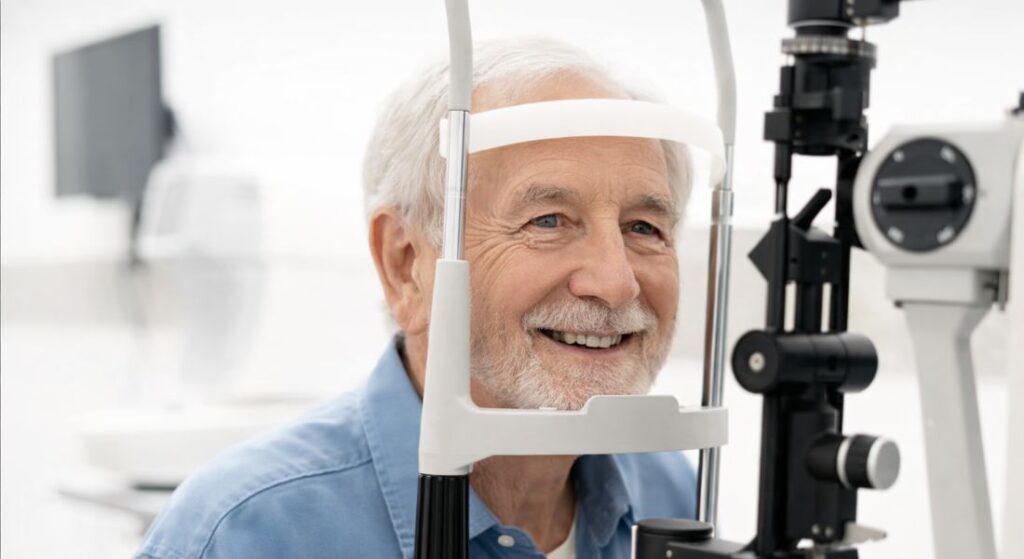
As pressure on NHS services continues, we are likely to see Right to Choose remain a central part of cataract care pathways. When waiting times and access challenges are discussed more openly, you may find that awareness of this right naturally increases. We are already seeing more patients ask informed questions about their options. This shift helps make the system feel more transparent and patient-focused.
Digital referrals and more standardised processes are expected to shape how Right to Choose works in the future. When systems are clearer and easier to navigate, you and we benefit from fewer delays and less confusion. These developments may support more consistent experiences across regions. Even as processes evolve, the core idea of giving patients meaningful choice is likely to stay.
Staying informed will continue to matter as the system changes. When you understand your rights, you are better able to adapt and engage confidently with your care. We believe informed patients feel more in control and less anxious. This helps ensure you remain an active participant in your care, rather than a passive observer.
FAQs:
1. What exactly is NHS Right to Choose in simple terms?
NHS Right to Choose is a legal entitlement that allows patients in England to have a say in where they receive certain NHS-funded treatments once a GP referral is made. Instead of being automatically referred to the nearest NHS hospital, you may be able to choose from a list of approved providers that hold NHS contracts. The care remains NHS-funded and free at the point of use, with choice relating to location and provider rather than payment or type of treatment.
2. Does Right to Choose mean my cataract surgery becomes private?
No, using Right to Choose does not turn your cataract surgery into private treatment. Your surgery is still fully funded by the NHS and follows NHS clinical standards. Some providers are independent organisations, but they deliver care on behalf of the NHS under strict contracts and governance, meaning your entitlement, safety standards, and funding remain exactly the same.
3. Can I use Right to Choose if I already know which clinic I want?
Yes, you can request a specific provider as long as they are approved to deliver NHS-funded cataract surgery and hold a valid NHS contract. This request must be made at the point when your GP submits the referral. You cannot self-refer, and the provider must be eligible under NHS rules for Right to Choose to apply.
4. Does everyone in the UK have the Right to Choose for cataract surgery?
Right to Choose only applies to patients who live in England and are registered with an NHS GP in England. It does not apply in Scotland, Wales, or Northern Ireland, where referral systems are managed differently. Eligibility is based on where you are registered, not where you wish to receive treatment.
5. Will using Right to Choose automatically reduce my waiting time?
Using Right to Choose does not guarantee a shorter waiting time, although some providers may have greater capacity and therefore shorter waits. Waiting times vary depending on demand, staffing, and local service organisation. Right to Choose offers an opportunity to explore alternatives, not a promise of immediate surgery.
6. Can I choose a specific surgeon under Right to Choose?
No, Right to Choose allows you to select a provider organisation, not an individual surgeon. Surgeon allocation is managed internally by the provider based on availability, experience, and clinical governance. This ensures safety, fairness, and consistent standards of care.
7. What happens if my GP does not mention Right to Choose?
If your GP does not raise Right to Choose, it does not mean you are not entitled to it. Many GPs work under time pressure and may focus on clinical aspects rather than administrative rights. You are allowed to ask about Right to Choose and request a specific NHS-approved provider, and this request should be considered as part of your referral.
8. Can I change my provider after the referral has been sent?
In some cases, changing provider after referral is possible, but it can cause delays because the referral may need to be redirected and reassessed. If pre-operative assessments or scheduling have already begun, switching providers becomes more complex. For this reason, it is best to consider your options carefully before the referral is submitted.
9. Are lens options different when using Right to Choose?
No, NHS lens funding rules are the same regardless of whether you use Right to Choose. Standard NHS monofocal lenses are included as part of NHS-funded cataract surgery. Premium or lifestyle lenses are not automatically covered and must be discussed separately, with no pressure to upgrade and with full transparency about costs.
10. Why is Right to Choose important for cataract patients?
Right to Choose matters because it gives patients a sense of control at a time when vision loss can feel disempowering. It allows flexibility around where care is delivered, encourages transparency about waiting times, and helps patients feel more involved in decisions about their treatment. Even when outcomes are similar, understanding and exercising choice often makes the care journey feel calmer, fairer, and more manageable.
Final Thoughts: Making Sense of Right to Choose for Cataract Surgery
Understanding NHS Right to Choose can make a real difference when you are navigating cataract referrals. Knowing that you may have flexibility over where your NHS-funded care is delivered helps reduce uncertainty and restores a sense of control at a time when vision problems can feel overwhelming. When used with realistic expectations, Right to Choose is less about bypassing the system and more about engaging with it confidently and informed.
Clear information is what turns choice into reassurance rather than confusion. At London Cataract Centre, we focus on helping patients understand their options, waiting times, and pathways so decisions feel calm and considered. If you’re thinking about Cataract Surgery in London, you can get in touch with us at London Cataract Centre.
Reference
- Shoshi, F., Shoshi, F., Xhafa, A. and Nagy, Z.Z., 2024. Refractive Outcomes After Cataract Surgery—The Impact of Preoperative Visual Acuity, the Intraocular Lens Model, and the Surgeon’s Experience: An Empirical Analysis of Hungarian and Kosovan Patients. Journal of Clinical Medicine, 13(23):7013. https://www.mdpi.com/2077-0383/13/23/7013
- (Alternative MDPI support) R Khoramnia et al., 2022. Refractive Outcomes after Cataract Surgery. Diagnostics, 12(2):243. https://www.mdpi.com/2075-4418/12/2/243
- Lundström, M., et al., 2019. Cataract surgery refractive outcomes: representative standards in a National Health Service setting. British Journal of Ophthalmology, 103(10), pp.1347–1351. https://pubmed.ncbi.nlm.nih.gov/29907629/
- (Support for clinical outcomes of cataract surgery) Outcomes of Cataract Surgery at a Referral Centre. 2015. Ophthalmology outcomes study — vision results and factors influencing success. Available at: PubMed. https://pubmed.ncbi.nlm.nih.gov/26730309/
- Lundström, M., Barry, P., Henry, Y. P., Stenevi, U., and Rosen, P., 2012. Evidence-based guidelines for cataract surgery: data from the European Registry of Quality Outcomes for Cataract and Refractive Surgery database. Journal of Cataract & Refractive Surgery, 38(6), pp.1096–1105. https://www.sciencedirect.com/science/article/abs/pii/S0886335012002982