



Cataract surgery has advanced significantly over recent years, and many people now look ahead expecting further improvement. You may be wondering whether future developments will make surgery safer, more accurate, or more personalised. These questions are increasingly common as awareness grows. We recognise the need for clear and realistic answers.
We see rising interest in what lies ahead rather than what is already routine. You are often better informed and want balanced insight instead of exaggerated promises. Understanding how progress usually unfolds helps manage expectations. We believe clarity matters more than hype.
The outlook for 2026 represents continuation rather than transformation. We expect progress through refinement, precision, and better integration of existing technologies. Incremental advances often deliver the greatest real-world benefit. Small improvements can have a meaningful impact.
This article focuses on what is realistically expected based on current research and development. We concentrate on evidence rather than speculation or marketing language. The aim is to explain how care is likely to improve in practical terms. Meaningful progress remains the priority.
How Cataract Surgery Has Reached Its Current Level
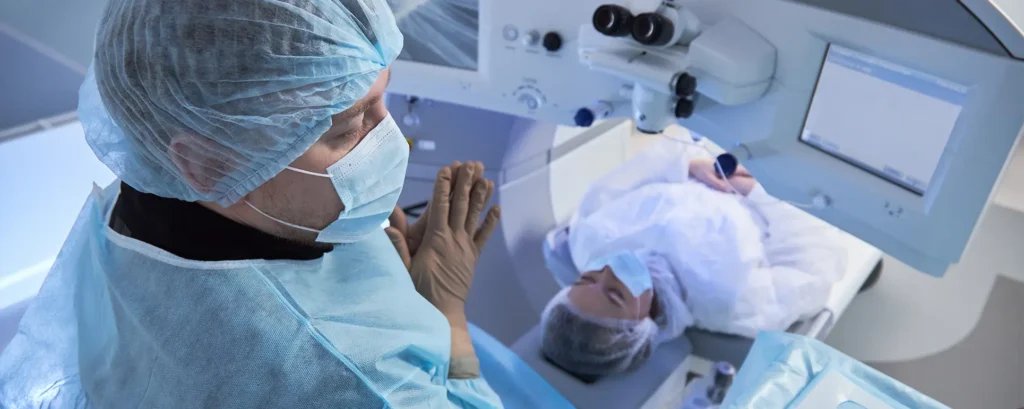
Modern cataract surgery is already one of the most successful procedures in medicine. Techniques are highly refined, complication rates are low, and recovery is fast. These strengths shape how future advances are developed.
You may already benefit from microsurgical techniques, advanced imaging, and predictable lens outcomes. These foundations allow innovation to focus on optimisation rather than reinvention. Progress builds on what already works well.
We now see research targeting consistency, personalisation, and decision-making support. Rather than changing the surgery itself, innovation often improves planning and execution. This approach reduces variability between patients. Understanding this context helps explain why advances may appear subtle. Small refinements can still make meaningful differences in outcomes.
Refinements in Intraocular Lens Technology
Intraocular lenses continue to evolve through refinement rather than radical redesign as we move towards 2026. We see materials becoming more stable and optically precise, supporting clearer vision over time. These developments focus on long-term reliability rather than novelty. Clarity remains the priority.
You may notice improved contrast sensitivity and less glare, especially in difficult lighting conditions. We expect enhanced edge profiles and surface treatments to reduce unwanted visual effects. These subtle changes aim to make everyday vision more comfortable. Quality improves through detail.
Extended-depth-of-focus lenses are also expected to benefit from further refinement. We aim to broaden useful vision while limiting visual disturbances. Balance between flexibility and clarity remains essential. Lens selection becomes more predictable rather than more complex.
More Personalised Lens Selection
Lens selection is moving steadily towards a more personalised approach. By 2026, decisions are expected to rely less on broad categories and more on individual eye characteristics and visual priorities. This shift reflects a focus on outcomes that feel natural rather than standardised. Planning becomes increasingly specific to how your eyes function and how you use your vision.
- Lens choice is becoming tailored rather than generic
Broad classifications are giving way to decisions shaped by individual anatomy. We aim for outcomes that feel appropriate to your eyes, not just technically correct. - Lifestyle discussion plays a greater role in planning
Visual demands for work, driving, and reading help guide lens selection. We treat this as a shared conversation, not a preset recommendation. - Technology supports closer anatomical matching
Corneal shape and retinal health increasingly influence lens design choices. Personalisation means better decisions for the right patient, not more options for everyone.
This evolution reflects a broader move towards patient-centred eye care. By combining advanced technology with meaningful discussion, lens choice becomes more precise and relevant. We believe this approach leads to outcomes that feel comfortable, practical, and aligned with everyday life.
AI-Assisted Biometry and Measurements
Biometry sits at the centre of cataract surgery accuracy, and we expect artificial intelligence to strengthen this area significantly. AI-assisted systems analyse large datasets to improve lens power prediction. This approach helps reduce unexpected refractive outcomes. Precision improves through pattern recognition rather than assumption.
You may benefit from more consistent results, particularly if your eyes are complex to measure. AI can identify trends that are difficult to detect through manual calculation alone. We use this support to refine accuracy rather than rely on a single data point. Calculations become more dependable.
These systems do not replace clinical judgement or decision-making. We use AI as a support tool while remaining responsible for final choices. Care remains guided by experience and evidence. Accuracy improves while human oversight stays essential.
Improved Predictability in Challenging Eyes
Certain eyes are harder to measure accurately because of previous surgery, high refractive errors, or irregular anatomy. We recognise that these factors can complicate planning and reduce predictability. By 2026, advances aim to narrow these gaps through better analysis. Precision improves by understanding complexity rather than ignoring it.
You may see more reliable outcomes in eyes that were previously less predictable. Enhanced algorithms combine information from multiple measurements instead of relying on a single source. We use this integration to reduce uncertainty and improve consistency. Planning becomes more dependable even in challenging cases.
We expect fewer unexpected refractive outcomes where anatomy is complex, even though absolute perfection is unrealistic. Greater consistency reduces the need for secondary correction. Better predictability builds confidence for you and we alike. Robust planning supports calmer decisions and clearer expectations.
Intraoperative Guidance and Real-Time Feedback
Intraoperative guidance systems are expected to become more refined in the coming years. We see these tools offering real-time feedback that supports precision during surgery. They are designed to complement surgical skill rather than replace it. Accuracy improves while clinical judgement remains central.
You may benefit from more precise lens positioning and alignment, particularly with lenses that depend on exact orientation. Small adjustments made at the right moment can have a meaningful effect on visual outcomes. Real-time guidance helps confirm these decisions during surgery. Adaptation becomes possible when conditions differ from expectations.
We expect these systems to integrate smoothly into the surgical workflow. The aim is support without intrusion, keeping focus and efficiency intact. Technology should enhance confidence, not distract from care. Seamless use matters more than complexity.
Enhanced Imaging for Surgical Planning
Preoperative imaging continues to advance, giving a more detailed view of eye anatomy. By 2026, we expect clearer insight into lens position, corneal shape, and retinal health. This deeper understanding supports safer and more informed planning. Precision improves without adding complexity.
You may undergo scans that gather more comprehensive information in a single assessment. We use these results to identify subtle risk factors that might otherwise be missed. Early awareness allows potential issues to be addressed in advance. Prevention benefits from clarity.
We rely on imaging not only to plan surgery but also to manage expectations realistically. Understanding both strengths and limitations guides better conversations and decisions. Better imaging supports safer choices and clearer outcome discussions. Informed planning leads to confidence for you and we.
More Integrated Digital Surgical Planning
Digital platforms are increasingly bringing multiple data sources together within a single planning environment. We expect this trend to continue through 2026 as integration reduces fragmentation across stages of care. When information is unified, planning becomes clearer and more reliable. Consistency improves through better organisation.
You may notice smoother movement between assessment, planning, and surgery as data flows more efficiently. We see fewer gaps, less repetition, and reduced risk of error. Information becomes easier to access and interpret. This supports more confident decision-making.
We benefit from improved visualisation of planning choices and clearer communication within clinical teams. Plans can be reviewed and refined with greater accuracy before surgery. Integrated systems support coordinated care rather than speed alone. Reliability and clarity remain the priority.
Incremental Advances in Surgical Instruments

Surgical instruments continue to evolve with a focus on precision and ergonomics. We see improvements that are often subtle yet meaningful, enhancing control during delicate steps. These refinements support safety rather than dramatic change. Reliability improves through thoughtful design.
You may not notice these developments directly, but they influence how surgery feels and heals. Improved fluid dynamics and greater stability reduce stress on eye structures. We aim for a gentler surgical experience with fewer disturbances. Small adjustments can lead to smoother outcomes.
We expect refinement of familiar tools rather than entirely new systems. Familiarity paired with improvement keeps learning curves manageable and performance consistent. Instrument development prioritises control and safety above novelty. These qualities matter most for dependable care.
Faster Visual Recovery and Comfort
Advances in cataract surgery are increasingly centred on how recovery feels, not just on visual results. The goal is to minimise inflammation, support steady healing, and reduce unnecessary disruption after the procedure. By 2026, progress is expected to come from thoughtful refinements rather than dramatic change. These incremental improvements help create a calmer and more predictable recovery experience.
- Techniques continue to prioritise comfort and controlled healing
Surgical refinements focus on reducing tissue stress and inflammation. We aim for smoother recovery rather than introducing changes that disrupt healing. - Recovery is becoming more personalised
Visual stabilisation is often quicker as techniques become more precise. Medication plans are increasingly tailored so care matches individual healing responses. - Predictability matters more than speed alone
Rushing recovery timelines can increase variability and uncertainty. We prioritise consistent healing so expectations remain clear and confidence builds naturally.
Comfort after cataract surgery is now seen as a core outcome, not a secondary benefit. By focusing on precision, predictability, and personalisation, we support recovery that feels steady and reassuring. When experience is valued alongside results, care feels complete and confidence lasts beyond the procedure itself.
What Will Not Change in Cataract Surgery
Despite ongoing innovation, the core principles of cataract surgery remain consistent. We continue to rely on careful assessment, surgical skill, and personalised planning, with technology supporting rather than replacing clinical judgement. These foundations remain central to safe and effective care.
You should not expect sudden or dramatic transformation as new tools emerge. We see progress as gradual and guided by evidence rather than excitement. Reliable improvement develops over time and reflects real clinical practice.
We remain focused on safety, clarity, and long-term outcomes above all else. New technologies are adopted only when clear benefit is proven, protecting trust and patient confidence. Consistency and reliability continue to guide progress.
How Patients Should View Advances Expected in 2026
Patients benefit most when advances are viewed with realistic understanding. We know that new technology improves consistency rather than guaranteeing perfect outcomes. This balanced perspective supports confidence and long-term satisfaction. Clear expectations matter.
You may be offered refined options instead of dramatic change. We base these choices on suitability and individual needs rather than trends. Personal priorities continue to guide recommendations. Care remains tailored rather than standardised.
We encourage informed discussion rather than assumption. Understanding what technology can and cannot deliver leads to better decisions. Advances serve you best when applied thoughtfully. Progress is most meaningful when it is appropriate.
Why Personalised Planning Matters More Than Technology

Technology enhances planning, but it does not replace individual assessment. Your eyes, overall health, and visual priorities remain unique to you. We adapt planning to reflect these differences rather than relying on data alone. Measurements add precision, but context gives them meaning. Personal evaluation remains essential.
You benefit most when technology supports personalised care instead of directing it. Data helps inform decisions, while conversation shapes how those decisions are applied. We listen carefully to your needs and expectations. This balance ensures recommendations feel relevant and realistic. Both elements work best together.
We believe outcomes improve when planning is collaborative and clearly aligned with your goals. Shared understanding reduces the gap between expectation and result. Technology assists accuracy, but it does not define success. Personalisation continues to guide every step. Care remains centred on you.
Looking Ahead Without Exaggeration
Looking ahead to 2026, cataract surgery is expected to advance through careful refinement rather than dramatic change. Progress continues to build on techniques that already deliver strong outcomes. This steady evolution supports greater consistency and reliability for patients. We focus on improvements that enhance confidence at every stage of care.
- Progress is driven by refinement, not reinvention
Advances build on proven techniques rather than replacing them. This approach strengthens reliability and reduces uncertainty in outcomes. - Planning is becoming increasingly personalised
Treatment is tailored more closely to individual eye characteristics. You benefit from decisions that reflect how your eyes function rather than generic categories. - Precision supports confidence throughout the process
Mature techniques improve clarity before, during, and after surgery. Greater precision helps make outcomes feel predictable and reassuring.
The future of cataract surgery is shaped by evidence-led improvement rather than rapid change. By refining what already works well, we maintain safety while enhancing clarity and consistency. This measured approach ensures progress continues to serve you reliably over time.
FAQs:
1. What should you realistically expect from cataract surgery advances in 2026?
You should expect refinement rather than dramatic change in how cataract surgery is performed. Advances are focused on improving accuracy, comfort, and consistency rather than reinventing the procedure. These developments aim to reduce variability between patients. Outcomes become more predictable rather than radically different.
2. Will new technology make cataract surgery completely risk-free?
No surgery can ever be entirely risk-free, even with advanced technology. What you can expect is better control of known risks through improved planning and precision. Technology helps reduce uncertainty rather than eliminate it. Safety continues to depend on careful assessment and surgical judgement.
3. How will artificial intelligence affect your cataract surgery planning?
AI is expected to support measurements and calculations rather than replace clinical decision-making. You may benefit from more accurate lens power predictions, especially if your eyes are complex. These systems help identify patterns across large datasets. Final decisions remain guided by experience and individual assessment.
4. Will lens options become more complicated for you in 2026?
Lens selection is expected to become more personalised, not more confusing. Choices will be guided by how your eyes function and how you use your vision daily. This approach reduces unnecessary options rather than expanding them. Decisions become more relevant to your lifestyle and needs.
5. Can you expect better results if your eyes are harder to measure?
Advances aim to improve predictability in eyes with previous surgery or irregular anatomy. You may experience fewer unexpected visual outcomes as planning becomes more precise. Improved analysis helps manage complexity more effectively. While perfection is unrealistic, consistency is expected to improve.
6. Will surgery itself feel different because of new technology?
The surgical experience is unlikely to feel dramatically different from your perspective. Refinements focus on smoother execution and reduced tissue stress. These changes support comfort and steady recovery rather than noticeable procedural differences. Benefits are often felt after surgery rather than during it.
7. How will imaging improvements affect your surgical assessment?
Enhanced imaging provides a clearer understanding of your eye anatomy before surgery. You may undergo fewer but more informative scans. This helps identify subtle risks early and supports better planning. Clearer data leads to more confident decision-making.
8. Will recovery after cataract surgery be faster by 2026?
Recovery is expected to become more predictable rather than significantly faster. Improvements focus on reducing inflammation and supporting stable healing. You benefit from steadier visual recovery rather than rushed timelines. Comfort and consistency matter more than speed alone.
9. What aspects of cataract surgery are unlikely to change?
Core principles such as careful assessment, skilled surgery, and personalised planning remain unchanged. Technology continues to support rather than replace clinical judgement. Proven techniques remain central to safety and outcomes. Innovation builds on stability rather than replacing it.
10. How should you decide whether new advances are right for you?
Decisions should be based on suitability rather than availability of technology. We consider your eye health, visual goals, and overall risk profile together. New tools are helpful only when they align with your needs. Personalised planning remains more important than innovation alone.
Final Thoughts on Cataract Surgery Advances Expected in 2026
Advances expected in cataract surgery by 2026 focus on refinement, precision, and personalisation rather than dramatic change. Improvements in lens technology, AI-assisted planning, and intraoperative guidance aim to enhance consistency and predictability. These developments support better outcomes without unrealistic promises.
We believe the most meaningful progress comes from thoughtful integration of technology into personalised care. If you would like to discuss how current and emerging advances may apply to your situation, you can contact us at London Cataract Centre for expert guidance and evidence-based advice tailored to your needs.
References:
- Lindegger, D.J. and Müller, S. (2022) Evolution and applications of artificial intelligence to cataract surgery. Journal of Ophthalmology, 2022. Available at: https://www.ncbi.nlm.nih.gov/pmc/articles/PMC9559105/
- Müller, S. (2024) Artificial intelligence in cataract surgery: current uses and reliability of AI algorithms. PMCID Journal, 2024. Available at: https://www.ncbi.nlm.nih.gov/pmc/articles/PMC11033603/
- Ahuja, A.S., Paredes III, A.A., Eisel, M.L.S., Kodwani, S., Wagner, I.V., Miller, D.D. and Dorairaj, S. (2024) Applications of artificial intelligence in cataract surgery: a review. Clinical Ophthalmology, 18, pp. 2969–2975. Available at: https://pubmed.ncbi.nlm.nih.gov/39434720/
- Gkikas, M.A., et al. (2025) Preoperative prediction of intraoperative complications in cataract surgery using machine learning. Eye (London), 2025. Available at: https://pubmed.ncbi.nlm.nih.gov/41222768/
- Goh, J.H.L. (2020) Artificial intelligence for cataract detection and management. Asia-Pacific Academy of Ophthalmology Review, 2020. Available at: https://www.sciencedirect.com/science/article/pii/S2162098923002141