



If you’re considering refractive cataract surgery, it’s normal to want reassurance about what happens if results aren’t exactly as expected. Premium surgery often comes with higher expectations, and many patients worry that anything short of perfection means something has gone wrong. Refractive-focused cataract care is designed with flexibility built in.
Modern cataract surgery is extremely accurate, but the eye is still a biological system. Small variations can occur despite careful planning and advanced measurements. What matters most is how those variations are managed, not whether they occur at all.
In this article, I’ll explain what it means when refractive cataract surgery doesn’t fully meet expectations, what fine-tuning options exist, and how surgeons plan for and manage outcomes in refractive-focused care.
Why Expectations Matter So Much With Refractive Cataract Surgery
Standard cataract surgery is primarily aimed at restoring clear vision by removing the cloudy natural lens. Refractive cataract surgery goes a step further by also aiming to reduce dependence on glasses and optimise overall visual quality. Because the goals extend beyond clarity alone, patient expectations are understandably higher.
Many patients picture a very specific outcome, such as no longer needing glasses for most activities. While this is often achievable, results can vary slightly depending on individual healing, eye anatomy, and daily visual demands. Some people may still require glasses for certain tasks, particularly in low light or for prolonged reading.
Managing expectations early is a key part of achieving long-term satisfaction. Clear discussions help patients understand what is realistic and what may involve compromise. When expectations align with likely outcomes, patients are far more likely to feel pleased with their results.
What “Missing the Target” Actually Means
When refractive cataract surgery doesn’t fully meet expectations, it rarely indicates that something has gone wrong. In most cases, it simply means the final visual result is slightly different from what was originally planned. These small variations are a recognised part of refractive surgery rather than a complication.
This may involve a mild residual prescription, unexpected visual symptoms, or the continued need for glasses in certain situations. Importantly, overall vision is usually still far better than it was before surgery. These outcomes are considered refinements, not failures, and can often be addressed if needed.
Why Small Refractive Differences Can Occur
Even with advanced technology and highly precise measurements, refractive cataract surgery is not an exact science. Every eye heals differently, and subtle variations in healing response can influence the final outcome. Factors such as lens positioning and individual eye anatomy also play an important role.
A difference of only a fraction of a dioptre can affect visual satisfaction, particularly for patients hoping to be largely free from glasses. While these differences are medically small, they can feel significant to the patient in daily life. This is especially true for tasks that require sharp, consistent focus.
For this reason, refractive cataract surgery is best viewed as a process rather than a single event. Outcomes are assessed over time, allowing for refinement if needed. This approach helps ensure the best possible visual quality and long-term satisfaction.
How Surgeons Plan for Non-Perfect Outcomes
Refractive cataract surgery is planned with precision, but experienced surgeons also recognise that small refinements may occasionally be needed. Responsible refractive care involves anticipating this possibility and discussing it openly before surgery takes place. This approach ensures patients feel informed, supported, and confident throughout the process.
Key elements of planning for non-perfect outcomes include:
1. Building flexibility into pre-operative planning: Surgeons discuss potential enhancement or adjustment pathways in advance, so patients understand that refinement is part of the process rather than a complication. This preparation allows decisions to be made calmly and methodically if fine-tuning is required.
2. Clear communication about realistic accuracy: While modern refractive surgery achieves very high levels of precision, absolute perfection cannot be guaranteed for every eye. Honest explanations help align expectations and reduce anxiety if outcomes differ slightly from initial targets.
3. Viewing refinement as responsible care, not failure: Planning for possible adjustments reflects experience and caution rather than uncertainty. It ensures that visual outcomes can be optimised safely and thoughtfully when needed.
By acknowledging variability and planning ahead, surgeons deliver refractive care that is transparent, adaptable, and focused on long-term patient satisfaction.
What Enhancement Means in Refractive Cataract Surgery
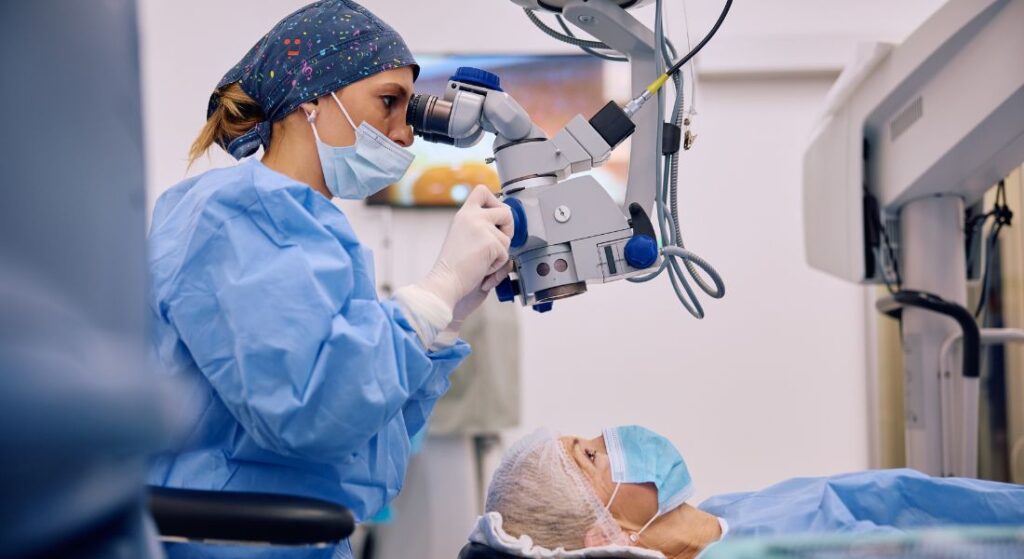
In refractive cataract surgery, an enhancement refers to an additional step used to fine-tune vision when the initial result doesn’t fully match the planned target. This approach is not unusual in refractive-focused care, where precision is a key goal. Enhancements are considered part of the overall treatment journey rather than a sign of a problem.
Enhancement options vary depending on the type and size of the remaining refractive issue. These may include laser vision correction or other targeted treatments tailored to the individual eye. The choice is always based on careful assessment rather than a routine approach.
Importantly, enhancements are only considered once the eye has fully healed and vision has stabilised. This waiting period allows natural healing changes to settle before any further intervention. Acting too early could lead to inaccurate adjustments.
Ultimately, enhancement is about precision, not the correction of a mistake. It reflects a commitment to achieving the best possible visual outcome. When used appropriately, it can significantly improve satisfaction and visual quality.
Common Fine-Tuning Options After Surgery
While refractive cataract surgery is highly accurate, small adjustments may occasionally be needed to optimise vision. Experienced surgeons plan for this possibility in advance and select the most appropriate refinement option based on your eye health and the nature of any remaining prescription. Knowing that effective solutions are available can provide reassurance throughout the recovery process.
Possible fine-tuning approaches include:
1. Laser vision correction: In some cases, laser treatment can be used to fine-tune residual refractive error after the eye has fully healed. This option allows precise adjustment of focus and can further reduce dependence on glasses.
2. Additional lens-based adjustments in select cases: For certain patients, a secondary lens-based procedure may be considered to refine visual outcomes. This approach is carefully assessed and is only recommended when it offers a clear benefit and low risk.
3. Glasses for specific tasks: Some patients achieve excellent overall vision but may still prefer glasses for particular activities such as prolonged reading or night driving. In these situations, further intervention may not be necessary, and spectacles provide a simple and effective solution.
Not every patient requires enhancement, but having a range of options ensures that any residual visual needs can be addressed thoughtfully and safely.
When Enhancements Are Considered
Enhancements in refractive cataract surgery are never rushed. Surgeons wait until the eye has fully healed and vision has stabilised, which usually takes several weeks to a few months after the initial procedure. This careful timing helps ensure safe and accurate decision-making.
The waiting period allows temporary changes caused by swelling or healing to settle completely. Only once vision is stable can any remaining prescription be properly assessed. This reduces the risk of making unnecessary or inaccurate adjustments.
Acting too early can compromise both precision and safety. An eye that is still healing may change further, making early enhancement less reliable. For this reason, surgeons take a cautious and measured approach.
Patience plays a crucial role in achieving the best final outcome. Allowing the eye sufficient time to stabilise supports more predictable results. This approach ultimately leads to higher satisfaction and better long-term vision.
Why Many “Missed Targets” Improve on Their Own
Some visual issues resolve naturally over time. The brain adapts to new optics, and minor fluctuations often settle as healing progresses. Vision in the early weeks is not always the final outcome.
Dry eye, mild swelling, or temporary inflammation can affect clarity shortly after treatment. These factors are common during recovery and usually improve with routine care. As the ocular surface stabilises, vision often becomes clearer on its own.
Neuro-adaptation also plays an important role in visual improvement. The brain gradually learns to process new visual inputs more efficiently. This adjustment can noticeably enhance vision without any additional treatment.
For these reasons, reassurance and monitoring are often the first steps. Immediate intervention is not always necessary. Giving the eyes time to heal helps distinguish temporary changes from true residual issues.
Managing Visual Symptoms Beyond Prescription
Visual satisfaction is not measured by sharpness alone. Some patients notice glare, halos, or changes in near vision, particularly in the early stages. These experiences can be part of the normal adjustment process.
Such symptoms are discussed in detail and monitored over time. In many cases, they gradually lessen as healing continues. Careful follow-up helps ensure that improvements are on track.
The eyes and brain often need time to adapt to new visual conditions. This process, known as neuro-adaptation, can significantly reduce visual disturbances. Improvement may occur without any additional treatment.
Understanding that adaptation is a normal part of recovery helps prevent unnecessary worry. Not all visual symptoms indicate a problem. Patience and reassurance are often key to achieving long-term visual comfort.
How Surgeon Experience Influences Outcome Management

Managing outcomes requires sound judgement as much as technical ability. Experienced surgeons understand when reassurance is appropriate, when observation is best, and when intervention is truly necessary. This balance helps avoid premature or unnecessary procedures.
Clear communication is another key part of experience. Surgeons guide patients through what is normal during recovery and what can be refined if needed. This clarity builds confidence and reduces anxiety during the healing process.
In refractive-focused surgery, this approach is particularly important. Centres such as London Cataract Centre emphasise long-term, patient-centred care rather than quick fixes. Ongoing guidance ensures outcomes are managed safely and realistically over time.
Why Perfection Isn’t the Only Measure of Success
Success in refractive cataract surgery is not defined only by complete freedom from glasses. The goal is to improve overall quality of vision and reduce dependence in ways that matter day to day. Small compromises can still deliver significant benefits.
Many patients continue to use glasses occasionally and remain very satisfied with their results. Reading glasses or task-specific correction can be a practical part of visual life. This does not mean the surgery has fallen short.
The most successful outcomes are those that support an individual’s lifestyle. Vision should feel comfortable, functional, and reliable across everyday activities. Chasing absolute perfection can sometimes create unnecessary disappointment.
True satisfaction comes from alignment rather than absolutes. When expectations, outcomes, and lifestyle needs match, confidence in vision improves. Understanding this perspective helps patients appreciate realistic and positive results.
How Clear Communication Protects Confidence
Patient satisfaction after refractive cataract surgery depends as much on communication as it does on surgical precision. Dissatisfaction most often occurs when expectations do not align with realistic outcomes, rather than when vision is objectively poor. Clear, honest conversations before and after surgery play a vital role in preventing this disconnect.
Key ways communication protects confidence include:
1. Aligning expectations with realistic outcomes: Open discussions help patients understand what surgery can and cannot achieve. When expectations are realistic, outcomes feel reassuring rather than disappointing.
2. Normalising the refinement process: Patients who are informed about potential fine-tuning see enhancement as a routine part of care rather than a failure. This understanding reduces anxiety and supports trust in the treatment plan.
3. Providing reassurance throughout recovery: Ongoing communication after surgery helps patients interpret changes in vision correctly. Clear guidance ensures that normal healing and adaptation are not mistaken for problems.
Ultimately, effective communication is just as important as advanced technology. It builds confidence, supports satisfaction, and ensures patients feel informed and supported at every stage of their care.
When Further Treatment Is Not Recommended
In some cases, additional treatment is neither necessary nor beneficial. If vision is stable and functional, further procedures may offer minimal improvement while increasing risk. Careful assessment helps determine whether intervention would genuinely add value.
An experienced surgeon will advise honestly when enhancement is unlikely to improve outcomes. This transparent guidance prioritises long-term safety and patient satisfaction. Knowing when not to intervene is an important marker of high-quality, responsible care.
Long-Term Outcomes After Fine-Tuning
When enhancements are carefully planned and performed, long-term results are typically excellent. Vision often improves to meet or closely approach the intended target. Proper timing and patient selection are key to achieving these outcomes.
Patients who undergo refinement frequently feel reassured by the process. Understanding that adjustments are part of personalised care helps reduce anxiety. This transparency builds trust in the surgical journey.
Fine-tuning allows surgeons to optimise visual quality without unnecessary risk. Each step is tailored to the patient’s needs and recovery. Gradual improvements often lead to higher overall satisfaction.
The emphasis remains on long-term visual comfort and functionality rather than immediate perfection. Quick fixes may not deliver lasting benefits. A considered, patient-centred approach ensures outcomes are safe, stable, and meaningful.
Why Asking These Questions Early Helps

Many patients wait until after surgery to consider “what if” scenarios. Discussing these questions beforehand allows for informed decisions and sets realistic expectations. Understanding potential outcomes helps patients feel prepared and confident.
Knowing that options exist if results aren’t perfect provides reassurance. This awareness reduces anxiety and supports a smoother recovery. Informed patients are often the most satisfied with their overall experience.
FAQs:
1. What does it mean if refractive cataract surgery doesn’t meet expectations?
If refractive cataract surgery does not fully meet expectations, it usually indicates that the final visual outcome differs slightly from the originally planned result rather than signalling a complication. Patients may notice a mild residual prescription, subtle visual symptoms, or the continued need for glasses for specific tasks, but overall vision is generally much improved compared with pre-surgery. These small variations are recognised in refractive-focused care and are often manageable through fine-tuning or enhancement procedures.
2. Why can small refractive differences occur after surgery?
Even with highly advanced measurements and precise surgical techniques, the human eye remains a biological system, and healing can vary from person to person. Factors such as individual eye anatomy, lens positioning, and the eye’s natural healing response can create slight differences in the final outcome. While medically small, even a minor residual prescription can feel significant to a patient, especially for activities requiring sharp or prolonged focus, which is why refractive cataract surgery is best viewed as a process rather than a single event.
3. How do surgeons plan for outcomes that aren’t perfect?
Experienced surgeons approach refractive cataract surgery with both precision and flexibility. Pre-operative planning includes discussions about realistic visual outcomes and potential enhancement pathways, so patients are aware that refinement is a normal part of the process. This planning ensures that any adjustments required later can be made calmly, safely, and effectively, while clear communication helps align patient expectations with likely results.
4. What are “enhancements” in refractive cataract surgery?
Enhancements refer to additional procedures undertaken to fine-tune vision when the initial surgical outcome does not fully match the planned target. These procedures are considered a normal part of the treatment journey rather than a correction of a mistake. Enhancements can involve laser vision correction or secondary lens-based adjustments and are only considered once the eye has fully healed and vision has stabilised, allowing for the most precise and safe results.
5. What fine-tuning options are available after surgery?
Fine-tuning options vary depending on the nature and size of the residual refractive error. Common approaches include laser vision correction to refine focus, secondary lens-based procedures for specific patients, or the continued use of glasses for particular tasks such as reading or night driving. The choice of approach is carefully tailored to the patient’s eye health and lifestyle needs, ensuring any adjustments are safe, effective, and appropriate.
6. When is enhancement considered necessary?
Enhancement procedures are only considered after the eye has fully healed, typically several weeks to a few months post-surgery. This waiting period allows temporary changes from swelling or inflammation to settle, ensuring that any residual prescription is accurately assessed. Acting too early could compromise both safety and precision, so surgeons adopt a cautious and measured approach to ensure the best possible long-term outcomes.
7. Can vision improve naturally after surgery without further treatment?
Yes, minor visual issues often resolve naturally as the eye heals and the brain adapts to new visual inputs, a process known as neuro-adaptation. Temporary factors such as mild swelling, dry eye, or early post-operative inflammation can affect clarity initially but usually improve over time. For many patients, vision continues to refine itself during the early recovery period, reducing the need for immediate intervention.
8. How do surgeons manage visual symptoms beyond prescription issues?
Visual satisfaction encompasses more than clarity alone, and some patients may experience glare, halos, or changes in near vision in the early stages after surgery. Surgeons monitor these symptoms carefully and provide guidance on the natural adaptation process. Often, these issues gradually diminish as the eyes and brain adjust, and reassurance during this period is key to preventing unnecessary concern.
9. Why isn’t complete freedom from glasses the only measure of success?
The success of refractive cataract surgery is measured by improvements in overall visual quality and daily functioning rather than absolute independence from glasses. Some patients may still use spectacles for specific activities and remain highly satisfied. The most meaningful outcomes are those that support an individual’s lifestyle, providing vision that is comfortable, reliable, and functional across everyday tasks rather than achieving theoretical perfection.
10. How does clear communication influence patient satisfaction?
Clear and honest communication before and after surgery is crucial for aligning patient expectations with realistic outcomes. Patients who understand that refinement is a normal part of the process are less likely to experience anxiety and disappointment. Ongoing guidance during recovery helps patients interpret visual changes accurately, supports informed decision-making, and ensures long-term confidence and satisfaction in their vision.
Final Thoughts: Managing Expectations and Optimising Outcomes
Refractive cataract surgery is designed to improve both clarity and quality of vision, but small variations from the planned outcome can occur. Understanding that perfection isn’t always the goal and that enhancements and fine-tuning options exist helps patients approach the process with confidence. Clear communication, careful monitoring, and the expertise of an experienced surgeon ensure that outcomes are managed safely and effectively over time.
If you’re considering refractive cataract surgery in London, you can reach out to us at London Cataract Centre to book a consultation. Our team provides personalised guidance, helping you achieve the best possible visual outcome while aligning expectations with realistic results.
References:
1. Cooke, D.L., Cooke, T.M. and Myers, R.W., 2022, Limits of the precision in refractive results after cataract surgery, Journal of Cataract & Refractive Surgery, vol. 48, pp. https://www.sciencedirect.com/science/article/abs/pii/S2173579422000767
2. Arens, S., Böhringer, D., Lapp, T., Reinhard, T. and Heinzelmann‑Mink, S., 2024, Comparative analysis of refractive outcomes following cataract surgery using IOL Master 500 and IOL Master 700 biometry devices: a retrospective analysis, Journal of Clinical Medicine. https://www.mdpi.com/2077-0383/13/17/5125
3. Al Barri, L., Mercea, N., Ionela‑Iasmina, Y., Munteanu, M. & Stanca, H.T. (2025) Evaluation of Refractive Predictive Accuracy in Intraocular Lens Power Calculations: A Comparative Study of Swept‑Source Optical Coherence Tomography and Optical Low‑Coherence Interferometry, Journal of Clinical Medicine, 14(4), 1201. https://www.mdpi.com/2077-0383/14/4/1201
4. Refractive Outcomes after Cataract Surgery: Impact of Biometry and Factors Affecting Accuracy (2023) Diagnostics, 12(2), 243. https://pubmed.ncbi.nlm.nih.gov/35204334/
5. Comparison of Intraocular Lens Formulas in Patients With Postoperative Refractive Surprise (2024) Cureus, 16(12): e74991. https://pubmed.ncbi.nlm.nih.gov/39744283/