



Many people assume that once they’ve had cataract surgery, their choice of lens implant is permanent. If you’re unhappy with your vision or experiencing unexpected symptoms, you may worry that you’ve “missed the window” to have your intraocular lens (IOL) replaced. The good news is that IOL replacement also called IOL exchange can be performed long after your original surgery, including months and even years later. The idea that you only have a short period to change your lens is one of the most common misconceptions patients encounter.
In this detailed guide, I’ll walk you through what determines the safest timing for an IOL exchange, the differences between early and late replacement, why lens capsules change over time, and how surgeons decide when an exchange is feasible. You’ll learn why timing matters and equally important why it’s almost never “too late”.
Why Patients Consider IOL Replacement After Cataract Surgery
Before looking at timing, it helps to understand why someone might want their lens replaced. Cataract surgery is highly successful, but it doesn’t always deliver perfect visual satisfaction. Several common reasons lead patients to consider IOL exchange:
1. The wrong lens type was implanted: Sometimes the visual behaviour of a multifocal or EDOF lens doesn’t match your lifestyle. You might struggle with halos, glare, reduced contrast, or difficulty with night driving.
2. The refractive outcome wasn’t accurate: Even with advanced measurements, small refractive “surprises” can occur. If the lens power was off, you may still need glasses or feel unhappy with clarity.
3. The lens shifted or rotated: Toric lenses with astigmatism correction can rotate out of alignment, creating blurry or distorted vision.
4. Poor adaptation: Some people simply don’t adapt to premium lenses, even when everything is technically correct.
5. Visual imbalance between the two eyes: If your lenses behave differently, your binocular vision may feel uncomfortable or disjointed.
6. Unwanted visual effects: Glare, halos, waxiness, reduced contrast, and shadowing (negative dysphotopsia) can lead people to explore lens replacement.
These issues can arise soon after surgery or gradually over time. Because of this, the question of when an IOL can be safely replaced becomes very important.
Is There a Limited Window for IOL Replacement?
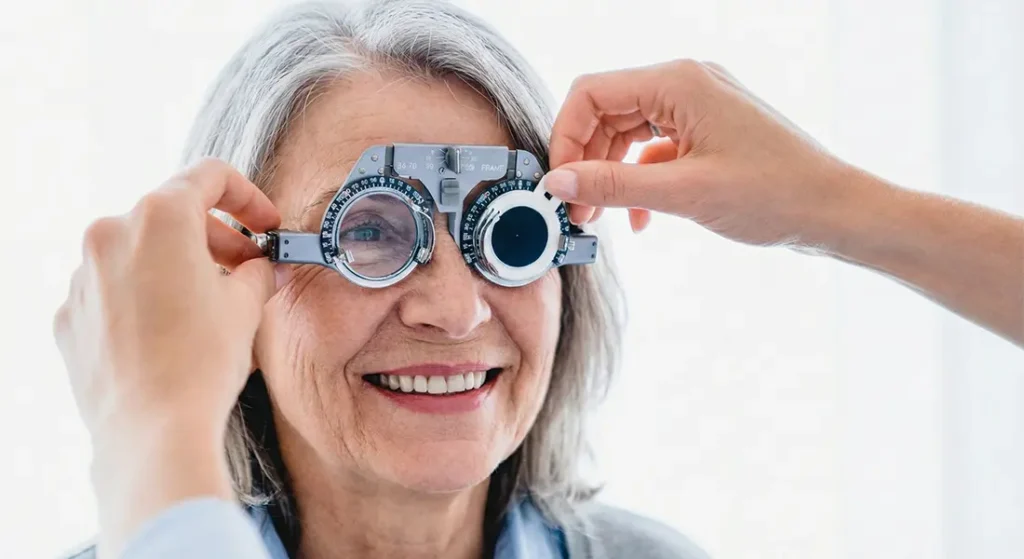
There is no strict expiry date for IOL replacement, although many people assume otherwise. While replacing the lens earlier is usually simpler, surgeons can safely perform an IOL exchange months or even years after cataract surgery. In many cases, patients only realise much later that their original lens choice is not suitable for them.
The condition of the capsule that holds the lens is one of the most important factors in IOL replacement. If the capsule remains healthy and stable, the procedure is generally safer and more predictable. Over time, changes in the capsule can make the surgery more complex.
Scar tissue formation also affects how straightforward the lens exchange will be. The type of IOL originally implanted influences the removal and replacement technique. The reason for the exchange further helps surgeons plan the most appropriate approach.
Intermediate IOL Replacement: 3–12 Months After Surgery
Replacing an IOL within the first three months after surgery is generally the easiest and safest time. During this period, the capsular bag the natural structure that holds the artificial lens remains soft and flexible, making removal simpler. Early replacement is preferred because the capsule hasn’t fully tightened around the lens, reducing the risk of fibrosis or scar tissue formation.
Surgery during this window is more predictable, as the lens typically slides out smoothly and a new lens can be implanted with minimal manipulation. The pliable capsule lowers the risk of complications, allowing for excellent visual outcomes. This makes the replacement lens sit securely and predictably, leading to stable vision for the patient.
Early IOL exchange is also advantageous for correcting refractive surprises. If the original lens power was incorrect, adjustments can be made quickly and effectively. Most surgeons therefore recommend performing the exchange within this period whenever feasible, particularly for refractive power corrections or early patient dissatisfaction.
Late IOL Replacement: 1–5 Years After Surgery

Many patients don’t realise that IOL exchange remains an option even years after cataract surgery. People often come across information suggesting that once the capsule has tightened or a YAG capsulotomy is performed, replacement is impossible but this is not true.
What to expect in late exchange:
More fibrosis: Scar tissue may have developed over time, causing the lens to adhere more firmly to the capsular bag. This can make removal slightly more challenging compared to early exchange, but it is still manageable with careful technique.
A different surgical approach: Surgeons may need to use specialised techniques or instruments to safely remove the old lens. This ensures the capsule and surrounding structures remain intact while minimising the risk of complications.
Higher complexity but still safe: Although the procedure can be more complex due to capsule changes or fibrosis, modern micro-instrumentation allows experienced surgeons to perform late exchanges routinely. Patients can still achieve excellent visual outcomes even years after the original surgery.
Particularly helpful for premium lens dissatisfaction: Some patients only realise months or even years later that their premium lens does not suit their visual needs or lifestyle. Late IOL replacement can significantly improve quality of vision and overall satisfaction for these individuals.
Very Late IOL Replacement: 5–15+ Years After Surgery
Even decades after cataract surgery, IOL replacement is still possible, although the procedure becomes more complex over time. Ageing or long-term fibrosis can weaken the capsular bag, making it more fragile, and the lens may be firmly embedded, requiring specialised removal techniques. In some cases, if the capsule’s integrity is compromised, the surgeon may need to implant a secondary lens, such as a sulcus-placed lens or an anterior chamber lens.
Despite these challenges, experienced surgeons achieve excellent outcomes even in very late cases. High-volume IOL exchange specialists routinely manage long-term patients, providing reassurance for those who have lived with discomfort or dissatisfaction for many years and had assumed nothing could be done.
What Factors Influence the Safety of IOL Replacement Over Time?

Several factors influence how straightforward or complex an IOL replacement will be. The type of original lens plays a key role, as multifocal or EDOF lenses may sit differently in the capsular bag compared to monofocal lenses. The condition of the capsular bag is also critical, with the surgeon assessing fibrosis, tightness, or any previous YAG laser openings. Lens material matters too, as some lenses are easier to remove due to their flexibility or composition, while the lens position can affect the techniques required if it has rotated or shifted.
Overall eye health is another important consideration, including factors such as dry eye, glaucoma, previous surgeries, and corneal stability. Understanding these variables helps both the surgeon plan the procedure effectively and the patient have realistic expectations about the process and potential outcomes. Being aware of these factors can also provide reassurance regarding the safety and predictability of the surgery.
YAG Laser and IOL Exchange: Does It Prevent Replacement?
A common misconception is that having a YAG capsulotomy makes IOL replacement impossible. While the procedure does add some complexity, it does not prevent lens exchange. With careful planning and specialised techniques, many surgeons can safely perform IOL replacement even after YAG treatment.
The capsule is already open: Because YAG creates an opening in the capsular bag, removing the existing lens requires extra care to avoid tearing or other complications. Surgeons must work delicately to preserve the remaining capsule while safely extracting the lens.
The lens may move unpredictably: With part of the structural support compromised, the lens can shift or rotate during removal. This unpredictability means surgeons often need to stabilise the lens carefully throughout the procedure.
Additional techniques may be needed: In some cases, a sulcus-placed lens or an alternative fixation method is required to ensure proper positioning. These specialised approaches help achieve optimal visual outcomes despite the previous YAG procedure.
Even with these challenges, many experienced surgeons successfully perform IOL exchanges after YAG, particularly in specialised centres equipped for complex cases.
Common Reasons for Late IOL Exchange
Even years after cataract surgery, patients may seek a late IOL exchange for several reasons. Common issues include long-standing glare or halos, reduced contrast sensitivity, difficulty adapting to multifocal or EDOF lenses, lens tilt or decentration, and progressive visual imbalance. Lifestyle changes that make a different lens more suitable, as well as worsening symptoms following a YAG capsulotomy, can also prompt replacement. These problems often become more noticeable over time, making late IOL exchange both reasonable and beneficial for improving visual comfort and quality of life.
Is It Safe to Replace an IOL Long After Surgery?
The safety of replacing an IOL long after surgery largely depends on the surgeon’s experience and careful planning. In general, the procedure is considered safe, and long-term visual outcomes are excellent, particularly when the exchange addresses the underlying cause of dissatisfaction.
Potential risks include capsular rupture, zonule weakness, lens instability, cystoid macular oedema, and elevated intraocular pressure. However, with modern surgical techniques, these risks are low, and most patients experience significant improvements in both vision and overall quality of life.
How Surgeons Decide When IOL Replacement Is Appropriate
When considering IOL replacement, the surgeon carefully evaluates several factors during your assessment. These include whether the current lens type meets your visual needs, the clarity and condition of the capsular bag, the position and stability of the existing lens, and your overall refraction and corneal health.
The surgeon also considers the severity of your symptoms and whether alternative treatments, such as laser enhancement, could address the problem. If the underlying issue is directly related to the IOL itself, lens replacement is often the most effective and lasting solution.
IOL Replacement vs Laser Enhancement: Which Should Happen First?
Some patients assume that LASIK or PRK is the natural next step after an unsatisfactory cataract outcome. However, if the underlying issue lies with the IOL itself, laser procedures will not resolve the problem. It is important to identify the true cause of visual dissatisfaction before deciding on any corrective procedure.
Laser enhancement is appropriate only when the lens type is correct, the position is perfect, and there is a small residual refractive error. In such cases, LASIK or PRK can fine-tune vision effectively. This approach is generally less invasive than IOL replacement and can provide quick improvements.
IOL replacement, on the other hand, is recommended when patients experience persistent glare or halos, difficulty adapting to multifocal or EDOF lenses, or rotation of a toric lens. It is also indicated if the lens feels visually misaligned, tilted, or otherwise unsuitable for the patient’s visual needs.
Ultimately, timing is less important than correctly identifying the cause of symptoms. Addressing the root issue whether through laser enhancement or IOL exchange ensures the best possible visual outcome. Careful evaluation by an experienced surgeon is essential to determine the most appropriate treatment.
What Happens During IOL Replacement Surgery?
Although more specialised than standard cataract surgery, IOL replacement follows a similar procedure. The surgeon creates a small incision, carefully frees the existing lens from the capsular bag, and removes it. A new lens is then inserted and accurately positioned before the incision is sealed. The exact steps may vary depending on the timing of the exchange and the condition of the original lens.
Why You Shouldn’t Delay a Consultation Even If You’re Unsure
If you’re unhappy with your cataract surgery result but unsure about timing, it’s always best to seek an assessment. Early insight helps determine whether replacement is recommended now or later. Many people wait too long because they believe they should “just adapt” but vision is personal, and persistent dissatisfaction is a valid reason to explore options.
FAQs:
1. What is an IOL replacement and why might it be needed after cataract surgery?
An IOL replacement, also called an IOL exchange, is a surgical procedure where the original intraocular lens implanted during cataract surgery is removed and replaced with a new lens. Patients may require this procedure if the lens type does not suit their lifestyle, if the refractive outcome was inaccurate, or if the lens has shifted or rotated. Other reasons include difficulty adapting to multifocal or premium lenses, visual imbalance between the eyes, or unwanted visual effects such as glare, halos, or reduced contrast.
2. Is there a time limit for safely replacing an IOL?
There is no strict time limit for IOL replacement. While early replacement within the first few months after cataract surgery is technically easier, surgeons can safely perform the procedure months or even years later. The most important factors for timing include the condition of the capsular bag, the presence of scar tissue, the type of lens originally implanted, and the reason for the exchange. Experienced surgeons are able to manage complex cases safely, even long after the original surgery.
3. What makes early IOL replacement simpler than later procedures?
Replacing an IOL within the first three months after cataract surgery is generally considered the safest and most straightforward. During this period, the capsular bag remains soft and flexible, allowing the lens to slide out smoothly with minimal manipulation. Scar tissue or fibrosis is less likely to have formed, making the procedure more predictable and reducing the risk of complications. Early replacement is particularly advantageous when correcting refractive surprises or adjusting lens power for optimal vision.
4. Can an IOL be replaced years after cataract surgery?
Yes, IOL replacement is possible even several years after cataract surgery, though the procedure becomes more complex as time passes. Over time, scar tissue and fibrosis may develop, and the capsular bag can tighten, making lens removal more challenging. However, modern surgical techniques and micro-instrumentation allow experienced surgeons to safely perform these late exchanges, achieving excellent visual outcomes. Patients who were dissatisfied with premium lenses or develop long-term visual issues can still benefit from a replacement even after many years.
5. How does the condition of the capsular bag affect IOL replacement?
The capsular bag, which holds the lens in place, is a crucial factor in determining the safety and complexity of an IOL exchange. If the capsule is healthy and stable, the procedure is generally easier and safer. Scar tissue or fibrosis can make lens removal more challenging, requiring careful surgical planning. In cases where the capsule has been compromised by previous procedures such as YAG laser capsulotomy, specialised techniques may be necessary, but replacement is still possible with experienced surgeons.
6. Does having a YAG laser treatment prevent IOL replacement?
No, a YAG capsulotomy does not prevent IOL replacement, although it can add complexity. The laser creates an opening in the capsular bag, so the surgeon must take extra care to preserve the remaining capsule during lens removal. The lens may move unpredictably during the procedure, and additional techniques, such as a sulcus-placed lens or alternative fixation methods, may be required. Despite these challenges, many surgeons successfully perform IOL exchanges even after YAG treatment.
7. What factors determine the complexity of an IOL replacement procedure?
Several factors influence the difficulty of IOL replacement, including the type of original lens, the condition of the capsular bag, lens material, and lens position. Multifocal or extended depth of focus lenses may require different techniques compared to monofocal lenses. The patient’s overall eye health, previous surgeries, corneal stability, and the presence of conditions such as glaucoma or dry eye also play a role. These variables help surgeons plan the safest and most effective approach and allow patients to understand what to expect from the procedure.
8. Should laser enhancement be performed before or after considering IOL replacement?
Laser enhancement procedures such as LASIK or PRK are only effective when the underlying issue is residual refractive error, not an unsatisfactory lens. If the lens itself is causing persistent glare, halos, or poor adaptation, IOL replacement is the appropriate solution. Identifying the root cause of visual dissatisfaction is critical, as performing laser enhancement before addressing a problematic lens may not resolve the issue. Surgeons usually assess which treatment is most suitable based on the lens position, type, and the patient’s visual needs.
9. What can patients expect during IOL replacement surgery?
IOL replacement follows a procedure similar to cataract surgery but is more specialised. The surgeon makes a small incision, carefully frees the existing lens from the capsular bag, and removes it. A new lens is then inserted and accurately positioned before the incision is sealed. The procedure may vary in complexity depending on the timing of the exchange, the condition of the capsular bag, and the type of lens being replaced. With modern techniques, most patients achieve excellent visual outcomes and improved satisfaction.
10. Why is it important to seek an assessment if you’re unhappy with your vision after cataract surgery?
Even if you are unsure about timing or whether a lens replacement is necessary, early consultation is recommended. Waiting too long can lead to prolonged dissatisfaction, but it does not mean it is too late for surgery. A thorough assessment allows the surgeon to determine whether IOL replacement is appropriate, the safest approach for the patient, and whether alternative treatments, such as laser enhancement, could address the issue. Understanding your options helps ensure the best possible visual outcome and long-term comfort.
Final Thought: Restoring Clear Vision: It’s Never Too Late for IOL Replacement
If you’re unhappy with your vision after cataract surgery, it’s important to know that IOL replacement is possible even months or years later. Modern surgical techniques allow for safe and effective lens exchanges, helping to correct refractive issues, adapt to lifestyle needs, and improve overall visual comfort. Understanding your options and timing can give you confidence in making the right decision for your eyes. If you’re looking for IOL replacement surgery in London, our specialist team at the London Cataract Centre is here to help.
References:
1. Noguchi, S. Direct Intraocular Lens Extraction Using a Newly Designed Lens-Grabbing Forceps: A Minimally Invasive Technique for IOL Removal, Journal of Clinical Medicine, MDPI, 2024. https://www.mdpi.com/2077-0383/13/10/2938
2. Meiers, D. et al. Long‑Term Clinical and Structural Outcomes Following Iris‑Claw IOL Exchange for Dislocated Intraocular Lenses, Journal of Clinical Medicine, MDPI, 2025. https://www.mdpi.com/2077-0383/14/10/3306
3. Elsayed, M. E. A. A. et al. Incidence of Intraocular Lens Exchange after Cataract Surgery, Scientific Reports, PMC. https://pmc.ncbi.nlm.nih.gov/articles/PMC6733834/
4. Intraocular Lens Exchange: Indications, Comparative Outcomes by Technique, and Complications, PMC. https://pmc.ncbi.nlm.nih.gov/articles/PMC10041992/
5. Incidence of Intraocular Lens Exchange after Cataract Surgery, PubMed. https://pubmed.ncbi.nlm.nih.gov/31501458/