


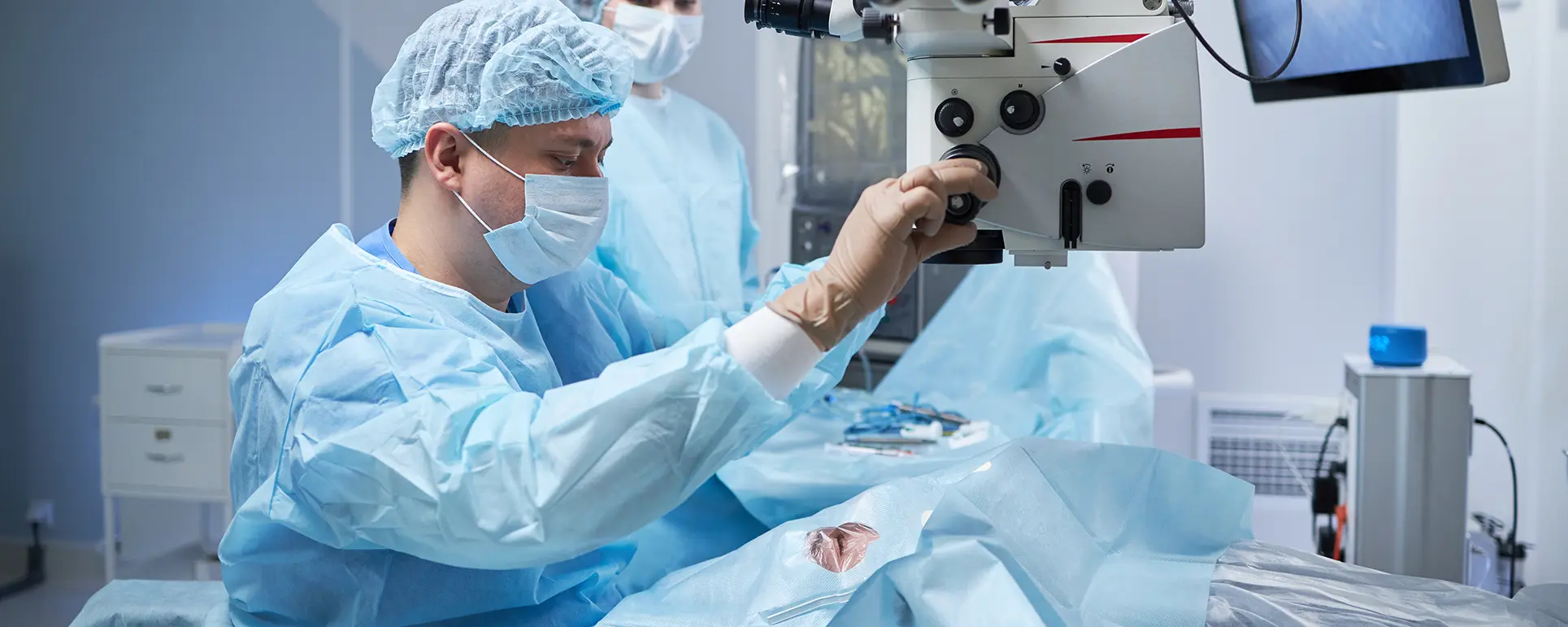
If you’re thinking about replacing the lens implanted during cataract surgery, one of your biggest concerns may be whether the procedure is more dangerous than the original operation. It’s natural to feel worried. Cataract surgery is known for being one of the safest surgeries in the world, and you may have heard that “secondary surgeries” always carry more risk. You might wonder whether IOL replacement is worth pursuing or whether it introduces complications you should avoid.
The truth is more nuanced and far more reassuring. Yes, IOL replacement can be more technically complex than first-time cataract surgery, but that doesn’t mean it is unsafe. With the right surgeon, appropriate planning, and modern techniques, most IOL exchanges are carried out safely and achieve excellent outcomes. The key lies in understanding what makes the two procedures different, which risks genuinely increase, and how experienced surgeons minimise them.
Why Patients Consider IOL Replacement After Cataract Surgery
Before considering the risks, it’s important to understand why someone might want an IOL replacement after cataract surgery. Recognising the reasons helps patients and surgeons evaluate whether the potential benefits outweigh the associated risks. IOL exchange is often considered when the existing lens is not meeting visual needs or causing persistent symptoms.
Patients may seek IOL replacement if they have a multifocal or EDOF lens that produces glare, halos, or reduced contrast, or if the lens power is incorrect, resulting in blurred or unbalanced vision. Other reasons include a toric lens that has rotated or shifted, mismatched vision between the two eyes, difficulty adapting to the lens’ optical characteristics, or persistent negative dysphotopsia, such as a dark arc or shadow in the peripheral vision.
Many patients also opt for a different lens type with alternative visual properties. Unlike laser enhancement, which reshapes the cornea, IOL replacement directly addresses problems originating from the lens itself. For this reason, many find that the potential improvement in vision quality justifies the procedure despite the associated risks.
How IOL Replacement Differs From First-Time Cataract Surgery

Understanding how IOL replacement differs from first-time cataract surgery is key to appreciating the risks and complexities involved. Unlike primary cataract surgery, an IOL exchange must contend with a healed and sometimes fibrotic capsular bag, possible scar tissue, and any prior procedures such as YAG capsulotomy.
1. The Capsule Has Already Healed: During cataract surgery, the natural lens is removed, but the thin capsular bag that holds the artificial IOL is left intact. After healing, this capsule becomes more fibrotic and less flexible, so the existing lens may be more firmly attached and delicate separation is required to free it. This increases the need for micro-precision, whereas first-time cataract surgery involves a fresh, flexible capsule that is easier to work with.
2. Possible Scar Tissue Formation: Over time, the capsule can develop adhesions and fibrosis. Removing the lens without damaging this capsule requires experience and specialised tools.
3. Presence of a YAG Capsulotomy: Many patients undergo YAG laser treatment months or years after cataract surgery to clear posterior capsule opacification (PCO). A YAG opening makes IOL exchange more technically challenging, but not impossible. Surgeons must take extra precautions to avoid dislocating the lens or destabilising the eye’s internal structure.
4. The Eye Has Already Been Operated On Once: Secondary surgery always carries slightly higher risk because tissues have been altered before. However, this doesn’t automatically mean the risk is high it simply means the surgeon must plan the procedure differently.
5. IOL Removal and Replacement Requires Additional Steps: Removing an old IOL involves manoeuvring inside the capsule and ensuring the replacement sits correctly. This adds complexity compared to primary cataract surgery, where the surgeon only needs to insert a new lens, not remove an old one.
Despite these differences, modern surgical techniques have dramatically reduced complications, and many IOL exchanges proceed as smoothly as first-time surgery especially when performed by a surgeon experienced in secondary procedures.
Is IOL Replacement Actually More Risky? The Genuine Risk Differences
IOL replacement carries some differences in risk compared to first-time cataract surgery, primarily due to the condition of the capsular bag and zonules. The capsule may be fibrotic, adherent, or previously opened, slightly increasing the risk of damage, but modern instruments and techniques allow safe lens removal. Zonular fibres can also weaken with age or prior surgery, yet devices like capsular tension rings and careful surgical methods minimise this risk, keeping outcomes reliable.
Other risks, such as infection, retinal detachment, or cystoid macular oedema, remain low and generally comparable to cataract surgery. Inflammation or temporary corneal swelling may occur slightly more often due to longer surgical time and capsule manipulation, but these are usually manageable with drops and rarely cause lasting issues.
Finally, the chance of needing additional surgery is slightly higher than with primary cataract surgery, particularly for complex cases or minor refractive adjustments.
Is IOL Replacement Considered Safe Overall?

Yes, IOL replacement is considered safe in experienced hands. Although technically more delicate than first-time cataract surgery, modern IOL exchange has become a predictable and effective procedure. Many patients achieve significant improvements in both vision quality and overall comfort following lens replacement.
Success rates are particularly high when the surgeon routinely performs IOL exchanges, carefully assesses the capsular bag, anticipates any YAG-related challenges, selects an appropriate replacement lens, and understands the patient’s visual goals. When all these factors align, the overall risk remains low, and the potential benefits can be life changing.
Factors That Influence Individual Risk
Before deciding if IOL replacement is appropriate, your surgeon will assess several factors. These include the time since your cataract surgery, as earlier exchanges are generally easier while later ones require more precision, and whether you have had a YAG laser, which can make the procedure more complex but not unsafe.
The type of current lens is also considered, since certain IOL materials and designs are easier to remove, along with your visual symptoms, such as glare or halos from premium lenses, which may strongly indicate replacement. Finally, overall eye health including dry eye, corneal integrity, retinal status, and glaucoma helps guide the surgical plan and ensure a safe and effective outcome.
How Surgeons Reduce IOL Replacement Risk
Even though IOL exchange is more intricate than first-time cataract surgery, careful planning makes it very safe. Surgeons use detailed imaging, such as OCT scans, corneal topography, and anterior segment imaging, to assess the lens position and the condition of the capsular bag. Specialised micro-instruments allow gentle separation of the lens without tearing the capsule, while viscoelastic protects the cornea and stabilises tissues during the procedure.
Capsular tension rings are often employed to stabilise weak capsules and prevent zonular damage. Surgeons also engage in predictive planning, anticipating adhesions and preparing alternative lens fixation methods if needed. Choosing the correct replacement lens type further ensures long-term stability and resolution of visual symptoms.
Meticulous aftercare is equally important, including the use of anti-inflammatory medications, monitoring intraocular pressure, and follow-up scans to detect early signs of complications. Combined, these measures make IOL exchanges a safe and reliable solution for patients seeking improved vision and comfort.
Comparing Overall Risk Between Cataract Surgery and IOL Exchange
When considering IOL exchange compared to primary cataract surgery, it is important to understand the differences in technical complexity and surgical planning. While both procedures are generally very safe, IOL replacement requires additional considerations due to changes in the capsular bag, previous procedures, and patient-specific factors.
Cataract Surgery: This procedure is very safe, with the natural capsule being fresh and flexible, allowing predictable placement of the new lens. The overall risk is extremely low, and complications are uncommon when performed by an experienced surgeon.
IOL Exchange: IOL replacement involves slightly higher technical complexity because the capsule may be fibrotic, partially opened, or have adhesions. There are more variables to manage, such as lens stability, prior YAG laser openings, and potential zonular weakness. Despite these factors, the procedure remains very safe when performed by a surgeon skilled in secondary lens exchanges, and most patients achieve excellent visual outcomes.
The key difference is not that IOL exchange is unsafe, but that it demands careful planning and an experienced surgeon to manage the added challenges effectively.
When the Benefits Outweigh the Risks
Many patients consider IOL exchange when their current visual symptoms significantly impact daily life, making the potential benefits of improved vision outweigh the slightly increased risk of secondary surgery. You may be a good candidate if your current lens limits comfort, you experience persistent glare or halos, have lost confidence in night driving, or feel your vision is unbalanced or unnatural. Other indications include difficulty adapting to a multifocal or EDOF lens, bothersome refractive error, or a misaligned toric lens. When these symptoms are persistent and directly related to the IOL, lens replacement is often the most effective solution.
FAQs:
1. What is IOL replacement surgery, and why might it be needed?
IOL replacement surgery, also called IOL exchange, involves removing the intraocular lens implanted during cataract surgery and replacing it with a new lens. Patients may consider this procedure if their current lens causes visual disturbances such as glare, halos, or reduced contrast. Other reasons include a lens that is misaligned, rotated (especially toric lenses), or provides incorrect refractive correction. Additionally, some individuals may simply find it difficult to adapt to premium lenses like multifocal or extended depth of focus (EDOF) types. The goal of IOL replacement is to improve vision quality and overall visual comfort when the original lens no longer meets the patient’s needs.
2. Is IOL replacement riskier than first-time cataract surgery?
While IOL replacement can be technically more complex than primary cataract surgery, it is not inherently dangerous when performed by an experienced surgeon. The risks are slightly higher primarily because the capsular bag holding the lens may have healed, become fibrotic, or developed scar tissue over time. Previous procedures, such as a YAG capsulotomy, can also make lens removal more delicate. However, modern surgical techniques, careful planning, and specialised instruments allow surgeons to manage these challenges safely, resulting in outcomes that are often comparable to first-time cataract surgery.
3. What complications are more likely with IOL replacement?
The main complications of IOL exchange are associated with the condition of the capsular bag and zonules, which may be weaker or more fragile than during primary surgery. There is a slightly higher risk of capsular rupture, zonular damage, or lens decentration. Temporary corneal swelling or inflammation can occur more frequently due to the longer surgical manipulation required. Other rare complications, such as cystoid macular oedema, retinal detachment, or infection, are possible but remain uncommon. Overall, careful surgical technique and postoperative care keep these risks low.
4. How do previous YAG laser procedures affect IOL replacement?
A YAG capsulotomy, often performed to clear posterior capsule opacification, does not prevent IOL replacement but adds complexity to the procedure. The laser creates an opening in the capsule, meaning the surgeon must take extra precautions to avoid destabilising the lens or damaging surrounding structures. Specialised techniques may be used to stabilise the eye and ensure safe lens removal. Experienced surgeons can perform IOL exchanges successfully even after YAG procedures, maintaining excellent visual outcomes.
5. How does the type of original lens affect the safety of replacement?
The lens material and design can influence how easily it can be removed and replaced. Flexible lenses or certain single-piece designs are often simpler to extract, whereas multifocal or toric lenses may require more careful handling to prevent damage to the capsule. Additionally, lenses that have rotated or shifted over time may need extra manipulation during surgery. Surgeons assess the specific lens type during preoperative planning to determine the safest approach for removal and replacement.
6. What factors determine whether someone is a good candidate for IOL replacement?
Candidates for IOL exchange are generally those who experience persistent visual dissatisfaction that cannot be corrected with glasses, contact lenses, or laser enhancement. Factors include the time elapsed since cataract surgery, the presence of a healthy or sufficiently stable capsular bag, the type of existing lens, previous procedures such as YAG capsulotomy, and overall eye health. Conditions like glaucoma, corneal irregularities, or retinal issues are also assessed. Surgeons weigh these factors carefully to ensure the benefits of lens replacement outweigh the potential risks.
7. How do surgeons minimise risk during IOL replacement?
Surgeons employ several strategies to reduce risk during IOL exchange. Preoperative imaging such as OCT, anterior segment scans, and corneal topography helps map the lens position and capsular condition. During surgery, micro-instruments and viscoelastic substances protect ocular structures and allow precise lens separation. Capsular tension rings may be used to stabilise weak capsules or zonules, and alternative lens fixation methods are available if the capsule cannot fully support the new lens. Postoperative care, including anti-inflammatory medications and intraocular pressure monitoring, further reduces the likelihood of complications.
8. How does the timing of IOL replacement affect safety?
Timing plays a significant role in the complexity of IOL exchange. Early replacement, typically within a few months after cataract surgery, is generally easier because the capsular bag is still soft and flexible. Late replacements, years after the initial surgery, can be more technically demanding due to fibrosis, scarring, or changes from prior YAG treatment. Despite these challenges, modern surgical techniques allow safe and effective IOL replacement even long after cataract surgery, though more experienced surgical planning is required for complex cases.
9. What are the expected outcomes after IOL replacement?
Most patients experience substantial improvements in vision quality, contrast, and overall visual comfort after IOL exchange. When performed by an experienced surgeon, the procedure provides stable lens positioning and predictable visual results. While some complex cases may require minor adjustments or additional procedures, the majority of patients achieve better clarity, reduced glare or halos, and improved satisfaction compared to their previous lens.
10. Should patients be concerned about the risks of IOL replacement?
Patients should not be overly concerned, as IOL replacement is generally very safe when performed by a skilled surgeon. Although technically more delicate than primary cataract surgery, the risks are well understood and can be managed effectively. The key is careful patient evaluation, surgical planning, and appropriate postoperative care. For those experiencing persistent visual dissatisfaction, the potential benefits of improved vision typically outweigh the slightly increased risks associated with secondary surgery.
Final Thought: Is IOL Replacement Surgery Riskier Than Cataract Surgery?
IOL replacement surgery offers a reliable solution for patients whose current lenses no longer meet their visual needs. While technically more complex than first-time cataract surgery, careful surgical planning, modern techniques, and experienced surgeons ensure that risks are minimised and outcomes are excellent. Most patients experience significant improvements in vision quality, comfort, and overall satisfaction. If you’re looking for IOL replacement surgery in London, our specialist team at the London Cataract Centre is here to help, providing personalised care and advanced expertise to restore clear, comfortable vision.
References:
1. Patel V, et al. Intraocular Lens Exchange: Indications, Outcomes, and Complications detailed overview of risks and considerations specific to IOL exchange procedures. https://pmc.ncbi.nlm.nih.gov/articles/PMC10041992/
2. Silva M, Orguel S, Becker M, et al. Indications and Complications of IOL Exchange Surgery retrospective study outlining intra‑ and postoperative complications. https://pubmed.ncbi.nlm.nih.gov/37164400/
3. Märker DA, et al. Long‑Term Outcome and Complications of IOL‑Exchange evaluates outcomes and safety profiles following lens exchange. https://pmc.ncbi.nlm.nih.gov/articles/PMC10625384/
4. Fernández‑Buenaga R, Alió JL. Intraocular Lens Explantation After Cataract Surgery: Results and Techniques review of complications associated with IOL explantation and exchange. https://pubmed.ncbi.nlm.nih.gov/28780780/
5. Carlson AN. Intraocular Lens Complications Requiring Removal or Exchange classic review on mechanical, inflammatory, and optical complications that may necessitate IOL exchange. https://pubmed.ncbi.nlm.nih.gov/9548571/