



If you have mild astigmatism and are thinking about trifocal lenses for cataract or lens replacement surgery, you might be wondering whether this level of prescription affects your suitability. Many people assume that astigmatism rules out trifocal lenses altogether, especially if they’ve worn toric glasses or contact lenses for years.
The key is understanding how astigmatism interacts with trifocal optics, when it needs to be corrected, and how precisely your eyes can be measured before surgery. Surgeons today can fine-tune your visual outcome with remarkable accuracy, allowing you to benefit from a full range of distance, intermediate and near vision even if your cylindrical prescription is not perfectly zero.
In this guide, I’ll walk you through everything you need to know about trifocal lenses and mild astigmatism. You’ll learn how astigmatism affects clarity, when a toric trifocal lens is recommended, how surgeons check suitability, and why modern diagnostics play such a crucial role in delivering crisp, stable vision.
What Is Mild Astigmatism?
Astigmatism occurs when the front surface of your eye the cornea is more curved in one direction than the other. Instead of being perfectly round like a football, it has a slightly oval or rugby-ball shape. This causes light to bend unevenly, leading to blurred vision at all distances.
Typical Features of Mild Astigmatism
- Cylinder measurement below 1.00 dioptre
- Mild blur that often improves with small corrections
- Distortion or ghosting especially at night
- Often present for years without significant symptoms
People with mild astigmatism usually function well with glasses or soft contact lenses and are sometimes surprised to learn they have it at all. But even small degrees of astigmatism can influence the outcome of trifocal lenses if not accounted for properly.
Why Astigmatism Matters When Choosing Trifocal Lenses
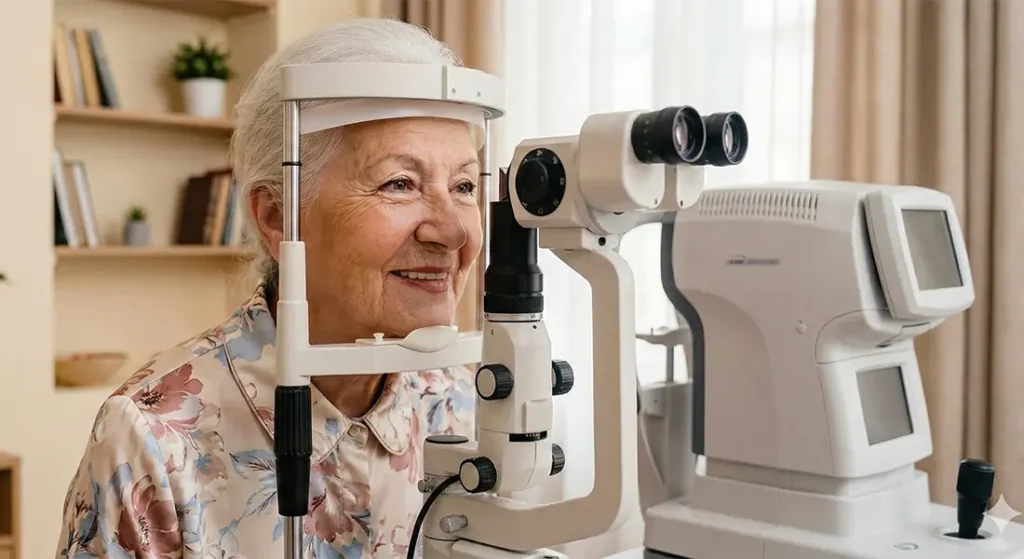
Trifocal lenses are designed to give you clear vision at distance, intermediate and near by splitting light into three precise focal points. Because the optics are so finely engineered, the visual system needs to be well-aligned for the lens to perform at its best. Even small amounts of uncorrected astigmatism can interfere with how sharply each focal point is delivered, which is why surgeons pay close attention to it during planning.
How Astigmatism Affects Trifocal Vision
- Blurs each focal point – Instead of a crisp image, the light spreads into different directions.
- Reduces contrast sensitivity – Fine details, especially in low light, become harder to see.
- Causes ghosting, doubling or shadowing – Multiple faint images can appear around objects.
- Affects night-time clarity – Night driving, streetlights and signs may seem less sharp.
- Makes near tasks harder – Reading small text may feel less precise or more tiring.
In simple terms, trifocal lenses work best when the eye’s focusing system is perfectly balanced. The good news is that mild astigmatism can usually be corrected during surgery either through the IOL choice itself or with additional fine-tuning ensuring you can enjoy the full benefit of trifocal vision.
Can You Have Trifocal Lenses With Mild Astigmatism?
Yes you can absolutely have trifocal lenses even if you have mild astigmatism. Many people with low levels of astigmatism are still excellent candidates because modern cataract and lens-replacement techniques allow surgeons to correct or compensate for it during the procedure. As long as the astigmatism is accurately measured and managed, it won’t interfere with the performance of a trifocal lens.
Mild astigmatism is not a barrier because it can be corrected through small corneal incisions, toric trifocal IOL options, or precise adjustments during surgical planning. In some cases, the astigmatism is so minimal that it doesn’t require treatment at all. Surgeons today have multiple effective tools to ensure excellent vision outcomes even when mild astigmatism is present.
Understanding How Much Astigmatism Can Be Tolerated
Not all levels of astigmatism require treatment, and many people are surprised to learn that trifocal lenses can still perform very well with small amounts of uncorrected astigmatism. When the degree is very mild, it may not noticeably affect your vision at all, meaning you can still enjoy clear distance, intermediate and near focus without additional correction. The key is understanding where your measurements fall and how sensitive your eyes are to even small optical imperfections.
As a general guideline, astigmatism under 0.50D is often tolerated without correction, while anything between 0.50D and 1.00D is usually corrected to ensure the sharpest results. For measurements above 1.00D, surgeons typically recommend a toric trifocal IOL to maintain clarity across all distances. These are broad ranges, and your surgeon will rely on highly detailed measurements and corneal mapping to decide what level of correction will give you the most stable and comfortable vision.
When a Toric Trifocal Lens Is Recommended

A toric trifocal lens is typically advised when your astigmatism is regular, stable and clearly measurable. Because these lenses contain built-in astigmatism correction, they help ensure the trifocal optics work as intended giving each focal point sharper alignment and reducing visual imperfections.
Benefits You Can Expect
Toric trifocals can noticeably reduce blur, improve contrast and enhance both reading and intermediate clarity. Many patients also experience fewer halos and less glare, resulting in smoother day-to-night vision. With accurate measurements and correct lens alignment, most people achieve excellent outcomes and often enjoy near-complete freedom from glasses.
How Surgeons Decide Whether You Need a Toric Trifocal IOL
Surgeons determine whether you need a toric trifocal IOL by performing a series of highly precise diagnostic tests. These assessments map the curvature, steepness and overall structure of your cornea, helping the surgeon understand exactly how much astigmatism is present and whether it is visually significant. Modern scanners used in cataract and lens-replacement clinics provide extremely accurate data, allowing even subtle irregularities to be detected.
Based on results from corneal topography, keratometry, biometry and tomography, your surgeon can calculate the best way to manage your astigmatism. Mild levels may be corrected with small corneal incisions or left untreated if they don’t affect vision, while more noticeable measurements may require a toric trifocal IOL for the sharpest outcome. This personalised approach ensures that your final vision is as clear and balanced as possible.
What Happens If Astigmatism Isn’t Corrected?
If mild astigmatism isn’t corrected during lens surgery, you may still experience a degree of blur even with a perfectly functioning trifocal lens. This happens because the cornea continues to bend light unevenly, which affects the overall clarity of your vision despite the advanced technology of the implant.
People often notice symptoms such as slight ghosting, haloes around lights, reduced contrast, intermediate blur or difficulty reading very small print. Even low levels of astigmatism can impact sharpness, so addressing it during surgery usually leads to clearer, more comfortable vision with your trifocal lens.
Correcting Mild Astigmatism Without a Toric Lens
If your astigmatism is only mild, your surgeon may opt for alternative techniques that correct the issue without needing a toric trifocal IOL. These approaches can fine-tune the corneal shape enough to allow trifocals to perform well, while keeping the procedure simpler.
Limbal Relaxing Incisions (LRIs) – Small, precise cuts are placed at the corneal edge to gently relax the steep meridian, reducing low-level astigmatism in a controlled way.
Arcuate Incisions with a Laser – A femtosecond laser can create highly accurate arcuate incisions, offering more predictability and consistency than manual techniques.
Post-operative Laser Enhancement – In some cases, your surgeon may recommend a minor laser correction after healing to achieve the final refinement.
These options work well when astigmatism is borderline just enough to influence clarity but not high enough to justify a dedicated toric lens.
How Mild Astigmatism Influences Your Vision After Trifocal Surgery
The main aim of trifocal lenses is to give you clear vision at near, intermediate and long distances. Even mild residual astigmatism can subtly affect how well each focal point performs, leading to small but noticeable reductions in clarity.
Distance Vision – You may notice the image feels slightly soft or stretched in one direction, especially when looking at high-contrast objects.
Intermediate Vision – Tasks like computer work or dashboard viewing can show faint shadowing or a mild double effect, particularly later in the day when your eyes are tired.
Near Vision – Fine print or detailed close-up work may require more concentration, and the clarity can dip further in dim lighting.
Correcting even small amounts of astigmatism helps the trifocal lens deliver sharper vision across all three ranges, making your overall experience much more consistent.
Why Modern Trifocal Technology Works Better Than Older Lenses
Modern trifocal lenses perform far better than older multifocal designs because they’ve been engineered to handle real-world visual demands more effectively. Earlier lenses were more sensitive to lighting conditions and even small amounts of astigmatism, but today’s models use advanced optics to deliver smoother, clearer focus at all distances.
They offer advantages such as improved light distribution, smoother transitions between focal points, reduced glare and halo profiles, and better tolerance to minor imperfections. With enhanced depth of focus and stronger functional reading ability, modern trifocals are far more forgiving making them a strong option even for people with mild astigmatism.
How Surgeons Personalise Your Trifocal Vision Plan
Choosing the right trifocal lens is both a scientific calculation and a personalised visual strategy. Your surgeon looks beyond the numbers to understand how you use your eyes every day whether you read extensively, work on screens, drive at night or enjoy detailed close-up tasks.
Personalised Factors Include:
Amount of astigmatism – Determines whether correction is needed through a toric lens or alternative methods.
Corneal regularity – Ensures the corneal surface can support crisp, stable trifocal performance.
Dominant eye strategy – Helps balance distance and near vision for the most natural binocular outcome.
Pupil size – Influences how well the lens performs in different lighting conditions.
Lighting sensitivity – Guides decisions about lens type to reduce glare or halos.
Desired visual independence – Helps tailor the plan to minimise the need for glasses in daily life.
This customised approach ensures the trifocal system is fine-tuned to your visual goals, giving you the clearest and most comfortable outcome.
Suitability Checklist for Trifocal Lenses With Mild Astigmatism
A suitability checklist can help you understand whether trifocal lenses are a good match when you have mild astigmatism. You’re generally a strong candidate if your cylinder is under 1.00D, the astigmatism is regular, your cornea is healthy and you’re aiming for high levels of spectacle independence with realistic expectations. Extra caution is needed if the astigmatism is irregular, you have notable dry eye, underlying retinal or macular issues or an unusually large pupil. A detailed consultation will confirm exactly where you stand.
The Role of Precision in Achieving Crisp Vision
Achieving crisp vision with trifocal lenses relies greatly on precision, especially when correcting mild astigmatism. Even tiny misalignments in the corneal axis or lens position can affect how sharply light enters the eye, leading to subtle blur or reduced contrast. This is why modern clinics place so much emphasis on accurate measurements and meticulous planning before surgery.
During the procedure, surgeons often use digital guidance systems, intraoperative alignment tools and enhanced imaging to ensure the trifocal or toric lens sits exactly where it should. When combined with the correct lens power, a stable capsular bag and secure fixation, these steps dramatically improve clarity, reduce optical disturbances and help deliver the crisp, high-quality vision trifocal lenses are designed for.
Will Trifocal Lenses Reduce the Need for Glasses Even With Astigmatism?
Yes when astigmatism is accurately corrected, trifocal lenses can significantly reduce or even eliminate the need for glasses for most daily activities. While you might occasionally use reading glasses for very small print or extended reading sessions, many patients achieve a high degree of spectacle independence.
Typical outcomes include clear distance vision, strong intermediate focus for tasks like using a laptop or driving, and comfortable near vision for reading. Minimal dependence on glasses is achievable, but the key to this success is effectively managing any existing astigmatism during surgery.
Frequently Asked Questions:
1. Can I have trifocal lenses if I have mild astigmatism?
Yes, trifocal lenses can be suitable for people with mild astigmatism. Modern lens technology allows surgeons to correct or compensate for small degrees of astigmatism during surgery, meaning that having a cylindrical prescription under one dioptre does not automatically exclude you from receiving a trifocal implant. With precise measurements and careful planning, most patients with mild astigmatism achieve clear vision at distance, intermediate, and near without additional glasses.
2. How does mild astigmatism affect trifocal lens performance?
Even mild astigmatism can subtly influence how light is focused on the retina. This may reduce the sharpness of each focal point, potentially causing slight blur, shadowing, or reduced contrast, particularly in low-light conditions. While trifocal lenses are designed to provide a full range of vision, uncorrected astigmatism can interfere with optimal clarity. Addressing even low-level astigmatism during surgery helps ensure that the trifocal lens performs as intended.
3. When is a toric trifocal lens recommended?
A toric trifocal lens is generally advised when regular, measurable astigmatism is present and likely to interfere with vision if left uncorrected. Toric lenses have built-in astigmatism correction, allowing the trifocal optics to deliver sharper alignment across all focal points. Surgeons consider several factors, including corneal shape and cylinder magnitude, to decide if a toric option is the best way to optimise vision and reduce potential issues such as ghosting or glare.
4. How do surgeons determine if I need a toric trifocal lens?
Surgeons use a combination of advanced diagnostic tests to assess astigmatism and decide on lens selection. Corneal topography, keratometry, biometry, and tomography provide highly accurate data on corneal curvature, axis, and regularity. This detailed information allows the surgeon to determine whether mild astigmatism will significantly impact vision and whether it can be corrected with small incisions or requires a toric trifocal lens to achieve the best possible outcomes.
5. What happens if mild astigmatism isn’t corrected?
If mild astigmatism remains uncorrected during trifocal lens surgery, patients may notice subtle visual disturbances. These can include slight ghosting, reduced contrast, or minor blurring at distance, intermediate, or near. While the lens may still provide improved vision overall, even low levels of astigmatism can prevent the lens from achieving optimal clarity. Correcting astigmatism during surgery usually leads to a sharper, more comfortable visual experience across all ranges.
6. Are there alternatives to toric lenses for correcting mild astigmatism?
Yes, for mild astigmatism, surgeons often employ techniques that do not require a toric lens. Small corneal incisions, such as limbal relaxing incisions or femtosecond laser arcuate incisions, can gently reshape the cornea to reduce low-level astigmatism. In some cases, post-operative laser enhancements may be recommended to fine-tune vision further. These approaches allow trifocal lenses to function effectively without adding the complexity of a toric implant.
7. Will trifocal lenses fully eliminate the need for glasses if I have mild astigmatism?
Trifocal lenses can significantly reduce the dependence on glasses for most daily activities, even in the presence of mild astigmatism. When astigmatism is accurately addressed, many patients achieve clear distance vision, strong intermediate focus for tasks like computer work or driving, and comfortable near vision for reading. Occasional use of reading glasses may still be required for very fine print or prolonged reading, but overall spectacle independence is often substantial.
8. How does mild astigmatism influence long-term satisfaction with trifocal lenses?
Long-term satisfaction depends on achieving clear and balanced vision across all focal points. Mild residual astigmatism can slightly affect sharpness, particularly in low light, but modern trifocal lenses are designed to tolerate small imperfections. Patients who have their mild astigmatism corrected during surgery generally report higher satisfaction, experiencing fewer visual disturbances and more consistent clarity throughout the day.
9. Are modern trifocal lenses better at handling mild astigmatism than older designs?
Yes, modern trifocal lenses perform significantly better than older multifocal designs when it comes to tolerating mild astigmatism. Advanced optical engineering improves light distribution, reduces glare and halos, and provides smoother transitions between focal points. This allows patients with minor astigmatic prescriptions to enjoy sharper, more consistent vision than was possible with previous lens technologies.
10. How do surgeons personalise trifocal lens selection for patients with mild astigmatism?
Surgeons tailor trifocal lens selection based on a detailed understanding of the patient’s visual habits, corneal shape, and astigmatism level. Factors such as dominant eye, pupil size, lighting conditions, and desired visual independence all play a role in lens planning. Combining advanced diagnostics with individualised surgical strategies ensures that mild astigmatism is effectively managed, resulting in clearer, more comfortable vision and a better overall patient experience.
Final Thought: Achieving Clear Vision with Trifocal Lenses and Mild Astigmatism
Mild astigmatism doesn’t automatically prevent you from enjoying the benefits of trifocal lenses. With modern diagnostics and surgical techniques, your surgeon can accurately measure and manage even low levels of astigmatism, ensuring clear vision at distance, intermediate, and near. Whether through a toric trifocal lens or precise corneal adjustments, the goal is to optimise clarity and reduce reliance on glasses.
If you’re considering trifocal lenses in London, you can reach out to us at the London Cataract Cente. Our team can guide you through personalised lens options and help you achieve the best possible vision outcome.
References:
1. Scheepers, M. & Pasin, N. & Hall, B. (2025) ‘Visual outcomes, quality of vision, and patient satisfaction of a trifocal intraocular lens’, Journal of Cataract & Refractive Surgery. https://www.sciencedirect.com/science/article/abs/pii/S0008418225000389
2. (2023) ‘Visual and patient‑reported outcomes of a diffractive trifocal intraocular lens compared with those of a monofocal intraocular lens’, American Journal of Ophthalmology. https://www.sciencedirect.com/science/article/pii/S0161642020306771
3. Fernández, J. F., Montés‑Mico, R., & de la Cruz, J. (2020) ‘Simultaneous Correction of Presbyopia and Corneal Astigmatism With a Novel Trifocal‑Toric Intraocular Lens: One‑Year Follow‑Up’, Journal of Clinical Medicine, 11(14), 4194. https://www.mdpi.com/2077-0383/11/14/4194
4. Vega, F., García, M. et al. (2021) ‘One‑Year Clinical Outcomes Following Diffractive Trifocal Toric Intraocular Lens Implantation’, Journal of Refractive Surgery. https://pubmed.ncbi.nlm.nih.gov/36467347/
5. Spanish‑speaking study (authors unnamed here) on eyes with low corneal astigmatism showing successful refractive outcomes and excellent uncorrected visual acuity after implantation of a trifocal‑toric IOL. https://pmc.ncbi.nlm.nih.gov/articles/PMC7511383/