


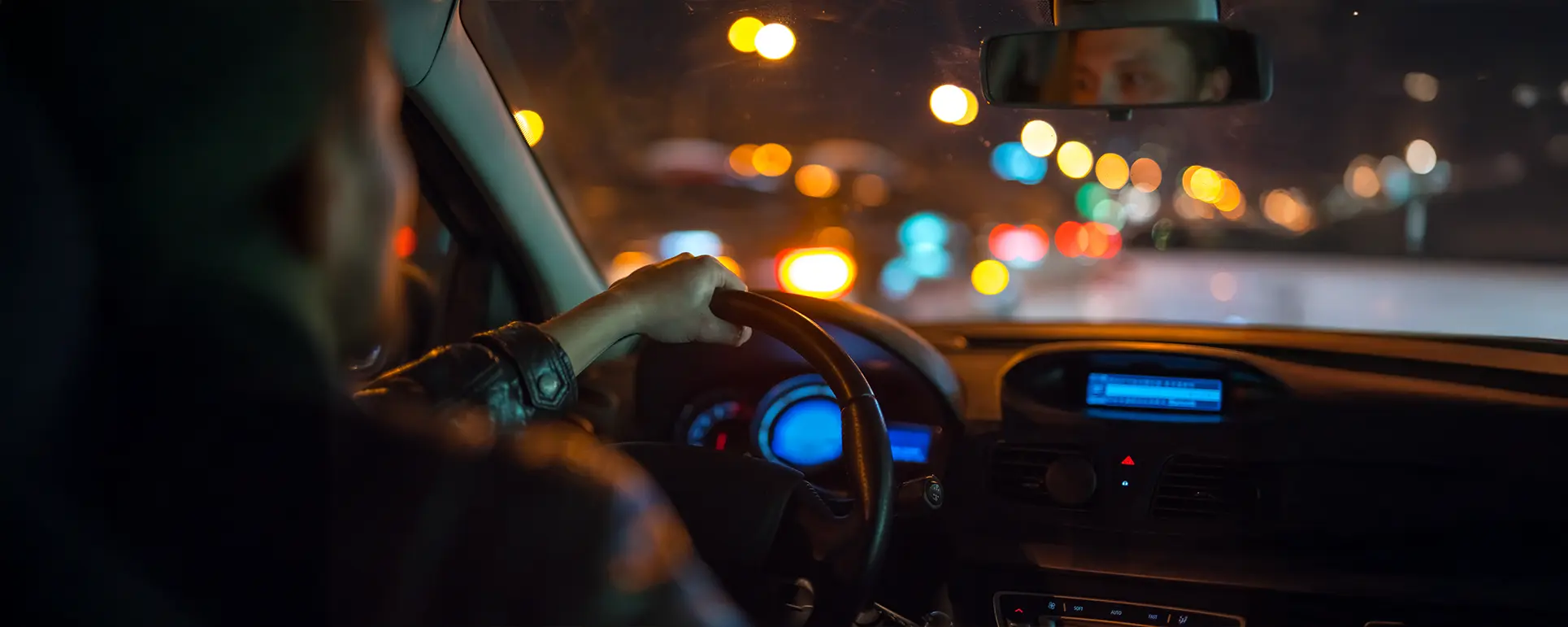
If you’re considering trifocal intraocular lenses for cataract surgery or lens replacement, night driving may be one of your biggest concerns. You may have heard about haloes, glare, starbursts, or reduced contrast sensitivity, and you may be wondering how common these effects are and whether they ever settle. Many people feel excited about the idea of seeing clearly without glasses but feel hesitant when they think about night-time vision, especially if driving is an important part of their lifestyle. It’s completely understandable to want clarity before making such a significant decision.
In this guide, I’ll walk you through exactly what you need to know about trifocal lenses and night driving. I’ll explain why haloes can appear, how long they typically last, how the brain adapts to them, and what percentage of patients report persistent symptoms. I’ll also compare trifocal IOLs with extended depth of focus (EDOF) lenses and monofocal lenses so that you can see how each performs in low-light conditions. By the end, you’ll have a clear understanding of what trifocal lenses feel like at night and whether they align with your visual needs.
Why Night Driving Feels Different With Trifocal Lenses
To understand night driving with trifocal lenses, you first need to know how these lenses work. Trifocal intraocular lenses split incoming light into three focal points: near, intermediate, and distance. This design gives you a full range of vision but also changes the way your eye processes light, especially in low-light conditions when the pupil naturally dilates.
When your pupil becomes larger, more of the lens surface contributes to your vision. This introduces optical effects such as haloes or glare because the different focal points interact simultaneously with bright lights. Streetlights, headlights, reflective signs, and glowing screens all become sharper sources of light at night, which can make these visual effects especially noticeable.
The important thing to know is that these effects don’t mean anything is wrong with the lens. They are simply a normal part of how trifocal optics function, and for most people, they improve significantly over time as the brain adapts.
Understanding Haloes and Glare: Why Do They Appear?
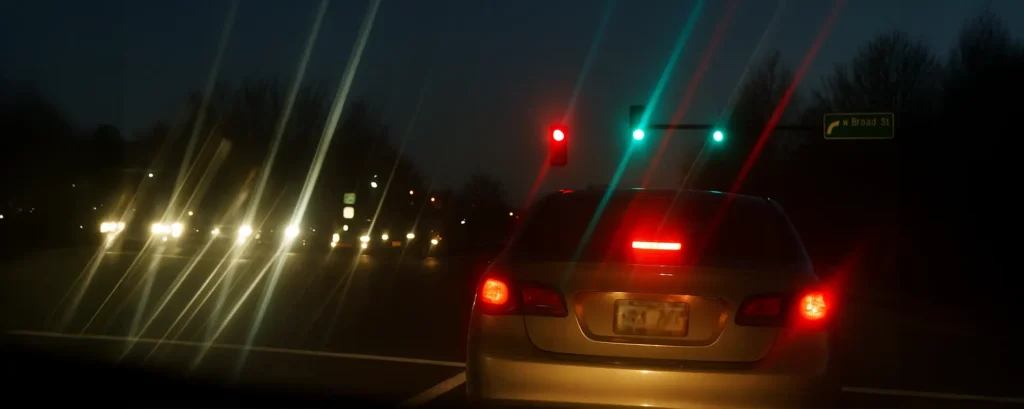
Haloes and glare occur because of the way trifocal lenses split light. When bright lights enter the eye, the multiple focal points create overlapping rings or patterns of light. This is perceived as haloes around headlights or starbursts from streetlamps. The effect is most noticeable when driving at night because the contrast between dark surroundings and bright lights is extreme.
You may experience:
- Circular haloes around headlights
- Starburst-like patterns spreading outward from lights
- A slight glow around illuminated objects
- Reduced contrast sensitivity
These effects are common in the early weeks after surgery. They are usually not harmful, but they can be distracting until your brain adapts.
The good news is that most people find these effects become less noticeable with time.
How Long Do Haloes and Glare Last? A Realistic Timeline
After receiving trifocal lenses, it’s normal to notice haloes or glare, especially around bright lights at night. The timeline for adaptation varies from person to person, but most follow a fairly predictable pattern. Your brain gradually learns how to interpret the new visual information and filter out the extra light patterns caused by the lens, making the experience much more comfortable over time.
Most people experience:
- Noticeable haloes during the first few weeks – Lights such as headlights, street lamps, or reflections may appear to have rings or starbursts. This is part of the initial adjustment period as your visual system gets used to multiple focal points.
- Gradual improvement by three months – The brain begins to prioritise the primary focal point, and haloes or glare usually feel less intense. Nighttime driving and low-light activities often become easier.
- Significant reduction by six months – Most people notice a clear improvement, with haloes becoming faint or occurring only occasionally under certain lighting conditions.
- Continued subtle improvement up to a year – Neural adaptation continues slowly, refining how your brain processes light. Many patients report that haloes are barely noticeable or even disappear entirely after a year.
The brain’s ability to adapt is powerful. It learns to focus on the visual information that matters most while filtering out secondary light patterns. A small number of patients may continue to notice haloes, but for most, these effects are no longer bothersome and do not interfere with daily activities.
What Percentage of Patients Adapt to Night-Time Vision?
Studies and long-term patient feedback show that the vast majority of people adapt very well to trifocal lenses. While almost everyone notices haloes early on, the percentage of people who find them bothersome after several months is quite low. This reflects the brain’s remarkable ability to adjust to new visual patterns and filter out unwanted light effects.
Based on published research:
- Most patients adapt within the first three to six months – During this period, the brain gradually learns to prioritise the primary focal points, making night-time vision more comfortable and natural.
- Haloes reduce in intensity for over 80–90% of people – Bright lights like headlights or street lamps may initially cause noticeable rings, but these effects typically become faint or nearly imperceptible over time.
- Only a small percentage find them bothersome long term – A minority of patients may still perceive haloes occasionally, but they rarely interfere with daily activities or night driving.
- Satisfaction rates for trifocal lenses remain high overall – Most patients report being pleased with their overall vision, appreciating the freedom from glasses and the consistent clarity at all distances.
This means that although early night driving may feel unusual, the long-term experience with trifocal lenses is usually very positive, offering both convenience and reliable vision in various lighting conditions.
Why the Brain Adapts: Understanding Neuroadaptation
Neuroadaptation is the process that helps your brain adjust to new visual patterns. When you receive a trifocal lens, your brain is suddenly exposed to visual information it has never processed before. Instead of receiving one focal point, it now receives three. At first, this can feel overwhelming, especially in dark environments with bright lights.
Over time, your brain learns to:
- Prioritise the correct focal point
- Filter out unwanted light patterns
- Ignore secondary and tertiary focal inputs
- Strengthen the clarity of the primary visual pathway
This process happens naturally. You don’t have to consciously train yourself. You simply continue using your eyes, and the adaptation develops quietly in the background.
Most people don’t even notice the adaptation happening they just realise one day that their night vision feels much more comfortable.
Night Driving in the First Few Weeks: What to Expect
In the early weeks after trifocal lens implantation, night driving can feel very different. The haloes may appear large or bright, and your sensitivity to headlights may be higher than usual. It’s best to avoid unnecessary night driving during the initial recovery period because your eyes are still healing and your brain is still adjusting.
You may notice:
- Headlights with circular rings
- Increased glare from reflective surfaces
- More noticeable starbursts
- Reduced clarity in very low light
This stage is temporary. As healing progresses, the effects become subtler.
Your surgeon may advise you to limit night driving temporarily, especially in the first few weeks after the procedure.
Night Driving After Three Months
By around three months, most patients report that night driving feels more manageable. Haloes may still be present, but they are softer and less distracting. Contrast sensitivity improves, making it easier to see darker objects against bright backgrounds.
At this stage, your brain has already made significant strides in neuroadaptation. Many people feel comfortable returning to regular night driving routines such as commuting, visiting friends, or running errands after sunset.
Night Driving After Six Months and Beyond
Six months is the point at which most patients report a stable night driving experience. For many, haloes or glare are minimal or hardly noticeable. For others, they remain faint but manageable.
What’s important is that these effects no longer interfere with daily life for the vast majority of people. Rarely, someone may continue to notice haloes long term, but even then, they typically describe them as mild rather than disruptive.
How Trifocal Lenses Compare With Monofocal Lenses for Night Driving
Monofocal lenses are the most forgiving option for night driving. They focus all available light into a single point, which gives excellent clarity and contrast. This means they rarely cause haloes or glare. If night driving is your highest priority and you don’t mind wearing glasses, monofocals may be the best choice.
However, monofocals do not provide near or intermediate vision correction. You would still need glasses for reading, screens, shopping, and many other tasks. This trade-off is important to consider.
If you value night driving clarity above everything else, monofocal IOLs are the simplest and most predictable option.
How Trifocal Lenses Compare With EDOF Lenses for Night Driving
EDOF lenses (Extended Depth of Focus) offer a middle ground between monofocals and trifocals. They usually cause fewer haloes and provide better contrast sensitivity than trifocal lenses, making them easier on the eyes in low-light conditions. However, they don’t provide the same level of near vision clarity, so you may still need reading glasses for some tasks.
This means:
- EDOF lenses are smoother for night driving than trifocals – They generally produce fewer visual artefacts like haloes or glare, which can make night driving feel more comfortable and less distracting.
- Trifocals provide stronger near vision than EDOF lenses – Reading, using a smartphone, or other close-up tasks are usually sharper with trifocals, reducing the need for glasses during daily activities.
- EDOF lenses may require reading glasses for fine print – While they provide good intermediate and distance vision, very close tasks like reading small text or detailed work often still need a supplemental lens.
If you drive frequently at night and also want a reduced dependence on glasses, EDOF lenses may be worth considering. Conversely, if you prioritise clear near vision and can tolerate a short adaptation period, trifocal lenses may be the better option.
Why Some People Experience More Haloes Than Others
Haloes and glare are common after trifocal lens implantation, but their intensity can vary widely from person to person. Several individual factors influence how noticeable these visual effects are, including the anatomy of your eyes, the quality of your tear film, and how your brain adapts to the new lenses. Understanding these factors can help set realistic expectations and guide measures to minimise night-time disturbances.
- Your pupil size in dim light – Larger pupils expose more of the lens surface, which can make trifocal light splitting more noticeable at night. This doesn’t affect the quality of your vision it may just mean a slightly longer adaptation period.
- Your sensitivity to contrast changes – People who are naturally more sensitive to subtle visual differences may notice haloes and glare more readily, especially in low-light conditions.
- Your neural adaptability – The brain needs to adjust to multiple focal points created by the lens. Those with faster neural adaptation may experience fewer or shorter-lasting haloes.
- The presence of dry eye – Dry eye can increase light scattering, intensifying glare and halo effects. Treating dry eye often improves comfort and reduces night-time visual disturbances.
- The quality of your tear film – A smooth and stable tear film helps maintain a clear optical surface, reducing scattering and making lights appear sharper at night.
- The precision of your surgery – Accurate lens placement and alignment are critical. Even small deviations can influence how light is focused and may affect halo perception.
Larger pupils and dry eye are common reasons why some patients notice haloes more than others. With proper evaluation, treatment of dry eye, and time for neural adaptation, these effects usually become less noticeable.
How Lighting Conditions Affect Your Experience
Night driving is particularly complex because lighting conditions vary dramatically. On well-lit roads, haloes tend to feel less intense. On dark roads with bright oncoming headlights, the contrast makes haloes more visible.
You may notice:
- Stronger rings in extreme darkness
- Softer haloes in urban environments
- Reduced glare in foggy or rainy conditions
- Increased reflections on wet surfaces
These variations are normal and occur even with natural lenses, but they can feel more pronounced with trifocal optics.
What You Can Do to Improve Night Driving After Trifocal Lenses
Although your brain will adapt naturally, you can support the process by taking a few simple steps.
Treating dry eye is essential because it dramatically reduces glare. Using artificial tears, staying hydrated, and avoiding excessive screen time can help. Good lighting habits also make a difference. Keeping your car’s interior dim and avoiding looking directly at headlights can reduce discomfort.
Some people benefit from anti-reflective coatings on glasses for occasional use. Even though you won’t need glasses for most tasks, having a pair for night driving can sometimes improve clarity, especially early in your adaptation period.
These strategies support your vision while your brain continues learning to interpret the trifocal lens.
Are Persistent Haloes Common?
Long-term haloes occur in a small percentage of people. Even when they persist, they usually become mild enough that patients describe them as noticeable but not disruptive.
Some people with large pupils or high visual sensitivity may experience haloes for longer. However, most still consider the trade-off worthwhile because of the freedom from glasses and the improved near and intermediate vision trifocal lenses offer.
Knowing the risk of long-term haloes helps you make an informed decision, but it shouldn’t overshadow the fact that satisfaction rates with trifocals remain very high overall.
The Role of a Personalised Assessment
The best way to determine whether trifocal lenses are right for your night driving needs is to have a personalised assessment. Your surgeon will examine your pupil size, tear film quality, lifestyle habits, sensitivity level, and your expectations. They may also discuss alternative lenses if night driving is a major priority for you.
Many people start their research by exploring clinics that offer trifocal lenses in London, as these centres often have access to advanced technology and highly experienced surgeons who can tailor a solution to your needs.
A personalised consultation ensures that you choose a lens that aligns with your visual goals and your daily life.
Final Thought: Night Driving with Trifocal Lenses
Night driving with trifocal lenses may feel unusual at first, but most patients adapt within a few months. Haloes and glare are common initially, yet neuroadaptation and proper eye care usually make them manageable. While monofocal lenses offer the clearest night vision and EDOF lenses reduce haloes compared with trifocals, trifocal lenses provide the greatest freedom from glasses for near, intermediate, and distance vision. If you’re considering trifocal lenses in London, you can book a consultation with our specialist at the London Cataract Centre to discuss your visual goals, lifestyle needs, and lens options.
References:
1. Zhu, D., Karki, S., Dhariwal, M. et al. (2024) ‘Patient‑Reported Outcomes of Visual Disturbances with a Trifocal Intraocular Lens: A Meta‑Analysis’, Ophthalmology and Therapy. https://pubmed.ncbi.nlm.nih.gov/39718735/
2. Shin, K. Y., Lim, D. H. & Chung, T.-Y. (2022) ‘Clinical Outcomes after Bilateral Implantation of Trifocal Diffractive Intraocular Lenses and Extended Depth of Focus Intraocular Lenses’, Journal of Clinical Medicine, 11, 5729. https://www.mdpi.com/2077-0383/11/19/5729
3. Cano‑Ortiz, A. et al. (2024) ‘Clinical and Patient Reported Outcomes of an Optimized Trifocal Intraocular Lens’, Journal of Clinical Medicine, 13(14), 4133. https://www.mdpi.com/2077-0383/13/14/4133
4. Nivean, M. et al. (2019) ‘Performance of a New‑Generation Extended Depth of Focus Intraocular Lens’, [Journal details] reporting that less than 10% of patients had glare, halos or other photic phenomena after EDOF IOL implantation. https://www.sciencedirect.com/science/article/pii/S2162098923005108
5. Liu, S. et al. (2025) ‘Clinical efficacy evaluation of the implantation of a diffractive trifocal intraocular lens in high myopic eyes: Two‑year follow-up’, Indian Journal of Ophthalmology. https://pubmed.ncbi.nlm.nih.gov/39257087/