



If you’re thinking about multifocal lens surgery and you regularly drive at night, it’s completely normal to wonder whether these lenses are the right choice for you. Night driving is one of the most common concerns for patients exploring multifocal intraocular lenses (IOLs). You may have heard that glare and halos can appear after surgery, especially during the adjustment period. You might also worry about how these effects could impact your safety or confidence on the road.
In this guide, I’ll explain why multifocal lenses cause certain visual symptoms, who is most likely to notice them, how long they usually last and whether an alternative option like an EDOF (Extended Depth of Focus) lens may be a better fit for your lifestyle. My aim is to help you make an informed decision that suits your everyday visual needs and your comfort behind the wheel.
Why Night Driving Is a Major Consideration for Multifocal IOL Patients
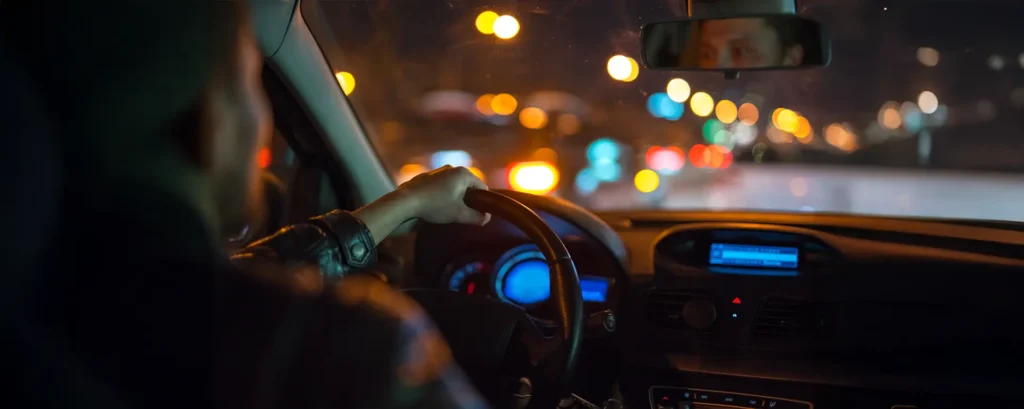
Night driving already requires more visual effort compared to daytime driving. Your pupils are larger, contrast is lower, and you rely more heavily on clear illumination from streetlights and headlights. When you add multifocal optics into the equation, your visual system has to adjust to new light-splitting patterns that may create glare or halos.
This doesn’t mean multifocal lenses are unsuitable for night drivers, but it does mean you need a realistic understanding of what to expect. If you drive long distances every evening, work night shifts, or rely on night driving for your commute, it’s especially important to choose a lens that fits your lifestyle.
How Multifocal IOLs Work And Why They Create Halos
Multifocal intraocular lenses (IOLs) work differently from standard monofocal lenses. While monofocal IOLs focus light at a single point, multifocal lenses split incoming light into multiple focal points, allowing you to see clearly at various distances without relying on glasses. This optical design helps provide functional vision for near, intermediate, and far tasks, making daily activities easier.
However, because the lens distributes light across different focal points, some light doesn’t reach the primary focus, leading to visual phenomena such as halos, rings around lights, starbursts, mild glare, or increased sensitivity to oncoming headlights. These effects are normal, particularly during the first weeks or months after surgery, and indicate your visual system is adjusting to the new lens rather than a lens failure.
How Common Are Halos with Multifocal Lenses?
Halos are more common with multifocal IOLs than with monofocal or EDOF lenses, though not everyone experiences them to the same degree. Research shows that around 20–30% of patients notice halos early in recovery, but only 5–10% find them significantly bothersome in the long term. Most people experience gradual improvement as their brain adjusts to the new visual input, a process known as “neuroadaptation,” which is a key factor in overall satisfaction with multifocal lenses after a few months.
It’s important to remember that the severity of halos often decreases over time. As your brain adapts, it learns to prioritise the most useful visual information and filter out the distracting effects of scattered light. Many patients find that by three to six months after surgery, halos become much less noticeable, and they can enjoy the full benefits of clear vision at multiple distances without glasses.
Why Halos Are More Noticeable at Night
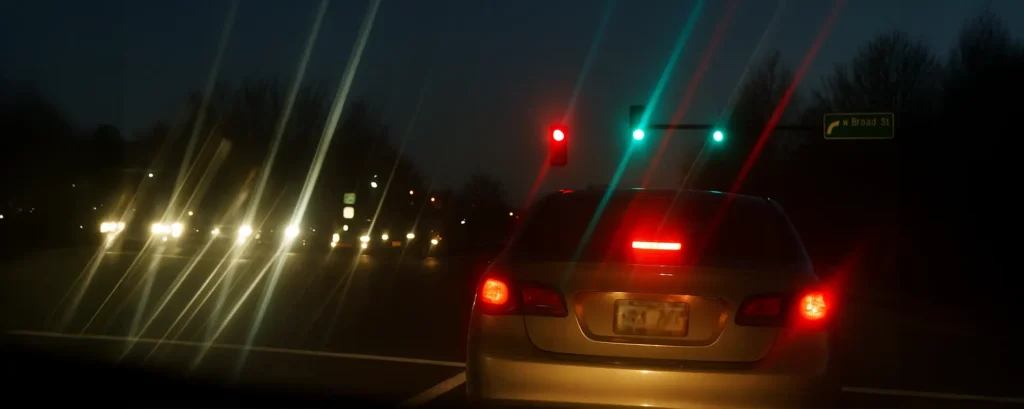
Halos are more obvious in low light because your pupils naturally dilate. When your pupils enlarge, more light passes through the outer zones of the lens where optical differences are more pronounced.
This means glare can appear stronger when you:
Drive at night: Because Street lighting is limited, your pupils open wider, making any optical scatter more noticeable. Headlights create a strong contrast against the dark background, which can exaggerate halo patterns. Many people find that this gradually improves within the first few months.
Look at bright LEDs: LEDs have sharp, concentrated light sources, which can make halos appear more defined. This is especially noticeable on phones, signs, or illuminated displays. Over time, most people report these halos becoming far less distracting.
Encounter oncoming headlights: Oncoming lights create a sudden burst of brightness that your eyes have to quickly adjust to. This rapid shift makes any halo effect stand out more clearly. With neuroadaptation, the glare response usually settles down.
Walk into dark environments with scattered lighting: Dim areas with multiple small light sources like restaurants, parking lots, or hallways can create overlapping halo patterns. Your vision has to adjust repeatedly, which enhances the effect. As healing progresses, your eyes become better at handling these transitions.
Look at reflective road surfaces after rain: Wet roads reflect and scatter headlights and street lamps, amplifying the glow you see around them. This combination of brightness and reflection can make halos appear larger than usual. Once your brain adapts, this becomes much easier to manage.
This effect improves over time as your brain learns to filter the unfocused light and prioritise the clearest focal point.
Will Night Driving Always Feel Different with Multifocal Lenses?
For most people, no. Night driving becomes more comfortable as your visual system adapts and learns to interpret the multiple focal points created by multifocal IOLs. With time, the brain becomes better at prioritising the sharpest image and ignoring scattered light.
Most patients notice a significant improvement within:
2–4 weeks: During this stage, your brain begins adjusting to the new optics, and the intensity of halos usually starts to lessen. Many people find night driving manageable again, although some mild glare may still be present. The change is gradual but reassuring.
3 months: By this point, the visual system becomes much more efficient at filtering out unfocused light. Most patients report that halos become softer, smaller or far less distracting. Night driving typically feels smoother and more predictable.
6–12 months: This is when your brain has fully adjusted to the multifocal design. Halos often reduce to a level that you barely notice unless you look for them. For a large percentage of patients, night-time vision becomes very natural by this stage.
If you have healthy eyes, good contrast sensitivity, and no underlying eye conditions, your adaptation is likely to be smooth. People with stable ocular health tend to adjust faster and experience fewer long-term visual disturbances.
Who Is More Likely to Notice Night-Time Visual Symptoms?
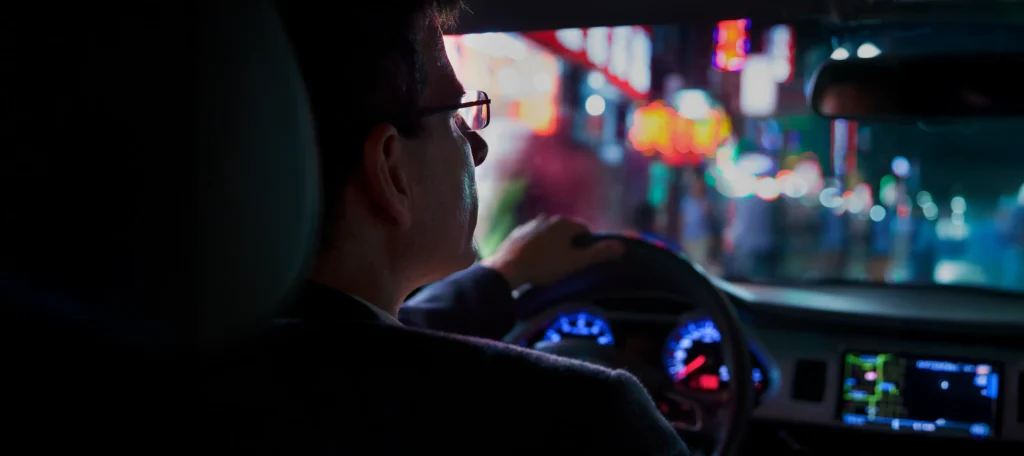
While anyone may notice halos initially, some people are naturally more sensitive to them. You may experience more pronounced symptoms if you:
Have large pupils: Larger pupils allow more peripheral light into the eye, where optical imperfections are more noticeable. This can make halos appear bigger or brighter in low-light settings. It’s one of the most common reasons some people notice symptoms more strongly.
Drive long distances at night: Extended exposure to headlights, reflective signs, and changing light conditions can heighten your awareness of halos. The constant contrast between dark roads and bright lights tends to make any glare more noticeable. Regular night driving may slow adaptation slightly, but improvement still happens.
Are sensitive to bright or scattered light: People with inherent light sensitivity often notice visual disturbances more easily. Bright LEDs, headlights, and neon signs can trigger stronger halo effects. With time, the brain usually learns to adjust and reduce the discomfort.
Have dry eyes: Dryness causes an irregular tear film, which scatters light and worsens glare. Even mild dryness can make halos look larger or more blurred. Treating dry eye often leads to a significant reduction in night-time symptoms.
Have early glaucoma or macular changes: Even subtle changes in the optic nerve or retina can affect contrast sensitivity. This makes bright lights feel more intrusive, especially in low-light environments. Your surgeon will typically assess this during your eye examination.
Have significant astigmatism: Uncorrected or residual astigmatism can cause light to scatter unevenly across the retina. This often leads to streaking, starbursts, or more noticeable halos. Additional correction may help reduce these symptoms.
Work night shifts: Regular exposure to dim environments and artificial lighting can make halos stand out more. The visual system must constantly adapt, which may temporarily heighten sensitivity. Over time, this still improves for most people.
Spend a lot of time on unlit roads: Low-light environments with sudden bursts of brightness from oncoming cars tend to amplify glare. Because your pupils stay widely dilated, halos can appear more dramatic. As neuroadaptation develops, these effects usually become less bothersome.
Your surgeon will evaluate all these factors during your consultation.
Are Multifocal Lenses Suitable If You Drive at Night Every Day?
Multifocal lenses can significantly reduce your dependence on glasses, but if you drive at night every day, the decision really comes down to your personal visual priorities. These lenses are often a good match if your eyes are otherwise healthy, your night driving is moderate rather than intensive, and you’re willing to go through a short period of adaptation where halos and glare may be more noticeable. They’re also well-suited for people who prioritise glasses-free vision for reading, computer work, and other close tasks, as multifocal lenses offer excellent convenience during daytime activities. For many patients, the initial trade-offs feel worthwhile once they adjust to the new visual system.
However, multifocal lenses may not be the best choice if you drive long distances at night every day, are particularly sensitive to bright lights, frequently travel on dark or rural roads with minimal ambient lighting, or need the highest level of night-time clarity for safety or work. These situations place greater demands on your night vision, and the halos or glare associated with multifocal optics may become distracting. If night driving is a non-negotiable part of your lifestyle, your surgeon may advise considering alternative lenses such as monofocal or certain EDOF options that provide more stable contrast and fewer night-time visual disturbances.
Why EDOF Lenses Are Often Recommended for Daily Night Drivers
EDOF (Extended Depth of Focus) lenses are a popular recommendation for people who drive at night every day because they offer a smoother and more natural visual experience compared to multifocal lenses. Instead of splitting light into multiple focal points, an EDOF lens stretches the focal range, allowing you to see clearly over a continuous distance. This design reduces the amount of scattered light entering the eye, which means far fewer halos, better contrast sensitivity, and clearer, more comfortable night vision. For daily night drivers, this stability can make a significant difference in confidence and safety on the road.
Although EDOF lenses may not provide the same level of close-up clarity as multifocal lenses, forcing some people to use low-prescription reading glasses for very fine near tasks, many feel the trade-off is worthwhile. The improved night-time clarity, smoother visual transitions, and high satisfaction rates among people who frequently drive after dark make EDOF lenses a strong option for anyone prioritising reliable night vision over complete glasses independence.
Monofocal Lenses: The Gold Standard for Night Drivers
Monofocal lenses are often considered the gold standard for people who prioritise perfect night driving vision. Because they focus light into a single point rather than dividing it, they offer the highest contrast sensitivity and the clearest vision in low-light environments. This makes them particularly well-suited for anyone who regularly drives after dark and needs sharp, predictable visual performance without distractions. When combined with monovision or mini-monovision, they can also provide functional near vision while preserving excellent distance clarity.
Monofocal IOLs produce the fewest visual disturbances of all lens types, with minimal risk of halos or glare a major advantage for daily night drivers. If you want zero compromise on night-time clarity and the most reliable results, monofocal lenses remain the safest and most dependable choice. They may not offer complete glasses independence, but for those who value flawless night vision above all else, they deliver unmatched consistency.
Dry Eyes: A Hidden Factor That Can Worsen Halos
Dry eyes are extremely common after cataract or lens surgery, and they can make halos appear much more intense than they truly are. When the tear film is unstable, light scatters irregularly across the surface of the eye, creating glare, halos, and starbursts that can interfere with night driving. This means that even with the best lens choice, early post-surgery dryness can temporarily make night driving uncomfortable, regardless of whether you have a monofocal, EDOF, or multifocal IOL.
The good news is that dryness is usually manageable with the right care. Using lubrication drops regularly, avoiding direct air-conditioning airflow, blinking more consciously during screen time, staying hydrated, and treating any underlying conditions such as blepharitis can all help stabilise the tear film. As dryness improves, many patients notice a significant reduction in halos and an overall improvement in night-time visual clarity.
Astigmatism Correction and Night Driving
If you have astigmatism, it’s important that the lens chosen includes toric correction if appropriate. Uncorrected astigmatism can:
Reduce contrast: Astigmatism causes light to focus unevenly on the retina, which makes edges and fine details look softer or slightly blurred. This reduced clarity becomes more noticeable in low-light conditions where contrast is already limited. Correcting the cylinder helps restore sharper, more defined vision.
Increase glare: When the cornea isn’t evenly curved, incoming light scatters more easily. This scattered light can amplify halos, starbursts, and light streaks at night. Many patients find that correcting astigmatism significantly reduces these visual disturbances.
Make night driving harder: Night driving relies heavily on good contrast and precise light focus. Astigmatism can distort headlights, street lamps, and reflective road signs, making them appear stretched or fuzzy. This can increase visual strain and slow down your confidence when driving after dark.
Slow down neuroadaptation: Your brain adapts best when the incoming image is as clear and consistent as possible. Astigmatism creates irregular blur that your visual system struggles to ignore, prolonging the adjustment period with multifocal or other advanced IOLs. Proper correction allows the brain to adapt more smoothly.
Correcting astigmatism ensures the best possible outcome with any IOL type. It improves clarity, reduces visual symptoms, and supports a faster, more comfortable adjustment to your new lens.
How Long After Surgery Can You Resume Night Driving?
Most people begin driving again within 2–3 days after lens surgery, but night driving may require a bit longer. Night-time vision takes more time to stabilise because your pupils dilate in the dark, making any early halos or glare more noticeable.
Typical timelines
Day 1–3: clear daytime vision – Most patients regain functional daytime vision very quickly, often within the first 24–48 hours. Colours look brighter, and distance vision usually feels much clearer than before surgery. However, your eyes may still be adjusting to brightness changes or focusing at different distances.
Week 1–2: early neuroadaptation: During this period, the brain starts learning how to process the new optical pattern from your lens. You may still notice some halos or glare, especially in dim environments, but they tend to feel less sharp. Many people feel confident with daylight driving and short evening trips.
Week 2–4: more comfortable night driving for many patients: By this stage, your visual system becomes more stable in low light. Halos often feel softer, and contrast improves enough for safe night driving on familiar roads. Some people may still prefer quieter routes or shorter journeys while confidence builds.
3 months: major improvement in halos: Most of the noticeable glare reduction happens around this time. The brain becomes much better at filtering out scattered light, making night-time driving feel smoother and more predictable. Many patients report that night vision starts feeling “normal” again.
6–12 months: full adaptation for many people: This is when neuroadaptation reaches its peak. Halos typically fade to a mild, manageable level or disappear entirely for many patients. Night driving usually becomes comfortable even in challenging conditions like rain, reflective roads, or busy highways.
Your clinician will confirm when you meet the legal driving standards. This ensures your vision is stable, safe, and suitable for both daytime and night-time driving.
Tips for Comfortable Night Driving After Multifocal IOL Surgery
If you choose multifocal lenses, these habits can help:
1. Use anti-reflective windscreen coatings – These reduce scattered light and improve clarity.
2. Clean your windscreen regularly – Smudges amplify halos dramatically.
3. Dim your dashboard brightness – High contrast inside the car makes outside lights harsher.
4. Avoid driving when your eyes feel tired or dry – Carry lubricating drops for comfort.
5. Choose well-lit routes when possible – Avoiding dark roads helps reduce visual strain.
6. Stay patient with neuroadaptation – Your brain adjusts over time, and symptoms usually fade.
When Multifocal Lenses Work Brilliantly Even for Some Night Drivers
It’s worth remembering that multifocal lenses have very high satisfaction rates, even among people who drive at night sometimes. Many patients report:
Fast visual clarity: Most people notice sharp vision very quickly after surgery, often within the first day or two. Colours appear brighter, and objects feel more defined than before. This rapid improvement helps build confidence early in the recovery period.
Freedom from glasses: One of the biggest advantages of multifocal IOLs is the ability to see clearly at multiple distances without relying on glasses. Many patients enjoy the convenience of switching between reading, driving, and daily tasks effortlessly. This independence can significantly improve quality of life.
Smooth adaptation: While some halos are normal in the beginning, most people adapt far faster than they expect. The brain quickly learns how to prioritise the clearest focal point and minimise visual distractions. For many, the adaptation process feels natural and unproblematic.
Great near vision for daily reading: Activities like reading menus, using a phone, or checking labels become much easier without needing reading glasses. The strong near focus is one of the main reasons many people choose a multifocal lens. It offers consistent clarity for everyday close-up tasks.
Excellent functional vision in everyday life: From cooking and working to shopping and travelling, most patients report smooth, comfortable vision throughout the day. Multifocal lenses are designed to handle the visual demands of modern life without frequent eyewear changes. This makes them ideal for people with active routines.
The key is whether night driving is an occasional task or a daily, essential part of your lifestyle. If you only drive at night now and then, multifocal lenses often perform beautifully without causing significant disruption.
The Adaptation Process: What Your Brain Does Behind the Scenes
Neuroadaptation is the natural process where your brain gradually learns to interpret vision from your new lens and filter out any unfocused or scattered light. Instead of reacting to every ring or halo, your visual system begins to prioritise the sharpest image and suppress distracting signals in the background. This happens automatically, but it takes time which is why visual disturbances are often more noticeable in the first few weeks and steadily improve as your brain adjusts.
You can support this adaptation by being consistent with your lens choice, allowing yourself adequate time to adjust, and adopting habits that reduce visual strain. Lowering screen brightness, preventing dryness, and using good indoor lighting all help create a smoother adaptation period. Because the brain is remarkably flexible, most people find that halos and glare become far less noticeable as neuroadaptation progresses.
What to Discuss With Your Surgeon Before Choosing a Multifocal IOL
Before choosing a multifocal IOL, it’s important to have a thorough discussion with your surgeon about your lifestyle and visual needs. Key topics include how often you drive at night, whether you mostly travel in rural or urban areas, your sensitivity to bright lights, and any occupational or night-time responsibilities. You should also consider how important glasses-free vision is to you and whether you have conditions like dry eyes or astigmatism that could affect outcomes. A personalised consultation helps ensure you select the lens that best suits your daily life and visual priorities.
FAQs:
1. Will I see halos forever after multifocal IOL surgery?
Halos are a normal part of the adaptation period with multifocal lenses, and for most people, they gradually fade over time. In the first few weeks, your brain is learning to prioritise the sharpest visual input, which can make halos appear more pronounced. Over several months, this process known as neuroadaptation usually reduces the intensity and frequency of halos. While a small number of patients may continue to notice mild visual disturbances, these rarely interfere significantly with daily activities, especially once the brain has fully adjusted.
2. How soon can I drive after cataract or lens surgery?
Most patients regain functional daytime vision within the first two to three days after surgery and can safely drive in daylight conditions once their doctor confirms that their vision meets legal driving standards. Night driving, however, requires a longer adjustment period because low-light conditions make halos and glare more noticeable. Typically, within two to four weeks, many patients feel comfortable with short night-time trips, and by three months, most report that their night vision feels more natural and reliable.
3. Can dry eyes worsen halos or glare after surgery?
Yes, dry eyes can significantly amplify the perception of halos, glare, and starbursts after IOL surgery. An unstable tear film causes light to scatter irregularly on the cornea, making halos appear larger or more diffuse. Addressing dryness through lubrication drops, blinking consciously during screen use, avoiding direct airflow, and treating any underlying conditions can dramatically improve visual clarity and reduce night-time visual disturbances over time.
4. Are multifocal lenses suitable for people with astigmatism?
Multifocal lenses can work well for patients with astigmatism, but proper correction is essential to achieve optimal results. Uncorrected astigmatism can blur vision, reduce contrast sensitivity, and worsen glare and halos, particularly at night. Many surgeons recommend toric multifocal lenses or additional corrective procedures to ensure that the visual input is as clear as possible, which also helps the brain adapt more efficiently to the multifocal optics.
5. Will I still need glasses after multifocal IOL surgery?
While multifocal lenses are designed to provide vision at multiple distances, some patients may still require low-prescription glasses for very fine near tasks, such as reading small print or intricate detail work. The majority of daily activities, including reading menus, using a phone, or working on a computer, can usually be performed without glasses. The need for occasional near correction is considered a minor trade-off for the convenience of reduced dependency on spectacles for most everyday tasks.
6. How long does neuroadaptation take with multifocal lenses?
Neuroadaptation generally occurs gradually over several weeks to months. Most patients notice initial improvements within two to four weeks, with halos and glare becoming softer and less intrusive. By three months, the brain is typically much more efficient at filtering out unfocused light, and by six to twelve months, many people experience near-complete adaptation, with halos reduced to a minimal or unnoticeable level. The timeline can vary depending on individual visual sensitivity and ocular health.
7. Can I drive safely at night immediately after surgery?
Immediate night driving is usually not recommended because your pupils are dilated in low-light conditions, making halos and glare more noticeable. Early post-operative vision may feel less predictable in dim environments. Most surgeons advise waiting until your eyes have stabilised, typically a few weeks, and until you feel confident with the new visual patterns. Gradually increasing exposure to night driving conditions allows the brain to adjust safely over time.
8. Are EDOF lenses a better option if I drive a lot at night?
EDOF lenses are often recommended for patients who prioritise consistent night-time clarity because they provide a continuous focal range rather than splitting light into multiple points. This design reduces the amount of scattered light entering the eye, which helps minimise halos and glare. Although they may not offer the same level of near vision as multifocal lenses, many night drivers find that the trade-off is worthwhile for the stability and comfort EDOF lenses provide in low-light conditions.
9. What lifestyle factors affect how I experience halos?
Several factors can influence the perception of halos after lens surgery. Driving long distances at night, frequent exposure to bright or scattered lights, working night shifts, and spending time on poorly lit roads can all make halos more noticeable. Additionally, individual traits like pupil size, light sensitivity, and underlying eye conditions such as early glaucoma or dry eye can affect visual experiences. Understanding these factors helps you and your surgeon choose the lens type that aligns with your daily routines and visual priorities.
10. How can I support my visual adaptation after surgery?
You can help your brain adapt to multifocal lenses by maintaining healthy eye habits and giving yourself time to adjust. Keeping your eyes well-lubricated, avoiding unnecessary glare, using appropriate indoor lighting, and lowering screen brightness can all contribute to smoother neuroadaptation. Being patient and allowing your visual system to gradually prioritise the clearest images makes halos and glare less noticeable, and most patients find that their vision becomes comfortable and natural within a few months.
Final Thought: Choosing the Right Lens for Night Driving
Choosing the right lens for cataract or lens replacement surgery is a highly personal decision, especially if night driving is a regular part of your life. Multifocal lenses can offer freedom from glasses and excellent daytime vision, but they may cause halos or glare during the adaptation period, particularly in low-light conditions. For daily night drivers, alternatives such as EDOF or monofocal lenses can provide more stable, comfortable night vision while still improving overall clarity. If you’re considering multifocal lenses in London, contact us at London Cataract Centre to book a consultation with one of our specialists. We’re here to help you find the lens that best suits your lifestyle, priorities, and visual needs.
References:
1. Gil, M.Á., Varón, C., Cardona, G., & Buil, J.A., 2022. Far and Near Contrast Sensitivity and Quality of Vision with Six Presbyopia Correcting Intraocular Lenses. Journal of Clinical Medicine, 11, 4150. https://www.mdpi.com/2077-0383/11/14/4150
2. Moshirfar, M., Hsu, B., & Skanchy, D., et al., 2022. Comparative Visual Outcome Analysis of a Diffractive Multifocal Intraocular Lens and a Diffractive–Refractive Multifocal IOL: Photopic and Mesopic Visual Acuities and Photic Phenomena. Journal of Clinical Medicine, 11, 7374. https://www.mdpi.com/2077-0383/11/24/7374
3. Álvarez‑García, M.T., Pérez‑Cavallas, M.J., González‑Candelas, F., et al., 2023. Clinical Outcomes with Extended Depth of Focus Intraocular Lenses after Cataract Surgery: A Patient‑Reported Outcome Study. Journal of Clinical Medicine, 12, 10289873. https://pmc.ncbi.nlm.nih.gov/articles/PMC10289873/
4. Chao, C.C., Chuang, C.-Y., Chen, Y.-T., et al., 2022. Difference in Quality of Vision Outcome among Extended Depth of Focus and Multifocal Intraocular Lenses. https://pmc.ncbi.nlm.nih.gov/articles/PMC9223205/
5. Buchanan, J., Allan, B., Evans, J., et al., 2001. Contrast sensitivity and glare in patients with a diffractive multifocal intraocular lens. Journal of Cataract & Refractive Surgery, 27(3), pp. 415–422. https://pubmed.ncbi.nlm.nih.gov/8487170/