



If you’re preparing for cataract surgery or lens replacement, you might find yourself overwhelmed by all the choices available. Monofocal IOLs, enhanced monofocals, EDOF lenses, multifocals, toric options the list feels endless. While some people are excited by the idea of reducing their dependence on glasses or gaining a wider range of focus, others want something much simpler. You might be thinking, “I don’t need fancy vision. I just want my eyes to feel natural again.”
This idea of “natural-looking” vision is far more common than you might think. Many people simply want to see the world comfortably, without odd sensations, visual disturbances, or anything that makes their vision feel artificial. You may want your vision to be as close as possible to what you had earlier in life, before cataracts changed how everything looked. And this preference has a huge impact on which intraocular lens is right for you.
In this guide, I’ll help you explore what natural vision really means, which IOLs tend to provide the most natural feel, how different lenses affect your brain’s adaptation, and how to make the choice that suits you best. If your goal is comfort, clarity, and ease not complex optics this article will give you the understanding you need.
What Do People Mean When They Say “Natural” Vision?
When people talk about “natural” vision, they usually mean a sense of comfort, ease, and familiarity in how they see the world. It’s not just about clarity it’s about vision that feels effortless and consistent. Natural vision often includes clear distance sight without distracting optical effects, smooth and stable focus, comfortable depth perception, good contrast even in low light, and minimal halos or glare. Essentially, it’s the kind of vision that allows your eyes to adapt naturally to different environments, giving a sense of visual ease throughout the day.
For many, natural vision isn’t about reading tiny print without glasses or correcting every visual imperfection. Instead, it’s about returning to a state where your sight feels intuitive and reliable, letting you feel at home in your vision again. The focus is on overall comfort and consistency rather than complete spectacle independence, providing a seamless visual experience that supports confidence, safety, and a sense of effortless awareness in everyday life.
Why Cataracts Make Vision Feel “Unnatural”
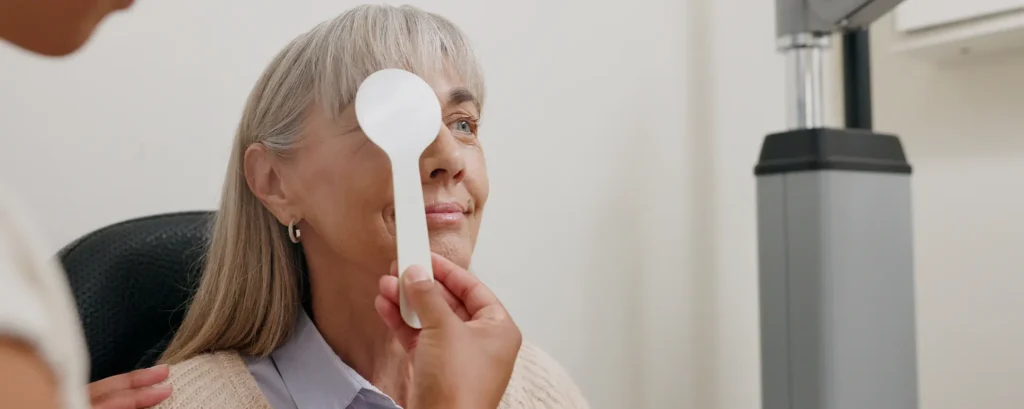
Cataracts make vision feel “unnatural” because they cloud the eye’s natural lens, scattering light and reducing contrast. Over time, this gradual loss of clarity can be hard to notice, so even if your vision seems “normal,” you may actually be missing out on the sharpness and vibrancy you once had. Cataracts interfere with the way your eyes process light and colour, making everyday tasks like reading, driving, or recognising faces more tiring and less comfortable.
Cataracts often cause a variety of visual problems, including:
- Faded or dull colour perception, making the world appear washed out
- Poor night vision, making it difficult to see clearly in low light or on dimly lit roads
- Sensitivity to glare from headlights, sunlight, or bright indoor lighting
- Double vision in one eye, which can make objects appear blurry or doubled
- Reduced sharpness, making fine details harder to distinguish
- Difficulty seeing in low-contrast situations, such as foggy weather or shadowed areas
- Increased eye strain or fatigue during reading or prolonged screen use
- Trouble adjusting to changes in light, like moving from a dark room to bright sunlight
After cataract surgery, many people are amazed at how bright, vivid, and clear everything looks again. However, the type of intraocular lens (IOL) you choose will affect not only clarity but also how natural and comfortable your vision feels, influencing everything from depth perception to glare tolerance.
What Makes an IOL Feel Natural?
Several factors influence how natural an IOL feels once it’s implanted. While every person’s visual experience is unique, a few consistent principles help determine whether your vision will feel comfortable, effortless, and familiar after surgery. Choosing the right lens can make a significant difference in how your eyes adapt and how enjoyable your vision feels in daily life.
- Single Point of Focus
The human eye originally had one natural focal point that gradually shifts with age, and monofocal IOLs are designed to mimic this natural behaviour. Lenses with multiple focal points, such as trifocals, can sometimes feel unnatural to people who are sensitive to light scatter or contrast changes. For some patients, this can result in intermittent blur or visual strain, especially in challenging lighting conditions. - Strong Contrast Sensitivity
Contrast sensitivity is the ability to distinguish subtle differences in shades, which is essential for perceiving textures, shapes, and depth accurately. Natural vision relies heavily on this skill, and monofocal or enhanced monofocal lenses typically provide the best contrast performance. High contrast sensitivity improves safety when driving at night or in low-light situations and makes colours appear more vivid and lifelike. - Minimal Halos or Night-Time Effects
Night-time glare, halos, and starbursts are common complaints that make vision feel “unnatural.” Multifocal IOLs can produce these optical side effects because they split incoming light between different focal zones. Minimising these effects is crucial for patients who drive at night or work in environments with variable lighting, as persistent glare can be both distracting and tiring. - Smooth Focusing Range
Lenses that create a smooth depth of focus, rather than distinct jumps between near and far vision, tend to feel more natural to the brain. Enhanced monofocals and Extended Depth of Focus (EDOF) lenses offer this smooth transition, reducing the need for frequent head or eye movements. This smoother visual experience helps tasks like reading, computer work, and distance viewing feel more effortless and less fatiguing. - Predictable Visual Behaviour
Your brain adapts more easily to lenses that behave in a predictable and stable way, which contributes to the sense of effortless vision. IOLs with complex optics may take longer to adapt to, and in some cases, may never feel entirely comfortable for certain individuals. Predictable behaviour also improves confidence in everyday activities, from walking down stairs to recognising faces in varying lighting conditions.
Which IOLs Provide the Most Natural Vision?

If natural-looking vision is your priority, certain lens types consistently stand out as the best choices. These lenses are designed to closely mimic the eye’s natural focusing behaviour, offering clarity, comfort, and minimal visual disturbances. By prioritising contrast, smooth focus, and predictable visual performance, they help patients regain a sense of effortless, familiar vision. Choosing the right IOL can make a noticeable difference in daily life, from reading and driving to simply enjoying the world around you with confidence and ease.
1. Standard Monofocal IOLs: Standard monofocal IOLs remain the gold standard for natural-looking vision, providing a single clear focal point that closely mimics the structure of your original eye. These lenses deliver the sharpest distance vision, excellent contrast sensitivity, minimal halos and glare, reliable night-time clarity, and an overall familiar visual feel. The main trade-off is that reading glasses are still needed for near tasks and occasionally for intermediate vision, but for many people, this is a small price to pay for the comfort and natural quality of vision they provide.
2. Enhanced Monofocal IOLs (also called Monofocal Plus): Enhanced monofocal IOLs, also known as Monofocal Plus lenses, are designed to provide better intermediate vision than standard monofocals while avoiding the visual disturbances often associated with multifocal lenses. They feel natural because they maintain excellent contrast, produce virtually no halos, improve vision for dashboards and screens, and offer a smooth, continuous depth of focus. These lenses are ideal for people who want a slightly extended visual range without sacrificing the comfort and familiarity of natural vision.
3. EDOF Lenses (Extended Depth of Focus): EDOF lenses, or Extended Depth of Focus lenses, offer a wider range of focus than standard monofocals while producing fewer visual disturbances than trifocal lenses. Rather than creating multiple distinct focal points, they stretch the focal range for smoother vision. These lenses can feel natural for people who want good distance and intermediate vision, prefer minimal night-time halos, and don’t mind using reading glasses for small print. In terms of natural visual experience, EDOF lenses sit comfortably between monofocals and multifocals, providing a balanced combination of clarity and range.
4. Toric Versions of the Above: If you have astigmatism, toric IOLs provide the most natural vision because they correct shape irregularities that otherwise cause blur or distortion.
Without correcting astigmatism, even the best IOL can feel “unnatural” because the image isn’t properly focused.
Why Multifocal Lenses May Not Feel Natural for Some People
Multifocal and trifocal IOLs provide the widest range of vision, but they may not feel natural for everyone. These lenses split incoming light into multiple focal points, which means your brain receives several images at once. While this design allows for both near and distance vision without glasses, it can also create visual side effects that some people find uncomfortable.
- Glare: Bright lights, such as headlights or street lamps, can appear to scatter or create a halo effect, making it harder to focus and causing eye strain in certain conditions.
- Halos: Rings of light around objects, especially at night, are common and can be distracting, interfering with tasks like night driving or reading in low light.
- Reduced Contrast: The splitting of light can make it harder to distinguish subtle differences in shades and textures, leading to a slightly washed-out or less vivid visual experience.
- Light Scatter: Light entering the eye can scatter in multiple directions, causing blurred or overlapping images, which can make focusing on fine details more challenging.
- Night-Driving Discomfort: Combined effects of glare, halos, and light scatter can make driving at night tiring or even unsafe for some patients, as visual clarity is reduced in low-light conditions.
Some people adapt quickly to these effects, but others find them persistent or distracting. If your priority is natural, comfortable vision rather than complete glasses independence, multifocal lenses may not be the best choice.
How the Brain Adapts to New Vision After IOL Surgery
Your brain plays a crucial role in how natural your vision feels after IOL surgery. Vision isn’t just about the eyes it’s a complex partnership between your eyes and your brain, where the brain learns to interpret the images it receives. After surgery, your brain must adjust to the new way light is focused on the retina, which can significantly influence comfort, clarity, and overall visual satisfaction.
Neuroadaptation: Neuroadaptation is the process by which your brain learns to interpret new visual input. With simpler optics, such as monofocal lenses, this adaptation is usually fast and seamless, often taking just a few days or weeks. With multifocal or trifocal lenses, however, the process can take longer sometimes weeks or even months as your brain learns to filter out unwanted visual “noise” and focus on the intended image. This learning process is why some patients initially notice halos, glare, or slightly blurred vision before their brain fully adapts.
Natural Vision and Comfort: Natural vision feels effortless because your brain doesn’t have to “work hard” to make sense of the images. Lenses that provide clear, single-point focus, like monofocals and enhanced monofocals, are easier for the brain to process, which is why they tend to feel most familiar and comfortable. When your eyes and brain are in sync, daily tasks such as reading, driving, or recognising faces feel smooth and natural without conscious effort.
When Adaptation Takes Longer: If you choose a more complex lens type, like multifocals, or if you have pre-existing vision issues such as astigmatism or dry eye, adaptation may take longer. Some patients adjust beautifully over time, while others may never fully adapt to the optics of multifocal lenses, continuing to notice halos, glare, or reduced contrast. Your surgeon can help predict how easily you might adapt based on factors like your lifestyle, visual needs, and eye health, guiding you to the lens type that best balances clarity, comfort, and natural vision.
Choosing the Most Natural Vision Based on Your Lifestyle
What feels natural depends a lot on what you do every day. Two people can choose different lenses and both feel they made the most natural choice because their needs are different.
If You Drive at Night Often: You will almost always find monofocal or enhanced monofocal lenses more natural. The strong contrast and minimal halos make night roads feel comfortable.
If You Spend Hours on Screens: Enhanced monofocals often feel most natural because they support intermediate vision while keeping the optics simple.
If You Read a Lot: Monofocals will still feel natural, but you may rely on reading glasses. Most people who want natural vision don’t mind this.
If You Have Astigmatism: A toric IOL (monofocal or enhanced monofocal) will feel far more natural than a non-toric lens. Without astigmatism correction, even perfect surgery can feel “off.”
If You Want the Least Chance of Visual Side Effects: Standard monofocals remain the safest, cleanest, most natural-feeling option.
If You Want a Bit More Range Without Feeling “Artificial”: Enhanced monofocals or EDOF lenses offer a nice compromise for many people.
FAQs:
1. What does “natural vision” really mean after cataract surgery?
Natural vision after cataract surgery refers to a visual experience that feels comfortable, familiar, and effortless. It isn’t only about seeing clearly; it’s about seeing in a way that doesn’t strain your eyes, cause glare, or create distracting optical effects. Natural vision allows your eyes and brain to work together seamlessly, providing stable focus, good depth perception, and accurate contrast in a variety of lighting conditions. Essentially, it’s the kind of vision that makes everyday tasks like reading, driving, or recognising faces feel intuitive and comfortable, as though nothing has changed in how you perceive the world.
2. Why does cataract surgery improve how “natural” my vision feels?
Cataract surgery replaces your clouded natural lens with an intraocular lens, which restores the clarity and contrast that cataracts diminish. Before surgery, even slowly developing cataracts can reduce sharpness, dull colours, and scatter light, making your vision feel unnatural without you realising it. Once the lens is replaced, many patients notice how vibrant and clear their surroundings appear, and activities that were once tiring, such as driving at night or reading in low light, suddenly become easier. The type of lens chosen influences not just clarity but also the comfort and overall “natural” feel of vision.
3. How do different IOL types affect natural vision?
Not all IOLs provide the same sense of visual comfort. Standard monofocals offer one sharp focal point, giving excellent contrast and minimal visual disturbances, which many people describe as feeling most familiar. Enhanced monofocals extend the intermediate range slightly without sacrificing this comfort. EDOF lenses broaden the focus range for smoother transitions between near and distance vision, while multifocal lenses split light between multiple focal points, which can create halos or glare for some patients. The right IOL depends on your priorities, whether that’s comfort and natural vision or greater glasses independence.
4. Will I still need glasses after cataract surgery?
Whether or not you need glasses depends on the type of lens implanted and your personal visual needs. Monofocal lenses generally require reading glasses for near tasks, while enhanced monofocals or EDOF lenses may reduce dependence on glasses for certain distances. Multifocal lenses aim to reduce or eliminate the need for glasses, but they can introduce optical side effects that some patients find uncomfortable. Ultimately, your choice should balance your desire for natural, comfortable vision with any goals for spectacle independence.
5. What causes halos and glare after IOL implantation?
Halos and glare occur when the lens splits or redirects light in ways your brain is not yet accustomed to. Multifocal and trifocal IOLs, which divide light into several focal points, are most likely to produce these effects, particularly at night or in low-light environments. Even bright indoor lighting or headlights can appear scattered, creating rings or streaks of light. For lenses with simpler optics, such as monofocals or enhanced monofocals, halos and glare are minimal or absent, which is why they are often perceived as more natural.
6. How long does it take for my brain to adapt to a new IOL?
The adaptation process, known as neuroadaptation, varies depending on the complexity of the lens and individual visual habits. For monofocal lenses, the brain typically adapts within days to weeks, quickly integrating the single focal point into daily visual tasks. Multifocal or trifocal lenses require more adjustment time, sometimes taking several weeks or months, as the brain learns to filter out extra images and focus on the correct one. Factors like pre-existing eye conditions or astigmatism can also influence the speed and comfort of adaptation.
7. Can toric IOLs improve the natural feel of vision?
Yes, toric IOLs are designed for patients with astigmatism and correct corneal irregularities that otherwise cause blur or distortion. By properly focusing light on the retina, toric lenses help produce sharper, more comfortable vision. Without this correction, even high-quality IOLs may not feel fully natural, as images can appear distorted or soft. For patients with significant astigmatism, choosing a toric lens often results in a much more satisfying, effortless visual experience.
8. Is it possible to feel unnatural vision even after surgery?
Some patients may experience a sense of unnatural vision after surgery, particularly if they have chosen multifocal lenses or have additional eye conditions. Effects such as halos, glare, or reduced contrast can persist if the brain struggles to adapt. Other factors, like dry eye, retinal conditions, or pre-existing visual limitations, can also affect how comfortable and natural vision feels. Surgeons can help manage these expectations and provide guidance on lens choice to maximise comfort and clarity.
9. How can I support my brain’s adaptation to a new IOL?
Supporting neuroadaptation involves giving your brain time to adjust to the new optics, while engaging in normal visual activities such as reading, screen use, or outdoor tasks. Avoiding rapid lens switching or over-straining your eyes can help, and following post-operative care instructions such as using prescribed drops and attending follow-up appointments ensures the eyes are healthy and healing optimally. Patience is key, as adaptation for multifocal lenses can take several weeks, while simpler lenses generally integrate more quickly.
10. How do I know which IOL will feel most natural for me?
Determining the most natural-feeling IOL involves a discussion with your ophthalmologist about your lifestyle, visual priorities, and tolerance for potential optical side effects. If your goal is effortless, comfortable vision without distraction, monofocal or enhanced monofocal lenses are often the safest choice. If you prioritise reducing dependence on glasses, EDOF or multifocal lenses may be considered, but it’s important to weigh potential trade-offs in comfort, night-time clarity, and neuroadaptation. Your surgeon can assess your eyes and provide personalised recommendations for the lens that best balances natural vision, clarity, and daily functionality.
Final Thought: Making the Right Choice for Natural, Comfortable Vision
Choosing the right intraocular lens is about more than just restoring clarity it’s about achieving vision that feels natural, comfortable, and effortless in your everyday life. Understanding how different IOL types affect contrast, focus, and adaptation can help you make a decision that aligns with your visual priorities. If you’re considering IOL surgery in London and want personalised guidance on which lens will provide the most natural vision for you, our team at London Cataract Centre is here to help. You can book a consultation to discuss your options, lifestyle needs, and expectations, ensuring that your post-surgery vision feels as familiar and comfortable as possible.
References:
1. Kim, D.Y., Park, E.S.Y., Park, H., Kim, B.Y., Jun, I., Seo, K.Y., Elsheikh, A. & Kim, T.-i. (2025) ‘Comparative Outcomes of the Next‑Generation Extended Depth‑of‑Focus Intraocular Lens and Enhanced Monofocal Intraocular Lens in Cataract Surgery’, Journal of Clinical Medicine, 14(14), article 4967. https://www.mdpi.com/2077-0383/14/14/4967
2. Cano‑Ortiz, A. et al. (2025) ‘Clinical performance and optical quality of a non‑diffractive extended‑depth‑of-focus (EDOF) intraocular lens (IOL)’, Journal of Clinical Medicine, 14, article 3717. https://www.mdpi.com/2077-0383/14/11/3717
3. Beltraminelli, T. et al. (2023) ‘Comparison of visual performance between standard monofocal and enhanced monofocal intraocular lenses after cataract surgery’, Peer‑reviewed Clinical Ophthalmology Study. https://pmc.ncbi.nlm.nih.gov/articles/PMC10120133/
4. Zhang, W. et al. (2023) ‘Comparison of postoperative visual performance between trifocal and monofocal IOLs: contrast sensitivity and subjective quality of vision’, Scientific Study on IOL Outcomes. https://pmc.ncbi.nlm.nih.gov/articles/PMC10187746/
5. Queiroz, M.F.N. et al. (2023) ‘Visual acuity, contrast sensitivity, and quality of life after cataract surgery with different IOL types’, Ophthalmology Clinical Study. https://pmc.ncbi.nlm.nih.gov/articles/PMC11826713/