


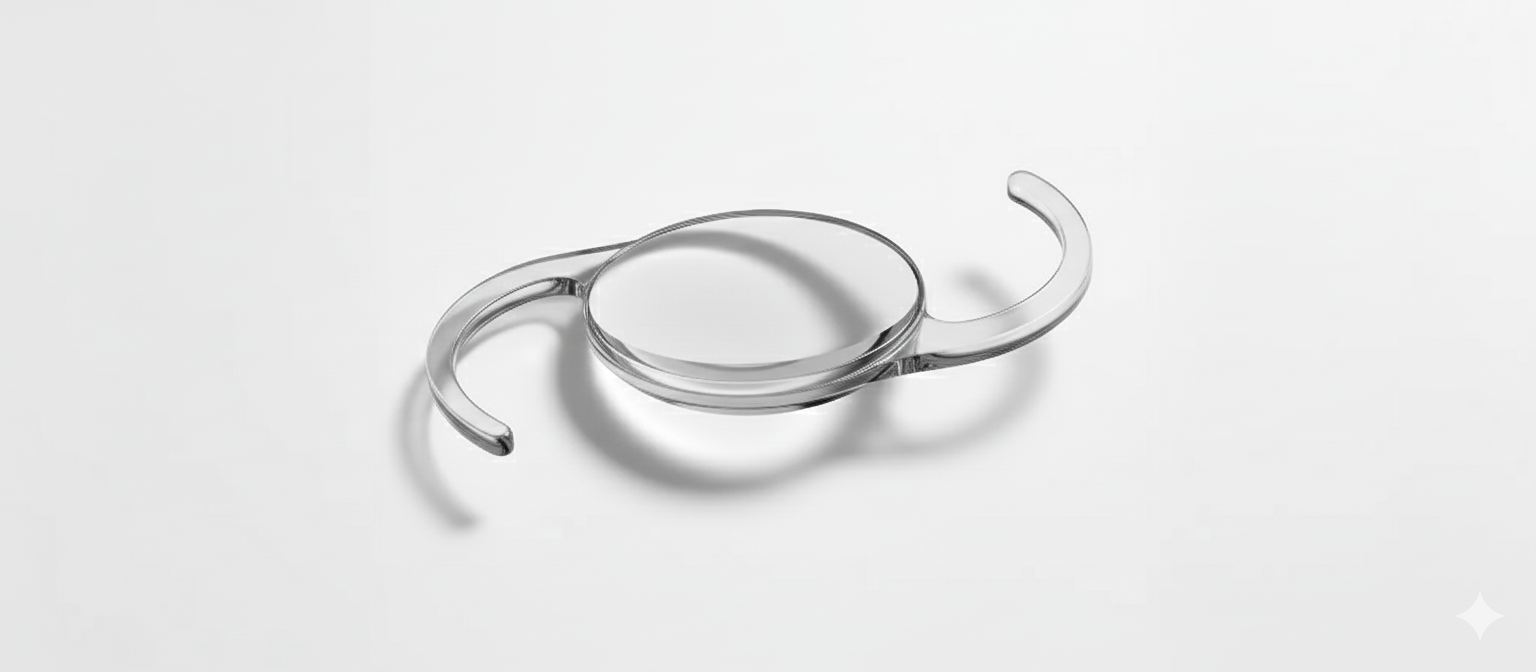
Cataract surgery has already transformed millions of lives by replacing cloudy natural lenses with clear artificial ones. Today’s premium intraocular lenses (IOLs) can reduce the need for glasses, enhance contrast, improve near and distance vision, and even correct astigmatism. But as advanced as modern IOLs are, they still rely on fixed optical power. Once your surgeon implants the lens, the focus is set. If your eyes, lifestyle, or visual tasks change, the lens cannot adapt.
That’s why researchers are now working on something extraordinary self-adjusting intraocular lenses, sometimes called “smart IOLs” or “adaptive lenses.” These lenses are being designed to automatically fine-tune focus inside the eye, using technologies such as micro-sensors, shape-changing materials, or internal fluid mechanics.
The goal is to mimic what the natural lens used to do adjust focus dynamically and deliver personalised visual optimisation throughout your life. In this guide, I’ll explain what self-adjusting IOLs are, how they work, what technologies are currently in development, and how they may shape the future of cataract treatment at clinics like the London Cataract Centre.
Why Current IOLs Have Limitations
Current intraocular lenses (IOLs) have transformed cataract surgery by restoring clear vision, but they do come with inherent limitations. Modern IOLs including monofocal, toric, EDOF, multifocal, and enhanced monofocal designs provide excellent visual outcomes, yet their focusing power is fixed once implanted. This means they cannot adjust dynamically to different distances or compensate for small measurement errors during surgery.
Because of this fixed nature, many patients still need glasses for reading or close-up work, and minor refractive surprises may occur if preoperative measurements are slightly off. Additionally, as your eye naturally changes with age, current IOLs cannot adapt to those changes, limiting their long-term flexibility.
The rise of modern lifestyles with increased screen time, variable working distances, and diverse visual demands highlights the need for lenses that can adapt more like the natural eye. Self-adjusting or “accommodating” IOLs are being developed to address these limitations, allowing the lens to change focus after implantation or even continuously.
These next-generation lenses aim to reduce or eliminate dependence on glasses, correct for minor refractive errors automatically, and better meet the dynamic visual needs of today’s patients. By overcoming the rigidity of current IOLs, self-adjusting lenses represent a significant leap toward truly personalised vision correction.
What Are Self-Adjusting Intraocular Lenses?

Self-adjusting intraocular lenses (IOLs) are a new generation of artificial lenses that can modify their optical power while inside the eye. Unlike traditional IOLs, which have a fixed focusing strength, self-adjusting lenses can fine-tune vision either automatically, on-demand, or through external activation. This adaptability allows patients to achieve sharper vision after surgery and maintain optimal focus as their visual needs change over time.
These lenses incorporate advanced technologies to achieve their dynamic adjustment. Some use internal micro-sensors, liquid-filled chambers, or electro-active materials, while others rely on polymers that change shape with electrical stimulation, light-adjustable components, or miniature adaptive optics systems. Certain designs allow a single post-surgery adjustment, whereas others aim for continuous accommodation, mimicking the natural ability of the eye to focus at different distances.
By integrating these technologies, self-adjusting IOLs aim to reduce or even eliminate the need for glasses, correct minor refractive errors automatically, and provide a more natural visual experience. They represent a significant evolution in cataract surgery and vision correction, offering a tailored solution for patients with dynamic visual demands.
Why This Technology Matters
Modern cataract surgery has evolved far beyond simply removing a cloudy lens. Today, it’s about enhancing overall visual function and quality of life. Smart intraocular lenses (IOLs) are at the forefront of this innovation, offering personalised vision solutions that adapt to your eyes and lifestyle. Unlike traditional lenses, they provide dynamic focus for near, intermediate, and distance tasks, giving patients clearer vision across a range of activities from reading and computer work to driving and outdoor pursuits. These lenses even have the potential to adjust subtly over time, responding to changes in your refractive needs and helping maintain sharp vision for years.
Imagine having a lens that:
- Sharpens near vision when you pick up a book: Modern laser procedures or advanced IOLs are designed to optimise your focus for close tasks. When you pick up a book or read your phone, the treatment helps your eyes quickly and naturally bring text into sharp focus without extra effort.
- Clarifies distance vision when driving: Whether it’s daytime or nighttime, your corrected vision ensures that distant objects like road signs, traffic lights, or approaching cars appear crisp and clear. This improves safety and confidence while driving.
- Adapts automatically to computer distance: Your eyes naturally adjust to intermediate distances, such as a laptop screen or office desk. With advanced corrections, you don’t have to strain or rely heavily on reading glasses for digital tasks, making screen work more comfortable.
- Fine-tunes itself months or years after surgery: Some procedures, especially those with adjustable lenses or topography-guided lasers, allow for subtle refinements over time. Your vision can remain stable and optimised, even as small changes occur in your eye.
- Adjusts if your refractive needs change: If your prescription gradually changes, certain lens implants or enhancements can be modified with minimal intervention. This ensures you maintain clarity without returning to heavy dependence on glasses or contacts.
Smart IOLs are transforming cataract care by providing a level of visual flexibility previously unattainable. They offer sharper, more natural vision at multiple distances, reduce dependence on glasses, and adapt to your eyes’ evolving requirements. For patients seeking long-term clarity and convenience, these lenses represent a major leap forward, making everyday activities easier and more enjoyable while ensuring optimal vision well into the future.
How Self-Adjusting Lenses Work: The Technology Behind the Innovation
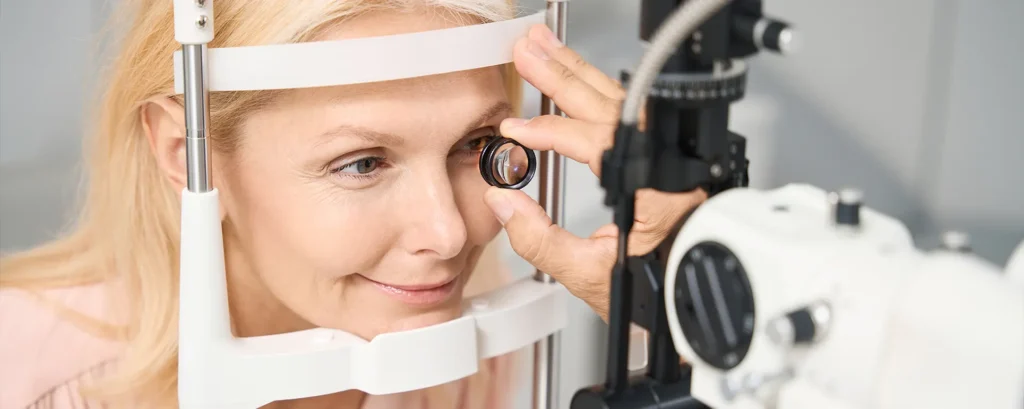
Self-adjusting or “smart” intraocular lenses (IOLs) are designed to mimic the eye’s natural focusing ability, providing clear vision at near, intermediate, and far distances. Unlike traditional lenses, which have a fixed focus, these lenses dynamically adjust to your visual needs. The technology integrates precise engineering with optics to respond to changes in light, eye shape, or ciliary muscle movement, creating a more natural visual experience.
1. Light-Adjustable Lenses (LAL)
Light-Adjustable Lenses (LAL) are the first commercially available type of adjustable intraocular lenses and are already in clinical use in many countries. Unlike experimental smart lens concepts, LALs have regulatory approval and a proven track record. After implantation, surgeons can fine-tune the lens power using a controlled UV light device, which reshapes the lens polymer and adjusts the prescription. This approach allows precise correction of both distance and near vision and is especially useful for patients who have had previous LASIK or PRK surgery, where standard lens calculations can be less predictable.
Despite their benefits, LALs have some limitations. They require multiple UV light treatments to reach the desired prescription, meaning the patient must attend follow-up sessions for adjustments. Additionally, they are not fully self-adjusting the lens cannot change power automatically without external activation. Once the final “lock-in” treatment is applied, the lens becomes fixed, making it different from the continuous-adjustment concept of future self-adjusting IOLs. Nevertheless, LALs have paved the way for these next-generation adaptive lenses, demonstrating the potential for post-surgery customization of vision.
2. Fluid-Based IOLs (Liquid Crystal or Fluid-Filled Designs)
Fluid-based IOLs, including liquid crystal or fluid-filled designs, are engineered to mimic the natural accommodation of the eye by dynamically changing their shape and optical power. These lenses contain tiny micro-chambers filled with transparent fluid, and internal pumps or subtle pressure shifts move the liquid, altering the curvature of the lens much like the natural lens does during focusing. Triggers for these adjustments can vary from eye muscle movement to electrical stimulation, light patterns, or built-in pressure sensors allowing smooth, continuous changes in focus across different distances.
The main advantage of fluid-based IOLs is their ability to replicate natural accommodation, providing a seamless transition between near, intermediate, and far vision with less risk of glare or halos compared to multifocal lenses. However, challenges remain, including ensuring reliable fluid movement over decades, miniaturising pumps or valves to fit safely within the eye, and guaranteeing long-term biocompatibility. Despite these hurdles, fluid-based lenses are considered one of the most promising avenues for truly dynamic, self-adjusting intraocular lenses.
3. Electro-Active or Electro-Responsive Lenses
Electro-active or electro-responsive IOLs are advanced lenses that adjust their focus instantly when a tiny electrical charge is applied. They incorporate electro-active polymers or liquid crystals, with micro-electronics controlling the electrical fields inside the lens to change its optical shape. This allows the lens to respond to natural triggers like blinking, ciliary muscle activity, or eye movements, and some designs can even communicate with external devices like smart glasses or contact lenses to fine-tune vision.
The main advantages of electro-active lenses are their speed, precision, and adaptability across all distances, potentially providing near-natural accommodation. However, several challenges remain before widespread use is possible, including safely powering the lens, maintaining long-term stability of the electronics, and ensuring there are no heat or electromagnetic side effects. Despite these hurdles, electro-active lenses represent a scientifically promising frontier in self-adjusting intraocular technology.
4. Shape-Memory Polymer Lenses
Shape-memory polymer lenses are made from advanced materials that can “remember” and switch between different shapes in response to environmental stimuli. These lenses can change curvature when exposed to factors like temperature shifts, electrical impulses, mechanical pressure, or even pH changes. This allows the lens to potentially react to natural ciliary muscle movements, providing smooth, dynamic accommodation similar to a natural lens.
The promise of shape-memory lenses lies in their ability to adjust optical power after surgery or during daily visual tasks, offering a more flexible and personalised visual experience. Current challenges include ensuring long-term stability, achieving precise manufacturing, and maintaining smooth, repeatable focusing. Despite these hurdles, shape-memory polymer lenses represent a biologically inspired and exciting direction for the next generation of intraocular lenses.
5. Sensor-Based Smart Lenses
Sensor-based smart lenses are a new generation of IOLs equipped with micro-sensors that detect exactly what your eye is trying to focus on. These sensors can measure factors like pupil size, eye movement, brightness, and ciliary muscle tension to understand your visual intention. Based on this data, the lens automatically adjusts its shape or power, providing an almost intuitive, real-time focus adjustment.
The main advantage of these smart lenses is that they tailor vision continuously to your behaviour, much like an internal autofocus system. However, challenges remain, including the complexity of integrating electronics safely, ensuring long-term reliability, and meeting strict medical safety regulations. Despite these hurdles, sensor-based lenses offer a glimpse into highly personalised, adaptive vision correction in the future.
6. Magnetically Adjustable IOLs
Magnetically adjustable IOLs incorporate tiny internal magnets within the lens, allowing external magnetic fields to precisely alter the curvature of the lens. By applying a controlled magnetic force, the lens can be reshaped either temporarily or permanently, enabling fine-tuning of vision after surgery or adapting to changes in visual needs over time. This could potentially reduce dependence on glasses or additional procedures in the future.
Although still in the early stages of research and development, this technology holds significant promise. It represents a non-invasive way to adjust vision post-implantation, offering patients a level of flexibility and customization that current fixed-focus IOLs cannot provide. With further refinement, magnetically adjustable lenses may become a key player in next-generation adaptive intraocular lens designs.
Why Do We Need Adjustable IOLs?
Our daily visual demands have changed dramatically over the past few decades. We now spend hours on computers, tablets, and smartphones, switch constantly between near and far tasks, and often drive at night. A fixed-focus IOL can correct vision at one distance, but it doesn’t adapt to these evolving needs, leaving some tasks more challenging.
Longer life expectancy also plays a role. Even if an IOL works perfectly immediately after surgery, changes in the eye or shifts in lifestyle over decades may require adjustments that traditional lenses cannot provide. This can lead to the need for reading glasses or other vision aids later in life.
Adjustable IOLs aim to “future-proof” vision by allowing the lens to change focus either automatically or on demand. By adapting to new visual requirements, these lenses can maintain optimal clarity across distances, improve comfort with digital tasks, and potentially reduce dependence on corrective eyewear throughout a patient’s lifetime.
How Self-Adjusting Lenses Could Improve Personalisation
Self-adjusting or “smart” lenses represent a major step forward in personalised vision care. Unlike traditional intraocular lenses that remain fixed after implantation, these lenses can fine-tune focus, adapt to lifestyle changes, and compensate for age-related shifts in the eye’s shape and elasticity. The goal is to give patients consistently sharp, comfortable vision across all distances and lighting conditions.
1. Fine-Tuning After Surgery: Even with highly precise measurements and laser treatments, tiny refractive errors can remain. A smart lens can automatically correct these small imperfections, giving you sharper vision without the need for glasses or further invasive procedures.
2. Adaptation to Lifestyle: If your daily activities or hobbies change for example, starting a new sport, profession, or frequent screen work a smart lens can adjust its focus accordingly. This ensures your vision remains optimal for whatever distance or task is most important to you.
3. Compensation for Age-Related Changes: As we age, the shape and elasticity of the eye can change slightly, affecting focus and clarity. Unlike static lenses, a smart lens can adapt to these natural changes, helping maintain clear vision for longer without additional corrective surgery.
4. Enhanced Near Vision Without Multifocal Side Effects: Traditional multifocal lenses can sometimes cause halos, glare, or contrast issues. Smart lenses are designed to provide smooth, natural near vision while minimising these side effects, making reading, digital work, and other close-up tasks more comfortable.
5. Adjustments for Night vs Day Vision: Some smart lens designs can subtly optimise performance based on lighting conditions. This can reduce glare at night, improve clarity in bright sunlight, and generally enhance visual comfort in variable environments.
Benefits for Patients
The field of cataract and refractive surgery is on the brink of a major transformation with the development of self-adjusting, or “smart,” intraocular lenses (IOLs). Unlike traditional lenses, which remain fixed after implantation, these advanced lenses can adapt to your eye’s changing needs over time. They aim to provide sharper near and distance vision, reduce dependence on glasses, and offer a personalised visual experience tailored to your lifestyle.
By combining cutting-edge optics with adaptive technology, self-adjusting lenses promise to overcome many limitations of conventional IOLs, potentially delivering clearer vision, improved comfort, and long-term flexibility. This innovation represents a new frontier in personalised eye care, offering patients a glimpse of truly dynamic vision correction.
- clearer near and distance vision
- less dependency on glasses
- customisable focus
- better night vision
- reduced glare
- more natural visual transitions
- higher surgical precision
- long-term adaptability
In fact, many experts believe this technology could represent the most significant advancement in cataract and refractive surgery since the introduction of phacoemulsification. By combining adaptability, precision, and long-term visual stability, self-adjusting lenses have the potential to redefine what patients can expect from lens implants, offering a level of personalised vision care previously unimaginable.
Safety Considerations for Future Lenses
As adjustable IOLs become more advanced, safety is a top priority. Researchers are focusing on ensuring long-term implant stability so that the lens stays securely in place for decades. They are also testing materials to resist biofilm formation and prevent infection, while maintaining consistent lens power over time.
Biocompatibility is another major concern. Lenses must not trigger inflammation, allergic reactions, or interfere with the natural structures of the eye. For designs with internal electronics or sensors, ensuring these components are safe, reliable, and durable over a lifetime is essential.
Finally, regulatory bodies require rigorous testing before approval. Every aspect from material safety to long-term performance, MRI compatibility, and electromagnetic resilience must meet strict standards. Only then can these lenses be widely adopted for clinical use.
When Will Self-Adjusting IOLs Become Available?
Some adjustable IOL technologies are already in clinical use, most notably light-adjustable lenses (LALs). These allow patients to fine-tune their vision after surgery using UV light, providing excellent accuracy for distance and near vision. While not fully autonomous, they represent the first wave of “adjustable” intraocular lenses available to patients today.
Other fully self-adjusting lenses, such as sensor-driven, electro-active, or fluid-based designs, are still in development. Researchers are working on refining these technologies to ensure they are safe, reliable, and effective over the long term. These lenses aim to mimic the natural accommodation of the eye, offering continuous adjustment without external intervention.
Early versions of these advanced lenses may reach clinical use within the next five to ten years, depending on regulatory approvals and successful long-term trials. These initial releases will likely focus on patients with specific visual needs or challenging prescriptions, gradually expanding as confidence in the technology grows.
Fully autonomous self-adjusting IOLs, capable of continuously adapting to visual demands, could become available within ten to twenty years. Adoption will depend on regulatory validation, safety data, and long-term performance. Leading clinics, such as the London Cataract Centre, are expected to be early adopters, offering these premium innovations to patients once they are proven safe and effective.
Who Will Benefit Most From Adjustable IOLs?
Adjustable intraocular lenses (IOLs), often called “smart lenses,” represent a major leap forward in personalised vision correction. Unlike traditional lenses, which provide a fixed focus, these innovative implants can adapt to your eyes’ unique characteristics and changing needs over time. They are designed to offer sharper, more natural vision across multiple distances, minimise common side effects, and provide long-term flexibility for patients with diverse visual demands.
Smart lenses will be especially valuable for:
1. Patients with a history of refractive surgery: If you’ve previously had LASIK, PRK, or another corneal procedure, standard lens calculations can be less predictable. Smart lenses can adjust for these variations, providing sharper vision than traditional IOLs in eyes that have already been surgically altered.
2. People who want full spectacle independence: Some patients wish to avoid glasses entirely, but traditional multifocal lenses may cause halos, glare, or reduced contrast. Smart lenses offer a more natural focus across distances while minimising these common side effects, helping achieve near-total freedom from spectacles.
3. Younger cataract patients: For people undergoing cataract surgery at a younger age, maintaining flexible vision for decades is important. Smart lenses can adapt over time to changes in the eye, reducing the likelihood of needing additional corrective procedures as they age.
4. People with demanding visual lifestyles: Certain professions or hobbies require consistently sharp vision at multiple distances. Pilots, graphic designers, heavy computer users, and others benefit from smart lenses because they can automatically fine-tune focus for near, intermediate, or far tasks.
5. Patients with progressive refractive tendencies: If your prescription changes over time, or if you have corneal irregularities or astigmatism, a smart lens can compensate for these shifts. This adaptability helps maintain stable, high-quality vision despite progressive changes in the eye.
What Will Cataract Surgery Look Like in the Future?
In the future, cataract surgery may evolve from a single procedure into an ongoing, adaptive process. Instead of implanting a fixed-focus lens, surgeons could place a smart base lens that can be adjusted multiple times after surgery. This would allow fine-tuning of vision as the eye heals and as the patient’s visual needs change over time.
These lenses could be monitored continuously using advanced imaging and AI-driven algorithms. The system could track changes in the eye, such as corneal shape, pupil size, or lens position, and recommend or even make minor adjustments automatically. This approach would maximise accuracy and ensure the best possible visual outcomes for each individual.
Remote adjustment could also become a reality, with surgeons fine-tuning lens performance without requiring multiple clinic visits. Patients could experience a truly personalised visual system that adapts as they age, use digital devices, or encounter new visual challenges. This represents the next level of precision and convenience in cataract care.
Challenges Facing Smart IOL Development
Developing smart IOLs comes with several significant challenges. Engineers and surgeons must ensure that micro-electronics inside the lens are safe, reliable, and can operate without generating heat or interfering with surrounding tissues. Powering internal sensors and actuators in such a tiny device is another major hurdle, requiring innovative solutions that won’t compromise eye health.
Miniaturisation is critical: every component must fit inside a lens small enough to implant safely, while still performing complex functions like measuring focus, adjusting curvature, or communicating with external devices. At the same time, materials need to remain stable and biocompatible over decades, resisting wear, degradation, and biofilm formation inside the eye.
Cost and regulatory approval add another layer of complexity. Advanced lenses may be expensive to manufacture, and regulators will demand long-term clinical data to ensure safety and effectiveness. Despite these obstacles, research is progressing rapidly, and prototypes are increasingly demonstrating that adaptive, self-adjusting IOLs could become a reality within the next decade or two.
FAQs:
1. What exactly are self-adjusting intraocular lenses?
Self-adjusting intraocular lenses (IOLs) are the next evolution in cataract technology, designed to modify their focusing power inside the eye after implantation. Unlike traditional fixed lenses, these “smart lenses” can automatically or externally adjust to help you see clearly at different distancesf much like the natural lens you were born with. Some use light-based adjustments, while others rely on internal micro-sensors, fluid-filled systems, or electro-active materials that change shape in response to stimuli. Their main goal is to provide lifelong personalised vision, even as your visual needs change over time.
2. How do self-adjusting lenses differ from traditional premium IOLs?
Traditional premium lenses, such as multifocal or extended depth-of-focus IOLs, are pre-set with fixed optical powers that cannot change after surgery. They improve near and distance vision, but once implanted, the focus remains constant. Self-adjusting lenses, on the other hand, introduce dynamic adaptability. They can fine-tune or recalibrate focus after implantation, offering far more flexibility. For example, if your near vision changes over time, or your visual habits shift due to work or age, a smart IOL can adapt something a standard lens simply cannot do.
3. How does a self-adjusting IOL know when to change focus?
The adjustment mechanism depends on the technology type. Some designs use internal sensors that detect what you are trying to look at by measuring eye movement, pupil size, and light levels. Others respond to external cues like UV light or magnetic fields applied by your surgeon. More advanced prototypes integrate microprocessors that interpret visual intent similar to how autofocus works in digital cameras allowing the lens to automatically shift focus from near to far in real-time. This ability to interpret your visual behaviour makes the lens “smart” in a truly practical sense.
4. Are self-adjusting IOLs already available to patients?
A few early versions of adjustable lenses, such as the Light Adjustable Lens (LAL) by RxSight, have already received regulatory approval in several countries and are being used in clinical practice. These lenses allow your surgeon to fine-tune your vision after surgery using special light treatments. However, fully autonomous, continuously adjusting lenses are still in research and development stages. Many are undergoing safety and long-term trials before they can be introduced for widespread patient use. Experts predict that more advanced, sensor-based models could become available within the next decade.
5. How does the light-adjustable lens work?
The light-adjustable lens represents the first practical step toward smart IOLs. After the cataract procedure, the patient returns for follow-up visits where the surgeon uses a controlled ultraviolet (UV) light beam to alter the lens’s internal structure. This process changes the lens’s optical power, allowing precise correction of any residual refractive error. Once the ideal vision is achieved, the lens is “locked in” with a final treatment. This offers a level of post-surgical customisation that was previously impossible, giving patients sharper vision tailored to their exact needs.
6. What are the safety concerns with self-adjusting IOLs?
Because these lenses use microelectronics, smart materials, or internal fluid systems, ensuring long-term safety is a top research priority. Scientists are studying how these materials behave inside the eye for years or even decades. Concerns include maintaining stable optical power, preventing inflammation or biofilm formation, ensuring electromagnetic compatibility (for example, during MRI scans), and avoiding internal heat or energy buildup. Regulatory authorities such as the FDA and MHRA require extensive testing before approval to confirm that smart IOLs are as safe as current standard implants.
7. Who would benefit most from a self-adjusting intraocular lens?
Patients who value long-term flexibility and precision will likely benefit the most. This includes younger cataract patients who want a solution that adapts as their vision changes, professionals with visually demanding jobs, and people who have had previous laser vision correction where traditional measurements can be less predictable. Additionally, patients seeking full independence from glasses especially those who dislike the glare or halos sometimes caused by multifocal lenses may find the adaptive capabilities of a smart IOL ideal.
8. How are these lenses powered or activated inside the eye?
Different prototypes use different power systems. Some lenses are powered externally using light or magnetism no internal battery is needed. Others use electro-active materials that respond to natural biological signals such as the contraction of the ciliary muscles (the muscles that control natural focusing). A few advanced designs are exploring micro-energy harvesting, where the lens generates small amounts of power from eye movement or temperature changes. The key challenge is creating a system that works continuously and safely without external maintenance.
9. Will cataract surgery change when self-adjusting lenses become available?
The surgery itself is unlikely to change drastically because the lens is still implanted through the same tiny incision used for modern phacoemulsification. However, the post-operative process will evolve. Patients may return for lens calibration sessions or remote adjustments using specialised devices. Future cataract surgery may become more of an ongoing visual management process, where the implanted lens can be optimised or fine-tuned over time. Clinics like the London Cataract Centre will likely lead this transition toward a more adaptive, lifelong vision-care approach.
10. What does the future of cataract treatment look like with smart IOLs?
Cataract surgery is evolving from a one-time replacement to a dynamic, intelligent vision system. In the coming years, patients could receive a base adaptive lens that continually refines focus through internal sensors or AI-guided feedback. This could allow surgeons to remotely monitor lens performance and make non-invasive adjustments when needed. Combined with advances in robotics, imaging, and data-driven medicine, self-adjusting IOLs represent the next leap in personalised eye care where every patient enjoys vision tailored to their unique needs at every stage of life.
Final Thoughts: The Future of Vision is Adaptive
Self-adjusting intraocular lenses represent one of the most exciting frontiers in modern ophthalmology. By combining the precision of digital technology with the adaptability of biological vision, these smart lenses could redefine what cataract surgery can achieve. Instead of a one-time fix, patients will soon enjoy lenses that learn, adjust, and evolve with their eyes offering sharper vision, greater comfort, and true long-term personalisation.
At the London Cataract Centre, we’re passionate about bringing the latest vision innovations to our patients. Our team follows every major development in adaptive lens technology to ensure that, when self-adjusting IOLs become available, our patients will be among the first to benefit. If you’re thinking about cataract surgery in London, get in touch with us at the London Cataract Centre to explore your options.
References:
1. Makhsatova, Z., Esteves, P., Kang, C., Ibrayeva, L. & Vieira, P., 2023. Electro-active intraocular lenses: Current advances and challenges. Sensors, 23(8), p.4126. Available at: https://www.mdpi.com/1424-8220/23/8/4126
2. Marcos, S., Sawides, L., Gambra, E. & Dorronsoro, C., 2017. Influence of adaptive optics technology on intraocular lens development and testing. Progress in Retinal and Eye Research, 56, pp.156–185. Available at: https://pubmed.ncbi.nlm.nih.gov/27856288/
3. Zhao, Y., Li, J., Li, Y., Zhang, X. & Chen, Y., 2022. Advances in smart materials for ophthalmic applications: Toward next-generation intraocular lenses. Frontiers in Bioengineering and Biotechnology, 10, Article 955784. Available at: https://pmc.ncbi.nlm.nih.gov/articles/PMC9425632/
4. Tarczy-Hornoch, K., Lin, D.T., & Wolfe, P., 2020. Dynamic focusing in accommodative intraocular lenses: A review of design concepts and prototypes. Translational Vision Science & Technology, 9(13), p.7. Available at: https://pmc.ncbi.nlm.nih.gov/articles/PMC7757139/
5. Villegas, E.A., Rubin, M., Smyth, R., & Georgescu, D., 2014. Refractive accuracy with light-adjustable intraocular lenses. Journal of Cataract & Refractive Surgery, 40(12), pp. 1993-1999. https://pubmed.ncbi.nlm.nih.gov/24957429/