



If you’re taking finasteride, whether it’s for male pattern hair loss or an enlarged prostate, you might have come across questions about its side effects. While most people know about possible sexual side effects or changes in mood, far fewer are aware that some researchers have asked whether finasteride might also have an impact on eye health. In particular, some studies have explored whether there’s a link between finasteride and cataract development.
Cataracts themselves are extremely common, especially as we get older. They occur when the normally clear lens inside the eye becomes cloudy, gradually reducing vision. Because cataract surgery is one of the most frequently performed operations worldwide, anything that might increase or reduce risk attracts a lot of attention. With finasteride being prescribed to millions of men across the world, it’s natural to want to know if there’s any cause for concern.
In this article, we’ll unpack what cataracts are, how finasteride works, and what the available research has to say about the possible connection. We’ll also cover practical considerations for patients, including what to discuss with your eye doctor if you’re taking finasteride, and what lifestyle factors can help protect your eyes in the long run.
What Are Cataracts?
Cataracts form when the proteins inside the natural lens of the eye start to break down and clump together. Instead of allowing light to pass cleanly through, the lens becomes cloudy, scattering light and making vision blurred. People with cataracts often describe their sight as misty or fogged, with glare around lights and difficulty seeing clearly in dim conditions.
They are usually age-related, but cataracts can also be linked to medical conditions like diabetes, long-term steroid use, eye injuries, or even exposure to radiation. Lifestyle factors such as smoking and poor diet can increase risk, while genetics also play a role.
Treatment is straightforward in principle but highly specialised in practice. The cloudy lens is removed with advanced surgical techniques and replaced with a clear artificial lens. While cataracts remain a leading cause of blindness worldwide, in places like the UK with good access to surgery, outcomes are usually excellent.
Because cataracts are so common, researchers are always looking into possible risk factors. Medications like finasteride are of interest precisely because so many people take them over long periods of time.
How Does Finasteride Work?

Finasteride belongs to a class of drugs called 5-alpha-reductase inhibitors. Its main role is to block the conversion of testosterone into dihydrotestosterone (DHT), a more potent form of the hormone.
In the scalp, high levels of DHT shrink hair follicles, leading to male pattern baldness. By reducing DHT, finasteride helps to slow or even reverse this process, which is why it’s widely prescribed for hair loss.
In the prostate, DHT is responsible for gland growth. Men with benign prostatic hyperplasia (BPH), or an enlarged prostate, often experience urinary problems. Finasteride helps shrink the gland, easing these symptoms.
Because hormones like testosterone and DHT don’t just affect the scalp or prostate, there’s always interest in whether their manipulation could have side effects elsewhere in the body—including the eyes.
Hormones and Eye Health: Why It Matters
The eye is more than just a visual organ—it’s influenced by systemic hormones in subtle ways. Receptors for sex hormones such as oestrogen and androgens (including testosterone and DHT) have been found in different parts of the eye. This suggests that hormonal balance may play a role in maintaining eye tissue health.
Some studies have shown that sex hormones influence tear production, which is why dry eye is often linked to hormonal changes. Others have looked at how hormones may affect the lens, retina, and even the optic nerve.
Since finasteride changes hormone balance by lowering DHT, the theory is that it might influence lens metabolism or oxidative stress pathways, both of which are important in cataract formation. That’s why researchers have started to examine whether long-term finasteride use could contribute to changes in the eye’s lens.
What Does the Research Say About Finasteride and Cataracts?
So far, research directly linking finasteride to cataracts is limited. A few observational studies have suggested a possible association, but results are not consistent, and no strong cause-and-effect relationship has been established.
One reason for the uncertainty is that cataracts are so common. If you look at any large group of men over 50, many will have cataracts regardless of whether they take finasteride. That makes it difficult to tease out whether the medication itself is contributing or whether age and other risk factors are more important.
Some researchers have speculated that reduced DHT might make the lens more vulnerable to oxidative stress, which is a major driver of cataract formation. Others have found no difference in cataract rates among men taking finasteride compared with those who are not. At this stage, it’s fair to say the evidence is mixed and incomplete.
Why Confusion Arises
One of the challenges in interpreting the data is separating correlation from causation. Just because some men on finasteride develop cataracts doesn’t mean the drug caused them. They might have developed cataracts anyway, as part of the natural ageing process.
There’s also the issue of study design. Randomised controlled trials, the gold standard for proving cause and effect, haven’t been carried out specifically for cataracts and finasteride. Most of the information comes from observational studies, insurance database reviews, or reports of side effects. These are useful for raising questions but less reliable for proving a direct link.
Adding to the complexity is the fact that men who take finasteride for prostate conditions are often older, and older age itself is the biggest risk factor for cataracts. This makes it even harder to untangle the role of the medication from the role of ageing.
What Should You Do If You’re Taking Finasteride?
If you’re on finasteride and concerned about your eyes, the first step is simple: mention it to your eye doctor. Cataracts develop gradually, and early detection makes management much easier. An optician or ophthalmologist can check for early lens changes during a routine eye exam.
You don’t need to stop finasteride just because of cataract concerns unless your doctor advises it. The current evidence doesn’t justify alarm. Instead, the emphasis should be on regular monitoring and raising the subject during your consultations.
If you’re already scheduled for cataract surgery, your eye surgeon will want to know about all the medicines you take, including finasteride. This helps them plan anaesthesia, anticipate any risks, and coordinate with your GP if needed.
Cataract Surgery and Finasteride: Is There Any Interaction?
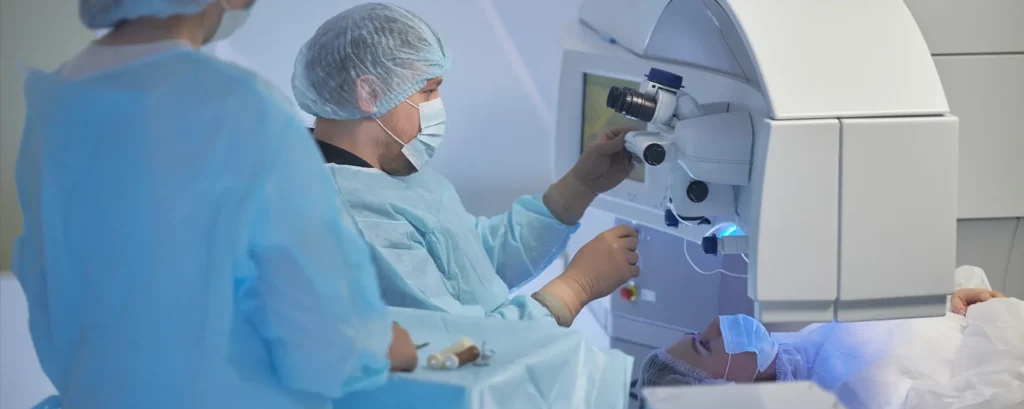
From a surgical perspective, there’s no evidence that finasteride complicates cataract surgery. Unlike blood thinners or diabetes medicines, finasteride doesn’t pose a direct risk during the operation.
That said, sharing a full medication list with your surgeon is always important. Sometimes, subtle interactions only come to light when all the pieces are considered together. Your surgeon and anaesthetist will weigh up your overall health picture rather than focusing on one drug alone.
Once surgery is complete, recovery typically follows the same pattern whether or not you take finasteride. Vision usually improves within days, and restrictions are minimal.
How to Protect Your Eyes if You’re Taking Finasteride
Even if finasteride’s role in cataracts remains uncertain, there are plenty of steps you can take to protect your vision. These include:
- Regular eye checks: Having your eyes tested every two years (or more often if recommended) helps pick up cataracts early.
- Healthy lifestyle: A diet rich in antioxidants, particularly leafy greens and colourful fruits, supports lens health.
- UV protection: Sunglasses that block UVA and UVB rays reduce oxidative stress in the lens.
- Avoiding smoking: Smoking is a well-established cataract risk factor, and stopping lowers your risk.
- Managing other health conditions: Keeping blood sugar, blood pressure, and cholesterol under control helps your eyes as well as the rest of your body.
These measures are relevant whether or not you’re on finasteride, but they’re especially worth keeping in mind if you’re already wondering about cataract risk.
The Bottom Line
At present, the scientific evidence does not prove that finasteride causes cataracts. Some studies raise the possibility of a connection, but the data is far from conclusive. Cataracts remain overwhelmingly an age-related condition, and lifestyle factors often play a much larger role.
If you’re taking finasteride and worried about your eyes, the best approach is regular monitoring and open communication with your healthcare providers. With modern cataract surgery offering excellent outcomes, even if you do develop cataracts, effective treatment is available.
FAQs: Finasteride and Cataracts
1. Does finasteride directly cause cataracts?
At present, there’s no solid evidence that finasteride directly causes cataracts. Some observational studies have suggested a possible association, but results have been inconsistent and not strong enough to prove a cause-and-effect relationship. Since cataracts are very common as people age, it’s difficult to know whether finasteride plays any role at all or if these findings are coincidental. More controlled research would be needed to answer this question with confidence.
2. Should I stop taking finasteride if I’m worried about cataracts?
You should not stop taking finasteride without speaking to your doctor first. For many men, it provides real benefits in slowing hair loss or improving prostate symptoms, and stopping suddenly could undo these improvements. Cataracts remain largely an age-related condition, so the current evidence does not suggest finasteride use alone is a strong enough reason to stop treatment. If you are worried, your doctor can discuss the risks and benefits in the context of your overall health.
3. Can finasteride affect other parts of the eye?
Some reports have suggested that finasteride may contribute to dry eye symptoms, as hormonal changes can affect tear film stability. A few patients have also described blurred vision while taking the medication, although this is not widely reported. These possible side effects are considered rare, but it’s worth mentioning to your optician or ophthalmologist if you experience any eye discomfort while using finasteride.
4. How often should I get my eyes checked if I take finasteride?
Most adults are advised to have an eye test every two years, but if you are on long-term medication like finasteride, it may be sensible to book check-ups more frequently. Your optician can monitor for early signs of cataracts, glaucoma, or other age-related eye changes. If you notice changes in your vision, such as increased glare or cloudiness, it’s important not to wait for your next routine appointment but to arrange a check sooner.
5. Is cataract surgery safe if I’m on finasteride?
Yes, cataract surgery is considered safe if you are taking finasteride. Unlike some other medications, it does not interfere with the procedure or affect the anaesthetic used. However, your surgeon will want to know about all medicines you take, including finasteride, so they have the full picture of your health. Being open about your medical history helps your surgical team tailor your care appropriately.
6. Are there warning signs that cataracts are starting?
Cataracts often begin subtly, with symptoms like blurred or hazy vision, faded colours, or difficulty seeing clearly at night. Some people also notice glare around lights, particularly when driving in the evening. Because these changes develop gradually, you may not realise at first that a cataract is forming. An eye exam is the best way to confirm whether your symptoms are related to cataracts or another eye condition.
7. Can diet and lifestyle reduce my cataract risk if I take finasteride?
Yes, a healthy lifestyle can reduce your overall risk of cataracts, regardless of finasteride use. Eating a diet rich in fruits and vegetables, particularly those high in antioxidants, helps support lens health. Wearing UV-blocking sunglasses, quitting smoking, and managing health conditions like diabetes can all lower your risk. While you cannot eliminate the chance of cataracts entirely, these steps can delay their onset and slow their progression.
8. What age do cataracts usually develop?
Most people begin to notice cataracts in their 60s or 70s, although subtle lens changes can start earlier without affecting vision straight away. Some medical conditions, such as diabetes, or lifestyle factors like smoking, may bring on cataracts sooner. Because cataracts are progressive, people often live with mild changes for years before surgery becomes necessary. Regular eye exams make sure they are picked up early.
9. Are there alternatives to finasteride that don’t raise cataract concerns?
There are alternative treatments for both hair loss and prostate conditions, but each option comes with its own set of side effects and limitations. For hair loss, topical minoxidil is often used, and for prostate problems, drugs such as alpha-blockers can be prescribed. None of these treatments have a proven link to cataracts either, so the decision should be based on which option suits your health and goals best. Discussing this with your doctor will give you a personalised plan.
10. Where can I get reliable information about cataracts and finasteride?
Your GP, pharmacist, or ophthalmologist are the most reliable sources for information tailored to your circumstances. While online resources can be helpful for background reading, they often lack context or may exaggerate risks. If you are worried about your medication, the safest approach is always to bring the question up at your next medical appointment so you can get advice based on your specific situation.
Final Thoughts
Finasteride is a widely used medicine that helps many men manage hair loss and prostate problems effectively. While questions about its impact on cataract risk are scientifically interesting, the current evidence doesn’t suggest a major cause for concern. Cataracts remain a common part of ageing, and proven risk factors such as smoking and UV exposure deserve more attention.
If you’re taking finasteride, the most important step is not to worry unnecessarily but to stay proactive about your eye health. Regular check-ups, healthy habits, and open communication with your doctor will give you the best chance of maintaining clear vision for years to come.
At the London Cataract Centre, we specialise in advanced cataract surgery and provide tailored advice for patients taking long-term medications. If you’d like to discuss your situation, you can book a consultation with us here.
References
- Wong, A.C.M. & Mak, S.T. (2011) ‘Finasteride-associated cataract and intraoperative floppy-iris syndrome’, Journal of Cataract & Refractive Surgery, 37(7), pp. 1351–1354. Available at: https://pubmed.ncbi.nlm.nih.gov/21555201/
- Issa, S.A. & Dagres, E. (2007) ‘Intraoperative floppy-iris syndrome and finasteride intake’, Journal of Cataract & Refractive Surgery, 33(12), pp. 2142–2143. Available at: https://www.sciencedirect.com/science/article/abs/pii/S0886335007015398
- Kaczmarek, I.A., Prost, M.E. & Wasyluk, J. (2019) ‘Clinical risk factors associated with intraoperative floppy iris syndrome: a prospective study’, International Ophthalmology, 39(3), pp. 541–549. Available at: https://link.springer.com/article/10.1007/s10792-018-0840-3
- Calvão, J., Feijão, J. & Soares, R.O. (2022) ‘Finasteride and floppy iris syndrome: what role can the dermatologist play?’, International Journal of Trichology, 14(3), pp. 115–116. Available at: https://pmc.ncbi.nlm.nih.gov/articles/PMC9231532/
- Shin, Y.K. et al. (2020) ‘Macular abnormalities associated with 5α-reductase inhibitor’, JAMA Ophthalmology, 138(7), pp. 699–706. Available at: https://pmc.ncbi.nlm.nih.gov/articles/PMC7206535/