


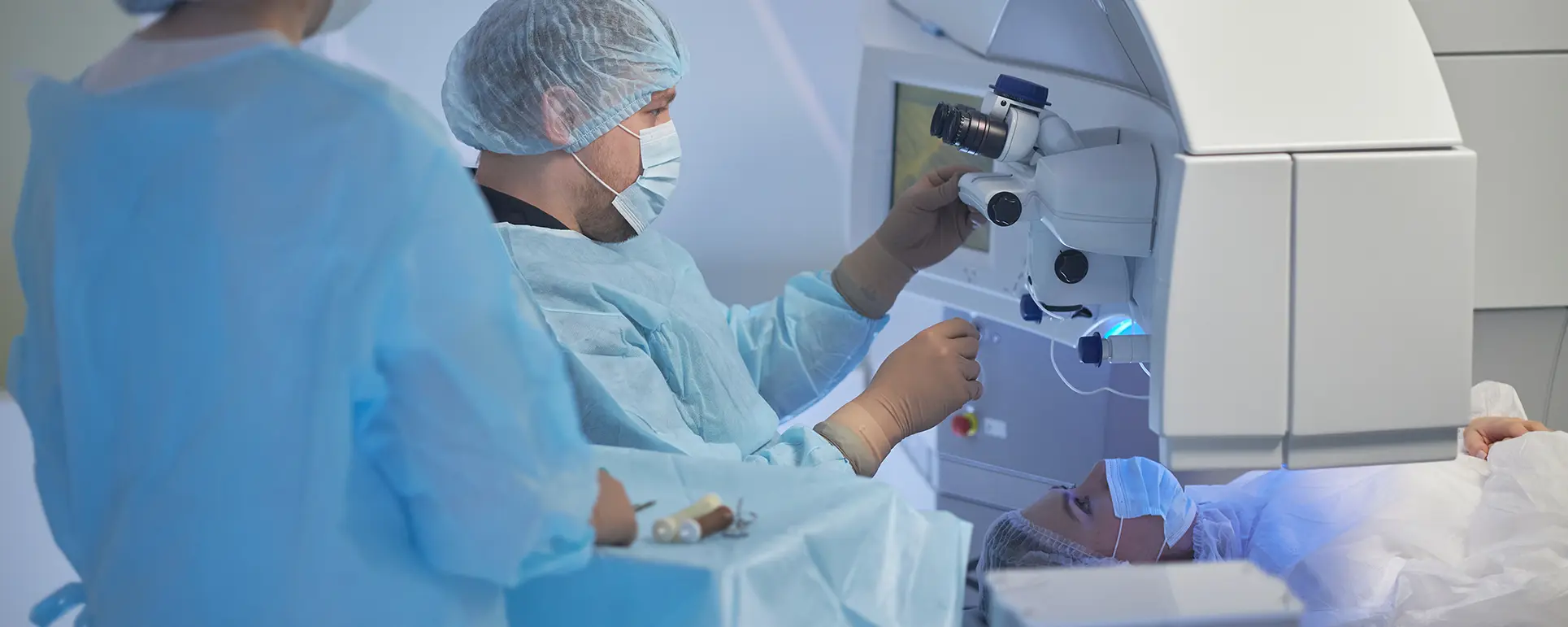
Cataracts are a natural part of ageing for most of us, and having had LASIK in your younger years doesn’t make you immune. So if your vision is starting to get cloudy, and you’re wondering whether your LASIK history will complicate things, you’re not alone. In fact, this is a common concern for many people now entering the age bracket where cataract surgery becomes relevant.
The short answer is yes — you can still have cataract surgery after LASIK. But the long answer is a little more nuanced. Your previous LASIK doesn’t stop you from having the procedure, but it does mean your ophthalmologist will need to take some extra steps to ensure the best possible outcome.
In this article, we’ll walk you through what to expect, what’s different about cataract surgery after LASIK, and what conversations you should have with your surgeon to make sure you’re set up for success.
Why LASIK Changes the Cataract Surgery Equation
If you had LASIK, PRK or another form of laser vision correction years ago, the shape of your cornea was permanently altered to correct your prescription. That’s what gave you clear vision without glasses at the time.
However, during cataract surgery, your surgeon needs to calculate the correct power of the intraocular lens (IOL) that will replace your clouded natural lens. And to do this accurately, the curvature of your cornea plays a major role.
When the cornea has been reshaped — as it was with LASIK — traditional formulas used for IOL power calculation can become less accurate. That means your surgeon has to work a bit harder to predict what lens strength will give you the clearest, most functional vision after surgery.
The good news? Thanks to modern advances in biometry, IOL calculation techniques, and imaging technology, this challenge is now very manageable — provided your surgical team is aware of your LASIK history and plans accordingly.
Importance of Telling Your Surgeon About Past LASIK
It might seem obvious, but many people forget to mention their laser eye surgery from 15 or 20 years ago — especially if they no longer wear glasses. This can be a problem because, unlike spectacles or contact lenses, LASIK leaves no visible trace on your eye.
Always let your ophthalmologist know about your LASIK or PRK, even if it was decades ago. If you still have your original surgical records — including your pre-LASIK prescription and corneal measurements — bring them along to your consultation. These can be incredibly helpful in calculating the ideal IOL power for your unique eye.
And if you don’t have your records? Don’t worry. There are now calculation methods specifically designed for post-LASIK eyes, even when historical data is missing.
The Challenge of IOL Power Calculations After LASIK
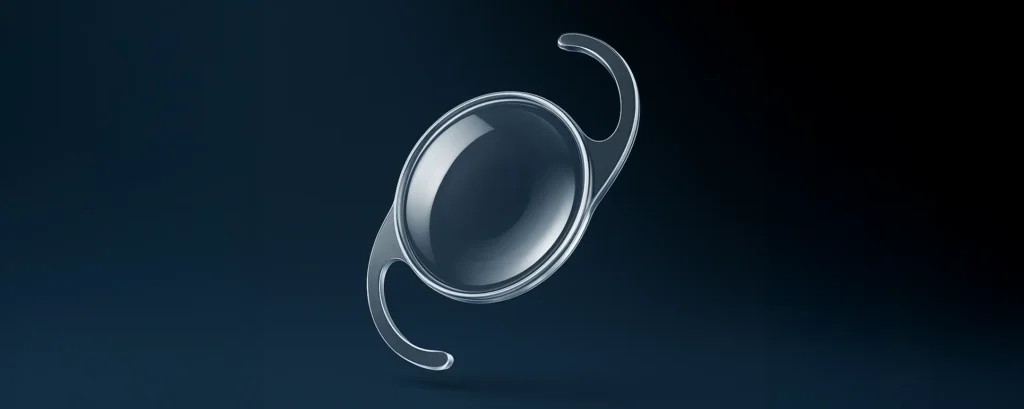
In people who haven’t had LASIK, the surgeon typically relies on measurements such as keratometry (corneal curvature) and axial length (length of the eye) to estimate the power of the replacement lens.
But after LASIK, the anterior surface of the cornea no longer reflects its natural shape. That’s because LASIK flattens or steepens the cornea to correct your old prescription. The relationship between the front and back surfaces of the cornea is altered, which can throw off traditional lens calculation formulas.
This can potentially lead to “refractive surprise” — a situation where the outcome isn’t what you or your surgeon expected. For instance, you might end up slightly long-sighted or short-sighted even after the surgery was technically perfect.
This is why extra care is taken in these cases, often using a combination of:
- Advanced biometric devices like the IOLMaster or Lenstar
- Corneal mapping (topography and tomography)
- Specialised formulas like the Barrett True-K or Haigis-L
- Online calculators designed for post-refractive surgery eyes
The Role of Intraoperative Aberrometry
One of the tools your surgeon might use to refine your lens selection is intraoperative aberrometry. This technique involves measuring the eye’s refractive state during the actual surgery, once the cloudy lens has been removed but before the new IOL is implanted.
It’s like a real-time double-check — allowing for more personalised adjustments based on how your unique post-LASIK eye behaves during surgery. While not always necessary, it can be particularly useful in challenging cases or when exact spectacle independence is the goal.
Choosing the Right Type of IOL After LASIK
If you’ve had LASIK before, it’s not just about getting the right power of lens — it’s also about choosing the right type. Here’s how your LASIK history might influence your options:
1. Monofocal IOLs
These provide clear vision at one distance (usually far) and are the most predictable option. For post-LASIK patients, they often yield the most reliable visual results because they don’t introduce additional complexities like multifocal designs.
2. Multifocal and Extended Depth of Focus (EDOF) Lenses
These are designed to reduce or eliminate the need for glasses by providing vision at multiple distances. However, they can be more sensitive to imperfections in the cornea — and after LASIK, your cornea might not be as optically “perfect” as it once was. This increases the risk of halos or reduced contrast.
That said, many patients still do very well with these advanced lenses, particularly if the LASIK was done for mild prescriptions and the corneal surface remains regular.
3. Toric Lenses for Astigmatism
If you have residual astigmatism (common even after LASIK), toric lenses can help. But precise alignment is crucial, and your surgeon must calculate how the previous laser treatment may have shifted your corneal shape.
Can You Still Expect Good Vision After Cataract Surgery?

Absolutely — but it comes down to planning and expectations. Studies show that most patients who’ve had LASIK go on to enjoy excellent results after cataract surgery. But there’s a slightly higher chance that you’ll need a minor enhancement, such as glasses for fine tasks or a touch-up procedure, to fully sharpen your vision.
The key is being realistic. Your outcome might not be perfect, but it can be very good. And with the right team and tools, it’s entirely possible to achieve sharp, functional, and satisfying vision again.
What About Having LASIK After Cataract Surgery?
Some patients wonder if they can have a LASIK “tune-up” after cataract surgery if their vision isn’t quite right. The answer is yes — it’s possible, but only after the eye has stabilised (usually 3 to 6 months post-op).
Your surgeon will assess the thickness of your cornea, your tear film, and other factors before deciding whether further laser vision correction is safe.
However, in many cases, a simpler option like using glasses or even a laser capsulotomy (to clear posterior capsule haze) might be all that’s needed to optimise your outcome.
Should You Be Concerned About Complications?
While cataract surgery after LASIK is generally safe, there are some added risks to be aware of:
- Inaccurate IOL power prediction
- Greater potential for dry eye symptoms
- Slightly higher risk of glare or halos, especially with multifocal lenses
These risks are manageable — but they reinforce the importance of choosing a surgeon experienced in post-refractive cataract cases.
Tips to Prepare If You’ve Had LASIK and Are Considering Cataract Surgery
If you’re starting to notice vision changes and suspect cataracts, here’s what you can do to prepare effectively:
- Locate your old LASIK records if you can.
- Tell your ophthalmologist about your past laser eye surgery — even if it was decades ago.
- Ask if your clinic uses advanced formulas and intraoperative tools for post-LASIK cases.
- Discuss IOL options in depth — especially whether monofocal, EDOF, or multifocal lenses make sense in your case.
- Set realistic expectations and be open to possibly needing glasses or enhancements afterwards.
FAQs
- Will my cataract surgery be more difficult if I’ve had LASIK?
Cataract surgery itself isn’t necessarily more difficult after LASIK, but your surgeon will need to take extra care when calculating the intraocular lens (IOL) power. That’s because LASIK alters the shape of your cornea, which makes traditional lens formulas less reliable. With modern technology and experienced hands, this challenge is manageable — but it does mean your surgery involves more planning and precision. - Can I still get multifocal lenses if I’ve had LASIK?
Yes, multifocal or extended depth of focus (EDOF) lenses are still an option after LASIK, but the decision depends on your corneal health and visual goals. Because LASIK may reduce contrast sensitivity or increase higher-order aberrations, some patients may be more prone to halos or glare with these advanced lenses. A detailed corneal assessment can help determine if they’re suitable for you. - Is there a greater risk of complications after LASIK?
The overall risk of serious complications remains low, but certain issues — like inaccurate IOL power prediction, increased dry eye symptoms, or night-time glare — are slightly more likely in post-LASIK eyes. These are usually mild and manageable, especially if your surgeon is aware of your LASIK history and uses appropriate planning tools. - Do I need my old LASIK records?
While not essential, old LASIK records can be incredibly helpful. If your surgeon has access to your pre-LASIK prescription and corneal measurements, it improves the accuracy of IOL calculations. If you can’t find your records, don’t worry — there are now calculation methods specifically designed for post-refractive eyes with no historical data. - Will I still need glasses after surgery?
There’s a good chance you may need reading glasses or glasses for some tasks, depending on the type of lens you choose. Monofocal lenses usually provide excellent distance vision, but won’t correct for near or intermediate tasks. Even with premium lenses, some people find they need occasional glasses for best clarity in certain situations. - How soon can I get LASIK again if needed after cataract surgery?
If your vision needs fine-tuning after cataract surgery, laser enhancement is sometimes an option — but only after your eye has fully healed and stabilised, which typically takes around 3 to 6 months. Your surgeon will assess whether your cornea is thick and healthy enough to safely undergo another round of laser correction. - Are there any lenses made specifically for post-LASIK patients?
There aren’t lenses that are exclusively designed for post-LASIK eyes, but surgeons use special formulas and diagnostic tools to help select the most appropriate lens. The key is not the lens itself, but the method of calculating its power to account for your previous corneal reshaping. - Does having LASIK affect my cataract surgery recovery time?
In most cases, your recovery time will be similar to someone who hasn’t had LASIK. However, you may be more prone to dry eye symptoms during the healing process, especially if you experienced dry eyes after your original LASIK procedure. Proper lubrication and follow-up care can help keep this under control. - What if I had PRK instead of LASIK?
PRK, like LASIK, reshapes the cornea to correct vision, so the same principles apply when planning cataract surgery. Your surgeon will still need to adjust the IOL calculations accordingly and may face similar challenges predicting lens power. As with LASIK, it’s important to mention your PRK history during your consultation. - Should I go to a specialist for cataract surgery after LASIK?
Yes, it’s highly recommended to choose a surgeon with specific experience handling cataract surgery in post-refractive eyes. These cases require advanced biometry, tailored IOL calculations, and a strong understanding of how previous laser treatments impact surgical planning and outcomes. The right specialist can make a big difference in your final vision.
Final Thoughts
If you’ve had LASIK or another form of laser eye surgery in the past, you can absolutely still have cataract surgery when the time comes. The procedure itself remains safe and effective, but it does require a bit more strategic planning to ensure your visual outcome is as accurate and satisfying as possible. From choosing the right type of lens to using the most appropriate IOL calculation methods, the success of your surgery hinges on careful preoperative assessment and clear communication with your surgeon.
Whether you’re aiming for complete spectacle independence or simply want sharper, more functional vision, the key is understanding how your past laser correction affects today’s choices. Even if you don’t have your old LASIK records, modern technology and surgical experience can still deliver excellent results — but only if your surgical team is well-versed in post-refractive eye care.
At London Cataract Centre, we routinely perform cataract surgery for patients who’ve previously had LASIK, PRK, or other vision correction procedures. Our team uses the latest diagnostic and calculation tools to customise each case, helping you achieve the clarity and confidence you’re hoping for. If you’re ready to explore your options, we’re here to guide you every step of the way.
References
- Wang, L., Booth, M.A., Koch, D.D. and Hill, W.E. (2021) ‘Comparison of newer intraocular lens power calculation methods for eyes after corneal refractive surgery’, Ophthalmology, 128(11), e121–e131. Available at: https://pubmed.ncbi.nlm.nih.gov/32615201/ (Accessed: 10 July 2025).
- Chen, H., Wang, L., Yao, K. et al. (2020) ‘Intraocular lens power calculation after laser refractive surgery: a meta‑analysis’, Scientific Reports, 10, Article 2645. Available at: https://www.nature.com/articles/s41598-020-59487-1 (Accessed: 10 July 2025).
- American Academy of Ophthalmology (2020) Intraocular lens power calculations in eyes with previous corneal refractive surgery. Ophthalmology, 127. Available at: https://www.aaojournal.org/article/S0161-6420(20)30625-4/fulltext (Accessed: 10 July 2025).